
林业科学 ›› 2026, Vol. 62 ›› Issue (1): 1-18.doi: 10.11707/j.1001-7488.LYKX20260001
• 特邀综述 • 下一篇
刘世荣1,*( ),陈远其1,2,聂秀青1(),明安刚3,王晖1
收稿日期:2026-01-01
修回日期:2026-01-05
出版日期:2026-01-25
发布日期:2026-01-14
通讯作者:
刘世荣
E-mail:liusr@caf.ac.cn;niexiuqing@caf.ac.cn
基金资助:
Shirong Liu1,*(),Yuanqi Chen1,2,Xiuqing Nie1(),Angang Ming3,Hui Wang1
Received:2026-01-01
Revised:2026-01-05
Online:2026-01-25
Published:2026-01-14
Contact:
Shirong Liu
E-mail:liusr@caf.ac.cn;niexiuqing@caf.ac.cn
摘要:
生物多样性对森林生态系统功能和生态系统服务具有十分重要的影响,而不断加剧的气候变化正在严重威胁森林生物多样性及生态系统的健康和稳定性。为应对气候变化和保护生物多样性,提高森林生态系统韧性、多功能性和可持续性尤为重要。树种多样性是森林经营过程中关注的核心问题,直接影响森林生态系统的多功能性、稳定性和可持续性,是当今国内外森林生态学研究的前沿和热点。由于森林生态系统的复杂性(如类型多样、结构复杂以及对干扰和环境变化的时空动态响应),人们对树种多样性调控森林生态系统多功能性内在机理的认识还十分有限。本研究系统总结树种多样性对生态系统多功能性影响的生态学原理,包括生态位分化、资源分配与功能性状整合及拮抗、互补效应与选择效应、杠杆效应与功能冗余等;综述近年来树种多样性与生态系统多功能性的研究进展,涉及树种多样性对树木生长、林分生产力、根系及根系分泌物、土壤有机碳、土壤养分、土壤微生物和根系?土壤?微生物互作等生态过程与相关功能的影响,以及树种多样性对森林生态系统响应极端干旱、病虫害、外来物种入侵等的影响;结合经营实践,从树种选择与遗传多样性、混交与不同功能型树种组配、轮伐期调整与地力维持、景观配置与多功能性等方面提出人工林质量与生态系统多功能性协同提升的经营技术对策。最后,展望树种多样性与生态系统多功能性的未来研究趋势,探究应对气候变化与生物多样性保护相协同的近自然解决方案,以期为全球气候变化背景下森林生态系统经营,尤其是人工林多功能可持续经营提供科学依据和实践参考。
中图分类号:
刘世荣,陈远其,聂秀青,明安刚,王晖. 树种多样性对森林生态系统多功能性和韧性的影响[J]. 林业科学, 2026, 62(1): 1-18.
Shirong Liu,Yuanqi Chen,Xiuqing Nie,Angang Ming,Hui Wang. Effects of Tree Species Diversity on Multifunctionality and Resilience of Forest Ecosystems[J]. Scientia Silvae Sinicae, 2026, 62(1): 1-18.
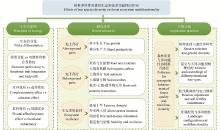
图1
主要内容结构框架"
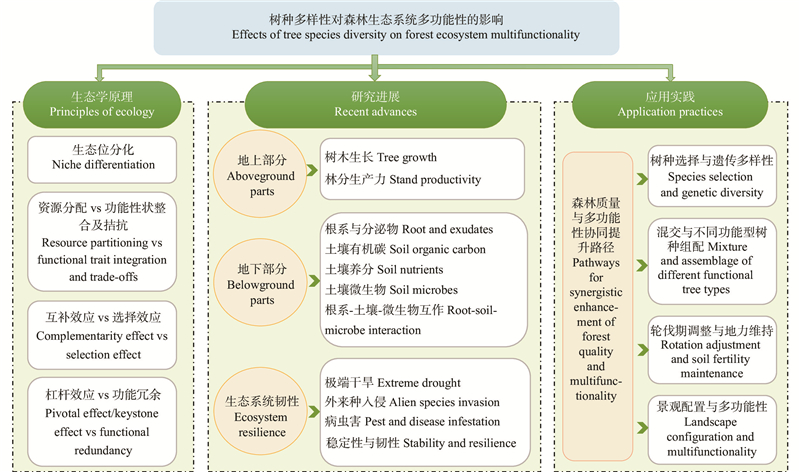
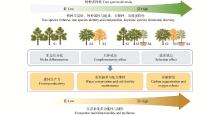
图2
树种多样性对生态系统多功能性与韧性影响的概念图 S1:针叶树种 Coniferous tree species;S2:常绿阔叶树种 Evergreen broadleaf tree species;S3:落叶阔叶树种 Deciduous broadleaf tree species;S4:固氮树种 Nitrogen-fixing tree species"


表1
树种丰富度对林木生长和林分生产力的影响①"
| 丰富度 Tree species richness | 生长指标 Growth indices | 效应(值) Effect (size) | 解释机制 Explanation | 研究地区 Study region | 参考文献 References |
| 1, 2, 3, 4, 5 | 生产力 Productivity | 正效应 Positive effect | 多营养级生物多样性 Multi-trophic biodiversity | 亚热带 Subtropics | |
| 1, 2, 4 | 木材蓄积量 Wood volume | +29% | 增加群落结构复杂性 Enhanced structural complexity | 温带 Temperate zone | |
| 1, 2, 4, 8 | 木材蓄积量与年生物量生长速率Wood volume and annual biomass growth rates | 正效应 Positive effect | 高多样性导致更强的邻体互作正效应 High diversity leads to stronger positive effects of neighboring interactions | 亚热带 Subtropics | |
| 1, 2, 4, 12 | 材积与茎干生物量 Volume and stem biomass | 正效应 Positive effect | 冠层空间互补 Crown complementarity | 温带 Temperate zone | |
| 1, 2, >2 | 地上生物量 Aboveground biomass | +25.5% | 种间互补性 Interspecific complementarity | 全球 Global regions | |
| 1, 2, >2 | 生物量Biomass | +15.2% | 补偿效应与选择效应 Complementarity and selection effects | 全球 Global regions |
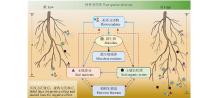
图3
树种多样性对根系?土壤?微生物互作关系的影响"

图4
树种多样性对生态系统韧性的影响"
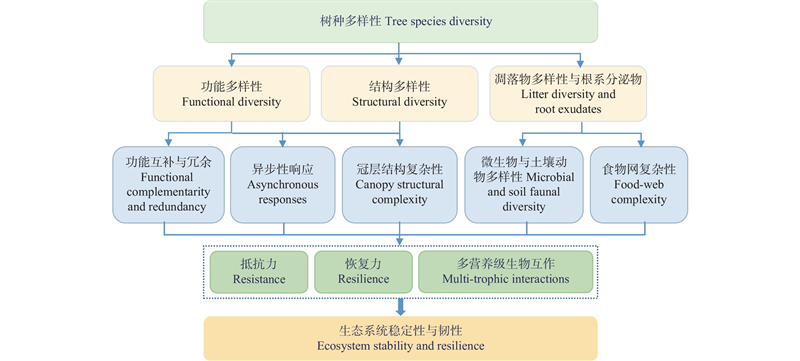
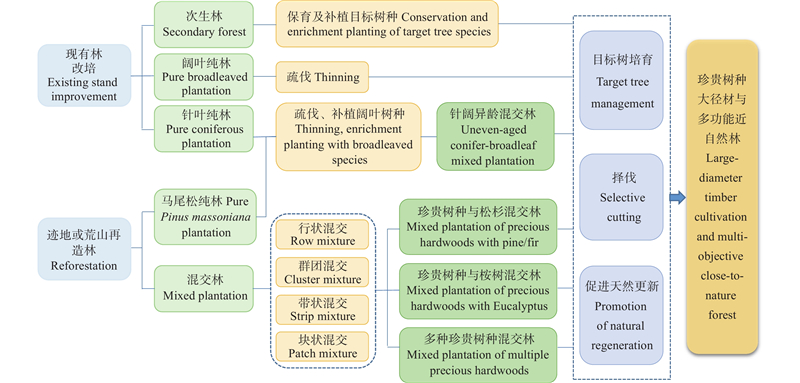
图5
森林质量(大径材培育)与多功能性提升的经营技术路径"
| 胡佳佳, 王 晖, 刘世荣, 等. 树种及多样性组配对南亚热带人工林早期树木生长的影响. 应用生态学报, 2022, 33 (6): 1511- 1517. | |
| Hu J J, Wang H, Liu S R, et al. Effects of tree species identity and diversity on young tree growth in a south subtropical plantation. Chinese Journal of Applied Ecology, 2022, 33 (6): 1511- 1517. | |
| 李金凤, 王 晖, 黄海梅, 等. 马尾松与不同阔叶树种混交种植对土壤微生物群落组成和多样性特征的影响. 广西科技, 2024, 31 (3): 439- 450. | |
| Li J F, Wang H, Huang H M, et al. Effects of mixed plantation of Pinus massoniana with different broadleaf species on soil microbial community composition and diversity. Guangxi Sciences, 2024, 31 (3): 439- 450. | |
| 李 茜, 王 晖, 栾军伟, 等. 树种多样性和土壤微生物多样性对人工林生产力的影响. 生态学报, 2023, 43 (12): 4984- 4994. | |
| Li X, Wang H, Luan J W, et al. Effects of tree species diversity and soil microbial diversity on stand productivity in plantations. Acta Ecologica Sinica, 2023, 43 (12): 4984- 4994. | |
| 李 茜. 2022. 亚热带不同类型人工纯林和混交林间多种生态功能的变异格局. 北京: 中国林业科学研究院. | |
| Li X. 2022. Variation patterns of multiple ecosystem functions among different types of monospecific and mixed planted forests across subtropical China. Beijing: Chinese Academy of Forestry. [in Chinese] | |
| 李 逸, 刘晓娟. 多营养级生物多样性与陆地生态系统多功能性: 研究现状与展望. 中国科学: 生命科学, 2024, 54 (4): 739- 750. | |
| Li Y, Liu X J. Multitrophic biodiversity and terrestrial ecosystem multifunctionality: advances and perspectives. Scientia Sinica Vitae, 2024, 54 (4): 739- 750. | |
|
刘世荣, 杨予静, 王 晖. 中国人工林经营发展战略与对策: 从追求木材产量的单一目标经营转向提升生态系统服务质量和效益的多目标经营. 生态学报, 2018, 38 (1): 1- 10.
doi: 10.1016/j.chnaes.2017.02.003 |
|
|
Liu S R, Yang Y J, Wang H. Development strategy and management countermeasures of planted forests in China: transforming from timber-centered single objective management towards multi-purpose management for enhancing quality and benefits of ecosystem services. Acta Ecologica Sinica, 2018, 38 (1): 1- 10.
doi: 10.1016/j.chnaes.2017.02.003 |
|
|
卢婵江, 温远光, 周晓果, 等. 不同轮伐期对巨尾桉人工林碳固存的影响. 广西科学, 2018, 25 (2): 149- 157.
doi: 10.13656/j.cnki.gxkx.20180427.003 |
|
|
Lu C J, Wen Y G, Zhou X G, et al. Effects of rotation length on carbon sequestration in Eucalyptus grandis×E. urophylla plantations. Guangxi Sciences, 2018, 25 (2): 149- 157.
doi: 10.13656/j.cnki.gxkx.20180427.003 |
|
|
罗 达, 史作民, 唐敬超, 等. 南亚热带乡土树种人工纯林及混交林土壤微生物群落结构. 应用生态学报, 2014, 25 (9): 2543- 2550.
doi: 10.13287/j.1001-9332.20140611.001 |
|
|
Luo D, Shi Z M, Tang J C, et al. Soil microbial community structure of monoculture and mixed plantation stands of nativetree species in south subtropical China. Chinese Journal of Applied Ecology, 2014, 25 (9): 2543- 2550.
doi: 10.13287/j.1001-9332.20140611.001 |
|
| 明安刚. 2017. 南亚热带针叶人工林近自然化改造过程中群落结构与碳动态研究. 北京: 中国林业科学研究院. | |
| Ming A G. 2017. Community structure and carbon dynamics during close-to-nature transformation in south subtropical conifer plantation. Beijing: Chinese Academy of Forestry. [in Chinese] | |
|
秦佳琪, 肖指柔, 明安刚, 等. 针阔人工混交林及其纯林对土壤微生物碳循环功能基因丰度的影响. 生态环境学报, 2023, 32 (10): 1719- 1731.
doi: 10.16258/j.cnki.1674-5906.2023.10.001 |
|
|
Qin J Q, Xiao Z R, Ming A G, et al. Effect of monoculture and mixed plantation with coniferous and broadleaved tree species on soil microbial carbon cycle functional gene abundance. Ecology and Environmental Sciences, 2023, 32 (10): 1719- 1731.
doi: 10.16258/j.cnki.1674-5906.2023.10.001 |
|
| 舒韦维, 明安刚, 杨 坤, 等. 近自然化改造对马尾松和杉木人工林土壤有机碳化学稳定性的影响. 林业科学, 2025, 61 (11): 1- 13. | |
| Shu W W, Ming A G, Yang K, et al. Effects of close-to-nature transformation on the chemical stability of soil organic carbon in Pinus massoniana and Cunninghamia lanceolata Plantations. Scientia Silvae Sinicae, 2025, 61 (11): 1- 13. | |
| 宋战超, 王 晖, 刘世荣, 等. 南亚热带混交人工林树种丰富度与土壤微生物多样性和群落组成的关系. 生态学报, 2020, 40 (22): 8265- 8273. | |
| Song Z C, Wang H, Liu S R, et al. Relationship between tree species richness and soil microbial diversity and community composition in a mixed planted south subtropical forest. Acta Ecologica Sinica, 2020, 40 (22): 8265- 8273. | |
| 王树梅. 2022. 南亚热带人工林树种多样性及组成对凋落物分解的影响机制. 北京: 中国林业科学研究院. | |
| Wang S M. 2022. Effect of tree species diversity and composition on litter decomposition in south subtropical planted forests. Beijing: Chinese Academy of Forestry.[in Chinese] | |
| 吴 迪, 张萌萌, 张钰莹, 等. 帽儿山针阔混交林及纯林土壤碳代谢微生物群落特征研究. 南京林业大学学报(自然科学版), 2017, 41(2), 81- 89. | |
| Wu D, Zhang M M, Zhang Y Y, et al. The carbon metabolism characteristics and diversity of soil microbial communities from pure or coniferous and broad-leaved mixed forests in the Mao’er Mountain region. Journal of Nanjing Forestry University (Natural Sciences Edition), 2017, 41(2), 81- 89. | |
| 夏 琦, 聂秀青, 陈轶群, 等. 2025. 南亚热带纯林和混交林根系分泌物代谢组学分析. 植物生态学报, DOI:10.17521/cjpe.2025.0047. | |
| Xia Q, Nie X Q, Chen Y Q, et al. 2025. Metabolomics analysis of root exudates in south subtropical pure and mixed plantations. Chinese Journal of Plant Ecology, DOI:10.17521/cjpe.2025.0047. [in Chinese] | |
|
杨 明, 汪思龙, 张伟东, 等. 杉木人工林生物量与养分积累动态. 应用生态学报, 2010, 21 (7): 1674- 1680.
doi: 10.13287/j.1001-9332.2010.0268 |
|
|
Yang M, Wang S L, Zhang W D, et al. Dynamics of biomass and nutrient accumulation in a Chinese fir plantation. Chinese Journal of Applied Ecology, 2010, 21 (7): 1674- 1680.
doi: 10.13287/j.1001-9332.2010.0268 |
|
| 杨淑雅, 王镜如, 朱滢滢, 等. 杉木与浙江楠混交对根系分泌物和丛枝菌根真菌群落结构的影响. 林业科学, 2024, 60 (9): 59- 68. | |
| Yang S Y, Wang J R, Zhu Y Y, et al. Effects of mixed plantation of Cunninghamia lanceolata and phoebe chekiangensis on root exudates and community structure of arbuscular mycorrhizal fungi. Scientia Silvae Sinicae, 2024, 60 (9): 59- 68. | |
| 叶晓丹, 刘世荣, 栾军伟, 等. 树种丰富度和组成对南亚热带人工林土壤植物源碳保存及有机碳稳定性的影响. 生态学报, 2023, 43 (12): 4974- 4983. | |
| Ye X D, Liu S R, Luan J W, et al. Effects of tree species richness and composition on the conservation of plant-derived carbon and soil organic carbon stability in southern subtropical plantations. Acta Ecologica Sinica, 2023, 43 (12): 4974- 4983. | |
| 叶晓丹. 2022. 南亚热带人工林树种配置对土壤有机碳来源及化学稳定性的影响. 北京: 中国林业科学研究院. | |
| Ye X D. 2022. Effects of tree species richness and composition on the source and chemical stability of soil organic carbon in subtropical plantations. Beijing: Chinese Academy of Forestry. [in Chinese] | |
| 余德菊, 何云雲, 曹 敏, 等. 基于代谢组学与转录组学技术的热带森林树种共存机制研究: 以榕属植物为例. 生物多样性, 2025, 33 (7): 5−16. | |
| Yu D J, He Y Y, Cao M, et al. Coexistence mechanism of tropical forest tree species based on metabolomics and transcriptomics technologies: taking Ficus species as an example. Biodiversity Science, 2025, 33 (7): 5− 16. | |
| 张可欣, 刘宪钊, 雷相东, 等. 马尾松人工林不同经营方式短期经济效益分析. 北京林业大学学报, 2022, 44 (5): 43- 54. | |
| Zhang K X, Liu X Z, Lei X D, et al. Short-term economic benefit analysis under different management modes of Pinus massoniana plantation. Journal of Beijing Forestry University, 2022, 44 (5): 43- 54. | |
| 中华人民共和国自然资源部. 2025. 2024年中国自然资源公报[EB/OL]. https://gi.mnr.gov.cn/202503/t202503 14_2881937.html. 2025-06-17. | |
| Ministry of Natural Resources of the People’s Republic of China. 2025. China Natural Resources Bulletin 2024. https://gi.mnr.gov.cn/202503/t20250314_2881937.html. 2025-06-17.[in Chinese] | |
|
Agrawal A A. A scale-dependent framework for trade-offs, syndromes, and specialization in organismal biology. Ecology, 2020, 101 (2): e02924.
doi: 10.1002/ecy.2924 |
|
| Aguirre-Gutiérrez J, Berenguer E, Oliveras Menor I, et al. Functional susceptibility of tropical forests to climate change. Nature Ecology & Evolution, 2022, 6 (7): 878- 889. | |
|
Anderegg W R, Konings A G, Trugman A T, et al. Hydraulic diversity of forests regulates ecosystem resilience during drought. Nature, 2018, 561 (7724): 538- 541.
doi: 10.1038/s41586-018-0539-7 |
|
|
Andrew M E, Bolton D K, Rickbeil G J, et al. Facets of functional diversity support niche-based explanations for Australian biodiversity gradients. Journal of Biogeography, 2024, 51 (3): 467- 482.
doi: 10.1111/jbi.14770 |
|
|
Augusto L, Boča A. Tree functional traits, forest biomass, and tree species diversity interact with site properties to drive forest soil carbon. Nature Communications, 2022, 13 (1): 1097.
doi: 10.1038/s41467-022-28748-0 |
|
|
Bani A, Pioli S, Ventura M, et al. The role of microbial community in the decomposition of leaf litter and deadwood. Applied Soil Ecology, 2018, 126, 75- 84.
doi: 10.1016/j.apsoil.2018.02.017 |
|
| Barry K E, Mommer L, van Ruijven J, et al. The future of complementarity: Disentangling causes from consequences. Trends in Ecology & Evolution, 2019, 34, 167- 180. | |
|
Bauman D, Fortunel C, Delhaye G, et al. Tropical tree mortality has increased with rising atmospheric water stress. Nature, 2022, 608 (7923): 528- 533.
doi: 10.1038/s41586-022-04737-7 |
|
|
Bayramzadeh V. Does tree species composition control the soil carbon stocks of the Hyrcanian forest in the Northern Iran? (A case study in Guilan province, Iran). Journal of Forestry Research, 2014, 25, 143- 146.
doi: 10.1007/s11676-014-0439-0 |
|
|
Beese W J, Deal J, Dunsworth B G, et al. Two decades of variable retention in British Columbia: a review of its implementation and effectiveness for biodiversity conservation. Ecological Processes, 2019, 8 (1): 33.
doi: 10.1186/s13717-019-0181-9 |
|
|
Beugnon R, Albert G, Hähn G, et al. Improving forest ecosystem functions by optimizing tree species spatial arrangement. Nature Communications, 2025, 16 (1): 6286.
doi: 10.1038/s41467-025-61389-7 |
|
|
Biggs C R, Yeager L A, Bolser D G, et al. Does functional redundancy affect ecological stability and resilience? A review and meta-analysis. Ecosphere, 2020, 11 (7): e03184.
doi: 10.1002/ecs2.3184 |
|
| Bongers F J, Schmid B, Bruelheide H, et al. Functional diversity effects on productivity increase with age in a forest biodiversity experiment. Nature Ecology & Evolution, 2021, 5 (12): 1594- 1603. | |
|
Bose T, Hammerbacher A, Slippers B, et al. Continuous replanting could degrade soil health in short-rotation plantation forestry. Current Forestry Reports, 2023, 9, 230- 250.
doi: 10.1007/s40725-023-00188-z |
|
| Bravo F, Lemay V, Jandl R, et al. 2013. Forest ecosystem management under climate change challenge. Wang X, Yang X, Liu J, et al. Translated. Beijing: Higher Education Press, 4–6. | |
|
Brockerhoff E G, Barbaro L, Castagneyrol B, et al. Forest biodiversity, ecosystem functioning and the provision of ecosystem services. Biodiversity and Conservation, 2017, 26, 3005- 3035.
doi: 10.1007/s10531-017-1453-2 |
|
|
Chen C, Bongers F J, Schmid B, et al. Ecosystem consequences of functional diversity in forests and implications for restoration. New Phytologist, 2025a, 247, 1081- 1097.
doi: 10.1111/nph.70247 |
|
|
Chen C, Xiao W, Chen H Y. Meta-analysis reveals global variations in plant diversity effects on productivity. Nature, 2025b, 638, 435- 440.
doi: 10.1038/s41586-024-08407-8 |
|
|
Chen L, Xiang W, Wu H, et al. Tree species identity surpasses richness in affecting soil microbial richness and community composition in subtropical forests. Soil Biology and Biochemistry, 2019, 130, 113- 121.
doi: 10.1016/j.soilbio.2018.12.008 |
|
|
Chen X, Reich P B, Taylor A R, et al. Resource availability enhances positive tree functional diversity effects on carbon and nitrogen accrual in natural forests. Nature Communications, 2024, 15 (1): 8615.
doi: 10.1038/s41467-024-53004-y |
|
|
Chen X, Taylor A R, Reich P B, et al. Tree diversity increases decadal forest soil carbon and nitrogen accrual. Nature, 2023, 618 (7963): 94- 101.
doi: 10.1038/s41586-023-05941-9 |
|
| Daehler C C. 2003. Performance comparisons of co-occurring native and alien invasive plants: implications for conservation and restoration. Annual Review of Ecology, Evolution, and Systematics, 34(1): 183–211. | |
| De Bello F, Lavorel S, Hallett L M, et al. Functional trait effects on ecosystem stability: assembling the jigsaw puzzle. Trends in Ecology & Evolution, 2021, 36 (9): 822- 836. | |
|
Decarsin R, Guillemot J, Le Maire G, et al. Tree drought-mortality risk depends more on intrinsic species resistance than on stand species diversity. Global Change Biology, 2024, 30 (9): e17503.
doi: 10.1111/gcb.17503 |
|
|
Delavaux C S, Crowther T W, Zohner C M, et al. Native diversity buffers against severity of non-native tree invasions. Nature, 2023, 621, 773- 781.
doi: 10.1038/s41586-023-06440-7 |
|
|
Deng M, Hu S, Guo L, et al. Tree mycorrhizal association types control biodiversity-productivity relationship in a subtropical forest. Science Advances, 2023, 9 (3): eadd4468.
doi: 10.1126/sciadv.add4468 |
|
|
Díaz S, Kattge J, Cornelissen J H, et al. The global spectrum of plant form and function. Nature, 2016, 529 (7585): 167- 171.
doi: 10.1038/nature16489 |
|
|
Dietrich P, Ferlian O, Huang Y, et al. Tree diversity effects on productivity depend on mycorrhizae and life strategies in a temperate forest experiment. Ecology, 2023, 104, e3896.
doi: 10.1002/ecy.3896 |
|
|
Eisenhauer N, Beßler H, Engels C, et al. Plant diversity effects on soil microorganisms support the singular hypothesis. Ecology, 2010, 91, 485- 496.
doi: 10.1890/08-2338.1 |
|
|
Eisenhauer N, Hines J, Maestre F T, et al. Reconsidering functional redundancy in biodiversity research. npj Biodiversity, 2023, 2 (1): 9.
doi: 10.1038/s44185-023-00015-5 |
|
|
Falk D A, van Mantgem P J, Keeley J E, et al. Mechanisms of forest resilience. Forest Ecology and Management, 2022, 512, 120129.
doi: 10.1016/j.foreco.2022.120129 |
|
|
Feng Y, Schmid B, Loreau M, et al. Multispecies forest plantations outyield monocultures across a broad range of conditions. Science, 2022, 376 (6595): 865- 868.
doi: 10.1126/science.abm6363 |
|
|
Fichtner A, Härdtle W, Li Y, et al. From competition to facilitation: how tree species respond to neighbourhood diversity. Ecology Letters, 2017, 20 (7): 892- 900.
doi: 10.1111/ele.12786 |
|
|
Field E, Castagneyrol B, Gibbs M, et al. Associational resistance to both insect and pathogen damage in mixed forests is modulated by tree neighbour identity and drought. Journal of Ecology, 2020, 108 (4): 1511- 1522.
doi: 10.1111/1365-2745.13397 |
|
|
Field E, Hector A, Barsoum N, et al. Tree diversity reduces pathogen damage in temperate forests: a systematic review and meta-analysis. Forest Ecology and Management, 2025, 578, 122398.
doi: 10.1016/j.foreco.2024.122398 |
|
|
Forrester D I, Bauhus J. A review of processes behind diversity-productivity relationships in forests. Current Forestry Reports, 2016, 2, 45- 61.
doi: 10.1007/s40725-016-0031-2 |
|
|
Fussi B, Westergren M, Aravanopoulos F, et al. Forest genetic monitoring: an overview of concepts and definitions. Environmental Monitoring and Assessment, 2016, 188, 493.
doi: 10.1007/s10661-016-5489-7 |
|
|
Gazol A, Camarero J J. Functional diversity enhances silver fir growth resilience to an extreme drought. Journal of Ecology, 2016, 104, 1063- 1075.
doi: 10.1111/1365-2745.12575 |
|
| Gebhardt S, Van Dijk J, Wassen M J, et al. 2023. Agricultural intensity interacts with landscape arrangement in driving ecosystem services. Agriculture, Ecosystems & Environment, 357: 108692. | |
| Guo, J., Kneeshaw D., Peng, C. et al. 2025. Positive effects of species mixing on biodiversity of understory plant communities and soil health in forest plantations. Proceedings of the National Academy of Sciences of United States of America, 122: e2418090122. | |
|
Hackett T D, Sauve A M C, Maia K P, et al. Multi-habitat landscapes are more diverse and stable with improved function. Nature, 2024, 633, 114- 119.
doi: 10.1038/s41586-024-07825-y |
|
|
Hartmann H, Bastos A, Das A J, et al. Climate change risks to global forest health: emergence of unexpected events of elevated tree mortality worldwide. Annual Review of Plant Biology, 2022, 73 (1): 673- 702.
doi: 10.1146/annurev-arplant-102820-012804 |
|
|
Hector A, Bagchi R. Biodiversity and ecosystem multifunctionality. Nature, 2007, 448 (7150): 188- 190.
doi: 10.1038/nature05947 |
|
|
Heděnec P, Zheng H, Siqueira D P, et al. Tree species traits and mycorrhizal association shape soil microbial communities via litter quality and species mediated soil properties. Forest Ecology and Management, 2023, 527, 120608.
doi: 10.1016/j.foreco.2022.120608 |
|
|
Hu C C, Liu X Y, Driscoll A W, et al. Global distribution and drivers of relative contributions among soil nitrogen sources to terrestrial plants. Nature Communications, 2024, 15 (1): 6407.
doi: 10.1038/s41467-024-50674-6 |
|
|
Huang X, Liu S, You Y, et al. Microbial community and associated enzymes activity influence soil carbon chemical composition in Eucalyptus urophylla plantation with mixing N2-fixing species in subtropical China. Plant and Soil, 2017, 414, 199- 212.
doi: 10.1007/s11104-016-3117-5 |
|
|
Huang Y, Chen Y, Castro-Izaguirre N, et al. Impacts of species richness on productivity in a large-scale subtropical forest experiment. Science, 2018, 362 (6410): 80- 83.
doi: 10.1126/science.aat6405 |
|
|
Isbell F, Craven D, Connolly J, et al. Biodiversity increases the resistance of ecosystem productivity to climate extremes. Nature, 2015, 526 (7574): 574- 577.
doi: 10.1038/nature15374 |
|
|
Isbell F, Gonzalez A, Loreau M, et al. Linking the influence and dependence of people on biodiversity across scales. Nature, 2017, 546 (7656): 65- 72.
doi: 10.1038/nature22899 |
|
|
Jactel H, Bauhus J, Boberg J, et al. Tree diversity drives forest stand resistance to natural disturbances. Current Forestry Reports, 2017, 3, 223- 243.
doi: 10.1007/s40725-017-0064-1 |
|
|
Jactel H, Moreira X, Castagneyrol B. Tree diversity and forest resistance to insect pests: patterns, mechanisms, and prospects. Annual Review of Entomology, 2021, 66 (1): 277- 296.
doi: 10.1146/annurev-ento-041720-075234 |
|
|
Jansen K, Von Oheimb G, Bruelheide H, et al. Tree species richness modulates water supply in the local tree neighbourhood: evidence from wood δ13C signatures in a large-scale forest experiment. Proceedings of the Royal Society B, 2021, 288 (1946): 20203100.
doi: 10.1098/rspb.2020.3100 |
|
|
Jiang F, Pu X, Schmid B, et al. Mycorrhizal symbioses and tree diversity in global forest communities. Science Advances, 2025, 11 (24): eadt5743.
doi: 10.1126/sciadv.adt5743 |
|
| Jochum M, Fischer M, Isbell F. et al. The results of biodiversity-ecosystem functioning experiments are realistic. Nature Ecology & Evolution, 2020, 4, 1485- 1494. | |
|
Jones A G, Cridge A, Fraser S, et al. Transitional forestry in New Zealand: re-evaluating forest systems through forest purpose. Biological Reviews, 2023, 98 (4): 1003- 1015.
doi: 10.1111/brv.12941 |
|
|
Kakouridis A, Hagen J A, Kan M P, et al. Routes to roots: direct evidence of water transport by arbuscular mycorrhizal fungi to host plants. New Phytologist, 2022, 236, 210- 221.
doi: 10.1111/nph.18281 |
|
|
Klein T, Siegwolf R T W, Körner C. Belowground carbon trade among tall trees in a temperate forest. Science, 2016, 352, 342- 344.
doi: 10.1126/science.aad6188 |
|
|
Kolisnyk B, Czacharowski M, Bingham L, et al. Tree size diversity can enhance the drought resilience of Abies alba Mill. in the European mountain forests. Forest Ecology and Management, 2025, 589, 122765.
doi: 10.1016/j.foreco.2025.122765 |
|
| Kremer A, Chen J, Lascoux M. 2025. Chimes of resilience: what makes forest trees genetically resilient? New Phytologist, 246(5): 1934–1947. | |
|
Kroeker K J, Sanford E. Ecological leverage points: species interactions amplify the physiological effects of global environmental change in the ocean. Annual Review of Marine Science, 2022, 14 (1): 75- 103.
doi: 10.1146/annurev-marine-042021-051211 |
|
|
LaRue E A, Knott J A, Domke G M, et al. Structural diversity as a reliable and novel predictor for ecosystem productivity. Frontiers in Ecology and the Environment, 2023, 21 (1): 33- 39.
doi: 10.1002/fee.2586 |
|
| Laurance W F, Camargo J L C, Fearnside P M, et al. 2016. An Amazonian forest and its fragments as a laboratory of global change//Nagy L, Forsberg B, Artaxo P. Interactions between biosphere, atmosphere and human land use in the Amazon Basin. Ecological Studies, 227. Berlin: Springer. | |
|
Li M, Ding X, Chen M, et al. Mixed plantations enhance soil aggregation and carbon storage: a global meta-analysis. Catena, 2025, 254, 109013.
doi: 10.1016/j.catena.2025.109013 |
|
|
Li Q, Liu Z, Jin G. Mixed forests provide higher levels of growth and yield than monocultures. Forest Ecology and Management, 2024, 566, 122083.
doi: 10.1016/j.foreco.2024.122083 |
|
|
Liang J, Crowther T W, Picard N, et al. Positive biodiversity-productivity relationship predominant in global forests. Science, 2016, 354 (6309): aaf8957.
doi: 10.1126/science.aaf8957 |
|
|
Liu D, Wang T, Peñuelas J, et al. Drought resistance enhanced by tree species diversity in global forests. Nature Geoscience, 2022c, 15 (10): 800- 804.
doi: 10.1038/s41561-022-01026-w |
|
|
Liu K, Chen B, Zhang B, et al. Understory vegetation diversity, soil properties and microbial community response to different thinning intensities in Cryptomeria japonica var. sinensis plantations. Frontiers in Microbiology, 2023, 14, 1117384.
doi: 10.3389/fmicb.2023.1117384 |
|
| Liu S, García-Palacios P, Tedersoo L, et al. Phylotype diversity within soil fungal functional groups drives ecosystem stability. Nature Ecology & Evolution, 2022a, 6 (7): 900- 909. | |
|
Liu X, Huang Y, Chen L, et al. Species richness, functional traits and climate interactively affect tree survival in a large forest biodiversity experiment. Journal of Ecology, 2022b, 110 (10): 2522- 2531.
doi: 10.1111/1365-2745.13970 |
|
|
Liu X, Tan N, Zhou G, et al. Plant diversity and species turnover co-regulate soil nitrogen and phosphorus availability in Dinghushan forests, southern China. Plant and Soil, 2021, 464, 257- 272.
doi: 10.1007/s11104-021-04940-x |
|
| Liu X, Huang Y, Chen W, et al. 2025b. Functions and mechanisms of secreted proteinaceous effectors of broad-host-range necrotrophic fungal pathogens. Annual Review of Phytopathology, 63(1): 89−115. | |
|
Liu Y, Li Q, Tian H, et al. Nitrogen-fixing tree species enhance the positive effects of tree species richness on soil organic carbon sequestration by increasing fine root phosphorus loss. Catena, 2025a, 254, 108927.
doi: 10.1016/j.catena.2025.108927 |
|
|
Loewe-Muñoz V, Del Río R, Delard C, et al. Mixed Pyrus pyraster and Sorbus torminalis plantations including companion species enhance high-quality timber production. European Journal of Forest Research, 2020, 139 (4): 655- 664.
doi: 10.1007/s10342-020-01278-4 |
|
|
Lopezosa P, Soliveres S, Serra L, et al. Land use determines Mediterranean ecosystems’ multifunctionality more than plant richness or habitat composition. Journal of Applied Ecology, 2024, 61 (3): 476- 488.
doi: 10.1111/1365-2664.14568 |
|
| Luan J, Li S, Liu S, et al. 2024. Biodiversity mitigates drought effects in the decomposer system across biomes. Proceedings of the National Academy of Sciences of United States of America, 121(13): e2313334121. | |
|
Luo S, Phillips R P, Jo I, et al. Higher productivity in forests with mixed mycorrhizal strategies. Nature Communications, 2023, 14, 1377.
doi: 10.1038/s41467-023-36888-0 |
|
| Luo Y, Cadotte M W, Liu J, et al. Multitrophic diversity and biotic associations influence subalpine forest ecosystem multifunctionality. Ecology, 2022, 103, 1- 15. | |
|
Mansourian S. From landscape ecology to forest landscape restoration. Landscape Ecology, 2021, 36 (8): 2443- 2452.
doi: 10.1007/s10980-020-01175-6 |
|
|
Martin M, Woodbury D, Glogower Y, et al. Within-gap position shapes fifty years of forest dynamics in a temperate hardwood forest in Connecticut, USA. Forest Ecology and Management, 2021, 494, 119311.
doi: 10.1016/j.foreco.2021.119311 |
|
| Mayor S, Altermatt F, Crowther T W, et al. Landscape diversity promotes landscape functioning in north America. Communications Earth & Environment, 2025, 6, 28. | |
|
McNeely J A, Miller K R, Reid W V, et al. Strategies for conserving biodiversity. Environment: Science and Policy for Sustainable Development, 1990, 32 (3): 16- 40.
doi: 10.1080/00139157.1990.9929017 |
|
|
Messier J, McGill B J, Enquist B J, et al. Trait variation and integration across scales: is the leaf economic spectrum present at local scales?. Ecography, 2017, 40 (6): 685- 697.
doi: 10.1111/ecog.02006 |
|
|
Milesi P, Kastally C, Dauphin B, et al. Resilience of genetic diversity in forest trees over the Quaternary. Nature Communications, 2024, 15, 8538.
doi: 10.1038/s41467-024-52612-y |
|
|
Mina M, Huber M O, Forrester D I, et al. Multiple factors modulate tree growth complementarity in central European mixed forests. Journal of Ecology, 2018, 106, 1106- 1119.
doi: 10.1111/1365-2745.12846 |
|
|
Ming A, Yang Y, Liu S, et al. Effects of near natural forest management on soil greenhouse gas flux in Pinus massoniana (Lamb.) and Cunninghamia lanceolata (Lamb.) Hook. plantations. Forests, 2018, 9 (5): 229.
doi: 10.3390/f9050229 |
|
|
Ming A, Yang Y, Liu S, et al. A decade of close-to-nature transformation alters community diversity. Frontiers in Plant Science, 2020, 11, 1141.
doi: 10.3389/fpls.2020.01141 |
|
|
Morin X, Fahse L, Scherer-Lorenzen M, et al. Tree species richness promotes productivity in temperate forests through strong complementarity between species. Ecology Letters, 2011, 14 (12): 1211- 1219.
doi: 10.1111/j.1461-0248.2011.01691.x |
|
|
Müller J, Mitesser O, Cadotte M W, et al. Enhancing the structural diversity between forest patches: a concept and real-world experiment to study biodiversity, multifunctionality and forest resilience across spatial scales. Global Change Biology, 2023, 29 (6): 1437- 1450.
doi: 10.1111/gcb.16564 |
|
|
Nicolescu V N, Rédei K, Vor T, et al. A review of black walnut (Juglans nigra L. ) ecology and management in Europe. Trees, 2020, 34, 1087- 1112.
doi: 10.1007/s00468-020-01988-7 |
|
| Ortiz A M D, Gayó E M, Henríquez N C, et al. 2024. Exploring the multifunctional landscapes model in areas dominated by non-native tree plantations. Trees, Forests and People, 17: 100617. | |
| Pedrini S, Gibson-Roy P, Trivedi C, et al. Collection and production of native seeds for ecological restoration. Restoration Ecology, 2020, 28, S228- S238. | |
|
Peng S, Chen H Y. Global responses of fine root biomass and traits to plant species mixtures in terrestrial ecosystems. Global Ecology and Biogeography, 2021, 30 (1): 289- 304.
doi: 10.1111/geb.13205 |
|
| Perakis S S, Pett-Ridge J C. Nitrogen-fixing red alder trees tap rock-derived nutrients. Proceedings of the National Academy of Sciences of the United States of America, 2019, 116 (11): 5009- 5014. | |
|
Pereira A P A, Zagatto M R G, Brandani C B, et al. Acacia changes microbial indicators and increases C and N in soil organic fractions in intercropped Eucalyptus plantations. Frontiers in Microbiology, 2018, 9, 655.
doi: 10.3389/fmicb.2018.00655 |
|
|
Perles-Garcia M D, Kunz M, Fichtner A, et al. Tree species richness promotes an early increase of stand structural complexity in young subtropical plantations. Journal of Applied Ecology, 2021, 58 (10): 2305- 2314.
doi: 10.1111/1365-2664.13973 |
|
|
Petchey O L, Gaston K J. Functional diversity (FD), species richness and community composition. Ecology letters, 2002, 5 (3): 402- 411.
doi: 10.1046/j.1461-0248.2002.00339.x |
|
|
Qin F, Yang F, Ming A, et al. Mixture enhances microbial network complexity in Eucalyptus plantations. Forest Ecology and Management, 2024, 553, 121632.
doi: 10.1016/j.foreco.2023.121632 |
|
|
Ran P, Hu S, Frazier A E, et al. The dynamic relationships between landscape structure and ecosystem services: an empirical analysis from the Wuhan metropolitan area, China. Journal of Environmental Management, 2023, 325, 116575.
doi: 10.1016/j.jenvman.2022.116575 |
|
|
Ray T, Delory B M, Beugnon R, et al. Tree diversity increases productivity through enhancing structural complexity across mycorrhizal types. Science Advances, 2023, 9 (40): eadi2362.
doi: 10.1126/sciadv.adi2362 |
|
|
Roberge J M, Laudon H, Björkman C, et al. Socio-ecological implications of modifying rotation lengths in forestry. Ambio, 2016, 45 (S2): 109- 123.
doi: 10.1007/s13280-015-0747-4 |
|
| Robinson S J B, Elias D M O, Goodall T, et al. 2024. Logging impacts on soil microbes in tropical forest. Frontiers in Microbiology, 15: 1447999. | |
| Roebuck A, Hurley L, Slater D. Assessing the species diversity and vulnerability of urban tree populations in the London borough of Westminster. Urban Forestry & Urban Greening, 2022, 74, 127676. | |
| Russo S E, McMahon S M, Detto M, et al. The interspecific growth-mortality trade-off is not a general framework for tropical forest community structure. Nature Ecology & Evolution, 2021, 5 (2): 174- 183. | |
|
Rutten G, Hönig L, Schwaß R, et al. More diverse tree communities promote foliar fungal pathogen diversity, but decrease infestation rates per tree species, in a subtropical biodiversity experiment. Journal of Ecology, 2021, 109 (5): 2068- 2080.
doi: 10.1111/1365-2745.13620 |
|
| Schmid B, Niklaus P A. Biodiversity: complementary canopies. Nature Ecology & Evolution, 2017, 1 (4): 104. | |
|
Schnabel F, Guillemot J, Barry K E, et al. Tree diversity increases carbon above-but not belowground. Global Change Biology, 2025, 31 (2): e70089.
doi: 10.1111/gcb.70089 |
|
|
Schnabel F, Liu X, Kunz M, et al. Species richness stabilizes productivity via asynchrony and drought-tolerance diversity in a large-scale tree biodiversity experiment. Science Advances, 2021, 7 (51): eabk1643.
doi: 10.1126/sciadv.abk1643 |
|
|
Scholl E A, Cross W F, Guy C S, et al. Landscape diversity promotes stable food-web architectures in large rivers. Ecology Letters, 2023, 26 (10): 1740- 1751.
doi: 10.1111/ele.14289 |
|
| Searle E B, Chen H Y, Paquette A. 2022. Higher tree diversity is linked to higher tree mortality. Proceedings of the National Academy of Sciences of the United States of America, 119(19): e2013171119. | |
|
Seidl R, Klonner G, Rammer W, et al. Invasive alien pests threaten the carbon stored in Europe’s forests. Nature Communications, 2018, 9, 1626.
doi: 10.1038/s41467-018-04096-w |
|
|
Shi X, Eisenhauer N, Peuelas J, et al. Trophic interactions in soil micro-food webs drive ecosystem multifunctionality along tree species richness. Global Change Biology, 2024, 30 (3): e17234.
doi: 10.1111/gcb.17234 |
|
|
Shovon T A, Auge H, Haase J, et al. Positive effects of tree species diversity on productivity switch to negative after severe drought mortality in a temperate forest experiment. Global Change Biology, 2024, 30 (3): e17252.
doi: 10.1111/gcb.17252 |
|
|
Shu W, Ming A, Zhang J, et al. Effects of close-to-nature transformation on soil enzyme activities and organic carbon fractions in Cunninghamia lanceolata and Pinus massoniana plantations. Forests, 2022, 13 (6): 872.
doi: 10.3390/f13060872 |
|
|
Singavarapu B, Ul Haq H, Darnstaedt F, et al. Influence of tree mycorrhizal type, tree species identity, and diversity on forest root-associated mycobiomes. New Phytologist, 2024, 242 (4): 1691- 1703.
doi: 10.1111/nph.19722 |
|
| Skinner C B, Touma D, Barlow M, et al. The spatial extent of heat waves has changed over the past four decades. Communications Earth & Environment, 2025, 6, 662. | |
| Spear E R, Mordecai E A. 2024. Host-Generalist phytopathogens and the maintenance of forest diversity on Barro Colorado Island. | |
|
Staab M, Schuldt A. The influence of tree diversity on natural enemies-a review of the “enemies” hypothesis in forests. Current Forestry Reports, 2020, 6, 243- 259.
doi: 10.1007/s40725-020-00123-6 |
|
|
Standish R J, Parkhurst T. Interventions for resilient nature-based solutions: an ecological perspective. Journal of Ecology, 2024, 112 (11): 2502- 2509.
doi: 10.1111/1365-2745.14377 |
|
|
Starke R, Mondéjar R L, Human Z R, et al. Niche differentiation of bacteria and fungi in carbon and nitrogen cycling of different habitats in a temperate coniferous forest: a metaproteomic approach. Soil Biology and Biochemistry, 2021, 155, 108170.
doi: 10.1016/j.soilbio.2021.108170 |
|
|
Tang T, Schmid B, Schuman M C, et al. Identifying seed families with high mixture performance in a subtropical forest biodiversity experiment. New Phytologist, 2025, 246 (6): 2537- 2550.
doi: 10.1111/nph.70130 |
|
|
Tang T, Zhang N, Bongers F J, et al. Tree species and genetic diversity increase productivity. eLife, 2022, 11, e78703.
doi: 10.7554/eLife.78703 |
|
|
Thompson P L, Kéfi S, Zelnik Y R, et al. The strength of the biodiversity-ecosystem function relationship depends on spatial scale. Proceedings of the Royal Society B, 2021, 288, 20202779.
doi: 10.1098/rspb.2020.2779 |
|
|
Thurm E A, Uhl E, Pretzsch H. Mixture reduces climate sensitivity of Douglas-fir stem growth. Forest Ecology and Management, 2016, 376, 205- 220.
doi: 10.1016/j.foreco.2016.06.020 |
|
|
Tong X, Brandt M, Yue Y, et al. Forest management in southern China generates short term extensive carbon sequestration. Nature Communications, 2020, 11, 129.
doi: 10.1038/s41467-019-13798-8 |
|
|
Urgoiti J, Messier C, Keeton W S, et al. No complementarity no gain-net diversity effects on tree productivity occur once complementarity emerges during early stand development. Ecology Letters, 2022, 25 (4): 851- 862.
doi: 10.1111/ele.13959 |
|
|
Van de Peer T, Verheyen K, Ponette Q, et al. Overyielding in young tree plantations is driven by local complementarity and selection effects related to shade tolerance. Journal of Ecology, 2018, 106 (3): 1096- 1105.
doi: 10.1111/1365-2745.12839 |
|
|
Waldén E, Queiroz C, Plue J, et al. Biodiversity mitigates trade-offs among species functional traits underpinning multiple ecosystem services. Ecology Letters, 2023, 26 (6): 929- 941.
doi: 10.1111/ele.14220 |
|
|
Wambsganss J, Beyer F, Freschet G T, et al. Tree species mixing reduces biomass but increases length of absorptive fine roots in European forests. Journal of Ecology, 2021, 109 (7): 2678- 2691.
doi: 10.1111/1365-2745.13675 |
|
|
Wang D, Deng S, Wang J, et al. Soil micro-food web complexity drives soil multifunctionality along an elevation gradient. Catena, 2024b, 246, 108464.
doi: 10.1016/j.catena.2024.108464 |
|
|
Wang H, Ding Y, Zhang Y, et al. Evenness of soil organic carbon chemical components changes with tree species richness, composition and functional diversity across forests in China. Global Change Biology, 2023a, 29, 2852- 2864.
doi: 10.1111/gcb.16653 |
|
|
Wang H, Liu S, Wang J. Effects of tree species mixture on soil organic carbon stocks and greenhouse gas fluxes in subtropical plantations in China. Forest Ecology and Management, 2013, 300, 4- 13.
doi: 10.1016/j.foreco.2012.04.005 |
|
| Wang H, Liu S, Song Z, et al. Introducing nitrogen-fixing tree species and mixing with Pinus massoniana alters and evenly distributes various chemical compositions of soil organic carbon in a planted forest in southern China. Forest Ecology and Management, 2019, 449, 117477. | |
|
Wang H, Song Z, Wang J, et al. The quadratic relationship between tree species richness and topsoil organic carbon stock in a subtropical mixed‑species planted forest. European Journal of Forest Research, 2022a, 141, 1151- 1161.
doi: 10.1007/s10342-022-01498-w |
|
|
Wang J, Liu H, Yang Q, et al. Topography and structural diversity regulate ecosystem multifunctionality in a subtropical evergreen broad-leaved forest. Frontiers in Forests and Global Change, 2023b, 6, 1309660.
doi: 10.3389/ffgc.2023.1309660 |
|
|
Wang S, Guan Y, Wang Q, et al. A mycorrhizae-like gene regulates stem cell and gametophore development in mosses. Nature communications, 2020, 11, 2030.
doi: 10.1038/s41467-020-15967-6 |
|
| Wang S, Hong P, Adler P B, et al. Towards mechanistic integration of the causes and consequences of biodiversity. Trends in Ecology & Evolution, 2024a, 39 (7): 689- 700. | |
| Wang W, Sun Z, Mishra S, et al. Body size determines multitrophic soil microbiota community assembly associated with soil and plant attributes in a tropical seasonal rainforest. Molecular Ecology, 2022b, 32, 6294- 6303. | |
|
Werner R, Gasser L T, Steinparzer M, et al. Early overyielding in a mixed deciduous forest is driven by both above-and below-ground species-specific acclimatization. Annals of Botany, 2024, 134 (6): 1077- 1096.
doi: 10.1093/aob/mcae150 |
|
|
Westoby M. Trait-based ecology, trait-free ecology, and in between. New Phytologist, 2025, 245 (1): 33- 39.
doi: 10.1111/nph.20197 |
|
|
Wiegand T, Wang X, Fischer S M, et al. Latitudinal scaling of aggregation with abundance and coexistence in forests. Nature, 2025, 640, 967- 973.
doi: 10.1038/s41586-025-08604-z |
|
|
Williams L J, Paquette A, Cavender-Bares J, et al. Spatial complementarity in tree crowns explains overyielding in species mixtures. Nature Ecology and Evolution, 2017, 1, 63.
doi: 10.1038/s41559-016-0063 |
|
|
Wu H, Xiang W, Ouyang S, et al. Linkage between tree species richness and soil microbial diversity improves phosphorus bioavailability. Functional Ecology, 2019, 33, 1549- 1560.
doi: 10.1111/1365-2435.13355 |
|
|
Xiang W, Xu L, Lei P, et al. Rotation age extension synergistically increases ecosystem carbon storage and timber production of Chinese fir plantations in southern China. Journal of Environmental Management, 2022b, 317, 115426.
doi: 10.1016/j.jenvman.2022.115426 |
|
|
Xiang Y, Li Y, Luo X, et al. Mixed plantations enhance SOC across China. Science of the Total Environment, 2022a, 821, 153449.
doi: 10.1016/j.scitotenv.2022.153449 |
|
|
Xiao W, Chen C, Chen X, et al. Functional and phylogenetic diversity promote litter decomposition across terrestrial ecosystems. Global Ecology and Biogeography, 2020, 29 (12): 2261- 2272.
doi: 10.1111/geb.13181 |
|
|
Xu K, Wei J, Zhang Y, et al. Drought in May inhibited conifer growth more seriously with climate warming in the southeastern Tibetan Plateau. Agricultural and Forest Meteorology, 2025, 375, 110860.
doi: 10.1016/j.agrformet.2025.110860 |
|
|
Xu Z, Hu Z, Jiao S, et al. Depth-dependent effects of tree species identity on soil microbial community characteristics and multifunctionality. Science of the Total Environment, 2023, 878, 162972.
doi: 10.1016/j.scitotenv.2023.162972 |
|
|
Yan G, Bongers F J, Trogisch S, et al. Climate and mycorrhizae mediate the relationship of tree species diversity and carbon stocks in subtropical forests. Journal of Ecology, 2022, 110 (10): 2462- 2474.
doi: 10.1111/1365-2745.13962 |
|
|
Yang S, Mao K, Yang H, et al. Stand characteristics of mixed plantations. Forest Ecology and Management, 2023, 544, 121168.
doi: 10.1016/j.foreco.2023.121168 |
|
|
Yao X, Hui D, Hou E, et al. Phosphorus transformation in fertilized Eucalyptus. New Phytologist, 2023, 237 (6): 2039- 2053.
doi: 10.1111/nph.18673 |
|
|
Ye Y, Wang H, Luan J, et al. Nitrogen-fixing tree species modulate species richness effects on soil aggregate-associated organic carbon fractions. Forest Ecology and Management, 2023, 546, 121315.
doi: 10.1016/j.foreco.2023.121315 |
|
|
Younessi-Hamzekhanlu M, Gailing O. Genome-wide SNP markers accelerate perennial forest tree breeding rate for disease resistance through marker-assisted and genome-wide selection. International Journal of Molecular Sciences, 2022, 23 (20): 12315.
doi: 10.3390/ijms232012315 |
|
|
Yu W, Albert G, Rosenbaum B, et al. Systematic distributions of interaction strengths across tree interaction networks yield positive diversity-productivity relationships. Ecology Letters, 2024, 27 (1): e14338.
doi: 10.1111/ele.14338 |
|
|
Yu Z, Wang K, Li J, et al. Mixed plantations increase SOC sequestration. Forest Ecology and Management, 2023, 529, 120654.
doi: 10.1016/j.foreco.2022.120654 |
|
| Zhang H, Liu S, Yu J, et al. Thinning increases forest ecosystem carbon stocks. Forest Ecology and Management, 2024a, 555, 121702. | |
|
Zhang L, Liu S, Wang Y, et al. Intercropping and restoration enhance Eucalyptus multifunctionality. Journal of Cleaner Production, 2024b, 483, 144288.
doi: 10.1016/j.jclepro.2024.144288 |
|
|
Zhang L, Schmid B, Bongers F J, et al. Strong nestedness and turnover effects on stand productivity in a long-term forest biodiversity experiment. New Phytologist, 2025, 245 (1): 130- 140.
doi: 10.1111/nph.20210 |
|
|
Zhang S, Zang R. Tropical forests are vulnerable in terms of functional redundancy. Biological Conservation, 2021, 262, 109326.
doi: 10.1016/j.biocon.2021.109326 |
|
|
Zhang S, Landuyt D, Verheyen K, et al. Tree species mixing can amplify microclimate offsets in young forest plantations. Journal of Applied Ecology, 2022, 59 (6): 1428- 1439.
doi: 10.1111/1365-2664.14158 |
|
|
Zhao X, Wei J, Zhang, L. et al. Membrane lipids’ metabolism and transcriptional regulation in maize roots under cold stress. Frontiers in Plant Science, 2021, 12, 639132.
doi: 10.3389/fpls.2021.639132 |
|
|
Zhu L, Yuan D, Camarero J J, et al. Rapid escalation and release of risks to forest ecosystems triggered by warming: Insights from tree growth synchrony in temperate forests. Forest Ecosystems, 2025, 13, 100336.
doi: 10.1016/j.fecs.2025.100336 |
|
| Zou X, Krebs L, Richter F, et al. 2025. Tropical forest restoration promotes soil phosphorus bioavailability in SW China. Processes and predictors. Agriculture, Ecosystems & Environment, 381: 109459. |
| [1] | 岑启兰,刘润洪,罗欣宇,宋慧清,何鹏,秦惠珍,申卫军. 马尾松和红锥混交林及其纯林根系与菌丝对土壤不同磷组分含量的影响及其调控机制[J]. 林业科学, 2026, 62(1): 19-31. |
| [2] | 竹万宽,王志超,许宇星,黄润霞,陶怡,钟源源,杜阿朋. 基于机器学习算法的雷州半岛桉树复层混交林土壤呼吸模拟[J]. 林业科学, 2026, 62(1): 67-82. |
| [3] | 刘璇昕,于新文,张旭,邓广,欧阳萱,范东璞,陈艳. 林业物联网发展现状与展望[J]. 林业科学, 2026, 62(1): 188-206. |
| [4] | 何潇,曾伟生,陈新云,黄宏超,雷相东. 我国4种落叶松人工林的林分优势高和平均高转换模型[J]. 林业科学, 2026, 62(1): 223-230. |
| [5] | 王亚飞,邹瑜,朱叙存,张树森,李少然,王烨,贾黎明. 毛白杨人工林叶片−细根表型及生长节律对间伐的可塑性响应[J]. 林业科学, 2026, 62(1): 95-108. |
| [6] | 郝嘉珩,郭毅超,李浩,朱爱青,石雷. 基于时序遥感指数的中国竹林植被信息提取[J]. 林业科学, 2025, 61(9): 1-11. |
| [7] | 黄柳源,郑炎,程欣杰,曾伟生,徐晴,侯正阳. 面向非全覆盖遥感辅助数据的森林地上生物量估算[J]. 林业科学, 2025, 61(9): 22-38. |
| [8] | 郭文俊,李鑫豪,田赟,孙艳丽,房新民,代远萌,陈文婧,李廷山,刘鹏,贾昕,查天山. 北京东北部山区不同生活型木本植物叶功能性状特征及其权衡关系[J]. 林业科学, 2025, 61(9): 70-80. |
| [9] | 杨智慧,韦柳端,于淼,董天心,张星宇,张新娜,马冰倩,徐程扬. 4种树苗生长的干旱胁迫响应取决于低序级根性状[J]. 林业科学, 2025, 61(9): 81-89. |
| [10] | 熊晓燕,李彩霞,柴国奇,陈龙,贾翔,雷令婷,张晓丽. 联合UAV-LiDAR和GEDI数据的区域森林地上生物量估算[J]. 林业科学, 2025, 61(8): 142-153. |
| [11] | 于贵瑞,郭珂歆,郝天象. 新时期林业生态经济体系构建的初步探索[J]. 林业科学, 2025, 61(7): 8-22. |
| [12] | 陈幸良,窦亚权. 林下经济高质量发展:战略要义、技术突破与关键举措[J]. 林业科学, 2025, 61(7): 59-71. |
| [13] | 赵忠. 古树健康管理面临的问题和挑战[J]. 林业科学, 2025, 61(7): 94-99. |
| [14] | 袁泽雨,许行,任怡,许杨,庞建壮,吴小云,张翰遥,张志强. 2001—2021年“三北”工程区植被韧性分布特征及其驱动因素[J]. 林业科学, 2025, 61(7): 182-191. |
| [15] | 李平平,王彦辉,于澎涛,王依瑞,段文标,万艳芳,韦小茶,史再军. 黄土高原刺槐人工林生长对立地质量和林分密度的响应[J]. 林业科学, 2025, 61(7): 192-207. |
| 阅读次数 | ||||||
|
全文 |
|
|||||
|
摘要 |
|
|||||

