
Scientia Silvae Sinicae ›› 2026, Vol. 62 ›› Issue (6): 166-177.doi: 10.11707/j.1001-7488.LYKX20250570
• Research papers • Previous Articles
Yufei Li1,Gang Yi1,Shuyuan Li1,Qizhen Cui1,Yutong Fan1,Guodong Rao1,2,*( )
)
Received:2025-09-17
Revised:2025-12-13
Online:2026-06-10
Published:2026-06-13
Contact:
Guodong Rao
E-mail:rgd@caf.ac.cn
CLC Number:
Yufei Li,Gang Yi,Shuyuan Li,Qizhen Cui,Yutong Fan,Guodong Rao. Construction of Tetraploid Olive (Olea europaea) and Identification and Expression Analysis of Key Genes in the EXP Family for the Cell Enlargement Phenotype[J]. Scientia Silvae Sinicae, 2026, 62(6): 166-177.
Table 1
qRT-PCR primer sequences"
| 基因名称 Gene name | 引物序列(5’–3’) Primer sequence (5’–3’) | |
| Lec47749 | F: TACTCATAACCAATGTCGGGGAG | R: ATTGTTAGAAACCATTGTACGGCC |
| Lec09513 | F: AATTACCCTGGAGTACGATTGACC | R: CTTCCCAGAATCCCCAGTTATCTT |
| Tubulin | F: CGTTCATTGGAAACTCAACCTCAA | R: TTCTTCCTCGTATTCCTCATCGTC |
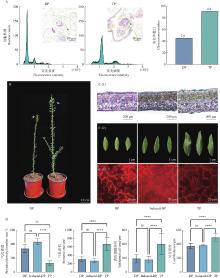
Fig.1
Flow cytometry and physiological index determination in tetraploid and diploid olive plants A. Flow cytometry profiles and chromosome counts of diploid and tetraploid olive, 2n=46, 4n=92. B. Morphology of diploid and tetraploid, with arrows indicating enlarged apical leaves. C. Leaf cross-sections, whole-leaf morphology, and abaxial epidermis micrographs of wild-type diploid (DP), colchicine-treated diploid (Induced-DP), and tetraploid (TP). D. Comparison of stomatal density, stomatal area, epidermal cell area, and leaf thickness among the three ploidy groups. DP: wild-type diploid; Induced-DP: colchicine-treated but non-doubled diploid; TP: tetraploid."
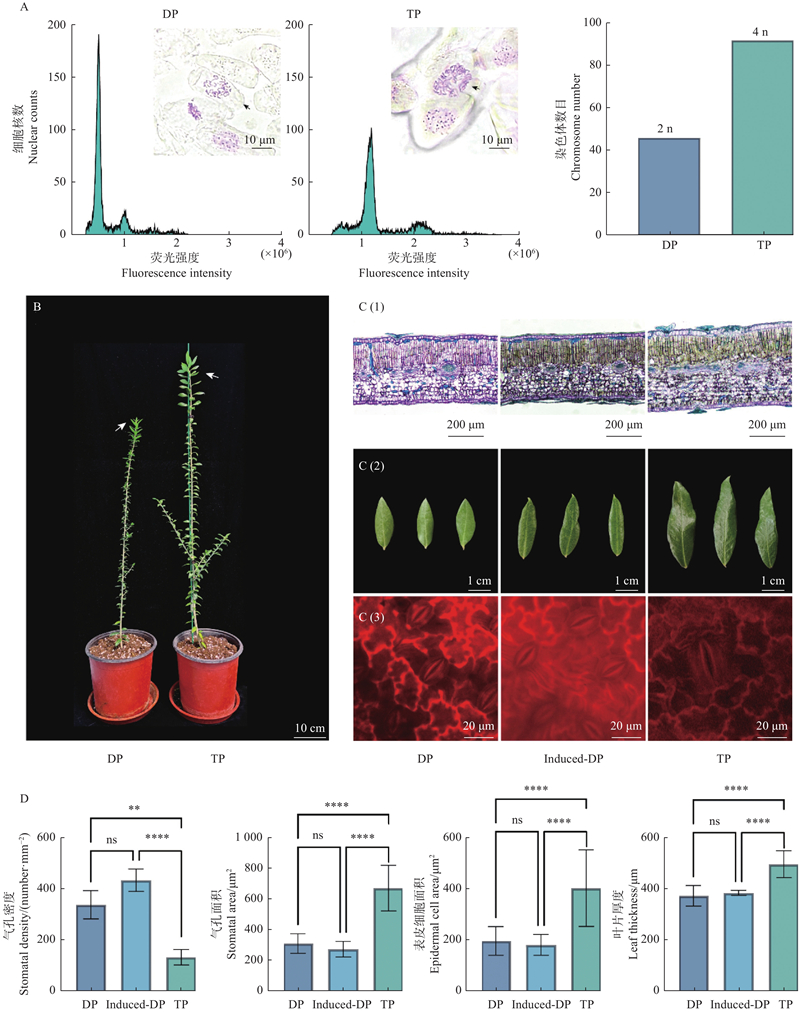
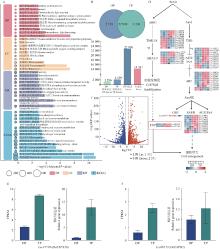
Fig.2
Transcriptome analysis of autotetraploid and diploid olive A. GO and KEGG enrichment analysis results of differentially expressed genes in TP vs. DP. The number in the circle indicates the quantity of entries. BP: Biological Process; CC: Cellular Component; MF: Molecular Function; B. Distribution of specifically expressed genes in diploid and tetraploid plants; C. TP vs. DP volcano plot of DEGs; D. Auxin signal transduction pathway; heatmap shows expression patterns of pathway-related DEGs. Solid lines represent physical binding interactions between enzymes and molecules; solid arrows represent promotion, activation, or positive regulation; dashed arrows represent indirect regulatory effects; T-bar arrows represent inhibition; cross-bar connection symbols represent complex dissociation; +p denotes protein phosphorylation; +u denotes protein ubiquitination; FPKM: Expression levels (FPKM) were log2-transformed and row-scaled (Z-score) for heatmap visualization; Auxin: IAA; ABP1: auxin binding protein 1; TMK1/4: receptor protein kinase TMK1/4; AHA1/2: H+-transporting ATPase 1/2; EXP: expansin, indicated by a red box; Aux1: auxin resistant 1; AUX/IAA: auxin-responsive protein IAA; ARF: auxin response factor; AuxRE: auxin response element; GH3: auxin responsive GH3 gene family; SAUR: SAUR family protein; E. qRT-PCR validation of Lec47749(OeEXPA26); F. qRT-PCR validation of Lec09513 (OeEXPB3) DP: wild-type diploid; TP: tetraploid. Bar plots show raw FPKM values for RNA-seq data, and relative expression levels were calculated using the 2?ΔΔCt method. The two approaches exhibited consistent expression trends; DP-Spe-ex: DP-specific expression; TP-Spe-ex: TP-specific expression; Co-ex: Co-expression; Unex: Unexpressed."
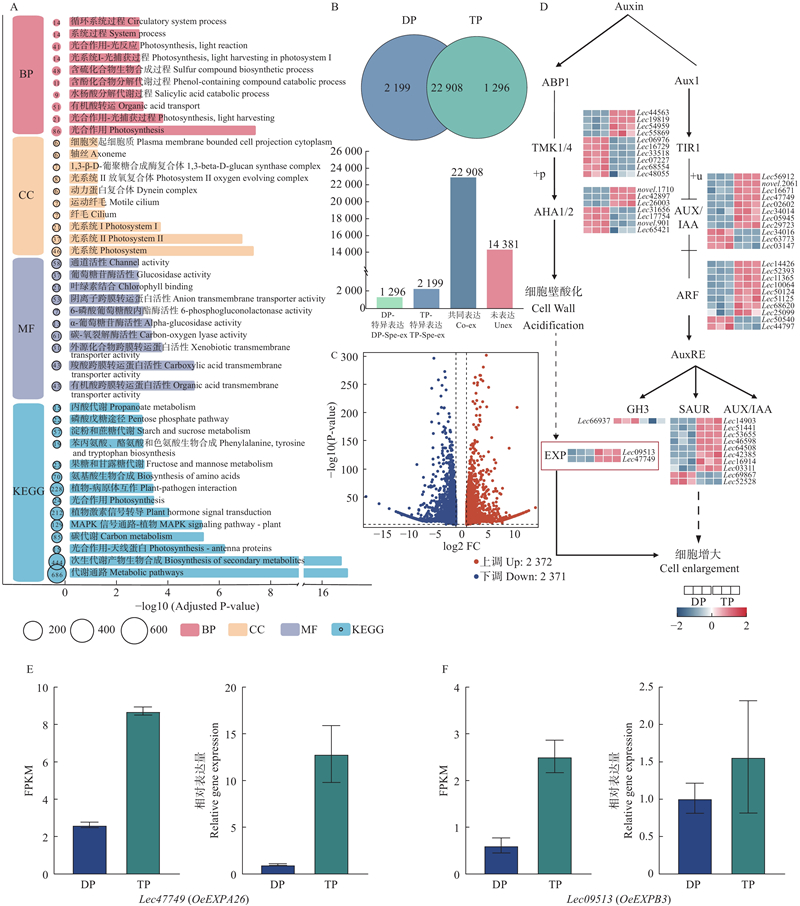
Fig.3
Analysis of physicochemical properties, phylogenetic relationships, and 3D structural modeling of the EXP gene family"
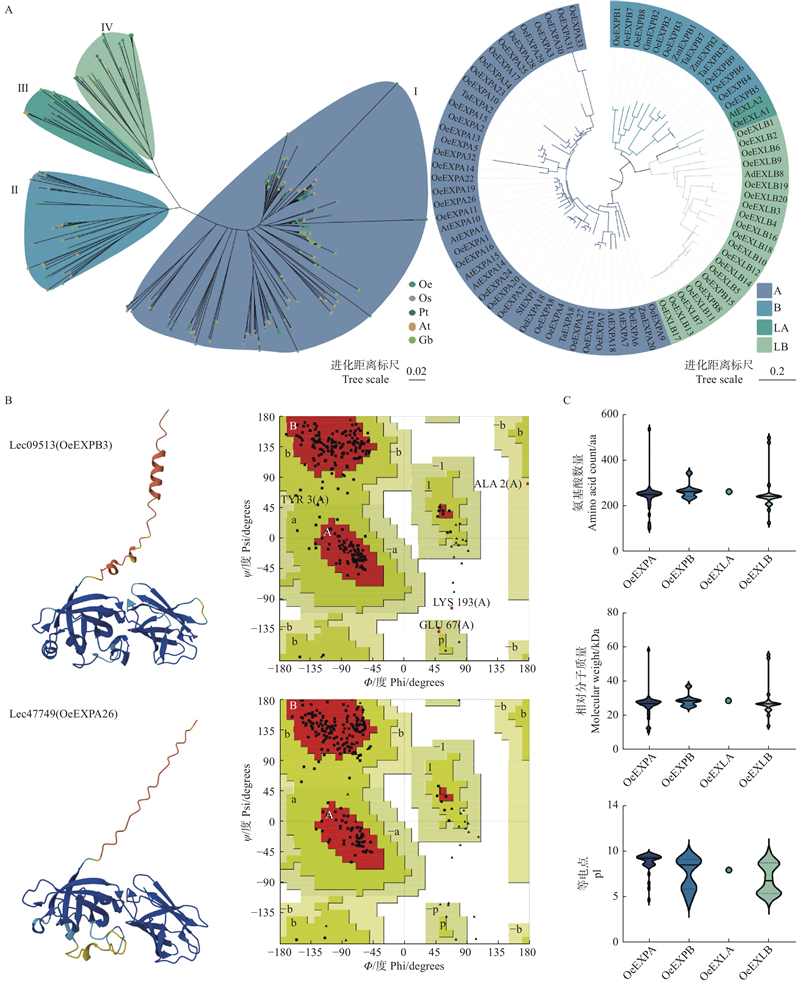
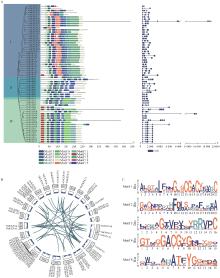
Fig.4
Analysis of conserved motifs, CDS structure, collinearity analysis and chromosomal localization of the OeEXP family"
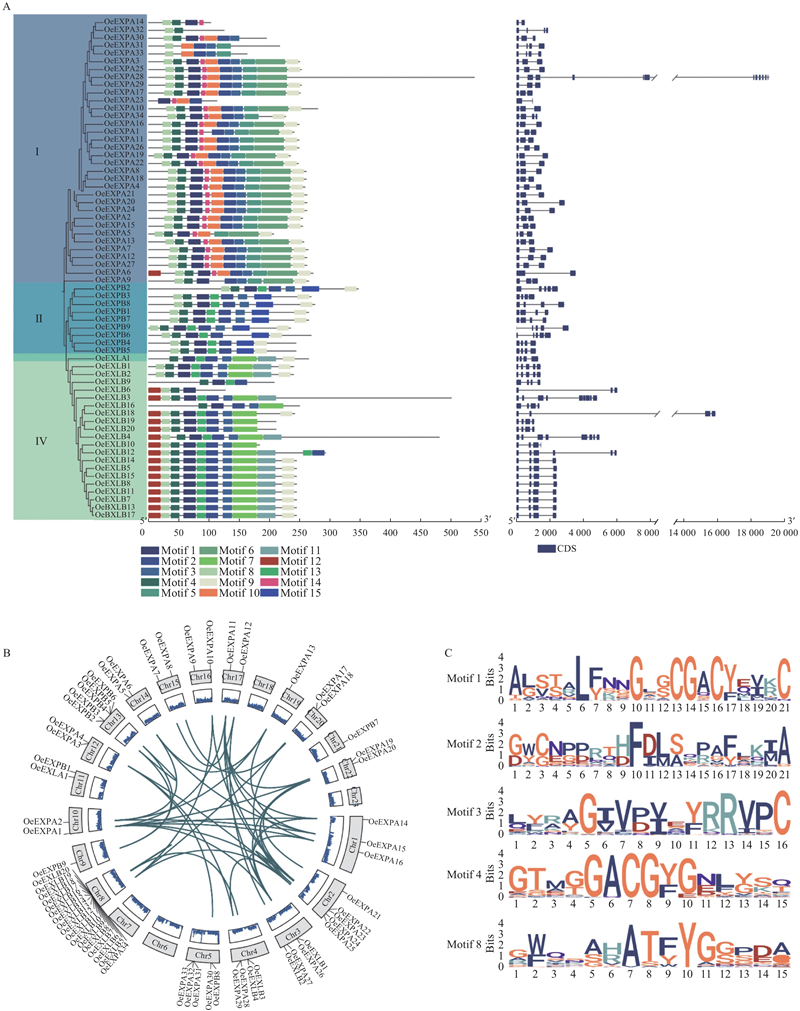
Table 2
Ks and Ka analysis of duplicated gene pairs"
| Seq_1 | Seq_2 | Ka | Ks | Ka/Ks |
| OeEXPA1 | OeEXPA11 | 0.102 | 2.237 | 0.045 |
| OeEXPA25 | OeEXPA17 | 0.116 | 2.274 | 0.051 |
| OeEXPA1 | OeEXPA26 | 0.107 | 1.986 | 0.054 |
| OeEXPA17 | OeEXPA34 | 0.115 | 2.004 | 0.057 |
| OeEXPA25 | OeEXPA34 | 0.143 | 2.386 | 0.060 |
| OeEXPA1 | OeEXPA19 | 0.099 | 1.615 | 0.061 |
| OeEXPA16 | OeEXPA1 | 0.161 | 2.615 | 0.062 |
| OeEXPA16 | OeEXPA26 | 0.148 | 2.001 | 0.074 |
| OeEXPA12 | OeEXPA27 | 0.026 | 0.349 | 0.075 |
| OeEXPA1 | OeEXPA22 | 0.104 | 1.265 | 0.082 |
| OeEXPA22 | OeEXPA19 | 0.031 | 0.374 | 0.082 |
| OeEXPA7 | OeEXPA12 | 0.069 | 0.799 | 0.086 |
| OeEXPA21 | OeEXPA20 | 0.083 | 0.954 | 0.086 |
| OeEXPA19 | OeEXPA26 | 0.070 | 0.801 | 0.087 |
| OeEXPA3 | OeEXPA25 | 0.083 | 0.893 | 0.093 |
| OeEXPA22 | OeEXPA26 | 0.076 | 0.817 | 0.094 |
| OeEXPA11 | OeEXPA26 | 0.033 | 0.330 | 0.101 |
| OeEXPA24 | OeEXPA20 | 0.040 | 0.399 | 0.101 |
| OeEXPA16 | OeEXPA11 | 0.157 | 1.509 | 0.104 |
| OeEXPA8 | OeEXPA18 | 0.042 | 0.394 | 0.106 |
| OeEXPA3 | OeEXPA28 | 0.102 | 0.941 | 0.108 |
| OeEXPA11 | OeEXPA22 | 0.079 | 0.727 | 0.109 |
| OeEXPA15 | OeEXPA13 | 0.097 | 0.828 | 0.118 |
| OeEXPA2 | OeEXPA13 | 0.100 | 0.852 | 0.118 |
| OeEXPA11 | OeEXPA19 | 0.074 | 0.594 | 0.125 |
| OeEXPA25 | OeEXPA28 | 0.050 | 0.381 | 0.130 |
| OeEXPA2 | OeEXPA5 | 0.107 | 0.821 | 0.130 |
| OeEXPA15 | OeEXPA2 | 0.038 | 0.290 | 0.131 |
| OeEXPA15 | OeEXPA5 | 0.100 | 0.675 | 0.148 |
| OeEXPA10 | OeEXPA34 | 0.048 | 0.278 | 0.174 |
| OeEXPA14 | OeEXPA26 | 0.227 | 1.241 | 0.183 |
| OeEXPA5 | OeEXPA13 | 0.040 | 0.200 | 0.200 |
| OeEXPA10 | OeEXPA23 | 0.331 | 1.631 | 0.203 |
| OeEXPA14 | OeEXPA11 | 0.223 | 1.069 | 0.209 |
| OeEXPA14 | OeEXPA1 | 0.119 | 0.496 | 0.240 |
| OeEXPB2 | OeEXPB4 | 0.456 | 1.494 | 0.305 |
| OeEXPA3 | OeEXPA30 | 0.113 | 0.319 | 0.356 |
| OeEXPB2 | OeEXPB9 | 0.484 | 1.121 | 0.432 |
| OeEXPB4 | OeEXPB9 | 0.219 | 0.469 | 0.467 |
| OeEXLB3 | OeEXLB7 | 0.276 | 0.570 | 0.484 |
| OeEXLB16 | OeEXLB17 | 0.302 | 0.625 | 0.484 |
| OeEXLB5 | OeEXLB6 | 0.178 | 0.362 | 0.492 |
| OeEXLB17 | OeEXLB18 | 0.179 | 0.307 | 0.583 |
| OeEXLB11 | OeEXLB12 | 0.071 | 0.110 | 0.642 |
| OeEXLB18 | OeEXLB19 | 0.154 | 0.237 | 0.648 |
| OeEXLB9 | OeEXLB10 | 0.492 | 0.746 | 0.660 |
| OeEXLB13 | OeEXLB14 | 0.045 | 0.046 | 0.968 |
| OeEXLB19 | OeEXLB20 | 0.024 | 0.020 | 1.200 |
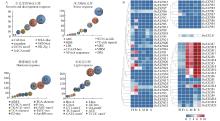
Fig.5
Transcriptional regulation and tissue-specific expression analysis of the OeEXP gene family"
| 欧阳昆唏, 李俊成, 黄 浩. 等. 团花树α扩展蛋白基因的克隆及表达分析. 林业科学, 2013, 49 (9): 62- 71. | |
| Ouyang K X, Li J C, Huang H, et al. Molecular cloning and expression analysis of α-expansin genes in Anthocephalus chinensis. Scientia Silvae Sinicae, 2013, 49 (9): 62- 71. | |
| 田新民, 周香艳, 弓 娜. 流式细胞术在植物学研究中的应用—检测植物核DNA含量和倍性水平. 中国农学通报, 2011, 27 (9): 21- 27. | |
| Tian X M, Zhou X Y, Gong N. Applications of flow cytometry in plant research: analysis of nuclear DNA content and ploidy level in plant cells. Chinese Agricultural Science Bulletin, 2011, 27 (9): 21- 27. | |
| 叶天文, 袁德义, 李艳民, 等. 海南油茶的倍性鉴定. 林业科学, 2021, 57 (7): 61- 69. | |
| Ye T W, Yuan D Y, Li Y M, et al. Ploidy identification of Camellia hainanica. Scientia Silvae Sinicae, 2021, 57 (7): 61- 69. | |
| 占明明, 杨 毅, 程子彰, 等. 基于SRAP标记的油橄榄品种遗传多样性分析. 林业科学, 2015, 51 (1): 157- 164. | |
| Zhan M M, Yang Y, Cheng Z Z, et al. Genetic diversity of olive varieties based on SRAP markers. Scientia Silvae Sinicae, 2015, 51 (1): 157- 164. | |
|
Boron A K, Van Loock B, Suslov D, et al. Over-expression of AtEXLA2 alters etiolated Arabidopsis hypocotyl growth. Annals of Botany, 2015, 115 (1): 67- 80.
doi: 10.1093/aob/mcu221 |
|
|
Brasileiro A C M, Lacorte C, Pereira B M, et al. Ectopic expression of an expansin-like B gene from wild Arachis enhances tolerance to both abiotic and biotic stresses. The Plant Journal, 2021, 107 (6): 1681- 1696.
doi: 10.1111/tpj.15409 |
|
|
Chen C J, Wu Y, Li J W, et al. TBtools-II: a “one for all, all for one” bioinformatics platform for biological big-data mining. Molecular Plant, 2023, 16 (11): 1733- 1742.
doi: 10.1016/j.molp.2023.09.010 |
|
|
Chen Y H, Ren Y Q, Zhang G Q, et al. Overexpression of the wheat expansin gene TaEXPA2 improves oxidative stress tolerance in transgenic Arabidopsis plants. Plant Physiology and Biochemistry, 2018, 124, 190- 198.
doi: 10.1016/j.plaphy.2018.01.020 |
|
|
Comai L. The advantages and disadvantages of being polyploid. Nature Reviews Genetics, 2005, 6 (11): 836- 846.
doi: 10.1038/nrg1711 |
|
|
Corneillie S, De Storme N, Van Acker R, et al. Polyploidy affects plant growth and alters cell wall composition. Plant Physiology, 2019, 179 (1): 74- 87.
doi: 10.1104/pp.18.00967 |
|
|
Cosgrove D J. Plant expansins: diversity and interactions with plant cell walls. Current Opinion in Plant Biology, 2015, 25, 162- 172.
doi: 10.1016/j.pbi.2015.05.014 |
|
|
Cosgrove D J. Plant cell wall loosening by expansins. Annual Review of Cell and Developmental Biology, 2024, 40 (1): 329- 352.
doi: 10.1146/annurev-cellbio-111822-115334 |
|
|
Feng X, Xu Y Q, Peng L N, et al. TaEXPB7-B, a β-expansin gene involved in low-temperature stress and abscisic acid responses, promotes growth and cold resistance in Arabidopsis thaliana. Journal of Plant Physiology, 2019, 240, 153004.
doi: 10.1016/j.jplph.2019.153004 |
|
|
Garcia-Lozano M, Natarajan P, Levi A, et al. Altered chromatin conformation and transcriptional regulation in watermelon following genome doubling. The Plant Journal, 2021, 106 (3): 588- 600.
doi: 10.1111/tpj.15256 |
|
|
Guo F Y, Guo J, El-Kassaby Y A, et al. Genome-wide identification of expansin gene family and their response under hormone exposure in Ginkgo biloba L. International Journal of Molecular Sciences, 2023, 24 (6): 5901.
doi: 10.3390/ijms24065901 |
|
|
Kende H, Bradford K, Brummell D, et al. Nomenclature for members of the expansin superfamily of genes and proteins. Plant Molecular Biology, 2004, 55 (3): 311- 314.
doi: 10.1007/s11103-004-0158-6 |
|
|
Kong Y B, Wang B, Du H, et al. GmEXLB1, a soybean expansin-like B gene, alters root architecture to improve phosphorus acquisition in Arabidopsis. Frontiers in Plant Science, 2019, 10, 808.
doi: 10.3389/fpls.2019.00808 |
|
|
Kumar V, Yadav S, Heymans A, et al. “Shape of cell”-an auxin and cell wall duet. Physiologia Plantarum, 2025, 177 (3): e70294.
doi: 10.1111/ppl.70294 |
|
|
Li X X, Zhao J, Tan Z Y, et al. GmEXPB2, a cell wall β-expansin, affects soybean nodulation through modifying root architecture and promoting nodule formation and development. Plant Physiology, 2015, 169 (4): 2640- 2653.
doi: 10.1104/pp.15.01029 |
|
|
Li Y, Darley C P, Ongaro V, et al. Plant expansins are a complex multigene family with an ancient evolutionary origin. Plant Physiology, 2002, 128 (3): 854- 864.
doi: 10.1104/pp.010658 |
|
|
McQueen-Mason S, Durachko D M, Cosgrove D J. Two endogenous proteins that induce cell wall extension in plants. The Plant Cell, 1992, 4 (11): 1425- 1433.
doi: 10.2307/3869513 |
|
|
Peng L N, Xu Y Q, Wang X, et al. Overexpression of paralogues of the wheat expansin gene TaEXPA8 improves low-temperature tolerance in Arabidopsis. Plant Biology, 2019, 21 (6): 1119- 1131.
doi: 10.1111/plb.13018 |
|
| Sampedro J, Cosgrove D J. The expansin superfamily. Genome Biology, 2005, 6 (12): 242. | |
|
Samalova M, Melnikava A, Elsayad K, et al. Hormone-regulated expansins: expression, localization, and cell wall biomechanics in Arabidopsis root growth. Plant Physiology, 2023, 194 (1): 209- 228.
doi: 10.1093/plphys/kiad228 |
|
|
Shao Y, Feng X H, Nakahara H, et al. Apical-root apoplastic acidification affects cell wall extensibility in wheat under salinity stress. Physiologia Plantarum, 2021, 173 (4): 1850- 1861.
doi: 10.1111/ppl.13527 |
|
|
Shcherban T Y, Shi J, Durachko D M, et al. Molecular cloning and sequence analysis of expansins: a highly conserved, multigene family of proteins that mediate cell wall extension in plants. Proceedings of the National Academy of the United States of America, 1995, 92 (20): 9245- 9249.
doi: 10.1073/pnas.92.20.9245 |
|
|
Soltis P S, Marchant D B, Van de Peer Y, et al. Polyploidy and genome evolution in plants. Current Opinion in Genetics & Development, 2015, 35, 119- 125.
doi: 10.1016/j.gde.2015.11.003 |
|
|
Su G Q, Lin Y F, Wang C F, et al. Expansin SlExp1 and endoglucanase SlCel2 synergistically promote fruit softening and cell wall disassembly in tomato. The Plant Cell, 2024, 36 (3): 709- 726.
doi: 10.1093/plcell/koad291 |
|
|
Sugiyama S I. Polyploidy and cellular mechanisms changing leaf size: comparison of diploid and autotetraploid populations in two species of Lolium. Annals of Botany, 2005, 96 (5): 931- 938.
doi: 10.1093/aob/mci245 |
|
|
Xie J M, Chen Y R, Cai G J, et al. Tree Visualization By One Table (tvBOT): a web application for visualizing, modifying and annotating phylogenetic trees. Nucleic Acids Research, 2023, 51 (W1): W587- W592.
doi: 10.1093/nar/gkad359 |
|
|
Yennawar N H, Li L C, Dudzinski D M, et al. Crystal structure and activities of EXPB1 (Zea m 1), a β-expansin and group-1 pollen allergen from maize. Proceedings of the National Academy of Sciences of the United States of America, 2006, 103 (40): 14664- 14671.
doi: 10.2210/pdb2hcz/pdb |
|
|
Yin Z H, Zhou F W, Chen Y N, et al. Genome-wide analysis of the expansin gene family in Populus and characterization of expression changes in response to phytohormone (abscisic acid) and abiotic (low-temperature) stresses. International Journal of Molecular Sciences, 2023, 24 (9): 7759.
doi: 10.3390/ijms24097759 |
|
|
Zhang B Y, Chang L, Sun W N, et al. Overexpression of an expansin-like gene, GhEXLB2 enhanced drought tolerance in cotton. Plant Physiology and Biochemistry, 2021, 162, 468- 475.
doi: 10.1016/j.plaphy.2021.03.018 |
|
|
Zhang Z L, Chen H H, Peng S Y, et al. Slow and rapid auxin responses in Arabidopsis. Journal of Experimental Botany, 2024, 75 (18): 5471- 5476.
doi: 10.1093/jxb/erae246 |
| [1] | Shan Zhao,Jing Dong,Shuai Zheng,Faju Chen,Wen Liu,Hongwei Liang. Reasons for the Difficulty of Differentiation of Embryogenic Callus in Long-Term Subculture of Catalpa bungei [J]. Scientia Silvae Sinicae, 2025, 61(6): 130-138. |
| [2] | Zhiyang Li,Xiaolin Chen,Lili Li,Shiping Xu,Yuanhao He. Transcriptome Analysis of Camellia olefolia Root and the Endophytic Bacteria Bacillus Subtilis at the Early Stage of Their Interaction [J]. Scientia Silvae Sinicae, 2022, 58(3): 48-58. |
| [3] | Shunfu Li,Huimin Wang,Lisha Fang,Zhen Liu. Gene Expression Related to Terminal Bud Death Induced by Short-Day in Paulownia fortunei [J]. Scientia Silvae Sinicae, 2022, 58(2): 148-158. |
| [4] | Zijing Zhou,Fuhua Fan,Xianwen Shang,Huijuan Qin,Conghui Wang,Guijie Ding,Jianhui Tan. Effects of Exogenous IAA on Stem Secondary Growth of Pinus massoniana Seedlings [J]. Scientia Silvae Sinicae, 2021, 57(9): 42-51. |
| [5] | Xingzhou Chen,Guoying Zhou,Xinggang Chen,Lingyu Jiang,Anhua Bao,Jun Liu. Screening of Effectors of Colletotrichum fructicola in Camellia oleifera [J]. Scientia Silvae Sinicae, 2021, 57(9): 110-120. |
| [6] | Xin Peng,Hantang Wang,Chunhui Guo,Zhende Yang,Jing Zhou,Xue Wang,Zhirou Ding. EST-SSR Development and Cryptic Species Identification of the Invasive Gall-Causing Pest Leptocybe invasa (Hymenopetra: Eulophidae) [J]. Scientia Silvae Sinicae, 2021, 57(9): 140-151. |
| [7] | Jinfeng Cai,Xiaoming Yang,Wanwen Yu,Guibin Wang,Fuliang Cao. Development of SSR Molecular Markers Based on Transcriptome Sequencing of Melia azedarach [J]. Scientia Silvae Sinicae, 2021, 57(6): 85-92. |
| [8] | Pengfei Xu,Yanhong Yang,Yuting Zhang,Yun Chen,Dingqin Tang. Induction and Preliminary Identification of Tetraploid in Phyllostachys edulis [J]. Scientia Silvae Sinicae, 2020, 56(8): 55-62. |
| [9] | Peihuang Zhu,Yu Chen,Lingzhi Zhu,Rong Li,Kongshu Ji. Codon Usage Bias and Its Influencing Factors in Pinus massoniana Transcriptome [J]. Scientia Silvae Sinicae, 2020, 56(4): 74-81. |
| [10] | Xiaoyu Lu,Zhu Chen,Fei Tang,Songling Fu,Jie Ren. Combined Transcriptomic and Metabolomic Analysis Reveals Mechanism of Anthocyanin Changes in Red Maple(Acer rubrum) Leaves [J]. Scientia Silvae Sinicae, 2020, 56(1): 38-53. |
| [11] | Zhao Qingquan, Chi Yujie, Zhang Jian, Feng Lianrong. Transcriptome Construction and Related Gene Expression Analysis of Lenzites gibbosa in Woody Environment [J]. Scientia Silvae Sinicae, 2019, 55(8): 95-105. |
| [12] | Han Xiaohong, Lu Ciding, Hua Yin, Lin Haoyu, Shi Yufei, Wu Songqing, Zhang Feiping, Liang Guanghong. Phylogenetic Analysis of Transcriptome and Three Detoxification Enzyme Families Related Genes in Anoplophora chinensis (Coleoptera: Cerambycidae) [J]. Scientia Silvae Sinicae, 2019, 55(5): 104-113. |
| [13] | Xu Xiaodan, Shao Weizhu, Zheng Wei. Ploidy Study on Polyploidy Cultivars of Camellia reticulata [J]. Scientia Silvae Sinicae, 2018, 54(9): 44-48. |
| [14] | Zhang Enliang, Ma Lingling, Yang Rutong, Li Linfang, Wang Qing, Li Ya, Wang Peng. Transcriptome Profiling of IBA-Induced Adventitious Root Formation in Softwood Cuttings of Catalpa bungei ‘Yu-1’ [J]. Scientia Silvae Sinicae, 2018, 54(5): 48-61. |
| [15] | Mao Weibing, Chen Faju, Wang Changlan, Liang Hongwei. Transcriptome Sequencing and Analysis of Male Sterile Flower Buds in Catalpa bungei [J]. Scientia Silvae Sinicae, 2017, 53(6): 141-150. |
| Viewed | ||||||
|
Full text |
|
|||||
|
Abstract |
|
|||||
