
林业科学 ›› 2025, Vol. 61 ›› Issue (11): 160-180.doi: 10.11707/j.1001-7488.LYKX20240546
孔凡斌1,2,陆雨1,徐彩瑶1,*( )
)
收稿日期:2024-09-23
修回日期:2024-11-21
出版日期:2025-11-25
发布日期:2025-12-11
通讯作者:
徐彩瑶
E-mail:caiyao@126.com
基金资助:
Fanbin Kong1,2,Yu Lu1,Caiyao Xu1,*()
Received:2024-09-23
Revised:2024-11-21
Online:2025-11-25
Published:2025-12-11
Contact:
Caiyao Xu
E-mail:caiyao@126.com
摘要:
目的: 阐明数字新质生产力助力中国式现代化产业体系建设的时代意义,厘清数字新质生产力促进山区林业产业高质量发展的作用机制,丰富和发展林业新质生产力理论和政策研究内涵,为完善林业高质量发展政策体系提供支撑。方法: 基于2011—2022年浙江省山区26县的面板数据,采用中介效应模型和面板门槛效应模型等方法,探讨数字新质生产力对林业产业高质量发展的影响效应及其作用机制。结果: 1) 基准回归分析结果表明,数字新质生产力能够显著提升山区林业产业高质量发展水平。2) 作用机制分析结果表明,数字新质生产力可通过生产要素优化配置、林业人力资本积累和技术创新等路径提升林业产业高质量发展水平。3) 异质性分析结果表明,数字新质生产力的3个维度中,仅数字劳动者和数字劳动对象对林业产业高质量发展具有显著提升作用,数字劳动资料无显著提升作用;数字新质生产力仅对林业产业结构优化和林业产业结构高级化具有显著提升作用;数字新质生产力可同时提升跨越发展县和生态发展县的林业产业高质量发展水平,相较于生态发展县,跨越发展县的提升效应更好。4) 门槛效应分析结果表明,只有当政府保障水平超越门槛值后,才能激发数字新质生产力对林业产业高质量发展的积极作用;当信息化水平越过门槛值时,数字新质生产力对林业产业高质量发展的正向提升作用逐渐减弱。结论: 浙江省山区26县数字新质生产力对林业产业高质量发展具有显著提升作用,生产要素优化配置、林业人力资本积累和技术创新发挥显著中介作用。为充分发挥数字新质生产力对林业产业高质量发展的促进作用,要重点提升对数字化基础设施和专业人才的投入,根据区域差异实施差异化政策,增强生态发展县的数字资源利用效率,确保信息化进程与产业需求相协调;要着力提升政府保障水平,进一步激发数字新质生产力潜力,带动林业产业结构优化和升级,推动形成数字新质生产力赋能林业高质量发展的示范样板。
中图分类号:
孔凡斌,陆雨,徐彩瑶. 数字新质生产力促进山区林业产业高质量发展的作用机制[J]. 林业科学, 2025, 61(11): 160-180.
Fanbin Kong,Yu Lu,Caiyao Xu. Mechanisms of Digital New Quality Productivity in Promoting High-Quality Development of Forestry Industry in Mountainous Areas[J]. Scientia Silvae Sinicae, 2025, 61(11): 160-180.
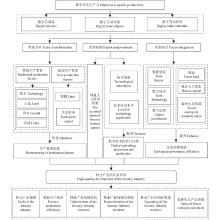
图1
数字新质生产力赋能林业产业高质量发展的理论机制"
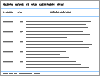
表1
林业产业高质量发展水平评价指标体系"
| 指标层Indicator layer | 一级指标Primary Indicators | 指标内涵Indicator connotations | 权重Weight |
| 林业产业高质量发展水平 High-quality development level of the forestry industry | 林业产业规模 Scale of the forestry industry | 林业产业增加值的对数值 Logarithm of the value added by the forestry industry | 0.085 7 |
| 林业生产效率 Production efficiency of the forestry industry | 林业总产值占林业从业人员比重的对数值 Logarithm of the proportion of total forestry output value to the number of forestry workers | 0.048 7 | |
| 林业产业结构优化 Optimization of the forestry industry structure | 林业第二、三产业产值之和占林业产业总产值的比重Proportion of the combined output value of the secondary and tertiary forestry industries to the total output value of the forestry industry | 0.077 7 | |
| 林业产业结构合理化 Rationalization of the forestry industry structure | 泰尔指数 Theil index | 0.078 8 | |
| 林业产业结构高级化 Upgrading of the forestry industry structure | 林业一产×1+林业二产×2+林业三产×3/林业总产值 (Forestry primary industry ×1 + forestry secondary industry × 2 + forestry tertiary industry × 3) / total forestry output value | 0.357 4 | |
| 森林生态产品价值 Value of forest ecological products | 物质产品价值+调节服务价值+文化服务价值 Value of material products + value of regulating services + value of cultural services | 0.351 7 |
表2
数字新质生产力发展水平评价指标体系"
| 指标层Indicator layer | 一级指标Primary Indicators | 二级指标Secondary Indicators | 指标内涵Indicator connotations | 权重Weight |
| 数字新质生产力发展水平 Development level of digital new quality productivity | 数字劳动者 Digital laborers | 劳动者生产率 Productivity of labor | 电信业务收入占总人口比重 Proportion of telecommunication business revenue to the total population | 0.105 7 |
| 劳动者就业率 Employment rate of labor | 信息技术服务就业人数占总人数之比 Proportion of employment in information technology services to the total employment | 0.036 7 | ||
| 劳动者技能 Skills of labor | 每万人高校学生数量 The number of college students per 10 000 people | 0.069 2 | ||
| 数字劳动对象 Digital labor objects | 新质产业 Emerging industries | 三产占比 Proportion of the tertiary industry | 0.166 2 | |
| 生态环境 Ecological environment | 森林覆盖率 Forest coverage rate | 0.022 8 | ||
| 每百人农村用电量 Rural electricity consumption per 100 people | 0.006 7 | |||
| 数字劳动资料 Digital labor materials | 数字基础设施 Digital infrastructure | 农村宽带普及率 The rural broadband penetration rate | 0.116 5 | |
| 科技创新 Technological innovation | 人均专利授权数量 Patents granted per capita | 0.323 3 | ||
| 数字金融 Digital finance | 每万人金融机构数量 The number of financial institutions per 10 000 people | 0.150 3 | ||
| 能源消耗 Energy consumption | 能源消耗占GDP比重 Proportion of energy consumption to GDP | 0.002 6 |
表3
变量的描述性统计"
| 变量类型 Variable types | 变量名称 Variable name | 观测数 Observations | 均值 Mean | 标准差 Standard deviation | 最小值 Minimum | 最大值 Maximum |
| 被解释变量 Dependent variable | 林业产业高质量发展水平 High-quality development level of the forestry industry | 286 | 0.501 0 | 0.132 4 | 0.264 3 | 0.848 8 |
| 核心解释变量 Independent variable | 数字新质生产力发展水平 Development level of digital new quality productivity | 286 | 0.262 6 | 0.091 5 | 0.078 0 | 0.697 6 |
| 控制变量 Control variables | 经济发展水平 Level of economic development | 286 | 9.863 0 | 1.605 6 | 3.965 2 | 13.700 7 |
| 财政支持力度 Degree of fiscal support | 286 | 0.260 9 | 0.124 8 | 0.016 2 | 0.713 3 | |
| 对外开放水平 Level of regional openness | 286 | 0.189 4 | 0.154 6 | 0.000 1 | 0.911 0 | |
| 城镇化水平 Level of urbanization | 286 | 0.276 6 | 0.131 4 | 0.076 7 | 0.602 2 | |
| 基础设施建设 Infrastructure construction | 286 | 0.919 2 | 0.234 7 | 0.259 8 | 1.704 6 | |
| 机制变量 Mediating variables | 生产要素优化配置 Production factor optimization | 286 | 1.369 5 | 1.061 9 | 0.232 2 | 10.105 1 |
| 林业人力资本积累 Forestry human capital accumulation | 286 | 0.117 6 | 0.027 6 | 0.063 9 | 0.224 7 | |
| 技术创新 Technological innovation | 286 | 6.440 0 | 0.925 4 | 4.007 3 | 9.137 4 | |
| 技术应用水平 Technology application lever | 286 | 12.061 6 | 0.661 7 | 10.962 5 | 14.004 6 | |
| 生态治理效能 Ecological governance effectiveness | 286 | 0.754 9 | 0.409 6 | 0.063 7 | 2.419 6 |
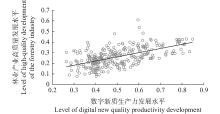
图2
数字新质生产力发展水平与林业产业高质量发展水平的拟合关系"
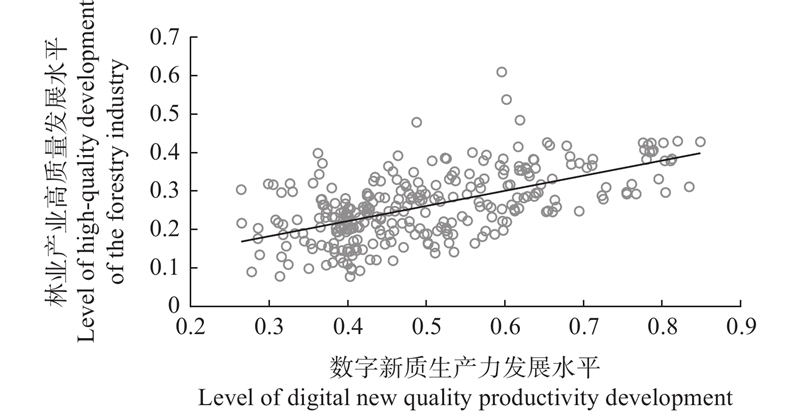
表4
基准回归结果①"
| 变量Variables | 模型(1) Model (1) | 模型(2) Model (2) |
| 数字新质生产力发展水平 Development level of digital new quality productivity | 0.732 6*** (0.072 6) | 0.261 6*** (0.060 7) |
| 经济发展水平 Level of economic development | 0.007 9*** (0.002 6) | |
| 政府财政支持力度 Degree of government fiscal support | 0.370 9*** (0.078 8) | |
| 地区对外开放水平 Level of regional openness | ?0.012 3 (0.071 6) | |
| 城镇化水平 Level of urbanization | 0.376 8*** (0.055 8) | |
| 基础设施建设 Infrastructure construction | 0.235 1*** (0.027 3) | |
| 常数项Constant | 0.308 6*** (0.019 9) | ?0.060 2 (0.042 5) |
| 个体/年份固定效应 Individual/ year fixed effects | 是 Yes | 是 Yes |
| 样本量Sample | 286 | 286 |
| R2 | 0.281 9 | 0.634 7 |
表5
稳健性检验结果①"
| 变量 Variables | 更换被解释变量测度方法 Replace the measurement method of the dependent variable | 增加控制变量 Add control variables | 数据缩尾 Data trimming | 更换估计方法 Change estimation method |
| 数字新质生产力发展水平 Development level of digital new quality productivity | 0.103 9*** | 0.263 2*** | 0.261 7*** | 0.399 0*** |
| (0.038 2) | (0.060 7) | (0.060 7) | (0.063 9) | |
| 经济发展水平 Level of economic development | 0.005 9*** | 0.007 5*** | 0.007 8*** | 0.005 3* |
| (0.001 6) | (0.002 6) | (0.002 6) | (0.002 9) | |
| 政府财政支持力度 Degree of government fiscal support | 0.119 0** | 0.381 4*** | 0.370 6*** | 0.285 9*** |
| (0.049 6) | (0.079 6) | (0.078 8) | ( | |
| 地区对外开放水平 Level of regional openness | ?0.085 6* | ?0.010 6 | ?0.012 1 | ?0.054 2 |
| (0.045 1) | (0.071 7) | (0.071 6) | (0.053 3) | |
| 城镇化水平 Level of urbanization | 0.220 2*** | 0.378 8*** | 0.376 2*** | 0.362 4*** |
| (0.035 1) | (0.055 9) | (0.055 8) | (0.052 3) | |
| 基础设施建设 Infrastructure construction | 0.130 9*** | 0.236 8*** | 0.234 2*** | 0.156 9*** |
| (0.017 2) | (0.027 4) | (0.027 3) | (0.027 0) | |
| 环境保护支出 Environmental protection expenditure | 0.017 7 | |||
| (0.018 4) | ||||
| 常数项 Constant | 0.034 8 | ?0.275 5 | ?0.058 9 | 0.034 9 |
| (0.026 8) | (0.227 3) | (0.042 5) | (0.045 5) | |
| 个体/时间固定效应 Individual/ time fixed effects | 是 Yes | 是 Yes | 是 Yes | 是 Yes |
| 样本量Sample | 286 | 286 | 286 | 286 |
| R2 | 0.520 5 | 0.636 0 | 0.633 8 | 0.617 9 |
表6
内生性检验结果①"
| 变量 Variables | 解释变量滞后一期 Lagged independent variable by one period | 工具变量法Instrumental variable method | |
| 第一阶段First stage | 第二阶段Second stage | ||
| IV | 0.001 4*** (0.000 3) | ||
| (L.)数字新质生产力 (L.)Development level of digital new quality productivity | 0.208 4*** (0.060 5) | 1.910 0** (0.347 4) | |
| 控制变量 Control variables | 已控制 Controlled | 已控制 Controlled | 已控制 Controlled |
| 个体/时间固定效应 Individual/time fixed effects | 是 Yes | 是 Yes | 是 Yes |
| Kleibergen-Paap rk LM | 6.003 1**[0.014 3] | ||
| Cragg-Donald Wald F | 28.210 4[0.000 0] | ||
| Kleibergen-Paap Wald rk F | 23.117 0***{16.38} | ||
| Adj-R2 /R2 | 0.600 3 | 0.922 0 | |
表7
作用机制检验回归结果①"
| 变量 Variables | 生产要素优化配置 Production factor optimization | 林业人力资本积累 The forestry human capital accumulation | 技术应用水平 Technology application level | 技术创新 Technological innovation | 生态治理效能 Ecological governance effectiveness |
| (1) | (2) | (3) | (4) | (5) | |
| 数字新质生产力发展水平 Development level of digital new quality productivity | 1.953 8*** (0.560 3) | 0.026 6** (0.011 2) | ?0.093 0 (0.207 3) | 3.474 5*** (0.735 6) | ?0.018 4 (0.189 1) |
| 常数项 Constant | 1.580 4*** (0.392 7) | 0.077 9*** ( | 12.164 4*** (0.145 3) | 7.260 9*** (0.515 6) | 0.965 9 (0.132 6) |
| 控制变量 Control variables | 已控制 | 已控制 | 已控制 | 已控制 | 已控制 |
| Controlled | Controlled | Controlled | Controlled | Controlled | |
| 个体/时间固定效应 Individual/time fixed effects | 是 Yes | 是 Yes | 是 Yes | 是 Yes | 是 Yes |
| 样本量Sample | 286 | 286 | 286 | 286 | 286 |
| R2 | 0.551 7 | 0.235 7 | 0.092 6 | 0.095 2 | 0.178 7 |
表8
数字新质生产力不同维度异质性回归结果①"
| 变量Variables | 模型(1)Model (1) | 模型(2)Model (2) | 模型(3)Model (3) |
| 数字劳动者 Digital laborers | 0.081 9* | ||
| (0.049 0) | |||
| 数字劳动对象 Digital labor objects | 0.565 3*** | ||
| (0.022 6) | |||
| 数字劳动资料 Digital labor materials | 0.011 2 | ||
| (0.028 7) | |||
| 经济发展水平 Level of economic development | 0.006 0*** | 0.006 7*** | |
| (0.002 0) | (0.001 0) | (0.001 9) | |
| 政府财政支持力度 Degree of government fiscal support | 0.315 7*** | 0.108 9*** | 0.330 0*** |
| (0.058 3) | (0.032 3) | (0.057 9) | |
| 地区对外开放水平 Level of regional openness | ?0.068 4 | ?0.039 0 | ?0.054 2 |
| (0.053 7) | (0.028 6) | (0.053 3) | |
| 城镇化水平 Level of urbanization | 0.253 6*** | 0.014 5 | 0.277 5*** |
| (0.042 7) | (0.024 0) | (0.040 3) | |
| 基础设施建设 Infrastructure construction | 0.163 9*** | 0.022 9* | 0.174 3*** |
| (0.020 8) | (0.012 3) | (0.019 9) | |
| 常数项Constant | ?0.037 3 | 0.015 8 | ?0.043 4 |
| (0.031 6) | (0.017 1) | (0.031 8) | |
| 个体/时间固定效应 Individual/time fixed effects | 是 Yes | 是 Yes | 是 Yes |
| 样本量Sample | 286 | 286 | 286 |
| R2 | 0.583 9 | 0.878 9 | 0.579 5 |
表9
林业产业高质量发展维度异质性回归结果①"
| 变量 Variables | 林业产业规模 Scale of the forestry industry | 林业产业生产效率 Forestry production efficiency | 林业产业 结构优化 Optimization of the forestry industry structure | 林业产业 合理化 Rationalization of the forestry industry structure | 林业产业 高级化 Upgrading of the forestry industry structure | 森林生态产品价值 Value of forest ecological products |
| (1) | (2) | (3) | (4) | (5) | (6) | |
| 数字新质生产力发展水平 Development level of digital new quality productivity | 0.045 6 (0.197 6) | 0.182 2 (0.408 7) | 0.055 9** (0.023 5) | 0.008 4 (0.036 8) | 0.371 3*** (0.079 1) | ?0.018 4 (0.189 1) |
| 经济发展水平 | 0.022 0*** (0.008 5) | ( | 0.005 1*** (0.001 0) | 0.001 9 (0.001 6) | 0.007 7** (0.003 4) | ?0.045 2*** (0.008 1) |
| Level of economic development | ||||||
| 政府财政支持力度 | 0.820 1*** (0.256 8) | ( | 0.078 2** (0.030 6) | 0.116 2** (0.047 8) | 0.413 3*** (0.102 7) | ?0.430 3 (0.245 8) |
| Degree of government fiscal support | ||||||
| 地区对外开放水平 | ?0.577 4** (0.233 4) | ( | ?0.010 0 (0.027 8) | 0.113 2*** (0.043 5) | ?0.045 0 (0.093 4) | 0.369 4 (0.223 4) |
| Level of regional openness | ||||||
| 城镇化水平 | ?0.089 0 (0.181 9) | ? ( | 0.085 1*** (0.021 6) | 0.159 7*** (0.033 9) | 0.481 4*** (0.072 8) | 0.124 4 (0.174 1) |
| Level of urbanization | ||||||
| 基础设施建设 | 0.311 9*** (0.089 0) | ( | 0.066 8*** (0.010 6) | ?0.055 2*** (0.016 6) | 0.302 7*** (0.035 6) | 0.269 5 (0.085 2) |
| Infrastructure construction | ||||||
| 常数项Constant | 0.795 6*** (0.138 5) | ( | 0.612 1*** (0.016 5) | 0.838 2*** (0.025 8) | 1.343 1*** (0.055 4) | 0.965 9 (0.132 6) |
| 个体/时间固定效应 Individual/time fixed effects | 是 Yes | 是 Yes | 是 Yes | 是 Yes | 是 Yes | 是 Yes |
| 样本量Sample | 286 | 286 | 286 | 286 | 286 | 286 |
| R2 | 0.123 9 | 0.279 0 | 0.412 8 | 0.247 2 | 0.623 1 | 0.178 7 |
表10
区域异质性回归结果①"
| 变量 Variables | 跨越发展县 Spanning development counties | 生态发展县 Ecological development counties |
| 数字新质生产力发展水平 Development level of digital new quality productivity | 0.179 5*** | 0.160 5*** |
| (0.066 4) | (0.060 9) | |
| 经济发展水平 Level of economic development | 0.004 2 | 0.008 5*** |
| (0.002 5) | (0.002 8) | |
| 政府财政支持力度 Degree of government fiscal support | 0.274 7*** | 0.387 2*** |
| (0.077 1) | (0.090 8) | |
| 地区对外开放水平 Level of regional openness | ?0.065 7 | ?0.057 3 |
| (0.071 0) | (0.080 3) | |
| 城镇化水平 Level of urbanization | 0.260 5*** | 0.156 2** |
| (0.050 6) | (0.070 0) | |
| 基础设施建设 Infrastructure construction | 0.127 2*** | 0.249 4*** |
| (0.022 6) | (0.040 7) | |
| 常数项Constant | ?0.016 4 | ?0.123 5** |
| (0.039 9) | (0.054 0) | |
| 个体/时间固定效应 Individual/time fixed effects | 是 Yes | 是 Yes |
| 样本量Sample | 165 | 121 |
| R2 | 0.604 9 | 0.627 0 |
表11
门槛效应检验结果"
| 门槛变量 Threshold variables | 检验类型 Types | F | P | 临界值Critical value | 门槛值 Threshold value | 95%置信区间 95% Confidence interval | ||
| 10% | 5% | 1% | ||||||
| 经济发展水平 Level of economic development | 单一门槛 Single threshold | 21.78 | 0.076 7 | 19.882 4 | 22.783 5 | 27.112 6 | 9.780 4 | [9.570 6, 9.781 2] |
| 双重门槛 Double threshold | 8.99 | 0.260 0 | 12.903 4 | 15.055 6 | 21.329 9 | 9.780 4 | [9.527 2, 9.781 2] | |
| 政府保障水平 Level of government support | 单一门槛 Single threshold | 44.06 | 0.000 0 | 19.717 1 | 23.699 0 | 34.503 2 | 3.728 9 | [3.714 0, 3.739 9] |
| 双重门槛 Double threshold | 16.08 | 0.113 3 | 16.217 3 | 18.061 1 | 24.505 7 | 3.728 9 | [3.719 1, 3.739 9] | |
| 信息化水平 Level of informatization | 单一门槛 Single threshold | 29.01 | 0.000 0 | 9.008 6 | 10.762 9 | 15.113 2 | 4.228 6 | [4.168 2, 4.230 0] |
| 双重门槛 Double threshold | 14.68 | 0.000 0 | 7.123 2 | 9.119 9 | 11.362 9 | 4.305 5 | [4.210 7, 4.309 2] | |
| 三重门槛 Triple threshold | 2.04 | 0.963 3 | 12.646 2 | 14.135 7 | 22.264 3 | 3.333 5 | [3.056 6, 3.345 7] | |
表12
门槛效应模型的回归结果①"
| 变量Variables | 模型(1) Model (1) | 模型(2) Model (2) | 模型(3) Model (3) |
| 门槛变量 Threshold variable (Th) | Th1=经济发 展水平 Th1=Level of economic development | Th2=政府保障水平 Th2=Government guarantee | Th3=信息化水平 Th3= Level of informatization |
| 控制变量 Control variables | 已控制 Controlled | 已控制 Controlled | 已控制 Controlled |
| Th1≤9.780 4 | ?0.043 7 | ||
| (0.089 8) | |||
| Th1> | 0.314 2*** | ||
| (0.060 4) | |||
| Th2≤ | 0.125 0* | ||
| (0.060 8) | |||
| Th2> | 0.362 6*** | ||
| (0.041 6) | |||
| Th3≤ | 0.960 1*** | ||
| (0.126 0) | |||
| 0.772 6*** | |||
| (0.105 9) | |||
| Th3> | 0.594 6*** | ||
| (0.078 0) | |||
| 常数项Constant | 0.164 1 | 0.016 4 | ?0.071 2* |
| (0.041 6) | (0.041 6) | (0.039 8) | |
| 样本量Sample | 286 | 286 | 286 |
| R2 | 0.661 5 | 0.682 9 | 0.683 3 |
| F | 70.64 | 77.85 | 67.98 |
| 曹 晔. 数字新质生产力对产业链韧性的影响研究. 统计与决策, 2024, 40 (10): 23- 27. | |
| Cao Y. Research on the impact of digital new quality productivity on the resilience of industrial chains. Statistics & Decision, 2024, 40 (10): 23- 27. | |
|
陈晓红, 李杨扬, 宋丽洁, 等. 数字经济理论体系与研究展望. 管理世界, 2022, 38 (2): 208- 224, 13−16.
doi: 10.3969/j.issn.1002-5502.2022.02.014 |
|
|
Chen X H, Li Y Y, Song L J, et al. Theoretical framework and research prospect of digital economy. Journal of Management World, 2022, 38 (2): 208- 224, 13−16.
doi: 10.3969/j.issn.1002-5502.2022.02.014 |
|
| 崔 云. 数字技术促进新质生产力发展探析. 世界社会主义研究, 2023, 8 (12): 97- 109, 120. | |
| Cui Y. Studies on the promoting the development of new productive forces through digital technologies. World Socialism Studies, 2023, 8 (12): 97- 109, 120. | |
| 冯永琦, 林凰锋. 数据要素赋能新质生产力: 理论逻辑与实践路径. 经济学家, 2024 (5): 15- 24. | |
| Feng Y Q, Lin H F. Data elements enabling new quality productivity: theoretical logic and practical approach. Economist, 2024 (5): 15- 24. | |
| 干春晖, 郑若谷, 余典范. 中国产业结构变迁对经济增长和波动的影响. 经济研究, 2011, 46 (5): 4- 16,31. | |
| Gan C H, Zheng R G, Yu D F. An empirical study on the effects of industrial structure on economic growth and fluctuations in China. Economic Research Journal, 2011, 46 (5): 4- 16,31. | |
| 高丹丹. 2021. 中国林业高质量发展时空效应与耦合协调研究. 哈尔滨: 东北林业大学. | |
| Gao D D. 2021. Research on the space-time effect and coupling coordination of China’s high-quality development of forestry. Harbin: Northeast Forestry University. [in Chinese] | |
| 高 原, 马九杰. 农业新质生产力: 一个政治经济学的视角. 农业经济问题, 2024, 45 (4): 81- 94. | |
| Gao Y, Ma J J. New quality agricultural productivity: a political economy perspective. Issues in Agricultural Economy, 2024, 45 (4): 81- 94. | |
| 郭家堂, 骆品亮. 2016. 互联网对中国全要素生产率有促进作用吗? 管理世界, 32(10): 34−49. | |
| Guo J T, Luo P L. 2016. Does the internet promote total factor productivity in China? Management World, 32(10): 34−49. [in Chinese] | |
| 贺子欣, 惠 宁, 付文宇. 数字经济对要素市场扭曲影响的实证检验. 统计与决策, 2023, 39 (20): 5- 10. | |
| He Z X, Hui N, Fu W Y. Empirical test of the impact of digital economy on factor market distortion. Statistics & Decision, 2023, 39 (20): 5- 10. | |
| 黄安胜, 郑逸芳, 王强强, 等. 生产要素、区域经济增长差异性和收敛性. 经济问题, 2014 (11): 112- 117. | |
| Huang A S, Zheng Y F, Wang Q Q, et al. A study on production factors, disparity and convergence of regional economic growth. On Economic Problems, 2014 (11): 112- 117. | |
|
江 艇. 因果推断经验研究中的中介效应与调节效应. 中国工业经济, 2022 (5): 100- 120.
doi: 10.3969/j.issn.1006-480X.2022.05.007 |
|
|
Jiang T. Mediating effects and moderating effects in causal inference. China Industrial Economics, 2022 (5): 100- 120.
doi: 10.3969/j.issn.1006-480X.2022.05.007 |
|
| 孔凡斌, 程文杰, 徐彩瑶. 数字经济发展能否提高森林生态产品价值转化效率: 基于浙江省丽水市的实证分析. 中国农村经济, 2023 (5): 163- 184. | |
| Kong F B, Cheng W J, Xu C Y. Does the development of digital economy improve the value transformation efficiency of forest ecological products: an empirical analysis in Lishui, Zhejiang Province. Chinese Rural Economy, 2023 (5): 163- 184. | |
| 孔凡斌, 王 苓, 徐彩瑶, 等. 中国生态环境治理体系和治理能力现代化: 理论解析、实践评价与研究展望. 管理学刊, 2022, 35 (5): 50- 64. | |
| Kong F B, Wang L, Xu C Y, et al. Modernization of China’s ecological environment governance system and governance capacity: theoretical analysis, practical evaluation and research prospect. Journal of Management, 2022, 35 (5): 50- 64. | |
|
孔凡斌, 王 宁, 徐彩瑶. 山区林业产业发展对城乡收入差距的影响机制: 基于就业与收入中介效应的视角. 自然资源学报, 2024, 39 (1): 62- 83.
doi: 10.31497/zrzyxb.20240104 |
|
|
Kong F B, Wang N, Xu C Y. The influence mechanism of forestry industry development in mountainous areas on urban-rural income gap: based on the perspective of the mediating effect of employment and income. Journal of Natural Resources, 2024, 39 (1): 62- 83.
doi: 10.31497/zrzyxb.20240104 |
|
|
李 政, 廖晓东. 新质生产力理论的生成逻辑、原创价值与实践路径. 江海学刊, 2023 (6): 91- 98.
doi: 10.3969/j.issn.1000-856X.2023.06.012 |
|
|
Li Z, Liao X D. Generative logic, original value and practical path of the theory of new qualitative productivity. Jianghai Academic Journal, 2023 (6): 91- 98.
doi: 10.3969/j.issn.1000-856X.2023.06.012 |
|
| 廖信林, 杨正源. 数字经济赋能长三角地区制造业转型升级的效应测度与实现路径. 华东经济管理, 2021, 35 (6): 22- 30. | |
| Liao X L, Yang Z Y. Effect measurement and realization path of transformation and upgrading of digital economy enabling manufacturing industry in the Yangtze River Delta. East China Economic Management, 2021, 35 (6): 22- 30. | |
|
林 震, 孟芮萱. 以林长制统领新时代林业生态文明建设. 国家林业和草原局管理干部学院学报, 2023, 22 (2): 7- 14.
doi: 10.3969/j.issn.2096-9481.2023.02.002 |
|
|
Lin Z, Meng R X. Forest chief system leading forestry eco-civilization construction in the new era. National Academy of Forestry and Grassland Administration Journal, 2023, 22 (2): 7- 14.
doi: 10.3969/j.issn.2096-9481.2023.02.002 |
|
| 刘 珉. 解读林业发展“十三五” 规划: 服务国家发展战略与林业现代化. 林业经济, 2016, 38 (11): 3- 8. | |
| Liu M. Introducing the thirteenth Five-Year Plan for forestry development: serving national development strategy and forestry modernization. Forestry Economics, 2016, 38 (11): 3- 8. | |
|
刘在洲, 汪发元. 绿色科技创新、财政投入对产业结构升级的影响: 基于长江经济带2003—2019年数据的实证分析. 科技进步与对策, 2021, 38 (4): 53- 61.
doi: 10.6049/kjjbydc.2020070382 |
|
|
Liu Z Z, Wang F Y. The impact of green technology innovation and financial investment on industrial structure upgrading: based on the data of spatial model in Yangtze River economic belt during 2003—2019. Science & Technology Progress and Policy, 2021, 38 (4): 53- 61.
doi: 10.6049/kjjbydc.2020070382 |
|
| 吕泽均. 2021. 林业绿色信贷对林业产业高质量发展的影响研究. 北京: 北京林业大学. | |
| Lü Z J. 2021. Study on the impact of forestry green credit on the high-quality development of forestry industry. Beijing: Beijing Forestry University. [in Chinese] | |
| 欧阳日辉. 数据要素促进数字经济和实体经济深度融合的理论逻辑与分析框架. 经济纵横, 2024 (2): 67- 78. | |
| Ouyang R H. Data as a factor of production promotes the deep integration of the digital economy and the real economy: theoretical logic and analysis framework. Economic Review Journal, 2024 (2): 67- 78. | |
|
裴长洪, 倪江飞, 李 越. 数字经济的政治经济学分析. 财贸经济, 2018, 39 (9): 5- 22.
doi: 10.3969/j.issn.1002-8102.2018.09.001 |
|
|
Pei C H, Ni J F, Li Y. Approach digital economy from the perspective of political economics. Finance & Trade Economics, 2018, 39 (9): 5- 22.
doi: 10.3969/j.issn.1002-8102.2018.09.001 |
|
| 蒲清平, 黄媛媛. 习近平总书记关于新质生产力重要论述的生成逻辑、理论创新与时代价值. 西南大学学报(社会科学版), 2023, 49 (6): 1- 11. | |
| Pu Q P, Huang Y Y. Generation logic, theoretical innovation and time value of general secretary Xi Jinping’s important exposition on new quality productivity. Journal of Southwest University (Social Sciences Edition), 2023, 49 (6): 1- 11. | |
| 任保平, 李培伟. 数字经济培育我国经济高质量发展新动能的机制与路径. 陕西师范大学学报(哲学社会科学版), 2022, 51 (1): 121- 132. | |
| Ren B P, Li P W. The mechanism and path for the digital economy to cultivate new drivers of high-quality economic development in China. Journal of Shaanxi Normal University (Philosophy and Social Sciences Edition), 2022, 51 (1): 121- 132. | |
| 任保平, 王子月. 数字新质生产力推动经济高质量发展的逻辑与路径. 湘潭大学学报(哲学社会科学版), 2023, 47 (6): 23- 30. | |
| Ren B P, Wang Z Y. The logic and path of digital new quality productivity promoting high quality economic development. Journal of Xiangtan University (Philosophy and Social Sciences), 2023, 47 (6): 23- 30. | |
| 沈坤荣, 金童谣, 赵 倩. 以新质生产力赋能高质量发展. 南京社会科学, 2024 (1): 37- 42. | |
| Shen K R, Jin T Y, Zhao Q. To energize high-quality development by new-quality productivity. Nanjing Journal of Social Sciences, 2024 (1): 37- 42. | |
| 石敏俊, 陈岭楠, 王志凯, 等. 新质生产力的科学内涵与绿色发展. 中国环境管理, 2024, 16 (3): 5- 9. | |
| Shi M J, Chen L N, Wang Z K, et al. The scientific connotation of new quality productive force and green development. Chinese Journal of Environmental Management, 2024, 16 (3): 5- 9. | |
| 孙绍勇. 发展新质生产力: 中国式经济现代化的核心要素与实践指向. 山东社会科学, 2024 (1): 22- 30. | |
| Sun S Y. Developing new quality productivity: the key element and practical direction of Chinese economic modernity. Shandong Social Sciences, 2024 (1): 22- 30. | |
| 万深玮, 赵海兰, 柯水发. 乡村林业高质量发展: 水平测度与障碍识别——基于“量质并举”的视角. 北京林业大学学报(社会科学版), 2024, 23 (4): 1- 9. | |
| Wan S W, Zhao H L, Ke S F. High quality development of rural forestry: level measurement and obstacle identification: based on the viewpoint of “quality and quantity at the same time”. Journal of Beijing Forestry University (Social Sciences), 2024, 23 (4): 1- 9. | |
|
王 珏, 王荣基. 新质生产力: 指标构建与时空演进. 西安财经大学学报, 2024, 37 (1): 31- 47.
doi: 10.3969/j.issn.1672-2817.2024.01.004 |
|
|
Wang J, Wang R J. New quality productivity: index construction and spatiotemporal evolution. Journal of Xi’an University of Finance and Economics, 2024, 37 (1): 31- 47.
doi: 10.3969/j.issn.1672-2817.2024.01.004 |
|
| 王琴梅, 杨军鸽. 数字新质生产力与我国农业的高质量发展研究. 陕西师范大学学报(哲学社会科学版), 2023, 52 (6): 61- 72. | |
| Wang Q M, Yang J G. Research on digital new quality productivity and high-quality development of Chinese agriculture. Journal of Shaanxi Normal University (Philosophy and Social Sciences Edition), 2023, 52 (6): 61- 72. | |
| 温赛赛, 贯 君, 杨 跃. 中国林业高质量发展评价指标体系构建与测度. 林业经济问题, 2022, 42 (3): 241- 252. | |
| Wen S S, Guan J, Yang Y. Construction of evaluation index system and measurement of high quality development of forestry in China. Issues of Forestry Economics, 2022, 42 (3): 241- 252. | |
| 武春友, 梁 潇, 房士吉. 城市化对产业结构演进的作用机理研究: 基于中国省际面板数据的实证. 中国软科学, 2010 (S2): 389- 395. | |
| Wu C Y, Liang X, Fang S J. Research on the urbanization effecting mechanism of industrial structure evolution: based on the panel data empirical analysis. China Soft Science, 2010 (S2): 389- 395. | |
| 习近平. 发展新质生产力是推动高质量发展的内在要求和重要着力点. 求是, 2024 (11): 4- 8. | |
| Xi J P. The development of new quality productive forces is the inherent requirement and important focus of promoting high-quality development. Qiushi, 2024 (11): 4- 8. | |
| 夏显力, 陈 哲, 张慧利, 等. 农业高质量发展: 数字赋能与实现路径. 中国农村经济, 2019 (12): 2- 15. | |
| Xia X L, Chen Z, Zhang H L, et al. Agricultural high-quality development: digital empowerment and implementation path. Chinese Rural Economy, 2019 (12): 2- 15. | |
|
徐彩瑶, 任 燕, 翟 郡, 等. 数字乡村建设对浙江省山区26县林业产业发展升级的影响. 林业科学, 2024, 60 (5): 67- 88.
doi: 10.11707/j.1001-7488.LYKX20230522 |
|
|
Xu C Y, Ren Y, Zhai J, et al. Impact of digital rural construction on development and upgrading of forestry industry of 26 counties in mountainous regions of Zhejiang Province. Scientia Silvae Sinicae, 2024, 60 (5): 67- 88.
doi: 10.11707/j.1001-7488.LYKX20230522 |
|
|
徐彩瑶, 王 宁, 孔凡斌, 等. 森林生态产品价值实现对县域发展差距的影响: 以浙江省山区26县为例. 林业科学, 2023, 59 (1): 12- 30.
doi: 10.11707/j.1001-7488.LYKX20220782 |
|
|
Xu C Y, Wang N, Kong F B, et al. Impact of value realization of forest ecological products on county level development gaps: a case study of 26 counties in mountainous regions of Zhejiang Province. Scientia Silvae Sinicae, 2023, 59 (1): 12- 30.
doi: 10.11707/j.1001-7488.LYKX20220782 |
|
| 徐 政, 郑霖豪, 程梦瑶. 新质生产力助力高质量发展: 优势条件、关键问题和路径选择. 西南大学学报(社会科学版), 2023, 49 (6): 12- 22. | |
| Xu Z, Zheng L H, Cheng M Y. New quality productivity for high-quality development: advantageous conditions, key issues and path selection. Journal of Southwest University (Social Sciences Edition), 2023, 49 (6): 12- 22. | |
| 杨建芳, 龚六堂, 张庆华. 人力资本形成及其对经济增长的影响: 一个包含教育和健康投入的内生增长模型及其检验. 管理世界, 2006, 22 (5): 10- 18, 34, 171. | |
| Yang J F, Gong L T, Zhang Q H. Human capital formation land its effects on economic growth. Management World, 2006, 22 (5): 10- 18, 34, 171. | |
| 杨耀武, 张 平. 中国经济高质量发展的逻辑、测度与治理. 经济研究, 2021, 56 (1): 26- 42. | |
| Yang Y W, Zhang P. Logic, measurement and governance in China’s high-quality economic development. Economic Research Journal, 2021, 56 (1): 26- 42. | |
|
姚 宇, 刘振华. 新发展理念助力新质生产力加快形成: 理论逻辑与实现路径. 西安财经大学学报, 2024, 37 (2): 3- 14.
doi: 10.3969/j.issn.1672-2817.2024.02.001 |
|
|
Yao Y, Liu Z H. New development philosophy impels the formation of new quality productivity: theoretical logic and implementation path. Journal of Xi’an University of Finance and Economics, 2024, 37 (2): 3- 14.
doi: 10.3969/j.issn.1672-2817.2024.02.001 |
|
| 俞伯阳, 丛 屹. 数字经济、人力资本红利与产业结构高级化. 财经理论与实践, 2021, 42 (3): 124- 131. | |
| Yu B Y, Cong Y. Digital economy, human capital dividend and advanced industrial structure. The Theory and Practice of Finance and Economics, 2021, 42 (3): 124- 131. | |
|
翟 郡, 杨红强, 徐彩瑶, 等. 浙江省数字经济与林业产业融合发展水平测度及影响因素. 林业科学, 2024, 60 (5): 22- 34.
doi: 10.11707/j.1001-7488.LYKX20230477 |
|
|
Zhai J, Yang H Q, Xu C Y, et al. Measurement and influencing factors of the level of integrated development of digital economy and forestry industry in Zhejiang Province. Scientia Silvae Sinicae, 2024, 60 (5): 22- 34.
doi: 10.11707/j.1001-7488.LYKX20230477 |
|
| 张爱英, 孟维福. 普惠金融、农业全要素生产率和城乡收入差距. 东岳论丛, 2021, 42 (9): 63- 76, 191. | |
| Zhang A Y, Meng W F. Inclusive finance, agricultural total factor productivity and urban-rural income gap. Dongyue Tribune, 2021, 42 (9): 63- 76, 191. | |
| 张 林, 蒲清平. 新质生产力的内涵特征、理论创新与价值意蕴. 重庆大学学报(社会科学版), 2023, 29 (6): 137- 148. | |
| Zhang L, Pu Q P. The connotation characteristic, theoretical innovation and value implication of new quality productivity. Journal of Chongqing University (Social Science Edition), 2023, 29 (6): 137- 148. | |
|
张 彭. 数字新质生产力与全球价值链嵌入: 理论机制与实证检验. 当代经济研究, 2024 (5): 75- 86.
doi: 10.3969/j.issn.1005-2674.2024.05.009 |
|
|
Zhang P. Digital new quality productive forces and global value chain embedding: theoretical mechanism and empirical test. Contemporary Economic Research, 2024 (5): 75- 86.
doi: 10.3969/j.issn.1005-2674.2024.05.009 |
|
| 张 鹏. 数字经济的本质及其发展逻辑. 经济学家, 2019 (2): 25- 33. | |
| Zhang P. The essence of digital economy and its development logic. Economist, 2019 (2): 25- 33. | |
| 张 琦, 万志芳. 林业产业高质量发展系统动力机制研究. 林业经济问题, 2021, 41 (6): 607- 613. | |
| Zhang Q, Wan Z F. Research on the system dynamic mechanism of high-quality development of forestry industry. Issues of Forestry Economics, 2021, 41 (6): 607- 613. | |
|
张夏恒, 肖 林. 数字化转型赋能新质生产力涌现: 逻辑框架、现存问题与优化策略. 学术界, 2024 (1): 73- 85.
doi: 10.3969/j.issn.1002-1698.2024.01.006 |
|
|
Zhang X H, Xiao L. Digital transformation enabling the emergence of new quality productivity: logical framework, existing issues, and optimization strategies. Academics, 2024 (1): 73- 85.
doi: 10.3969/j.issn.1002-1698.2024.01.006 |
|
| 赵敏娟, 杜瑞瑞. 新质生产力推动农业全产业链绿色转型: 理论逻辑与路径选择. 农业现代化研究, 2024, 45 (5): 723- 732. | |
| Zhao M J, Du R R. New quality productive forces promote green transformation of agricultural industry chains: the theoretical logics and the empirical path choicel1. Research of Agricultural Modernization, 2024, 45 (5): 723- 732. | |
| 周 文, 许凌云. 论新质生产力: 内涵特征与重要着力点. 改革, 2023 (10): 1- 13. | |
| Zhou W, Xu L Y. On new quality productivity: connotative char acter istics and impor tant focus. Reform, 2023 (10): 1- 13. | |
|
Qing Y, Chen M Y, Sheng Y, et al. Mechanization services, farm productivity and institutional innovation in China. China Agricultural Economic Review, 2019, 11 (3): 536- 554.
doi: 10.1108/CAER-12-2018-0244 |
|
|
Nunn N, Qian N. US food aid and civil conflict. American Economic Review, 2014, 104 (6): 1630- 1666.
doi: 10.1257/aer.104.6.1630 |
|
|
Rohlfs J. A theory of interdependent demand for a communications service. The Bell Journal of Economics and Management Science, 1974, 5 (1): 16.
doi: 10.2307/3003090 |
| [1] | 翟郡,陈燕,曾杰杰,汤灿,孔凡斌. 数林融合对城乡收入差距的影响及其作用机制——基于浙江省的实证分析[J]. 林业科学, 2025, 61(9): 223-235. |
| [2] | 陈幸良,窦亚权. 林下经济高质量发展:战略要义、技术突破与关键举措[J]. 林业科学, 2025, 61(7): 59-71. |
| [3] | 谭晶维,张怀清,郭梦蕾,朱学岩,刘洋,杨廷栋. 林草行业大模型构建思路与应用前景[J]. 林业科学, 2025, 61(7): 170-181. |
| [4] | 徐彩瑶,钱一莹,孔凡斌,柯水发,王浩. 乡村数字化影响林业新质生产力发展的理论逻辑与作用机制[J]. 林业科学, 2025, 61(6): 159-182. |
| [5] | 张少鹏,付瑶,朱洪革,赵梦涵. 天然林资源保护政策对重点国有林区林业新质生产力的影响——基于林业绿色全要素生产率视角[J]. 林业科学, 2025, 61(6): 183-195. |
| [6] | 黄显乔,李敬烨,吴家欣,任月,曹玉昆. 提高森林生态产品价值实现效率的林业高质量发展评估——以东北、内蒙古重点国有林区为例[J]. 林业科学, 2025, 61(6): 209-223. |
| [7] | 朱洪革,赵梦涵,张少鹏. 国有林管理体制转型对林业新质生产力发展的影响机制[J]. 林业科学, 2025, 61(5): 207-221. |
| [8] | 柯水发,万深玮,孔凡斌,朱洪革. 中国林业新质生产力的形成逻辑、时空演变与障碍因子分析[J]. 林业科学, 2025, 61(3): 199-213. |
| [9] | 黄安胜,薛泽茜,郭铭杰,许毓坤. 乡村数字化对林业新质生产力的影响[J]. 林业科学, 2025, 61(11): 200-214. |
| [10] | 李洪敏,张雨晨,米红,马国勇. 林业数智化对林业新质生产力的影响机制[J]. 林业科学, 2025, 61(11): 181-199. |
| [11] | 翟郡,杨红强,徐彩瑶,孔凡斌. 浙江省数字经济与林业产业融合发展水平测度及影响因素[J]. 林业科学, 2024, 60(5): 22-34. |
| [12] | 徐彩瑶,任燕,翟郡,孔凡斌. 数字乡村建设对浙江省山区26县林业产业发展升级的影响[J]. 林业科学, 2024, 60(5): 67-88. |
| [13] | 谢加封, 沈文星, 曹福亮. 复合型林产品价值链演进的空间动力机制——一个系统论的分析框架[J]. 林业科学, 2016, 52(1): 106-117. |
| [14] | 洪燕真, 戴永务. 林业产业集群企业网络结构与创新绩效的关系——基于福建林业产业集群的调查数据[J]. 林业科学, 2015, 51(11): 103-112. |
| [15] | 吕洁华, 张洪瑞, 张滨. 基于马尔科夫二次规划模型的黑龙江省林业产业结构的有序度测算与优化[J]. 林业科学, 2014, 50(9): 138-144. |
| 阅读次数 | ||||||
|
全文 |
|
|||||
|
摘要 |
|
|||||

