
林业科学 ›› 2026, Vol. 62 ›› Issue (4): 217-230.doi: 10.11707/j.1001-7488.LYKX20250497
• 综合评述 • 上一篇
王采妮,李颖,苏东雪,耿微微,叶家保*( ),许锋*(),张威威,廖咏玲
收稿日期:2025-08-07
出版日期:2026-04-15
发布日期:2026-04-11
通讯作者:
叶家保,许锋
E-mail:yejiabao13@163.com;xufeng198@126.com
基金资助:
Caini Wang,Ying Li,Dongxue Su,Weiwei Geng,Jiabao Ye*(),Feng Xu*(),Weiwei Zhang,Yongling Liao
Received:2025-08-07
Online:2026-04-15
Published:2026-04-11
Contact:
Jiabao Ye,Feng Xu
E-mail:yejiabao13@163.com;xufeng198@126.com
摘要:
银杏为银杏科银杏属国家一级保护孑遗植物,具有较高的观赏、经济和药用价值。萜内酯作为银杏叶中最重要的药用活性成分之一,具有抗登革热、抗炎、抗癌和抗氧化特性,对血小板活化因子受体有强大的特异性抑制作用,是治疗阿尔兹海默病的有效制剂,故而在银杏优良树种的选育过程中,萜内酯含量是极为重要的考量指标。本文深入探讨了萜内酯生物合成调控网络,从甲基赤藓糖醇4-磷酸(MEP)途径和甲羟戊酸(MVA)途径出发,全面综述了已鉴定的20个结构基因、5类关键转录因子(MYB、WRKY、bZIP、bHLH和AP2/ERF)以及2类非编码RNA(miRNA和lncRNA)对萜内酯合成的正向或负向调控作用。同时,系统分析了环境因素(光照、温度、水分、养分等)和植物激素(ABA、SA、MeJA、IAA、ETH、GA3、CCC等)对萜内酯合成的间接影响,明确了紫外照射、适度干旱等外部环境刺激,以及外源施加MeJA、SA、CCC等激素可显著提升银杏叶片中萜内酯含量,而土壤肥力、种植密度以及病虫害等因素也对其积累存在一定影响。最后,本文提出构建“内部基因调控”与“外部环境优化”协同策略,以促进银杏萜内酯含量,旨在为后续的生产实践和科学研究提供具有重要参考价值的理论指导,进而实现银杏药用价值和商业价值的提升。
中图分类号:
王采妮,李颖,苏东雪,耿微微,叶家保,许锋,张威威,廖咏玲. 银杏萜内酯合成代谢调控研究进展[J]. 林业科学, 2026, 62(4): 217-230.
Caini Wang,Ying Li,Dongxue Su,Weiwei Geng,Jiabao Ye,Feng Xu,Weiwei Zhang,Yongling Liao. Research Progress in Metabolic Regulation of Terpene Trilactones in Ginkgo biloba[J]. Scientia Silvae Sinicae, 2026, 62(4): 217-230.
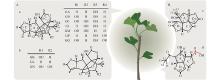
图S1
银杏萜内酯化学结构示意 A. 二萜内酯化学结构。a. GA、GB、GC、GJ、GM、GP和GQ化合物结构;b. GK、GL和GN化合物结构。B. 白果内酯化学结构。c. BB化合物结构;d. 新型BB化合物结构。缩写:GA:银杏内酯A;GB:银杏内酯B;GC:银杏内酯C;GJ:银杏内酯J;GM:银杏内酯M;GP:银杏内酯P;GQ:银杏内酯Q;GK:银杏内酯K;GL:银杏内酯L;GN:银杏内酯N;BB:白果内酯。A. Chemical structures of diterpene lactones. a. Structures of compounds GA, GB, GC, GJ, GM, GP and GQ; b. Structures of compounds GK, GL and GN. B. Chemical structures of bilobalide. c. Structure of compound BB; d. Structure of the novel BB compound. Abbreviations: GA: Ginkgolide A; GB: Ginkgolide B; GC: Ginkgolide C; GJ: Ginkgolide J; GM: Ginkgolide M; GP: Ginkgolide P; GQ: Ginkgolide Q; GK: Ginkgolide K; GL: Ginkgolide L; GN: Ginkgolide N; BB: Bilobalide."
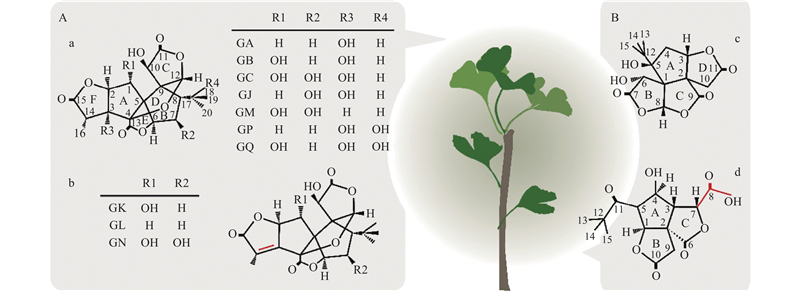
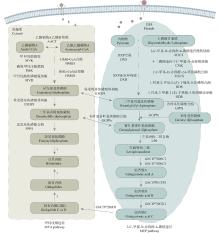
图1
银杏萜内酯代谢途径通路 AACT:乙酰辅酶A乙酰转移酶Acetyl-CoA C-acetyltransferase;HMGS:3-羟基-3-甲基戊二酰辅酶A合酶3-hydroxy-3-methylglutaryl coenzyme A reductase;HMGR:3-羟基-3-甲基戊二酰辅酶A还原酶3-hydroxy-3-methylglutaryl coenzyme A reductase;MVK:甲羟戊酸激酶Mevalonate kinase;PMK:磷酸甲羟戊酸激酶Phosphomevalonate kinase;MVD:甲羟戊酸焦磷酸脱羧酶Mevalonate diphosphate decarboxylase;DXS:1-脱氧-d-木酮糖-5-磷酸合酶1-deoxy-d-xylulose-5-phosphate synthase;DXR:1-脱氧-d-木酮糖-5-磷酸还原异构酶1-deoxy-d-xylulose-5-phosphate reductoisomerase;MECT:2-C-甲基-d-赤藓醇4-磷酸胞苷酰转移酶2-C-methyl-d-erythritol 4-phosphate cytidyltransferase;CMK:4-二磷酸胞苷-2-C-甲基-d-赤藓醇激酶4-(cytidine-5’-diphospho)-2-C-methyl-d-erythritol kinase;MECS:2-C-甲基-d-赤藓醇-2,4-环焦磷酸合酶2-C-methyl-d-erythritol 2,4-cyclodiphosphate synthase;HDS:1-羟基-2-甲基-2-(E)-丁烯基-4-焦磷酸合成酶1-hydroxy-2-methyl-2-(E)-butenyl-4-diphosphate synthase;HDR:1-羟基-2-甲基-2-(E)-丁烯基-4-焦磷酸还原酶1-hydroxy-2-methyl-2-(E)-butenyl-4-diphosphate reductase;IPI/IDI:异戊烯基焦磷酸异构酶Isopentenyl diphosphate isomerase;GGPPS:香叶基基焦磷酸合酶Geranylgeranyl diphosphate synthase;FPPS:法尼基焦磷酸合酶Farnesyl diphosphate synthase;LPS:左旋海松二烯合酶Levopimaradiene synthase;CYPs:细胞色素P450s Cytochrome P450s。虚线箭头表示省略催化步骤;虚线箭头加问号表示目前未有研究明确表明该产物由何种酶催化而成。The dotted arrow indicates that the catalytic step is omitted, and the dotted arrow with a question mark indicates that there is no clear indication of the enzyme by which the product is catalyzed."
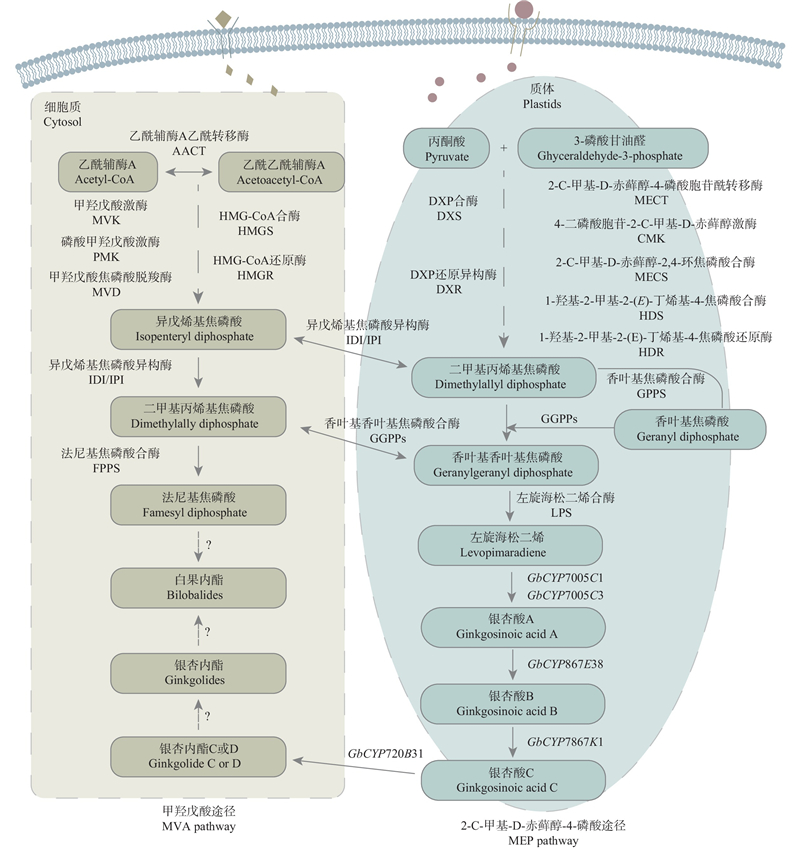
图2
银杏萜内酯生物合成的分子调控网络示意 银杏萜内酯的生物合成受多层级调控。核心转录调控层中,MYB、WRKY、ZC3H、MYC2及ERF等激活类转录因子正向调控TTL合成;而ERF4、HOX及部分MYB等抑制类转录因子则起负调控作用。上游非编码RNA调控层中,多种miRNA和lncRNA通过靶向特定的转录因子或结构基因参与调控,其中部分预测的互作关系(虚线所示)尚需进一步试验验证。"
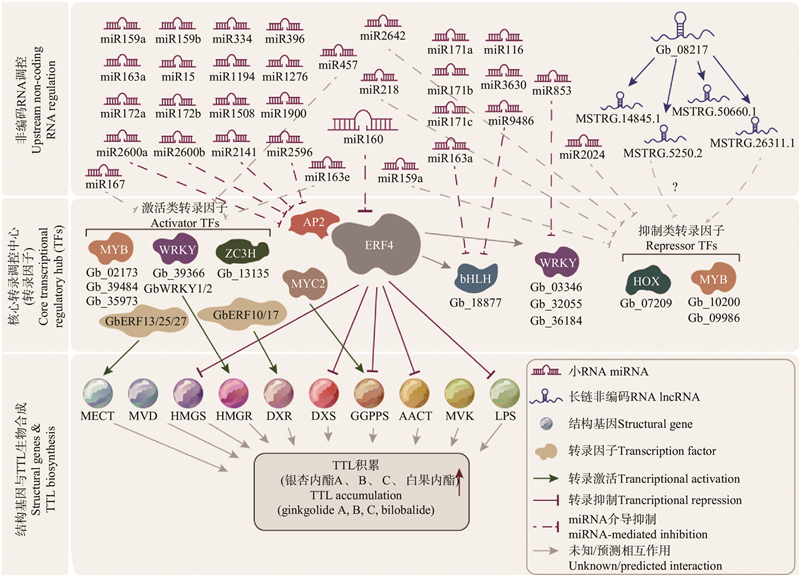
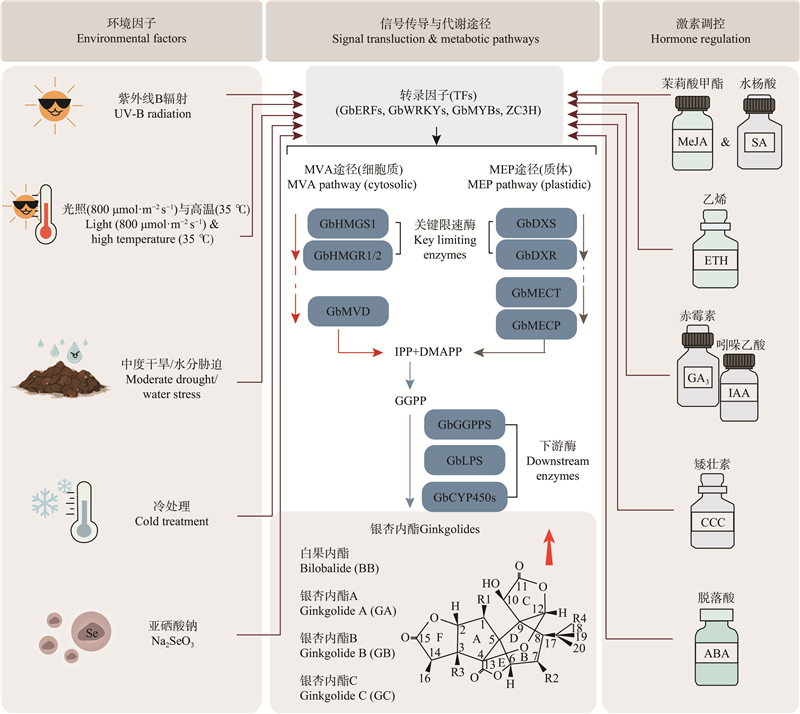
图3
银杏内酯生物合成的环境因子与激素调控机制"
表S1
不同环境条件对银杏萜内酯积累的影响"
| 序号 No. | 环境条件 Environmental conditions | 处理方法 Treatment methods | 总萜内酯含量 TTLs content (%) | 调控基因 Regulatory genes | 参考文献 References |
| 1 | 光照 Light | UV,24 h | 18.92 | — | |
| 2 | 光照 Light | 紫膜(涤纶滤光膜,厚0.2 mm),3个月 Purple membrane (polyester filter membrane, 0.2 mm thick), 3 months | 85.23 | — | |
| 3 | 光照 Light | — | GbERF13 | ||
| 4 | 光照 Light | 100 μmol·m?2 s?1,白天16 h/夜晚8 h,24 ℃,4天 100 μmol·m?2s?1, 16 h during the day/8 h at night, 24 ℃, 4 days | 15.10 | GbMVD | |
| 5 | 光照 Light | 21.89 | GbDXS、GbGGPPS、GbLPS、GbMVD | ||
| 6 | 温度 Temperature | 4 ℃,8天 4 ℃, 8 days | 14.50 | GbDXS、GbGGPPS、GbLPS、GbMVD | |
| 7 | 水分 Water | 干旱(土壤含水量55%~60%),7个月 Drought (soil moisture 55%-60%), 7 months | 23.00 | GbHMGR、GbMVD、GbDXS、GbDXR、MECT、MECPs | |
| 8 | 水分 Water | 干旱(土壤相对含水量约50%),30天 Drought (soil relative water content about 50%), 30 days | 15.68 | — | |
| 9 | 水分 Water | 干旱(连续不浇水15天),12 h Drought (no watering for 15 days), 12 h | — | GbEFR1、GbERF25 | |
| 10 | 水分 Water | PEG- PEG- | — | GbHMGS1、GbHMGR1、GbHMGR2 | |
| 11 | 养分 Nutrition | 叶面喷施,15 mg·L?1 Na2SeO3,5周 Foliar application, 15 mg·L?1 Na2SeO3, 5 weeks | 58.00 | GbWRKY、GbAP2/ERF、GbDXS、GbDXR、GbHMGR、GbMECPs、GbCYP450 | |
| 12 | 养分 Nutrition | 叶面喷施,0.5%尿素,6%过磷酸钙溶液,接种G.mosseae Foliar application, 0.5% urea, 6% superphosphate solution, inoculation with G.mosseae | 17.90 | — |
表S2
不同外源激素处理对银杏萜内酯积累的影响"
| 序号 No. | 激素 Hormones | 处理方法 Treatment methods | 总萜内酯含量 TTLs content (%) | 调控基因 Regulatory genes | 参考文献 References |
| 1 | 赤霉素 GA3 | 叶面喷施,0.04 mg·mL?1,7天 Foliar application, 0.04 mg·mL?1, 7 days | 16.76 | — | |
| 2 | 矮壮素 CCC | 叶面喷施,0.2 mg·mL?1,7天 Foliar application, 0.2 mg·mL?1, 7 days | 29.19 | — | |
| 3 | 矮壮素 CCC | 叶面喷施,2.0 g·L?1,8周 (每隔2周处理1次,共4次) Foliar application, 2.0 g·L?1, 8 weeks (4 treatments every 2 weeks) | TTLs:14.80; GA:18.60; GB:12.50; BB:17.50 | DXS、DXR、GGPPS、LPS | |
| 4 | 矮壮素 CCC | 叶面喷施,2000 μL·L?1,19天 Foliar application, 2000 μL·L?1, 19 days | 叶Leaves:107.12; 根Roots:62.03; 茎Stems:59.80 | — | |
| 5 | 萘乙酸 NAA | 叶片喷施,5 mg·L?1,15天 Foliar application, 5 mg·L?1, 15 days | 13.50 | — | |
| 6 | 多效唑 PBZ | 叶片喷施,50 mg·L?1,10天 Foliar application, 50 mg·L?1, 10 days | 39.30 | — | |
| 7 | ET | 叶面喷施,0.02%,30天 Foliar application, 0.02%, 30 days | 110.71 | — | |
| 8 | 脱落酸ABA | 叶面喷施,100 μmol·L?1,2天 Foliar application, 100 μmol·L?1, 2 days | 1.77 | DXS、GGPPS、LPS、MVD | |
| 9 | 茉莉酸甲酯MeJA | 叶面喷施,100 μmol·L?1,8天 Foliar application, 100 μmol·L?1, 8 days | 14.50 | DXS、GGPPS、LPS、MVD | |
| 10 | 乙烯 ETH | 叶面喷施,10 mmol·L?1,8天 Foliar application, 10 mmol·L?1, 8 days | 10.20 | DXS、GGPPS、LPS、MVD | |
| 11 | 水杨酸 SA | 叶面喷施,10 mmol·L?1,8天 Foliar application, 10 mmol·L?1, 8 days | 9.20 | DXS、GGPPS、LPS、MVD | |
| 12 | 茉莉酸甲酯MeJA | 细胞悬浮液培养,0.1 mmol·L?1,12 h, 3%(W/V)蔗糖,18.8 mmol·L?1 NAA,25 ℃ Cell suspension culture, 0.1 mmol·L?1, 12 h, 3% (W/V) sucrose, 18.8 mmol·L?1 NAA, 25 ℃ | GA:430;GB:820 | — | |
| 13 | 茉莉酸甲酯MeJA | 细胞悬浮液培养,1.0 mmol·L?1,12 h 3%(W/V)蔗糖,18.8 mmol·L?1 NAA,25 ℃ Cell suspension culture, 0.1 mmol·L?1, 12 h, 3% (W/V) sucrose, 18.8 mmol·L?1 NAA, 25 ℃ | BB:625 | — | |
| 14 | 水杨酸 SA | 细胞悬浮液培养,1.0 mmol·L?1,12 h 3% (W/V)蔗糖,18.8 mmol·L?1 NAA,25 ℃ Cell suspension culture, 0.1 mmol·L?1, 12 h, 3% (W/V) sucrose, 18.8 mmol·L?1 NAA, 25 ℃ | GA:310;GB:610 | — | |
| 15 | 水杨酸 SA | 细胞悬浮液培养,0.01 mmol·L?1,12 h, 3%(W/V)蔗糖,0.3%(W/V)结冷胶, 18.8 mmol·L?1 NAA,pH 5.6,25 ℃避光 Cell suspension culture, 0.01 mmol·L?1, 12 h, 3% sucrose, 0.3% gellan gum, 18.8 mmol·L?1 NAA, pH 5.6, 25 ℃ dark | BB:540 | — | |
| 16 | 茉莉酸甲酯+水杨酸MeJA+SA | 细胞悬浮液培养,0.1 mmol·L?1,24 h,30 g·L?1蔗糖,2 g结冷胶,2 mg·L?1 NAA,0.1 mg·L?1 KT,pH 5.8,25 ℃避光 Cell suspension culture, 0.1 mmol·L?1, 24 h, 30 g·L?1 sucrose, 2 g gellan gum, 2 mg·L?1 NAA 0.1 mg·L?1 KT, pH 5.8, 25 ℃ dark | BB:178;GA:195;GB:205;GC:295 | — | |
| 17 | 茉莉酸甲酯MeJA | 叶面喷施,400 μmol·L?1,60天 (每隔10天处理1次,共6次) Foliar application, 400 μmol·L?1, 60 days (6 treatments every 10 days) | 30.76 | CYP450 | |
| 18 | 水杨酸 SA | 叶面喷施,2.0 mmol·L?1,50天 (每隔10天处理1次,共5次) Foliar application, 2.0 mmol·L?1, 50 days (5 treatments every 10 days) | 23.63 | HMGR、TPS、CYPs、CPR、MYB、WRKY | |
| 19 | 矮壮素 CCC | 叶面喷施,10 mmol·L?1,6 h Foliar application, 10 mmol·L?1, 6 h | — | ERF25、ERF27 | |
| 20 | 茉莉酸甲酯MeJA | 叶面喷施,0.5%(V/V),3周 Foliar application, 0.5% (V/V), 3 weeks | GA:16-25; GB:10 | — |
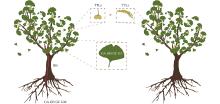
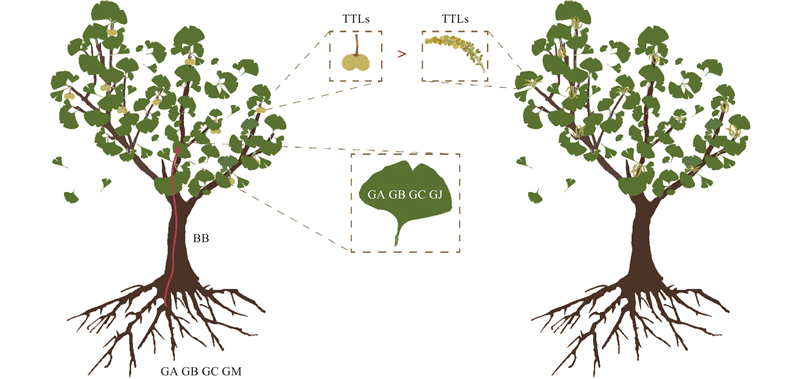
图4
银杏萜内酯含量富集分布 TTLs:总萜内酯 Total terpene trilactones;BB:白果内酯 Bilobalide;GA:银杏内酯A Ginkgolide A;GB:银杏内酯B Ginkgolide B;GC:银杏内酯C Ginkgolide C;GJ:银杏内酯J Ginkgolide J;GM:银杏内酯M Ginkgolide M."
| 杜金法, 李 萍, 陆 续. 银杏内酯生物合成与代谢调控研究进展. 中国中药杂志, 2021, 46 (13): 3288- 3297. | |
| Du J F, Li P, Lu X. Advance in biosynthesis and metabolic regulation of ginkgolides. China Journal of Chinese Materia Medica, 2021, 46 (13): 3288- 3297. | |
|
冯 如, 李泽宏, 袁红慧, 等. 不同胁迫处理对银杏叶片萜内酯含量的影响. 武汉轻工大学学报, 2017, 36 (1): 34- 38, 53.
doi: 10.3969/j.issn.2095-7386.2017.01.007 |
|
|
Feng R, Li Z H, Yuan H H, et al. The effect of different stresses on terpene lactones contents of Ginkgo biloba. Journal of Wuhan Polytechnic University, 2017, 36 (1): 34- 38, 53.
doi: 10.3969/j.issn.2095-7386.2017.01.007 |
|
| 耿 婷, 申文雯, 王佳佳, 等. 银杏叶中内酯类成分的研究进展. 中国中药杂志, 2018, 43 (7): 1384- 1391. | |
| Geng T, Shen W W, Wang J J, et al. Research development of Ginkgo terpene lactones. China Journal of Chinese Materia Medica, 2018, 43 (7): 1384- 1391. | |
|
冷平生, 苏淑钗, 蒋湘宁, 等. 银杏萜内酯的分布与矮壮素对其生物合成的调节. 植物资源与环境学报, 2004, 13 (2): 54- 55.
doi: 10.3969/j.issn.1674-7895.2004.02.013 |
|
|
Leng P S, Su S C, Jiang X N, et al. Distribution of terpene lactones in Ginkgo biloba and the regulation effect of chlorocholine chloride on their biosynthesis. Journal of Plant Resources and Environment, 2004, 13 (2): 54- 55.
doi: 10.3969/j.issn.1674-7895.2004.02.013 |
|
| 冷平生, 苏淑钗, 李月华, 等. 施肥与干旱胁迫对银杏生长及黄酮苷和萜类内酯含量的影响. 北京农学院学报, 2001, 16 (1): 32- 37. | |
| Leng P S, Su S C, Li Y H, et al. Effects of fertilier and drought stress on growth as well as flavonol glycosides and terpene lactone content of Ginkgo biloba seedlings. Journal of Beijing University of Agriculture, 2001, 16 (1): 32- 37. | |
|
冷平生, 苏淑钗, 王天华, 等. 光强与光质对银杏光合作用及黄酮苷与萜类内酯含量的影响. 植物资源与环境学报, 2002, 11 (1): 1- 4.
doi: 10.3969/j.issn.1674-7895.2002.01.001 |
|
|
Leng P S, Su S C, Wang T H, et al. Effects of light intensity and light quality on photosynthesis, flavonol glycoside and terpene lactone contents of Ginkgo biloba L. seedlings. Journal of Plant Resources and Environment, 2002, 11 (1): 1- 4.
doi: 10.3969/j.issn.1674-7895.2002.01.001 |
|
|
李泽宏, 袁红慧, 程 华, 等. 银杏GbERF1转录因子基因的克隆及亚细胞定位分析. 北方园艺, 2018, (3): 92- 100.
doi: 10.11937/bfyy.20172419 |
|
|
Li Z H, Yuan H H, Cheng H, et al. Cloning and subcellular localization analysis of GbERF1 transcription factor in Ginkgo biloba L. Northern Horticulture, 2018, (3): 92- 100.
doi: 10.11937/bfyy.20172419 |
|
| 刘彬果, 张新萍, 刘 岩. 银杏叶中萜内酯类化合物的研究进展. 药学实践杂志, 2011, 29 (6): 421- 425. | |
| Liu B G, Zhang X P, Liu Y. Advances in terpene trilactones of Ginkgo leaves. Journal of Pharmaceutical Practice, 2011, 29 (6): 421- 425. | |
| 庞锦霞. 2018. 一种银杏植物杀虫剂及其制备方法. 中国, 专利公开号: CN107691523A. | |
| Pang J X. 2018. Ginkgo plant insecticide and preparation method thereof. China, Patent Publication Number: CN107691523A [in Chinese] | |
| 王鼎豪. 2021. NAA和多效唑对银杏叶黄酮和萜内酯合成与积累的影响. 南京: 南京林业大学. | |
| Wang D H. 2021. Effects of naphthylacetic acid and paclobutrazol on the synthesis and accumulation of flavonoids and terpenoids in Ginkgo biloba L. leaves. Nanjing: Nanjing Forestry University. [in Chinese] | |
| 王 豪, 涂宗财, 罗亚林, 等. 七种坚果仁中多酚、三萜含量及其抗氧化活性比较. 食品与发酵工业, 2019, 45 (6): 219- 224. | |
| Wang H, Tu Z C, Luo Y L, et al. Contents of polyphenols and triterpenoids in seven types of nuts and their antioxidant activities. Food and Fermentation Industries, 2019, 45 (6): 219- 224. | |
|
温美娟, 沈 奇, 邹秀崽, 等. 唇形科香料植物挥发油成分与遗传相关性分析. 广西植物, 2025, 45 (2): 262- 274.
doi: 10.11931/guihaia.gxzw202403031 |
|
|
Wen M J, Shen Q, Zou X Z, et al. Volatile oil components and genetic correlation analysis in aromatic plants of Lamiaceae family. Guihaia, 2025, 45 (2): 262- 274.
doi: 10.11931/guihaia.gxzw202403031 |
|
|
谢宝东, 王华田, 吴国意, 等. 乙烯利对银杏叶黄酮和内酯含量的影响. 山东林业科技, 2002, 32 (3): 1- 3.
doi: 10.3969/j.issn.1002-2724.2002.03.001 |
|
|
Xie B D, Wang H T, Wu G Y, et al. The influence of ethrel on contents of flavone- lactone in gingko leaves. Journal of Shandong Forestry Science and Technology, 2002, 32 (3): 1- 3.
doi: 10.3969/j.issn.1002-2724.2002.03.001 |
|
|
谢寒冰, 齐桦琳, 胡 鑫, 等. 湖北地区栽培南方红豆杉二萜成分研究. 绿色科技, 2023, 25 (13): 141- 146.
doi: 10.3969/j.issn.1674-9944.2023.13.023 |
|
|
Xie H B, Qi H L, Hu X, et al. Diterpenoids from Taxus wallichiana var. mairei cultivated in Hubei Province. Journal of Green Science and Technology, 2023, 25 (13): 141- 146.
doi: 10.3969/j.issn.1674-9944.2023.13.023 |
|
| 许 锋, 张威威, 孙楠楠, 等. 矮壮素对银杏叶片光合代谢与萜内酯生物合成的影响. 园艺学报, 2011, 38 (12): 2253- 2260. | |
| Xu F, Zhang W W, Sun N N, et al. Effects of chlorocholine chloride on photosynthesis metabolism and terpene trilactones biosynthesis in the leaf of Ginkgo biloba. Acta Horticulturae Sinica, 2011, 38 (12): 2253- 2260. | |
| 徐会连, 陈晋銮, 薛鹏飞, 等. 2017. 一种含有银杏叶的生物肥料的制作方法. 中国, 专利公开号: CN106866285A. | |
| Xu H L, Chen J L, Xue P F, et al. 2017. A method for making a biofertilizer containing Ginkgo biloba. China, Patent Publication Number: CN106866285A [in Chinese] | |
| 徐 友. 2016. 温度和光强对银杏生长和次生代谢产物合成的影响. 南京: 南京林业大学. | |
| Xu Y. 2016. Effects of temperature and light intensity on growth and secondary metabolites biosynthesis of ginkgo (Ginkgo biloba L. ) leaves. Nanjing: Nanjing Forestry University. [in Chinese] | |
|
杨 扬, 周 斌, 赵文杰. 银杏叶史话: 中药/植物药研究开发的典范. 中草药, 2016, 47 (15): 2579- 2591.
doi: 10.7501/j.issn.0253-2670.2016.15.001 |
|
|
Yang Y, Zhou B, Zhao W J. Ginkgo biloba leaves history: a model of research and development for Chinese materia medica/phytomedicine. Chinese Traditional and Herbal Drugs, 2016, 47 (15): 2579- 2591.
doi: 10.7501/j.issn.0253-2670.2016.15.001 |
|
| 赵晶晶, 章 鸿, 方 正, 等. 2015. 一种利用银杏叶渣生产金针菇菌丝体的方法. 中国, 专利公开号: CN104488552A. | |
| Zhao J J, Zhang H, Fang Z, et al. 2015. A method for producing enoki mushroom mycelium using ginkgo leaf residue. China, Patent Publication Number: CN104488552A [in Chinese] | |
| 朱灿灿, 曹福亮, 汪贵斌, 等. 干旱胁迫对银杏叶萜内酯年动态变化的影响. 林业科技开发, 2011, 25 (6): 15- 20. | |
| Zhu C C, Cao F L, Wang G B, et al. Effects of drought stress on annual dynamic changing pattern of the terpene lactones content in Ginkgo biloba leaves. China Forestry Science and Technology, 2011, 25 (6): 15- 20. | |
| 朱灿灿. 2010. 银杏叶次生代谢产物的环境诱导机制及其调控. 南京: 南京林业大学. | |
| Zhu C C. 2010. Effects of environmental factors on the growth and principal medicinal compositions of Ginkgo biloba seedlings. Nanjing: Nanjing Forestry University. [in Chinese] | |
|
朱 俊, 许 锋, 程水源. 银杏叶萜内酯含量与内源激素含量相关性研究. 湖北农业科学, 2010, 49 (11): 2807- 2810, 2814.
doi: 10.3969/j.issn.0439-8114.2010.11.058 |
|
|
Zhu J, Xu F, Cheng S Y. A study on the correlation of terpene lactone and endogenous hormones in Ginkgo biloba leaves. Hubei Agricultural Sciences, 2010, 49 (11): 2807- 2810, 2814.
doi: 10.3969/j.issn.0439-8114.2010.11.058 |
|
|
Agatha O, Mutwil-Anderwald D, Tan J Y, et al. Plant sesquiterpene lactones. Philosophical Transactions of the Royal Society B: Biological Sciences, 2024, 379 (1914): 20230350.
doi: 10.1098/rstb.2023.0350 |
|
|
Bu S, Xiong A R, Yang Z Y, et al. Bilobalide induces apoptosis in 3T3-L1 mature adipocytes through ROS-mediated mitochondria pathway. Molecules, 2023, 28 (17): 6410.
doi: 10.3390/molecules28176410 |
|
|
Chen Q W, Song Q L, Yang X Y, et al. Characterization of a novel levopimaradiene synthase gene responsible for the biosynthesis of terpene trilactones in Ginkgo biloba. Plant Signaling & Behavior, 2021, 16 (4): 1885906.
doi: 10.1080/15592324.2021.1885906 |
|
|
Chen Q W, Yan J P, Meng X X, et al. Molecular cloning, characterization, and functional analysis of acetyl-CoA C-acetyltransferase and mevalonate kinase genes involved in terpene trilactone biosynthesis from Ginkgo biloba. Molecules, 2017, 22 (1): 74.
doi: 10.3390/molecules22010074 |
|
|
Ding C, Chen E Q, Lindsay R C. Natural accumulation of terpene trilactones in Ginkgo biloba leaves: variations by gender, age and season. European Food Research and Technology, 2007, 224 (5): 615- 621.
doi: 10.1007/s00217-006-0347-4 |
|
|
Dong H L, Lin S, Wu Q L, et al. A new bilobalide isomer and two cis-coumaroylated flavonol glycosides from Ginkgo biloba leaves. Fitoterapia, 2020, 142, 104516.
doi: 10.1016/j.fitote.2020.104516 |
|
|
Forman V, Luo D, Geu-Flores F, et al. A gene cluster in Ginkgo biloba encodes unique multifunctional cytochrome P450s that initiate ginkgolide biosynthesis. Nature Communications, 2022, 13 (1): 5143.
doi: 10.1038/s41467-022-32879-9 |
|
|
Gao S, Lin J, Liu X F, et al. Molecular cloning, characterization and functional analysis of a 2C-methyl- D-erythritol 2, 4-cyclodiphosphate synthase gene from Ginkgo biloba. Journal of Biochemistry and Molecular Biology, 2006, 39 (5): 502- 510.
doi: 10.5483/bmbrep.2006.39.5.502 |
|
|
Ge Y B, Xu W, Zhang L J, et al. Ginkgolide B attenuates myocardial infarction-induced depression-like behaviors via repressing IL-1β in central nervous system. International Immunopharmacology, 2020, 85, 106652.
doi: 10.1016/j.intimp.2020.106652 |
|
|
Gong Y F, Liao Z H, Chen M, et al. Molecular cloning and characterization of a 1-deoxy-D-xylulose 5-phosphate reductoisomerase gene from Ginkgo biloba. DNA Sequence, 2005, 16 (2): 111- 120.
doi: 10.1080/10425170500058869 |
|
|
Gong Y F, Liao Z H, Guo B H, et al. Molecular cloning and expression profile analysis of Ginkgo biloba DXS gene encoding 1-deoxy-D-xylulose 5-phosphate synthase, the first committed enzyme of the 2-C-methyl-D-erythritol 4-phosphate pathway. Planta Medica, 2006, 72 (4): 329- 335.
doi: 10.1055/s-2005-916234 |
|
|
Gu J H, Ge J B, Li M, et al. Inhibition of NF-κB activation is associated with anti-inflammatory and anti-apoptotic effects of Ginkgolide B in a mouse model of cerebral ischemia/reperfusion injury. European Journal of Pharmaceutical Sciences, 2012, 47 (4): 652- 660.
doi: 10.1016/j.ejps.2012.07.016 |
|
|
Guo J, Tang W, Tang W J, et al. Research progress on the types, functions, biosynthesis, and metabolic regulation of Ginkgo terpenoids. Plant Physiology and Biochemistry, 2024, 212, 108754.
doi: 10.1016/j.plaphy.2024.108754 |
|
|
Horbowicz M, Wiczkowski W, Góraj-Koniarska J, et al. Effect of methyl jasmonate on the terpene trilactones, flavonoids, and phenolic acids in Ginkgo biloba L. leaves: relevance to leaf senescence. Molecules, 2021, 26 (15): 4682.
doi: 10.3390/molecules26154682 |
|
|
Ivic L, Sands T T J, Fishkin N, et al. Terpene trilactones from Ginkgo biloba are antagonists of cortical glycine and GABAA receptors. Journal of Biological Chemistry, 2003, 278 (49): 49279- 49285.
doi: 10.1074/jbc.M304034200 |
|
| Jian Z C, Long J F, Yin L C, et al. Ginkgolide A inhibits lipopolysaccharide-induced inflammatory response in human coronary artery endothelial cells via downregulation of TLR4-NF-κB signaling through PI3K/Akt pathway. Die Pharmazie, 2016, 71 (10): 588- 591. | |
|
Kang M K, Nargis S, Kim S M, et al. Distinct expression patterns of two Ginkgo biloba 1-hydroxy-2-methyl-2-(E)-butenyl-4-diphosphate reductase/isopentenyl diphospahte synthase (HDR/IDS) promoters in Arabidopsis model. Plant Physiology and Biochemistry, 2013, 62, 47- 53.
doi: 10.1016/j.plaphy.2012.10.011 |
|
|
Kang S M, Min J Y, Kim Y D, et al. Effects of methyl jasmonate and salicylic acid on the production of bilobalide and ginkgolides in cell cultures of Ginkgo biloba. In Vitro Cellular & Developmental Biology–Plant, 2006, 42 (1): 44- 49.
doi: 10.1079/IVP2005719 |
|
|
Kim J H, Lee K I, Chang Y J, et al. Developmental pattern of Ginkgo biloba levopimaradiene synthase (GbLPS) as probed by promoter analysis in Arabidopsis thaliana. Plant Cell Reports, 2012, 31 (6): 1119- 1127.
doi: 10.1007/s00299-012-1232-1 |
|
|
Kim S M, Kim S U. Characterization of 1-hydroxy-2-methyl-2-(E)-butenyl-4-diphosphate synthase (HDS) gene from Ginkgo biloba. Molecular Biology Reports, 2010, 37 (2): 973- 979.
doi: 10.1007/s11033-009-9771-4 |
|
|
Kim S M, Kim Y B, Kuzuyama T, et al. Two copies of 4-(cytidine 5'-diphospho)-2-C-methyl-D-erythritol kinase (CMK) gene in Ginkgo biloba: molecular cloning and functional characterization. Planta, 2008a, 228 (6): 941- 950.
doi: 10.1007/s00425-008-0794-1 |
|
|
Kim S M, Kuzuyama T, Chang Y J, et al. Cloning and characterization of 2-C-methyl-D-erythritol 2, 4-cyclodiphosphate synthase (MECS) gene from Ginkgo biloba. Plant Cell Reports, 2006a, 25 (8): 829- 835.
doi: 10.1007/s00299-006-0136-3 |
|
|
Kim S M, Kuzuyama T, Chang Y J, et al. Cloning and functional characterization of 2-C-methyl-D-erythritol 4-phosphate cytidyltransferase (GbMECT) gene from Ginkgo biloba. Phytochemistry, 2006b, 67 (14): 1435- 1441.
doi: 10.1016/j.phytochem.2006.05.034 |
|
|
Kim S M, Kuzuyama T, Chang Y J, et al. Identification of class 2 1-deoxy-D-xylulose 5-phosphate synthase and 1-deoxy-D-xylulose 5-phosphate reductoisomerase genes from Ginkgo biloba and their transcription in embryo culture with respect to ginkgolide biosynthesis. Planta Medica, 2006c, 72 (3): 234- 240.
doi: 10.1055/s-2005-916180 |
|
|
Kim S M, Kuzuyama T, Kobayashi A, et al. 1-Hydroxy-2-methyl-2-(E)-butenyl 4-diphosphate reductase (IDS) is encoded by multicopy genes in gymnosperms Ginkgo biloba and Pinus taeda. Planta, 2008b, 227 (2): 287- 298.
doi: 10.1007/s00425-007-0616-x |
|
|
Krane S, Kim S, Abrell L, et al. Microphysiometric measurement of PAF receptor responses to ginkgolides. Helvetica Chimica Acta, 2003, 86 (11): 3776- 3786.
doi: 10.1002/hlca.200390319 |
|
|
Kumar S, Singh B, Bajpai V. Andrographis paniculata (Burm. f. ) Nees: traditional uses, phytochemistry, pharmacological properties and quality control/quality assurance. Journal of Ethnopharmacology, 2021, 275, 114054.
doi: 10.1016/j.jep.2021.114054 |
|
|
Li B, Zhang B K, Li Z Y, et al. Ginkgolide C attenuates cerebral ischemia/reperfusion-induced inflammatory impairments by suppressing CD40/NF-κB pathway. Journal of Ethnopharmacology, 2023, 312, 116537.
doi: 10.1016/j.jep.2023.116537 |
|
|
Li L L, Yuan H H, Zha S X, et al. Transcriptome-based discovery of AP2/ERF transcription factors related to terpene trilactones synthesis in Ginkgo biloba. Notulae Botanicae Horti Agrobotanici Cluj-Napoca, 2019, 47 (3): 772- 783.
doi: 10.15835/nbha47311428 |
|
|
Li L L, Yu J, Li L, et al. Treatment of Ginkgo biloba with exogenous sodium selenite affects its physiological growth, changes its phytohormones, and synthesizes its terpene lactones. Molecules, 2022, 27 (21): 7548.
doi: 10.3390/molecules27217548 |
|
| Liao H J, Zheng Y F, Li H Y, et al. Two new ginkgolides from the leaves of Ginkgo biloba. Planta Medica, 2011, 77 (16): 1818- 1821. | |
|
Liao Y L, Xu F, Huang X H, et al. Promoter analysis and transcriptional profiling of Ginkgo biloba 3-hydroxy-3-methylglutaryl coenzyme A reductase (GbHMGR) gene in abiotic stress responses. Notulae Botanicae Horti Agrobotanici Cluj-Napoca, 2015, 43 (1): 25- 34.
doi: 10.15835/nbha.43.1.9416 |
|
|
Liao Y L, Xu F, Huang X H, et al. Characterization and transcriptional profiling of Ginkgo biloba mevalonate diphosphate decarboxylase gene (GbMVD) promoter towards light and exogenous hormone treatments. Plant Molecular Biology Reporter, 2016, 34 (3): 566- 581.
doi: 10.1007/s11105-015-0947-x |
|
|
Lin D M, Wu H Q, Zhou Z W, et al. Ginkgolide B improves multiterritory perforator flap survival by inhibiting endoplasmic reticulum stress and oxidative stress. Journal of Investigative Surgery, 2021, 34 (6): 610- 616.
doi: 10.1080/08941939.2019.1676483 |
|
|
Liu L, Shang Y Y, Zhang Y, et al. Phytochemical compounds, antioxidant, and digestive enzymes inhibitory activities of different fractions from Ginkgo biloba L. nut shells. Journal of Food Quality, 2022a, 2022, 5797727.
doi: 10.1155/2022/5797727 |
|
|
Liu X G, Lu X, Gao W, et al. Structure, synthesis, biosynthesis, and activity of the characteristic compounds from Ginkgo biloba L. Natural Product Reports, 2022b, 39 (3): 474- 511.
doi: 10.1039/D1NP00026H |
|
|
Liu X M, Cheng S Y, Ye J B, et al. Screening and identification of miRNAs related to sexual differentiation of strobili in Ginkgo biloba by integration analysis of small RNA, RNA, and degradome sequencing. BMC Plant Biology, 2020, 20 (1): 387.
doi: 10.1186/s12870-020-02598-8 |
|
|
Liu X M, Zhang X X, He X, et al. Identification and analysis of CYP450 family members in Ginkgo biloba reveals the candidate genes for terpene trilactone biosynthesis. Scientia Horticulturae, 2022c, 301, 111103.
doi: 10.1016/j.scienta.2022.111103 |
|
|
Liu X W, Yang J L, Niu W, et al. Human pharmacokinetics of Ginkgo terpene lactones and impact of carboxylation in blood on their platelet-activating factor antagonistic activity. Acta Pharmacologica Sinica, 2018, 39 (12): 1935- 1946.
doi: 10.1038/s41401-018-0086-7 |
|
|
Liu Y X, Xin H W, Zhang Y C, et al. Leaves, seeds and exocarp of Ginkgo biloba L. (Ginkgoaceae): a comprehensive review of traditional uses, phytochemistry, pharmacology, resource utilization and toxicity. Journal of Ethnopharmacology, 2022d, 298, 115645.
doi: 10.1016/j.jep.2022.115645 |
|
|
Lu J, Wu W S, Cao S W, et al. Molecular cloning and characterization of 1-hydroxy-2-methyl-2-(E)-butenyl-4-diphosphate reductase gene from Ginkgo biloba. Molecular Biology Reports, 2008, 35 (3): 413- 420.
doi: 10.1007/s11033-007-9101-7 |
|
|
Mahadevan S, Park Y. Multifaceted therapeutic benefits of Ginkgo biloba L. : chemistry, efficacy, safety, and uses. Journal of Food Science, 2008, 73 (1): R14- R19.
doi: 10.1111/j.1750-3841.2007.00597.x |
|
|
Meng X X, Song Q L, Ye J B, et al. Characterization, function, and transcriptional profiling analysis of 3-hydroxy-3-methylglutaryl-CoA synthase gene (GbHMGS1) towards stresses and exogenous hormone treatments in Ginkgo biloba. Molecules, 2017, 22 (10): 1706.
doi: 10.3390/molecules22101706 |
|
|
Meng X X, Xu F, Song Q L, et al. Isolation, characterization and functional analysis of a novel 3-hydroxy-3-methylglutaryl-coenzyme A synthase gene (GbHMGS2) from Ginkgo biloba. Acta Physiologiae Plantarum, 2018, 40 (4): 72.
doi: 10.1007/s11738-018-2650-7 |
|
|
Pang Y Z, Shen G A, Bergès T, et al. Molecular cloning, characterization and heterologous expression in Saccharomyces cerevisiae of a mevalonate diphosphate decarboxylase cDNA from Ginkgo biloba. Physiologia Plantarum, 2006, 127 (1): 19- 27.
doi: 10.1111/j.1399-3054.2006.00645.x |
|
|
Priyanka A, Nisha V M, Anusree S S, et al. Bilobalide attenuates hypoxia induced oxidative stress, inflammation, and mitochondrial dysfunctions in 3T3-L1 adipocytes via its antioxidant potential. Free Radical Research, 2014, 48 (10): 1206- 1217.
doi: 10.3109/10715762.2014.945442 |
|
|
Rao S, Meng X X, Liao Y L, et al. Characterization and functional analysis of two novel 3-hydroxy-3-methylglutaryl-coenzyme A reductase genes (GbHMGR2 and GbHMGR3) from Ginkgo biloba. Scientific Reports, 2019, 9 (1): 14109.
doi: 10.1038/s41598-019-50629-8 |
|
|
Rimkiene L, Ivanauskas L, Zevzikovas A, et al. Variation of terpene lactones composition in Ginkgo biloba (L. ) leaves under the influence of harvesting time and growing location. Acta Physiologiae Plantarum, 2021, 43 (3): 46.
doi: 10.1007/s11738-021-03217-1 |
|
|
Saniewski M, Dziurka M, Dziurka K, et al. Methyl jasmonate induces leaf senescence of Ginkgo biloba L. : relevance to endogenous levels of plant hormones. Plant Growth Regulation, 2020, 91 (3): 383- 396.
doi: 10.1007/s10725-020-00612-5 |
|
|
Shan Y, Zhao J N, Wei K, et al. A comprehensive review of Tripterygium wilfordii Hook. f. in the treatment of rheumatic and autoimmune diseases: Bioactive compounds, mechanisms of action, and future directions. Frontiers in Pharmacology, 2023, 14, 1282610.
doi: 10.3389/fphar.2023.1282610 |
|
|
Shen G A, Pang Y Z, Wu W S, et al. Cloning and characterization of a root-specific expressing gene encoding 3-hydroxy-3-methylglutaryl coenzyme A reductase from Ginkgo biloba. Molecular Biology Reports, 2006, 33 (2): 117- 127.
doi: 10.1007/s11033-006-0014-7 |
|
|
Smith J V, Luo Y. Studies on molecular mechanisms of Ginkgo biloba extract. Applied Microbiology and Biotechnology, 2004, 64 (4): 465- 472.
doi: 10.1007/s00253-003-1527-9 |
|
| Strømgaard K, Nakanishi K. Chemistry and biology of terpene trilactones from Ginkgo biloba. Angewandte Chemie International Edition, 2004, 43 (13): 1640- 1658. | |
|
Sukito A, Tachibana S. Effect of methyl jasmonate and salycilic acid synergism on enhancement of bilobalide and ginkgolide production by immobilized cell cultures of Ginkgo biloba. Bioresources and Bioprocessing, 2016, 3 (1): 24.
doi: 10.1186/s40643-016-0101-0 |
|
|
Sun S J, Li Y, Chu L H, et al. Full-length sequencing of Ginkgo transcriptomes for an in-depth understanding of flavonoid and terpenoid trilactone biosynthesis. Gene, 2020, 758, 144961.
doi: 10.1016/j.gene.2020.144961 |
|
|
Tan J P, Han M X, Mao D, et al. Comparative transcriptomic analysis reveals the regulatory mechanism of terpene trilactones improvement by exogenous methyl jasmonate in Ginkgo biloba. Plant Molecular Biology Reporter, 2022, 40 (1): 81- 94.
doi: 10.1007/s11105-021-01302-w |
|
|
Tran T V, Park S J, Shin E J, et al. Blockade of platelet-activating factor receptor attenuates abnormal behaviors induced by phencyclidine in mice through down-regulation of NF-κB. Brain Research Bulletin, 2018, 137, 71- 78.
doi: 10.1016/j.brainresbull.2017.11.004 |
|
|
von Gunten A, Schlaefke S, Überla K. Efficacy of Ginkgo biloba extract EGb 761® in dementia with behavioural and psychological symptoms: a systematic review. The World Journal of Biological Psychiatry, 2016, 17 (8): 622- 633.
doi: 10.3109/15622975.2015.1066513 |
|
|
Wang L, Xia X, Jiang H R, et al. Genome-wide identification and characterization of novel lncRNAs in Ginkgo biloba. Trees, 2018, 32 (5): 1429- 1442.
doi: 10.1007/s00468-018-1724-x |
|
|
Xiang J, Zhang J S, Cai X F, et al. Bilobalide protects astrocytes from oxygen and glucose deprivation-induced oxidative injury by upregulating manganese superoxide dismutase. Phytotherapy Research, 2019, 33 (9): 2329- 2336.
doi: 10.1002/ptr.6414 |
|
|
Xu F, Huang X H, Li L L, et al. Molecular cloning and characterization of GbDXS and GbGGPPS gene promoters from Ginkgo biloba. Genetics and Molecular Research, 2013, 12 (1): 293- 301.
doi: 10.4238/2013.February.4.3 |
|
|
Ye J B, Mao D, Cheng S Y, et al. Comparative transcriptome analysis reveals the potential stimulatory mechanism of terpene trilactone biosynthesis by exogenous salicylic acid in Ginkgo biloba. Industrial Crops and Products, 2020a, 145, 112104.
doi: 10.1016/j.indcrop.2020.112104 |
|
|
Ye J B, Yang K, Li Y T, et al. Genome-wide transcriptome analysis reveals the regulatory network governing terpene trilactones biosynthesis in Ginkgo biloba. Tree Physiology, 2022, 42 (10): 2068- 2085.
doi: 10.1093/treephys/tpac051 |
|
|
Ye J B, Zhang X, Tan J P, et al. Global identification of Ginkgo biloba microRNAs and insight into their role in metabolism regulatory network of terpene trilactones by high-throughput sequencing and degradome analysis. Industrial Crops and Products, 2020b, 148, 112289.
doi: 10.1016/j.indcrop.2020.112289 |
|
|
Yu W W, Cai J F, Liu H M, et al. Transcriptomic analysis reveals regulatory networks for osmotic water stress and rewatering response in the leaves of Ginkgo biloba. Forests, 2021, 12 (12): 1705.
doi: 10.3390/f12121705 |
|
|
Yuan H H, Li L L, Li L, et al. Promoter activity analysis and transcriptional profile of Ginkgo biloba 1-Deoxy-D-Xylulose 5-Phosphate reductoisomerase gene (GbDXR) under abiotic stresses. Notulae Botanicae Horti Agrobotanici Cluj-Napoca, 2022, 50 (1): 12562.
doi: 10.15835/nbha50112562 |
|
|
Zeppilli D, Ribaudo G, Pompermaier N, et al. Radical scavenging potential of ginkgolides and bilobalide: insight from molecular modeling. Antioxidants, 2023, 12 (2): 525.
doi: 10.3390/antiox12020525 |
|
|
Zhang Y H, Liu P Y, Kong Q Q, et al. The contents of terpene trilactone and flavonoid in leaves of seedlings from ancient female Ginkgo trees in China. Horticultural Plant Journal, 2017, 3 (4): 165- 171.
doi: 10.1016/j.hpj.2017.06.002 |
|
|
Zheng J R, He X, Zhou X, et al. The Ginkgo biloba microRNA160-ERF4 module participates in terpene trilactone biosynthesis. Plant Physiology, 2024a, 195 (2): 1446- 1460.
doi: 10.1093/plphys/kiae114 |
|
|
Zheng J R, Liao Y L, Ye J B, et al. The transcription factor MYC2 positively regulates terpene trilactone biosynthesis through activating GbGGPPS expression in Ginkgo biloba. Horticulture Research, 2024b, 11 (10): uhae228.
doi: 10.1093/hr/uhae228 |
|
|
Zheng J R, Zhang X, Fu M Y, et al. Effects of different stress treatments on the total terpene trilactone content and expression levels of key genes in Ginkgo biloba leaves. Plant Molecular Biology Reporter, 2020, 38 (4): 521- 530.
doi: 10.1007/s11105-020-01220-3 |
|
|
Zhou J M, Gu S S, Mei W H, et al. Ginkgolides and bilobalide protect BV2 microglia cells against OGD/reoxygenation injury by inhibiting TLR2/4 signaling pathways. Cell Stress and Chaperones, 2016, 21 (6): 1037- 1053.
doi: 10.1007/s12192-016-0728-y |
|
|
Zhou Z W, Li M J, Zhang Z K, et al. Overview of Panax ginseng and its active ingredients protective mechanism on cardiovascular diseases. Journal of Ethnopharmacology, 2024, 334, 118506.
doi: 10.1016/j.jep.2024.118506 |
| [1] | 张源辉,汪贵斌,王语,国靖,刘玉华,余鹏飞. 高药低酸型叶用银杏无性系综合评选[J]. 林业科学, 2026, 62(4): 25-33. |
| [2] | 王语,汪贵斌,张源辉,杨玉霞,唐玮,国靖,刘玉华,余鹏飞. 基于表型及功能成分的果用银杏优良栽培品系综合评价[J]. 林业科学, 2026, 62(3): 161-170. |
| [3] | 于钊妍,刘甘萍,李芳弟,曹福亮,郭起荣. 银杏无性系种实的无胚现象及其主要成分比较分析[J]. 林业科学, 2023, 59(6): 12-18. |
| [4] | 符庆成,邱尔发,张媛,王慧超,黄岚虹. 北京市银杏古树心腐特征及其影响因素[J]. 林业科学, 2023, 59(6): 130-140. |
| [5] | 王嘉,梁晓洁,高暝,吴立文,赵耘霄,汪阳东,黄世清,张永志,傅火勇,陈益存. 千年桐根部黄酮类化合物生物合成对枯萎病菌侵染的响应[J]. 林业科学, 2022, 58(2): 159-170. |
| [6] | 邓小敏,杨署光,田维敏. 橡胶树胶乳高表达的法尼基焦磷酸合成酶的功能[J]. 林业科学, 2022, 58(1): 43-51. |
| [7] | 王启繁,沈隽,曾彬,王慧玉,曹田雨,董华君. 漆饰贴面刨花板VOCs及气味释放[J]. 林业科学, 2020, 56(5): 130-142. |
| [8] | 吴项乾,曹林,申鑫,汪贵斌,曹福亮. 基于无人机激光雷达的银杏人工林有效叶面积指数估测[J]. 林业科学, 2020, 56(1): 74-86. |
| [9] | 谢婷婷, 汤锋, 高全, 王煜炜, 王越. 印楝素A无细胞合成体系构建及其合成前体[J]. 林业科学, 2019, 55(9): 50-60. |
| [10] | 许自龙, 陈益存, 高暝, 吴立文, 赵耘霄, 汪阳东. 被子植物性别分化的研究进展[J]. 林业科学, 2019, 55(8): 157-169. |
| [11] | 曹亚兵, 翟晓巧, 邓敏捷, 赵振利, 范国强. 泡桐丛枝病发生与代谢组变化的关系[J]. 林业科学, 2017, 53(6): 85-93. |
| [12] | 唐海霞, 杜淑辉, 邢世岩, 桑亚林, 李际红, 刘晓静, 孙立民. 银杏性别决定相关基因的筛选[J]. 林业科学, 2017, 53(2): 76-82. |
| [13] | 陈智裕, 吴鹏飞, 邹显花, 汪攀, 马静, 马祥庆. 低磷胁迫下杉木幼苗生长特性与内源激素的关系[J]. 林业科学, 2016, 52(2): 57-66. |
| [14] | 刘欢欢, 曹治国, 贾黎明, 李秀忠, 郝利峰, 刘金强, 王华, 席本野. 基于超声清洗的植物叶片吸滞大气颗粒物定量评估——以银杏为例[J]. 林业科学, 2016, 52(12): 133-140. |
| [15] | 陈雷, 孙冰, 汪贵斌, 曹福亮, 封超年. 银杏果用林复合经营模式下种仁品质综合评价[J]. 林业科学, 2016, 52(11): 63-70. |
| 阅读次数 | ||||||
|
全文 |
|
|||||
|
摘要 |
|
|||||

