
林业科学 ›› 2026, Vol. 62 ›› Issue (6): 118-131.doi: 10.11707/j.1001-7488.LYKX20250606
• 研究论文 • 上一篇
李华语1,张安娜1,韩宗亮2,樊军锋1,张胜1,*( )
)
收稿日期:2025-10-09
修回日期:2026-01-21
出版日期:2026-06-10
发布日期:2026-06-13
通讯作者:
张胜
E-mail:zhangsheng@nwafu.edu.cn
基金资助:
Huayu Li1,Anna Zhang1,Zongliang Han2,Junfeng Fan1,Sheng Zhang1,*()
Received:2025-10-09
Revised:2026-01-21
Online:2026-06-10
Published:2026-06-13
Contact:
Sheng Zhang
E-mail:zhangsheng@nwafu.edu.cn
摘要:
目的: 系统探究大田条件下白杨良种‘秦白杨3号’响应水氮耦合处理的生长表现、生理特性及分子机制,解决西北地区白杨人工林培育中水肥管理粗放、单位面积产量偏低等问题,为白杨高效培育提供理论依据与实践支撑。方法: 以2年生长势基本一致的‘秦白杨3号’为试验材料,采用双因素完全随机区组设计,设置灌水[6、7、8月上旬各灌溉1次(W3);6、7月上旬各灌溉1次(W2);6月上旬灌溉1次(W1);生长季不灌溉作为对照(W0)]与施氮[全年生长期施肥3次(F3)、施肥2次(F2)、施肥1次(F1)以及不施肥对照(F0)]各4个水平。灌水采用沟灌至田间持水量100%;氮肥于灌水前穴施(单次每株250 g),连续处理2年,于生长季末期测定生长指标。结果: 水氮耦合能够显著促进林木生长。胸径增量在W3F2处理下最高,树高生长在W2F3处理下最优,材积累积则在W3F2处理下最大;综合各生长指标及光合表现,W3F2为最优处理组合。灌溉与施氮均显著促进次生木质部发育、增大导管面积和纤维长度,且耦合效应优于单因子处理。与对照(W0F0)相比,水氮优化处理(W3F2)显著上调了韧皮部与初生木质部中木质素、纤维素合成关键基因(如PaPAL2、PaCesA4、PaCesA7A等)的表达,表明水氮协同可通过促进细胞壁合成代谢驱动木材形成。结论: W3F2处理(生长季灌水3次、年施氮2次)在促进胸径生长与材积累积方面表现最为突出,该方案通过提升光合能力、优化导管结构并驱动细胞壁合成基因表达,可有效协调林木生长和木材形成。
中图分类号:
李华语,张安娜,韩宗亮,樊军锋,张胜. 水氮耦合对白杨良种‘秦白杨3号’生长的影响及机制分析[J]. 林业科学, 2026, 62(6): 118-131.
Huayu Li,Anna Zhang,Zongliang Han,Junfeng Fan,Sheng Zhang. Effects of Water-Nitrogen Coupling on the Growth of Populus × tomentosa ‘Qinbaiyang 3’, an Elite Variety, and the Mechanism Analysis[J]. Scientia Silvae Sinicae, 2026, 62(6): 118-131.

表1
水氮耦合试验设计①"
| 处理 Treatment | 施肥量 Nitrogen level/g | 灌水次数 Irrigation | 处理 Treatment | 施肥量 Nitrogen level/g | 灌水次数 Irrigation | |
| W0F0 | 0 | 0 | W0F2 | 500 | 0 | |
| W1F0 | 0 | 1 | W1F2 | 500 | 1 | |
| W2F0 | 0 | 2 | W2F2 | 500 | 2 | |
| W3F0 | 0 | 3 | W3F2 | 500 | 3 | |
| W0F1 | 250 | 0 | W0F3 | 750 | 0 | |
| W1F1 | 250 | 1 | W1F3 | 750 | 1 | |
| W2F1 | 250 | 2 | W2F3 | 750 | 2 | |
| W3F1 | 250 | 3 | W3F3 | 750 | 3 |
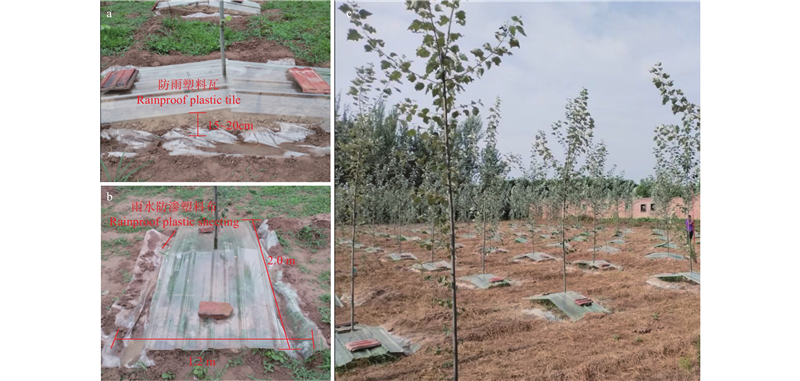
图1
试验林控雨装置(a)、单株树下防雨设施铺设(b)及试验林控雨装置整体布设(c)"
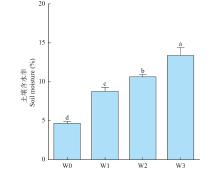
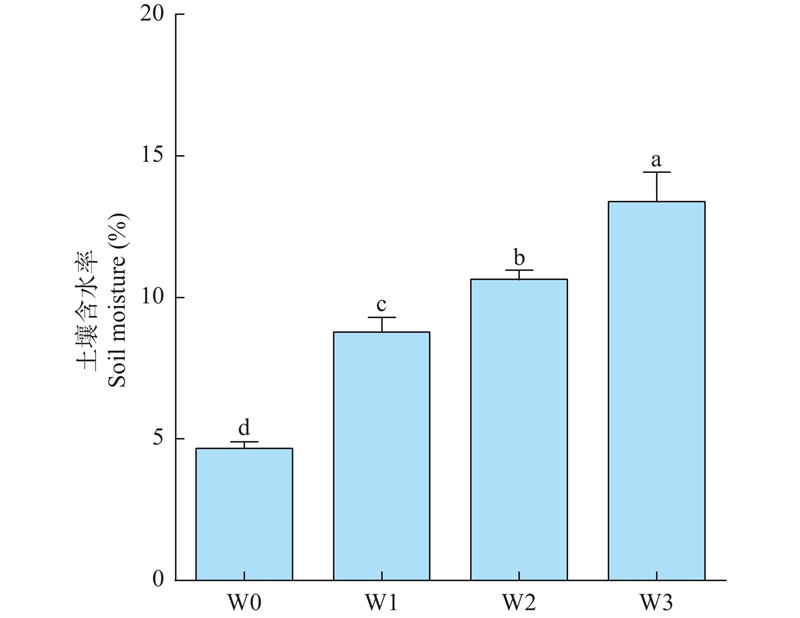
图S1
试验林地土壤含水量在各灌溉水平处理间的差异比较 W:灌水 Irrigation;W0−W3:灌水0~3次0−3 times of irrigation;不同小写字母表示差异显著性(P<0.05), Different lowercase letters indicatesignificant differences(P<0.05)."
图S4
水氮耦合处理对土壤全钾含量(A)和速效钾含量(B)的影响 A:水氮耦合处理对土壤全钾含量的影响 Effect of water-nitrogen coupling treatment on soil total potassium content; B:水氮耦合处理对土壤速效钾含量的影响 Effect of water-nitrogen coupling treatment on soil available potassium content. W:灌水 Irrigation;F:施氮 Fertilization;W0?W3:灌水0~3次0?3 times of irrigation;F0?F3:施肥0~3次 0?3 times of fertilization.不同小写字母表示差异显著性(P<0.05), Different lowercase letters indicatesignificant differences(P<0.05).*:P<0.05;**: P<0.001;***:P<0.001;ns表示差异不显著 ns indicates no significant difference."
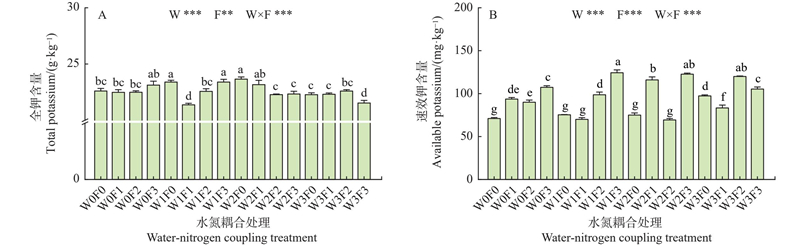
表2
实时荧光定量PCR引物"
| 引物名称 Primer name | 引物序列(5’→3’) Primer sequence(5’→3’) |
| PaCesA4-F | GAGTTAAGGAAGATGGAGAGGTGT |
| PaCesA4-R | TGCACTGAGGACAGGACTGGTTGC |
| PaCesA7A-F | TCGCCTTTCTCTCAGATACGAACG |
| PaCesA7A -R | TTACCCGTAACAAGAGGGGGTTCC |
| PaCesA7B-F | GCGATGAGATTGGCGTAACTGTG |
| PaCesA7B-R | ACGCTTGTATCTAGTCTTGCACTGG |
| PaCesA8A-F | ATAACAAATCCTGTTGATAGTGCCTTC |
| PaCesA8A-R | GTTGACAGGATTCCACTTGGGAAAT |
| PaCesA8B-F | ATAACAAATCCTGTCGATAGTGCCTTT |
| PaCesA8B-R | ATTGACAGGATTCCACTTGGGGAAC |
| PaCCR1-F | TGAGCTCTCTTGTCAGTTACCG |
| PaCCR1-R | AGCCACGTTGAAGCAAAAGC |
| PaPAL1- F | TGCAGTTGGTTCTGGTTTGG |
| PaPAL1-R | AACCTCGGCGAAAATTGCAG |
| PaPAL2-F | ACGCAATGGCAATGGTTCAC |
| PaPAL2-R | TGACAGCTCCACCATGACAC |
| PaPAL3-F | CTTCAGTATCTCGCCAATCCAG |
| PaPAL3-R | GAAGAGATAAGCCCCAACGAG |
| PaC4H2-F | GGCTCAAGTTGTCGAGGATG |
| PaC4H2-R | CCTCTTCGCTCTCAAATCTCC |
| PaC3H3-F | TCATTGGACTGCTTTGGGAC |
| PaC3H3-R | TGGGTTCTTGATTAGCTCTGC |
| PaCCoAOMT1-F | ATCTGCTGATGAAGGGCAAT |
| PaCCoAOMT1-R | TTTCTGAATCACCGGGAGAC |
| PaFRA8-F | TCTCCAAAACCCATGTCTCAG |
| PaFRA8-R | CGATTGATGTTCTTGCTCTGTTG |
| PaGT43A-F | TCCTGTGCCAACTCCATTAAG |
| PaGT43A-R | CCTTGGTACGGATCTTCAGTG |
| PaGT8D2-F | TTCTCACTGCACCCTTTGG |
| PaGT8D2-R | ACCCTCTGATCCTTTTCCATTG |
| PaPARVUS1-F | TTGGAGTGGTAAAGGGAAGC |
| PaPARVUS1-R | AGAGATCATAAGGTGCCCAAAG |
| PaGXM2-F | AGCTGGCACATAGAGAACTTTG |
| PaGXM2-R | CAATCTCATGGAGGTAGGCAAG |
| PaIRX10-1-F | GTGGGAAGGTTGAAGGTCTATG |
| PaIRX10-1-R | CGAACTGGGCTGGATAAGAG |
| PaActin F | ACCCTCCAATCCAGACACTG |
| PaActin R | TTGCTGACCGTATGAGCAAG |
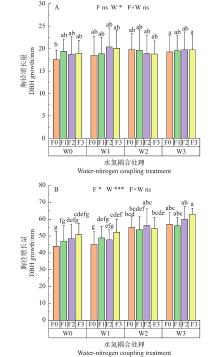
图2
水氮耦合处理对秦白杨3号胸径增长量的影响 A:水氮耦合处理1年对胸径增长量的影响 Effects of one-year water-nitrogen coupling treatments on DBH growth;B:水氮耦合处理2年对胸径增长量的影响 Effects of two-year water-nitrogen coupling treatments on DBH growth. W:灌水 Irrigation;F:施氮 Fertilization;W0?W3:灌水0~3次 0?3 times of irrigation;F0?F3:施肥0~3次 0?3 times of fertilization. 不同小写字母表示差异显著性(P<0.05), Different lowercase letters indicate significant differences(P<0.05).*:P<0.05;**: P<0.001;***:P<0.001;ns 表示差异不显著 ns indicates no significant difference."
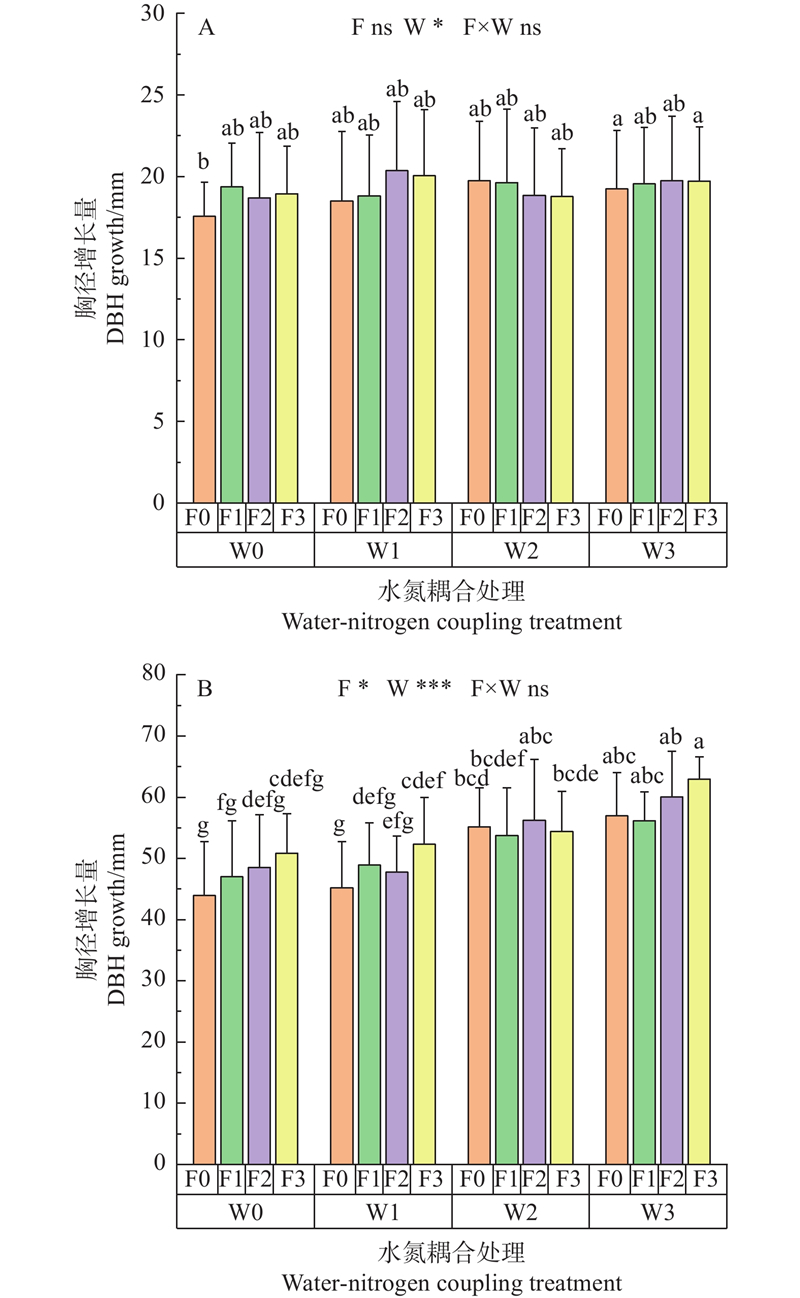
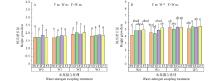
图3
水氮耦合处理对‘秦白杨3号’树高增长量的影响 A:水氮耦合处理1年对树高增长量的影响 Effects of one-year water-nitrogen coupling treatments on height growth;B:水氮耦合处理2年对树高增长量的影响 Effects of two-year water-nitrogen coupling treatments on height growth. W:灌水 Irrigation;F:施氮 Fertilization;W0?W3:灌水0~3次 0?3 times of irrigation;F0?F3:施肥0~3次 0?3 times of fertilization. 不同小写字母表示差异显著性(P<0.05), Different lowercase letters indicate significant differences(P<0.05).*:P<0.05;**: P<0.001;***:P<0.001;ns 表示差异不显著 ns indicates no significant difference."
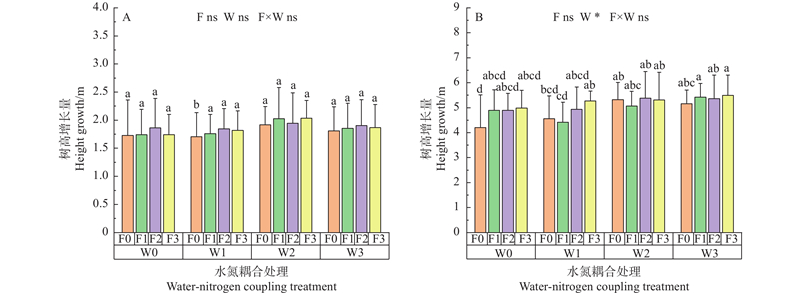
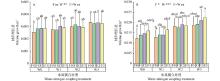
图4
水氮耦合处理对‘秦白杨3号’材积增长量的影响 A:水氮耦合处理1年对树高增长量的影响 Effects of one-year water-nitrogen coupling treatments on volume growth;B:水氮耦合处理2年对树高增长量的影响 Effects of two-year water-nitrogen coupling treatments on volume growth. W:灌水 Irrigation;F:施氮 Fertilization;W0?W3:灌水0~3次 0?3 times of irrigation;F0?F3:施肥0~3次 0?3 times of fertilization. 不同小写字母表示差异显著性(P<0.05), Different lowercase letters indicate significant differences (P<0.05).*:P<0.05;**: P<0.001;***:P<0.001;ns 表示差异不显著 ns indicates no significant difference."
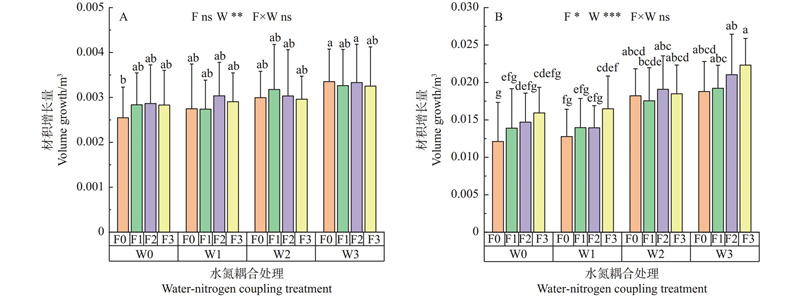
图5
水氮耦合处理对‘秦白杨3号’相对叶绿素含量的影响 W:灌水 Irrigation;F:施氮 Fertilization;W0?W3:灌水0~3次 0?3 times of irrigation;F0?F3:施肥0~3次 0?3 times of fertilization. 不同小写字母表示差异显著性(P<0.05), Different lowercase letters indicate significant differences (P<0.05).*:P<0.05;**: P<0.001;***:P<0.001;ns 表示差异不显著 ns indicates no significant difference."
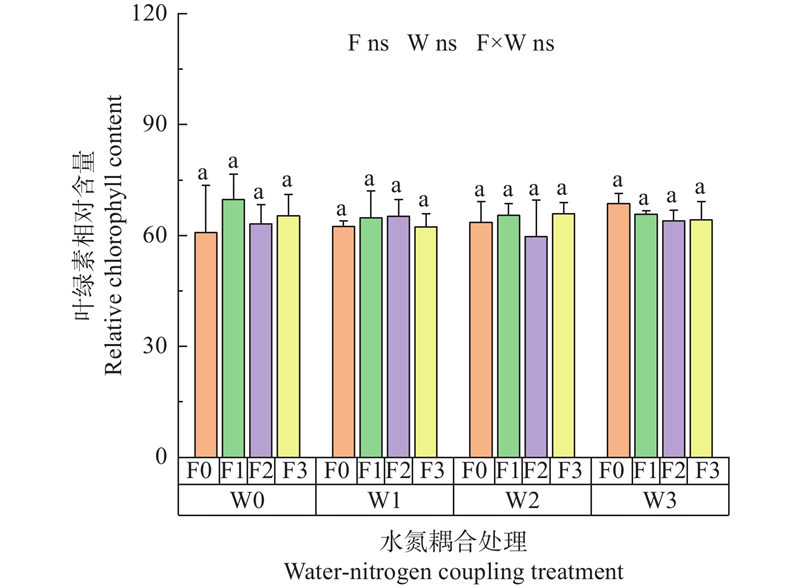
图6
不同水氮耦合处理对‘秦白杨3号’净光合速率Pn (A)、胞间二氧化碳浓度Ci (B)、蒸腾速率Tr (C)以及气孔导度Gs(D)的影响 W:灌水 Irrigation;F:施氮 Fertilization;W0?W3:灌水0~3次 0?3 times of irrigation;F0?F3:施肥0~3次 0?3 times of fertilization. 不同小写字母表示差异显著性(P<0.05), Different lowercase letters indicate significant differences(P<0.05).*:P<0.05;**:P<0.001;***:P<0.001;ns表示差异不显著 ns indicates no significant difference."
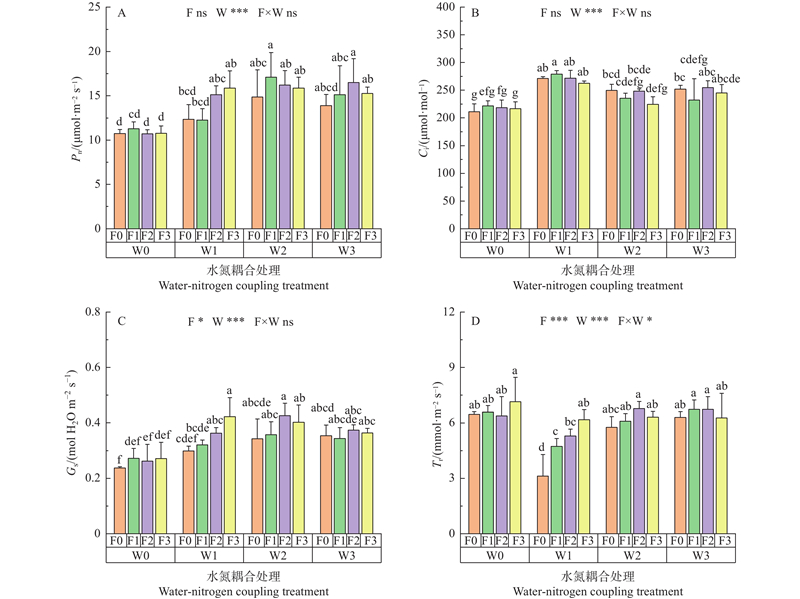
图7
W0F0、W0F3、W3F0和W3F3处理对‘秦白杨3号’木材发育的影响 A:木材横截面示例 Representative cross-sectional example of xylem;B: 2023年4种处理对木质部发育的影响 Effects of four treatments on xylem development during 2023; C:2024年四种处理对木质部发育的影响 Effects of four treatments on xylem development during 2024; D: 四种处理对树皮发育的影响 Effects of four treatments on bark development. W0F0:灌溉0次、施肥0次 No irrigation and no fertilization;W0F3:灌溉0次、施肥3次 No irrigation and fertilization 3 times;W3F0:灌溉3次、施肥0次 Irrigation 3 times and no fertilization;W3F3:灌溉3次、施肥3次 Irrigation 3 times and fertilization 3 times;不同小写字母表示差异显著性(P<0.05), Different lowercase letters indicate significant differences(P<0.05)."
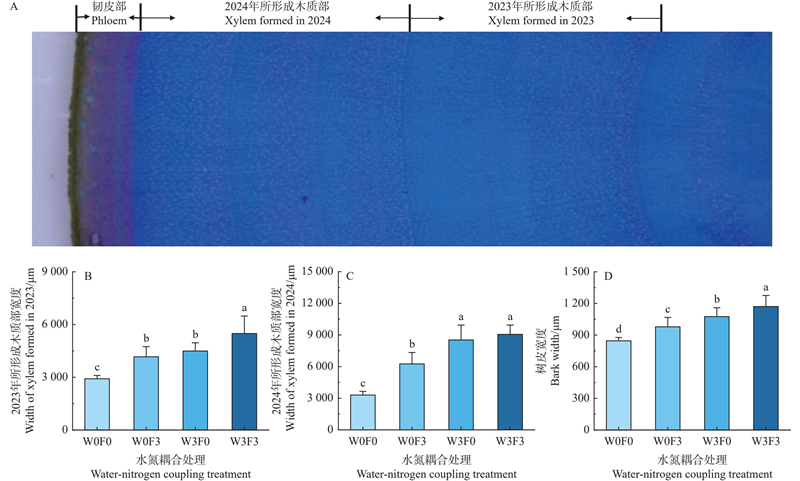
图8
W0F0、W0F3、W3F0和W3F3处理对‘秦白杨3号’维管组织发育的影响 W0F0:灌溉0次、施肥0次 No irrigation and no fertilization;W0F3:灌溉0次、施肥3次 No irrigation and fertilization 3 times;W3F0:灌溉3次、施肥0次 Irrigation 3 times and no fertilization;W3F3:灌溉3次、施肥3次 Irrigation 3 times and fertilization 3 times. 不同小写字母表示差异显著性(P<0.05)。"
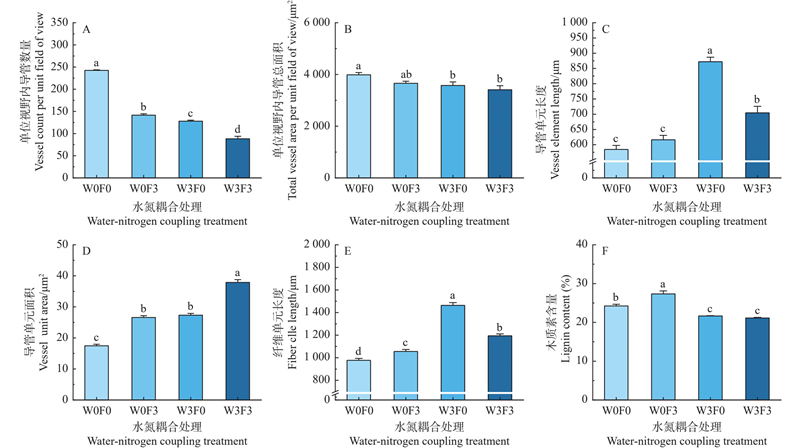
图9
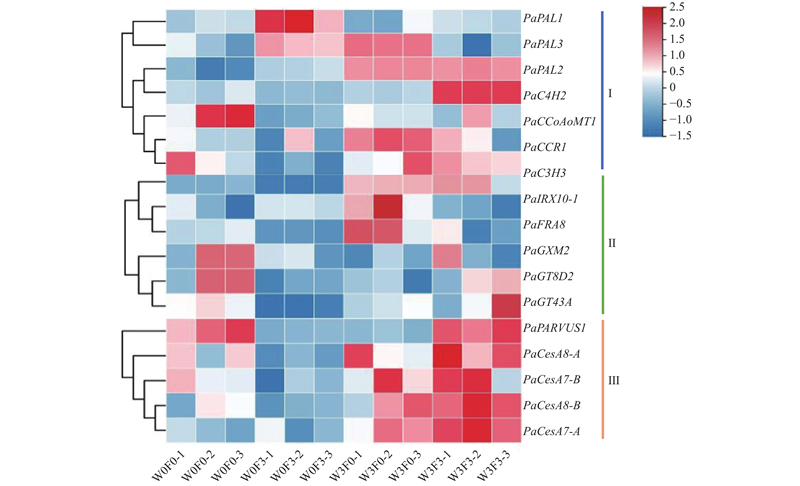
木质素、纤维素、半纤维素合成关键基因在氮肥、灌溉和水氮耦合处理下‘秦白杨3号’茎段组织表达情况 颜色深浅代表基因相对表达水平(红高蓝低),颜色标尺为对关键基因相对表达水平进行?1.5~2.5标准化处理后得到的数值,左侧聚类树用于聚合表达模式相似的基因。Ⅰ、Ⅱ、Ⅲ分别表示三个显著的表达聚类分支。Ⅰ. 木质素合成通路关键基因:PaPAL1-3,苯丙氨酸裂解酶基因;PaC4H2,反式肉桂酸4-羟化酶基因;PaCCoAOMT1,咖啡酰辅酶A-O-甲基转移酶基因;PaCCR1,肉桂酰辅酶A还原酶基因;PaC3H3,香豆酸3-羟化酶基因;Ⅱ. 半纤维素合成通路关键基因:PaIRX10-1、PaFRA8、PaGT43A、PaGT8D2、PaPARVUS1编码糖基转移酶;PaGXM2,葡萄糖醛酸木聚糖甲基转移酶基因;Ⅲ. 纤维素合成通路关键基因:PaCesA,纤维素合酶基因。"
图S2
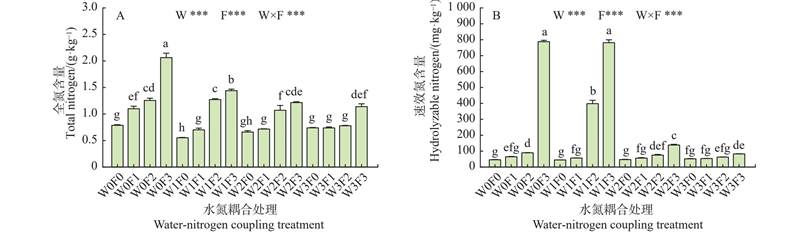
水氮耦合处理对土壤总氮含量(A)和速效氮含量(B)的影响 A:水氮耦合处理对土壤全氮含量的影响 Effect of water-nitrogen coupling treatment on soil total nitrogen content; B:水氮耦合处理对土壤速效氮含量的影响 Effect of water-nitrogen coupling treatment on soil hydrolyzable nitrogen content. W:灌水 Irrigation;F:施氮 Fertilization;W0−W3:灌水0~3次0−3 times of irrigation;F0−F3:施肥0~3次 0−3 times of fertilization. 不同小写字母表示差异显著性(P<0.05), Different lowercase letters indicatesignificant differences(P<0.05).*:P<0.05;**: P<0.001;***:P<0.001;ns表示差异不显著 ns indicates no significant difference."
图S3
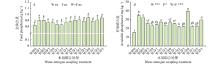
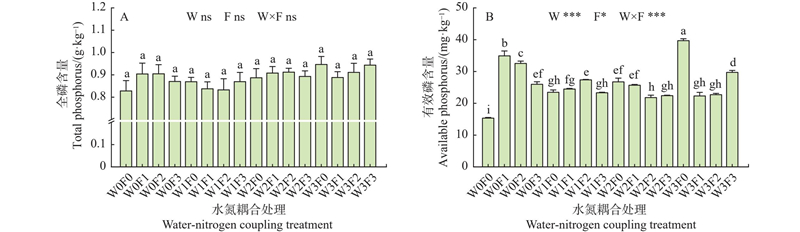
水氮耦合处理对土壤全磷含量(A)和有效磷含量(B)的影响 A:水氮耦合处理对土壤全磷含量的影响 Effect of water-nitrogen coupling treatment on soil total phosphorus content; B:水氮耦合处理对土壤有效磷含量的影响 Effect of water-nitrogen coupling treatment on soil available phosphorus content. W:灌水 Irrigation;F:施氮 Fertilization;W0?W3:灌水0~3次0?3 times of irrigation;F0?F3:施肥0~3次 0?3 times of fertilization.不同小写字母表示差异显著性(P<0.05), Different lowercase letters indicatesignificant differences(P<0.05).*:P<0.05;**: P<0.001;***:P<0.001;ns表示差异不显著 ns indicates no significant difference."
| 陈海波, 卫 星, 王 婧, 等. 水曲柳苗木根系形态和解剖结构对不同氮浓度的反应. 林业科学, 2010, 46 (2): 61- 66. | |
| Chen H B, Wei X, Wang J, et al. Morphological and anatomical responses of Fraxinus mandshurica seedling roots to different nitrogen concentrations. Scientia Silvae Sinicae, 2010, 46 (2): 61- 66. | |
|
陈柳晔, 史小娟, 樊军锋. 秦白杨系列品种木材材性及纤维形态的研究. 西北林学院学报, 2017, 32 (1): 253- 258.
doi: 10.3969/j.issn.1001-7461.2017.01.41 |
|
|
Chen L Y, Shi X J, Fan J F. Study on properties and fiber morphology of qinbaiyang series varieties woods. Journal of Northwest Forestry University, 2017, 32 (1): 253- 258.
doi: 10.3969/j.issn.1001-7461.2017.01.41 |
|
| 冯玉龙, 巨关升, 朱春全. 杨树无性系幼苗光合作用和PV水分参数对水分胁迫的响应. 林业科学, 2003, 39 (3): 30- 36. | |
| Feng Y L, Ju G S, Zhu C Q. Responses of photosynthesis and PV-parameters to water stress in poplar clone seedlings. Scientia Silvae Sinicae, 2003, 39 (3): 30- 36. | |
|
郭 伟, 董正武, 李光莹, 等. 新疆柴窝堡湖滨荒漠区4种灌木生理生化特性的季节变化. 应用生态学报, 2025, 36 (5): 1350- 1360.
doi: 10.13287/j.1001-9332.202505.005 |
|
|
Guo W, Dong Z W, Li G Y, et al. Seasonal changes of physiological and biochemical characteristics of four shrub species in Chaiwopu Lake-shore desert area of Xinjiang, China. Chinese Journal of Applied Ecology, 2025, 36 (5): 1350- 1360.
doi: 10.13287/j.1001-9332.202505.005 |
|
| 黄事焜, 樊军锋, 葛舒悦, 等. 芳香木蠹蛾东方亚种危害与不同杨树品系物理性状的关系. 东北林业大学学报, 2024, 52 (10): 119- 123, 141. | |
| Huang S K, Fan J F, Ge S Y, et al. Relationship between damage caused by Cossus cossus Orientalis gaede and physical characteristics of different Populus strains. Journal of Northeast Forestry University, 2024, 52 (10): 119- 123, 141. | |
| 邱 权, 李吉跃, 王军辉, 等. 水肥耦合效应对楸树苗期叶片净光合速率和SPAD值的影响. 生态学报, 2016, 36 (11): 3459- 3468. | |
| Qiu Q, Li J Y, Wang J H, et al. Interactive effects of soil water and fertilizer application on leaf net photosynthetic rate and SPAD readings of Catalpa bungei seedlings. Acta Ecologica Sinica, 2016, 36 (11): 3459- 3468. | |
| 韦献东, 施福军, 梁小春, 等. 模拟氮沉降对桢楠幼苗生长的影响. 北方园艺, 2020 (8): 74- 79. | |
| Wei X D, Shi F J, Liang X C, et al. Effects of simulated nitrogen deposition on the growth of Phoebe zhennan seedlings. Northern Horticulture, 2020 (8): 74- 79. | |
| 吴龙龙, 田 仓, 张 露, 等. 稻田水氮氧环境因子对水稻生长发育、光合作用和氮利用的调控研究进展. 应用生态学报, 2021, 32 (4): 1498- 1508. | |
| Wu L L, Tian C, Zhang L, et al. Research advance in the roles of water-nitrogen-oxygen factors in mediating rice growth, photosynthesis and nitrogen utilization in paddy soils. Chinese Journal of Applied Ecology, 2021, 32 (4): 1498- 1508. | |
| 熊 涵, 刘彦伶, 李 渝, 等. 长期不同施肥模式对黄壤旱地土壤细菌群落结构和土壤养分的影响. 应用生态学报, 2023, 34 (7): 1949- 1956. | |
| Xiong H, Liu Y L, Li Y, et al. Effects of long-term fertilization patterns on bacterial community structure and soil nutrients in dryland of yellow soil. Chinese Journal of Applied Ecology, 2023, 34 (7): 1949- 1956. | |
| 烟亚萍, 刘 勇, 贺国鑫, 等. 水肥耦合对楸树苗木生长和养分状况的影响. 北京林业大学学报, 2018, 40 (2): 58- 67. | |
| Yan Y P, Liu Y, He G X, et al. Coupling effects of water and fertilizer on seedling growth and nutrient status of Catalpa bungei. Journal of Beijing Forestry University, 2018, 40 (2): 58- 67. | |
| 张 胜, 张志龙, 张安娜, 等. 2024. 一种用于杨树田间干旱胁迫试验的控水种植装置: CN220733787U. 2024−04−09. | |
| Zhang, S. , Zhang S, Zhang Z L, Zhang A N, et al. 2024. A water-controlled planting device for drought stress testing in poplar field experiments: CN220733787U. 2024−04−09.[in Chinese] | |
| 郑 涛, 樊军锋, 张海燕. 秦白杨3号扦插繁育技术研究. 西北林学院学报, 2019, 34 (5): 122- 126. | |
| Zheng T, Fan J F, Zhang H Y. Cutting technology of the poplar cultivar ‘Qinbaiyang No. 3’. Journal of Northwest Forestry University, 2019, 34 (5): 122- 126. | |
|
Arend M, Fromm J. Seasonal change in the drought response of wood cell development in poplar. Tree Physiology, 2007, 27 (7): 985- 992.
doi: 10.1093/treephys/27.7.985 |
|
|
Cao X, Jia J B, Zhang C, et al. Anatomical, physiological and transcriptional responses of two contrasting poplar genotypes to drought and re-watering. Physiologia Plantarum, 2014, 151 (4): 480- 494.
doi: 10.1111/ppl.12138 |
|
|
Coll L, Schneider R, Berninger F, et al. Quantifying the effect of nitrogen-induced physiological and structural changes on poplar growth using a carbon-balance model. Tree Physiology, 2011, 31 (4): 381- 390.
doi: 10.1093/treephys/tpr013 |
|
|
Deslauriers A, Huang J G, Balducci L, et al. The contribution of carbon and water in modulating wood formation in black spruce saplings. Plant Physiology, 2016, 170 (4): 2072- 2084.
doi: 10.1104/pp.15.01525 |
|
|
Della Justina do Carmo F H, Volpato M, dos Santos Ataíde G C V, et al. Wood traits of Tectona grandis during the 2015—2016 El Niño drought in the Amazon. Canadian Journal of Forest Research, 2024, 54 (7): 741- 748.
doi: 10.1139/cjfr-2023-0179 |
|
|
Evans J R. Photosynthesis and nitrogen relationships in leaves of C3 plants. Oecologia, 1989, 78 (1): 9- 19.
doi: 10.1007/BF00377192 |
|
| Hacke U G, Spicer R, Schreiber S G, et al. 2017. An ecophysiological and developmental perspective on variation in vessel diameter. Plant, Cell & Environment, 40(6): 831−845. | |
|
Ištok I, Potočić N, Šefc B, et al. The effects of nitrogen fertilisation on the anatomical properties of the Populus alba L. clone ‘villafranca’ juvenile wood. Biology, 2022, 11 (9): 1348.
doi: 10.3390/biology11091348 |
|
|
Jacobsen A L, Pratt R B, Tobin M F, et al. A global analysis of xylem vessel length in woody plants. American Journal of Botany, 2012, 99 (10): 1583- 1591.
doi: 10.3732/ajb.1200140 |
|
|
Li H, Dai X R, Huang X, et al. Single-cell RNA sequencing reveals a high-resolution cell atlas of xylem in Populus. Journal of Integrative Plant Biology, 2021, 63 (11): 1906- 1921.
doi: 10.1111/jipb.13159 |
|
|
Lu Y, Zheng B Y, Zhang C T, et al. Wood formation in trees responding to nitrogen availability. Industrial Crops and Products, 2024, 218, 118978.
doi: 10.1016/j.indcrop.2024.118978 |
|
|
Mamashita T, Larocque G R, DesRochers A, et al. Short-term growth and morphological responses to nitrogen availability and plant density in hybrid poplars and willows. Biomass and Bioenergy, 2015, 81, 88- 97.
doi: 10.1016/j.biombioe.2015.06.003 |
|
|
Rohde A, Morreel K, Ralph J, et al. Molecular phenotyping of the pal1 and pal2 Mutants ofArabidopsis thaliana Reveals far-reaching consequences on phenylpropanoid, amino acid, and carbohydrate metabolism. The Plant Cell, 2004, 16 (10): 2749- 2771.
doi: 10.3410/f.1022809.261707 |
|
|
Schreiber S G, Hacke U G, Hamann A. Variation of xylem vessel diameters across a climate gradient: insight from a reciprocal transplant experiment with a widespread boreal tree. Functional Ecology, 2015, 29 (11): 1392- 1401.
doi: 10.1111/1365-2435.12455 |
|
|
Shen Y Y, Wang X F, Wu F Q, et al. The Mg-chelatase H subunit is an abscisic acid receptor. Nature, 2006, 443 (7113): 823- 826.
doi: 10.1038/nature05176 |
|
|
van den Driessche R, Thomas B R, Kamelchuk D P. Effects of N, NP, and NPKS fertilizers applied to four-year old hybrid poplar plantations. New Forests, 2008, 35 (3): 221- 233.
doi: 10.1007/s11056-007-9073-4 |
|
|
Yoon J, Choi H, An G. Roles of lignin biosynthesis and regulatory genes in plant development. Journal of Integrative Plant Biology, 2015, 57 (11): 902- 912.
doi: 10.1111/jipb.12422 |
|
|
Zhang F, Chen M R, Fu J T, et al. Coupling effects of irrigation amount and fertilization rate on yield, quality, water and fertilizer use efficiency of different potato varieties in northwest China. Agricultural Water Management, 2023, 287 (C): 108446.
doi: 10.1016/j.agwat.2023.108446 |
| [1] | 王亚飞,曲冠博,丁晓菲,唐泽浩,李子睿,贾黎明. 间伐和水氮调控对毛白杨光合特性和器官非结构性碳水化合物的影响[J]. 林业科学, 2026, 62(2): 97-110. |
| [2] | 王亚飞,刘洋,王凯,丁晓菲,续可心,贾黎明,席本野. 水氮耦合处理对毛白杨纸浆林生长及土壤水养特征影响[J]. 林业科学, 2025, 61(5): 85-97. |
| [3] | 吕梦燕,任军,张立民,陈思羽,赵佳丽,鲁佳乐,孔晨,戴维,金桂香. 基于光合指标的平欧杂种榛扦插苗根系生长发育评价模型[J]. 林业科学, 2025, 61(3): 100-107. |
| [4] | 姬新颖, 唐佳莉, 李敖, 郑旭, 王红霞, 张俊佩. 盐胁迫下不同基因型核桃实生幼苗生长及生理响应[J]. 林业科学, 2024, 60(2): 65-77. |
| [5] | 周凡博,刘玉民,刘亚敏,代崇雯,高琦,张钰林,朱娅婷. 外源茉莉酸甲酯对红椿苗木干旱损伤的缓解作用及生理机制[J]. 林业科学, 2024, 60(12): 58-71. |
| [6] | 王卫锋,赵瑜琦,高苗琴,宗毓铮,郝兴宇. 群众杨幼苗叶光合特性与碳氮分配对CO2浓度和气温升高的响应[J]. 林业科学, 2023, 59(2): 40-47. |
| [7] | 马雅莉,郭素娟,廖逸宁,王芳芳. 板栗不同冠层球苞负载量对光合特性及果实品质的影响[J]. 林业科学, 2022, 58(9): 90-97. |
| [8] | 尚佳州,高钿惠,王卫锋,周新军,宗毓铮. 连续2年氮添加对中金杨幼苗叶光合特性与碳氮分配的影响[J]. 林业科学, 2022, 58(6): 23-32. |
| [9] | 孟畅,彭洋,赵杨,王秀荣,肖枫. 2种叶型膏桐幼苗的形态结构和光合特性[J]. 林业科学, 2022, 58(12): 32-41. |
| [10] | 张梦娇,史帅营,刘政安,朱学玲,范昆,史国安. 间伐对'凤丹’牡丹生长、籽粒产量及品质的影响[J]. 林业科学, 2022, 58(1): 162-174. |
| [11] | 陈敏,赖华燕,郑姗姗,李明,马祥庆,吴鹏飞. 磷胁迫下外源乙烯对杉木幼苗生长及磷素利用的影响[J]. 林业科学, 2021, 57(7): 43-50. |
| [12] | 孙明慧,刘勇,王长伟,李国雷,王苗苗,宋协海,常笑超,万芳芳,宋怀山. 密度和行距配置对毛白杨苗木质量的影响[J]. 林业科学, 2021, 57(3): 152-160. |
| [13] | 徐瑞晶,胡璇,刘广路,郭雯,梁昌强,孔祥河. 海南岛热带低地雨林2种攀缘竹的叶片功能性状差异[J]. 林业科学, 2021, 57(12): 155-166. |
| [14] | 房丽莎,徐自恒,刘震,李志,耿晓东,蔡齐飞,翟雯婧,周海清,王艳梅. 山桐子果实发育过程中内含物、内源激素及光合特性的变化[J]. 林业科学, 2020, 56(11): 41-52. |
| [15] | 刘春洋, 史田, 史国安, 杨林菲, 范学峰, 高双成, 张改娜. 不同移栽时期对‘凤丹’牡丹植株生长效应及其综合评价[J]. 林业科学, 2019, 55(8): 54-62. |
| 阅读次数 | ||||||
|
全文 |
|
|||||
|
摘要 |
|
|||||

