
Scientia Silvae Sinicae ›› 2026, Vol. 62 ›› Issue (8): 30-42.doi: 10.11707/j.1001-7488.LYKX20260082
• Frontiers and hot topics • Previous Articles Next Articles
Fuhan Li,He Li*( )
)
Received:2026-02-05
Revised:2026-06-17
Online:2026-08-10
Published:2026-08-20
Contact:
He Li
E-mail:csuftlihe@163.com
CLC Number:
Fuhan Li,He Li. Functional Analysis of O-Mannosyltransferase CfPmt2 in Colletotrichum fructicola[J]. Scientia Silvae Sinicae, 2026, 62(8): 30-42.
Table 1
Primers used in this study"
| 引物 Primer | 引物序列 Sequence(5′??3′?) |
| CfPMT2-1F | AGATGGTCTCGAACTCCAGT |
| CfPMT2-2R | TTGACCTCCACTAGCTCCAGCCAAGCCGGTGACGGCATGCTGTGTAG |
| CfPMT2-3F | CAAAGGAATAGAGTAGATGCCGACCGAGCACTCTTGGAGGTAATCT |
| CfPMT2-4R | TCGCTAAGCTCGTCTGCATT |
| CfPMT2-5F | TACGCAGCAAGTGATACTCG |
| H855R | GCTGATCTGACCAGTTGC |
| CfPMT2-7F | CTGGATTCGCGTAAAGTGCG |
| CfPMT2-8R | TGAAGAGGGCAGGAATGCAG |
| CfPMT2-9F | ACTCACTATAGGGCGAATTGGGTACTCAAATTG GTTTGAGGTTGTCGGAGGAAGAA |
| CfPMT2-10R | CACCACCCCGGTGAACAGCTCCTCGCCCTTGCT CACGTCAGACATCCTCCAGGTAT |
| Hyg-F | GGCTTGGCTGGAGCTAGTGGAGGTCAA |
| Hyg-R | CGGTCGGCATCTACTCTATTCCTTTG |
| GFP-F | ATGGTGAGCAAGGGCGAGG |
| GFP-R | CTTGTACAGCTCGTCCATGC |
| qRTPmt2F | CGCGAATTGAAGCTGAGACG |
| qRTPmt2R | CCAGAAGAACCATTCGGGCT |
| qRTGPI8F | TGCCAGGCCAACACAATGTA |
| qRTGPI8R | CCGTCTTCTTGGAGCTGAGG |
| qRTGAA1F | GGCACTTTCCGGAGTCTGAA |
| qRTGAA1R | CCACAATGGGAGGCTGTTCT |
| qRTMsb2F | AACACCACCGATGCTGAGAG |
| qRTMsb2R | CTGAACAACAGGCGTTTCGG |
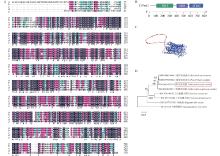
Fig.1
Sequence analysis of CfPmt2"
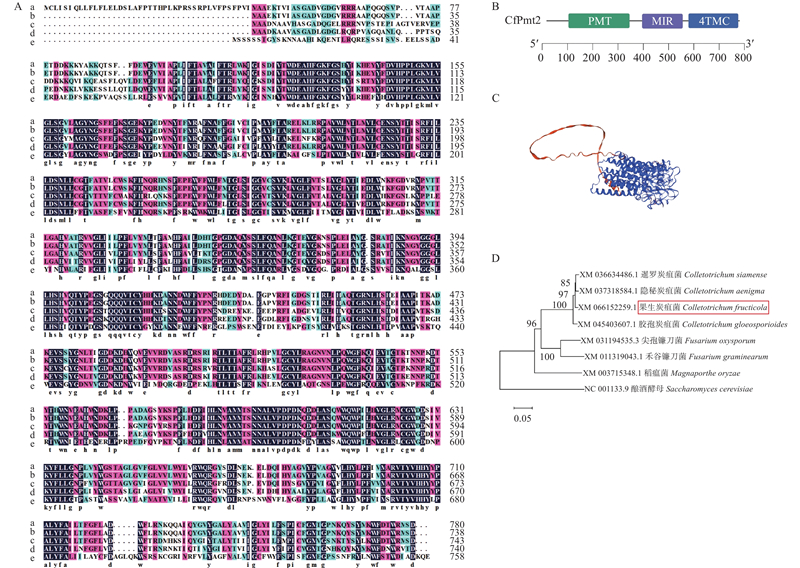
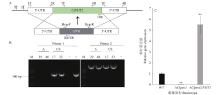
Fig.2
Construction of the CfPMT2 gene knockout vector and acquisition of mutants and complemented strains A. Schematic diagram of the CfPMT2 gene knockout strategy; B. Electrophoretic verification of mutants and complemented strains; M: 5 000 bp DNA marker; ?: H2O negative control; +: WT positive control; Δ: Mutants (No. 29, 46); CS: Complemented strains (No. 17, 33); C. Analysis of CfPMT2 gene expression levels in various strains; **: Indicates extremely significant difference (P<0.01)."
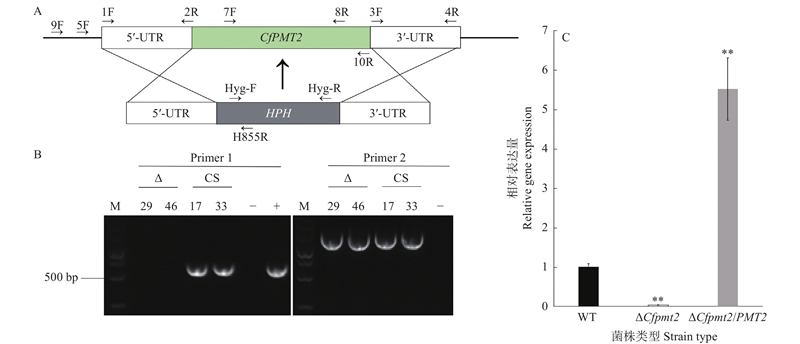
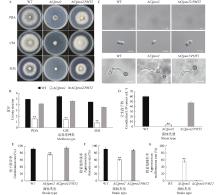
Fig.3
Analysis of vegetative growth, conidiation, and appressorium formation of ΔCfpmt2 A: Vegetative growth of WT, ΔCfpmt2, and ΔCfpmt2/PMT2 on PDA, CM, and MM plates; B: Statistical analysis of colony size of various strains; C: Conidia and appressoria of various strains, and arrows in white color indicate globular balloon-like structures; Scale=10 μm; D: Statistical analysis of conidiation; E: Statistical analysis of germination rate; F: Statistical analysis of appressorium formation rate; G: Statistical analysis of appressorium malformation rate; **: Indicates extremely significant difference (P<0.01)."
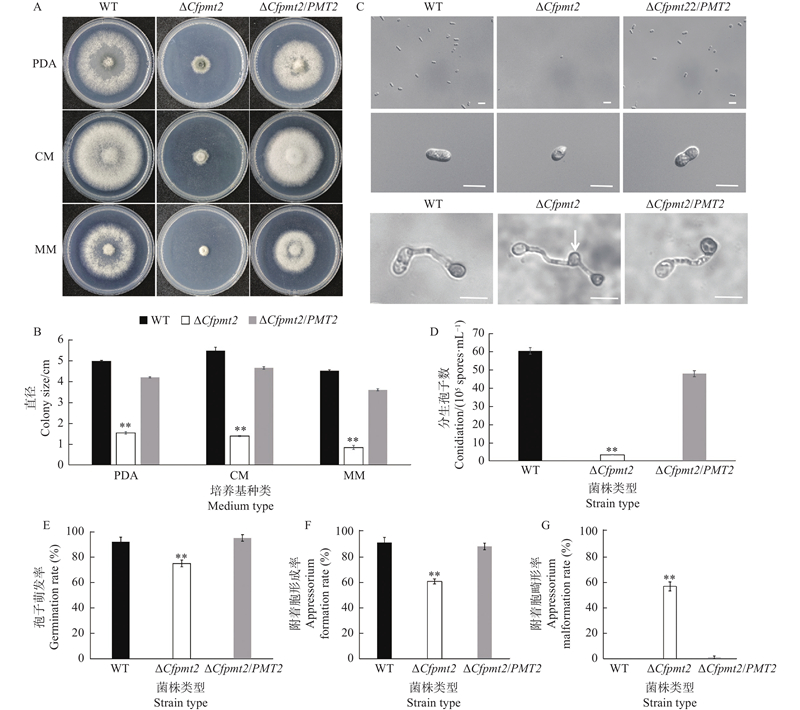
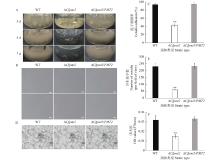
Fig.4
Analysis of conidial adhesion of ΔCfpmt2 A. The states of the culture broth of various strains cultured in PDB liquid medium for 3,5,and 7 days; B. Conidia on hydrophobic glass slides before and after sterile water washing; Upper: Unwashed; Lower: After washing; Scale = 20 μm; C. Statistical analysis of conidial adhesion rate of various strains; D. Conidia stained with crystal violet after PBS washing; Scale = 20 μm; E. Statistical analysis of the number of conidia stained with crystal violet by randomly selecting 3?5 fields of view; F. Statistical analysis of OD values of conidia stained with crystal violet of various strains detected by microplate reader; **: Indicates extremely significant difference (P<0.01)."
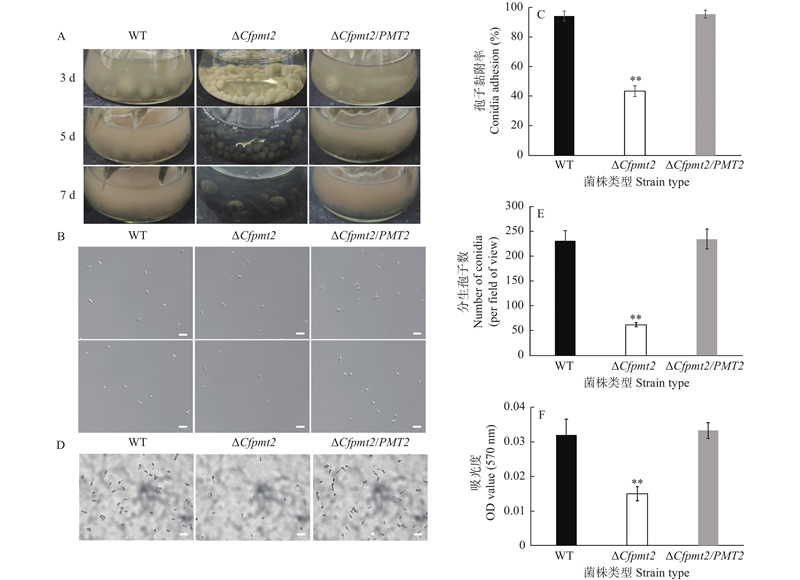
Fig.5
Analysis of appressorial adhesion of ΔCfpmt2 A. Appressoria on hydrophobic glass slides before and after sterile water washing; Upper: Unwashed; Lower: After washing; Scale = 20 μm; B. Statistical analysis of appressorial adhesion rate of various strains; C. Appressoria stained with crystal violet after PBS washing; Scale = 20 μm; D. Statistical analysis of the number of appressoria stained with crystal violet by randomly selecting 3?5 fields of view; E. Statistical analysis of OD values of appressoria stained with crystal violet of various strains detected by microplate reader; **: Indicates extremely significant difference (P<0.01)."
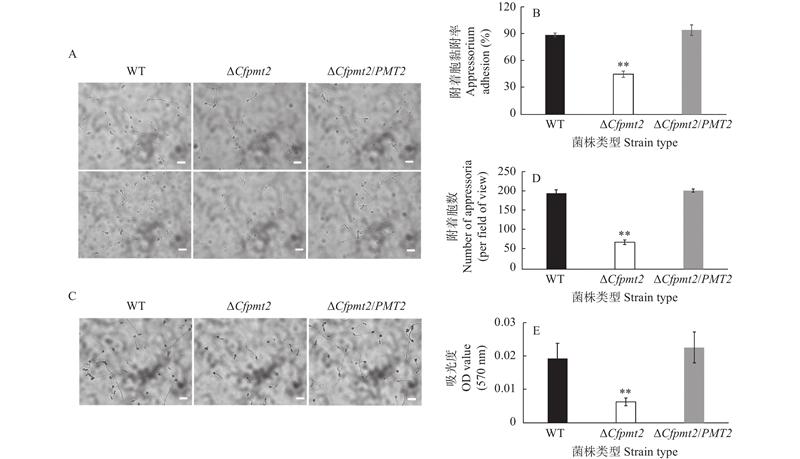
Fig.6
qRT-PCR analysis of the relative expression levels of GAA1, GPI8 and MSB2 genes in the ΔCfpmt2"
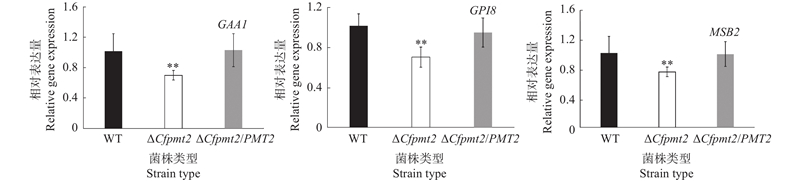
Fig.7
Sensitivity assay of ΔCfpmt2 under cell wall stress and oxidative stress A. Growth of WT, ΔCfpmt2, and ΔCfpmt2/PMT2 on PDA plates supplemented with 400 μg·mL−1 Congo Red (CR); B. Growth of WT, ΔCfpmt2, and ΔCfpmt2/PMT2 on PDA plates supplemented with 5 mmol·L−1 H2O2 and 10 mmol·L−1 H2O2; C. Statistical analysis of inhibition rate of various strains; **: Indicates extremely significant difference (P<0.01)."
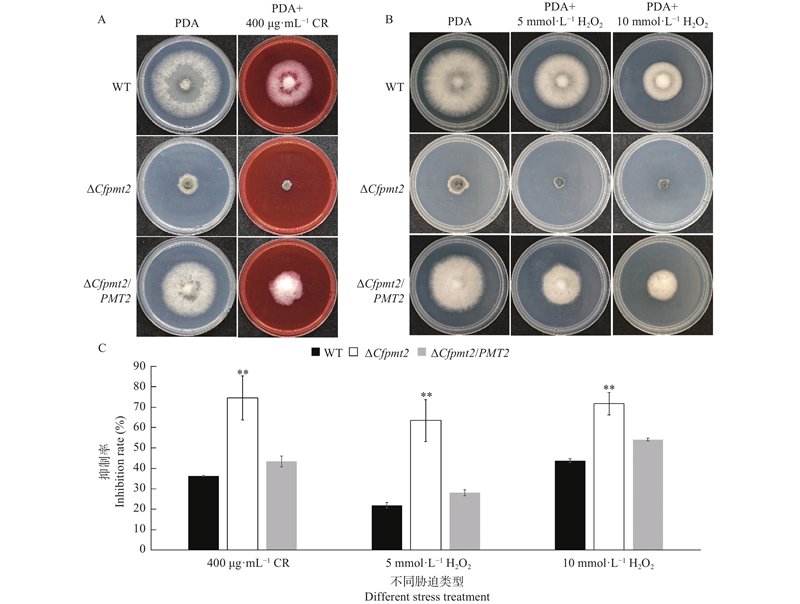
Fig.8
Analysis of mycelium formation and development of ΔCfpmt2 A. Mycelium formation of various strains in shake flask cultures; B. Analysis of CFW staining of mycelia from various strains, and arrows in white color indicate septa; C. Analysis of DHR 123 staining of mycelia from various strains."
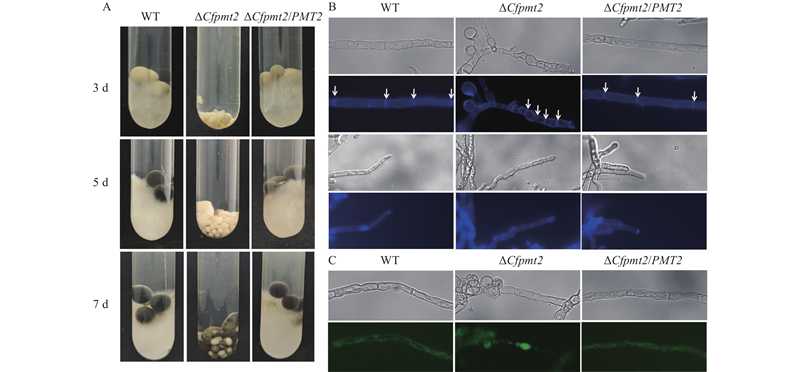
Fig.9
Analysis of the distribution of conidia, appressorial chitin and ROS in ΔCfpmt2 A. CFW staining of conidial suspensions from different strains cultured on hydrophobic glass slides for 2,4,6 and 24 h; B. DHR 123 staining of conidial suspensions from different strains cultured on hydrophobic glass slides for 2,4,6 and 24 h."
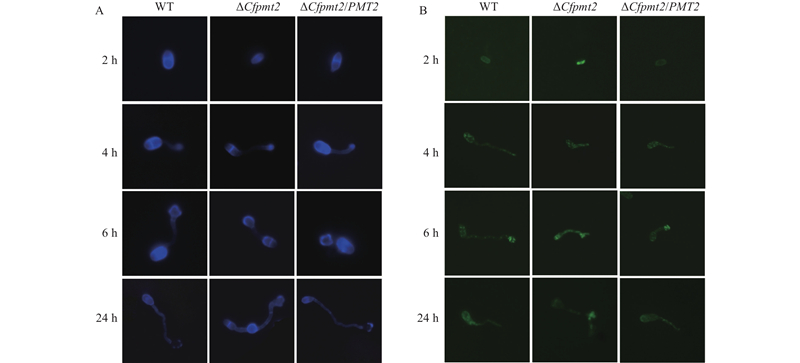
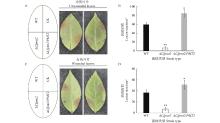
Fig.10
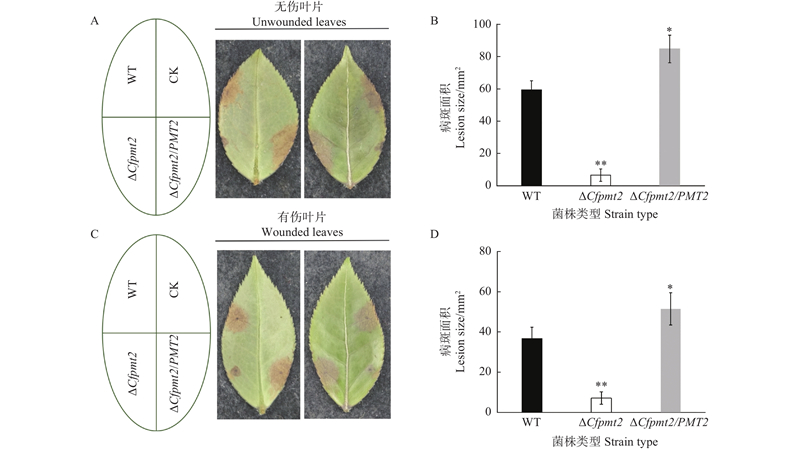
Pathogenicity assay of ΔCfpmt2 A. Pathogenicity of different strains inoculated on intact Camellia oleifera leaves; B. Statistical analysis of lesion size on intact camellia oleifera leaves; C. Pathogenicity of different strains inoculated on wounded C. oleifera leaves; D. Statistical analysis of lesion size on wounded C. oleifera leaves; **: Indicates extremely significant difference (P<0.01); *: Indicates significant difference (P<0.05)."
| 范晶晶, 李冠辰, 王子瑄, 等. 组蛋白赖氨酸甲基转移酶CfDot1在果生刺盘孢中的功能. 菌物学报, 2025, 44 (2): 55- 67. | |
| Fan J J, Li G C, Wang Z X, et al. Function of histone lysine methyltransferase CfDot1 in Colletotrichum fructicola. Mycosystema, 2025, 44 (2): 55- 67. | |
| 高亚兰, 何苑皋, 李 河. 调控油茶果生刺盘孢bZIP转录因子CfAp1的生物学功能. 林业科学, 2020, 56 (9): 30- 39. | |
| Gao Y L, He Y H, Li H. Biological function bZIP-Type transcription factor CfAp1 in Colletotrichum fructicola. Scientia Silvae Sinicae, 2020, 56 (9): 30- 39. | |
| 郭树峰, 郭 源, 陈 妍, 等. 半胱氨酸蛋白酶CfAtg4在油茶果生刺盘孢中的功能分析. 林业科学, 2024, 60 (7): 65- 72. | |
| Guo S F, Guo Y, Chen Y, et al. Functional analysis of cysteine protease CfAtg4 in Colletotrichum fructicola on Camellia oleifera. Scientia Silvae Sinicae, 2024, 60 (7): 65- 72. | |
| 郭 源. 2024. CfSnt2调控油茶果生炭疽菌细胞自噬和致病力的分子机制. 长沙: 中南林业科技大学. | |
| Guo Y. 2024. Molecular mechanism of CfSnt2 regulating autophagy and pathogenicity of Colletotrichum fructicola on Camellia oleifera. Changsha: Central South University of Forestry and Technology. [in Chinese] | |
|
郭 源, 李 河, 周国英, 等. 自噬相关蛋白CfAtg8在果生刺盘孢中的功能分析. 菌物学报, 2021, 40 (3): 592- 602.
doi: 10.13346/j.mycosystema.200227 |
|
|
Guo Y, Li H, Zhou G Y, et al. Functional analysis of the autophagy-related protein CfAtg8 in Colletotrichum fructicola. Mycosystema, 2021, 40 (3): 592- 602.
doi: 10.13346/j.mycosystema.200227 |
|
| 刘田谷. 2023. ChGPI7介导的GPI锚定修饰调控玉米小斑病菌致病过程的机制研究. 武汉: 华中农业大学. | |
| Liu T G. 2023. ChGPI7-mediated GPI anchoring modification regulates pathogenic process of Cochlibolus heterostrophus. Wuhan: Huazhong Agricultural University. [in Chinese] | |
| 李茜雅. 2022. CfVPS35基因调控果生刺盘孢致病力的分子机制研究. 长沙: 中南林业科技大学. | |
| Li X Y. 2022. Molecular mechanism of CfVPS35 gene regulating pathogenicity in Colletotrichum fructicola. Changsha: Central South University of Forestry and Technology. [in Chinese] | |
| 李茜雅, 张盛培, 李 河. 油茶果生刺盘孢液泡分选蛋白CfVps26的功能. 林业科学, 2021, 57 (8): 94- 101. | |
| Li X Y, Zhang S P, Li H. Function of vacuolar protein sorting CfVps26 in Colletotrichum fructicola on Camellia oleifera. Scientia Silvae Sinicae, 2021, 57 (8): 94- 101. | |
| 杨 迪. 2024. 油茶果生刺盘孢甘露糖转移酶Cfpmt的功能研究. 长沙: 中南林业科技大学. | |
| Yang D. 2024. Functional study of mannose phosphate transferases Cfpmt in Colletotrichum fructicola. Changsha: Central South University of Forestry and Technology. [in Chinese] | |
| 靳爱仙, 周国英, 李 河. 油茶炭疽病的研究现状、问题与方向. 中国森林病虫, 2009, 28 (2): 27- 31. | |
| Jin A X, Zhou G Y, Li H. Progress, problem and prospect of oil Camelliae anthracnose (Colletotrichum gloeosporioides) research. Forest Pest and Disease, 2009, 28 (2): 27- 31. | |
| 杨淑凤, 邓国英, 刘 欣, 等. 2015. 真核生物蛋白质O-甘露糖基化的研究进展. 生命的化学, 35(1): 5−8. | |
| Yang S F, Deng G Y, Liu X, et al. 2015. Protein O-mannosylation in eukaryotes. Chemistry of Life. 35(1): 5−8. [in Chinese] | |
|
Aebi M. N-linked protein glycosylation in the ER. Biochimica et Biophysica Acta (BBA) - Molecular Cell Research, 2013, 1833 (11): 2430- 2437.
doi: 10.1016/j.bbamcr.2013.04.001 |
|
|
Bago B, Chamberland H, Goulet A, et al. Effect of nikkomycin Z, a chitin-synthase inhibitor, on hyphal growth and cell wall structure of two arbuscular-mycorrhizal fungi. Protoplasma, 1996, 192 (1): 80- 92.
doi: 10.1007/bf01273247 |
|
|
Dai H F, Wen Z Q, Xia Y X, et al. MaMsb2, a signaling mucin, is involved in conidiation, stress tolerances, and virulence in the entomopathogenic fungus Metarhizium acridum. Virulence, 2025, 16 (1): 2541708.
doi: 10.1080/21505594.2025.2541708 |
|
|
Du M G, Yuan Z N, Kovach A, et al. Pmt4 recognizes two separate acceptor sites to O-mannosylate in the S/T-rich regions of substrate proteins. Nature Communications, 2025, 16, 9726.
doi: 10.1038/s41467-025-64729-9 |
|
|
Essen L O, Vogt M S, Mösch H U. Diversity of GPI-anchored fungal adhesins. Biological Chemistry, 2020, 401 (12): 1389- 1405.
doi: 10.1515/hsz-2020-0199 |
|
|
Fang W X, Ding W P, Wang B, et al. Reduced expression of the O-mannosyltransferase 2 (AfPmt2) leads to deficient cell wall and abnormal polarity in Aspergillus fumigatus. Glycobiology, 2010, 20 (5): 542- 552.
doi: 10.1093/glycob/cwp206 |
|
|
Fernández-Álvarez A, Elías-Villalobos A, Ibeas J I. The O-mannosyltransferase PMT4 is essential for normal appressorium formation and penetration in Ustilago maydis. The Plant Cell, 2009, 21 (10): 3397- 3412.
doi: 10.1105/tpc.109.065839 |
|
|
Gentzsch M, Tanner W. Protein-O-glycosylation in yeast: protein-specific mannosyltransferases. Glycobiology, 1997, 7 (4): 481- 486.
doi: 10.1093/glycob/7.4.481 |
|
|
Girrbach V, Strahl S. Members of the evolutionarily conserved PMT family of protein O-mannosyltransferases form distinct protein complexes among themselves. Journal of Biological Chemistry, 2003, 278 (14): 12554- 12562.
doi: 10.1074/jbc.M212582200 |
|
|
Girrbach V, Zeller T, Priesmeier M, et al. Structure-function analysis of the dolichyl phosphate-mannose: protein O-mannosyltransferase ScPmt1p. Journal of Biological Chemistry, 2000, 275 (25): 19288- 19296.
doi: 10.1074/jbc.M001771200 |
|
|
González M, Brito N, Frías M, et al. Botrytis cinerea protein O-mannosyltransferases play critical roles in morphogenesis, growth, and virulence. PLoS One, 2013, 8 (6): e65924.
doi: 10.1371/journal.pone.0065924 |
|
| Goto M. 2007. Protein O-glycosylation in fungi: diverse structures and multiple functions. Bioscience, Biotechnology, and Biochemistry, 71(6): 1415−1427. | |
|
Goto M, Harada Y, Oka T, et al. Protein O-mannosyltransferases B and C support hyphal development and differentiation in Aspergillus nidulans. Eukaryotic Cell, 2009, 8 (10): 1465- 1474.
doi: 10.1128/EC.00371-08 |
|
|
Guo M, Tan L Y, Nie X, et al. The Pmt2p-mediated protein O-mannosylation is required for morphogenesis, adhesive properties, cell wall integrity and full virulence of Magnaporthe oryzae. Frontiers in Microbiology, 2016, 7, 630.
doi: 10.3389/fmicb.2016.00630 |
|
|
Harries E, Gandía M, Carmona L, et al. The Penicillium digitatum protein O-mannosyltransferase Pmt2 is required for cell wall integrity, conidiogenesis, virulence and sensitivity to the antifungal peptide PAF26. Molecular Plant Pathology, 2015, 16 (7): 748- 761.
doi: 10.1111/mpp.12232 |
|
|
Jayawardena R S. Colletotrichum: lifestyles, biology, morpho-species, species complexes and accepted species. Mycosphere, 2021, 12 (1): 519- 669.
doi: 10.5943/mycosphere/12/1/7 |
|
|
Kriangkripipat T, Momany M. Aspergillus nidulans protein O-mannosyltransferases play roles in cell wall integrity and developmental patterning. Eukaryotic Cell, 2009, 8 (10): 1475- 1485.
doi: 10.1128/EC.00040-09 |
|
|
Lehle L, Strahl S, Tanner W. Protein glycosylation, conserved from yeast to man: a model organism helps elucidate congenital human diseases. Angewandte Chemie International Edition, 2006, 45 (41): 6802- 6818.
doi: 10.1002/anie.200601645 |
|
|
Li H, Zhou G Y, Liu J A, et al. Population genetic analyses of the fungal pathogen Colletotrichum fructicola on tea-oil trees in China. PLoS One, 2016, 11 (6): e0156841.
doi: 10.1371/journal.pone.0156841 |
|
|
Loibl M, Strahl S. Protein O-mannosylation: What we have learned from baker’s yeast. Biochimica et Biophysica Acta (BBA) - Molecular Cell Research, 2013, 1833 (11): 2438- 2446.
doi: 10.1016/j.bbamcr.2013.02.008 |
|
|
Lommel M, Strahl S. Protein O-mannosylation: conserved from bacteria to humans. Glycobiology, 2009, 19 (8): 816- 828.
doi: 10.1093/glycob/cwp066 |
|
|
Mouyna I, Kniemeyer O, Jank T, et al. Members of protein O-mannosyltransferase family in Aspergillus fumigatus differentially affect growth, morphogenesis and viability. Molecular Microbiology, 2010, 76 (5): 1205- 1221.
doi: 10.1111/j.1365-2958.2010.07164.x |
|
|
Oliveira-Garcia E, Deising H B. The glycosylphosphatidylinositol anchor biosynthesis genes GPI12, GAA1, and GPI8 are essential for cell-wall integrity and pathogenicity of the maize anthracnose fungus Colletotrichum graminicola. Molecular Plant-Microbe Interactions®, 2016, 29 (11): 889- 901.
doi: 10.1094/MPMI-09-16-0175-R |
|
|
Olson G M, Fox D S, Wang P, et al. Role of protein O-mannosyltransferase Pmt4 in the morphogenesis and virulence of Cryptococcus neoformans. Eukaryotic Cell, 2007, 6 (2): 222- 234.
doi: 10.1128/EC.00182-06 |
|
|
Pan Y M, Pan R, Tan L Y, et al. Correction to: pleiotropic roles of O-mannosyltransferase MoPmt4 in development and pathogenicity of Magnaporthe oryzae. Current Genetics, 2019, 65 (1): 241.
doi: 10.1007/s00294-018-0888-7 |
|
|
Pejenaute-Ochoa M D, Santana-Molina C, Devos D P, et al. Structural, evolutionary, and functional analysis of the protein O-mannosyltransferase family in pathogenic fungi. Journal of Fungi, 2021, 7 (5): 328.
doi: 10.3390/jof7050328 |
|
|
Peng S F, Lu J, Zhang Z, et al. Global transcriptome and correlation analysis reveal cultivar-specific molecular signatures associated with fruit development and fatty acid determination in Camellia oleifera Abel. International Journal of Genomics, 2020 (1): 6162802.
doi: 10.1155/2020/6162802 |
|
|
Plaza V, Pasten A, López-Ramírez L A, et al. Botrytis cinerea PMT4 is involved in O-glycosylation, cell wall organization, membrane integrity, and virulence. Journal of Fungi, 2025, 11 (1): 71.
doi: 10.3390/jof11010071 |
|
|
Shaw B D, Momany M. Aspergillus nidulans polarity mutant swoA is complemented by protein O-mannosyltransferase pmtA. Fungal Genetics and Biology, 2002, 37 (3): 263- 270.
doi: 10.1016/S1087-1845(02)00531-5 |
|
|
Takayama T, Yamamoto K, Saito H, et al. Interaction between the transmembrane domains of Sho1 and Opy2 enhances the signaling efficiency of the Hog1 MAP kinase cascade in Saccharomyces cerevisiae. PLoS One, 2019, 14 (1): e0211380.
doi: 10.1371/journal.pone.0211380 |
|
|
Willer T, Brandl M, Sipiczki M, et al. Protein O-mannosylation is crucial for cell wall integrity, septation and viability in fission yeast. Molecular Microbiology, 2005, 57 (1): 156- 170.
doi: 10.1111/j.1365-2958.2005.04692.x |
|
|
Willer T, Valero M C, Tanner W, et al. O-mannosyl glycans: from yeast to novel associations with human disease. Current Opinion in Structural Biology, 2003, 13 (5): 621- 630.
doi: 10.1016/j.sbi.2003.09.003 |
|
|
Xu Y Q, Zhou H, Zhao G Y, et al. Genetical and O-glycoproteomic analyses reveal the roles of three protein O-mannosyltransferases in phytopathogen Fusarium oxysporum f. sp. cucumerinum. Fungal Genetics and Biology, 2020, 134, 103285.
doi: 10.1016/j.fgb.2019.103285 |
|
|
Zhou A T, Wang F, Yin J B, et al. Antifungal action and induction of resistance by Bacillus sp. strain YYC 155 against Colletotrichum fructicola for control of anthracnose disease in Camellia oleifera. Frontiers in Microbiology, 2022, 13, 956642.
doi: 10.3389/fmicb.2022.956642 |
|
|
Zhou H Q, Dong K K, Du Q J, et al. Biofilm-forming of Bacillus tequilensis DZY 6715 enhanced suppression the Camellia oleifera anthracnose caused by Colletotrichum fructicola and its mechanism. Scientia Horticulturae, 2024, 338, 113676.
doi: 10.1016/j.scienta.2024.113676 |
| [1] | Qingsong Li,Daochun Xu,Xiaopeng Bai,Yuan He,Yuewei Ma,Wenbin Li. Construction and Simulation Experiment of the Distributed Mass Model for Camellia oleifera Trees [J]. Scientia Silvae Sinicae, 2026, 62(7): 197-207. |
| [2] | Chunmei Yang,Chongyang Shan,Xiaofeng Wu,Jianbo Zhou,Beihang Zhang,Quangang Li,Honglei Yi,Zhiru Li,Zhiyu Tan,Weiguo Zhang. Mechanical Properties of Camellia oleifera Seedlings Matched to Automated Grafting Devices [J]. Scientia Silvae Sinicae, 2026, 62(6): 224-235. |
| [3] | Huiqi Zhong,Jingyu Chai,Kailiang Wang,Jianhua Teng,Wenyu Bi,Anni Wang,Ping Lin. Construction of Near Infrared Spectroscopy Prediction Models Based on CARS-PLSR for Determining Oil Content and Fatty Acid Composition of Camellia oleifera Kernel [J]. Scientia Silvae Sinicae, 2026, 62(2): 111-125. |
| [4] | Ran Liu,Jianbo Zhou,Zhenkun Miao,Yu Zhang,Tengfei Li,Zhiru Li,Shi Wang. Analysis of Opening Conditions and Mechanical Tests for Non-Woven Seedling Containers of Camellia oleifera Grafted Seedlings [J]. Scientia Silvae Sinicae, 2025, 61(8): 1-10. |
| [5] | Ting Zhang,Jian’an Li,Yuzi Gong,Xinyue Yang,Caixia Liu,Haoyu Wang,Xiaofeng Tan,Ze Li. Pollination Configuration Technology of Five Early- to Mid-Maturing Camellia oleifera Varieties Recommended in Hunan Province [J]. Scientia Silvae Sinicae, 2025, 61(4): 153-168. |
| [6] | Xiaolin Qiu,Shumin Wang,Lu Yu,Yuchen Yang,Dianguang Xiong,Chengming Tian. Functional of SNARE Protein CcNyv1 in Cytospora chrysosperma [J]. Scientia Silvae Sinicae, 2024, 60(9): 90-98. |
| [7] | Shufeng Guo,Yuan Guo,Yan Chen,He Li,Shengpei Zhang. Functional Analysis of Cysteine Protease CfAtg4 in Colletotrichum fructicola on Camellia oleifera [J]. Scientia Silvae Sinicae, 2024, 60(7): 65-72. |
| [8] | Xiansheng Geng,Jinping Shu,Ying Liu,Jun Liu. Isolation and Identification of the Pathogen Causing Canker Disease of Toona sinensis in Zhejiang Province [J]. Scientia Silvae Sinicae, 2024, 60(5): 151-157. |
| [9] | Xiaofeng Tan,Jun Yuan,Ze Li,Jian’an Li. Breeding and Popularization of Sanhua Camellia oleifera Cultivars [J]. Scientia Silvae Sinicae, 2024, 60(11): 199-202. |
| [10] | Lingling Li,Yuanye Zhu,Shengpei Zhang,He Li. Identification of the Compound Pathogens Causing Anthracnose of Camellia oleifera and Evaluation of Fungicides in Laboratory [J]. Scientia Silvae Sinicae, 2023, 59(5): 100-108. |
| [11] | Shouke Zhang,Zikun Li,Hao Yin,Wei Zhang,Jinping Shu,Haojie Wang,Xudong Zhou,Yangdong Wang. Effects of Saponin Content in Camellia oleifera Resistant Clones on the Gut Microbiome Structure of the Seed Pest Curculio chinensis (Coleoptera: Curculionidae) [J]. Scientia Silvae Sinicae, 2022, 58(7): 120-127. |
| [12] | Yanmin Li,Deyi Yuan,Tianwen Ye,Ya Chen,Chunxia Han,Shixin Xiao. Karyotype Analysis of 18 Excellent Individuals in F1 Generation of Interspecific Hybridization of Oil-Tea (Camellia oleifera) [J]. Scientia Silvae Sinicae, 2022, 58(4): 165-174. |
| [13] | Zhiyang Li,Xiaolin Chen,Lili Li,Shiping Xu,Yuanhao He. Transcriptome Analysis of Camellia olefolia Root and the Endophytic Bacteria Bacillus Subtilis at the Early Stage of Their Interaction [J]. Scientia Silvae Sinicae, 2022, 58(3): 48-58. |
| [14] | Yongzhong Chen,Caixia Liu,Yanming Xu,Zhen Zhang,Yinghe Peng,Longsheng Chen,Yirong Su,Rui Wang,Wei Tang. Effects of Herbage Inter-Planting on Structure and Stability of Soil Microbial Community in Camellia oleifera Plantations [J]. Scientia Silvae Sinicae, 2022, 58(11): 61-70. |
| [15] | Xingzhou Chen,Guoying Zhou,Xinggang Chen,Lingyu Jiang,Anhua Bao,Jun Liu. Screening of Effectors of Colletotrichum fructicola in Camellia oleifera [J]. Scientia Silvae Sinicae, 2021, 57(9): 110-120. |
| Viewed | ||||||
|
Full text |
|
|||||
|
Abstract |
|
|||||
