
林业科学 ›› 2026, Vol. 62 ›› Issue (1): 207-222.doi: 10.11707/j.1001-7488.LYKX20250273
李尧迪1,田野1,张长春1,谢将剑1,赵海涛1,2,*( ),张军国1,2,*()
收稿日期:2025-05-05
修回日期:2025-07-07
出版日期:2026-01-25
发布日期:2026-01-14
通讯作者:
赵海涛,张军国
E-mail:zht@xab.ac.cn;zhangjunguo@bjfu.edu.cn
基金资助:
Yaodi Li1,Ye Tian1,Changchun Zhang1,Jiangjian Xie1,Haitao Zhao1,2,*(),Junguo Zhang1,2,*()
Received:2025-05-05
Revised:2025-07-07
Online:2026-01-25
Published:2026-01-14
Contact:
Haitao Zhao,Junguo Zhang
E-mail:zht@xab.ac.cn;zhangjunguo@bjfu.edu.cn
摘要:
随着野生动物保护和生态监测需求的不断增长,基于深度学习的图像识别方法在野生动物研究中的应用日益广泛。本研究首先介绍野生动物常用公开数据集,随后详细综述不同深度学习技术在野生动物图像识别中的应用,依据任务需求将识别方法划分为图像级、对象级和像素级3个层级,并重点讨论各层级方法的具体实现及其技术细节。在此基础上,深入探讨野生动物图像识别所面临的核心挑战,涵盖数据层面的诸多问题,如数据质量参差不齐、标注代价高昂且效率低下、样本分布不均衡;同时还从模型与算法角度剖析若干关键技术难题,包括细粒度检测、跨域分布偏移、类增量学习、零样本学习和跨模态学习等。针对上述挑战,总结当前的研究进展与应对策略,并提出未来可能的发展方向,旨在为构建高效、鲁棒且适用于实际监测场景的野生动物智能识别系统提供理论支持和方法参考。
中图分类号:
李尧迪,田野,张长春,谢将剑,赵海涛,张军国. 基于深度学习的野生动物图像识别方法与挑战[J]. 林业科学, 2026, 62(1): 207-222.
Yaodi Li,Ye Tian,Changchun Zhang,Jiangjian Xie,Haitao Zhao,Junguo Zhang. Wildlife Image Recognition Methods and Challenges Based on Deep Learning[J]. Scientia Silvae Sinicae, 2026, 62(1): 207-222.
表1
常用野生动物公开数据集"
| 数据集 Dataset | 物种数量 Species quantity | 图像总数 Total number of images | 采集地点 Collection site |
| Snapshot Serengeti( | 48 | 1 200 000 | 坦桑尼亚塞伦盖蒂国家公园 Serengeti National Park, Tanzania |
| Missouri Camera Traps( | 20 | 25 000 | 密苏里州Missouri |
| Wildlife Spotter Dataset( | 15 | 125 621 | 澳大利亚Australia |
| iNaturalist( | 5 089 | 675 170 | 全球Globe |
| Costa Rica Camera Trap Dataset( | 12 | 300 000 | 哥斯达黎加共和国The Republic of Costa Rica |
| Caltech Camera Traps( | 14 | 110 843 | 美国西南部 Southwestern United States |
| Wildlife Surveillance( | 6 | 8 368 | 英国United Kingdom |
| NACTI-64( | 22 | 29 899 | 北美洲North America |
| The iWildCam 2021( | 206 | 263 528 | 全球Globe |
| LoTE-Animal( | 11 | 21 987 | 中国卧龙国家级自然保护区 Wolong National Nature Reserve, China |

图1
图像级的野生动物识别方法"
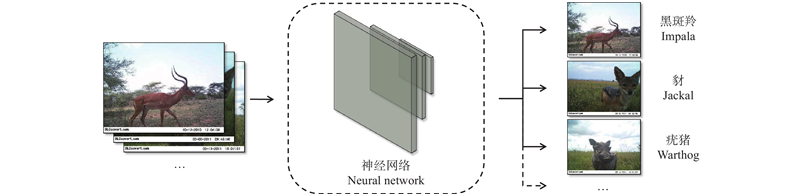
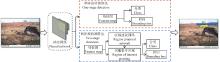
图2
对象级的野生动物识别方法"

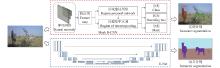
图3
实例分割与语义分割的差异"
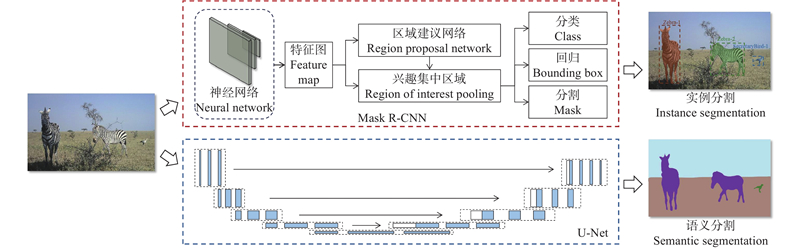
图4
基于Retinex理论的光照自适应图像增强方法流程"
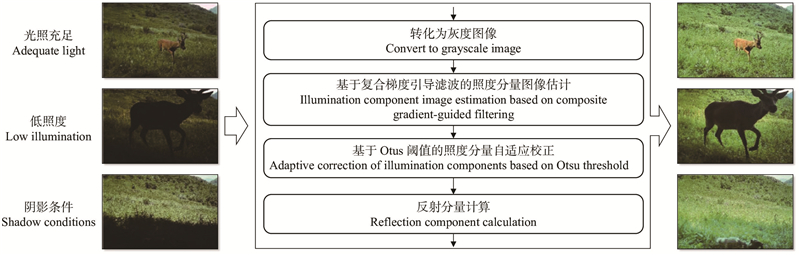
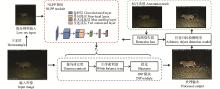
图5
自适应图像处理模块(AIP-OD)嵌入野生动物目标检测任务框架"
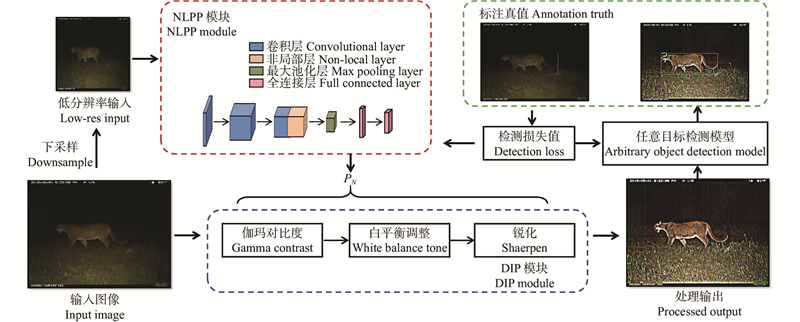
图6
小熊猫个体识别方法流程"
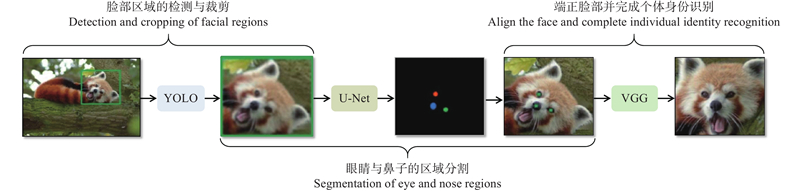
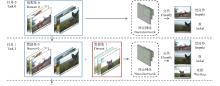
图7
野生动物类增量学习流程(Zhu et al.,2022)"
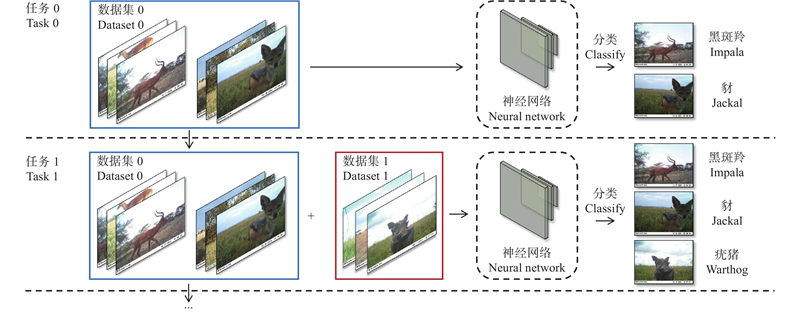
表2
零样本分类算法在AWA、AWA2和CUB三个数据集上的试验结果对比"
| 方法 Method | ZSL | GZSL | |||||||||||||
| AWA | AWA2 | CUB | AWA | AWA2 | CUB | ||||||||||
| Top-1 | Top-1 | Top-1 | u | s | H | u | s | H | u | s | H | ||||
| TF-VAEGAN( | 71.5 | 71.6 | 63.4 | 57.3 | 76.6 | 65.5 | 52.5 | 82.4 | 64.1 | 50.7 | 62.5 | 56 | |||
| GCM-CF( | 66.4 | 62.6 | 59.9 | 76.2 | 45.4 | 56.9 | 39.8 | 82.7 | 53.7 | 41.3 | 65.6 | 50.7 | |||
| FREE( | 71.2 | 65.9 | 62.9 | 61.6 | 70.1 | 65.9 | 58.9 | 75.4 | 66.1 | 52.4 | 60.5 | 56.2 | |||
| MFF( | 73.8 | 71.8 | 64.7 | 64.5 | 71.4 | 67.8 | 58 | 79.1 | 66.9 | 54.1 | 62.9 | 58.2 | |||
| VS-Boost( | 74.2 | — | 79.8 | 67.9 | 81.6 | 74.1 | — | — | — | 68.0 | 68.7 | 68.4 | |||
| DI-GAN( | 70.6 | 68.8 | 61.8 | 58.8 | 69.2 | 63.6 | 54.9 | 75.8 | 63.7 | 50.2 | 58.9 | 54.2 | |||
| 蔡前舟, 郑伯川, 曾祥银, 等. 结合长尾数据解决方法的野生动物目标检测. 计算机应用, 2022, 42 (4): 1284- 1291. | |
| Cai Q Z, Zheng B C, Zeng X Y, et al. Wildlife object detection combined with solving method of long-tail data. Journal of Computer Applications, 2022, 42 (4): 1284- 1291. | |
|
陈建促, 王 越, 朱小飞, 等. 融合多特征图的野生动物视频目标检测方法. 计算机工程与应用, 2020, 56 (7): 221- 227.
doi: 10.3778/j.issn.1002-8331.1901-0087 |
|
|
Chen J C, Wang Y, Zhu X F, et al. Wild animal video object detection method combining multi-feature map. Computer Engineering and Applications, 2020, 56 (7): 221- 227.
doi: 10.3778/j.issn.1002-8331.1901-0087 |
|
| 范苍宁, 刘 鹏, 肖 婷, 等. 深度域适应综述: 一般情况与复杂情况. 自动化学报, 2021, 47 (3): 515- 548. | |
| Fan C N, Liu P, Xiao T, et al. A review of deep domain adaptation: general situation and complex situation. Acta Automatica Sinica, 2021, 47 (3): 515- 548. | |
|
高 爽, 徐巧枝. 迁移学习方法在医学图像领域的应用综述. 计算机工程与应用, 2021, 57 (24): 39- 50.
doi: 10.3778/j.issn.1002-8331.2107-0300 |
|
|
Gao S, Xu Q Z. Review of application of transfer learning in medical image field. Computer Engineering and Applications, 2021, 57 (24): 39- 50.
doi: 10.3778/j.issn.1002-8331.2107-0300 |
|
| 宫一男, 谭孟雨, 王 震, 等. 基于深度学习的红外相机动物影像人工智能识别: 以东北虎豹国家公园为例. 兽类学报, 2019, 39 (4): 458- 465. | |
| Gong Y N, Tan M Y, Wang Z, et al. AI recognition of infrared camera image of wild animals based on deep learning: Northeast Tiger and Leopard National Park for example. Acta Theriologica Sinica, 2019, 39 (4): 458- 465. | |
| 韩佳艺, 刘建伟, 陈德华, 等. 深度长尾学习研究综述. 自动化学报, 2025, 51 (5): 985- 1020. | |
| Han J Y, Liu J W, Chen D H, et al. Survey on deep long-tailed learning. Acta Automatica Sinica, 2025, 51 (5): 985- 1020. | |
| 柯 澳, 王宇聪, 胡博宇, 等. 基于图像的野生动物检测与识别综述. 计算机系统应用, 2024, 33 (1): 22- 36. | |
| Ke A, Wang Y C, Hu B Y, et al. Review on image-based wildlife detection and recognition. Computer Systems and Applications, 2024, 33 (1): 22- 36. | |
|
李柏灿, 张军国, 张长春, 等. 基于TC-YOLO模型的北京珍稀鸟类识别方法. 生物多样性, 2024, 32 (5): 127- 141.
doi: 10.17520/biods.2024056 |
|
|
Li B C, Zhang J G, Zhang C C, et al. Rare bird recognition method in Beijing based on TC-YOLO model. Biodiversity Science, 2024, 32 (5): 127- 141.
doi: 10.17520/biods.2024056 |
|
| 李 叶, 石永红, 许显金, 等. 利用红外相机技术对青海省布尔汗布达山非保护地鸟兽多样性的初步调查. 林业科学, 2022, 58 (12): 155- 163. | |
| Li Y, Shi Y H, Xu X J, et al. Preliminary survey on the diversity of mammalian and avian in the non-protected area of burhan buda mountain, Qinghai Province, with infrared camera-trapping technology. Scientia Silvae Sinicae, 2022, 58 (12): 155- 163. | |
| 刘文定, 李安琪, 张军国, 等. 基于ROI-CNN的赛罕乌拉国家级自然保护区陆生野生动物自动识别. 北京林业大学学报, 2018, 40 (8): 123- 131. | |
| Liu W D, Li A Q, Zhang J G, et al. Automatic identification method for terrestrial wildlife in Saihanwula National Nature Reserve in Inner Mongolia of northern China based on ROI-CNN. Journal of Beijing Forestry University, 2018, 40 (8): 123- 131. | |
| 吕永磊, 普布顿珠, 李 凡, 等. 2022. 基于卫星遥感影像的野生动物栖息地监测技术研究. 中国高新科技, (3): 106−108. | |
| Lü Y L, Pubudunzhu, Li F, et al. 2022. Research on monitoring technology of wildlife habitat based on satellite remote sensing images. China High-Tech, (3): 106−108. [in Chinese] | |
|
马瑞俊, 蒋志刚. 全球气候变化对野生动物的影响. 生态学报, 2005, 25 (11): 3061- 3066.
doi: 10.3321/j.issn:1000-0933.2005.11.037 |
|
|
Ma R J, Jiang Z G. Impact of global climate change on wildlife. Acta Ecologica Sinica, 2005, 25 (11): 3061- 3066.
doi: 10.3321/j.issn:1000-0933.2005.11.037 |
|
|
孟继森, 马玉明, 杨紫合, 等. 基于伪标签和YOLOv4的野生动物检测方法. 野生动物学报, 2025, 46 (3): 523- 532.
doi: 10.12375/ysdwxb.20250306 |
|
|
Meng J S, Ma Y M, Yang Z H, et al. Wildlife detection method based on pseudo-labels and YOLOv4. Chinese Journal of Wildlife, 2025, 46 (3): 523- 532.
doi: 10.12375/ysdwxb.20250306 |
|
|
齐建东, 马鐘添, 张德怀, 等. 基于BS-ResNeXt-50的密云地区野生动物图像识别. 林业科学, 2023, 59 (8): 112- 122.
doi: 10.11707/j.1001-7488.LYKX20220378 |
|
|
Qi J D, Ma Z T, Zhang D H, et al. Wildlife image recognition in Miyun District based on BS-ResNeXt-50. Scientia Silvae Sinicae, 2023, 59 (8): 112- 122.
doi: 10.11707/j.1001-7488.LYKX20220378 |
|
|
齐建东, 郑尚姿, 陈子仪, 等. 基于ConvNeXt的北京地区红外相机野生动物图像识别改进模型构建. 林业科学, 2024, 60 (8): 33- 45.
doi: 10.11707/j.1001-7488.LYKX20230276 |
|
|
Qi J D, Zheng S Z, Chen Z Y, et al. Wildlife image recognition of infrared cameras in Beijing area based on an improvement ConvNeXt model. Scientia Silvae Sinicae, 2024, 60 (8): 33- 45.
doi: 10.11707/j.1001-7488.LYKX20230276 |
|
| 汪 帅, 卢 楠, 郑 红, 等. 2024. 基于深度学习的野生动物视频目标检测. 林草资源研究 (1): 34−40. | |
| Wang S, Lu N, Zheng H, et al. 2024. Wildlife video object detection based on deep learning. Forest and Grassland Resources Research, (1): 34−40. [in Chinese] | |
| 王 越, 陈建促, 朱小飞, 等. 基于熵和运动偏移量的野生动物遮挡检测方法. 计算机应用研究, 2019, 36 (12): 3869- 3873,3877. | |
| Wang Y, Chen J C, Zhu X F, et al. Wild animal occlusion detection method based on entropy and motion offset. Application Research of Computers, 2019, 36 (12): 3869- 3873,3877. | |
|
肖治术, 李欣海, 姜广顺. 红外相机技术在我国野生动物监测研究中的应用. 生物多样性, 2014, 22 (6): 683- 684.
doi: 10.3724/SP.J.1003.2014.14244 |
|
|
Xiao Z S, Li X H, Jiang G S. Applications of camera trapping to wildlife surveys in China. Biodiversity Science, 2014, 22 (6): 683- 684.
doi: 10.3724/SP.J.1003.2014.14244 |
|
|
阎婧宇, 谢永华. 基于YOLOv7-Tiny算法的无人机实时跟踪野生动物方法. 野生动物学报, 2024, 45 (2): 251- 261.
doi: 10.12375/ysdwxb.20240203 |
|
|
Yan J Y, Xie Y H. Real time tracking of wild animals using unmanned aerial vehicles based on YOLOv7-tiny algorithm. Chinese Journal of Wildlife, 2024, 45 (2): 251- 261.
doi: 10.12375/ysdwxb.20240203 |
|
|
杨文翰, 刘天宇, 周俊池, 等. 基于改进YOLOv5s的CNN-Swin Transformer森林野生动物图像目标检测算法. 林业科学, 2024, 60 (3): 121- 130.
doi: 10.11707/j.1001-7488.LYKX20220597 |
|
|
Yang W H, Liu T Y, Zhou J C, et al. CNN-Swin Transformer detection algorithm of forest wildlife images based on improved YOLOv5s. Scientia Silvae Sinicae, 2024, 60 (3): 121- 130.
doi: 10.11707/j.1001-7488.LYKX20220597 |
|
|
张长春, 李大方, 张军国. 基于Wasserstein距离和相关对齐迁移学习的野生动物图像识别方法. 林业科学, 2024, 60 (8): 25- 32.
doi: 10.11707/j.1001-7488.LYKX20230399 |
|
|
Zhang C C, Li D F, Zhang J G. Wildlife images recognition method based on Wasserstein distance and correlation alignment transfer learning. Scientia Silvae Sinicae, 2024, 60 (8): 25- 32.
doi: 10.11707/j.1001-7488.LYKX20230399 |
|
|
张军国, 程浙安, 胡春鹤, 等. 野生动物监测光照自适应Retinex图像增强算法. 农业工程学报, 2018, 34 (15): 183- 189.
doi: 10.11975/j.issn.1002-6819.2018.15.023 |
|
|
Zhang J G, Cheng Z A, Hu C H, et al. Adaptive image enhancement algorithm for wild animal monitoring based on Retinex theory. Transactions of the Chinese Society of Agricultural Engineering, 2018, 34 (15): 183- 189.
doi: 10.11975/j.issn.1002-6819.2018.15.023 |
|
|
张雪莹, 张浩林, 韩莹莹, 等. 基于深度学习的野生动物监测与识别研究进展. 野生动物学报, 2022, 43 (1): 251- 258.
doi: 10.3969/j.issn.1000-0127.2022.01.040 |
|
|
Zhang X Y, Zhang H L, Han Y Y, et al. Research progress of the wildlife monitoring and identification based on deep learning. Chinese Journal of Wildlife, 2022, 43 (1): 251- 258.
doi: 10.3969/j.issn.1000-0127.2022.01.040 |
|
|
张 毓, 高雅月, 常峰源, 等. 基于改进Cascade R-CNN的雪豹物种水平的自动检测方法. 野生动物学报, 2022, 43 (2): 307- 313.
doi: 10.12375/ysdwxb.20220202 |
|
|
Zhang Y, Gao Y Y, Chang F Y, et al. Automatic detection of snow leopard(Panthera uncia) at species level based on improved cascade R-CNN. Chinese Journal of Wildlife, 2022, 43 (2): 307- 313.
doi: 10.12375/ysdwxb.20220202 |
|
|
赵恩庭, 张长春, 赵海涛, 等. 基于对抗学习的野生动物图像域适应识别方法. 林业科学, 2025, 61 (4): 1- 8.
doi: 10.11707/j.1001-7488.LYKX20240437 |
|
|
Zhao E T, Zhang C C, Zhao H T, et al. A recognition method of domain adaptation for wildlife images based on adversarial learning. Scientia Silvae Sinicae, 2025, 61 (4): 1- 8.
doi: 10.11707/j.1001-7488.LYKX20240437 |
|
| 钟俊杰, 钮 冰, 陈 沁, 等. 深度学习在野生动物保护中的应用. 兽类学报, 2023, 43 (6): 734- 744. | |
| Zhong J J, Niu B, Chen Q, et al. Application of deep learning in wildlife conservation. Acta Theriologica Sinica, 2023, 43 (6): 734- 744. | |
|
Awal M R, Lee R K, Tanwar E, et al. Model-agnostic meta-learning for multilingual hate speech detection. IEEE Transactions on Computational Social Systems, 2024, 11 (1): 1086- 1095.
doi: 10.1109/TCSS.2023.3252401 |
|
|
Bakana S R, Zhang Y F, Twala B. WildARe-YOLO: a lightweight and efficient wild animal recognition model. Ecological Informatics, 2024, 80, 102541.
doi: 10.1016/j.ecoinf.2024.102541 |
|
| Beery S, Agarwal A, Cole E, et al. 2021. The iwildcam 2021 competition dataset. arXiv preprint arXiv: 2105.03494. | |
| Beery S, Van Horn G, Perona P. 2018. Recognition in Terra incognita//Proceedings of the European conference on computer vision (ECCV). Munich, Germany, 456−473. | |
| Bolya D, Zhou C, Xiao F Y, et al. 2019. YOLACT: real-time instance segmentation. 2019 IEEE/CVF International Conference on Computer Vision (ICCV), Seoul, Korea. IEEE, 9156−9165. | |
| Brust C A, Burghardt T, Groenenberg M, et al. 2017. Towards automated visual monitoring of individual gorillas in the wild. 2017 IEEE International Conference on Computer Vision Workshops (ICCVW), Venice, Italy. IEEE, 2820−2830. | |
|
Buschbacher K, Ahrens D, Espeland M, et al. Image-based species identification of wild bees using convolutional neural networks. Ecological Informatics, 2020, 55, 101017.
doi: 10.1016/j.ecoinf.2019.101017 |
|
|
Bustos N, Mashhadi M, Lai-Yuen S K, et al. A systematic literature review on object detection using near infrared and thermal images. Neurocomputing, 2023, 560, 126804.
doi: 10.1016/j.neucom.2023.126804 |
|
|
Cao W P, Wu Y H, Huang C C, et al. MFF: Multi-modal feature fusion for zero-shot learning. Neurocomputing, 2022, 510, 172- 180.
doi: 10.1016/j.neucom.2022.09.070 |
|
| Chao W L, Changpinyo S, Gong B Q, et al. 2016. An empirical study and analysis of generalized zero-shot learning for object recognition in the wild. Computer Vision-ECCV 2016: 14th European Conference, Amsterdam, The Netherlands, 52−68. | |
|
Chawla N V, Bowyer K W, Hall L O, et al. SMOTE: synthetic minority over-sampling technique. Journal of Artificial Intelligence Research, 2002, 16, 321- 357.
doi: 10.1613/jair.953 |
|
| Chen G B, Han T X, He Z H, et al. 2014. Deep convolutional neural network based species recognition for wild animal monitoring. 2014 IEEE International Conference on Image Processing (ICIP), Paris, France. IEEE, 858−862. | |
|
Chen L C, Papandreou G, Kokkinos I, et al. DeepLab: semantic image segmentation with deep convolutional nets, atrous convolution, and fully connected CRFs. IEEE Transactions on Pattern Analysis and Machine Intelligence, 2018, 40 (4): 834- 848.
doi: 10.1109/TPAMI.2017.2699184 |
|
|
Chen R L, Little R, Mihaylova L, et al. Wildlife surveillance using deep learning methods. Ecology and Evolution, 2019, 9 (17): 9453- 9466.
doi: 10.1002/ece3.5410 |
|
| Chen S M, Wang W J, Xia B H, et al. 2021. FREE: feature refinement for generalized zero-shot learning. 2021 IEEE/CVF International Conference on Computer Vision (ICCV), Montreal, QC, Canada. IEEE, 122−131. | |
| Chou Y M, Chen C H, Liu K H, et al. 2018. Stingray detection of aerial images using augmented training images generated by a conditional generative model. 2018 IEEE/CVF Conference on Computer Vision and Pattern Recognition Workshops (CVPRW). Salt Lake City, UT, USA, 1484−14846. | |
|
Christiansen P, Steen K A, Jørgensen R N, et al. Automated detection and recognition of wildlife using thermal cameras. Sensors, 2014, 14 (8): 13778- 13793.
doi: 10.3390/s140813778 |
|
|
Clapham M, Miller E, Nguyen M, et al. Automated facial recognition for wildlife that lack unique markings: a deep learning approach for brown bears. Ecology and Evolution, 2020, 10 (23): 12883- 12892.
doi: 10.1002/ece3.6840 |
|
| Clutton-Brock T, Sheldon B C. Individuals and populations: the role of long-term, individual-based studies of animals in ecology and evolutionary biology. Trends in Ecology & Evolution, 2010, 25 (10): 562- 573. | |
| Crooks K R, Burdett C L, Theobald D M, et al. Quantification of habitat fragmentation reveals extinction risk in terrestrial mammals. Proceedings of the National Academy of Sciences of the United States of America, 2017, 114 (29): 7635- 7640. | |
| Cui Y, Jia M L, Lin T Y, et al. 2019. Class-balanced loss based on effective number of samples. 2019 IEEE/CVF Conference on Computer Vision and Pattern Recognition (CVPR), Long Beach, CA, USA, IEEE, 9260−9269. | |
| Dai J, Li Y, He K, et al. R-fcn: Object detection via region-based fully convolutional networks. Advances in Neural Information Processing Systems, 2016, 29, 379- 387. | |
| Dhariwal P, Nichol A. Diffusion models beat gans on image synthesis. Advances in Neural Information Processing Systems, 2021, 34, 8780- 8794. | |
|
Dorning J, Harris S. The challenges of recognising individuals with few distinguishing features: Identifying red foxes Vulpes vulpes from camera-trap photos. PLoS One, 2019, 14 (5): e0216531.
doi: 10.1371/journal.pone.0216531 |
|
| Dosovitskiy A, Beyer L, Kolesnikov A, et al. 2020. An image is worth 16x16 words: Transformers for image recognition at scale. arXiv preprint arXiv: 2010.11929. | |
|
Favorskaya M, Pakhirka A. Animal species recognition in the wildlife based on muzzle and shape features using joint CNN. Procedia Computer Science, 2019, 159, 933- 942.
doi: 10.1016/j.procs.2019.09.260 |
|
|
Feng W Z, Ju W H, Li A Q, et al. High-efficiency progressive transmission and automatic recognition of wildlife monitoring images with WISNs. IEEE Access, 2019, 7, 161412- 161423.
doi: 10.1109/ACCESS.2019.2951596 |
|
|
Ferreira A C, Silva L R, Renna F, et al. Deep learning-based methods for individual recognition in small birds. Methods in Ecology and Evolution, 2020, 11 (9): 1072- 1085.
doi: 10.1111/2041-210X.13436 |
|
|
Gabeff V, Rußwurm M, Tuia D, et al. WildCLIP: scene and animal attribute retrieval from camera trap data with domain-adapted vision-language models. International Journal of Computer Vision, 2024, 132 (9): 3770- 3786.
doi: 10.1007/s11263-024-02026-6 |
|
| Girshick R, Donahue J, Darrell T, et al. 2014. Rich feature hierarchies for accurate object detection and semantic segmentation. 2014 IEEE Conference on Computer Vision and Pattern Recognition, Columbus, OH, USA, IEEE, 580−587. | |
|
Gomez Villa A, Salazar A, Vargas F. Towards automatic wild animal monitoring: Identification of animal species in camera-trap images using very deep convolutional neural networks. Ecological Informatics, 2017, 41, 24- 32.
doi: 10.1016/j.ecoinf.2017.07.004 |
|
|
Gonçalves B C, Spitzbart B, Lynch H J. SealNet: a fully-automated pack-ice seal detection pipeline for sub-meter satellite imagery. Remote Sensing of Environment, 2020, 239, 111617.
doi: 10.1016/j.rse.2019.111617 |
|
|
Gray P C, Bierlich K C, Mantell S A, et al. Drones and convolutional neural networks facilitate automated and accurate cetacean species identification and photogrammetry. Methods in Ecology and Evolution, 2019, 10 (9): 1490- 1500.
doi: 10.1111/2041-210X.13246 |
|
| Han H, Wang W Y, Mao B H. 2005. Borderline-SMOTE: a new over-sampling method in imbalanced data sets learning. Advances in Intelligent Computing, Berlin, Heidelberg, 878−887. | |
| Haucke T, Steinhage V. 2021. Exploiting depth information for wildlife monitoring. arXiv preprint arXiv: 2102.05607. | |
| He H B, Bai Y, Garcia E A, et al. 2008. ADASYN: Adaptive synthetic sampling approach for imbalanced learning. 2008 IEEE International Joint Conference on Neural Networks (IEEE World Congress on Computational Intelligence), Hong Kong, China, IEEE, 1322−1328. | |
|
He H B, Garcia E A. Learning from imbalanced data. IEEE Transactions on Knowledge and Data Engineering, 2009, 21 (9): 1263- 1284.
doi: 10.1109/TKDE.2008.239 |
|
| He K M, Gkioxari G, Dollár P, et al. 2017. Mask R-CNN. 2017 IEEE International Conference on Computer Vision (ICCV), Venice, Italy, IEEE, 2980−2988. | |
| He Q, Zhao Q J, Liu N, et al. 2019. Distinguishing individual red pandas from their faces. Pattern Recognition and Computer Vision: Second Chinese Conference. Xi’an, China, 714−724. | |
| Hospedales T, Antoniou A, Micaelli P, et al. Meta-learning in neural networks: a survey. IEEE Transactions on Pattern Analysis and Machine Intelligence, 2022, 44 (9): 5149- 5169. | |
| Huang C, Li Y N, Loy C C, et al. 2016. Learning deep representation for imbalanced classification. 2016 IEEE Conference on Computer Vision and Pattern Recognition (CVPR), Las Vegas, NV, USA, IEEE, 5375−5384. | |
|
Ibraheam M, Li K F, Gebali F, et al. A performance comparison and enhancement of animal species detection in images with various R-CNN models. Ai, 2021, 2 (4): 552- 577.
doi: 10.3390/ai2040034 |
|
| Kang B, Xie S, Rohrbach M, et al. 2019. Decoupling representation and classifier for long-tailed recognition. arXiv preprint arXiv, 1910.09217. | |
|
Kellenberger B, Marcos D, Lobry S, et al. Half a percent of labels is enough: efficient animal detection in UAV imagery using deep CNNs and active learning. IEEE Transactions on Geoscience and Remote Sensing, 2019a, 57 (12): 9524- 9533.
doi: 10.1109/TGRS.2019.2927393 |
|
|
Kellenberger B, Marcos D, Tuia D. Detecting mammals in UAV images: best practices to address a substantially imbalanced dataset with deep learning. Remote Sensing of Environment, 2018, 216, 139- 153.
doi: 10.1016/j.rse.2018.06.028 |
|
| Kellenberger B, Marcos D, Tuia D. 2019b. When a few clicks make all the difference: improving weakly-supervised wildlife detection in UAV images. 2019 IEEE/CVF Conference on Computer Vision and Pattern Recognition Workshops (CVPRW), Long Beach, CA, USA, IEEE, 1414−1422. | |
| Kirkpatrick J, Pascanu R, Rabinowitz N, et al. Overcoming catastrophic forgetting in neural networks. Proceedings of the National Academy of Sciences of the United States of America, 2017, 114 (13): 3521- 3526. | |
| Lampert C H, Nickisch H, Harmeling S. 2009. Learning to detect unseen object classes by between-class attribute transfer. 2009 IEEE Conference on Computer Vision and Pattern Recognition. Miami, FL, USA., 951−958. | |
| Li X, Zhang Y, Bian S, et al. 2023. VS-Boost: boosting visual-semantic association for generalized zero-shot learning. International Joint Conference on Artificial Intelligence, 1107−1115. | |
| Liang D W, Krishnan R G, Hoffman M D, et al. 2018. Variational autoencoders for collaborative filtering. Proceedings of the 2018 World Wide Web Conference on World Wide Web - WWW '18. Lyon, France, 689−698. | |
|
Liang J H, Fang X Z, Kang P P, et al. Dual insurance for generalized zero-shot learning. International Journal of Machine Learning and Cybernetics, 2025, 16 (3): 2111- 2125.
doi: 10.1007/s13042-024-02381-3 |
|
| Lin G S, Milan A, Shen C H, et al. 2017a. RefineNet: multi-path refinement networks for high-resolution semantic segmentation. 2017 IEEE Conference on Computer Vision and Pattern Recognition (CVPR). Honolulu, HI, USA, 5168−5177. | |
| Lin T Y, Goyal P, Girshick R, et al. 2017b. Focal loss for dense object detection. 2017 IEEE International Conference on Computer Vision (ICCV), Venice, Italy, 2999−3007. | |
| Liu D, Hou J, Huang S L, et al. 2023. LoTE-animal: a long time-span dataset for endangered animal behavior understanding. 2023 IEEE/CVF International Conference on Computer Vision (ICCV). Paris, France, 20007−20018. | |
| Liu W, Anguelov D, Erhan D, et al. 2016. SSD: single shot MultiBox detector. Computer Vision – ECCV 2016. Amsterdam, The Netherlands, 21−37. | |
| Liu X Y, Wu J X, Zhou Z H. 2009. Exploratory undersampling for class-imbalance learning. IEEE Transactions on Systems, Man, and Cybernetics Part B, Cybernetics, 39(2): 539−550. | |
| Liu Z W, Miao Z Q, Zhan X H, et al. 2019. Large-scale long-tailed recognition in an open world. 2019 IEEE/CVF Conference on Computer Vision and Pattern Recognition (CVPR). Long Beach, CA, USA, 2532−2541. | |
| Long J, Shelhamer E, Darrell T. 2015. Fully convolutional networks for semantic segmentation. Proceedings of the IEEE Conference on Computer Vision and Pattern Recognition, 3431−3440. | |
|
Lyu H T, Qiu F, An L, et al. Advancing wild deer monitoring through UAV thermal imaging and modified faster RCNN: a case study in Nepal’s chitwan National Park. Sensing and Imaging, 2024, 25 (1): 50.
doi: 10.1007/s11220-024-00496-z |
|
|
Masana M, Liu X L, Twardowski B, et al. Class-incremental learning: survey and performance evaluation on image classification. IEEE Transactions on Pattern Analysis and Machine Intelligence, 2023, 45 (5): 5513- 5533.
doi: 10.1109/TPAMI.2022.3213473 |
|
|
Miao Z Q, Liu Z W, Gaynor K M, et al. Iterative human and automated identification of wildlife images. Nature Machine Intelligence, 2021, 3 (10): 885- 895.
doi: 10.1038/s42256-021-00393-0 |
|
| Mikolov T, Sutskever I, Chen K, et al. Distributed representations of words and phrases and their compositionality. Advances in Neural Information Processing Systems, 2013, 26, 3111- 3119. | |
| Norouzzadeh M S, Nguyen A, Kosmala M, et al. 2020. Automatically identifying wild animals in camera trap images with deep learning. Proceedings of the National Academy of Sciences. 115(25), E5716–E5725. | |
| Narayan S, Gupta A, Khan S, et al. 2021. Discriminative region-based multi-label zero-shot learning. 2021 IEEE/CVF International Conference on Computer Vision (ICCV). Montreal, QC, Canada, 8711−8720. | |
| Nguyen H, Maclagan S J, Nguyen T D, et al. 2017. Animal recognition and identification with deep convolutional neural networks for automated wildlife monitoring. 2017 IEEE International Conference on Data Science and Advanced Analytics (DSAA). Tokyo, Japan, 40−49. | |
| Ouyang W L, Wang X G, Zhang C, et al. 2016. Factors in finetuning deep model for object detection with long-tail distribution. 2016 IEEE Conference on Computer Vision and Pattern Recognition (CVPR). Las Vegas, NV, USA, 864−873. | |
| Padubidri C, Kamilaris A, Karatsiolis S, et al. 2020. Counting sea lions and elephants from aerial photography using deep learning with density maps. Animal Biotelemetry. | |
| Palatucci M, Pomerleau D, Hinton G E, et al. 2009. Zero-shot learning with semantic output codes. International Conference on Neural Information Processing Systems, British Columbia, Canada, 1410–1418. | |
|
Peng J B, Wang D L, Liao X H, et al. Wild animal survey using UAS imagery and deep learning: modified Faster R-CNN for kiang detection in Tibetan Plateau. ISPRS Journal of Photogrammetry and Remote Sensing, 2020, 169, 364- 376.
doi: 10.1016/j.isprsjprs.2020.08.026 |
|
| Pouyanfar S, Tao Y D, Mohan A, et al. 2018. Dynamic sampling in convolutional neural networks for imbalanced data classification. 2018 IEEE Conference on Multimedia Information Processing and Retrieval (MIPR). Miami, FL, USA, 112−117. | |
| Radford A, Kim J W, Hallacy C, et al. 2021. Learning transferable visual models from natural language supervision. International conference on machine learning. PmLR, 8748−8763. | |
| Rebuffi S A, Kolesnikov A, Sperl G, et al. 2017. iCaRL: incremental classifier and representation learning. 2017 IEEE Conference on Computer Vision and Pattern Recognition (CVPR). Honolulu, HI, USA, 5533−5542. | |
| Redmon J, Divvala S, Girshick R, et al. 2016. You only look once: unified, real-time object detection. 2016 IEEE Conference on Computer Vision and Pattern Recognition (CVPR). Las Vegas, NV, USA, 779−788. | |
|
Ren S Q, He K M, Girshick R, et al. Faster R-CNN: towards real-time object detection with region proposal networks. IEEE Transactions on Pattern Analysis and Machine Intelligence, 2017, 39 (6): 1137- 1149.
doi: 10.1109/TPAMI.2016.2577031 |
|
| Ronneberger O, Fischer P, Brox T. 2015. U-Net: convolutional networks for biomedical image segmentation. Medical image computing and computer-assisted intervention-MICCAI 2015: 18th international conference. Munich, Germany, 234−241. | |
|
Schindler F, Steinhage V. Identification of animals and recognition of their actions in wildlife videos using deep learning techniques. Ecological Informatics, 2021, 61, 101215.
doi: 10.1016/j.ecoinf.2021.101215 |
|
|
Seymour A C, Dale J, Hammill M, et al. Automated detection and enumeration of marine wildlife using unmanned aircraft systems (UAS) and thermal imagery. Scientific Reports, 2017, 7, 45127.
doi: 10.1038/srep45127 |
|
|
Shi C M, Xu J, Roberts N J, et al. Individual automatic detection and identification of big cats with the combination of different body parts. Integrative Zoology, 2023, 18 (1): 157- 168.
doi: 10.1111/1749-4877.12641 |
|
|
Shorten C, Khoshgoftaar T M. A survey on image data augmentation for deep learning. Journal of Big Data, 2019, 6 (1): 60.
doi: 10.1186/s40537-019-0197-0 |
|
| Stevens S, Wu J M, Thompson M J, et al. 2024. BioCLIP: a vision foundation model for the tree of life. 2024 IEEE/CVF Conference on Computer Vision and Pattern Recognition (CVPR). Seattle, WA, USA, 19412−19424. | |
|
Swanson A, Kosmala M, Lintott C, et al. Snapshot Serengeti, high-frequency annotated camera trap images of 40 mammalian species in an African savanna. Scientific Data, 2015, 2, 150026.
doi: 10.1038/sdata.2015.26 |
|
|
Tabak M A, Norouzzadeh M S, Wolfson D W, et al. Machine learning to classify animal species in camera trap images: Applications in ecology. Methods in Ecology and Evolution, 2019, 10 (4): 585- 590.
doi: 10.1111/2041-210X.13120 |
|
| Timm M, Maji S, Fuller T. 2018. Large-scale ecological analyses of animals in the wild using computer vision. 2018 IEEE/CVF Conference on Computer Vision and Pattern Recognition Workshops (CVPRW). Salt Lake City, UT, USA, 1977−19772. | |
| Van Horn G, Mac Aodha O, Song Y, et al. 2018. The iNaturalist species classification and detection dataset. 2018 IEEE/CVF Conference on Computer Vision and Pattern Recognition. Salt Lake City, UT, USA, 8769−8778. | |
| Vaswani A, Shazeer N, Parmar N, et al. Attention is all you need. Advances in neural information processing systems, 2017, 3030, 5998- 6008. | |
| Vijayakumaran C, Dakshata, Talwar P. 2024. Animal intrusion detection system using Mask RCNN. 4TH International Conference on Internet of Things 2023: ICIoT2023. Kattankalathur, India, 020067. | |
| Wang X L, Kong T, Shen C H, et al. 2020a. SOLO: segmenting objects by locations. Computer Vision-ECCV 2020: 16th European Conference. Glasgow, UK, 649−665. | |
| Wang X H, Li P H, Zhu C X. 2020b. Classification of wildlife based on transfer learning. 2020 The 4th International Conference on Video and Image Processing. Xi’an China. ACM, 236−240. | |
| Wang Y X, Ramanan D, Hebert M. Learning to model the tail. Advances in Neural Information Processing Systems, 2017, 30, 5444- 5454. | |
|
Wu Z J, Zhang C, Gu X W, et al. Deep learning enables satellite-based monitoring of large populations of terrestrial mammals across heterogeneous landscape. Nature Communications, 2023, 14 (1): 3072.
doi: 10.1038/s41467-023-38901-y |
|
|
Xie J J, Li A Q, Zhang J G, et al. An integrated wildlife recognition model based on multi-branch aggregation and squeeze-and-excitation network. Applied Sciences, 2019, 9 (14): 2794.
doi: 10.3390/app9142794 |
|
|
Xie J J, Zhong Y J, Zhang J G, et al. A weakly supervised spatial group attention network for fine-grained visual recognition. Applied Intelligence, 2023, 53 (20): 23301- 23315.
doi: 10.1007/s10489-023-04627-z |
|
|
Xu Z Y, Wang T J, Skidmore A K, et al. A review of deep learning techniques for detecting animals in aerial and satellite images. International Journal of Applied Earth Observation and Geoinformation, 2024, 128, 103732.
doi: 10.1016/j.jag.2024.103732 |
|
| Yan S P, Xie J W, He X M. 2021. DER: dynamically expandable representation for class incremental learning. 2021 IEEE/CVF Conference on Computer Vision and Pattern Recognition (CVPR). Nashville, TN, USA. IEEE, 3013−3022. | |
|
Yang Z H, Tian Y, Wang L F, et al. Enhancing generalization in camera trap image recognition: Fine-tuning visual language models. Neurocomputing, 2025, 634, 129826.
doi: 10.1016/j.neucom.2025.129826 |
|
|
Yang Z H, Tian Y, Zhang J G. Adaptive image processing embedding to make the ecological tasks of deep learning more robust on camera traps images. Ecological Informatics, 2024, 82, 102705.
doi: 10.1016/j.ecoinf.2024.102705 |
|
| Yue Z Q, Wang T, Sun Q R, et al. 2021. Counterfactual zero-shot and open-set visual recognition. 2021 IEEE/CVF Conference on Computer Vision and Pattern Recognition (CVPR). Nashville, TN, USA. IEEE, 15399−15409. | |
|
Zhang Z, He Z H, Cao G T, et al. Animal detection from highly cluttered natural scenes using spatiotemporal object region proposals and patch verification. IEEE Transactions on Multimedia, 2016, 18 (10): 2079- 2092.
doi: 10.1109/TMM.2016.2594138 |
|
|
Zhang C C, Zhang J G. DJAN: deep joint adaptation network for wildlife image recognition. Animals, 2023, 13 (21): 3333.
doi: 10.3390/ani13213333 |
|
| Zhao H S, Shi J P, Qi X J, et al. 2017. Pyramid scene parsing network. 2017 IEEE Conference on Computer Vision and Pattern Recognition (CVPR). Honolulu, HI, USA. IEEE, 6230−6239. | |
| Zheng X C, Kellenberger B, Gong R, et al. 2021. Self-supervised pretraining and controlled augmentation improve rare wildlife recognition in UAV images. 2021 IEEE/CVF International Conference on Computer Vision Workshops (ICCVW). Montreal, BC, Canada. IEEE, 732−741. | |
|
Zhong Y J, Li X, Xie J J, et al. A lightweight automatic wildlife recognition model design method mitigating shortcut learning. Animals, 2023, 13 (5): 838.
doi: 10.3390/ani13050838 |
|
| Zhou B Y, Cui Q, Wei X S, et al. 2020. BBN: bilateral-branch network with cumulative learning for long-tailed visual recognition. 2020 IEEE/CVF Conference on Computer Vision and Pattern Recognition (CVPR). Seattle, WA, USA. IEEE, 9716−9725. | |
|
Zhu H W, Tian Y, Zhang J G. Class incremental learning for wildlife biodiversity monitoring in camera trap images. Ecological Informatics, 2022, 71, 101760.
doi: 10.1016/j.ecoinf.2022.101760 |
| [1] | 葛晓宁,许新桥,张怀清,张京,杨杰,崔泽宇,傅汝饶,梁金洁,邹添华,王林龙,刘洋. 林木基因型-环境互作算法研究进展与思考[J]. 林业科学, 2025, 61(3): 1-15. |
| [2] | 谢珊珊,张军国,谢将剑,张长春. 基于系统分类学信息的鸟类音频零样本分类[J]. 林业科学, 2025, 61(2): 12-20. |
| [3] | 纪敏,高锐,王晓欢,刁兴良,韩佳锴,赵扬,王国富,张伟. 基于深度学习的结构用锯材节子在线检测方法[J]. 林业科学, 2025, 61(11): 150-159. |
| [4] | 谢婉滢,刘文萍,王晗. 无人机松林图像早期松材线虫病害检测[J]. 林业科学, 2024, 60(9): 124-133. |
| [5] | 张长春,李大方,张军国. 基于Wasserstein距离和相关对齐迁移学习的野生动物图像识别方法[J]. 林业科学, 2024, 60(8): 25-32. |
| [6] | 齐建东,郑尚姿,陈子仪,马鐘添. 基于ConvNeXt的北京地区红外相机野生动物图像识别改进模型构建[J]. 林业科学, 2024, 60(8): 33-45. |
| [7] | 田智康,葛浙东,郑焕祺,郑志帅,周玉成. 基于深度学习的75种阔叶材微观辨识方法[J]. 林业科学, 2024, 60(10): 94-103. |
| [8] | 齐建东,马鐘添,张德怀,田赟. 基于BS-ResNeXt-50的密云地区野生动物图像识别[J]. 林业科学, 2023, 59(8): 112-122. |
| [9] | 李贾,兰岚,张佐忠,袁文涛,高德民,宗树琴,业巧林. 基于深度学习的森林可燃物含水率反演技术[J]. 林业科学, 2022, 58(10): 47-58. |
| [10] | 周焱,刘文萍,骆有庆,宗世祥. 基于深度学习的小目标受灾树木检测方法[J]. 林业科学, 2021, 57(3): 98-107. |
| [11] | 郭颖,李增元,陈尔学,张旭,赵磊,陈艳,王雅慧. 一种改进的高空间分辨率遥感影像森林类型深度学习精细分类方法:双支FCN-8s[J]. 林业科学, 2020, 56(3): 48-60. |
| [12] | 邵明伟,董军宇. 基于深度学习的木材优选锯视觉检测算法[J]. 林业科学, 2020, 56(12): 123-129. |
| [13] | 张广群,李英杰,汪杭军,周厚奎. 基于微调CaffeNet的林业图像分类[J]. 林业科学, 2020, 56(10): 121-128. |
| 阅读次数 | ||||||
|
全文 |
|
|||||
|
摘要 |
|
|||||

