
Scientia Silvae Sinicae ›› 2026, Vol. 62 ›› Issue (5): 1-15.doi: 10.11707/j.1001-7488.LYKX20260014
• Frontiers and hot topics • Previous Articles Next Articles
Ruoyu Wang,Mengqi Feng,Lu Sima,Zhenli Zhao*( ),Guoqiang Fan
Received:2026-01-08
Revised:2026-03-15
Online:2026-05-10
Published:2026-05-12
Contact:
Zhenli Zhao
E-mail:zlxx64@126.com
CLC Number:
Ruoyu Wang,Mengqi Feng,Lu Sima,Zhenli Zhao,Guoqiang Fan. Genome-wide Identification and Stress Response of PfCCR Gene Family in Paulownia fortunei[J]. Scientia Silvae Sinicae, 2026, 62(5): 1-15.

Table 1
List of primer sequences"
| 引物名称 Primer names | 正向引物序列(5'?3') Forward primer sequences (5'?3') | 反向引物序列(5'?3') Reverse primer sequences (5'?3') |
| PfCCR1 | ACCACGTCAACCTCCTCAAC | CGGCAAGCACGTTCAGAGTA |
| PfCCR2 | AACGTGCTTGGATCTTGTGC | ACCGCTTCAGATGTTCGAGG |
| PfCCR3 | ATTGAGGAGACTTGGTGGGC | TTGTGTTGAGTGTTGGCTGC |
| PfCCR4 | ATGAGACTTGGTGGGCTGAC | CTTGTGTTGAGCGTTGGCTG |
| PfCCR5 | ATTGACGGCTGTGATGGTGT | ACTGAAGCCACCGATGATGT |
| PfCCR6 | TGGTGAATCCTGGAACCGTG | CACAAGTGCCTTCCAGTTGC |
| PfCCR7 | TGGTGAATCCAGGAACGGTG | TCCAGTGGCCGATGTGTTTT |
| PfCCR8 | TGTGGACCCTGCTGGACTAT | CACTCCAGCACTTGTGGTCA |
| PfCCR9 | ACGGTTGCGATGGTGTTTTC | CACGGCTGACCTTAGCTTCT |
| PfCCR10 | TGTTCTTGGGTCATGTGCGA | CGGACCACCAAGTCTCATCA |
| PfCCR11 | TCAGCCAACTGTGAATGCCA | GCCAATGCCACATCCTTGAC |
| PfCCR12 | ATGTTCATGGCACCGTCAGA | CACCTCCGGGTTTGGTACAG |
| PfCCR13 | GTGCTTGTGGCCTACGATGA | GGGGACACTTCTTCCACGTC |
| PfCCR14 | AGTTGTCCACCTAAAGGCACT | AGTGTTCCTTTCACTGCTGGT |
| Pfactin | AATGGAATCTGCTGGAAT | ACTGAGGACAATGTTACC |
Table 2
Analysis of the physicochemical properties of PfCCRs"
| 基因名称 Gene name | 基因ID Gene ID | 氨基酸数目 Amino acid/aa | 分子质量 Molecular mass/Da | 等电点 pI | 不稳定指数 Instability index | 亲水性均值 Hydrophilic mean value | 亚细胞定位 Subcellular localization |
| Pfo02g012130.1 | PfCCR1 | 339 | 6.14 | 31.26 | ?0.003 | 细胞质、叶绿体Cytoplasm, chloroplast | |
| Pfo05g006750.1 | PfCCR2 | 323 | 7.50 | 22.25 | ?0.135 | 叶绿体Chloroplast | |
| Pfo05g006760.1 | PfCCR3 | 323 | 6.99 | 24.66 | ?0.120 | 叶绿体Chloroplast | |
| Pfo05g006770.1 | PfCCR4 | 323 | 6.20 | 22.45 | ?0.122 | 叶绿体Chloroplast | |
| Pfo05g006780.1 | PfCCR5 | 324 | 5.76 | 30.56 | ?0.003 | 叶绿体Chloroplast | |
| Pfo05g013040.1 | PfCCR6 | 334 | 6.12 | 38.23 | ?0.078 | 叶绿体、细胞质Chloroplast, cytoplasm | |
| Pfo05g013050.1 | PfCCR7 | 210 | 5.76 | 38.83 | 0.023 | 叶绿体Chloroplast | |
| Pfo06g015420.1 | PfCCR8 | 360 | 5.90 | 37.74 | ?0.090 | 叶绿体、细胞质、细胞核 Chloroplast, cytoplasm, nucleus | |
| Pfo08g010280.1 | PfCCR9 | 332 | 6.52 | 27.42 | ?0.145 | 叶绿体Chloroplast | |
| Pfo12g004120.1 | PfCCR10 | 324 | 7.04 | 26.36 | ?0.040 | 叶绿体Chloroplast | |
| Pfo14g003150.1 | PfCCR11 | 332 | 6.03 | 30.86 | ?0.172 | 叶绿体Chloroplast | |
| Pfo15g012660.1 | PfCCR12 | 347 | 6.67 | 27.05 | ?0.148 | 叶绿体Chloroplast | |
| Pfo17g001580.1 | PfCCR13 | 327 | 5.22 | 43.36 | ?0.175 | 细胞质、细胞核Cytoplasm, nucleus | |
| Pfo17g009820.1 | PfCCR14 | 111 | 6.90 | 46.50 | 0.195 | 叶绿体、细胞质Chloroplast, cytoplasm |
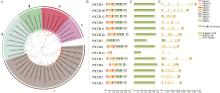
Fig.1
Phylogenetic relationships and gene structure of CCRs gene A: A phylogenetic tree is constructed using the neighbor-joining method with CCRs protein sequences from Paulownia, Arabidopsis thaliana, Zea mays, Triticum aestivum, Oryza sativa, Populus trichocarpa, resulting in five main branches. B: Conserved motif analysis of PfCCRs protein, showing 1–10 motifs, with each color representing a different motif. C: Conserved domain analysis of PfCCRs protein. D: Exon structure of PfBZRs, where CDS: Coding sequence, UTR: Untranslated region."
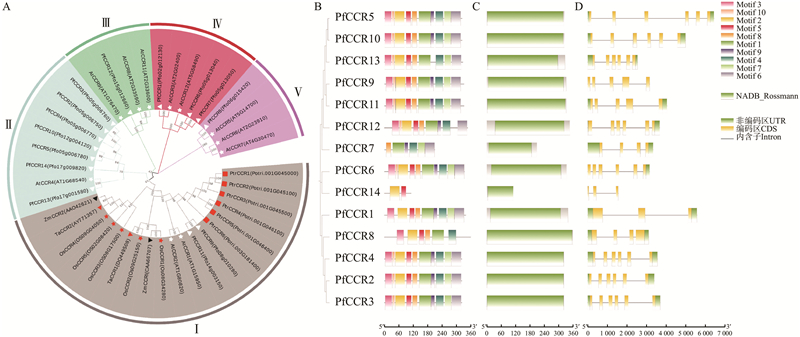
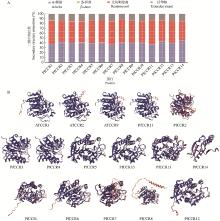
Fig.2
Protein structural analysis of PfCCRs and AtCCRs A: Secondary structure analysis of Paulownia fortunei PfCCRs proteins. B: Tertiary structure analysis of Paulownia fortunei PfCCRs and Arabidopsis AtCCRs proteins. AtCCR1 and AtCCR2 have been shown to regulate lignin biosynthesis."
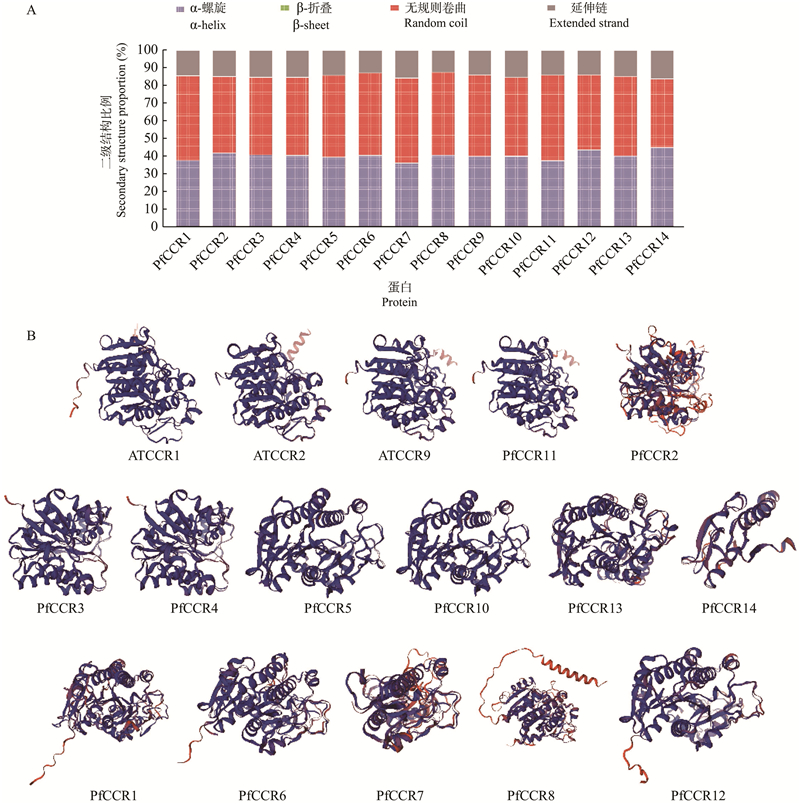
Fig.3
Analysis of cis-acting elements in the PfCCRs gene A: The promoter sequences (2 000 bp) of 14 PfCCR genes are analyzed using PlantCARE software. Each color represents a different cis-regulatory element, totaling 15 elements. B: Distribution of PfCCRs genes among the 14 cis-regulatory elements; the numbers indicate the quantity of cis-acting elements. C: Distribution of different cis-acting motifs in the PfCCRs gene promoters; the numbers indicate the quantity of cis-acting motifs."
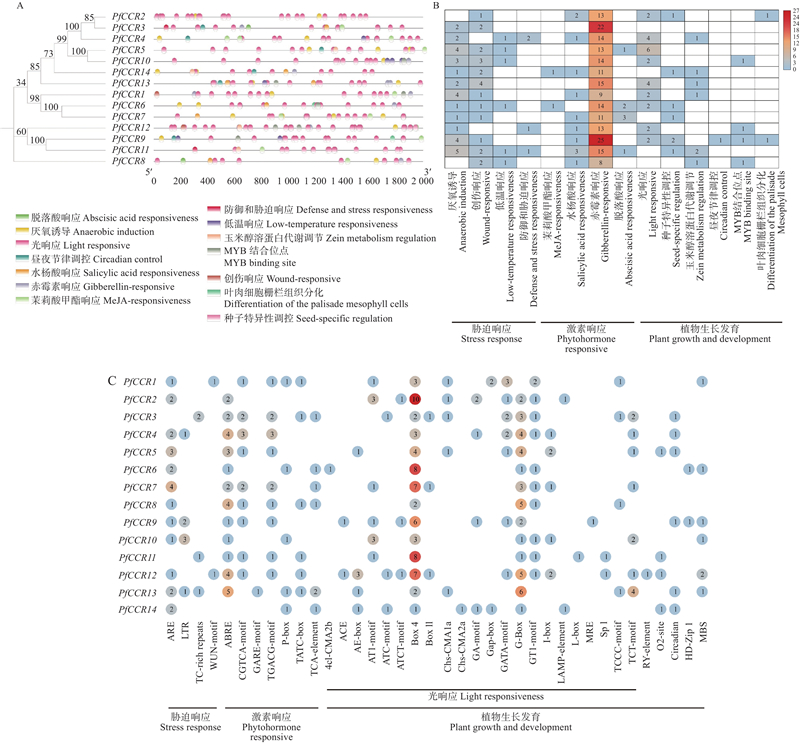
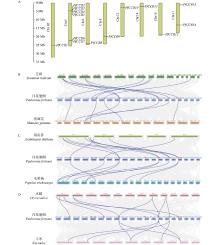
Fig.4
Chromosome distribution and collinearity analysis of the PfCCRs gene A: Chromosomal distribution of the PfCCRs gene in Paulownia fortunei. B: Phylogenetic analysis of Paulownia fortunei with Sesamum indicum and Mimulus guttatus. Gray lines represent collinear blocks in the S. indicum and M. guttatus genomes. Blue lines represent collinear gene pairs. C: Phylogenetic analysis of Paulownia fortunei with Arabidopsis thaliana and Populus trichocarpa. Gray lines represent collinear blocks in the A. thaliana and P. trichocarpa genomes. Blue lines represent collinear gene pairs. D: Phylogenetic analysis of Paulownia fortunei with Oryza sativa and Zea mays. Gray lines represent collinear blocks in the Oryza sativa and Zea mays genomes. Blue lines represent collinear gene pairs."
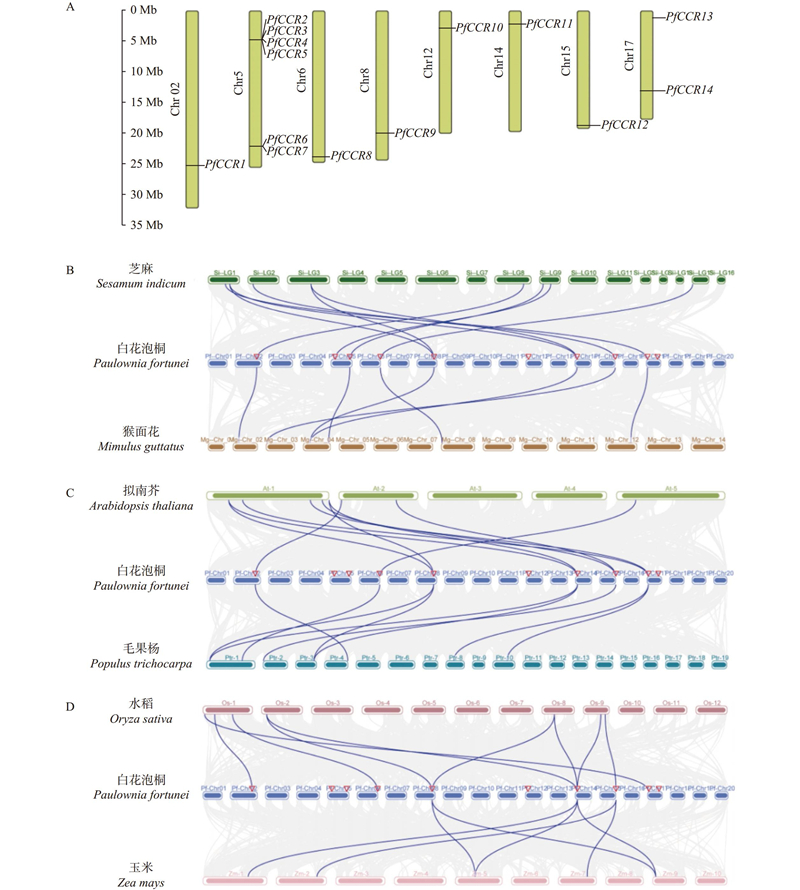
Fig.5
Tissue-specific expression patterns of PfCCRs gene The expression patterns of PfCCRs in different tissues of healthy Paulownia fortunei seedlings are analyzed using RT-qPCR, with Pfactin as the internal reference gene. R: Root; S: Stem; L: Leaf; B: Apical bud. Error bars represent the standard error of the mean of three biological replicates. Statistical significance is determined using a t-test (*: P<0.05, **: P<0.01, ***: P<0.001, ****: P<0.000 1)"
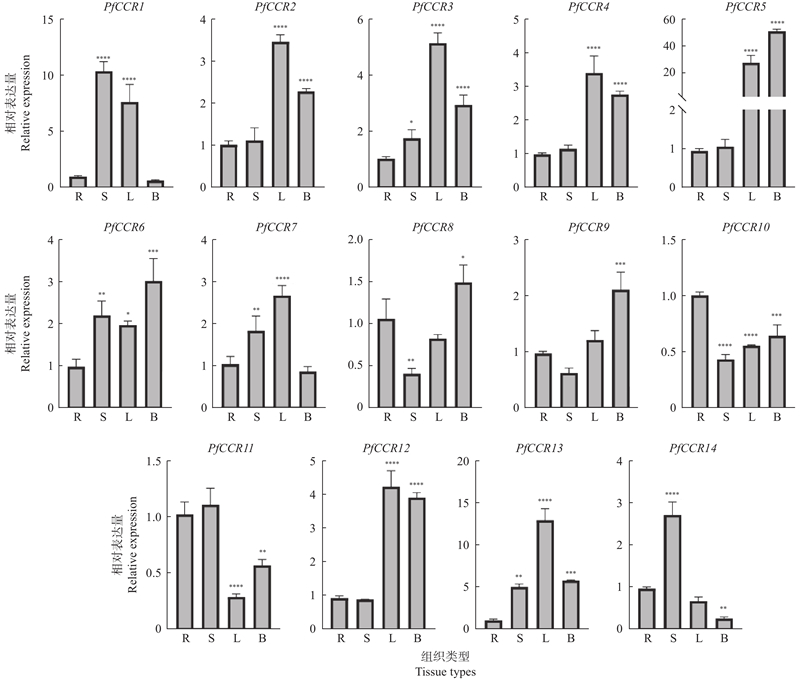
Fig.6
Expression pattern analysis of PfCCRs genes under biological stress The expression patterns of PfCCRs in healthy and PaWB-infected seedlings of Paulownia fortunei and Paulownia tomentosa are analyzed using RT-qPCR, with Pfactin as the internal reference gene. PF: Paulownia fortunei healthy seedlings; PFI: PaWB-infected seedlings of Paulownia fortunei; PT: Paulownia tomentosa healthy seedlings; PTI: PaWB-infected seedlings of Paulownia tomentosa. Error bars represent the standard error of the mean of three biological replicates. Statistical significance is determined using a t-test (*: P<0.05, **: P<0.01, ***: P< 0.001, ****: P< 0.000 1)."
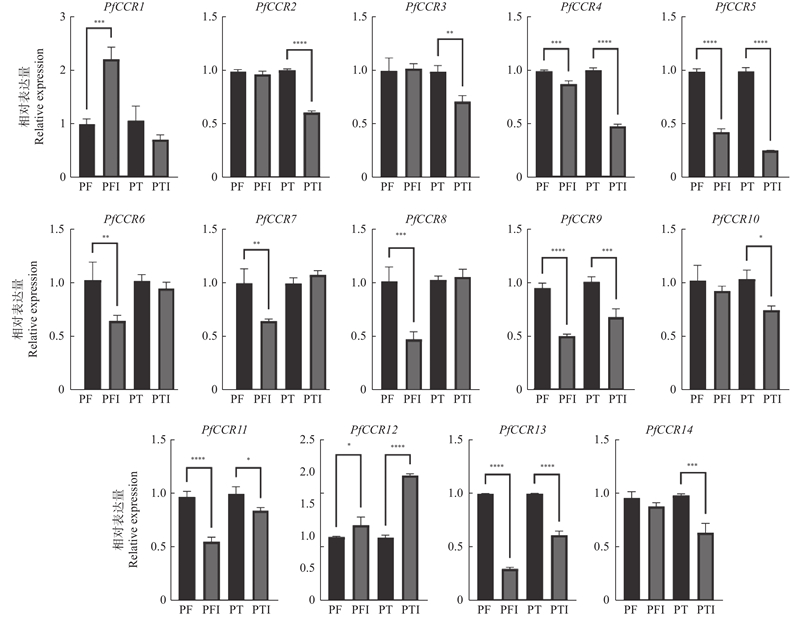
Fig.7
Expression pattern analysis of PfCCRs genes under drought stress The expression patterns of PfCCRs under drought stress are analyzed using RT-qPCR. Pfactin is used as the internal reference gene, and CK serves as the control (relative expression level set to 1.0). CK: control group treated with an equal amount of water; 24 h: experimental group sampled 24 hours after spraying with 150 g·L−1 PEG 6000; 3 d: experimental group sampled 3 days after spraying with 150 g·L−1 PEG 6000; 7 d: experimental group sampled 7 days after spraying with 150 g·L−1 PEG 6000. Error bars represent the standard error of the mean of three biological replicates. Statistical significance is determined using a t-test (*: P<0.05, ** P<0.01, ***: P<0.001,****: P<0.000 1)."
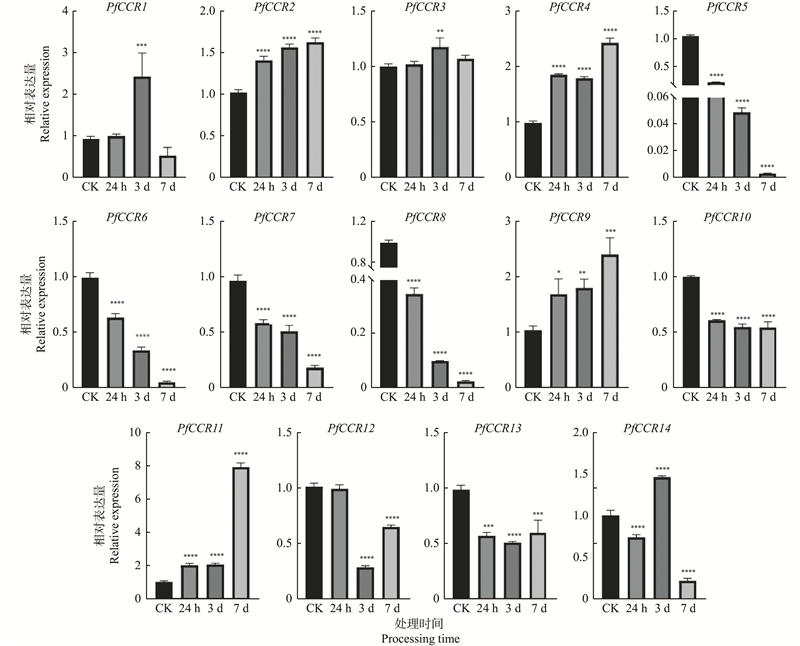
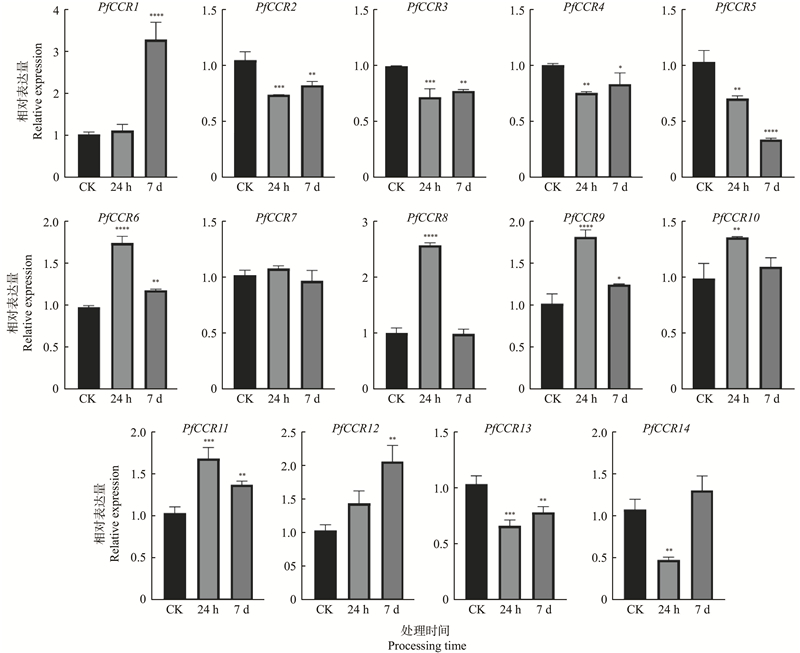
Fig.8
Expression pattern analysis of PfCCRs genes under salt stress The expression patterns of PfCCRs under salt stress are analyzed using RT-qPCR. Pfactin is used as an internal reference gene, and CK serves as the control (relative expression level set to 1.0). CK: Control group treated with an equal amount of water; 24 h: Experimental group sampled 24 hours after spraying with 50 g·L−1 NaCl; 7 d: Experimental group sampled 7 days after spraying with 50 g·L−1 NaCl. Error bars represent the standard error of the mean of three biological replicates. Statistical significance is determined using a t-test (*: P<0.05, **: P<0.01, ***: P<0.001, ****: P<0.000 1)."
|
陈碧华. 马尾松肉桂酰辅酶A还原酶基因(CCR)克隆及分析. 林业科学, 2009, 12 (12): 46- 53.
doi: 10.3321/j.issn:1001-7488.2009.12.008 |
|
|
Chen B H. Cloning and sequence analysis of cinnamoyl-CoA reductase gene (CCR) of Pinus massoniana. Scientia Silvae Sinicae, 2009, 12 (12): 46- 53.
doi: 10.3321/j.issn:1001-7488.2009.12.008 |
|
|
董占强, 翟晓巧, 范国强, 等. 泡桐叶片RNA提取方法的研究. 河南农业大学学报, 2009, 43 (1): 40- 43.
doi: 10.16445/j.cnki.1000-2340.2009.01.016 |
|
|
Dong Z Q, Zhai X Q, Fan G Q, et al. Study on extraction methods of RNA from Paulownia leaves. Journal of Henan Agricultural University, 2009, 43 (1): 40- 43.
doi: 10.16445/j.cnki.1000-2340.2009.01.016 |
|
| 侯维海, 王建林, 旦 巴, 等. 甘蓝型和白菜型油菜肉桂酰辅酶A还原酶1基因的克隆与表达. 西北农林科技大学学报(自然科学版), 2017, 45 (11): 27- 35. | |
| Hou W H, Wang J L, Dan B, et al. Cloning and expression of cinnamoyl-CoA reductase 1 (CCR1) gene of Brassica napus L. and Brassica rapa L. Journal of Northwest A&F University (Natural Science Edition), 2017, 45 (11): 27- 35. | |
| 胡嘉祺, 齐 芪, 蒋湘宁, 等. 毛白杨融合基因4CL1-CCR对烟草木质素沉积的影响. 林业科学, 2020, 56 (10): 63- 69. | |
| Hu J Q, Qi Q, Jiang X N, et al. Effect of fusion gene 4CL1-CCR of Populus tomentosa on lignin deposition in tobacco. Scientia Silvae Sinicae, 2020, 56 (10): 63- 69. | |
| 蔺占兵, 马庆虎, 麻 密. 2001. 小麦中两个肉桂酰辅酶A还原酶基因的分离和表达分析. 植物学报, 43(10): 1043−1046. | |
| Lin Z B, Ma Q H, Mi M. Cloning and expression analysis of two wheat cDNAs encoding cinnamoyl- CoA reductase. Acta Botanica Sinica, 2001, 43(10): 1043−1046. [in Chinese] | |
|
唐雪飞, 蒲婷婷, 李豫杰, 等. 泡桐研究进展与展望. 林业科学, 2025, 61 (7): 114- 128.
doi: 10.11707/j.1001-7488.LYKX20250357 |
|
|
Tang X F, Pu T T, Li Y J, et al. Research progress and prospects of Paulownia. Scientia Silvae Sinicae, 2025, 61 (7): 114- 128.
doi: 10.11707/j.1001-7488.LYKX20250357 |
|
| 王 哲. 2020. 白花泡桐丛枝病发生相关ceRNA研究. 郑州: 河南农业大学. | |
| Wang Z. 2020. Research of ceRNA related to the occurrence of Paulownia fortunei witches’ broom. Zhengzhou: Henan Agricultural University. [in Chinese] | |
|
徐 浩, 杨克彬, 朱成磊, 等. 毛竹肉桂酰辅酶A还原酶基因PeCCR功能初步研究. 林业科学研究, 2020, 33 (2): 77- 84.
doi: 10.13275/j.cnki.lykxyj.2020.02.010 |
|
|
Xu H, Yang K B, Zhu C L, et al. Preliminary study on the function of cinnamoyl- CoA reductase gene PeCCR of moso bamboo (Phyllostachys edulis). Forest Research, 2020, 33 (2): 77- 84.
doi: 10.13275/j.cnki.lykxyj.2020.02.010 |
|
|
游 韧, 邓湘雯, 胡彦婷, 等. 树木对干旱胁迫及复水的生理生态响应研究进展. 林业科学, 2023, 59 (11): 124- 136.
doi: 10.11707/j.1001-7488.LYKX20220250 |
|
|
You R, Deng X W, Hu Y T, et al. Progress on physiological and ecological responses of trees to drought stress and rewatering. Scientia Silvae Sinicae, 2023, 59 (11): 124- 136.
doi: 10.11707/j.1001-7488.LYKX20220250 |
|
|
张嫚嫚, 刘宝光, 顾宸瑞, 等. 转BpCCR1正义链及反义链对7年生盆栽白桦木质素的影响及优良株系选择. 北京林业大学学报, 2019, 41 (6): 86- 95.
doi: 10.13332/j.1000-1522.20180412 |
|
|
Zhang M M, Liu B G, Gu C R, et al. Effects of transgenic sense and antisense of BpCCR1 on 7-year-old potted birch and selection of excellent lines. Journal of Beijing Forestry University, 2019, 41 (6): 86- 95.
doi: 10.13332/j.1000-1522.20180412 |
|
| 赵佳玥, 宗志洁, 彭玺元, 等. 2026. 真菌降解木质素的酶及其代谢途径研究进展. 林业科学, 62(3): 1−12. | |
| Zhao J Y, Zong Z J, Peng X Y, et al. 2026. An overview of novel enzymes and pathways involved in lignin biodegradation by fungi. Scientia Silvae Sinicae, 62(3): 1−12. [in Chinese] | |
|
朱 凡, 雷佳奇, 黄鑫浩, 等. 木本植物光反应对重金属胁迫响应机制的研究进展. 中南林业科技大学学报, 2022, 42 (10): 9- 21.
doi: 10.14067/j.cnki.1673-923x.2022.10.002 |
|
|
Zhu F, Lei J Q, Huang X H, et al. Advances in response mechanism of the light reaction of woody plants to heavy metal stress. Journal of Central South University of Forestry & Technology, 2022, 42 (10): 9- 21.
doi: 10.14067/j.cnki.1673-923x.2022.10.002 |
|
|
Ahuja I, Kissen R, Bones A M. Phytoalexins in defense against pathogens. Trends in Plant Science, 2012, 17 (2): 73- 90.
doi: 10.1016/j.tplants.2011.11.002 |
|
|
Bailey T L, Johnson J, Grant C E, et al. The MEME Suite. Nucleic Acids Research, 2015, 43 (W1): W39- 49.
doi: 10.1093/nar/gkv416 |
|
|
Bang S W, Choi S, Jin X, et al. Transcriptional activation of rice CINNAMOYL-CoA REDUCTASE 10 by OsNAC5, contributes to drought tolerance by modulating lignin accumulation in roots. Plant Biotechnology Journal, 2022, 20 (4): 736- 747.
doi: 10.1111/pbi.13752 |
|
|
Boerjan W, Ralph J, Baucher M. Lignin biosynthesis. Annual Review of Plant Biology, 2003, 54, 519- 546.
doi: 10.1146/annurev.arplant.54.031902.134938 |
|
|
Cao Y, Sun G, Zhai X, et al. Genomic insights into the fast growth of paulownias and the formation of Paulownia witches’ broom. Molecular Plant, 2021, 14 (10): 1668- 1682.
doi: 10.1016/j.molp.2021.06.021 |
|
| Cao Y P, Li K, Li Y L, et al. MYB transcription factors as regulators of secondary metabolism in plants. Biology, 2020, 9 (3): 61. | |
| Carocha V, Soler M, Hefer C, et al. Genome-wide analysis of the lignin toolbox of Eucalyptus grandis. New Phytologist, 2015, 206 (4): 1297- 1313. | |
|
Chabannes M, Barakate A, Lapierre C, et al. Strong decrease in lignin content without significant alteration of plant development is induced by simultaneous down-regulation of cinnamoyl CoA reductase (CCR) and cinnamyl alcohol dehydrogenase (CAD) in tobacco plants. The Plant Journal, 2001, 28 (3): 257- 270.
doi: 10.1046/j.1365-313X.2001.01140.x |
|
|
Chen C, Chen H, Zhang Y, et al. TBtools: an integrative toolkit developed for interactive analyses of big biological data. Molecular Plant, 2020, 13 (8): 1194- 1202.
doi: 10.1016/j.molp.2020.06.009 |
|
|
Costa M A, Collins R E, Anterola A M, et al. An in silico assessment of gene function and organization of the phenylpropanoid pathway metabolic networks in Arabidopsis thaliana and limitations thereof. Phytochemistry, 2003, 64 (6): 1097- 1112.
doi: 10.1016/S0031-9422(03)00517-X |
|
|
De Meester B, de Vries L, Özparpucu M, et al. Vessel-specific reintroduction of CINNAMOYL-COA REDUCTASE1 (CCR1) in dwarfed ccr1 mutants restores vessel and xylary fiber integrity and increases biomass. Plant Physiology, 2018, 176 (1): 611- 633.
doi: 10.1104/pp.17.01462 |
|
|
Fan L, Linker R, Gepstein S, et al. Progressive inhibition by water deficit of cell wall extensibility and growth along the elongation zone of maize roots is related to increased lignin metabolism and progressive stelar accumulation of wall phenolics. Plant Physiology, 2006, 140 (2): 603- 612.
doi: 10.1104/pp.105.073130 |
|
|
Ghazzawy H S, Bakr A, Mansour A T, et al. Paulownia trees as a sustainable solution for CO2 mitigation: assessing progress toward 2050 climate goals. Frontiers in Environmental Science, 2024, 12, 1307840.
doi: 10.3389/fenvs.2024.1307840 |
|
|
Ghosh R, Choi B, Cho B K, et al. Characterization of developmental- and stress-mediated expression of cinnamoyl-CoA reductase in kenaf (Hibiscus cannabinus L. ). The Scientific World Journal, 2014, 2014, 601845.
doi: 10.1155/2014/601845 |
|
|
Goicoechea M, Lacombe E, Legay S, et al. EgMYB2, a new transcriptional activator from Eucalyptus xylem, regulates secondary cell wall formation and lignin biosynthesis. The Plant Journal, 2005, 43 (4): 553- 567.
doi: 10.1111/j.1365-313X.2005.02480.x |
|
|
Goujon T, Ferret V, Mila I, et al. Down-regulation of the AtCCR1 gene in Arabidopsis thaliana: effects on phenotype, lignins and cell wall degradability. Planta, 2003, 217 (2): 218- 228.
doi: 10.1007/s00425-003-0987-6 |
|
|
Hou Y, Li X, Hu Y, et al. Drought weakens the positive effect of plant diversity on community biomass. Journal of Plant Ecology, 2024, 17 (4): rtae059.
doi: 10.1093/jpe/rtae059 |
|
|
Huang S, Kang X, Fu R, et al. Simultaneous down-regulation of dominant cinnamoyl CoA reductase and cinnamyl alcohol dehydrogenase dramatically altered lignin content in Mulberry. Plants, 2024, 13 (24): 3512.
doi: 10.3390/plants13243512 |
|
|
Jakubowski M. Cultivation potential and uses of Paulownia wood: A Review. Forests, 2022, 13 (5): 668.
doi: 10.3390/f13050668 |
|
|
Kawasaki T, Koita H, Nakatsubo T, et al. Cinnamoyl-CoA reductase, a key enzyme in lignin biosynthesis, is an effector of small GTPase Rac in defense signaling in rice. Proceedings of the National Academy of Sciences of the United States of America, 2006, 103 (1): 230- 235.
doi: 10.1073/pnas.0509875103 |
|
|
Krzywinski M, Schein J, Birol I, et al. Circos: an information aesthetic for comparative genomics. Genome Research, 2009, 19 (9): 1639- 1645.
doi: 10.1101/gr.092759.109 |
|
|
Lacombe E, Hawkins S, Van D J, et al. Cinnamoyl CoA reductase, the first committed enzyme of the lignin branch biosynthetic pathway: cloning, expression and phylogenetic relationships. The Plant Journal, 1997, 11 (3): 429- 441.
doi: 10.1046/j.1365-313x.1997.11030429.x |
|
|
Lauvergeat V, Lacomme C, Lacombe E, et al. Two cinnamoyl-CoA reductase (CCR) genes from Arabidopsis thaliana are differentially expressed during development and in response to infection with pathogenic bacteria. Phytochemistry, 2001, 57 (7): 1187- 1195.
doi: 10.1016/S0031-9422(01)00053-X |
|
| Leisner C P, Potnis N, Sanz-Saez A. Crosstalk and trade-offs: plant responses to climate change-associated abiotic and biotic stresses. Plant Cell and Environment, 2023, 46 (10): 2946- 2963. | |
|
Letunic I, Bork P. Interactive tree of life (iTOL) v5: an online tool for phylogenetic tree display and annotation. Nucleic Acids Research, 2021, 49 (W1): W293- w296.
doi: 10.1093/nar/gkab301 |
|
|
Li J, Fan F, Wang L, et al. Cloning and expression analysis of cinnamoyl-CoA reductase (CCR) genes in sorghum. PeerJ, 2016, 4, e2005.
doi: 10.7717/peerj.2005 |
|
|
Ma Q H. Characterization of a cinnamoyl-CoA reductase that is associated with stem development in wheat. Journal of Experimental Botany, 2007, 58 (8): 2011- 2021.
doi: 10.1093/jxb/erm064 |
|
|
Ma Q H. Lignin biosynthesis and its diversified roles in disease resistance. Genes, 2024, 15 (3): 295.
doi: 10.3390/genes15030295 |
|
|
Mello B. Estimating timetrees with MEGA and the TimeTree resource. Molecular Biology and Evolution, 2018, 35 (9): 2334- 2342.
doi: 10.1093/molbev/msy133 |
|
|
Miedes E, Vanholme R, Boerjan W, et al. The role of the secondary cell wall in plant resistance to pathogens. Frontiers in Plant Science, 2014, 5, 358.
doi: 10.3389/fpls.2014.00358 |
|
|
Moura J C, Bonine C A, de Oliveira Fernandes Viana J, et al. Abiotic and biotic stresses and changes in the lignin content and composition in plants. Journal of Integrative Plant Biology, 2010, 52 (4): 360- 376.
doi: 10.1111/j.1744-7909.2010.00892.x |
|
|
Park S H, Mei C, Pauly M, et al. Downregulation of maize cinnamoyl-coenzyme a reductase via RNA interference technology causes brown midrib and improves ammonia fiber expansion-pretreated conversion into fermentable sugars for biofuels. Crop Science, 2012, 52 (6): 2687- 2701.
doi: 10.2135/cropsci2012.04.0253 |
|
|
Patzlaff A, McInnis S, Courtenay A, et al. Characterisation of a pine MYB that regulates lignification. The Plant Journal, 2003, 36 (6): 743- 754.
doi: 10.1046/j.1365-313X.2003.01916.x |
|
|
Piquemal J, Lapierre C, Myton K, et al. Down-regulation of cinnamoyl-CoA reductase induces significant changes of lignin profiles in transgenic tobacco plants. The Plant Journal, 1998, 13 (1): 71- 83.
doi: 10.1046/j.1365-313x.1998.00014.x |
|
|
Rejeb I B, Pastor V, Mauch-Mani B. Plant responses to simultaneous biotic and abiotic stress: molecular mechanisms. Plants, 2014, 3 (4): 458- 475.
doi: 10.3390/plants3040458 |
|
|
Sławińska N, Zając J, Olas B. Paulownia organs as interesting new sources of bioactive compounds. International Journal of Molecular Sciences, 2023, 24 (2): 1676.
doi: 10.3390/ijms24021676 |
|
|
Suzuki N, Rivero R M, Shulaev V, et al. Abiotic and biotic stress combinations. New Phytologist, 2014, 203 (1): 32- 43.
doi: 10.1111/nph.12797 |
|
|
Thévenin J, Pollet B, Letarnec B, et al. The simultaneous repression of CCR and CAD, two enzymes of the lignin biosynthetic pathway, results in sterility and dwarfism in Arabidopsis thaliana. Molecular Plant, 2011, 4 (1): 70- 82.
doi: 10.1093/mp/ssq045 |
|
|
Van A R, Leplé J C, Aerts D, et al. Improved saccharification and ethanol yield from field-grown transgenic poplar deficient in cinnamoyl-CoA reductase. Proceedings of the National Academy of Sciences of the United States of America, 2014, 111 (2): 845- 850.
doi: 10.1073/pnas.1321673111 |
|
|
Wang H, Tian W, Teng Y, et al. Rice cinnamoyl CoA reductase-like gene OsCCR14 involved in heat stress via regulation lignin and flavonoid accumulation. Plants, 2025, 14 (23): 3626.
doi: 10.3390/plants14233626 |
|
|
Xiong W, Reynolds M, Xu Y. Climate change challenges plant breeding. Current Opinion in Plant Biology, 2022, 70, 102308.
doi: 10.1016/j.pbi.2022.102308 |
|
|
Yin N, Li B, Liu X, et al. Two types of cinnamoyl-CoA reductase function divergently in accumulation of lignins, flavonoids and glucosinolates and enhance lodging resistance in Brassica napus. The Crop Journal, 2022, 10 (3): 647- 660.
doi: 10.1016/j.cj.2021.10.002 |
|
|
Zhan W, Cui L, Song N, et al. Comprehensive analysis of cinnamoyl-CoA reductase (CCR) gene family in wheat: implications for lignin biosynthesis and stress responses. BMC Plant Biology, 2025, 25 (1): 567.
doi: 10.1186/s12870-025-06605-8 |
|
|
Zhang H, Zhu J, Gong Z, et al. Abiotic stress responses in plants. Nature Reviews Genetics, 2022, 23 (2): 104- 119.
doi: 10.1038/s41576-021-00413-0 |
|
| Zhao Q, Dixon R A. 2011. Transcriptional networks for lignin biosynthesis: more complex than we thought? Trends in Plant Science, 16(4): 227−233. | |
|
Zhou R, Jackson L, Shadle G, et al. Distinct cinnamoyl CoA reductases involved in parallel routes to lignin in Medicago truncatula. Proceedings of the National Academy of Sciences of the United States of America, 2010, 107 (41): 17803- 17808.
doi: 10.1073/pnas.1012900107 |
|
|
Zoratti L, Karppinen K, Luengo E A, et al. Light-controlled flavonoid biosynthesis in fruits. Frontiers in Plant Science, 2014, 5, 534.
doi: 10.3389/fpls.2014.00534 |
| [1] | Jiayue Zhao,Zhijie Zong,Xiyuan Peng,Zhiqiang Li,Xingxia Ma. Research Progress on Enzymes and Metabolic Pathways Involved in Lignin Biodegradation by Fungi [J]. Scientia Silvae Sinicae, 2026, 62(3): 1-12. |
| [2] | Sicheng Jiang,Ni Wang,Huibin Gao,Guoqiang Zhou,Haiyun Yang. Analysis of Culm Structure and Cell Wall Component Content in Dwarf Lodging Mutant of Pseudosasa japonica f. akebonosuji [J]. Scientia Silvae Sinicae, 2025, 61(3): 158-168. |
| [3] | Kangjie Jiang,Wenjuan Wu,Lijing Huang,Jiaquan Li,Kongyan Li. Effect Mechanism of Lignin Isolated from Diverse Types Woods on Cellulase Adsorption [J]. Scientia Silvae Sinicae, 2024, 60(7): 140-148. |
| [4] | Yixin Xiong,Shuang Wang,Xingxia Ma,Zhiqin Sun. Construction of Compound Fungal Culture System for High-Yield Ligninolytic Enzymes [J]. Scientia Silvae Sinicae, 2024, 60(10): 133-142. |
| [5] | Chunyang Zou,Wenjuan Wu. Effect of Lignin Structural Unit on Cellulase Adsorption [J]. Scientia Silvae Sinicae, 2023, 59(6): 141-148. |
| [6] | Linxin Dai,Zhihui Wang,Zhenrui Li,Jiajun Wang,Xing’e Liu,Jialong Wen,Jianfeng Ma. Pyrolysis Characteristics of the Main Components of Bamboo Cell Wall Using TG-FTIR [J]. Scientia Silvae Sinicae, 2023, 59(11): 85-94. |
| [7] | Yajing Xu,Jiawei Wang,Yanqiu Zhao,Cheng Jiang,Lichao Huang,Yi An,Wei Zeng,Jin Zhang,Mengzhu Lu. Effect of PagMSBP1/2a Gene of 84K Poplar on Lignin Biosynthesis [J]. Scientia Silvae Sinicae, 2022, 58(6): 56-65. |
| [8] | Youcai Gui,Songlin Zuo,Kainan Jin. Preparation of High-Surface-Area Carbon Foam by Self-Bubbling Method of Lignin [J]. Scientia Silvae Sinicae, 2022, 58(3): 139-148. |
| [9] | Shunfu Li,Huimin Wang,Lisha Fang,Zhen Liu. Gene Expression Related to Terminal Bud Death Induced by Short-Day in Paulownia fortunei [J]. Scientia Silvae Sinicae, 2022, 58(2): 148-158. |
| [10] | Yahui Miao,Dan Ju,Kehao Liang,Aibin Wang,Junling Liu,Lingyun Zhang. Cloning and Functional Analysis of Transcription Factor Gene PwNF-YB8 from Picea wilsonii [J]. Scientia Silvae Sinicae, 2021, 57(5): 77-92. |
| [11] | Ru Jia,Haiyan Sun,Yurong Wang,Rui Wang,Rongjun Zhao,Haiqing Ren. Relativity of Microstructures and Mechanical Properties of Juvenile Woods of 10-Year-Old New Chinese Fir Clones 'Yang 020' and 'Yang 061' [J]. Scientia Silvae Sinicae, 2021, 57(5): 165-175. |
| [12] | Xuejiao He,Liwei Chu,Shuangshuang Wen,Mengzhu Lu,Fang Tang. Study on the Gravity Response and Vascular Structure of Monocotyledons with Maize As An Example [J]. Scientia Silvae Sinicae, 2021, 57(2): 93-102. |
| [13] | Sheng Yang,Gaiyun Li. Chemical Composition Heterogeneity of Catalpa bungeana Wood [J]. Scientia Silvae Sinicae, 2021, 57(1): 169-177. |
| [14] | Wenjuan Wu,Chunyang Zou,Lijing Huang,Yongcan Jin. Dissolution and Regeneration of Bamboo in LiCl/DMSO Solvent System [J]. Scientia Silvae Sinicae, 2020, 56(9): 201-206. |
| [15] | Yu Zhou,Yanming Han,Gaiyu Li,Fuxiang Chu. Effect of Enzymatic Hydrolysis Lignin Mass Concentration on the Structure of Lignin Nano Particles and Drug-Loading Behavior [J]. Scientia Silvae Sinicae, 2020, 56(3): 109-116. |
| Viewed | ||||||
|
Full text |
|
|||||
|
Abstract |
|
|||||
