
林业科学 ›› 2026, Vol. 62 ›› Issue (3): 36-47.doi: 10.11707/j.1001-7488.LYKX20240712
孙丽丽1( ),孙艳丽2,王菁黎2,周泽圆2,于海群2,陈文婧3,刘鹏1,田赟1,查天山1,*()
收稿日期:2024-11-22
修回日期:2025-10-22
出版日期:2026-03-15
发布日期:2026-03-12
通讯作者:
查天山
E-mail:17805958627@163.com;tianshanzha@bjfu.edu.cn
基金资助:
Lili Sun1(),Yanli Sun2,Jingli Wang2,Zeyuan Zhou2,Haiqun Yu2,Wenjing Chen3,Peng Liu1,Yun Tian1,Tianshan Zha1,*()
Received:2024-11-22
Revised:2025-10-22
Online:2026-03-15
Published:2026-03-12
Contact:
Tianshan Zha
E-mail:17805958627@163.com;tianshanzha@bjfu.edu.cn
摘要:
目的: 量化北京城郊密云水库周边油松人工林蒸腾降温[ΔT(Ef)]和土壤蒸发降温[ΔT(Es)],确定2种降温在昼夜和季节尺度上的调节因子,为减缓北京城市热岛效应的策略制定提供科学支撑。方法: 于2021年5—11月生长期,分别采用热扩散探针和涡度相关法对油松人工林树干液流(SFD)和蒸散发(ET)进行连续监测,并计算林分蒸腾(Ef)和土壤蒸发(Es),同步监测主要气象因子和土壤含水量(SWC),运用Mantel检验和随机森林算法等方法,分析密云水库周边油松人工林Ef、Es、ΔT(Ef)和ΔT(Es)时间变化特征及其影响因子。结果: 1) 在昼夜尺度上,ΔT(Ef)和ΔT(Es)分别在白天和夜间占主导地位。白天空气温度(Ta)对ΔT(Es)的影响最显著,土壤含水量(SWC)和短波辐射(RSD)对ΔT(Ef)的影响最显著(Mantel’s P<0.01,0.2≤ r <0.4)。2) 在季节尺度上,ΔT(Ef)的降温贡献比重高于ΔT(Es),且夏季ΔT(Ef)和ΔT(Es)高于其他季节。7—9月ΔT(Ef)和ΔT(Es)日均值分别为3.49和1.66 ℃,Ef和Es日均值分别为1.64和0.77 mm。空气温度和土壤含水量分别是影响ΔT(Es)和ΔT(Ef)季节变化的主要环境因子。3) 参数优化后,随机森林模型对ΔT(Es)和ΔT(Ef)均有较好的模拟效果(R2>0.93)。结论: 蒸发降温和蒸腾降温的比重在昼夜和季节尺度上存在显著差异。热量条件(土壤温度和空气温度)和土壤含水量分别是影响蒸发降温和蒸腾降温的最重要因子。相较于土壤蒸发降温,植物气孔的调节作用可使蒸腾降温快速地对饱和水汽压差和气温作出响应。
中图分类号:
孙丽丽,孙艳丽,王菁黎,周泽圆,于海群,陈文婧,刘鹏,田赟,查天山. 北京城郊油松人工林的降温效应及其环境驱动规律[J]. 林业科学, 2026, 62(3): 36-47.
Lili Sun,Yanli Sun,Jingli Wang,Zeyuan Zhou,Haiqun Yu,Wenjing Chen,Peng Liu,Yun Tian,Tianshan Zha. Cooling Effect of a Pinus tabuliformis Plantation in the Suburban Areas of Beijing and Its Environmental Driving Mechanisms[J]. Scientia Silvae Sinicae, 2026, 62(3): 36-47.
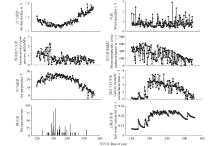
图1
生长季环境因子的动态变化"
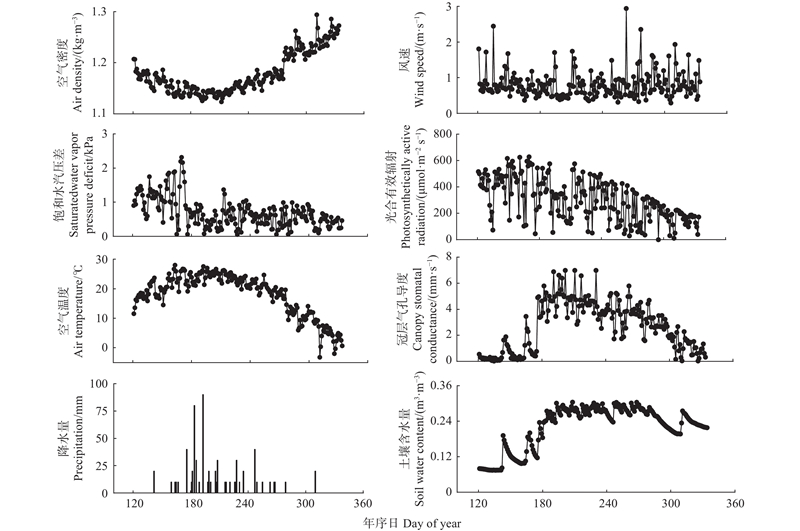
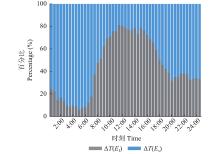
图2
逐半小时的土壤蒸发降温[ΔT(Es)]和蒸腾降温[ΔT(Ef)]占蒸散发降温的比重"
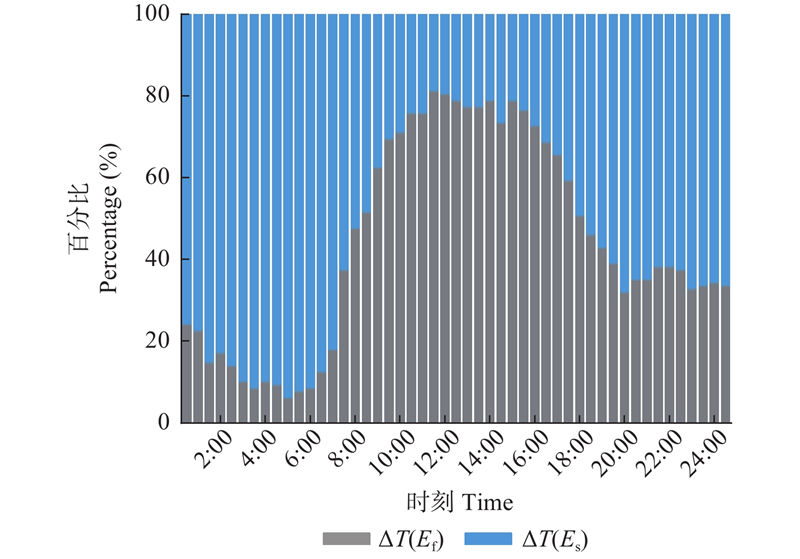
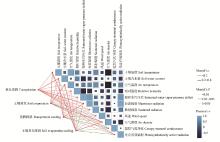
图3
白天土壤蒸发降温[ΔT(Es)]、蒸腾降温[ΔT(Ef)]、土壤蒸发(Es)、林分蒸腾(Ef)与环境因子的Mantel-Test分析"
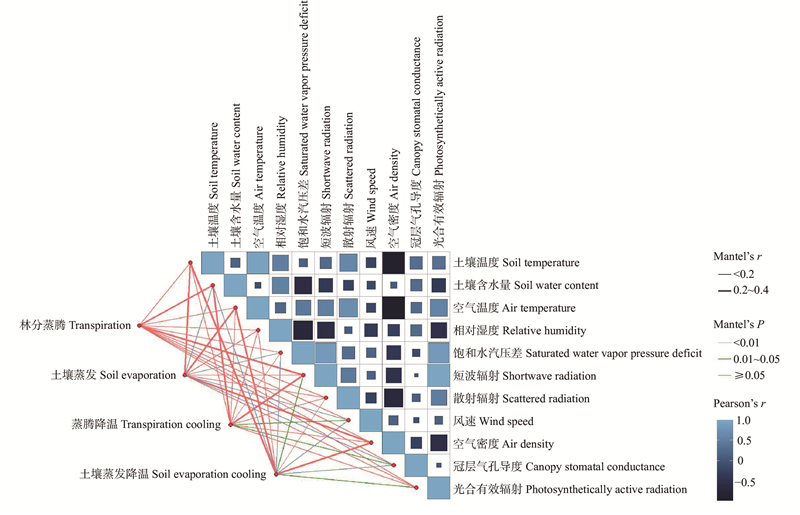
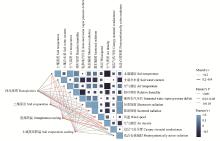
图4
夜间土壤蒸发降温[ΔT(Es)]、蒸腾降温[ΔT(Ef)]、土壤蒸发(Es)、林分蒸腾(Ef)与环境因子的Mantel-Test分析"
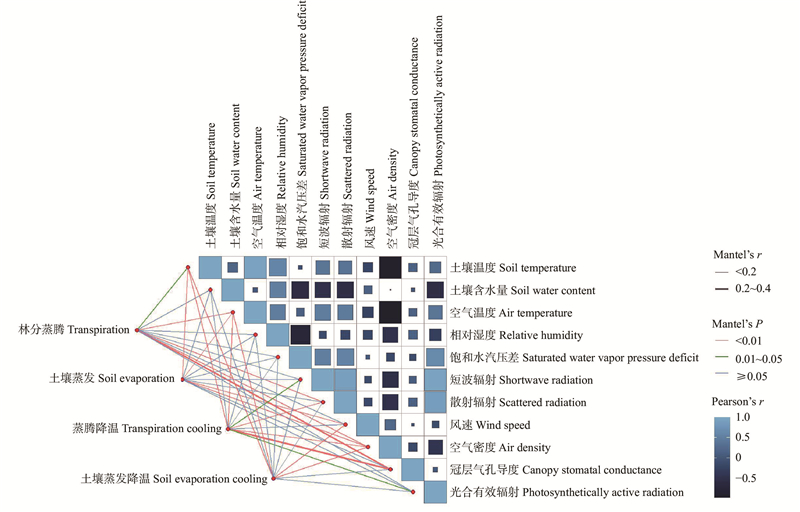
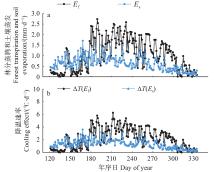
图5
生长季土壤蒸发降温[ΔT(Es)]、蒸腾降温[ΔT(Ef)]、土壤蒸发(Es)、林分蒸腾(Ef)的动态变化"
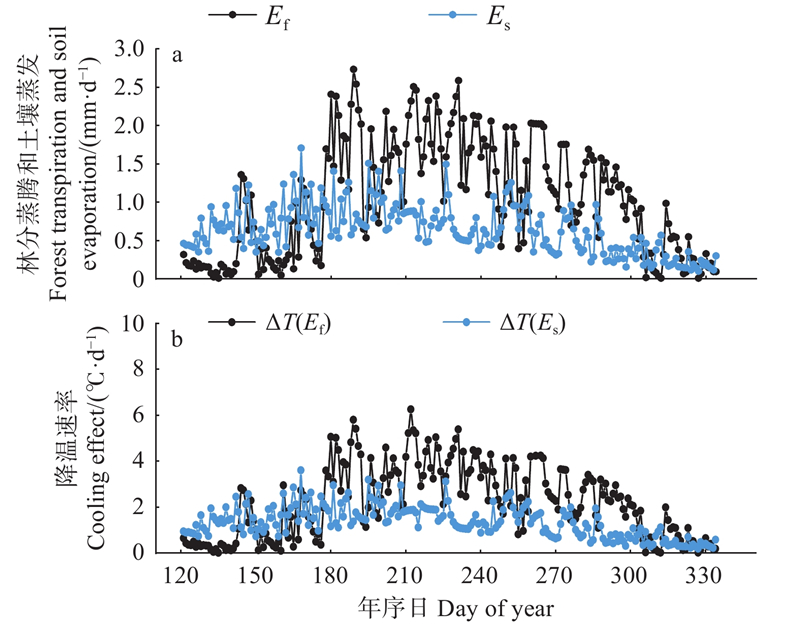
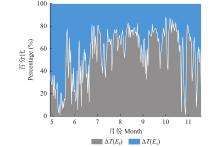
图6
生长季逐日土壤蒸发降温[ΔT(Es)]和蒸腾降温[ΔT(Ef)]占蒸散发降温的比重"
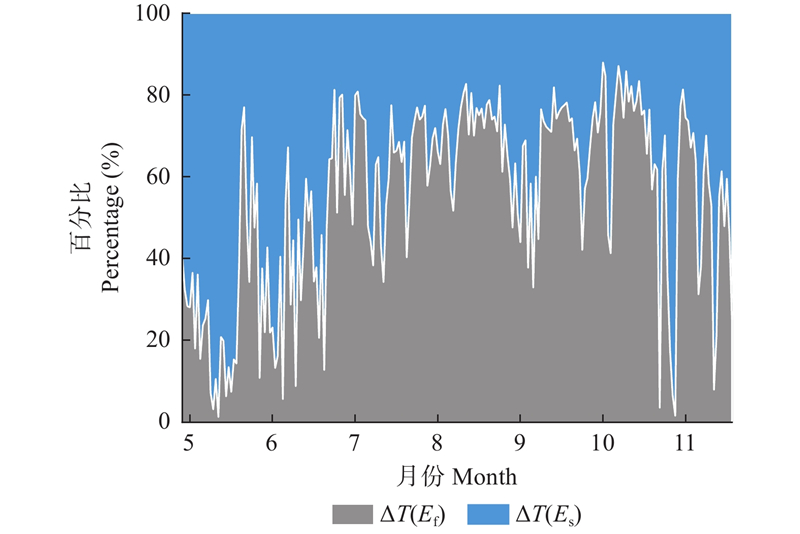
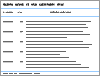
表1
多种机器学习算法模拟精度"
| 机器学习算法 Machine learning algorithms | 蒸散发降温 Evapotranspiration cooling | 均方根误差 Root mean square error | R2 | 机器学习算法名称 Machine learning algorithms | 蒸散发降温 Evapotranspiration cooling | 均方根误差 Root mean square error | R2 | |
| 决策树Classification and regression tree (CART) | ΔT(Ef) | 0.11 | 0.90 | 支持向量回归 Support vector regression (SVR) | ΔT(Ef) | 0.09 | 0.92 | |
| ΔT(Es) | 0.84 | 0.48 | ΔT(Es) | 0.17 | 0.68 | |||
| 随机森林 Random forest (RF) | ΔT(Ef) | 0.07 | 0.93 | 多层感知机 Multilayer perceptron (MLP) | ΔT(Ef) | 0.07 | 0.93 | |
| ΔT(Es) | 0.29 | 0.65 | ΔT(Es) | 0.18 | 0.67 |
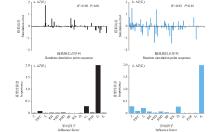
图7
优化参数后2种降温模型模拟误差(a和b)和2种降温输入变量的重要性程度(c和d) PAR:光合有效辐射Photosynthetically active radiation;Ta:空气温度Air temperature;SWC:土壤含水量Soil water content;VPD:饱和水汽压差Saturated water vapor pressure deficit;Da:空气密度Air density;RSD:短波辐射Shortwave radiation;RH:相对湿度Relative humidity;WS:风速Wind speed;Gs:冠层气孔导度Canopy stomatal conductance;Ts:土壤温度Soil temperature;SR:散射辐射Scattered radiation."
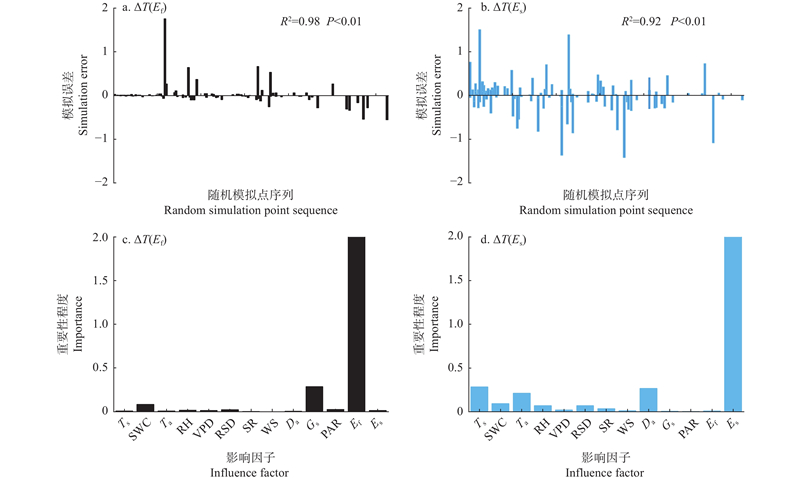
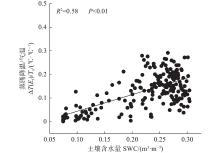
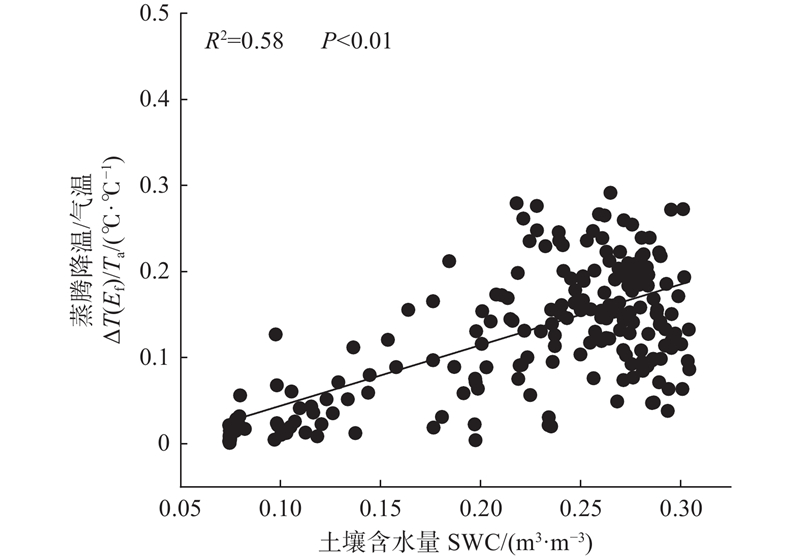
图8
蒸腾降温[ΔT(Ef)]对气温的敏感性随土壤含水量(SWC)的变化"
| 孛永明, 王丽洁, 荐圣淇. 黄土高原丘陵沟壑区柠条和沙棘树干液流的变化特征. 生态学报, 2023, 43 (4): 1553- 1562. | |
| Bei Y M, Wang L J, Jian S Q. Variations of sap flow of Caragana korshinskii and Hippophae rhamnoides in hilly and gully region of the Loess Plateau. Acta Ecologica Sinica, 2023, 43 (4): 1553- 1562. | |
| 陈胜楠, 陈左司南, 张志强. 北京山区油松和元宝槭冠层气孔导度特征及其环境响应. 植物生态学报, 2021, 45 (12): 1329- 1340. | |
| Chen S N, Chen-Zuo S N, Zhang Z Q. Canopy stomatal conductance characteristics of Pinus tabulaeformis and Acer truncatum and their responses to environmental factors in the mountain area of Beijing. Chinese Journal of Plant Ecology, 2021, 45 (12): 1329- 1340. | |
| 党宏忠, 冯金超, 韩 辉. 沙地樟子松边材液流速率的方位差异特征. 林业科学, 2020, 56 (1): 29- 37. | |
| Dang H Z, Feng J C, Han H. Characteristics of azimuthal variation of sap flux density in Pinus sylvestris var. mongolica grown in sandy land. Scientia Silvae Sinicae, 2020, 56 (1): 29- 37. | |
| 韩 辉, 张学利, 党宏忠, 等. 科尔沁沙地南缘樟子松林蒸腾强度的年际变化及与降水、地下水位间的关系. 林业科学, 2020, 56 (11): 31- 40. | |
| Han H, Zhang X L, Dang H Z, et al. Inter-annual variation of transpiration intensity of Pinus sylvestris var. mongolica stand on the southern margin of Horqin sandy land and its relationship with precipitation and groundwater Level. Scientia Silvae Sinicae, 2020, 56 (11): 31- 40. | |
| 华 溢, 陆彦玮, 李 敏, 等. 苹果树种植对黄土旱塬土壤蒸发的影响. 干旱地区农业研究, 2023, 41 (5): 51- 58. | |
| Hua Y, Lu Y W, Li M, et al. Effects of apple tree planting on soil evaporation in the Loess Tableland. Agricultural Research in the Arid Areas, 2023, 41 (5): 51- 58. | |
| 季 鹏, 袁 星. 基于多种机器学习模型的西北地区蒸散发模拟与趋势分析. 大气科学学报, 2023, 46 (1): 1- 15. | |
| Ji P, Yuan X. Simulation and trend analysis of evapotranspiration in northwest China based on multiple machine learning models. Transactions of Atmospheric Sciences, 2023, 46 (1): 1- 15. | |
| 贾国栋, 陈立欣, 李瀚之, 等. 北方土石山区典型树种耗水特征及环境影响因子. 生态学报, 2018, 38 (10): 3441- 3452. | |
| Jia G D, Chen L X, Li H Z, et al. The effect of environmental factors on plant water consumption characteristics in a northern rocky mountainous area. Acta Ecologica Sinica, 2018, 38 (10): 3441- 3452. | |
| 李 聪, 吕晶花, 陆 梅, 等. 文山国家级自然保护区不同海拔地带性植被的土壤微生物生物量碳氮分布特征. 林业科学, 2022, 58 (3): 20- 30. | |
| Li C, Lü J H, Lu M, et al. Distribution of soil microbial biomass carbon and nitrogen across different altitudinal vegetation zones in Wenshan National Nature Reserve. Scientia Silvae Sinicae, 2022, 58 (3): 20- 30. | |
| 李 艳, 刘海军, 黄冠华. 麦秸覆盖条件下土壤蒸发阻力及蒸发模拟. 农业工程学报, 2015, 31 (1): 98- 106. | |
| Li Y, Liu H J, Huang G H. Soil evaporation resistance and simulation under wheat straw cover. Transactions of the Chinese Society of Agricultural Engineering, 2015, 31 (1): 98- 106. | |
| 李晓婷, 李 彤, 仇宽彪, 等. 城市森林林木斑块特征与降温效应的关系: 以北京市城区为例. 林业科学, 2021, 57 (4): 32- 42. | |
| Li X, Li T, Qiu K B, et al. Relationship between patterns of urban forest patches and their cooling effects: a case study of Beijing urban area. Scientia Silvae Sinicae, 2021, 57 (4): 32- 42. | |
| 李鑫豪, 张德怀, 张赵森, 等. 北京密云油松人工林碳通量组分季节变化及其对环境因子的响应. 林业科学, 2023, 59 (7): 35- 44. | |
| Li X H, Zhang D H, Zhang Z S, et al. Seasonal variations in carbon fluxes and their responses to environmental factors in a Pinus tabuliformis plantation ecosystem in Miyun, Beijing. Scientia Silvae Sinicae, 2023, 59 (7): 35- 44. | |
| 刘海轩, 许丽娟, 吴 鞠, 等. 城市森林降温效应影响因素研究进展. 林业科学, 2019, 55 (4): 144- 151. | |
| Liu H X, Xu L J, Wu J, et al. Advances in studies on influential factors for cooling effect of urban forest. Scientia Silvae Sinicae, 2019, 55 (4): 144- 151. | |
| 刘丽霞, 王 辉, 孙栋元, 等. 2008,, 绿洲农田防护林系统土壤蒸发特征研究. 干旱区资源与环境, 22(1): 162−166. | |
| Liu L X, Wang H, Sun D Y, et al. 2008,. Study on soil evaporation characteristics in oasis farmland shelterbelt system. Journal of Arid Land Resources and Environment, 22(1): 162−166. [in Chinese] | |
| 刘潇潇, 何秋月, 闫美杰, 等. 黄土丘陵区辽东栎群落优势种和主要伴生种树干液流动态特征. 生态学报, 2018, 38 (13): 4744- 4751. | |
| Liu X X, He Q Y, Yan M J, et al. Characteristics of sap flow dynamics in dominant and companion trees in a natural secondary oak forest in the loess hilly region. Acta Ecologica Sinica, 2018, 38 (13): 4744- 4751. | |
| 卢泽洋, 王贺年. 密云水库上游典型油松林地林木生长空间格局. 中南林业科技大学学报, 2020, 40 (7): 1- 8. | |
| Lu Z Y, Wang H N. Spatial pattern of growth in a typical Pinus tabulaeformis forest in upper reaches of Miyun reservoir. Journal of Central South University of Forestry and Technology, 2020, 40 (7): 1- 8. | |
| 牛晓栋, 刘晓静, 刘世荣, 等. 亚热带−暖温带过渡区天然栎林的能量平衡特征. 生态学报, 2018, 38 (18): 346- 356. | |
| Niu X D, Liu X J, Liu S R, et al. Energy balance characteristics of a natural oak forest (Quercus aliena) at atransitional area from a subtropical to warm temperate climate, China. Acta Ecologica Sinica, 2018, 38 (18): 346- 356. | |
| 秦 仲, 李湛东, 成仿云, 等. 北京园林绿地5种植物群落夏季降温增湿作用. 林业科学, 2016, 52 (1): 37- 47. | |
| Qin Z, Li Z D, Cheng F Y, et al. Cooling and humidifying effects of five landscape plant communities on summer days in Beijing. Scientia Silvae Sinicae, 2016, 52 (1): 37- 47. | |
| 秦文利. 行间生草种类对苹果园春季土壤蒸发, 空气湿度和土壤贮水的影响. 草业学报, 2023, 32 (1): 48- 62. | |
| Qin W L. Effects of interplanting with different species of cover grass on soil evaporation, air humidity, and soil water storage in apple orchards in spring. Acta Prataculturae Sinica, 2023, 32 (1): 48- 62. | |
| 沈琛琛, 肖文发, 朱建华, 等. 基于机器学习算法的华中天然林土壤有机碳特征与关键影响因子. 林业科学, 2024, 60 (3): 65- 77. | |
| Shen C C, Xiao W F, Zhu J H, et al. Characterization of soil organic carbon and key influencing factors of natural forests in central China based on machine learning algorithms. Scientia Silvae Sinicae, 2024, 60 (3): 65- 77. | |
| 苏王新, 常 青, 刘 筱, 等. 城市蓝绿基础设施降温效应研究综述. 生态学报, 2021, 41 (7): 2902- 2917. | |
| Su W X, Chang Q, Liu X, et al. Cooling effect of urban green and blue infrastructure: a systematic review of empirical evidence. Acta Ecologica Sinica, 2021, 41 (7): 2902- 2917. | |
| 王秀英, 陈 奇, 杜华礼, 等. 基于机器学习的青藏高原高寒沼泽湿地蒸散发插补研究. 植物生态学报, 2023, 47 (7): 912- 921. | |
| Wang X Y, Chen Q, Du H L, et al. Evapotranspiration interpolation in alpine marshes wetland on the Qingzang Plateau based on machine learning. Chinese Journal of Plant Ecology, 2023, 47 (7): 912- 921. | |
| 夏令操. 日本覆土屋面的蒸发冷却效果. 暖通空调, 2001, (5), 39- 42. | |
| Xia L C. Evaporative cooling effects of earth covered roofs in Japan. Heating Ventilating and Air Conditioning, 2001, (5), 39- 42. | |
| 鱼腾飞, 冯 起, 司建华, 等. 胡杨的夜间蒸腾: 来自树干液流、叶片气体交换及显微结构的证据. 北京林业大学学报, 2017, 39 (9): 8- 16. | |
| Yu T F, Feng Q, Si J H, et al. Nocturnal transpiration of Populus euphratica authenticated by measurements of stem sap flux, leaf gas exchange and stomatal microsturcture. Journal of Beijing Forestry University, 2017, 39 (9): 8- 16. | |
| 张 凯, 孙艳丽, 隗骥超, 等. 北京山区大果榆树干液流的季节与昼夜环境调控. 林业科学, 2023, 59 (7): 24- 34. | |
| Zhang K, Sun Y L, Wei J C, et al. Control of environmental factors on the sap flow at daily and seasonal scales in Ulmus macrocarpa in Beijing, China. Scientia Silvae Sinicae, 2023, 59 (7): 24- 34. | |
| 张君枝, 梁雅楠, 王 冀, 等. 1981—2020年北京城市热岛效应时空特征及其影响因素分析. 大气科学学报, 2024, 47 (4): 581- 591. | |
| Zhang J Z, Liang Y N, Wang J, et al. Spatiotemporal characteristics and influencing factors of urban heat island effect in Beijing from 1981 to 2020. Transactions of Atmospheric Sciences, 2024, 47 (4): 581- 591. | |
| 张梦迪, 张立锋, 陈之光, 等. 土壤蒸发和植被蒸腾对三江源退化高寒草甸蒸散的影响. 生态学报, 2021, 41 (18): 7138- 7152. | |
| Zhang M D, Zhang L F, Chen Z G, et al. Effects of evaporation and transpiration on evapotranspiration of degraded meadow in the Three-River Source Region. Acta Ecologica Sinica, 2021, 41 (18): 7138- 7152. | |
| 张彦群, 王建东, 龚时宏, 等. 2018. 基于液流计估测蒸腾分析覆膜滴灌玉米节水增产机理. 农业工程学报, 34(21): 89−97. | |
| Zhang Y Q, Wang J D, Gong S H, et al. 2018. Analysis of water-saving and yield-increasing mechanism of maize under mulched drip irrigation based on sap flow transpiration estimation. Transactions of the Chinese Society of Agricultural Engineering, 34(21): 89−97. [in Chinese] | |
|
Cheng X Y, Peng J Q, Dong Y X, et al. Non-linear effects of meteorological variables on cooling efficiency of African urban trees. Environment International, 2022, 169, 107489.
doi: 10.1016/j.envint.2022.107489 |
|
|
Davis K T, Dobrowski S, Holden Z, et al. Microclimatic buffering in forests of the future: the role of local water balance. Ecography, 2019, 42(1), 1- 11.
doi: 10.1111/ecog.03836 |
|
| De Frenne P, Lenoir J, Luoto M, et al. Forest microclimates and climate change: importance, drivers and future research agenda. Global Change Biology, 2021, 27 (11): 2279- 2297. | |
|
Granier A, Biron P, Lemoine D. Water balance, transpiration and canopy conductance in two beech stands. Agricultural and Forest Meteorology, 2000, 100 (4): 291- 308.
doi: 10.1016/S0168-1923(99)00151-3 |
|
|
Granier A. Evaluation of transpiration in a Douglas-fir stand by means of sap flow measurements. Tree Physiology, 1987, 3 (4): 309- 320.
doi: 10.1093/treephys/3.4.309 |
|
| Hayat M, Xiang J, Yan C, et al. 2022. Environmental control on transpiration and its cooling effect of Ficus concinna in a subtropical city Shenzhen, southern China. Agricultural and Forest Meteorology, 312: 108715. | |
|
He C L, Zhou Y, Yao W, et al. Cooling effect of urban trees and its spatiotemporal characteristics: a comparative study. Building and Environment, 2021, 204, 108103.
doi: 10.1016/j.buildenv.2021.108103 |
|
| Jan W, Martin M, Martin K, et al. Higher soil moisture increases microclimate temperature buffering in temperate broadleaf forests. Agricultural and Forest Meteorology, 2024, 345, 109828. | |
| Jia X, Mu Y, Zha T S, et al. Seasonal and interannual variations in ecosystem respiration in relation to temperature, moisture, and productivity in a temperate semi-arid shrubland. Science of the Total Environment, 2020, 709, 136210. | |
|
Jim C Y, Tsang S W. Ecological energetics of tropical intensive green roof. Energy and Buildings, 2011, 43 (10): 2696- 2704.
doi: 10.1016/j.enbuild.2011.06.018 |
|
|
Ma J Y, Jia X, Zha T S, et al. Ecosystem water use efficiency in a young plantation in northern China and its relationship to drought. Agriculturaland Forest Meteorology, 2019, 275, 1- 10.
doi: 10.1016/j.agrformet.2019.05.004 |
|
|
Ma L, Lu P, Zhao P, et al. Diumal, daily, seasonal and annual pallers of sap-flux-scaled transpiration from an Acacia mangiunr plantation in South China. Annals of Forest Science, 2008, 65, 402.
doi: 10.1051/forest:2008013 |
|
|
Mussetti G, Brunner D, Henne S, et al. COSMO-BEP-tree v1.0: a coupled urban climate model with explicit representation of street trees. Geoscientific Model Development, 2020, 13(3), 1685- 1710.
doi: 10.5194/gmd-13-1685-2020 |
|
|
Oliveira S, Andrade H, Vaz T. The cooling effect of green spaces as a contribution to the mitigation of urban heat: a case study in Lisbon. Building and Environment, 2011, 46 (11): 2186- 2194.
doi: 10.1016/j.buildenv.2011.04.034 |
|
|
Papale D, Reichstein M, Aubinet M, et al. Towards a standardized processing of net ecosystem exchange measured with eddy covariance technique: algorithms and uncertainty estimation. Biogeosciences, 2006, 3, 571- 583.
doi: 10.5194/bg-3-571-2006 |
|
|
Rahman M A, Moser A, Rötzer T, et al. Within canopy temperature differences and cooling ability of Tilia cordata trees grown in urban conditions. Building and Environment, 2017a, 114, 118- 128.
doi: 10.1016/j.buildenv.2016.12.013 |
|
|
Rahman M A, Moser A, Röttzer T, et al. Microclimatic differences and their influence on transpirational cooling of Tilia cordata in two contrasting street canyons in Munich, Germany. Agricultural and Forest Meteorology, 2017b, 232, 443- 456.
doi: 10.1016/j.agrformet.2016.10.006 |
|
|
Rosso F, Pioppi B, Pisello A L, et al. Pocket parks for human-centered urban climate change resilience: microclimate field tests and multi-domain comfort analysis through portable sensing techniques and citizens' science. Energy and Buildings, 2022, 260, 111918.
doi: 10.1016/j.enbuild.2022.111918 |
|
| Sadok W, Lopez J R, Smith K P, et al. 2021. Transpiration increases under hightemperature stress: potential mechanisms, trade-offs and prospects for crop resilience in a warming world. Plant Cell and Environment, 44(7): 2102−2116. | |
|
Seneviratne S I, Corti T, Davin E L, et al. Investigating soil moisture-climate interactions in a changing climate: a review. Earth-Science Reviews, 2010, 99 (3/4): 125- 161.
doi: 10.1016/j.earscirev.2010.02.004 |
|
| Spronkensmith R A. 1994. Energetics and cooling in urban parks. University of British Columbia. Vancouver, British Columbia, Canada. | |
|
Sun S, Shi C, Pan Y, et al. Applicability assessment of the 1998—2018 CLDAS multi-source precipitation fusion dataset over China. Journal of Meteorological Research, 2020, 34, 879- 892.
doi: 10.1007/s13351-020-9101-2 |
|
| Tie Q, Hu H C, Tian F Q, et al. Environmental and physiological controls on sap flow in a subhumid mountainous catchment in north China. Agricultural and Forest Meteorology, 2017, 240, 46- 57. | |
| Tong S, Wong N H, Tan C L, et al. Impact of urban morphology on microclimate and thermal comfort in northern China. Solar Energy, 2017, 155, 212- 223. | |
| Von Arx G, Dobbertin M, Rebetez M. 2012. Spatio-temporal effects of forest canopy on understory microclimate in a long-term experiment in Switzerland. Agricultural and Forest Meteorology, 166: 144−155. | |
|
Wang C H, Wang Z H, Wang C Y, et al. Environmental cooling provided by urban trees under extreme heat and cold waves in US cities. Remote Sensing of Environment, 2019, 227, 28- 43.
doi: 10.1016/j.rse.2019.03.024 |
|
|
Wei H, Chen B, Wu S, et al. Impact of early heat anomalies on urban tree cooling efficiency: evidence from spring heatwave events in India. International Journal of Applied Earth Observation and Geoinformation, 2023, 120, 103334.
doi: 10.1016/j.jag.2023.103334 |
|
|
Wu W B, Yu Z Y, Ma J, et al. Quantifying the influence of 2D and 3D urban morphology on the thermal environment across climatic zones. Landscape and Urban Planning, 2022, 226, 104499.
doi: 10.1016/j.landurbplan.2022.104499 |
|
| Yang L M, Ge J, Cao Y P, et al. Enhanced cooling efficiency of urban trees on hotter summer days in 70 cities of China. Advances in Atmospheric Sciences, 2024, 41 (11): 2259−2275. | |
| Zha T, Kellomaki S, Wang K Y, et al. Carbon sequestration and ecosystem respiration for 4 years in a Scots pine forest. Global Change Biology, 2004, 10 (9): 1492- 1503. | |
|
Zheng X D, Kong F H, Yin H W, et al. Outdoor thermal performance of green roofs across multiple time scales: a case study in subtropical China. Sustainable Cities and Society, 2021, 70, 102909.
doi: 10.1016/j.scs.2021.102909 |
|
|
Zhu L W, Zhao P. Temporal variation in sap-flux-scaled transpiration and cooling effect of a subtropical schima superba plantation in the urban area of Guangzhou. Journal of Integrative Agriculture, 2013, 12(8), 1350- 1356.
doi: 10.1016/S2095-3119(13)60548-1 |
|
| Zhu Y, Cheng Z F, Feng K, et al. Influencing factors for transpiration rate: a numerical simulation of an individual leaf system. Thermal Science and Engineering Progress, 2022, 27, 101- 110. |
| [1] | 康敏敏,李平平,万艳芳,段文标,于澎涛,王彦辉,张小全,李未来,高原. 北京山区侧柏人工林液流密度对极端土壤干旱的响应[J]. 林业科学, 2025, 61(9): 59-69. |
| [2] | 杨世纪,万艳芳,白雨诗,王冬梅,于澎涛,王彦辉,王巍樾,陈瑜佳. 六盘山不同坡向华北落叶松林分蒸腾对环境因子的响应[J]. 林业科学, 2025, 61(3): 108-120. |
| [3] | 王一君,陈立欣,陈左司南,张志强,许行,姚飞,陈胜楠. 夜间不同环境稳定性条件下杨树水分生理过程的生物物理控制[J]. 林业科学, 2024, 60(8): 95-108. |
| [4] | 张凯,孙艳丽,隗骥超,范雅倩,韩小雪,李林,魏晓帅,李鑫豪,刘鹏,查天山. 北京山区大果榆树干液流的季节与昼夜环境调控[J]. 林业科学, 2023, 59(7): 24-34. |
| [5] | 李玲雅,邸楠,刘金强,赵小宁,邹松言,付海曼,席本野. 短轮伐毛白杨人工林耗水规律及作物系数曲线构建[J]. 林业科学, 2023, 59(10): 76-88. |
| [6] | 胡建文,王庆成. 早春树干液流用于白桦营养诊断的可行性[J]. 林业科学, 2022, 58(11): 174-180. |
| [7] | 李晓婷,李彤,仇宽彪,姜莎莎,贾宝全. 城市森林林木斑块特征与降温效应的关系——以北京市城区为例[J]. 林业科学, 2021, 57(4): 32-42. |
| [8] | 孔喆,陈胜楠,律江,陈立欣,张志强. 欧美杨单株液流昼夜组成及其影响因素分析[J]. 林业科学, 2020, 56(3): 8-20. |
| [9] | 刘海轩, 许丽娟, 吴鞠, 徐程扬. 城市森林降温效应影响因素研究进展[J]. 林业科学, 2019, 55(4): 144-151. |
| [10] | 辛福梅, 闫小莉, 张长耀, 贾黎明. 西藏拉萨河谷区藏川杨和北京杨树干液流特征及其对环境因子的响应[J]. 林业科学, 2019, 55(2): 22-32. |
| [11] | 胡兴波, 芦新建, 于洋, 贺康宁. 基于热扩散法的青海云杉冠层导度模拟[J]. 林业科学, 2018, 54(3): 8-18. |
| [12] | 王艳兵, 王彦辉, 熊伟, 姚依强, 张桐, 李振华. 六盘山半干旱区华北落叶松树干液流速率及主要影响因子的坡位差异[J]. 林业科学, 2017, 53(6): 10-20. |
| [13] | 秦仲, 李湛东, 成仿云, 沙海峰. 北京园林绿地5种植物群落夏季降温增湿作用[J]. 林业科学, 2016, 52(1): 37-47. |
| [14] | 高美蓉, 贾宝全, 王成, 孙朝晖. 厦门本岛城市森林树冠覆盖与热岛效应关系[J]. 林业科学, 2014, 50(3): 63-68. |
| [15] | 彭小平, 樊军, 米美霞, 薛智德. 黄土高原水蚀风蚀交错区不同立地条件下旱柳树干液流差异[J]. 林业科学, 2013, 49(9): 38-45. |
| 阅读次数 | ||||||
|
全文 |
|
|||||
|
摘要 |
|
|||||

