
Scientia Silvae Sinicae ›› 2026, Vol. 62 ›› Issue (6): 27-35.doi: 10.11707/j.1001-7488.LYKX20250771
• Frontiers and hot topics • Previous Articles Next Articles
Huajing Li1,2,3,Jing Li1,2,3,Lijuan Cui1,*( )
)
Received:2025-12-24
Revised:2026-03-20
Online:2026-06-10
Published:2026-06-13
Contact:
Lijuan Cui
E-mail:wetlands108@126.com
CLC Number:
Huajing Li,Jing Li,Lijuan Cui. Response Mechanisms of Soil Active Microorganisms in Northern Wetlands to Low-Temperature Stress[J]. Scientia Silvae Sinicae, 2026, 62(6): 27-35.
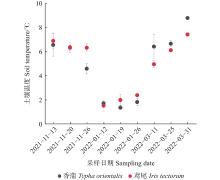
Fig.1
Soil temperature variations on different sampling dates"
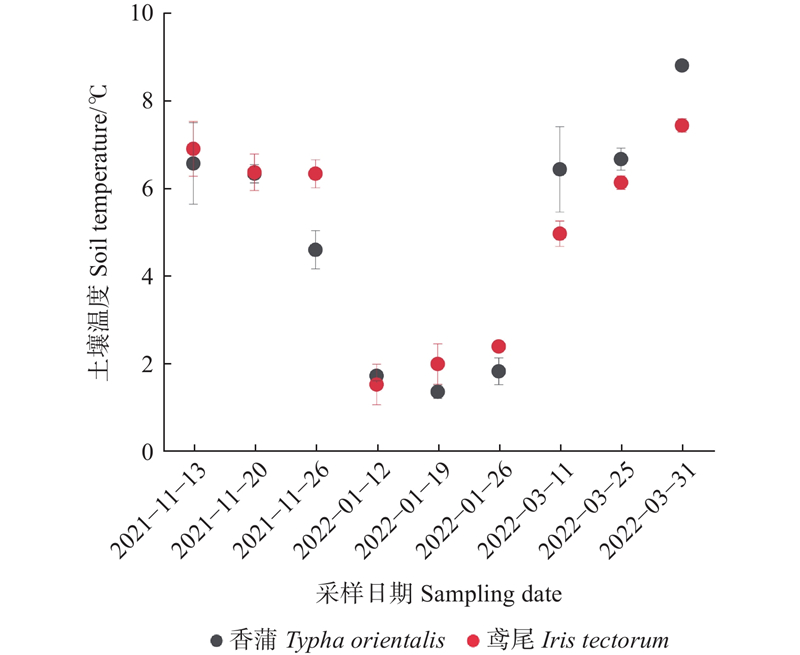
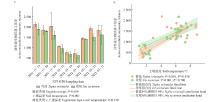
Fig.2
Soil active microbial community richness at different sampling dates (a) and its regression analysis with soil temperature (b)"
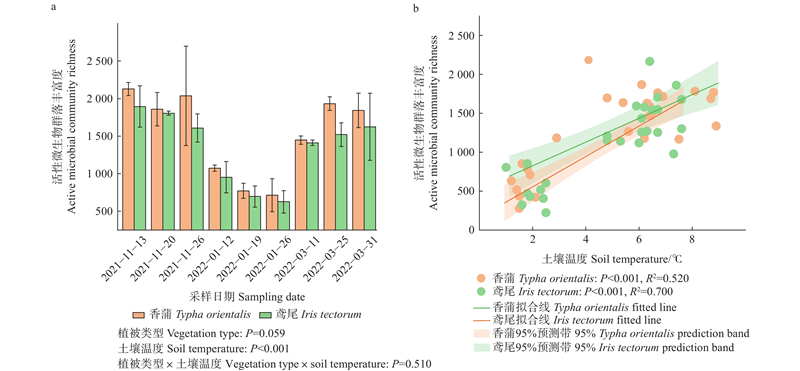
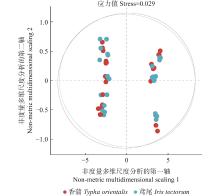
Fig.3
Non-metric multidimensional scaling analysis of soil active microbial communities in different vegetation types"
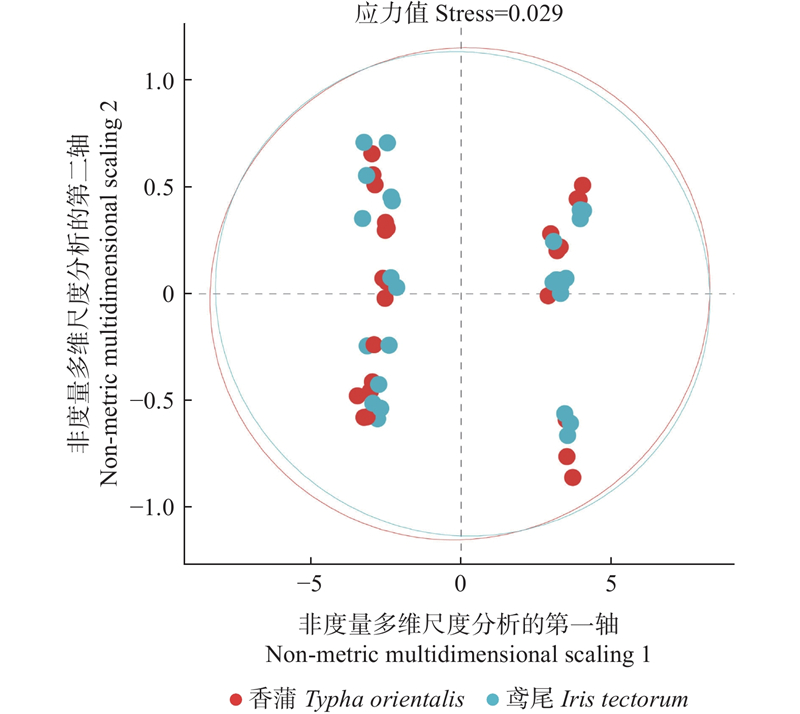
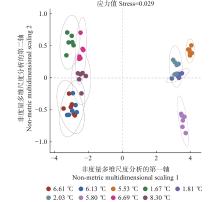
Fig.4
Non-metric multidimensional scaling analysis of soil active microbial communities under different temperatures"
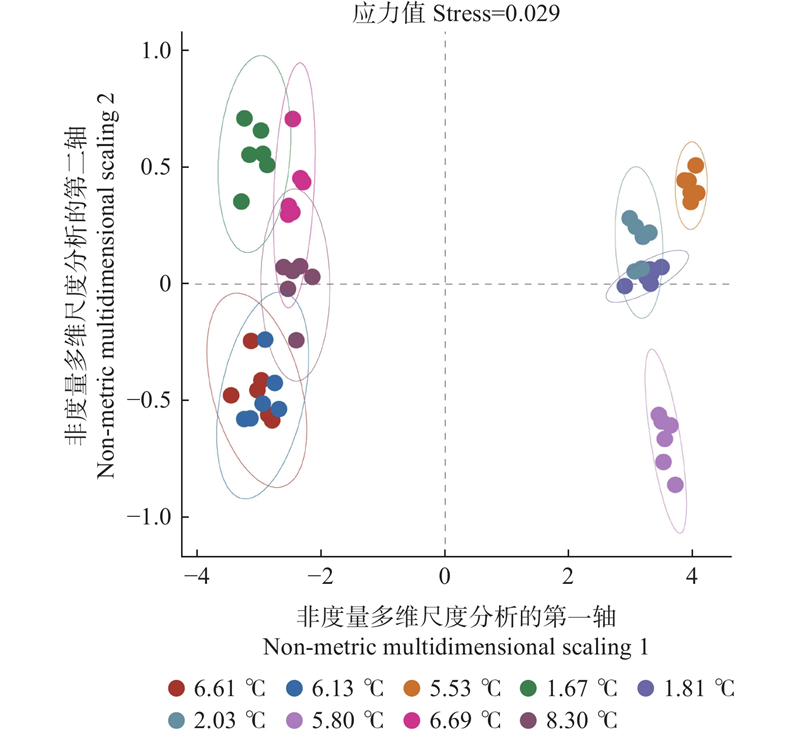
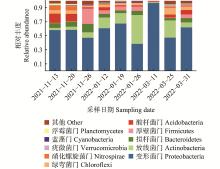
Fig.5
Relative abundance of active microorganisms at the phylum level on different sampling dates"
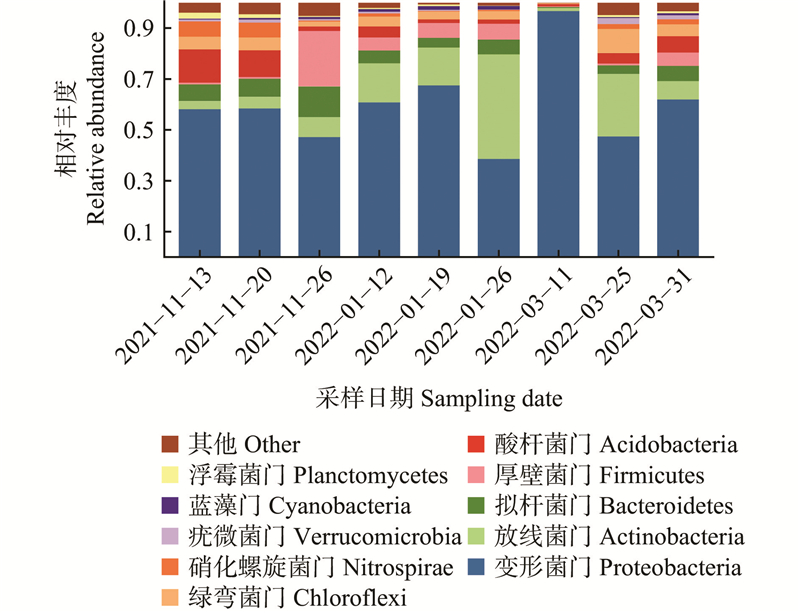
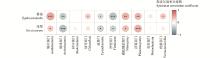
Fig.6
Spearman correlation analysis between the relative abundance of dominant active soil microbes and temperature under different vegetation types"
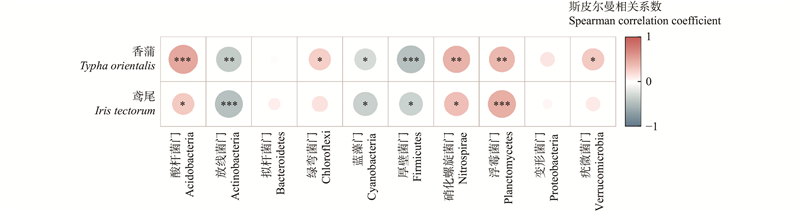
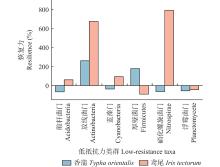
Fig.7
Resilience of low-resistance taxa in the soil of Typha orientalis and Iris tectorum"
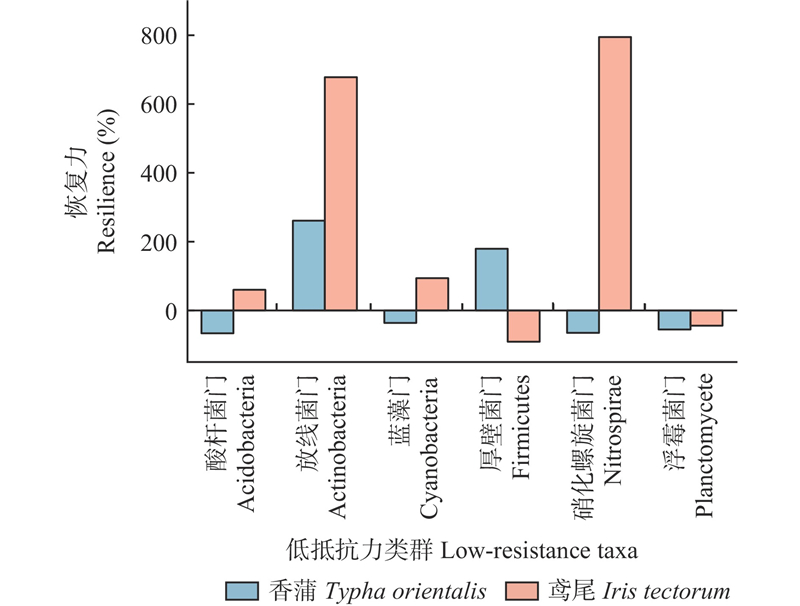
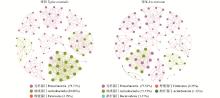
Fig.8
Co-occurrence networks of soil active microorganisms under different vegetation"
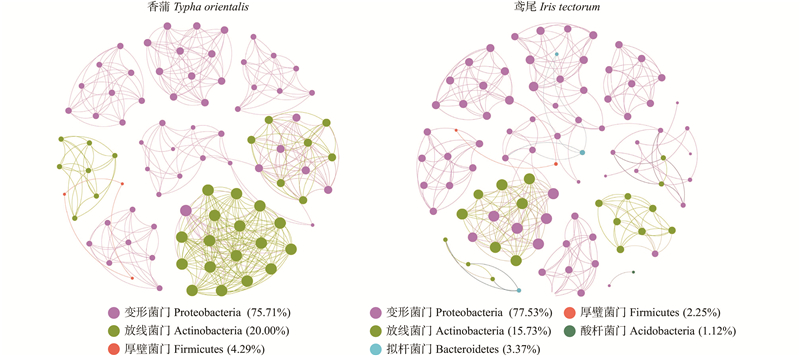
Table 1
Topological properties of co-occurrence networks of soil microorganisms in two types of vegetation"
| 项目Item | 香蒲Typha orientalis | 鸢尾Iris tectorum |
| 节点数量Number of nodes | 87 | 94 |
| 边数量Number of edges | 407 | 378 |
| 网络直径Diameter | 3 | 4 |
| 模块化Modularity | 0.79 | 0.86 |
| 平均聚类系数 Average clustering coefficient | 0.81 | 0.94 |
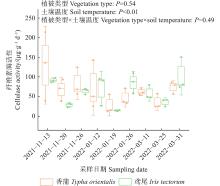
Fig.9
Changes in cellulase activity on different sampling dates"
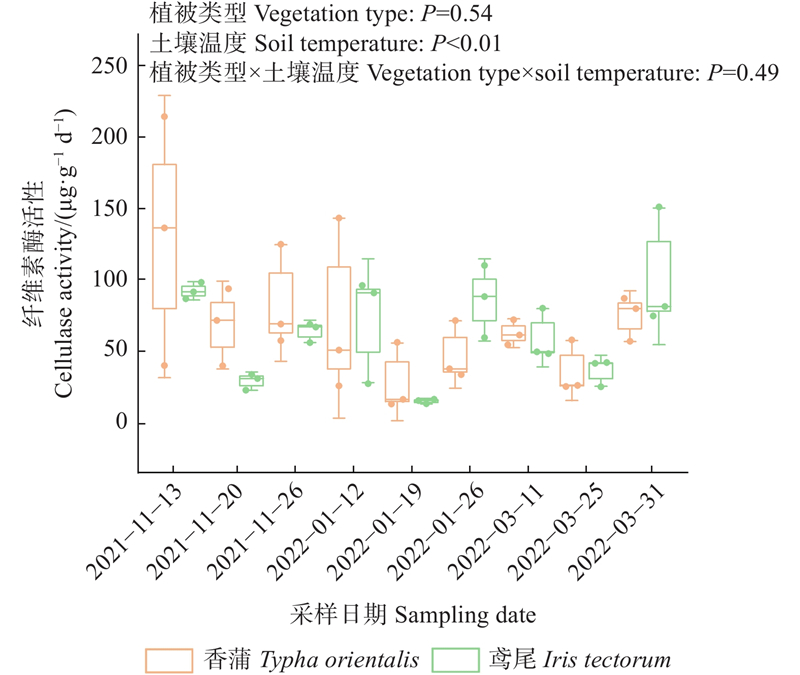
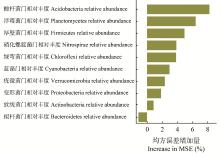
Fig.10
Random forest model analysis of key active microbial groups affecting cellulase activity"
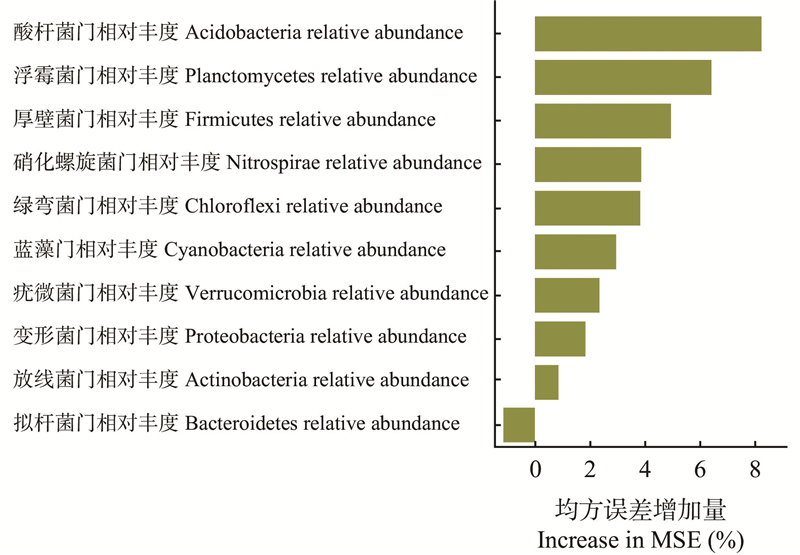
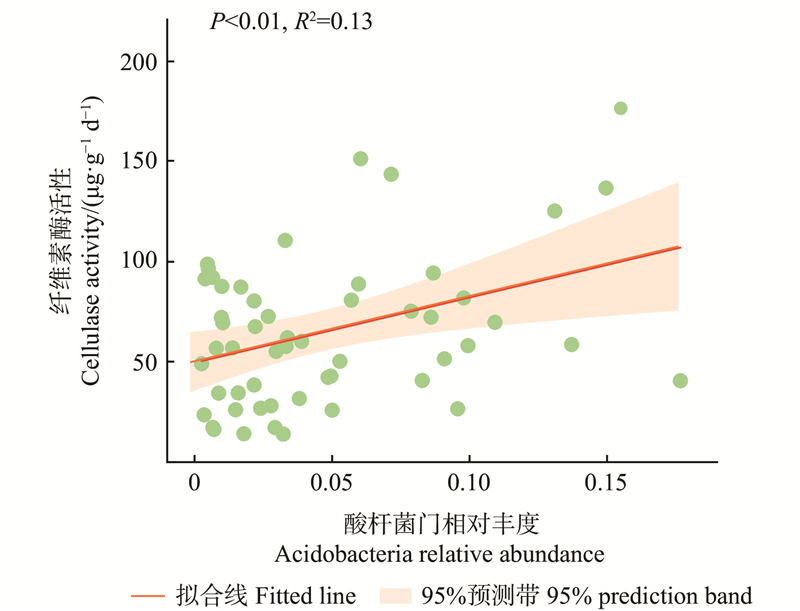
Fig.11
Regression analysis of the relative abundance of Acidobacteria and cellulase activity"
| 崔丽娟, 张曼胤, 张 岩, 等. 湿地恢复研究现状及前瞻. 世界林业研究, 2011, 24 (2): 5- 9. | |
| Cui L J, Zhang M Y, Zhang Y, et al. Status and outlook of wetland restoration research. World Forestry Research, 2011, 24 (2): 5- 9. | |
|
贺纪正, 李 晶, 郑袁明. 土壤生态系统微生物多样性−稳定性关系的思考. 生物多样性, 2013, 21 (4): 412- 421.
doi: 10.19392/j.cnki.1671-7341.201712208 |
|
|
He J Z, Li J, Zheng Y M. Thoughts on the microbial diversity-stability relationship in soil ecosystems. Biodiversity Science, 2013, 21 (4): 412- 421.
doi: 10.19392/j.cnki.1671-7341.201712208 |
|
| 黄松庆, 刘秀红, 曹馨月, 等. 城市污水处理厂A2O工艺N2O产生、关键影响因素与减排策略. 环境科学, 2025, 46 (1): 140- 147. | |
| Huang S Q, Liu X H, Cao X Y, et al. N2O generation, key influencing factors, and emission reduction strategies of A2O process in municipal wastewater treatment plant. Environmental Science, 2025, 46 (1): 140- 147. | |
| 李 晶, 刘玉荣, 贺纪正, 等. 土壤微生物对环境胁迫的响应机制. 环境科学学报, 2013, 33 (4): 959- 967. | |
| Li J, Liu Y R, He J Z, et al. Insights into the responses of soil microbial community to the environmental disturbances. Acta Scientiae Circumstantiae, 2013, 33 (4): 959- 967. | |
|
李 鑫, 李娅芸, 安韶山, 等. 宁南山区典型草本植物茎叶分解对土壤酶活性及微生物多样性的影响. 应用生态学报, 2016, 27 (10): 3182- 3188.
doi: 10.13287/j.1001-9332.201610.016 |
|
|
Li X, Li Y Y, An S S, et al. Effects of stem and leaf decomposition in typical herbs on soil enzyme activity and microbial diversity in the south Ningxia loess hilly region of Northwest China. Chinese Journal of Applied Ecology, 2016, 27 (10): 3182- 3188.
doi: 10.13287/j.1001-9332.201610.016 |
|
|
申建波, 白 洋, 韦 中, 等. 根际生命共同体: 协调资源、环境和粮食安全的学术思路与交叉创新. 土壤学报, 2021, 58 (4): 805- 813.
doi: 10.11766/trxb202012310722 |
|
|
Shen J B, Bai Y, Wei Z, et al. Rhizobiont: an interdisciplinary innovation and perspective for harmonizing resources, environment, and food security. Acta Pedologica Sinica, 2021, 58 (4): 805- 813.
doi: 10.11766/trxb202012310722 |
|
|
王光华, 刘俊杰, 于镇华, 等. 土壤酸杆菌门细菌生态学研究进展. 生物技术通报, 2016, 32 (2): 14- 20.
doi: 10.13560/j.cnki.biotech.bull.1985.2016.02.002 |
|
|
Wang G H, Liu J J, Yu Z H, et al. Research progress of acidobacteria ecology in soils. Biotechnology Bulletin, 2016, 32 (2): 14- 20.
doi: 10.13560/j.cnki.biotech.bull.1985.2016.02.002 |
|
|
Attia S, Russel J, Mortensen M S, et al. Unexpected diversity among small-scale sample replicates of defined plant root compartments. The ISME Journal, 2022, 16 (4): 997- 1003.
doi: 10.1038/s41396-021-01094-7 |
|
|
Bhat N A, Riar A, Ramesh A, et al. Soil biological activity contributing to phosphorus availability in vertisols under long-term organic and conventional agricultural management. Frontiers in Plant Science, 2017, 8, 1523.
doi: 10.3389/fpls.2017.01523 |
|
|
Chen J H, Wu Q F, Li S H, et al. Diversity and function of soil bacterial communities in response to long-term intensive management in a subtropical bamboo forest. Geoderma, 2019, 354, 113894.
doi: 10.1016/j.geoderma.2019.113894 |
|
|
Colombo F, MacDonald C A, Jeffries T C, et al. Impact of forest management practices on soil bacterial diversity and consequences for soil processes. Soil Biology and Biochemistry, 2016, 94, 200- 210.
doi: 10.1016/j.soilbio.2015.11.029 |
|
|
Cui J, Zhao J, Wang Z, et al. Diversity of active root-associated methanotrophs of three emergent plants in a eutrophic wetland in northern China. AMB Express, 2020, 10 (1): 48.
doi: 10.1186/s13568-020-00984-x |
|
|
Delgado-Baquerizo M, Oliverio A M, Brewer T E, et al. A global atlas of the dominant bacteria found in soil. Science, 2018, 359 (6373): 320- 325.
doi: 10.1126/science.aap9516 |
|
|
Edgar R C, Haas B J, Clemente J C, et al. UCHIME improves sensitivity and speed of Chimera detection. Bioinformatics, 2011, 27 (16): 2194- 2200.
doi: 10.1093/bioinformatics/btr381 |
|
|
Feng J W, Cui B H, Yuan B X, et al. Purification mechanism of low-pollution water in three submerged plants and analysis of bacterial community structure in plant rhizospheres. Environmental Engineering Science, 2020, 37 (8): 560- 571.
doi: 10.1089/ees.2019.0459 |
|
|
Fierer N. Embracing the unknown: disentangling the complexities of the soil microbiome. Nature Reviews Microbiology, 2017, 15 (10): 579- 590.
doi: 10.1038/nrmicro.2017.87 |
|
|
Frank J A, Reich C I, Sharma S, et al. Critical evaluation of two primers commonly used for amplification of bacterial 16S rRNA genes. Applied and Environmental Microbiology, 2008, 74 (8): 2461- 2470.
doi: 10.1128/AEM.02272-07 |
|
|
Gao C, Xu L, Montoya L, et al. Co-occurrence networks reveal more complexity than community composition in resistance and resilience of microbial communities. Nature Communications, 2022, 13, 3867.
doi: 10.1038/s41467-022-31343-y |
|
| Gratz R, Brumbarova T, Ivanov R, et al. Phospho-mutant activity assays provide evidence for alternative phospho-regulation pathways of the transcription factor fer-like iron deficiency-induced transcription factor. The New Phytologist, 2020, 225 (1): 250- 267. | |
|
Guo X, Zhu L, Zhong H, et al. Response of antibiotic and heavy metal resistance genes to tetracyclines and copper in substrate-free hydroponic microcosms with Myriophyllum aquaticum. Journal of Hazardous Materials, 2021, 413, 125444.
doi: 10.1016/j.jhazmat.2021.125444 |
|
|
He S, Ding L L, Xu K, et al. Effect of low temperature on highly unsaturated fatty acid biosynthesis in activated sludge. Bioresource Technology, 2016, 211, 494- 501.
doi: 10.1016/j.biortech.2016.03.069 |
|
|
Hernandez D J, David A S, Menges E S, et al. Environmental stress destabilizes microbial networks. The ISME Journal, 2021, 15 (6): 1722- 1734.
doi: 10.1038/s41396-020-00882-x |
|
|
Huang L B, Bai J H, Wen X J, et al. Microbial resistance and resilience in response to environmental changes under the higher intensity of human activities than global average level. Global Change Biology, 2020, 26 (4): 2377- 2389.
doi: 10.1111/gcb.14995 |
|
|
Ji M D, Hu Z, Hou C L, et al. New insights for enhancing the performance of constructed wetlands at low temperatures. Bioresource Technology, 2020, 301, 122722.
doi: 10.1016/j.biortech.2019.122722 |
|
|
Kajihara K T, Hynson N A. Networks as tools for defining emergent properties of microbiomes and their stability. Microbiome, 2024, 12 (1): 184.
doi: 10.1186/s40168-024-01868-z |
|
|
Kanokratana P, Uengwetwanit T, Rattanachomsri U, et al. Insights into the phylogeny and metabolic potential of a primary tropical peat swamp forest microbial community by metagenomic analysis. Microbial Ecology, 2011, 61 (3): 518- 528.
doi: 10.1007/s00248-010-9766-7 |
|
|
Kouba V, Vejmelkova D, Zwolsman E, et al. Adaptation of anammox bacteria to low temperature via gradual acclimation and cold shocks: Distinctions in protein expression, membrane composition and activities. Water Research, 2022, 209, 117822.
doi: 10.1016/j.watres.2021.117822 |
|
|
Liu C C, Yu D S, Wang Y Y, et al. A novel control strategy for the partial nitrification and anammox process (PN/A) of immobilized particles: Using salinity as a factor. Bioresource Technology, 2020, 302, 122864.
doi: 10.1016/j.biortech.2020.122864 |
|
|
Liu X, Wang M, Liu B, et al. Keystone taxa mediate the trade-off between microbial community stability and performance in activated sludges. Nature Water, 2025, 3, 723- 733.
doi: 10.1038/s44221-025-00451-6 |
|
|
Louca S, Jacques S M S, Pires A P F, et al. High taxonomic variability despite stable functional structure across microbial communities. Nature Ecology & Evolution, 2017, 1, 15.
doi: 10.3410/f.728777529.793570413 |
|
|
Maisch M, Lueder U, Kappler A, et al. Iron lung: how rice roots induce iron redox changes in the rhizosphere and create niches for microaerophilic Fe(II)-oxidizing bacteria. Environmental Science & Technology Letters, 2019, 6 (10): 600- 605.
doi: 10.1021/acs.estlett.9b00403 |
|
|
Manasa S L, Panigrahy M, Panigrahi K C S, et al. Overview of cold stress regulation in plants. The Botanical Review, 2022, 88 (3): 359- 387.
doi: 10.1007/s12229-021-09267-x |
|
|
McAteer P G, Christine Trego A, Thorn C, et al. Reactor configuration influences microbial community structure during high-rate, low-temperature anaerobic treatment of dairy wastewater. Bioresource Technology, 2020, 307, 123221.
doi: 10.1016/j.biortech.2020.123221 |
|
|
Orwin K H, Wardle D A. New indices for quantifying the resistance and resilience of soil biota to exogenous disturbances. Soil Biology and Biochemistry, 2004, 36 (11): 1907- 1912.
doi: 10.1016/j.soilbio.2004.04.036 |
|
|
Pankratov T A, Ivanova A O, Dedysh S N, et al. Bacterial populations and environmental factors controlling cellulose degradation in an acidic Sphagnum peat. Environmental Microbiology, 2011, 13 (7): 1800- 1814.
doi: 10.1111/j.1462-2920.2011.02491.x |
|
|
Personnic N, Striednig B, Hilbi H. Quorum sensing controls persistence, resuscitation, and virulence of Legionella subpopulations in biofilms. The ISME Journal, 2021, 15 (1): 196- 210.
doi: 10.1038/s41396-020-00774-0 |
|
|
Pimm S L. The complexity and stability of ecosystems. Nature, 1984, 307 (5949): 321- 326.
doi: 10.1038/307321a0 |
|
|
Sandra M, Fredrik D, Erland B. Antagonistic and synergistic effects of fungal and bacterial growth in soil after adding different carbon and nitrogen sources. Soil Biology & Biochemistry, 2008, 40 (9): 2334- 2343.
doi: 10.1016/j.soilbio.2008.05.011 |
|
|
Schnecker J, Wild B, Takriti M, et al. Microbial community composition shapes enzyme patterns in topsoil and subsoil horizons along a latitudinal transect in Western Siberia. Soil Biology and Biochemistry, 2015, 83, 106- 115.
doi: 10.1016/j.soilbio.2015.01.016 |
|
|
Shen C, Su L T, Zhao Y Q, et al. Plants boost pyrrhotite-driven nitrogen removal in constructed wetlands. Bioresource Technology, 2023, 367, 128240.
doi: 10.1016/j.biortech.2022.128240 |
|
|
Stephen J R, McCaig A E, Smith Z, et al. Molecular diversity of soil and marine 16S rRNA gene sequences related to beta-subgroup ammonia-oxidizing bacteria. Applied and Environmental Microbiology, 1996, 62 (11): 4147- 4154.
doi: 10.1128/aem.62.11.4147-4154.1996 |
|
|
Tang S Y, Liao Y H, Xu Y C, et al. Microbial coupling mechanisms of nitrogen removal in constructed wetlands: a review. Bioresource Technology, 2020, 314, 123759.
doi: 10.1016/j.biortech.2020.123759 |
|
|
Wang M X, Chen X L, Liu X N, et al. Even allocation of benefits stabilizes microbial community engaged in metabolic division of labor. Cell Reports, 2022, 40 (13): 111410.
doi: 10.1016/j.celrep.2022.111410 |
|
|
Wang Y, Thompson K N, Yan Y, et al. RNA-based amplicon sequencing is ineffective in measuring metabolic activity in environmental microbial communities. Microbiome, 2023, 11 (1): 131.
doi: 10.1186/s40168-022-01449-y |
|
|
Wilhelm R C, Singh R, Eltis L D, et al. Bacterial contributions to delignification and lignocellulose degradation in forest soils with metagenomic and quantitative stable isotope probing. The ISME Journal, 2019, 13 (2): 413- 429.
doi: 10.1038/s41396-018-0279-6 |
|
|
Xiong C, Zhu Y G, Wang J T, et al. Host selection shapes crop microbiome assembly and network complexity. New Phytologist, 2021, 229 (2): 1091- 1104.
doi: 10.1111/nph.16890 |
|
|
Xu L, Shi Y J, Fang H Y, et al. Vegetation carbon stocks driven by canopy density and forest age in subtropical forest ecosystems. Science of the Total Environment, 2018, 631, 619- 626.
doi: 10.1016/j.scitotenv.2018.03.080 |
|
|
Zhang A L, Yin J F, Zhang Y M, et al. Plants alter their aboveground and belowground biomass allocation and affect community-level resistance in response to snow cover change in Central Asia, Northwest China. Science of the Total Environment, 2023, 902, 166059.
doi: 10.1016/j.scitotenv.2023.166059 |
|
|
Zhu Y N, Cui L J, Li J, et al. Long-term performance of nutrient removal in an integrated constructed wetland. Science of the Total Environment, 2021, 779, 146268.
doi: 10.1016/j.scitotenv.2021.146268 |
| Viewed | ||||||
|
Full text |
|
|||||
|
Abstract |
|
|||||
