
Scientia Silvae Sinicae ›› 2026, Vol. 62 ›› Issue (4): 1-11.doi: 10.11707/j.1001-7488.LYKX20260101
• Invited reviews • Previous Articles Next Articles
Shaokun Wang1,2( ),Jing Li1,2,Lijuan Cui1,*()
Received:2026-02-13
Online:2026-04-15
Published:2026-04-11
Contact:
Lijuan Cui
E-mail:wangsk94@163.com;wetlands108@126.com
CLC Number:
Shaokun Wang,Jing Li,Lijuan Cui. Research Progress on Mechanisms of Halophyte Plant Root Traits Influencing Microbial Nitrogen Removal in Coastal Wetlands[J]. Scientia Silvae Sinicae, 2026, 62(4): 1-11.
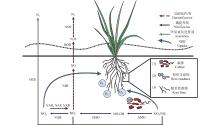
Fig.1
Schematic diagram of root traits of halophyte, microbial nitrogen removal processes, and their interactions"
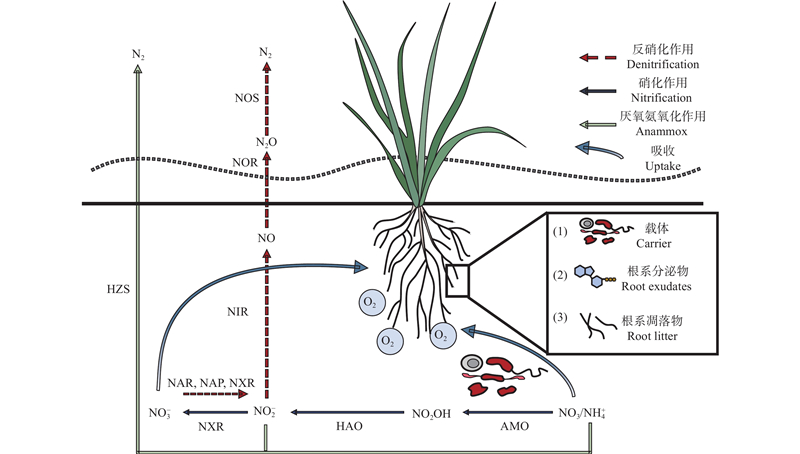

Table 1
Microbial mechanisms linking halophyte root traits to nitrogen removal in coastal wetlands"
| 根系性状 Root traits | 影响机制 Mechanisms | 微生物类群 Microbial taxa | 参考文献 References |
| 根系泌氧 Radial oxygen loss | 根系泌氧塑造基质中好氧和微好氧区域,影响氮 去除过程反应强度 Radial oxygen loss creates aerobic and microaerobic zones within the substrate, thereby influencing the intensity of nitrogen removal processes | 拟杆菌纲,地杆菌属,假单胞菌 Petrimonas, Geobacter, Pseudomonas | |
| 根系生物量 Root biomass | 植物较高的根系生物量提供更多碳源输入,促进反硝化过程 Greater root biomass enhances carbon inputs, thereby facilitating denitrification | nirS, nirK型反硝化微生物 nirS, nirK type denitrifiers | |
| 比表面积 Specific root area | 高比表面积植物根系,提供更大附着界面,提高功能 微生物多样性和活性 Higher root surface area provides greater carrier for microorganisms, enhancing their diversity and activity | 放线菌门,节杆菌属Actinobacteria, Arthrobacter | |
| 根直径,比根长 Root diameter,specific root length | 控制分泌速率和细根周转的速率进一步调节碳输入, 调控反硝化过程 Regulation of exudation rates and root turnover further modulates carbon inputs, thereby regulating denitrification | 固氮螺菌属,慢生根瘤菌属,中华根瘤菌属Azospira, Bradyrhizobium, Sinorhizobium | |
| 根氮浓度 Root nitrogen content | 不仅决定了植物本身的养分吸收率,还减少了 土壤中的氮底物,抑制反硝化 This not only determines the nutrient uptake rate of plants themselves, but also reduces nitrogen substrates in the soil, thereby inhibiting denitrification | ||
| 根系次生代谢产物 Root secondary metabolites | 脂肪酸甲酯、脂肪酸酰胺、豆甾醇作为信号分析促进 反硝化菌氮去除活性 Fatty acid methyl esters, fatty acid amides, and stigmasterol function as signaling molecules, enhancing the nitrogen removal activity of denitrifying bacteria | 假单胞菌属Pseudomonas | |
| 根系初生代谢产物 Root primary metabolites | 有机酸、蛋白质、氨基酸、糖类作为碳源促进反硝化过程 Organic acids, proteins, amino acids, and carbohydrates serve as carbon sources to promote denitrification | 绿脓杆菌,地杆菌属,梭状芽孢杆菌属Pseudomonas aeruginosa,Geobacter, Clostridium | |
| 生物反硝化抑制剂 Biological denitrification inhibitors | 根系分泌的黄酮和萜类化合物抑制反硝化;类腐殖酸以及氨氧化过程产生的羟胺抑制厌氧氨氧化活性 Flavonoids and terpenoids exuded by roots inhibit denitrification, while humic-like substances and hydroxylamine generated during ammonia oxidation suppress anaerobic ammonium oxidation activity | nirS, nirK, nosZ型反硝化微生物 nirS, nirK, nosZ type denitrifiers |
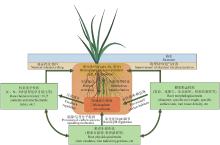
Fig.2
A simple diagram depicting the relationships among root traits of halophyte, rhizosphere microenvironment, and associated microbes"
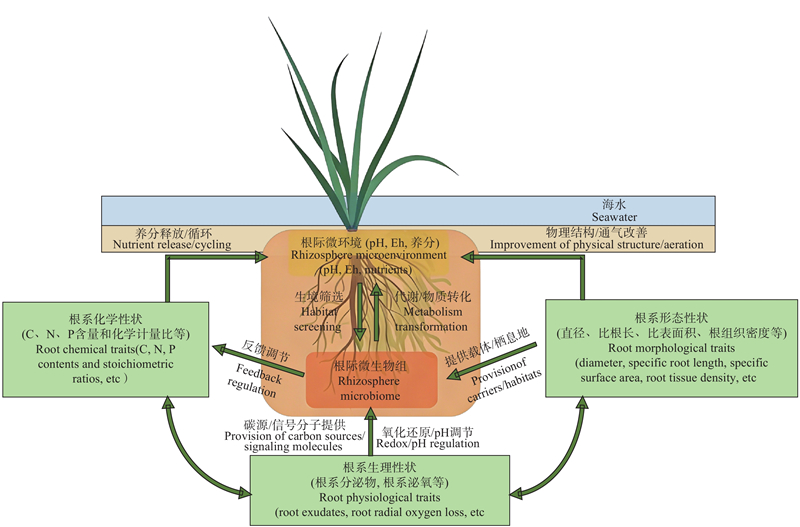
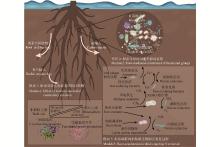
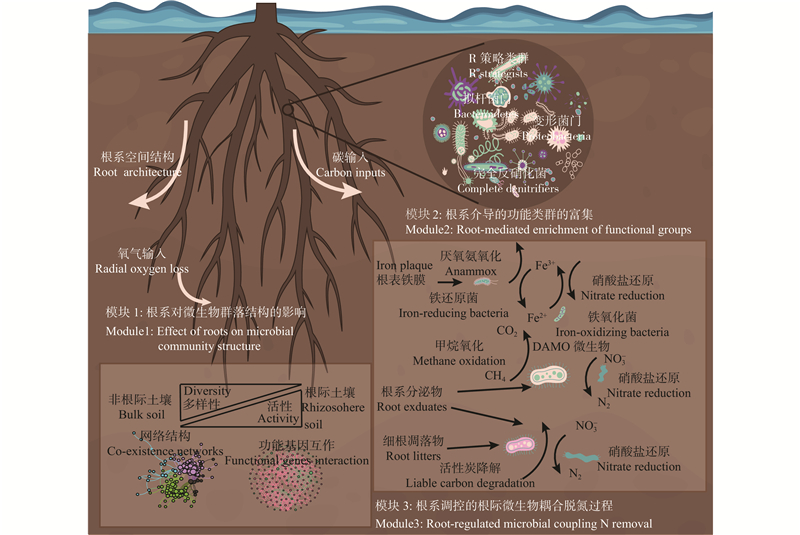
Fig.3
Halophyte root–mediated rhizosphere microbial nitrogen removal mechanisms"
| 陈飞扬. 2023. 河口潮滩湿地反硝化型甲烷厌氧氧化及其影响机制研究. 上海: 华东师范大学. | |
| Chen F Y. 2023. Denitrifying anaerobic methane oxidation and its influencing mechanism in estuarine intertidal wetlands. Shanghai: East China Normal University. [in Chinese] | |
| 陈顺涛. 2023. 河口潮滩湿地氮素转化过程及环境调控机制. 上海: 华东师范大学. | |
| Chen S T. 2023. Nitrogen transformation processes and its environmental controls in estuarine tidal flat wetland. Shanghai: East China Normal University. [in Chinese] | |
| 崔丽娟, 康晓明, 张曼胤, 等. 2019. 中国滨海湿地生态系统功能及服务评价. 北京: 中国林业出版社. | |
| Cui L J, Kang X M, Zhang M Y, et al. 2019. Assessment of ecosystem functions and services of China’s coastal wetlands. Beijing: China Forestry Publishing House. [in Chinese] | |
|
崔丽娟, 李 伟, 窦志国, 等. 近30年中国滨海滩涂湿地变化及其驱动力. 生态学报, 2022, 42 (18): 7297- 7307.
doi: 10.5846/stxb202203080551 |
|
|
Cui L J, Li W, Dou Z G, et al. Changes and driving forces of the tidal flat wetlands in coastal China during the past 30 years. Acta Ecologica Sinica, 2022, 42 (18): 7297- 7307.
doi: 10.5846/stxb202203080551 |
|
|
李 晶, 雷茵茹, 崔丽娟, 等. 我国滨海滩涂湿地现状及研究进展. 林业资源管理, 2018, (2): 24- 28.
doi: 10.13466/j.cnki.lyzygl.2018.02.005 |
|
|
Li J, Lei Y R, Cui L J, et al. Current status and research progress of coastal tidal flat wetlands in China. Forest Resources Management, 2018, (2): 24- 28.
doi: 10.13466/j.cnki.lyzygl.2018.02.005 |
|
|
李 威, 于珍珍, 何 徽, 等. 碳输入改变对湿地松人工成熟林土壤微生物群落的影响. 林业科学, 2025, 61 (6): 232- 242.
doi: 10.11707/j.1001-7488.LYKX20240238 |
|
|
Li W, Yu Z Z, He H, et al. Effects of carbon input change on soil bacterial and fungal community structure and diversity in a mature Pinus elliottii plantation. Scientia Silvae Sinicae, 2025, 61 (6): 232- 242.
doi: 10.11707/j.1001-7488.LYKX20240238 |
|
| 刘世荣, 陈远其, 聂秀青, 等. 2026. 树种多样性对森林生态系统多功能性和韧性的影响. 林业科学, 62(1): 1−18. | |
| Liu S R, Chen Y Q, Nie X Q, et al. 2026. Effects of tree species diversity on multifunctionality and resilience of forest ecosystems. Scientia Silvae Sinicae, 62(1): 1−18. [in Chinese] | |
| 刘晓娟, 马克平. 植物功能性状研究进展. 中国科学(生命科学), 2015, 45 (4): 325- 339. | |
| Liu X J, Ma K P. Plant functional traits: concepts, applications and future directions. Science in China (Series C), 2015, 45 (4): 325- 339. | |
|
刘志君, 崔丽娟, 李 伟, 等. 互花米草入侵对盐城滨海湿地nirS型反硝化细菌多样性及群落结构的影响. 生态环境学报, 2022, 31 (4): 704- 714.
doi: 10.16258/j.cnki.1674-5906.2022.04.008 |
|
|
Liu Z J, Cui L J, Li W, et al. Effects of Spartina alterniflora invasion on the diversity and community structure of nirS-type denitrifying bacteria in Yancheng coastal wetlands. Ecology and Environment Sciences, 2022, 31 (4): 704- 714.
doi: 10.16258/j.cnki.1674-5906.2022.04.008 |
|
| 王汝苗, 李 晶, 刘魏魏, 等. 微生物代谢可塑性对退化湿地固碳的调控机制及生态恢复启示. 林业科学, 2025, 61 (7): 52- 58. | |
| Wang R M, Li J, Liu W W, et al. Regulating mechanisms of microbial metabolic plasticity on carbon sequestration in degraded wetlands and its implications for ecological restoration. Scientia Silvae Sinicae, 2025, 61 (7): 52- 58. | |
| 中国海洋生态环境状况公报. 2023. 生态环境部. | |
| China Marine Ecological Environment Status Bulletin. 2023. Ministry of Ecology and Environment of the People’s Republic of China. [in Chinese] | |
|
An Z R, Chen F Y, Zheng Y L, et al. Role of n-DAMO in mitigating methane emissions from intertidal wetlands is regulated by saltmarsh vegetations. Environmental Science & Technology, 2024, 58 (2): 1152- 1163.
doi: 10.1021/acs.est.3c07882 |
|
|
Attia S, Russel J, Mortensen M S, et al. Unexpected diversity among small-scale sample replicates of defined plant root compartments. The ISME Journal, 2022, 16 (4): 997- 1003.
doi: 10.1038/s41396-021-01094-7 |
|
|
Bardgett R D, Mommer L, De Vries F T. Going underground: root traits as drivers of ecosystem processes. Trends in Ecology & Evolution, 2014, 29 (12): 692- 699.
doi: 10.1016/j.tree.2014.10.006 |
|
| Bergmann J, Weigelt A, van der Plas F, et al. 2020. The fungal collaboration gradient dominates the root economics space in plants. Science Advances, 6(27): eaba3756. | |
|
Bowen J L, Spivak A C, Bernhard A E, et al. Salt marsh nitrogen cycling: where land meets sea. Trends in Microbiology, 2024, 32 (6): 565- 576.
doi: 10.1016/j.tim.2023.09.010 |
|
|
Cantarel A A M, Pommier T, Desclos-Theveniau M, et al. Using plant traits to explain plant–microbe relationships involved in nitrogen acquisition. Ecology, 2015, 96 (3): 788- 799.
doi: 10.1890/13-2107.1 |
|
|
Chen S T, Gao D Z, Zhang J B, et al. Gross nitrogen transformations in intertidal sediments of the Yangtze Estuary: Distribution patterns and environmental controls. Geoderma, 2023a, 429, 116233.
doi: 10.1016/j.geoderma.2022.116233 |
|
|
Chen S T, Gao D Z, Li X F, et al. Nitrogen loss from anaerobic ammonium oxidation coupled to Iron(III) reduction activity across estuarine and coastal wetlands of China: Spatial variations, controlling factors, and environmental implications. Catena, 2023b, 222, 106805.
doi: 10.1016/j.catena.2022.106805 |
|
|
Chen Y, Wen Y, Zhou Q, et al. Effects of plant biomass on nitrogen transformation in subsurface-batch constructed wetlands: a stable isotope and mass balance assessment. Water Research, 2014, 63, 158- 167.
doi: 10.1016/j.watres.2014.06.015 |
|
|
Cheng S S, Gong X, Xue W F, et al. Evolutionarily conserved core microbiota as an extended trait in nitrogen acquisition strategy of herbaceous species. New Phytologist, 2024, 244 (4): 1570- 1584.
doi: 10.1111/nph.20118 |
|
|
Choudhury M I, Hallin S, Ecke F, et al. Disentangling the roles of plant functional diversity and plant traits in regulating plant nitrogen accumulation and denitrification in freshwaters. Functional Ecology, 2022, 36 (4): 921- 932.
doi: 10.1111/1365-2435.14001 |
|
|
Coskun D, Britto D T, Shi W M, et al. How plant root exudates shape the nitrogen cycle. Trends in Plant Science, 2017, 22 (8): 661- 673.
doi: 10.1016/j.tplants.2017.05.004 |
|
|
Cui H, Yang Y C, Ding Y, et al. A novel pilot-scale tubular bioreactor-enhanced floating treatment wetland for efficient in situ nitrogen removal from urban landscape water: Long-term performance and microbial mechanisms. Water Environment Research, 2019, 91 (11): 1498- 1508.
doi: 10.1002/wer.1147 |
|
|
Deng S H, Peng S, Xie B H, et al. Influence characteristics and mechanism of organic carbon on denitrification, N2O emission and NO2−accumulation in the iron [Fe(0)]-oxidizing supported autotrophic denitrification process. Chemical Engineering Journal, 2020, 393, 124736.
doi: 10.1016/j.cej.2020.124736 |
|
|
Di Capua F, Pirozzi F, Lens P N L, et al. Electron donors for autotrophic denitrification. Chemical Engineering Journal, 2019, 362, 922- 937.
doi: 10.1016/j.cej.2019.01.069 |
|
|
Fan K K, Weisenhorn P, Gilbert J A, et al. Wheat rhizosphere harbors a less complex and more stable microbial co-occurrence pattern than bulk soil. Soil Biology and Biochemistry, 2018, 125, 251- 260.
doi: 10.1016/j.soilbio.2018.07.022 |
|
| Fort F. Grounding trait-based root functional ecology. Functional Ecology, 2023, 37 (8): 2159- 2169. | |
|
Freschet G T, Roumet C, Comas L H, et al. Root traits as drivers of plant and ecosystem functioning: current understanding, pitfalls and future research needs. New Phytologist, 2021, 232 (3): 1123- 1158.
doi: 10.1111/nph.17072 |
|
|
Gao J, Hou L J, Zheng Y L, et al. nirS-Encoding denitrifier community composition, distribution, and abundance along the coastal wetlands of China. Applied Microbiology and Biotechnology, 2016, 100 (19): 8573- 8582.
doi: 10.1007/s00253-016-7659-5 |
|
|
Gao D Z, Liu C, Li X F, et al. High importance of coupled nitrification-denitrification for nitrogen removal in a large periodically low-oxygen estuary. Science of the Total Environment, 2022, 846, 157516.
doi: 10.1016/j.scitotenv.2022.157516 |
|
|
Gao X Q, Bi Y X, Su L, et al. Unveiling the nitrogen and phosphorus removal potential: Comparative analysis of three coastal wetland plant species in lab-scale constructed wetlands. Journal of Environmental Management, 2024, 351, 119864.
doi: 10.1016/j.jenvman.2023.119864 |
|
|
Gillespie L M, Hättenschwiler S, Milcu A, et al. Tree species mixing affects soil microbial functioning indirectly via root and litter traits and soil parameters in European forests. Functional Ecology, 2021, 35 (10): 2190- 2204.
doi: 10.1111/1365-2435.13877 |
|
|
Glaister B J, Fletcher T D, Cook P L M, et al. Interactions between design, plant growth and the treatment performance of stormwater biofilters. Ecological Engineering, 2017, 105, 21- 31.
doi: 10.1016/j.ecoleng.2017.04.030 |
|
|
Guyonnet J P, Vautrin F, Meiffren G, et al. The effects of plant nutritional strategy on soil microbial denitrification activity through rhizosphere primary metabolites. FEMS Microbiology Ecology, 2017, 93 (4): fix022.
doi: 10.1093/femsec/fix022 |
|
|
Giblin A E, Weston N B, Banta G T, et al. The effects of salinity on nitrogen losses from an oligohaline estuarine sediment. Estuaries and Coasts, 2010, 33 (5): 1054- 1068.
doi: 10.1007/s12237-010-9280-7 |
|
|
Hamonts K, Trivedi P, Garg A, et al. Field study reveals core plant microbiota and relative importance of their drivers. Environmental Microbiology, 2018, 20 (1): 124- 140.
doi: 10.1111/1462-2920.14031 |
|
|
He N P, Li Y, Liu C C, et al. Plant trait networks: improved resolution of the dimensionality of adaptation. Trends in Ecology & Evolution, 2020, 35 (10): 908- 918.
doi: 10.1016/j.tree.2020.06.003 |
|
|
Herms C H, Hennessy R C, Bak F, et al. Back to our roots: exploring the role of root morphology as a mediator of beneficial plant–microbe interactions. Environmental Microbiology, 2022, 24 (8): 3264- 3272.
doi: 10.1111/1462-2920.15926 |
|
|
Hinshaw S E, Tatariw C, Flournoy N, et al. Vegetation loss decreases salt marsh denitrification capacity: implications for marsh erosion. Environmental Science & Technology, 2017, 51 (15): 8245- 8253.
doi: 10.1021/acs.est.7b00618 |
|
|
Hu B L, Shen L D, Xu X Y, et al. Anaerobic ammonium oxidation (anammox) in different natural ecosystems. Biochemical Society Transactions, 2011, 39 (6): 1811- 1816.
doi: 10.1042/BST20110711 |
|
|
Hu J P, He Y Y, Li J H, et al. Planting halophytes increases the rhizosphere ecosystem multifunctionality via reducing soil salinity. Environmental Research, 2024, 261, 119707.
doi: 10.1016/j.envres.2024.119707 |
|
|
Hu S S, Chen Z B, Vosátka M, et al. Arbuscular mycorrhizal fungi colonization and physiological functions toward wetland plants under different water regimes. Science of the Total Environment, 2020, 716, 137040.
doi: 10.1016/j.scitotenv.2020.137040 |
|
|
Hu X J, Xie J X, Xie H J, et al. Towards a better and more complete understanding of microbial nitrogen transformation processes in the rhizosphere of subsurface flow constructed wetlands: effect of plant root activities. Chemical Engineering Journal, 2023a, 463, 142455.
doi: 10.1016/j.cej.2023.142455 |
|
|
Hu X J, Yue J Y, Yao D D, et al. Plant development alters the nitrogen cycle in subsurface flow constructed wetlands: Implications to the strategies for intensified treatment performance. Water Research, 2023b, 246, 120750.
doi: 10.1016/j.watres.2023.120750 |
|
|
Hu Y K, Liu G F, Pan X, et al. Abundance-weighted plant functional trait variation differs between terrestrial and wetland habitats along wide climatic gradients. Science China Life Sciences, 2021, 64 (4): 593- 605.
doi: 10.1007/s11427-020-1766-1 |
|
|
Huang F J, Lin X B, Hu W F, et al. Nitrogen cycling processes in sediments of the Pearl River Estuary: spatial variations, controlling factors, and environmental implications. Catena, 2021, 206, 105545.
doi: 10.1016/j.catena.2021.105545 |
|
|
King W L, Yates C F, Guo J, et al. The hierarchy of root branching order determines bacterial composition, microbial carrying capacity and microbial filtering. Communications Biology, 2021, 4, 483.
doi: 10.1038/s42003-021-01988-4 |
|
|
Kuypers M M M, Marchant H K, Kartal B. The microbial nitrogen-cycling network. Nature Reviews Microbiology, 2018, 16 (5): 263- 276.
doi: 10.1038/nrmicro.2018.9 |
|
|
Li J, Cui L J, Delgado-Baquerizo M, et al. Plant species and associated root nutritional traits influence soil dominant bacteria in coastal wetlands across China. New Phytologist, 2024, 244 (2): 683- 693.
doi: 10.1111/nph.20047 |
|
|
Li J C, Bol R, Jones D L, et al. Exploiter no more: root metabolites driving denitrification inhibition from diverse plants. Soil Biology and Biochemistry, 2025, 209, 109898.
doi: 10.1016/j.soilbio.2025.109898 |
|
|
Li N, Li B, Nie M, et al. Effects of exotic Spartina alterniflora on saltmarsh nitrogen removal in the Yangtze River Estuary, China. Journal of Cleaner Production, 2020a, 271, 122557.
doi: 10.1016/j.jclepro.2020.122557 |
|
|
Li X F, Hou L J, Liu M, et al. Biogeochemical controls on nitrogen transformations in subtropical estuarine wetlands. Environmental Pollution, 2020b, 263, 114379.
doi: 10.1016/j.envpol.2020.114379 |
|
|
Ling N, Wang T T, Kuzyakov Y. Rhizosphere bacteriome structure and functions. Nature Communications, 2022, 13, 836.
doi: 10.1038/s41467-022-28448-9 |
|
|
Liu S B, He F K, Kuzyakov Y, et al. Nutrients in the rhizosphere: a meta-analysis of content, availability, and influencing factors. Science of the Total Environment, 2022, 826, 153908.
doi: 10.1016/j.scitotenv.2022.153908 |
|
|
Lopes L D, Schachtman D P. Rhizosphere and bulk soil bacterial community succession is influenced more by changes in soil properties than in rhizosphere metabolites across a maize growing season. Applied Soil Ecology, 2023, 189, 104960.
doi: 10.1016/j.apsoil.2023.104960 |
|
|
Lu Y F, Kronzucker H J, Shi W M. Stigmasterol root exudation arising from Pseudomonas inoculation of the duckweed rhizosphere enhances nitrogen removal from polluted waters. Environmental Pollution, 2021, 287, 117587.
doi: 10.1016/j.envpol.2021.117587 |
|
|
Lu Y F, Kronzucker H J, Yu M, et al. Nitrogen-loss and carbon-footprint reduction by plant-rhizosphere exudates. Trends in Plant Science, 2024, 29 (4): 469- 481.
doi: 10.1016/j.tplants.2023.09.007 |
|
|
Ma L, Yang L L, Liu W, et al. Effects of root exudates on rhizosphere bacteria and nutrient removal in pond-ditch circulation systems (PDCSs) for rural wastewater treatment. Science of the Total Environment, 2021, 785, 147282.
doi: 10.1016/j.scitotenv.2021.147282 |
|
|
Ma Y D, Yue K, Heděnec P, et al. Global patterns of rhizosphere effects on soil carbon and nitrogen biogeochemical processes. Catena, 2023, 220, 106661.
doi: 10.1016/j.catena.2022.106661 |
|
|
Ma Z J, Melville D S, Liu J G, et al. Rethinking China’s new great wall. Science, 2014, 346 (6212): 912- 914.
doi: 10.1126/science.1257258 |
|
|
Maisch M, Lueder U, Kappler A, et al. Iron lung: how rice roots induce iron redox changes in the rhizosphere and create niches for microaerophilic Fe(II)-oxidizing bacteria. Environmental Science & Technology Letters, 2019, 6 (10): 600- 605.
doi: 10.1021/acs.estlett.9b00403 |
|
|
Moreau D, Pivato B, Bru D, et al. Plant traits related to nitrogen uptake influence plant-microbe competition. Ecology, 2015, 96 (8): 2300- 2310.
doi: 10.1890/14-1761.1 |
|
|
Navarro-Torre S, Garcia-Caparrós P, Nogales A, et al. Sustainable agricultural management of saline soils in arid and semi-arid Mediterranean regions through halophytes, microbial and soil-based technologies. Environmental and Experimental Botany, 2023, 212, 105397.
doi: 10.1016/j.envexpbot.2023.105397 |
|
|
Ooi S K, Barry A, Lawrence B A, et al. Vegetation zones as indicators of denitrification potential in salt marshes. Ecological Applications, 2022, 32 (6): e2630.
doi: 10.1002/eap.2630 |
|
|
Peng Y Y, Gu X S, Zhang M P, et al. Simultaneously enhanced autotrophic–heterotrophic denitrification in iron-based ecological floating bed by plant biomass: Metagenomics insights into microbial communities, functional genes and nitrogen metabolic pathways. Water Research, 2024, 248, 120868.
doi: 10.1016/j.watres.2023.120868 |
|
|
Pervaiz Z H, Contreras J, Hupp B M, et al. Root microbiome changes with root branching order and root chemistry in peach rhizosphere soil. Rhizosphere, 2020, 16, 100249.
doi: 10.1016/j.rhisph.2020.100249 |
|
|
Phillips R P, Fahey T J. Tree species and mycorrhizal associations influence the magnitude of rhizosphere effects. Ecology, 2006, 87 (5): 1302- 1313.
doi: 10.1890/0012-9658(2006)87[1302:TSAMAI]2.0.CO;2 |
|
|
Pold G, Saghaï A, Jones C M, et al. Denitrification is a community trait with partial pathways dominating across microbial genomes and biomes. Nature Communications, 2025, 16, 9495.
doi: 10.1038/s41467-025-65319-5 |
|
|
Qi M T, Li Y, Fu Y X, et al. Enhanced coupling of Fe(II) oxidation and nitrate reduction benefits chemoautotrophic carbon fixation in estuarine and coastal sediments. Environmental Science & Technology, 2025, 59 (39): 21189- 21201.
doi: 10.1021/acs.est.5c05446 |
|
|
Ramesh R, Chen Z, Cummins V, et al. Land–ocean interactions in the coastal zone: past, present and future. Anthropocene, 2015, 12, 85- 98.
doi: 10.1016/j.ancene.2016.01.005 |
|
|
Rooks C, Schmid M C, Mehsana W, et al. The depth–specific significance and relative abundance of anaerobic ammonium–oxidizing bacteria in estuarine sediments (Medway Estuary, UK). FEMS Microbiology Ecology, 2012, 80 (1): 19- 29.
doi: 10.1111/j.1574-6941.2011.01266.x |
|
|
Schulte-Uebbing L F, Beusen A H W, Bouwman A F, et al. From planetary to regional boundaries for agricultural nitrogen pollution. Nature, 2022, 610 (7932): 507- 512.
doi: 10.1038/s41586-022-05158-2 |
|
|
Shi F X, Song C C, Zhang X H, et al. Plant zonation patterns reflected by the differences in plant growth, biomass partitioning and root traits along a water level gradient among four common vascular plants in freshwater marshes of the Sanjiang Plain, Northeast China. Ecological Engineering, 2015, 81, 158- 164.
doi: 10.1016/j.ecoleng.2015.04.054 |
|
|
Steffen W, Richardson K, Rockström J, et al. Planetary boundaries: Guiding human development on a changing planet. Science, 2015, 347 (6223): 1259855.
doi: 10.1126/science.1259855 |
|
|
Stopnisek N, Shade A. Persistent microbiome members in the common bean rhizosphere: an integrated analysis of space, time, and plant genotype. The ISME Journal, 2021, 15 (9): 2708- 2722.
doi: 10.1038/s41396-021-00955-5 |
|
|
Sun L, Lu Y F, Kronzucker H J, et al. Quantification and enzyme targets of fatty acid amides from duckweed root exudates involved in the stimulation of denitrification. Journal of Plant Physiology, 2016, 198, 81- 88.
doi: 10.1016/j.jplph.2016.04.010 |
|
|
Sharp S J, Elgersma K J, Martina J P, et al. Hydrologic flushing rates drive nitrogen cycling and plant invasion in a freshwater coastal wetland model. Ecological Applications, 2021, 31 (2): e02233.
doi: 10.1002/eap.2233 |
|
|
Tang S Y, Liao Y H, Xu Y C, et al. Microbial coupling mechanisms of nitrogen removal in constructed wetlands: a review. Bioresource Technology, 2020, 314, 123759.
doi: 10.1016/j.biortech.2020.123759 |
|
|
Vieira S, Sikorski J, Dietz S, et al. Drivers of the composition of active rhizosphere bacterial communities in temperate grasslands. The ISME Journal, 2020, 14 (2): 463- 475.
doi: 10.1038/s41396-019-0543-4 |
|
|
Wan X H, Chen X L, Huang Z Q, et al. Contribution of root traits to variations in soil microbial biomass and community composition. Plant and Soil, 2021, 460 (1): 483- 495.
doi: 10.1007/s11104-020-04788-7 |
|
|
Wang R M, Cui L J, Li J, et al. Factors driving the halophyte rhizosphere bacterial communities in coastal salt marshes. Frontiers in Microbiology, 2023a, 14, 1127958.
doi: 10.3389/fmicb.2023.1127958 |
|
|
Wang F F, Lu Z Y, Tobias C R, et al. Salt marsh expansion into estuarine mangrove mudflats reduces nitrogen removal capacity. Catena, 2023b, 232, 107459.
doi: 10.1016/j.catena.2023.107459 |
|
|
Wang S K, Li J, Cui L J, et al. Latitudinal patterns and phosphorus-driven regulation of abundant and rare fungal communities in coastal wetlands. Applied Soil Ecology, 2025, 206, 105855.
doi: 10.1016/j.apsoil.2024.105855 |
|
|
Wang S K, Li J, Wang R M, et al. Specific root length regulated the rhizosphere effect on denitrification across distinct macrophytes. Geoderma, 2024a, 449, 117002.
doi: 10.1016/j.geoderma.2024.117002 |
|
|
Wang W Q, Guo Y P, Yang L, et al. Methanogen–methanotroph community has a more consistent and integrated structure in rice rhizosphere than in bulk soil and rhizoplane. Molecular Ecology, 2024b, 33 (13): e17416.
doi: 10.1111/mec.17416 |
|
|
Wang J, Zhang Z X, Liang F, et al. Decreased soil pH weakens the positive rhizosphere effect on denitrification capacity. Pedosphere, 2024c, 34 (5): 905- 915.
doi: 10.1016/j.pedsph.2023.07.011 |
|
| Wen Z H, Yu P, Shen J B, et al. 2025. Do rhizosphere microbiomes match root functional traits? Trends in Ecology & Evolution, 40(9): 885−899. | |
|
Wright I J, Reich P B, Westoby M, et al. The worldwide leaf economics spectrum. Nature, 2004, 428, 821- 827.
doi: 10.1038/nature02403 |
|
|
Wu H L, Wang X Z, He X J, et al. Effects of root exudates on denitrifier gene abundance, community structure and activity in a micro-polluted constructed wetland. Science of the Total Environment, 2017, 598, 697- 703.
doi: 10.1016/j.scitotenv.2017.04.150 |
|
|
Xia Z G, Wang Q, She Z L, et al. Nitrogen removal pathway and dynamics of microbial community with the increase of salinity in simultaneous nitrification and denitrification process. Science of the Total Environment, 2019, 697, 134047.
doi: 10.1016/j.scitotenv.2019.134047 |
|
|
Xiao S Y, Luo M, Liu Y X, et al. Rhizosphere effect and its associated soil-microbe interactions drive iron fraction dynamics in tidal wetland soils. Science of the Total Environment, 2021, 756, 144056.
doi: 10.1016/j.scitotenv.2020.144056 |
|
|
Xiong C, Zhu Y G, Wang J T, et al. Host selection shapes crop microbiome assembly and network complexity. New Phytologist, 2021, 229 (2): 1091- 1104.
doi: 10.1111/nph.16890 |
|
|
Xun W B, Liu Y P, Ma A Y, et al. Dissection of rhizosphere microbiome and exploiting strategies for sustainable agriculture. New Phytologist, 2024, 242 (6): 2401- 2410.
doi: 10.1111/nph.19697 |
|
| Yin X, Lu J, Wang Y, et al. The abundance of nirS–type denitrifiers and anammox bacteria in rhizospheres was affected by the organic acids secreted from roots of submerged macrophytes. Chemosphere, 2019, 240, 124903. | |
|
Zhang B, Chen L, Guo Q Z, et al. Characteristics of nitrogen distribution and its response to microecosystem changes in green infrastructure with different woody plants. Chemosphere, 2022, 313, 137371.
doi: 10.1016/j.chemosphere.2022.137371 |
|
|
Zheng Y L, Hou L J, Liu M, et al. Community composition and activity of anaerobic ammonium oxidation bacteria in the rhizosphere of salt-marsh grass Spartina alterniflora. Applied Microbiology and Biotechnology, 2016, 100 (18): 8203- 8212.
doi: 10.1007/s00253-016-7625-2 |
|
|
Zhou X, Li B L, Guo Z Y, et al. Niche separation of ammonia oxidizers in mudflat and agricultural soils along the Yangtze River, China. Frontiers in Microbiology, 2018, 9, 3122.
doi: 10.3389/fmicb.2018.03122 |
| [1] | Yafei Wang,Yu Zou,Xucun Zhu,Shusen Zhang,Shaoran Li,Ye Wang,Liming Jia. Plastic Response of Leaf-Fine Root Phenotype and Growth Rhythm of Populus tomentosa Plantation to Thinning Intensity [J]. Scientia Silvae Sinicae, 2026, 62(1): 95-108. |
| [2] | Jinying Xie,Lixia Ding,Zhihui Wang,Lijuan Liu. Classification of Coastal Wetland Vegetation Utilizing FCN and Object-Oriented Methods [J]. Scientia Silvae Sinicae, 2020, 56(8): 98-106. |
| Viewed | ||||||
|
Full text |
|
|||||
|
Abstract |
|
|||||
