
Scientia Silvae Sinicae ›› 2026, Vol. 62 ›› Issue (1): 109-121.doi: 10.11707/j.1001-7488.LYKX20240801
• Research papers • Previous Articles Next Articles
Ronghan Qin1,3,Guoqiu Fan1,3,Qiaoling Han1,2,3,Yili Zheng1,2,3,Jichen Xu4,Hao Liang1,2,3,*( )
)
Received:2024-12-27
Revised:2025-04-01
Online:2026-01-25
Published:2026-01-14
Contact:
Hao Liang
E-mail:lianghao@bjfu.edu.cn
CLC Number:
Ronghan Qin,Guoqiu Fan,Qiaoling Han,Yili Zheng,Jichen Xu,Hao Liang. Inversion of Relative Dielectric Constant of Tree Root Zone Based on MWFCNet[J]. Scientia Silvae Sinicae, 2026, 62(1): 109-121.
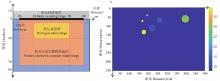
Fig.1
Schematic diagram of forward modeling"
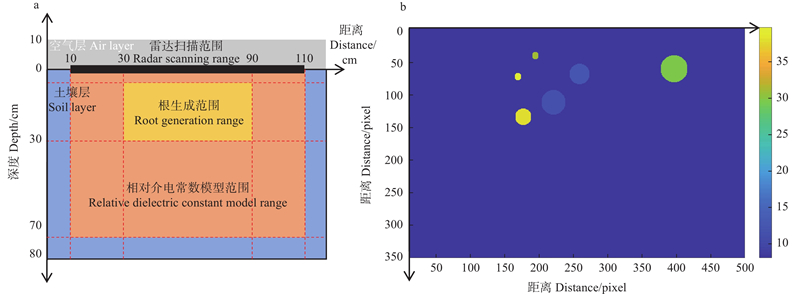
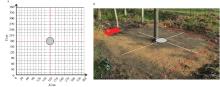
Fig.2
Schematic diagram of field experimental site"
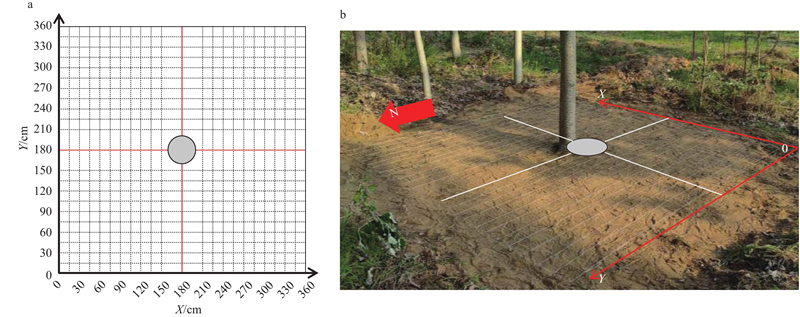
Fig.3
GPR B-scan image CycleGAN style transfer"
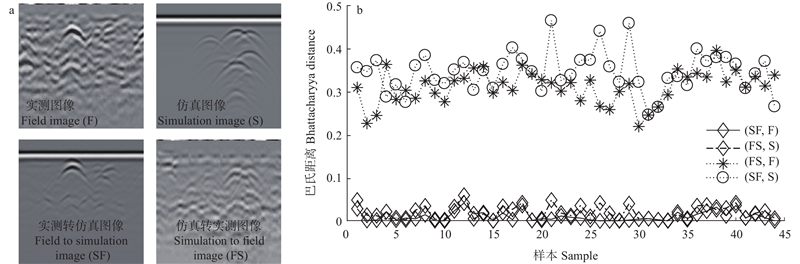
Fig.4
MWFCNet structure"
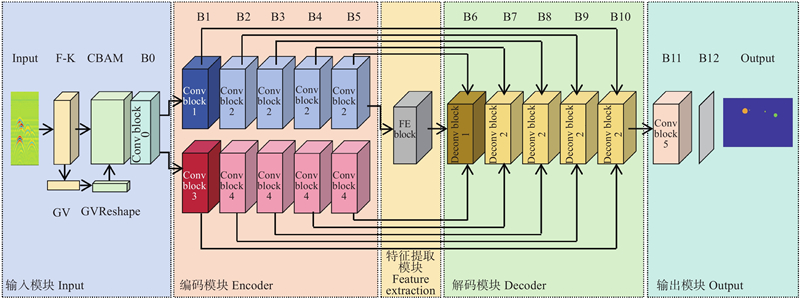

Table 1
MWFCNet parameter settings"
| 模块名称 Module name | 层名称 Layer name | 块名称 Block name | 卷积核 Kernel | 步长 Stride | 输入尺度 Input size | 输出尺度 Output size |
| 输入模块 Input | INPUT | — | — | — | — | (1, 512, 200) |
| F-K | — | — | — | (1, 512, 200) | (15, 512, 200) | |
| GV | — | — | — | (15, 512, 200) | (1, 15) | |
| GVReshape | — | — | — | (1, 15) | (15, 1, 1) | |
| CBAM | — | — | — | (15, 512, 200) (15, 1, 1) | (15, 512, 200) | |
| B0 | Conv Block 0 | (3, 3) | (2, 2) | (15, 512, 200) | (16, 512, 200) | |
| 编码模块 Encoder | B1 | Conv Block 1 Conv Block 3 | (3, 1) (3, 3) (7, 1) (3, 3) | (2, 1) (1, 1) (2, 1) (1, 1) | (16, 512, 200) | (16, 256, 200) |
| B2 | Conv Block 2 Conv Block 4 | (3, 1) (3, 3) (7, 1) (3, 3) | (2, 2) (1, 1) (2, 2) (1, 1) | (16, 256, 200) | (32, 128, 100) | |
| B3 | Conv Block 2 Conv Block 4 | (3, 1) (3, 3) (7, 1) (3, 3) | (2, 2) (1, 1) (2, 2) (1, 1) | (32, 128, 100) | (64, 64, 50) | |
| B4 | Conv Block 2 Conv Block 4 | (3, 1) (3, 3) (7, 1) (3, 3) | (2, 2) (1, 1) (2, 2) (1, 1) | (64, 64, 50) | (128, 32, 25) | |
| B5 | Conv Block 2 Conv Block 4 | (3, 1) (3, 3) (7, 1) (3, 3) | (2, 2) (1, 1) (2, 2) (1, 1) | (128, 32, 25) | (256, 16, 13) | |
| 特征提取模块 Feature extraction | Flatten | — | — | — | (256, 16, 13) | (256, 16×13) |
| LSTM | — | — | — | (256, 16×13) | (256, 16×13) | |
| FC1 | — | — | — | (256, 16×13) | (256, | |
| FC2 | — | — | — | (256, | (256, 512) | |
| FC3 | — | — | — | (256, 512) | (256, 256) | |
| FC4 | — | — | — | (256, 256) | (256, 128) | |
| FC5 | — | — | — | (256, 128) | (256, 64) | |
| FC6 | — | — | — | (256, 64) | (256, 8×7) | |
| Unflatten | — | — | — | (256, 8×7) | (256, 8, 7) | |
| 解码模块 Decoder | B6 | DeConv Block 1 | (3, 3) (3, 3) | (2, 2) (1, 1) | (256, 8, 7) (256, 16, 13) | (256, 16, 13) |
| B7 | DeConv Block 2 | (3, 3) (3, 3) | (2, 2) (1, 1) | (256, 16, 13) (128, 32, 25) | (128, 32, 25) | |
| B8 | DeConv Block 2 | (3, 3) (3, 3) | (2, 2) (1, 1) | (128, 32, 25) (64, 64, 50) | (64, 64, 50) | |
| B9 | DeConv Block 2 | (3, 3) (3, 3) | (2, 2) (1, 1) | (64, 64, 50) (32, 128, 100) | (32, 128, 100) | |
| B10 | DeConv Block 2 | (3, 3) (3, 3) | (2, 2) (1, 1) | (32, 128, 100) (16, 256, 200) | (16, 256, 200) | |
| 输出模块 Output | B11 | Conv Block 5 | (3, 3) | (2, 2) | (16, 256, 200) | (1, 512, 400) |
| B12 | Interpolation | — | — | (1, 512, 400) | (1, 350, 500) | |
| OUTPUT | — | — | — | (1, 350, 500) | — |
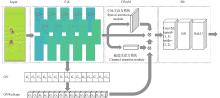
Fig.5
Input module framework"
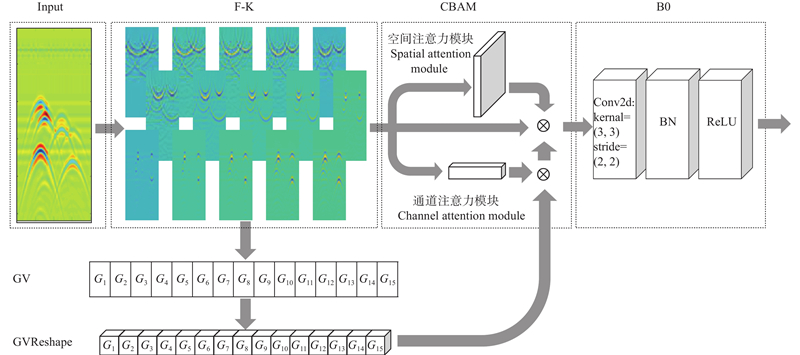
Table 2
Ablation experimental result"
| 方案序号 Scheme No. | 模型 Model | 训练时间 Training time | SSIM | PSNR/dB | MSE | VARbackground |
| 1 | Enc-Dec | 66 min 4 s | 0.989 1 | 24.324 4 | 0.132 3 | 0.101 1 |
| 2 | Enc-Dec-SC | 81 min 15 s | 0.991 3 | 25.451 2 | 0.108 5 | 0.066 7 |
| 3 | DPEnc-Dec-SC | 123 min 8 s | 0.991 4 | 25.639 3 | 0.107 4 | 0.058 5 |
| 4 | DPEnc-FC-Dec-SC | 124 min 22 s | 0.993 3 | 25.175 2 | 0.118 3 | 0.089 7 |
| 5 | FK-DPEnc-FC-Dec-SC | 135 min 31 s | 0.995 3 | 26.168 3 | 0.088 0 | 0.027 3 |
| 6 | MWFCNet | 137 min 25 s | 0.996 5 | 26.535 0 | 0.075 8 | 0.009 0 |
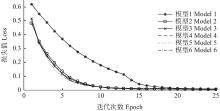
Fig.6
Loss curve"
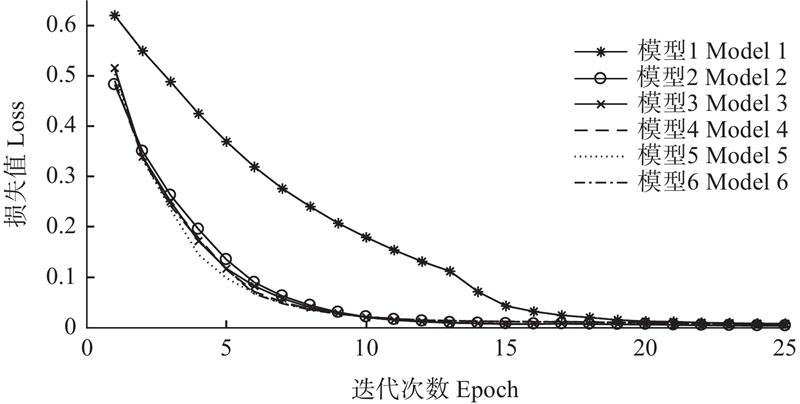
Fig.7
Comparison of inversion effects in ablation experiments"
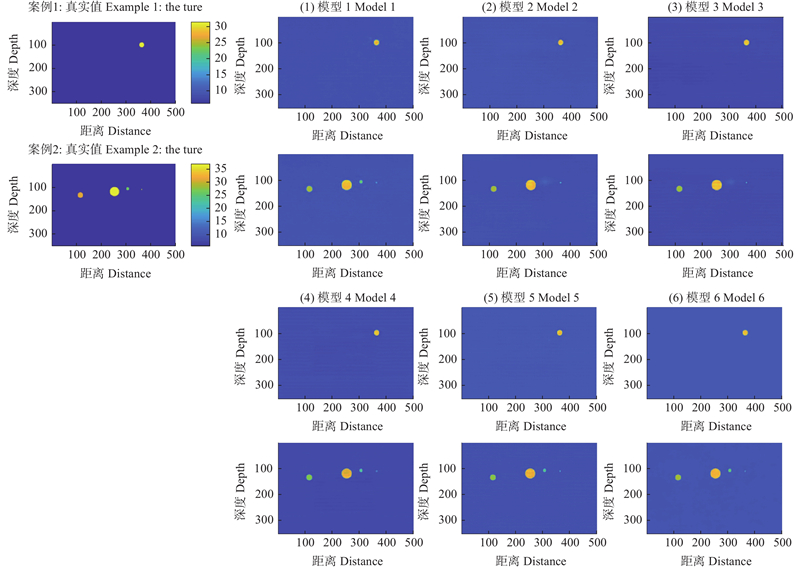
Fig.8
Comparison of field measurement inversion in ablation experiments Examples 1 and 2 show the results of GPR B-scan images corresponding to two measurement lines X=255 and X=135 in field measurements after mean filtering and gain adjustment. Fig.8(1) to Fig.8(6) represent the inversion results of the six models in the ablation experiment on the two scan lines, respectively."
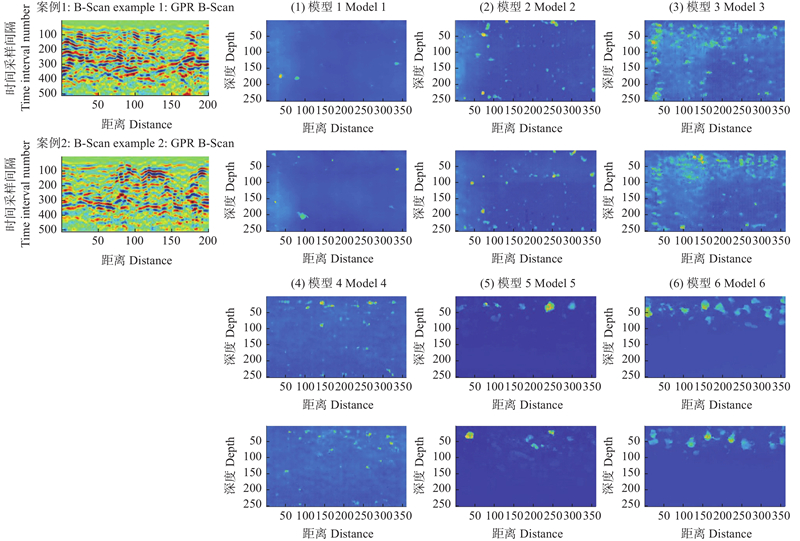
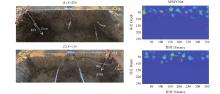
Fig.9
Comparison of field measurement inversion Fig.9(1) and Fig.9(2) show the actual excavation situation of two measuring lines X=255 and X=135, corresponding to the two inversion results of the MWFCNet."

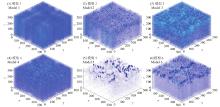
Fig.10
Comparison of 3D RDCRZ inversion Fig.10(1) to Fig.10(6) show the inversion results of the 3D RDCRZ for model 1 to 6, respectively."
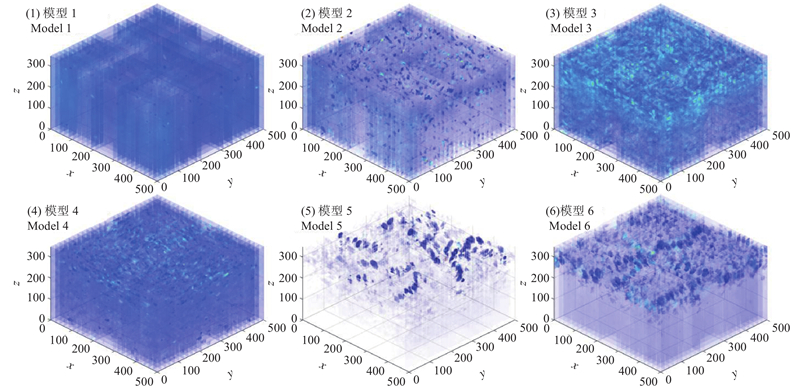
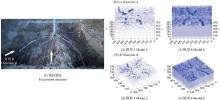
Fig.11
Comparison of overall excavation and 3D RDCRZ inversion results from different perspectives The arrows in Fig.11(1) indicate the viewing direction, with a 270° angle between direction A and the positive X-axis direction, and a 225° angle between direction B and the positive X-axis direction. Fig.11(2) to Fig.11(5) respectively show the comparison of the results of model 5 and 6 in each direction."
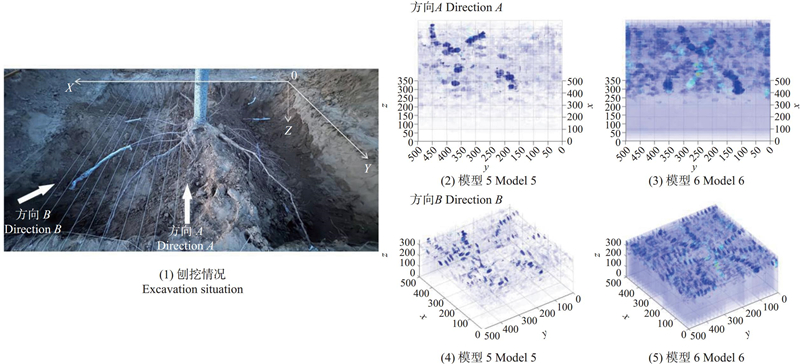
Table 3
Statistics of model comparison experiments"
| 方案序号 Scheme No. | 模型 Model | 训练时间 Training time | SSIM | PSNR/dB | MSE | VARbackground |
| 1 | Enc-Dec ( | 77 min 15 s | 0.964 8 | 15.508 0 | 1.006 7 | 0.158 5 |
| 2 | FCNVMB ( | 81 min 7 s | 0.997 8 | 21.022 0 | 0.265 1 | 0.077 6 |
| 3 | PINet ( | 86 min 44 s | 0.996 0 | 19.941 0 | 0.287 1 | 0.042 7 |
| 4 | MWFCNet | 137 min 25 s | 0.997 1 | 21.335 0 | 0.276 4 | 0.007 3 |
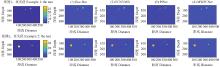
Fig.12
Comparison of inversion results of existing models"
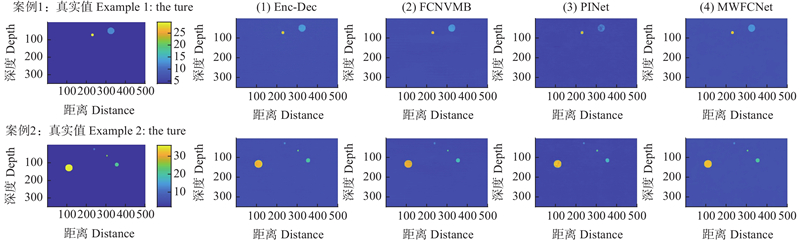
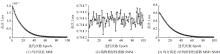
Fig.13
Loss curves of different loss functions"
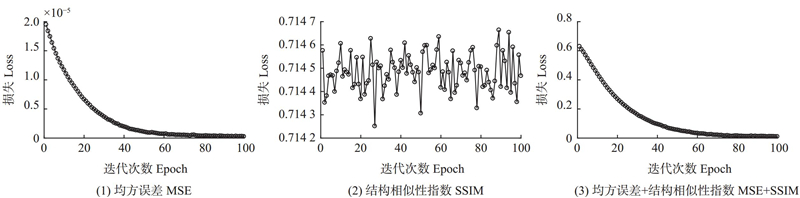
Table 4
Statistics of loss functions comparison experiments"
| 损失函数Loss function | 训练时间Training time | SSIM | PSNR/dB | MSE |
| lossMSE | 37 min 21 s | 0.992 5 | 21.934 0 | 0.269 8 |
| lossDSSIM | 32 min 50 s | 0.298 5 | 0.290 0 | 33.200 3 |
| lossDSSIM+MSE | 29 min 54 s | 0.996 8 | 22.617 0 | 0.248 6 |
| 崔喜红, 陈 晋, 关琳琳. 探地雷达技术在植物根系探测研究中的应用. 地球科学进展, 2009, 24 (6): 606- 611. | |
| Cui X H, Chen J, Guan L L. The application of ground penetrating radar to plant root system detection. Advances in Earth Science, 2009, 24 (6): 606- 611. | |
| 富美玲, 朱向明, 段文标. 探地雷达技术在土壤性质探测应用中的研究进展. 农学学报, 2024, 14 (4): 93- 100. | |
| Fu M L, Zhu X M, Duan W B. Research progress of application of ground penetrating radar technology in soil properties detection. Journal of Agriculture, 2024, 14 (4): 93- 100. | |
| 雷文太, 隋 浩, 姜和俊, 等. DABP: 一种基于深度学习的探地雷达自聚焦后向投影成像方法. 电子学报, 2024, 52 (12): 4023- 4036. | |
| Lei W T, Sui H, Jiang H J, et al. DABP: a deep learning based auto focusing back projection imaging method for ground penetrating radar. Acta Electronica Sinica, 2024, 52 (12): 4023- 4036. | |
| 李光辉, 马嘉辉, 王哲旭, 等. 基于深度神经网络的探地雷达杂波抑制和根参数预测方法. 农业工程学报, 2023, 39 (16): 171- 180. | |
| Li G H, Ma J H, Wang Z X, et al. Suppressing ground penetrating radar clutter to predict root parameters using deep neural networks. Transactions of the Chinese Society of Agricultural Engineering, 2023, 39 (16): 171- 180. | |
| 鲁建荣, 李云良, 谭志强, 等. 植物根系对土壤水力参数影响的定量研究综述. 土壤学报, 2023, 60 (4): 939- 952. | |
| Lu J R, Li Y L, Tan Z Q, et al. Review on quantification of root-induced change of soil hydraulic parameters. Acta Pedologica Sinica, 2023, 60 (4): 939- 952. | |
| 谭 旭, 张潇巍, 李 爽, 等. 风载荷下树木稳定性的无损评估方法. 森林工程, 2024, 40 (2): 127- 141. | |
| Tan X, Zhang X W, Li S, et al. A non-destructive method for assessing tree stability under wind loading. Forest Engineering, 2024, 40 (2): 127- 141. | |
| 王敬朋, 王金满, 张雅馥. 探地雷达技术探测土壤特性的研究进展. 土壤通报, 2021, 52 (1): 242- 252. | |
| Wang J P, Wang J M, Zhang Y F. Soil characteristics measurements with ground penetrating radar: a review. Chinese Journal of Soil Science, 2021, 52 (1): 242- 252. | |
| 王明凯, 李文彬, 文 剑. 基于探地雷达对粗根的识别技术研究. 森林工程, 2020, 36 (3): 21- 27. | |
| Wang M K, Li W B, Wen J. Study on recognition technology of coarse roots using ground-penetrating radar. Forest Engineering, 2020, 36 (3): 21- 27. | |
| 熊雨露, 周宇峰, 李平衡, 等. 毛竹林竹鞭生长特征和空间结构的探地雷达无损探测. 林业科学, 2020, 56 (12): 19- 27. | |
| Xiong Y L, Zhou Y F, Li P H, et al. Non-destructive detection by ground penetrating radar of growth characteristics and spatial structure of rhizomes in moso bamboo forest. Scientia Silvae Sinicae, 2020, 56 (12): 19- 27. | |
|
Al Hagrey S A. Geophysical imaging of root-zone, trunk, and moisture heterogeneity. Journal of Experimental Botany, 2007, 58 (4): 839- 854.
doi: 10.1093/jxb/erl237 |
|
| Alvarez J K, Kodagoda S. 2018. Application of deep learning image-to-image transformation networks to GPR radargrams for sub-surface imaging in infrastructure monitoring. 13th IEEE Conference on Industrial Electronics and Applications (ICIEA), Wuhan, China, 611−616. | |
|
Barton C V M, Montagu K D. Detection of tree roots and determination of root diameters by ground penetrating radar under optimal conditions. Tree Physiology, 2004, 24 (12): 1323- 1331.
doi: 10.1093/treephys/24.12.1323 |
|
| Bhattacharyya A. On a measure of divergence between two statistical populations defined by their probability distributions. Bulletin of the Calcutta Mathematical Society, 1943, 35, 99- 109. | |
|
Budzeń M, Kafarski M, Szypłowska A, et al. Effect of soil compaction on the measurements of complex dielectric permittivity spectrum with an open-ended antenna probe and the coaxial cell system. Measurement, 2024, 237, 115307.
doi: 10.1016/j.measurement.2024.115307 |
|
|
Fu Y W, Lu Y L, Heitman J, et al. Root-induced changes in soil thermal and dielectric properties should not be ignored. Geoderma, 2020, 370, 114352.
doi: 10.1016/j.geoderma.2020.114352 |
|
|
Gerke H H, Kuchenbuch R O. Root effects on soil water and hydraulic properties. Biologia, 2007, 62 (5): 557- 561.
doi: 10.2478/s11756-007-0110-8 |
|
| Guo L, Chen J, Cui X H, et al. Application of ground penetrating radar for coarse root detection and quantification: a review. Plant and Soil, 2013, 362 (1): 1- 23. | |
|
Ji Y T, Zhang F K, Wang J, et al. Deep neural network-based permittivity inversions for ground penetrating radar data. IEEE Sensors Journal, 2021, 21 (6): 8172- 8183.
doi: 10.1109/JSEN.2021.3050618 |
|
| Leong Z X, Zhu T Y. 2021. Direct velocity inversion of ground penetrating radar data using GPRNet. Journal of Geophysical Research: Solid Earth, 126(6): e2020JB021047. | |
|
Mendoza Veirana G, Verhegge J, Cornelis W, et al. Soil dielectric permittivity modelling for 50 MHz instrumentation. Geoderma, 2023, 438, 116624.
doi: 10.1016/j.geoderma.2023.116624 |
|
|
Mihai A E, Gerea A G, Curioni G, et al. Direct measurements of tree root relative permittivity for the aid of GPR forward models and site surveys. Near Surface Geophysics, 2019, 17 (3): 299- 310.
doi: 10.1002/nsg.12043 |
|
|
Warren C, Giannopoulos A, Giannakis I. gprMax: open source software to simulate electromagnetic wave propagation for ground penetrating radar. Computer Physics Communications, 2016, 209, 163- 170.
doi: 10.1016/j.cpc.2016.08.020 |
|
|
Yang D, Guo C, Wang F F, et al. PICGAN: conditional adversarial neural network-based permittivity inversions for ground penetrating radar data. Journal of Applied Geophysics, 2023, 217, 105164.
doi: 10.1016/j.jappgeo.2023.105164 |
|
|
Yang F S, Ma J W. Deep-learning inversion: a next-generation seismic velocity model building method. Geophysics, 2019, 84 (4): 583- 599.
doi: 10.1190/geo2018-0249.1 |
|
|
Yee K E. Numerical solution of initial boundary value problems involving Maxwell’s equations in isotropic media. IEEE Transactions on Antennas and Propagation, 1966, 14 (3): 302- 307.
doi: 10.1109/TAP.1966.1138693 |
|
| Zhu J Y, Park T, Isola P, et al. 2017. Unpaired image-to-image translation using cycle-consistent adversarial networks. IEEE International Conference on Computer Vision (ICCV), Venice, Italy, 2242−2251. |
| [1] | Yuqi Jiang,Jianzhi Niu,Di Wang,Tao Yang,Zhengyu Dai,Jiayu Zheng. Characteristics of Soil Preferential Flow in the Natural Secondary Forest of Laotudingzi in Liaoning Province Based on Dye Tracing and Ground Penetrating Radar [J]. Scientia Silvae Sinicae, 2025, 61(8): 32-45. |
| [2] | Yulu Xiong,Yufeng Zhou,Pingheng Li,Liang Tong,Guomo Zhou,Yongjun Shi,Huaqiang Du. Non-Destructive Detection by Ground Penetrating Radar of Growth Characteristics and Spatial Structure of Rhizomes in Moso Bamboo Forest [J]. Scientia Silvae Sinicae, 2020, 56(12): 19-27. |
| [3] | Yang Xiuhao;Luo Youqing;Gregg Henderson;Mao Lixin. Subterranean Termite Detection with a Ground Penetrating Radar Technique [J]. Scientia Silvae Sinicae, 2012, 48(1): 115-120. |
| Viewed | ||||||
|
Full text |
|
|||||
|
Abstract |
|
|||||
