
林业科学 ›› 2026, Vol. 62 ›› Issue (8): 206-218.doi: 10.11707/j.1001-7488.LYKX20250684
黄国星,陈绍志,赵荣*( )
)
收稿日期:2025-11-14
修回日期:2026-03-23
出版日期:2026-08-10
发布日期:2026-08-20
通讯作者:
赵荣
E-mail:zhaorong6@vip.163.com
基金资助:
Guoxing Huang,Shaozhi Chen,Rong Zhao*()
Received:2025-11-14
Revised:2026-03-23
Online:2026-08-10
Published:2026-08-20
Contact:
Rong Zhao
E-mail:zhaorong6@vip.163.com
摘要:
目的: 从组态视角解析影响林下经济发展效率的多重条件和提升路径,厘清多要素协同作用的内在机制,为科学制定林下经济发展策略提供决策参考。方法: 基于技术?组织?环境(TOE)理论框架,以2013—2022年全国31个省(区、市)面板数据为研究样本,采用超效率SBM模型和动态定性比较分析(QCA)方法,系统剖析林下经济发展效率提升的多元组态路径,揭示其时空变化规律和演化特征。结果: 1) 科技创新水平、科技推广程度、企业规模能力、政府扶持强度、市场消费能力以及森林生态环境单一要素均无法构成高林下经济发展效率的必要条件,其中科技创新水平在效率提升过程中具有普适性支撑作用。2) 基于组态分析的因果关系非对称性,得到实现高林下经济发展效率的4条路径,以及导致非高林下经济发展效率的2条路径。3) 从时间维度来看,资源禀赋?市场驱动型路径对高林下经济发展效率的解释效力呈逐步增强趋势,其余组态路径的解释力具有良好鲁棒性。4) 从空间维度来看,所有高林下经济发展效率的组态路径具有空间区域集聚特征。具体而言:科技赋能?企业推动型路径主要适用于中部和东北地区,政府引导?要素联动型路径主要适用于西部地区,资源禀赋?市场驱动型路径主要适用于东部沿海地区,组织协同?技术突破型路径主要适用于西部和部分东部地区。结论: 林下经济发展效率提升并非依赖单一要素的独立作用,而是技术、组织、环境多维度要素共同作用的结果。各地区应从区域整体视角出发,注重不同要素间的精准协同匹配,制定差异化发展策略,以系统性提升林下经济发展效率。
中图分类号:
黄国星,陈绍志,赵荣. 组态视角下林下经济发展效率提升路径[J]. 林业科学, 2026, 62(8): 206-218.
Guoxing Huang,Shaozhi Chen,Rong Zhao. Improvement Paths of the Non-Timber Forest-Based Economics Development Efficiency from the Configuration Perspective[J]. Scientia Silvae Sinicae, 2026, 62(8): 206-218.
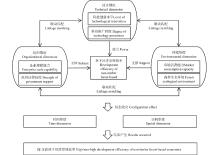
图1
理论分析框架"
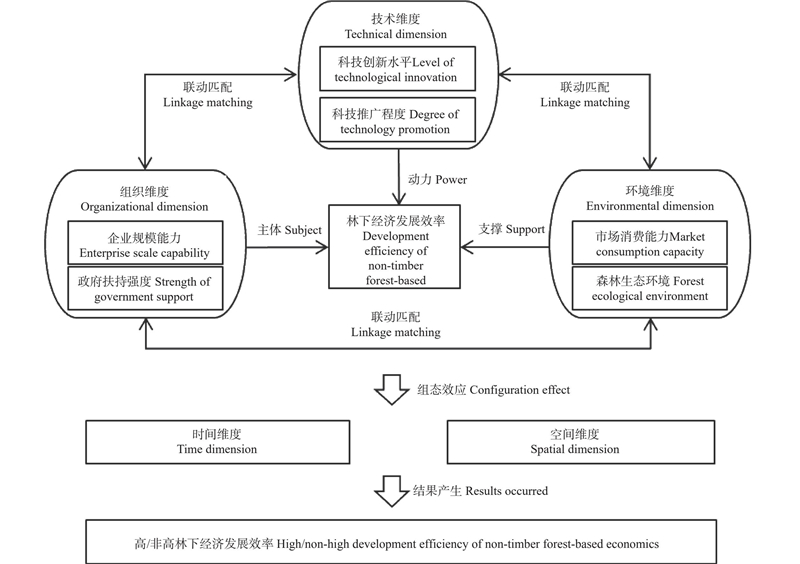
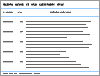
表1
林下经济发展效率评价指标体系"
| 类别Category | 一级指标Primary indicator | 二级指标Secondary indicator |
| 投入指标Input indicators | 劳动力投入Labor input | 林业从业人员数量Number of forestry employees |
| 林业职工平均工资Average salary of forestry workers | ||
| 林业人员受教育程度Education level of forestry personnel | ||
| 资本投入Capita input | 林下经济累计完成投资Cumulative investment in non-timber forest-based economics | |
| 林地投入Forest land input | 林地资源利用面积Forest land utilization area | |
| 产出指标Output indicators | 产业总产值Industrial output value | 林下经济年产值Annual output value of non-timber forest-based economics |
表2
林下经济发展效率的影响因素指标说明"
| 变量名称Variable name | 具体指标Specific indicators | 属性Attribute |
| 科技创新水平 Level of technological innovation | 林业研发经费投入Forestry R&D investment | + |
| 专利申请授权数量Number of authorized patent applications | + | |
| 科技推广程度 Degree of technology promotion | 林业科技推广面积Area of forestry technology promotion | + |
| 林业示范基地面积Area of forestry demonstration base | + | |
| 企业规模能力 Enterprise scale capability | 正常经营的林业企业数量Number of forestry enterprises in normal operation | + |
| 拥有知识产权的林业企业占比Proportion of forestry enterprises with intellectual property rights | + | |
| 政府扶持强度 Strength of government support | 林业固定资产投资Forestry fixed asset investment | + |
| 林业经营技术培训Forestry management technology training | + | |
| 市场消费能力 Market consumption capacity | 居民人均消费支出Per capita consumption expenditure of residents | + |
| 发展享受型消费支出占比Proportion of enjoyment-oriented consumption expenditure | + | |
森林生态环境 Forest ecological environment | 森林覆盖率Forest coverage rate | + |
| 林业有害生物防治率Forest pest control rate | + | |
| 人工造林面积占比Proportion of artificial afforestation area | + | |
| 森林火灾受害面积Area affected by forest fires | ? |
表3
变量校准锚点"
| 变量名称Variable name | 校准锚点Calibration anchor | ||
| 完全隶属Completely affiliated | 交叉点Intersection | 完全不隶属Unaffiliated | |
| 林下经济发展效率Development efficiency of non-timber forest-based economics | 0.986 | 0.606 | 0.305 |
| 科技创新水平Level of technological innovation | 0.283 | 0.107 | 0.021 |
| 科技推广程度Degree of technology promotion | 0.184 | 0.047 | 0.012 |
| 企业规模能力Enterprise scale capability | 0.263 | 0.078 | 0.018 |
| 政府扶持强度Strength of government support | 0.299 | 0.024 | 0.005 |
| 市场消费能力Market consumption capacity | 0.474 | 0.257 | 0.166 |
| 森林生态环境Forest ecological environment | 0.375 | 0.234 | 0.128 |
表4
单个条件的必要性分析结果"
| 条件变量 Condition variable | 高林下经济发展效率High development efficiency of non-timber forest-based economics | 非高林下经济发展效率Non-high development efficiency of non-timber forest-based economics | |||||||
| 汇总一致性Summary consistency | 汇总覆盖度Summary coverage | 组间一致性调整距离Adjustment range of inter-group consistency | 组内一致性调整距离Adjustment range of intra-group consistency | 汇总一致性Summary consistency | 汇总覆盖度Summary coverage | 组间一致性调整距离Adjustment range of inter-group consistency | 组内一致性调整距离Adjustment range of intra-group consistency | ||
| 高科技创新水平High level of technological innovation | 0.648 | 0.641 | 0.222 | 0.560 | 0.425 | 0.447 | 0.174 | 0.212 | |
| 非高科技创新水平Non-high level of technological innovation | 0.442 | 0.419 | 0.331 | 0.677 | 0.659 | 0.665 | 0.124 | 0.140 | |
| 高科技推广程度High degree of technology promotion | 0.602 | 0.607 | 0.265 | 0.560 | 0.446 | 0.479 | 0.374 | 0.203 | |
| 非高科技推广程度Non-high degree of technology promotion | 0.483 | 0.451 | 0.298 | 0.689 | 0.634 | 0.629 | 0.240 | 0.141 | |
| 高企业规模能力High enterprise scale capability | 0.655 | 0.650 | 0.429 | 0.368 | 0.425 | 0.449 | 0.523 | 0.280 | |
| 非高企业规模能力Non-high enterprise scale capability | 0.445 | 0.421 | 0.578 | 0.607 | 0.669 | 0.674 | 0.305 | 0.143 | |
| 高政府扶持强度High strength of government support | 0.626 | 0.634 | 0.058 | 0.584 | 0.431 | 0.465 | 0.193 | 0.207 | |
| 非高政府扶持强度Non-high strength of government support | 0.472 | 0.439 | 0.065 | 0.695 | 0.661 | 0.653 | 0.091 | 0.155 | |
| 高市场消费能力High market consumption capacity | 0.514 | 0.443 | 0.629 | 0.543 | 0.582 | 0.606 | 0.385 | 0.179 | |
| 非高市场消费能力Non-high market consumption capacity | 0.547 | 0.573 | 0.552 | 0.549 | 0.513 | 0.524 | 0.436 | 0.179 | |
| 高森林生态环境High forest ecological environment | 0.537 | 0.520 | 0.327 | 0.617 | 0.535 | 0.552 | 0.425 | 0.166 | |
| 非高森林生态环境Non-high forest ecological environment | 0.537 | 0.521 | 0.305 | 0.660 | 0.534 | 0.551 | 0.407 | 0.147 | |
表5
组间一致性调整距离大于0.2的因果组合"
| 因果组合 Causal combination | 指标类型 Indicator type | 年份Year | |||||||||
| 2013 | 2014 | 2015 | 2016 | 2017 | 2018 | 2019 | 2020 | 2021 | 2022 | ||
| 高科技创新水平?高发展效率High level of technological innovation - high development efficiency | 组间一致 Inter-group consistency | 0.373 | 0.544 | 0.579 | 0.605 | 0.753 | 0.722 | 0.769 | 0.908 | 0.728 | 0.754 |
| 组间覆盖度Inter-group coverage | 0.824 | 0.677 | 0.650 | 0.533 | 0.600 | 0.604 | 0.638 | 0.636 | 0.613 | 0.712 | |
| 高企业规模能力?高发展效率High enterprise scale capability - high development efficiency | 组间一致性Inter-group consistency | 0.778 | 0.811 | 0.909 | 0.848 | 0.824 | 0.781 | 0.666 | 0.339 | 0.276 | 0.254 |
| 组间覆盖度Inter-group coverage | 0.850 | 0.726 | 0.679 | 0.550 | 0.560 | 0.555 | 0.555 | 0.622 | 0.757 | 0.907 | |
| 高市场消费能力?高发展效率High market consumption capacity - high development efficiency | 组间一致性Inter-group consistency | 0.115 | 0.148 | 0.226 | 0.373 | 0.485 | 0.651 | 0.662 | 0.834 | 0.866 | 0.927 |
| 组间覆盖度Inter-group coverage | 0.414 | 0.366 | 0.452 | 0.501 | 0.503 | 0.530 | 0.480 | 0.460 | 0.498 | 0.554 | |
| 非高市场消费能力?高发展效率Non-high market consumption capacity - high development efficiency | 组间一致性Inter-group consistency | 0.920 | 0.903 | 0.864 | 0.790 | 0.660 | 0.483 | 0.518 | 0.281 | 0.244 | 0.124 |
| 组间覆盖度Inter-group coverage | 0.720 | 0.624 | 0.632 | 0.511 | 0.488 | 0.463 | 0.508 | 0.468 | 0.519 | 0.611 | |
| 非高市场消费能力?非高发展效率Non-high market consumption capacity - non-high development efficiency | 组间一致性Inter-group consistency | 0.752 | 0.639 | 0.503 | 0.462 | 0.508 | 0.506 | 0.617 | 0.854 | 0.827 | 0.970 |
| 组间覆盖度Inter-group coverage | 0.653 | 0.741 | 0.828 | 0.796 | 0.792 | 0.746 | 0.721 | 0.647 | 0.607 | 0.532 | |
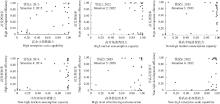
图2
必要性条件检验散点图"
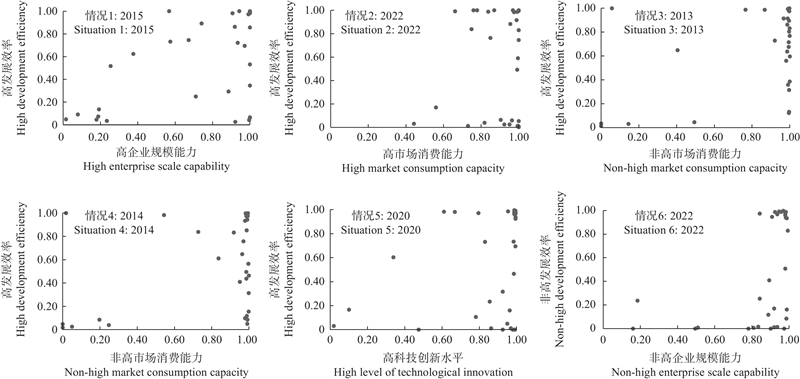
表6
林下经济发展效率的组态结果①"
| 条件变量Condition variable | 高组态结果High configuration result | 非高组态结果Non-high configuration result | |||||
| S1 | S2 | S3 | S4 | N1 | N2 | ||
| 科技创新水平Level of technological innovation | ● | ● | ● | ● | ? | ? | |
| 科技推广程度Degree of technology promotion | ● | ● | ● | ? | ● | ||
| 企业规模能力Enterprise scale capability | ● | ● | ● | ● | ? | ||
| 政府扶持强度Strength of government support | ● | ● | ● | ? | |||
| 市场消费能力Market consumption capacity | ? | ● | ● | ? | |||
| 森林生态环境Forest ecological environment | ● | ● | ? | ? | ? | ||
| 一致性Consistency | 0.865 | 0.920 | 0.863 | 0.893 | 0.846 | 0.873 | |
| PRI | 0.812 | 0.869 | 0.807 | 0.820 | 0.803 | 0.815 | |
| 原始覆盖度Original coverage | 0.246 | 0.339 | 0.246 | 0.117 | 0.362 | 0.082 | |
| 唯一覆盖度Unique coverage | 0.028 | 0.076 | 0.087 | 0.013 | 0.337 | 0.057 | |
| 组间一致性调整距离Adjustment range of inter-group consistency | 0.102 | 0.076 | 0.187 | 0.012 | 0.121 | 0.109 | |
| 组内一致性调整距离Adjustment range of intra-group consistency | 0.286 | 0.228 | 0.239 | 0.210 | 0.531 | 0.438 | |
| 总体一致性Overall consistency | 0.864 | 0.843 | |||||
| 总体PRI Overall PRI | 0.802 | 0.798 | |||||
| 总体覆盖度Overall coverage | 0.483 | 0.419 | |||||
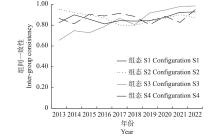
图3
组间一致性水平情况"
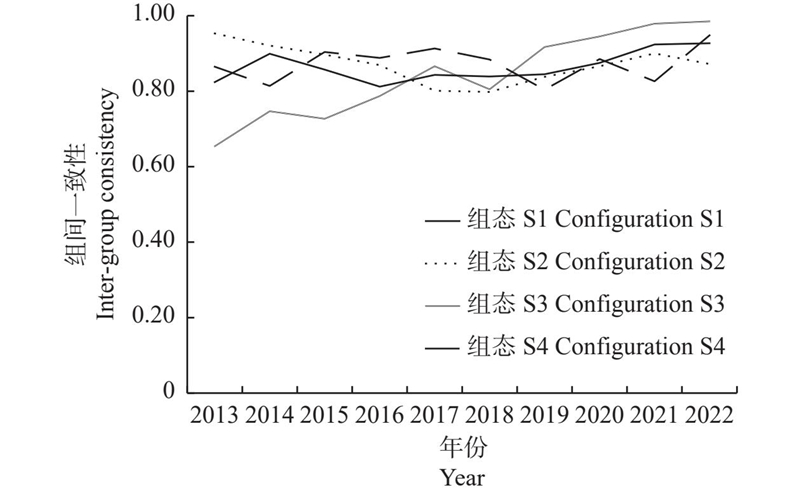
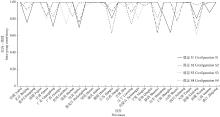
图4
组内一致性水平情况"
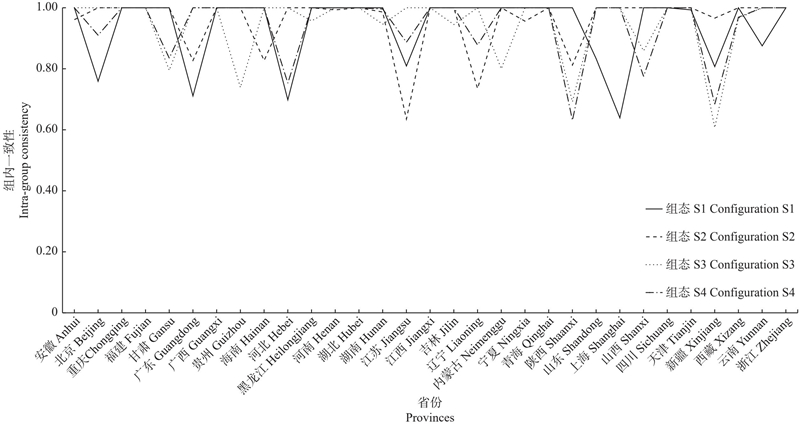
表7
区域覆盖度均值"
| 区域Region | 组态S1 Configuration S1 | 组态S2 Configuration S2 | 组态S3 Configuration S3 | 组态S4 Configuration S4 |
| 东部地区Eastern region | 0.247 | 0.197 | 0.409 | 0.225 |
| 中部地区Central region | 0.508 | 0.318 | 0.214 | 0.138 |
| 西部地区Western region | 0.351 | 0.496 | 0.115 | 0.276 |
| 东北地区Northeast region | 0.427 | 0.197 | 0.109 | 0.115 |
| 曹 泽, 陶 董. 组态视角下产业链和创新链耦合协调多元路径研究. 重庆科技学院学报(社会科学版), 2024 (3): 12- 25. | |
| Cao Z, Tao D. Research on multiple paths of coupling coordination between industrial chain and innovation chain from the perspective of configuration. Journal of Chongqing University of Science and Technology (Social Science Edition), 2024 (3): 12- 25. | |
|
陈祁琪, 方文楚, 袁雨寒, 等. 县域特色农业发展的影响因素及差异化路径研究: 基于31个县域案例的模糊集定性比较分析. 自然资源学报, 2025, 40 (9): 2398- 2416.
doi: 10.31497/zrzyxb.20250907 |
|
|
Chen Q Q, Fang W C, Yuan Y H, et al. Influencing factors and differentiated paths of characteristic agricultural development in counties: a fuzzy-set qualitative comparative analysis based on cases of 31 counties. Journal of Natural Resources, 2025, 40 (9): 2398- 2416.
doi: 10.31497/zrzyxb.20250907 |
|
|
陈幸良. 林下经济学的缘起、发展与展望. 南京林业大学学报(自然科学版), 2022, 46 (6): 105- 114.
doi: 10.12302/j.issn.1000-2006.202210024 |
|
|
Chen X L. The origin, development and propspect of non-timber forest-based economics. Journal of Nanjing Forestry University (Natural Sciences Edition), 2022, 46 (6): 105- 114.
doi: 10.12302/j.issn.1000-2006.202210024 |
|
|
陈幸良, 窦亚权. 林下经济高质量发展: 战略要义、技术突破与关键举措. 林业科学, 2025, 61 (7): 59- 71.
doi: 10.11707/j.1001-7488.LYKX20250377 |
|
|
Chen X L, Dou Y Q. High-quality development of non-timber forest-based economics: strategic essence, technological breakthroughs and key measures. Scientia Silvae Sinicae, 2025, 61 (7): 59- 71.
doi: 10.11707/j.1001-7488.LYKX20250377 |
|
| 成 蓥, 曾维忠, 胡 原. 基于计划行为理论的农户参与林下经济意愿影响因素分析. 农村经济, 2021 (11): 62- 69. | |
| Cheng Y, Zeng W Z, Hu Y. An analysis of influencing factors on farm households’ willingness to participate in the under-forest economy based on the theory of planned behavior. Rural Economy, 2021 (11): 62- 69. | |
|
邓兴平, 纪阳阳, 王金鑫. 数字普惠金融对农民消费结构升级的影响效应检验. 统计与决策, 2025, 41 (13): 129- 134.
doi: 10.13546/j.cnki.tjyjc.2025.13.021 |
|
|
Deng X P, Ji Y Y, Wang J X. Test on the impact effect of digital inclusive finance on the upgrading of farmers’ consumption structure. Statistics & Decision, 2025, 41 (13): 129- 134.
doi: 10.13546/j.cnki.tjyjc.2025.13.021 |
|
| 丁秀玲, 薛彩霞, 高建中. 林业科技服务对农户经营林下经济行为的影响研究. 林业经济问题, 2018, 38 (5): 52- 58,106. | |
| Ding X L, Xue C X, Gao J Z. Study on the influence of forestry science and technology services on farmers’ behavior of economy relying on forest. Issues of Forestry Economics, 2018, 38 (5): 52- 58,106. | |
|
董姝娜, 余宇芬, 付永存. 吉林省长白山地区林下经济增长质量时空分异及影响因素研究. 东北师大学报(哲学社会科学版), 2023 (1): 147- 158,202.
doi: 10.16164/j.cnki.22-1062/c.2023.01.016 |
|
|
Dong S N, Yu Y F, Fu Y C. Study on temporal and spatial differentiation of under-forestry-economy growth quality and influencing factors in Changbai Mountain, Jilin Province. Journal of Northeast Normal University (Philosophy and Social Sciences), 2023 (1): 147- 158,202.
doi: 10.16164/j.cnki.22-1062/c.2023.01.016 |
|
|
杜运周, 刘秋辰, 陈凯薇, 等. 营商环境生态、全要素生产率与城市高质量发展的多元模式: 基于复杂系统观的组态分析. 管理世界, 2022, 38 (9): 127- 144.
doi: 10.3969/j.issn.1002-5502.2022.09.010 |
|
|
Du Y Z, Liu Q C, Chen K W, et al. Ecosystem of doing business, total factor productivity and multiple patterns of high-quality development of Chinese cities: a configuration analysis based on complex systems view. Journal of Management World, 2022, 38 (9): 127- 144.
doi: 10.3969/j.issn.1002-5502.2022.09.010 |
|
| 方 威, 蔡旭伟, 付 町. 湖南省林下经济影响因素及发展对策研究. 经济地理, 2020, 40 (7): 184- 189. | |
| Fang W, Cai X W, Fu T. Influencing factors and development countermeasures of under forest economy in Hunan Province. Economic Geography, 2020, 40 (7): 184- 189. | |
| 高帅印, 侯方淼, 成诗怡, 等. 数字化赋能林下经济发展的机理. 林业经济问题, 2023, 43 (6): 615- 625. | |
| Gao S Y, Hou F M, Cheng S Y, et al. The mechanism of digitization enabling the development of the undergrowth economy. Issues of Forestry Economics, 2023, 43 (6): 615- 625. | |
|
卢宏亮, 李国源, 朱震锋, 等. 重点国有林区林下经济竞争力评价研究. 林业经济问题, 2021, 41 (4): 361- 368.
doi: 10.16832/j.cnki.1005-9709.20200127 |
|
|
Lu H L, Li G Y, Zhu Z F, et al. Research on the evaluation of the industrial competitiveness of non-timber forest-based economy in key state-owned forest region. Issues of Forestry Economics, 2021, 41 (4): 361- 368.
doi: 10.16832/j.cnki.1005-9709.20200127 |
|
| 盛明泉, 鹿晓晴, 汪 顺. 金融高质量发展: 指标体系建构与组态路径研究: 基于TOE框架的动态QCA分析. 金融经济学研究, 2026, 41 (1): 3- 18. | |
| Sheng M Q, Lu X Q, Wang S. High-quality financial development: indicator system construction and configuration path study: a dynamic qualitative comparative analysis (QCA) method based on the technology-organization- environment (TOE) framework. Financial Economics Research, 2026, 41 (1): 3- 18. | |
|
谭海波, 范梓腾, 杜运周. 技术管理能力、注意力分配与地方政府网站建设: 一项基于TOE框架的组态分析. 管理世界, 2019, 35 (9): 81- 94.
doi: 10.3969/j.issn.1002-5502.2019.09.007 |
|
|
Tan H B, Fan Z T, Du Y Z. Technology management capability, attention distribution and local government website construction: a configurational analysis based on the TOE framework. Management World, 2019, 35 (9): 81- 94.
doi: 10.3969/j.issn.1002-5502.2019.09.007 |
|
|
田庆锋, 易 磊. 战略性新兴产业技术创新驱动新质生产力发展的组态研究. 科研管理, 2025, 46 (5): 23- 34.
doi: 10.19571/j.cnki.1000-2995.2025.05.003 |
|
|
Tian Q F, Yi L. Research on the configurations for the development of new quality productive forces driven by technological innovation in strategic emerging industries. Science Research Management, 2025, 46 (5): 23- 34.
doi: 10.19571/j.cnki.1000-2995.2025.05.003 |
|
|
王本旭, 窦亚权, 陈幸良, 等. 基于效率测算的云南省林下经济高质量发展路径研究. 西部林业科学, 2025, 54 (2): 135- 142.
doi: 10.16473/j.cnki.xblykx1972.2025.02.019 |
|
|
Wang B X, Dou Y Q, Chen X L, et al. Research on the high-quality development path of Yunnan’s under-forest economy based on efficiency measurement. Journal of West China Forestry Science, 2025, 54 (2): 135- 142.
doi: 10.16473/j.cnki.xblykx1972.2025.02.019 |
|
| 王 坤. 黑龙江省国有森工林区林下经济发展水平及其影响因素的动态变化. 东北林业大学学报, 2022, 50 (3): 113- 118. | |
| Wang K. Forestry economic development level and dynamic changes in component elements in state-owned forest industry region of Heilongjiang Province. Journal of Northeast Forestry University, 2022, 50 (3): 113- 118. | |
|
王育平, 苏时鹏, 王团真, 等. 福建农户林下经济发展抉择的影响因素: 基于501户调查数据. 林业经济问题, 2015, 35 (6): 534- 538,561.
doi: 10.3969/j.issn.1005-9709.2015.06.010 |
|
|
Wang Y P, Su S P, Wang T Z, et al. Analysis on the influence factors of the farmer’s choice of Fujian Province in the development under-forest economy: based on the survey data of 501 samples. Issues of Forestry Economics, 2015, 35 (6): 534- 538,561.
doi: 10.3969/j.issn.1005-9709.2015.06.010 |
|
|
王姿燕, 魏远竹. 组织生态视角闽西北林下经济经营组织的运行效率. 林业经济问题, 2022, 42 (2): 169- 178.
doi: 10.16832/j.cnki.1005-9709.20210326 |
|
|
Wang Z Y, Wei Y Z. Operational efficiency of non-timber forest-based economic management organization in northwest Fujian from the perspective of organizational ecology. Issues of Forestry Economics, 2022, 42 (2): 169- 178.
doi: 10.16832/j.cnki.1005-9709.20210326 |
|
|
吴 娟, 陈建成. 林下经济与农业高质量发展: 耦合逻辑与实现路径. 西北农林科技大学学报(社会科学版), 2022, 22 (4): 153- 160.
doi: 10.13968/j.cnki.1009-9107.2022.04.16 |
|
|
Wu J, Chen J C. Study on the mechanism of under-forest economy on agricultural high-quality development. Journal of Northwest A& F University (Social Science Edition), 2022, 22 (4): 153- 160.
doi: 10.13968/j.cnki.1009-9107.2022.04.16 |
|
|
吴国春, 郭思源, 曹玉昆. 中国林下经济产业发展效率评价: 以31个省(区)面板数据为依据. 东北林业大学学报, 2020, 48 (5): 129- 132.
doi: 10.3969/j.issn.1000-5382.2020.05.025 |
|
|
Wu G C, Guo S Y, Cao Y K. Under-forest economy industry development efficiency evaluation analysis in China: taking panel data of 31 provinces as basis. Journal of Northeast Forestry University, 2020, 48 (5): 129- 132.
doi: 10.3969/j.issn.1000-5382.2020.05.025 |
|
|
吴松泽, 谢杰辉, 刘 彦, 等. 新质生产力对林下经济发展的影响效应研究. 林业经济问题, 2024, 44 (6): 637- 645.
doi: 10.16832/j.cnki.1005-9709.20240486 |
|
|
Wu S Z, Xie J H, Liu Y, et al. The impact of new quality productive forces on the development of under-forest economy. Issues of Forestry Economics, 2024, 44 (6): 637- 645.
doi: 10.16832/j.cnki.1005-9709.20240486 |
|
|
吴伟光, 许 恒, 王凤婷, 等. “两山”理念的有效载体与实践: 林下经济的经济效应、环境效应及其协同逻辑. 中国农村经济, 2023 (10): 158- 174.
doi: 10.20077/j.cnki.11-1262/f.2023.10.008 |
|
|
Wu W G, Xu H, Wang F T, et al. The effective carrier and practice of “two mountains” concept: the economic and environmental effects of under-forest economy and their synergistic logic. Chinese Rural Economy, 2023 (10): 158- 174.
doi: 10.20077/j.cnki.11-1262/f.2023.10.008 |
|
| 杨雨晴, 万志芳. 黑龙江省发展林下经济影响因素分析. 林业资源管理, 2016 (6): 17- 21. | |
| Yang Y Q, Wan Z F. Analysis on influencing factors of developing under-forest economy in Heilongjiang Province. Forest Resources Management, 2016 (6): 17- 21. | |
|
赵 均, 张 威. 区域体旅产业融合效率提升路径研究: 基于TOE框架的NCA与动态QCA分析. 体育学研究, 2025, 39 (4): 58- 71.
doi: 10.15877/j.cnki.nsic.20250814.002 |
|
|
Zhao J, Zhang W. Research on the pathway to improve the integration efficiency of regional sports and tourism industry: NCA and dynamic QCA analysis based on TOE framework. Journal of Sports Research, 2025, 39 (4): 58- 71.
doi: 10.15877/j.cnki.nsic.20250814.002 |
|
|
赵麟萱, 窦亚权, 林昆仑, 等. 林下经济发展与践行大食物观: 耦合关系与协同路径. 世界林业研究, 2024, 37 (2): 15- 21.
doi: 10.13348/j.cnki.sjlyyj.2024.0031.y |
|
|
Zhao L X, Dou Y Q, Lin K L, et al. Development of non-timber forest-based economy and practice of all-encompassing approach to food: coupling relationship and collaborative approach. World Forestry Research, 2024, 37 (2): 15- 21.
doi: 10.13348/j.cnki.sjlyyj.2024.0031.y |
|
|
周嘉祺, 任 波. 人工智能驱动体育企业全要素生产率提升的组态分析. 体育学研究, 2025, 39 (5): 47- 60,138.
doi: 10.15877/j.cnki.nsic.20250717.001 |
|
|
Zhou J Q, Ren B. Configuration analysis of AI-driven total factor productivity improvement in sports enterprises. Journal of Sports Research, 2025, 39 (5): 47- 60,138.
doi: 10.15877/j.cnki.nsic.20250717.001 |
|
|
Castro R G, Ariño M A. A general approach to panel data set-theoretic research. Journal of Advances in Management Sciences & Information Systems, 2016, 2, 63- 76.
doi: 10.6000/2371-1647.2016.02.06 |
|
|
Das B R, Bhuyan M J, Deka N, et al. Unveiling the richness and socio-cultural importance of homestead agroforestry in sivasagar district of Assam, India. Small-scale Forestry, 2024, 23 (4): 613- 643.
doi: 10.1007/s11842-024-09580-4 |
|
|
Deng B L, Shi Y Z, Zhang L, et al. Effects of spent mushroom substrate-derived biochar on soil CO2 and N2O emissions depend on pyrolysis temperature. Chemosphere, 2020, 246, 125608.
doi: 10.1016/j.chemosphere.2019.125608 |
|
|
Fiss P C. Building better causal theories: a fuzzy set approach to typologies in organization research. The Academy of Management Journal, 2011, 54 (2): 393- 420.
doi: 10.5465/amj.2011.60263120 |
|
|
Furnari S, Crilly D, Misangyi V F, et al. Capturing causal complexity: heuristics for configurational theorizing. Academy of Management Review, 2021, 46 (4): 778- 799.
doi: 10.5465/amr.2019.0298 |
|
|
Tone K. A slacks-based measure of super-efficiency in data envelopment analysis. European Journal of Operational Research, 2002, 143 (1): 32- 41.
doi: 10.1016/S0377-2217(01)00324-1 |
|
| Tornatzky G, Fleischer M. 1990. The process of technological innovation. United States: Lexington Books. | |
|
Wang X, Yin J, Yang Y, et al. Relationship between the resource curse, Forest management and sustainable development and the importance of R&D Projects. Resources Policy, 2023, 85, 103997.
doi: 10.1016/j.resourpol.2023.103997 |
|
|
Zomer R J, Bossio D A, Trabucco A, et al. Global carbon sequestration potential of agroforestry and increased tree cover on agricultural land. Circular Agricultural Systems, 2022, 2 (1): 1- 10.
doi: 10.5194/egusphere-egu24-6018 |
| [1] | 陈幸良,窦亚权. 林下经济高质量发展:战略要义、技术突破与关键举措[J]. 林业科学, 2025, 61(7): 59-71. |
| [2] | 叶子豪,罗国安,王增,姚任图,陆尤尤,吴家森,许在恩. 毛竹林下栽培食用菌对土壤性质及细菌群落特征的影响[J]. 林业科学, 2024, 60(8): 143-151. |
| [3] | 胡艳英, 曹玉昆. 基于利润共享契约的林下经济产品供应链协调管理设计——以黑龙江省国有林区为例[J]. 林业科学, 2018, 54(8): 165-172. |
| [4] | 朱洪革.. 国有林权制度改革后承包户投资行为及其影响因素分析*[J]. 林业科学, 2009, 12(4): 117-123. |
| 阅读次数 | ||||||
|
全文 |
|
|||||
|
摘要 |
|
|||||

