
林业科学 ›› 2026, Vol. 62 ›› Issue (3): 146-160.doi: 10.11707/j.1001-7488.LYKX20250281
张宇薇1,2,3,莫梦婷1,2,3,舒博1,2,3,姚佳佳3,袁志林1,3,*( )
)
收稿日期:2025-05-08
修回日期:2025-10-25
出版日期:2026-03-15
发布日期:2026-03-12
通讯作者:
袁志林
E-mail:yuanzl@caf.ac.cn
基金资助:
Yuwei Zhang1,2,3,Mengting Mo1,2,3,Bo Shu1,2,3,Jiajia Yao3,Zhilin Yuan1,3,*()
Received:2025-05-08
Revised:2025-10-25
Online:2026-03-15
Published:2026-03-12
Contact:
Zhilin Yuan
E-mail:yuanzl@caf.ac.cn
摘要:
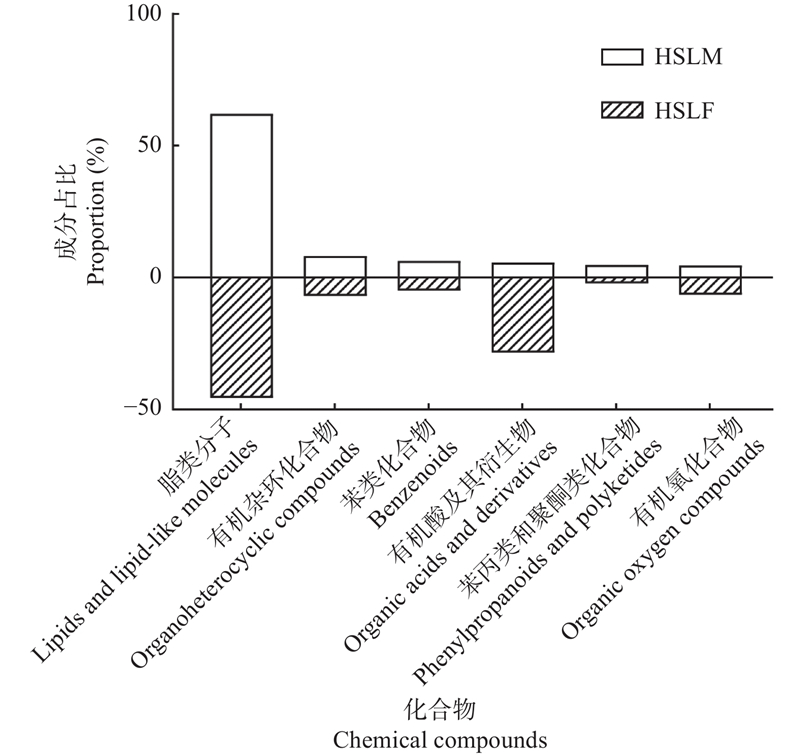
目的: 探究不同真菌来源的诱导子、同一真菌不同类型诱导子对桑黄菌丝体和子实体生长和黄酮含量的影响,以全面评估真菌诱导子在桑黄不同生长阶段和培养环境中的效果。方法: 以11种不同土壤真菌制备3种不同类型的真菌诱导子,总计33种真菌诱导子处理桑黄菌丝体,统计分析桑黄生物量、黄酮含量和黄酮产量,并综合3个指标筛选出3种最佳真菌诱导子;通过实时定量PCR初步验证最佳真菌诱导子提升黄酮含量的分子机制;利用响应面法进行最佳真菌诱导子诱导条件的优化,并将最佳真菌诱导子作用于桑黄子实体进行黄酮含量积累的验证;最后将对桑黄黄酮含量提升效果较好的菌株HSL的菌丝体和发酵液的代谢组分进行非靶向代谢组学分析。结果: 3种不同类型的最佳真菌诱导子(分别为NL-19M、NL-19ME和HSLFE)能够促进桑黄生物量、黄酮含量和黄酮产量的积累。3种最佳真菌诱导子通过提高黄酮生物合成途径中关键酶的表达量促进黄酮含量积累。同一真菌诱导子对桑黄生物量、黄酮含量和黄酮产量的优化条件存在差异。NL-19M、NL-19ME、HSLFE处理可提高桑黄子实体的黄酮含量,均高于对照,代谢组分显示真菌诱导子的有效成分可能为脂类物质。结论: 不同真菌诱导子处理能够激活黄酮生物合成途径中不同关键酶的表达以及其存在不同的最佳诱导条件,反映真菌代谢调控的复杂性,揭示出真菌诱导子对黄酮生物合成的调控机制,为真菌诱导子的商业化应用以及林下经济和“以菌养菌、以菌养药”药食用真菌品质提质增效技术体系的建立提供了更完善、系统的理论基础。
中图分类号:
张宇薇,莫梦婷,舒博,姚佳佳,袁志林. 真菌诱导子促进桑黄黄酮类物质积累及主要作用机制[J]. 林业科学, 2026, 62(3): 146-160.
Yuwei Zhang,Mengting Mo,Bo Shu,Jiajia Yao,Zhilin Yuan. Fungal Elicitors Promote Flavonoid Biosynthesis in Sanghuangporus vaninii and the Underlying Mechanisms[J]. Scientia Silvae Sinicae, 2026, 62(3): 146-160.
表1
11种真菌的来源①"
| 菌株编号 Isolate No. | 菌种 Species | 菌株来源 Strain origin | 参考文献 Reference |
| QYL-10 | Clitopilus hobsonii | 琴叶栎根系Quercus lyrata root | |
| NL-19 | C. hobsonii | 牛栎根系Q. michauxii root | |
| XST | C. hobsonii | 黄金小神童根系Cymbidium golden root | |
| HSL | Clitopolius sp. | 黄山栎根系Q. stewardii root | |
| Cab | C. abprunulus | 子实体Fruiting body | |
| C. prunulus | 子实体Fruiting body | CFCC | |
| C. scyphoides | 子实体Fruiting body | CFCC | |
| HBPOP-BS-1 | Mortierella alpina | 毛白杨根际土壤Populus tomentosa rhizosphere soil | |
| HBPOP-BS-2 | M. alpina | 毛白杨根际土壤P. tomentosa rhizosphere soil | |
| SML-TX-18 | Atractiella rhizophila | 舒玛栎根系Q. shumardii root | |
| LS-TZS-1 | Umbelopsis sp. | 栎树根系Quercus sp. root |
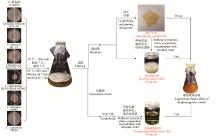
图1
真菌诱导子对桑黄菌丝体的诱导培养"
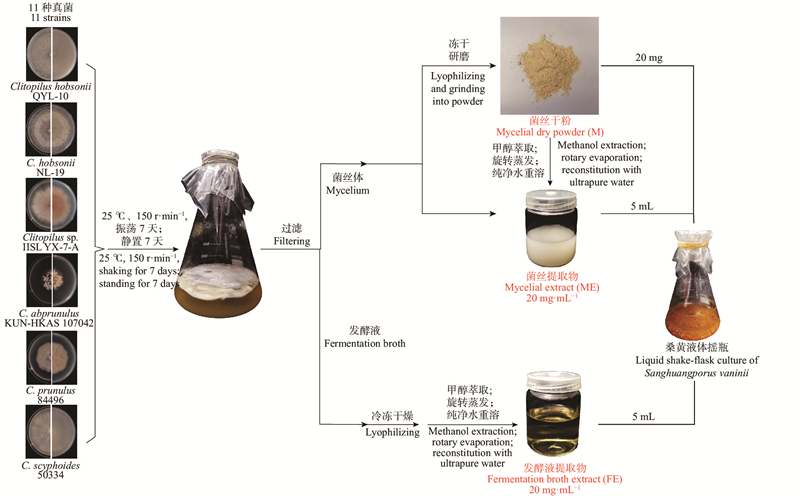
表2
引物序列"
| 引物名称 Primer | 序列(5’→3’) Sequences (5’→3’) | Tm值 Tm value/℃ |
| PAL-F | GCACCCGACGCACTCAAAT | 59.15 |
| PAL-R | AAGGCCGTACCGTTCAAAATC | 55.62 |
| 4CL-F | CCCTTCTGTGCTATTCTTCTGG | 55.33 |
| 4CL-R | ATTGTTCTATCCTTGCCGTGTC | 54.89 |
| CHS-F | GATGTCCATTCGCCACGGTA | 57.69 |
| CHS-R | GAATGCCATAGCACCCTCAGA | 57.18 |
| bHLH-F | CAACCAGTGAAAGCGAACAAAG | 54.75 |
| bHLH-R | CAGAACCCGGAGCAAAATAG | 53.53 |
| α-tubulin-F | CCAGCAAGCGTTACCGATT | 55.83 |
| α-tubulin-R | TCCACGACGTCCATCGTTC | 57.65 |
表3
响应面试验因素及水平"
| 水平 Level | 因素 Factors | ||
| A添加浓度 A concentration/(mg·mL?1) | B添加时间 B add time/d | C静置时间 C stand time/d | |
| ?1 | 5 | 0 | 0 |
| 0 | 50 | 7 | 7 |
| 1 | 95 | 14 | 14 |
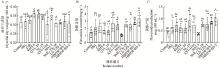
图2
菌丝干粉对桑黄生物量(A)、黄酮含量(B)、黄酮产量(C)的影响 黑色数据点代表独立数据点,柱形表示均值±标准差。Black dots represent individual data points, and bars indicate mean ± SD. 不同小写字母表示不同处理间有显著差异(P<0.05)。Different lowercase letters represent significant differences among different treatments (P<0.05). 菌株编号见表1。Isolate numbers are listed in Table 1."
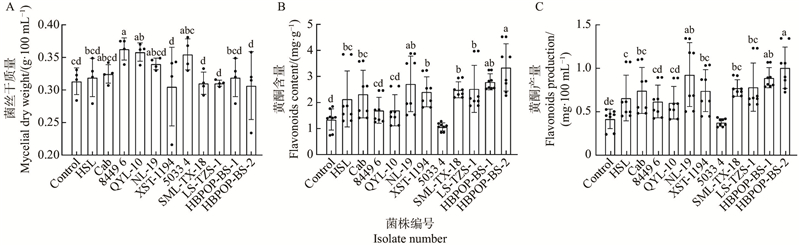
图3
菌丝提取物对桑黄生物量(A)、黄酮含量(B)、黄酮产量(C)的影响 黑色数据点代表独立数据点,柱形表示均值±标准差。Black dots represent individual data points, and bars indicate mean ± SD. 不同小写字母表示不同处理间有显著差异(P<0.05)。Different lowercase letters represent significant differences among different treatments (P<0.05). 菌株编号见表1。Isolate numbers are listed in Table 1."
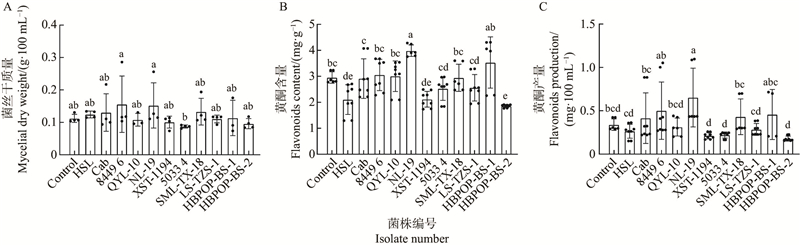
图4
发酵液提取物对桑黄生物量(A)、黄酮含量(B)、黄酮产量(C)的影响 黑色数据点代表独立数据点,柱形表示均值±标准差。Black dots represent individual data points, and bars indicate mean ± SD. 不同小写字母表示不同处理间有显著差异(P<0.05)。Different lowercase letters represent significant differences among different treatments (P<0.05). 菌株编号见表1。Isolate numbers are listed in Table 1."
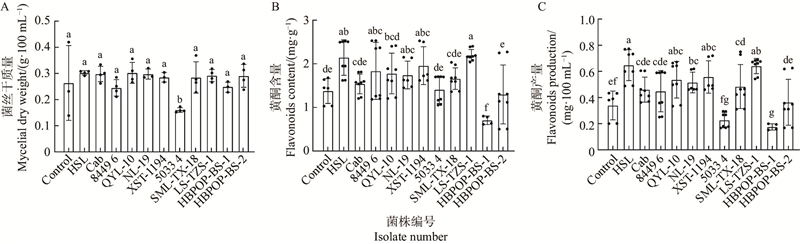
图5
NL-19M(A)、NL-19ME(B)、HSLFE(C)诱导下桑黄黄酮生物合成途径相关基因的实时荧光定量PCR分析 黑色数据点代表独立数据点。柱形表示均值±标准差。Black dots represent individual data points. Bars indicate mean ± SD. Control:加水作为对照Add water as the control;NL-19M:加NL-19菌丝干粉悬浮液Add NL-19 mycelial dry powder suspension;NL-19ME:加NL-19菌丝提取物Add NL-19 mycelial extract;HSLFE:加HSL发酵液提取物Add HSL fermentation broth extract. 不同符号表示显著性水平,*表示P<0.05,**表示P<0.01,***表示P<0.001,****表示P<0.000 1,ns表示P>0.05。 Different symbols indicate significance levels: *P<0.05, **P<0.01, ***P<0.001, ****P<0.000 1, and ns indicates P>0.05."
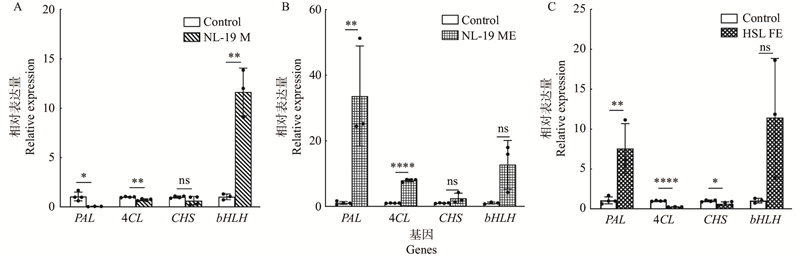
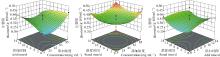
图6
NL-19M的添加时间与添加浓度、静置时间与添加浓度、静置时间与添加时间对桑黄生物量的影响"
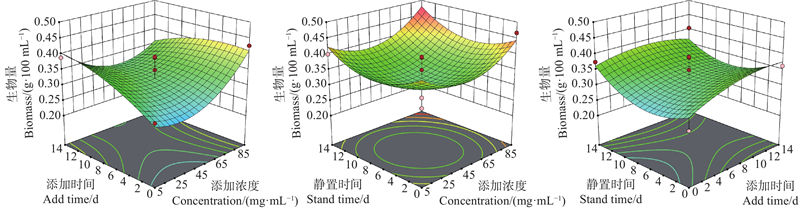
图7
NL-19M的添加时间与添加浓度、静置时间与添加浓度、静置时间与添加时间对桑黄黄酮含量的影响"
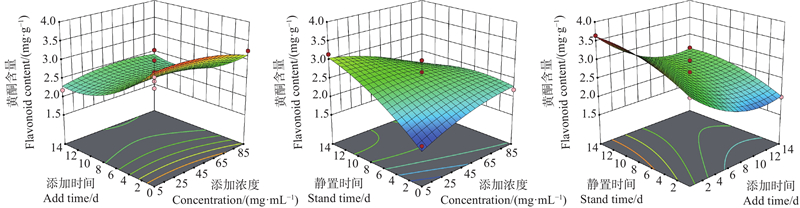
图8
NL-19M的添加时间与添加浓度、添加浓度与静置时间对桑黄黄酮产量的影响"
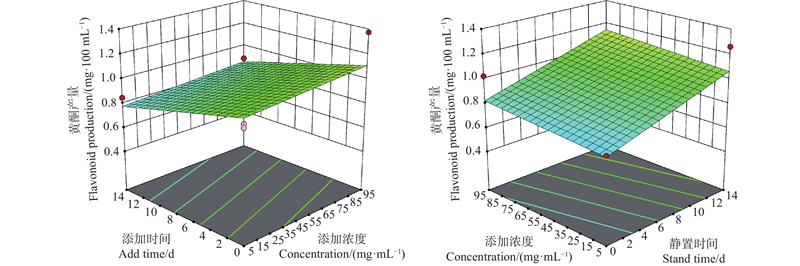
图9
NL-19ME的添加时间与添加浓度、静置时间与添加浓度、静置时间与添加时间对桑黄生物量的影响"
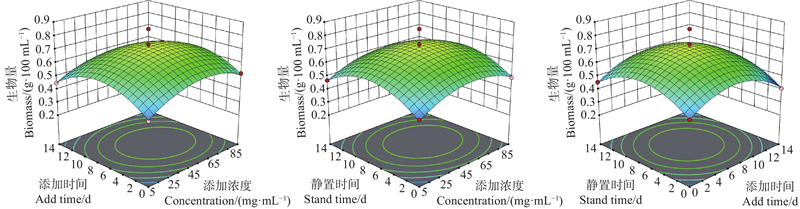
图10
NL-19ME的添加时间与添加浓度、静置时间与添加浓度、静置时间与添加时间对桑黄黄酮含量的影响"
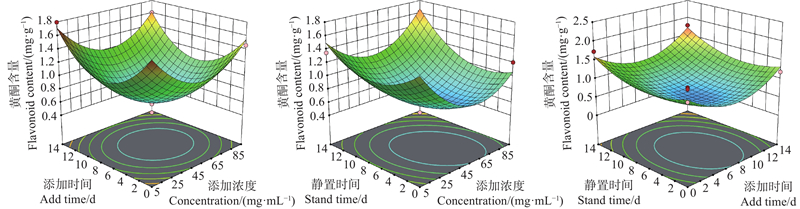
图11
NL-19ME的添加时间与添加浓度、静置时间与添加浓度、静置时间与添加时间对桑黄黄酮产量的影响"
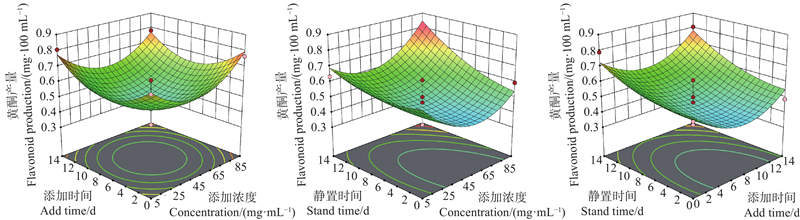
图12
HSLFE的添加时间与添加浓度、添加浓度与静置时间对桑黄生物量的影响"
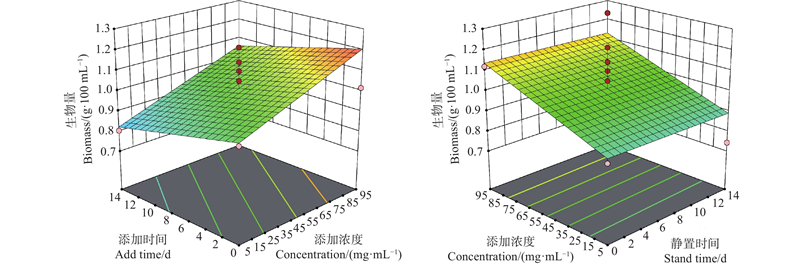
图13
HSLFE的添加时间与添加浓度、静置时间与添加浓度、静置时间与添加时间对桑黄黄酮含量的影响"
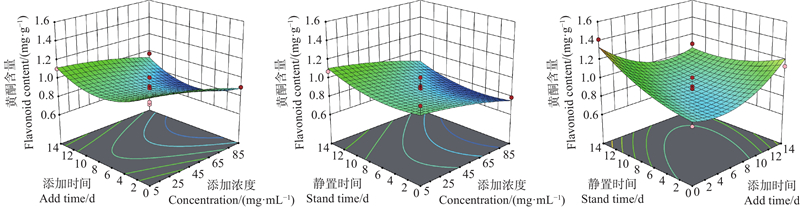
图14
HSLFE的添加时间与添加浓度、静置时间与添加浓度、静置时间与添加时间对桑黄黄酮产量的影响"
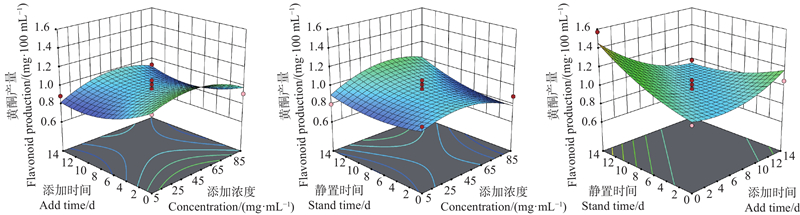
表4
黄酮含量的回归方程优化结果"
| 真菌诱导子类型 Types of fungal elicitors | A添加浓度 A concentration/(mg·mL?1) | B添加时间 B adding time/d | C静置时间 C standing time/d | 黄酮含量 Flavonoids content/(mg·g?1) |
| NL-19M | 7.89 | 0 | 9 | 3.45±0.16 |
| NL-19ME | 5 | 14 | 0 | 2.78±0.12 |
| HSLFE | 6.59 | 0 | 14 | 2.93±0.12 |
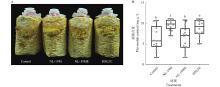
图15
真菌诱导子处理组(Control、NL-19M、NL-19ME、HSLFE)的桑黄子实体照片(A)以及黄酮含量对比(B) 灰色数据点代表独立数据点。Gray dots represent individual data points. 不同小写字母表示不同处理间有显著差异(P<0.05)。Different lowercase letters represent significant differences among different treatments (P<0.05). Control:涂抹水作为对照Smear water as the control;NL-19M:涂抹NL-19菌丝干粉悬浮液Smear NL-19 mycelial dry powder suspension;NL-19ME:涂抹NL-19菌丝提取物Smear NL-19 mycelial extract;HSLFE:涂抹HSL发酵液提取物Smear HSL fermentation broth extract."
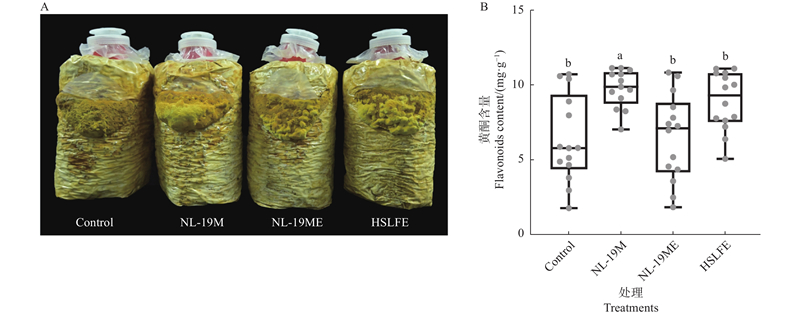
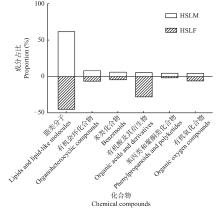
图16
HSLM和HSLF中不同化合物分布情况 空心柱体为HSL菌丝体(HSLM)中占比排名前6的物质的成分比例,填充柱体为HSL发酵液(HSLF)中占比排名前6的物质的成分比例。Open columns represent the proportion of the top six substances ranked by content in HSL mycelia (HSLM), and filled columns represent the proportion of the top six substances ranked by content in HSL fermentation broth (HSLF)."
|
白 禹, 卯 丹, 王继玥. 黄酮类物质的生物合成及对干旱胁迫响应的研究进展. 安徽农业科学, 2018, 46 (16): 24- 26.
doi: 10.3969/j.issn.0517-6611.2018.16.008 |
|
|
Bai Y, Mao D, Wang J Y. Research progress on the flavonoids biosynthesis and its response to drought stress. Journal of Anhui Agricultural Sciences, 2018, 46 (16): 24- 26.
doi: 10.3969/j.issn.0517-6611.2018.16.008 |
|
| 杜虹韦, 赵欣蕾. 黄芪黄酮对S180小鼠肿瘤细胞的影响研究. 黑龙江中医药, 2018, 47 (5): 173- 174. | |
| Du H W, Zhao X L. The effect of Astragalus flavonoids on tumor cells of S180. Heilongjiang Journal of Traditional Chinese Medicine, 2018, 47 (5): 173- 174. | |
|
冯海燕, 胡瑞省, 任 蕾, 等. 分光光度法测定萹蓄中总黄酮的含量. 石家庄学院学报, 2011, 13 (6): 20- 22.
doi: 10.3969/j.issn.1004-9444.2017.04.008 |
|
|
Feng H Y, Hu R X, Ren L, et al. Determination of total flavonoids in Polygonum aviculare by spectrophotometry. Journal of Shijiazhuang University, 2011, 13 (6): 20- 22.
doi: 10.3969/j.issn.1004-9444.2017.04.008 |
|
|
姜幸怡, 韩 伟, 郭 嘉, 等. 振荡−静置循环培养新策略提升灵芝三萜合成与菌丝体活性. 生物工程学报, 2024, 40 (9): 3189- 3200.
doi: 10.13345/j.cjb.230883 |
|
|
Jiang X Y, Han W, Guo J, et al. Oscillation-static cycle cultivation enhances the synthesis of triterpenes and mycelium activity in Ganoderma lucidum. Chinese Journal of Biotechnology, 2024, 40 (9): 3189- 3200.
doi: 10.13345/j.cjb.230883 |
|
| 靳微. 2019. 几种栎树外生菌根真菌多样性及其对苗木生长和养分吸收的影响. 北京: 中国林业科学研究院. | |
| Jin W, 2019. Diversity of ectomycorrhizal fungi associated with several introduced and native Quercus species and their effects on seedling growth and nutrient uptake. Beijing: Chinese Academy of Forestry. [in Chinese] | |
| 雷萍, 吴亚召, 张文隽. 2021. 桑黄菌丝体发酵中提高桑黄黄酮产量的方法: CN201710098046.5. 1-4. | |
| Lei P, Wu Y Z, Zhang W J. 2021. Methods for increasing the flavonoid yield of Phellinus igniarius during mycelium fermentation: CN201710098046.5. 1-4. [in Chinese] | |
| 李文华, 李 健, 罗 菁, 等. 基于根际土壤真菌和代谢物的广东梧桐山金线兰垂直分布驱动因子分析. 植物资源与环境学报, 2024, 33 (5): 45- 61. | |
| Li W H, Li J, Luo J, et al. Analysis on driving factors for the vertical distribution of Anoectochilus roxburghiiin Wutong Mountain of Guangdong Province based on fungi and metabolites in rhizosphere soil. Journal of Plant Resources and Environment, 2024, 33 (5): 45- 61. | |
|
林 波, 郑凤锦, 任 红, 等. 莲雾花多酚的超声波辅助提取工艺优化抗氧化活性分析. 西南农业学报, 2019, 32 (6): 1353- 1359.
doi: 10.16213/j.cnki.scjas.2019.6.024 |
|
|
Lin B, Zheng F J, Ren H, et al. Ultrasound-assisted extraction and antioxidant analysis of Syzygium samarangense flowers. Southwest China Journal of Agricultural Sciences, 2019, 32 (6): 1353- 1359.
doi: 10.16213/j.cnki.scjas.2019.6.024 |
|
|
吕秋谕, 孙培媛, 冉 彬, 等. 苦荞转录因子基因FtbHLH3的克隆, 亚细胞定位及表达分析. 生物技术通报, 2023, 39 (8): 194- 203.
doi: 10.13560/j.cnki.biotech.bull.1985.2023-0034 |
|
|
Lü Q Y, Sun P Y, Ran B, et al. Cloning, subcellular localization and expression analysis of the transcription factor gene FtbHLH3 in Fagopyrum tataricum. Biotechnology Bulletin, 2023, 39 (8): 194- 203.
doi: 10.13560/j.cnki.biotech.bull.1985.2023-0034 |
|
| 潘萍萍, 徐志浩, 张怡雯, 等. 多花黄精查尔酮合酶PcCHS的原核表达, 亚细胞定位及表达分析. 生物技术通报, 2024, 40 (5): 280- 289. | |
| Pan P P, Xu Z H, Zhang Y W, et al. Prokaryotic expression, subcellular localization and expression analysis of PcCHS gene from Polygonatum cyrtonema Hua. Biotechnology Bulletin, 2024, 40 (5): 280- 289. | |
| 潘雪玉. 2018. 沿海防护林树种促生、耐盐根系真菌筛选及机制初探. 北京: 中国林业科学研究院. | |
| Pan X Y. 2018. Growth promotion and salinity tolerance of several coastal shelter forest tree species conferred by root-associated fungi and the possible underlying mechanisms. Beijing: Chinese Academy of Forestry. [in Chinese] | |
|
时桂芹, 沈佳鑫, 孙新成, 等. 芍药种皮黄酮类化合物的超声辅助提取工艺优化及抗氧化活性分析. 中国食品添加剂, 2021, 32 (2): 26- 34.
doi: 10.19804/j.issn1006-2513.2021.02.005 |
|
|
Shi J Q, Shen J X, Sun X C, et al. Optimization of ultrasonic-assisted extraction and antioxidant activity analysis of flavonoids from Paeonia lactiflora seed peel. China Food Additives, 2021, 32 (2): 26- 34.
doi: 10.19804/j.issn1006-2513.2021.02.005 |
|
| 宋 刚, 张伟杰, 张 德, 等. 外源植物生长调节剂对桑黄发酵产黄酮的影响. 食药用菌, 2023, 31 (6): 391- 395. | |
| Song G, Zhang W J, Zhang D, et al. Effects of exogenous plant growth regulators on the production of flavones by fermentation of Sanghuangporus spp. Edible and Medicinal Mushrooms, 2023, 31 (6): 391- 395. | |
|
苏晓薇, 唐庆九, 张劲松, 等. 油酸促进灵芝三萜液态深层发酵的工艺研究及规模化验证. 菌物学报, 2021, 40 (9): 2445- 2460.
doi: 10.13346/j.mycosystema.210163 |
|
|
Su X W, Tang Q J, Zhang J S, et al. Synthesis of triterpenes in liquid submerged fermentation of Ganoderma lingzhi promoted by oleic acid. Mycosystema, 2021, 40 (9): 2445- 2460.
doi: 10.13346/j.mycosystema.210163 |
|
| 孙天驰, 董诗慧, 余佳琰, 等. 真菌诱导子对白术悬浮细胞生长与次生代谢的影响. 河南农业科学, 2023, 52 (4): 60- 65. | |
| Sun T C, Dong S H, Yu J Y, et al. Effects of fungal elicitors on growth and secondary metabolism of Atractylodes macrocephala suspension cells. Journal of Henan Agricultural Sciences, 2023, 52 (4): 60- 65. | |
| 孙婷婷, 刘瑞鹏, 邹莉. 2023. 一种桑黄bHLH类转录因子Pb-bHLH6及其编码基因与应用: CN202211378179.5. 1−9. | |
| Sun T T, Liu R P, Zou L. 2023. A bHLH transcription factor Pb-bHLH6 of Phellinus baumii and its coding gene and application: CN202211378179.5. 1−9. [in Chinese] | |
|
田 怡, 张振伟, 高锦运, 等. 桑黄航天诱变菌株的筛选及黄酮提取工艺的优化. 北方园艺, 2024 (8): 83- 93.
doi: 10.11937/bfyy.20233610 |
|
|
Tian Y, Zhang Z W, Gao J Y, et al. Screening of space mutagenic strains of Phellinus igniarius and optimization of flavonoid extraction process. Northern Horticulture, 2024 (8): 83- 93.
doi: 10.11937/bfyy.20233610 |
|
| 王世新. 2022. 暴马桑黄类黄酮合成途径的解析和基因挖掘. 哈尔滨: 东北林业大学. | |
| Wang S X. 2022. Analysis and gene mining of the synthesis pathway of flavonoids from Sanghuangporus baumii. Harbin: Northeast Forestry University. [in Chinese] | |
|
王文卷, 亓正良, 刘新利, 等. 富含多种生物活性物质的桑黄菌筛选、纯种分离及鉴定. 齐鲁工业大学学报, 2023, 37 (4): 73- 80.
doi: 10.16442/j.cnki.qlgydxxb.2023.04.011 |
|
|
Wang W J, Qi Z L, Liu X L, et al. Screening, isolation and identification of Inonotus hispidus riched in bioactive substances. Journal of Qilu University of Technology, 2023, 37 (4): 73- 80.
doi: 10.16442/j.cnki.qlgydxxb.2023.04.011 |
|
| 王学勇, 崔光红, 黄璐琦, 等. 茉莉酸甲酯对丹参毛状根中丹参酮类成分积累和释放的影响. 中国中药杂志, 2007, 32 (4): 300- 302. | |
| Wang X Y, Cui G H, Huang L Q, et al. Effects of methyl jasmonat on accumulation and release of tanshinones in suspension cultures of Salvia miltiorrhiza hairy root. China Journal of Chinese Materia Medica, 2007, 32 (4): 300- 302. | |
|
谢春芹, 曹 正, 王春野, 等. 基于响应曲面法优化桑黄黄酮发酵条件. 江苏农业科学, 2019, 47 (13): 222- 226.
doi: 10.15889/j.issn.1002-1302.2019.13.054 |
|
|
Xie C Q, Cao Z, Wang C Y, et al. Optimization of liquid fermentation conditions for flavonoids from medicinal fungus Phellinus linteus based on response surface method. Jiangsu Agricultural Sciences, 2019, 47 (13): 222- 226.
doi: 10.15889/j.issn.1002-1302.2019.13.054 |
|
|
杨 焱, 陈晓华, 戴玉成, 等. 我国桑黄产业发展现状, 问题及展望: 桑黄产业发展千岛湖宣言. 菌物学报, 2023, 42 (4): 855- 874.
doi: 10.13346/j.mycosystema.220065 |
|
|
Yang Y, Chen X H, Dai Y C, et al. Sanghuang industry in China: current status, challenges and perspectives: the Qiandao Lake declaration for sanghuang industry development. Mycosystema, 2023, 42 (4): 855- 874.
doi: 10.13346/j.mycosystema.220065 |
|
|
杨 云, 张 婷, 唐明双, 等. 桑黄孔菌属真菌人工培养研究进展. 现代农业科技, 2025 (7): 58- 61.
doi: 10.3969/j.issn.1007-5739.2025.07.014 |
|
|
Yang Y, Zhang T, Tang M, et al. Research progress on artificial cultivation of Sanghuangporus spp. Modern Agricultural Science and Technology, 2025 (7): 58- 61.
doi: 10.3969/j.issn.1007-5739.2025.07.014 |
|
| 姚 娜, 袁志林, 彭龙, 等. 2024. 荷伯生氏斜盖伞菌 (Clitopilus hobsonii) XST及其应用: CN202410649414.0. 1−10. | |
| Yao N, Yuan Z L, Peng L, et al. 2024. Clitopilus hobsonii XST and its application: CN202410649414.0. 1−10. [in Chinese] | |
| 殷九一. 2023. 桑树桑黄多糖的提取、纯化与体外抗肿瘤活性研究. 石家庄: 河北经贸大学, 1−86. | |
| Ying J Y. 2023. Study on extraction, purification and antitumor activity of polysaccharides from Sanghuangporus sanghuang. Shijiazhuang: Hebei University of Economics and Business, 1−86 [in Chinese] | |
|
张国利, 司 静, 田雪梅, 等. 真菌激发子对桑黄胞内代谢产物积累的影响. 菌物学报, 2017, 36 (4): 482- 491.
doi: 10.13346/j.mycosystema.160048 |
|
|
Zhang G L, Si J, Tian X M, et al. The effects of fungal elicitor on the accumulation of Sanghuangporus sanghuang intracellular metabolites. Mycosystema, 2017, 36 (4): 482- 491.
doi: 10.13346/j.mycosystema.160048 |
|
|
张力岚, 杨 军, 王让剑. 茶树PAL, C4H与4CL基因家族的全基因组鉴定及表达分析. 茶叶学报, 2024, 65 (3): 34- 46.
doi: 10.20045/j.cnki.issn.2096-0220.2024.03.003 |
|
|
Zhang L J, Yang J, Wang R J. Identification and expressions of PAL, C4H, and 4CL families in tea plant. Acta Tea Sinica, 2024, 65 (3): 34- 46.
doi: 10.20045/j.cnki.issn.2096-0220.2024.03.003 |
|
|
张文隽, 吴亚召, 雷 萍, 等. 桑黄黄酮液体发酵培养条件的优化. 中国食用菌, 2017, 36 (2): 52- 55.
doi: 10.13629/j.cnki.53-1054.2017.02.014 |
|
|
Zhang W J, Wu Y Z, Lei P, et al. Optimization of culture conditions for fermenting flavones from Phellinus linteus. Edible Fungi of China, 2017, 36 (2): 52- 55.
doi: 10.13629/j.cnki.53-1054.2017.02.014 |
|
| 张新业, 王雨欣, 孙艳香, 等. 2021. 胡萝卜类黄酮含量的测定及DcCHS基因家族的鉴定分析, 西北农业学报. 30(4): 572−581. | |
| Zhang X Y, Wang Y X, Sun Y X, et al. 2021. Determination of flavonoid content in carrot (Daucus carota subsp. sativus) and identification of DcCHS gene family. Acta Agriculturae Boreali-occidentalis Sinica, 30(4): 572−581. [in Chinese] | |
|
张宇薇, 廖望仪, 宋荣孝, 等. 斜盖伞诱导子促进灵芝三萜积累及其调控机制. 菌物学报, 2023, 42 (6): 1370- 1385.
doi: 10.13346/j.mycosystema.220319 |
|
|
Zhang Y W, Liao W Y, Song R X, et al. Fungal elicitors from Clitopilus spp. promoting triterpenoid accumulation of Ganoderma lingzhi and their underlying mechanisms. Mycosystema, 2023, 42 (6): 1370- 1385.
doi: 10.13346/j.mycosystema.220319 |
|
|
Cheng A X, Han X J, Wu Y F, et al. The function and catalysis of 2-oxoglutarate-dependent oxygenases involved in plant flavonoid biosynthesis. International Journal of Molecular Sciences, 2014, 15 (1): 1080- 1095.
doi: 10.3390/ijms15011080 |
|
|
Chesneau G, Herpell J, Garrido-Oter R, et al. From synthetic communities to synthetic ecosystems: exploring causalities in plant–microbe–environment interactions. New Phytologist, 2025, 245 (2): 496- 502.
doi: 10.1111/nph.20250 |
|
|
Fan S P, Chen W, Wei J C, et al. Molecular cloning and characterization of three phenylalanine ammonia-lyase genes from Schisandra chinensis. Chinese Journal of Natural Medicines, 2022, 20 (7): 527- 536.
doi: 10.1016/S1875-5364(22)60173-0 |
|
|
Fang Q H, Zhong J J. Two-stage culture process for improved production of ganoderic acid by liquid fermentation of higher fungus Ganoderma lucidum. Biotechnology Progress, 2002, 18 (1): 51- 54.
doi: 10.1021/bp010136g |
|
|
Flores C, Nieto M, Millán-Gómez D V, et al. Elicitation and biotransformation of 6-pentyl-α-pyrone in Trichoderma atroviride cultures. Process Biochemistry, 2019, 82, 68- 74.
doi: 10.1016/j.procbio.2019.04.019 |
|
|
Gao Y, Xu Y, Dong Z J, et al. Endophytic fungal diversity and its interaction mechanism with medicinal plants. Molecules, 2025, 30 (5): 1028.
doi: 10.3390/molecules30051028 |
|
|
Huo J X, Zhong S, Du X, et al. Whole-genome sequence of Phellinus gilvus (mulberry Sanghuang) reveals its unique medicinal values. Journal of Advanced Research, 2020, 24, 325- 335.
doi: 10.1016/j.jare.2020.04.011 |
|
|
Hyde K D, Xu J C, Rapior S, et al. The amazing potential of fungi: 50 ways we can exploit fungi industrially. Fungal Diversity, 2019, 97 (1): 1- 136.
doi: 10.1007/s13225-019-00430-9 |
|
|
Jian S P, Bau T, Zhu X T, et al. Clitopilus, Clitocella, and Clitopilopsis in China. Mycologia, 2020, 112 (2): 371- 399.
doi: 10.1080/00275514.2019.1703089 |
|
|
Jin C, Ma J X, Wang H, et al. First genome assembly and annotation of Sanghuangporus weigelae uncovers its medicinal functions, metabolic pathways, and evolution. Frontiers in Cellular and Infection Microbiology, 2024, 13, 1325418.
doi: 10.3389/fcimb.2023.1325418 |
|
| Karak P. Biological activities of flavonoids: an overview. International Journal of Pharmaceutical Sciences and Research, 2019, 10 (4): 1567- 1574. | |
| MacAlpine J L P. 2023. Exploring the mechanism and therapeutic potential of a bacterial-fungal interaction. Toronto: University of Toronto. | |
| Machado J C B, Ferreira M R A, Soares L A L. Optimization of the drying process of standardized extracts from leaves of Spondias mombin L. using Box-Behnken design and response surface methodology. Journal of Food Processing and Preservation, 2021, 45 (7): e15595. | |
| Nagy L G, Tóth R, Kiss E, et al. Six key traits of fungi: their evolutionary origins and genetic bases. Microbiology Spectrum, 2017, 5 (4) | |
| Nijveldt R J, van Nood E L S, van Hoorn D E C, et al. 2001. Flavonoids: a review of probable mechanisms of action and potential applications. The American Journal of Clinical Nutrition, 74(4): 418−425. | |
|
Panche A N, Diwan A D, Chandra S R. Flavonoids: an overview. Journal of Nutritional Science, 2016, 5, e47.
doi: 10.1017/jns.2016.41 |
|
|
Peng L, Zhang Y, Druzhinina I S, et al. A facultative ectomycorrhizal association is triggered by organic nitrogen. Current Biology, 2022, 32 (24): 5235- 5249.
doi: 10.1016/j.cub.2022.10.054 |
|
|
Shi L, Tan Y R, Sun Z H, et al. Exogenous salicylic acid (SA) promotes the accumulation of biomass and flavonoid content in Phellinus igniarius (Agaricomycetes). International Journal of Medicinal Mushrooms, 2019, 21 (10): 955- 963.
doi: 10.1615/IntJMedMushrooms.2019032557 |
|
|
Song Z Q, Ma Z, Bechthold A, et al. Effects of addition of elicitors on rimocidin biosynthesis in Streptomyces rimosus M527. Applied Microbiology and Biotechnology, 2020, 104 (10): 4445- 4455.
doi: 10.1007/s00253-020-10565-4 |
|
|
Sun T, Li S B, Song X Y, et al. Re-direction of carbon flux to key precursor malonyl-CoA via artificial small RNAs in photosynthetic Synechocystis sp. PCC 6803. Biotechnology for Biofuels, 2018, 11, 26.
doi: 10.1186/s13068-018-1032-0 |
|
|
Wang C H, Yu J, Cai Y X, et al. Characterization and functional analysis of 4-coumarate: CoA ligase genes in mulberry. PLoS One, 2016, 11 (5): e0155814.
doi: 10.1371/journal.pone.0155814 |
|
|
Wang J, Chen C, Guo Q, et al. Advances in flavonoid and derivative biosynthesis: systematic strategies for the construction of yeast cell factories. ACS Synthetic Biology, 2024, 13 (9): 2667- 2683.
doi: 10.1021/acssynbio.4c00383 |
|
|
Xu J W, Xu Y N, Zhong J J. Production of individual ganoderic acids and expression of biosynthetic genes in liquid static and shaking cultures of Ganoderma lucidum. Applied Microbiology and Biotechnology, 2010, 85 (4): 941- 948.
doi: 10.1007/s00253-009-2106-5 |
|
| Yang Z H, Wu X, Ma J L, et al. Genome-wide identification and expression profiling of 4-coumarate: coenzyme A ligase genes influencing soybean isoflavones at the seedling stage. Crop and Pasture Science, 2024, 75 (1): CP23147. | |
|
Zhang Y, Li Y Y, Chen X M, et al. Effect of different mycobionts on symbiotic germination and seedling growth of Dendrobium officinale, an important medicinal orchid. Botanical Studies, 2020, 61 (1): 1- 10.
doi: 10.1186/s40529-019-0279-5 |
|
|
Zhao C N, Liu X J, Gong Q, et al. Three AP2/ERF family members modulate flavonoid synthesis by regulating type IV chalcone isomerase in citrus. Plant Biotechnology Journal, 2021, 19 (4): 671- 688.
doi: 10.1111/pbi.13494 |
|
| Zheng J, Zhao C N, Liao Z K, et al. Functional characterization of two flavone synthase II members in citrus. Horticulture Research, 2023, 10 (7): 1- 15. | |
| Zhou L W, Vlasák J, Decock C, et al. 2016. Global diversity and taxonomy of the Inonotus linteus complex (Hymenochaetales, Basidiomycota): Sanghuangporus gen. nov. , Tropicoporus excentrodendri and T. guanacastensis gen. et spp. nov. , and 17 new combinations. Fungal Diversity, 77(1): 335−347. |
| [1] | 孙美玲, 李晓灿, 王晓东, 詹亚光, 范桂枝. H2O2介导真菌诱导子促进白桦酯醇积累[J]. 林业科学, 2013, 49(7): 57-61. |
| [2] | 翟俏丽;范桂枝;詹亚光. 真菌诱导子促进白桦悬浮细胞三萜的积累[J]. 林业科学, 2011, 47(6): 42-47. |
| 阅读次数 | ||||||
|
全文 |
|
|||||
|
摘要 |
|
|||||

