
林业科学 ›› 2026, Vol. 62 ›› Issue (11): 20-33.doi: 10.11707/j.1001-7488.LYKX20260146
胡蝶1,骆丕昭2,王云琦1,*( ),祁子寒1,张广贺1,袁雨3,刘玉芳3,傅开3
收稿日期:2026-03-25
修回日期:2026-08-12
出版日期:2026-11-10
发布日期:2026-11-20
通讯作者:
王云琦
E-mail:wangyunqi@bjfu.edu.cn
基金资助:
Die Hu1,Pizhao Luo2,Yunqi Wang1,*(),Zihan Qi1,Guanghe Zhang1,Yu Yuan3,Yufang Liu3,Kai Fu3
Received:2026-03-25
Revised:2026-08-12
Online:2026-11-10
Published:2026-11-20
Contact:
Yunqi Wang
E-mail:wangyunqi@bjfu.edu.cn
摘要:
目的: 厘清冠层–根土盘形态因子对单株立木抗风稳定性的影响规律,揭示风荷载作用下单株立木抗风稳定性特征,为边坡防护林抗风树种选择提供科学依据。方法: 基于缙云山风倒木野外调查数据,以土壤含水率(27%、35%、40%)和坡度(20°、30°、40°)为外界变化条件,构建简化的风荷载–根土盘几何参数模型,开展参数正交模拟试验,分析不同因子对树木稳定性的影响。结果: 1) 各因子对根土盘抵抗力矩的影响排序为土壤含水率>迎风半径>坡度>横向直径>根土盘深度>树自重,环境因子的影响大于树木本身特征的影响。2) 树木形态因子对风力矩的影响排序为冠型系数>冠厚>枝下高>冠宽;地下因子对稳定性的影响随风速增加而减弱,地上因子对稳定性的影响随风速增加先增大后减弱(拐点风速为5 m·s?1)。3) 各因子对临界风速的影响排序为冠型系数>冠宽>迎风半径>横向直径>根土盘深度>土壤含水率>枝下高>冠厚>坡度;冠型系数的独立贡献率达50.0%,冠宽的独立贡献率为33.4%,迎风半径和横向直径的独立贡献率分别为18.1%和11.6%;临界风速与冠型系数(P<0.01)、冠宽(P<0.01)和含水率(P<0.05)显著负相关,与迎风半径(P<0.01)、横向直径(P<0.01)显著正相关。树木地上部分的形态发育对稳定性影响更大。结论: 树木冠层和根土盘形态特征分别通过影响风力矩和根土盘抵抗力矩共同影响单株立木抗风稳定性,其中冠层形态特征的影响更为显著,冠型系数较小(圆锥形)、冠宽较窄(3~5 m)且根土盘迎风半径(1.0~1.2 m)和横向直径(1.5~1.8 m)较大的树木具有较强的抗风稳定性。研究结果揭示了冠层–根土盘形态特征对单株立木抗风稳定性的影响,为城市及多风地区的边坡防护林抗风树种选择提供了科学依据。
中图分类号:
胡蝶,骆丕昭,王云琦,祁子寒,张广贺,袁雨,刘玉芳,傅开. 基于冠层–根土盘形态特征的单株立木抗风稳定性分析[J]. 林业科学, 2026, 62(11): 20-33.
Die Hu,Pizhao Luo,Yunqi Wang,Zihan Qi,Guanghe Zhang,Yu Yuan,Yufang Liu,Kai Fu. Analysis of Wind Resistance Stability of Individual Trees Based on Crown and Root-Soil Plate Morphological Characteristics[J]. Scientia Silvae Sinicae, 2026, 62(11): 20-33.
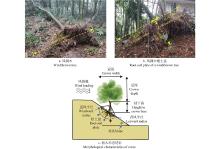
图1
根土盘及树木几何特征参数示意"
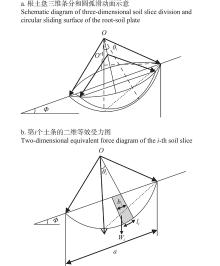
图2
根土盘力矩示意 O:圆弧滑动面圆心 Center of circular sliding surface;O′:O在相应纵向等效剖面上的投影点 Projection of point O onto the corresponding longitudinal equivalent cross-section;a:根土盘沿倒伏方向的总长度 (即迎风半径与背风半径之和) Total length of root-soil plate along the lodging direction (i.e., the sum of the windward and leeward radii) (m);bi:第i个土条的有效宽度 Effective width of the i-th soil slice (m);li:第i个土条的滑动面弧长 Arc length of sliding surface for the i-th soil slice (m);Wi:第i个土条上根土盘重力 Weight of root-soil plate on the i-th soil slice (kN);θi:土条与竖向的夹角 Angle between the soil slice and the vertical (°);Φ:坡度 Slope (°)."
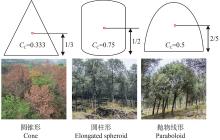
图3
3种典型树冠形状的冠型系数和质心 CC:冠型系数Crown shape factor; :质心Centroid."
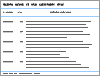
表1
根土盘因子正交模拟设计"
| 工况编号 Case number | 根土盘长度 Root-soil plate length/m | 因子1:迎风半径 Factor 1: windward radius | 因子2:横向直径 Factor 2: lateral diameter | 因子3:根土盘深度 Factor 3: root-soil plate depth | 因子4:树自重 Factor 4: tree weight | |||||||
| 水平Level | 取值Value/m | 水平Level | 取值Value/m | 水平Level | 取值Value/m | 水平Level | 取值Value/kg | |||||
| 1 | 1.5 | 1 | 0.9 | 1 | 1.2 | 1 | 0.8 | 1 | 0.9 | |||
| 2 | 1.5 | 1 | 0.9 | 2 | 1.5 | 3 | 1.2 | 2 | 1.1 | |||
| 3 | 1.5 | 1 | 0.9 | 3 | 1.8 | 2 | 1 | 3 | 1.3 | |||
| 4 | 1.5 | 2 | 1.05 | 1 | 1.2 | 3 | 1.2 | 3 | 1.3 | |||
| 5 | 1.5 | 2 | 1.05 | 2 | 1.5 | 2 | 1 | 1 | 0.9 | |||
| 6 | 1.5 | 2 | 1.05 | 3 | 1.8 | 1 | 0.8 | 2 | 1.1 | |||
| 7 | 1.5 | 3 | 1.2 | 1 | 1.2 | 2 | 1 | 2 | 1.1 | |||
| 8 | 1.5 | 3 | 1.2 | 2 | 1.5 | 1 | 0.8 | 3 | 1.3 | |||
| 9 | 1.5 | 3 | 1.2 | 3 | 1.8 | 3 | 1.2 | 1 | 0.9 | |||
表2
树木形态因子正交模拟设计"
| 工况编号 Case number | 迎风半径 | 横向直径 | 根土盘深度 | 冠型系数 | 枝下高 | 冠宽 | 冠厚 | 胸径 | ||||||||||||||
| Windward radius | Lateral diameter | Root-soil plate depth | Crown shape factor | Height to crown base | Crown width | Crown depth | Diameter at breast height | |||||||||||||||
| 水平 | 取值 | 水平 | 取值 | 水平 | 取值 | 水平 | 取值 | 水平 | 取值 | 水平 | 取值 | 水平 | 取值 | 取值 | ||||||||
| Level | Value/m | Level | Value/m | Level | Value/m | Level | Value | Level | Value/m | Level | Value/m | Level | Value/m | Value/m | ||||||||
| a | 3 | 1.2 | 3 | 1.8 | 1 | 0.8 | 1 | 0.33 | 2 | 6 | 2 | 6 | 2 | 6 | 0.2 | |||||||
| b | 1 | 0.9 | 1 | 1.2 | 1 | 0.8 | 1 | 0.33 | 1 | 4 | 1 | 4.5 | 1 | 4.5 | 0.15 | |||||||
| c | 3 | 1.2 | 2 | 1.5 | 1 | 0.8 | 3 | 0.75 | 1 | 4 | 1 | 4.5 | 3 | 7.5 | 0.2 | |||||||
| d | 2 | 1.05 | 1 | 1.2 | 1 | 0.8 | 2 | 0.5 | 3 | 8 | 2 | 6 | 3 | 7.5 | 0.25 | |||||||
| e | 3 | 1.2 | 1 | 1.2 | 2 | 1 | 2 | 0.5 | 3 | 8 | 1 | 4.5 | 2 | 6 | 0.25 | |||||||
| f | 1 | 0.9 | 3 | 1.8 | 2 | 1 | 2 | 0.5 | 1 | 4 | 2 | 6 | 1 | 4.5 | 0.15 | |||||||
| g | 2 | 1.05 | 3 | 1.8 | 1 | 0.8 | 3 | 0.75 | 3 | 8 | 3 | 7.5 | 1 | 4.5 | 0.2 | |||||||
| h | 3 | 1.2 | 2 | 1.5 | 2 | 1 | 1 | 0.33 | 3 | 8 | 3 | 7.5 | 1 | 4.5 | 0.2 | |||||||
| i | 1 | 0.9 | 1 | 1.2 | 2 | 1 | 3 | 0.75 | 2 | 6 | 3 | 7.5 | 3 | 7.5 | 0.25 | |||||||
| j | 1 | 0.9 | 2 | 1.5 | 3 | 1.2 | 1 | 0.33 | 3 | 8 | 2 | 6 | 3 | 7.5 | 0.25 | |||||||
| k | 3 | 1.2 | 3 | 1.8 | 3 | 1.2 | 2 | 0.5 | 1 | 4 | 3 | 7.5 | 3 | 7.5 | 0.2 | |||||||
| l | 2 | 1.05 | 1 | 1.2 | 3 | 1.2 | 1 | 0.33 | 1 | 4 | 3 | 7.5 | 2 | 6 | 0.15 | |||||||
| m | 1 | 0.9 | 3 | 1.8 | 3 | 1.2 | 3 | 0.75 | 3 | 8 | 1 | 4.5 | 2 | 6 | 0.25 | |||||||
| n | 3 | 1.2 | 1 | 1.2 | 3 | 1.2 | 3 | 0.75 | 2 | 6 | 2 | 6 | 1 | 4.5 | 0.15 | |||||||
| o | 2 | 1.05 | 2 | 1.5 | 3 | 1.2 | 2 | 0.5 | 2 | 6 | 1 | 4.5 | 1 | 4.5 | 0.15 | |||||||
| p | 1 | 0.9 | 2 | 1.5 | 1 | 0.8 | 2 | 0.5 | 2 | 6 | 3 | 7.5 | 2 | 6 | 0.2 | |||||||
| q | 2 | 1.05 | 2 | 1.5 | 2 | 1 | 3 | 0.75 | 1 | 4 | 2 | 6 | 2 | 6 | 0.15 | |||||||
| r | 2 | 1.05 | 3 | 1.8 | 2 | 1 | 1 | 0.33 | 2 | 6 | 1 | 4.5 | 3 | 7.5 | 0.25 | |||||||
图4
不同条件下根土盘抵抗力矩 a:坡度20° Slope 20°;b:坡度30° Slope 30°;c:坡度40° Slope 40°."
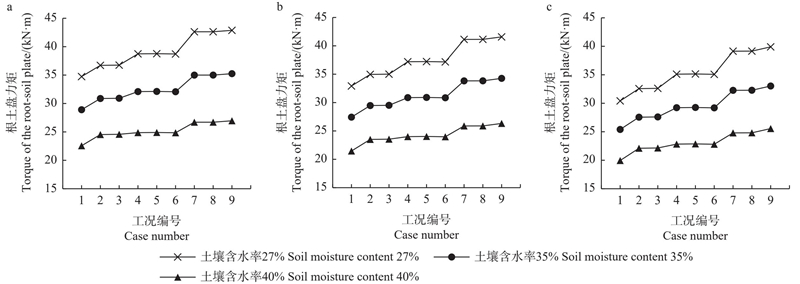
表3
不同风速下的安全系数模拟结果(FS)①"
| 工况编号 Case number | 0 m·s?1 | 5 m·s?1 | 10 m·s?1 | 15 m·s?1 | 20 m·s?1 | 25 m·s?1 | 30 m·s?1 |
| a | 6.78 | 5.87 | 4.62 | 3.99 | 3.02 | 2.30 | 1.78 |
| b | 21.61 | 17.09 | 12.06 | 9.87 | 6.94 | 5.02 | 3.76 |
| c | 7.85 | 5.70 | 3.68 | 2.90 | 1.95 | 1.37 | — |
| d | 12.30 | 6.54 | 3.38 | 2.48 | 1.53 | 1.02 | 0.73 |
| e | 7.85 | 6.18 | 4.33 | 3.54 | 2.48 | 1.79 | 1.34 |
| f | 13.05 | 9.97 | 6.77 | 5.46 | 3.76 | 2.69 | — |
| g | 8.86 | 5.43 | 3.06 | 2.30 | 1.46 | — | — |
| h | 6.56 | 5.62 | 4.37 | 3.75 | 2.81 | 2.13 | 1.64 |
| i | 18.02 | 5.33 | 2.21 | 1.54 | 0.90 | — | — |
| j | 13.05 | 8.05 | 4.56 | 3.44 | 2.19 | 1.49 | 1.07 |
| k | 4.94 | 4.06 | 2.99 | 2.50 | 1.81 | 1.33 | — |
| l | 8.86 | 7.27 | 5.35 | 4.46 | 3.22 | — | — |
| m | 11.34 | 6.79 | 3.77 | 2.82 | 1.78 | 1.21 | 0.87 |
| n | 6.78 | 5.44 | 3.90 | 3.21 | — | — | — |
| o | 7.43 | 6.46 | 5.13 | 4.44 | 3.38 | 2.59 | — |
| p | 18.02 | 8.61 | 4.21 | 3.04 | 1.85 | 1.23 | — |
| q | 8.58 | 6.10 | 3.87 | 3.04 | — | — | — |
| r | 7.43 | 6.25 | 4.75 | 4.02 | 2.96 | 2.21 | 1.69 |
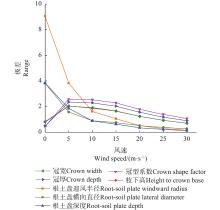
图5
不同风速下正交试验极差变化"
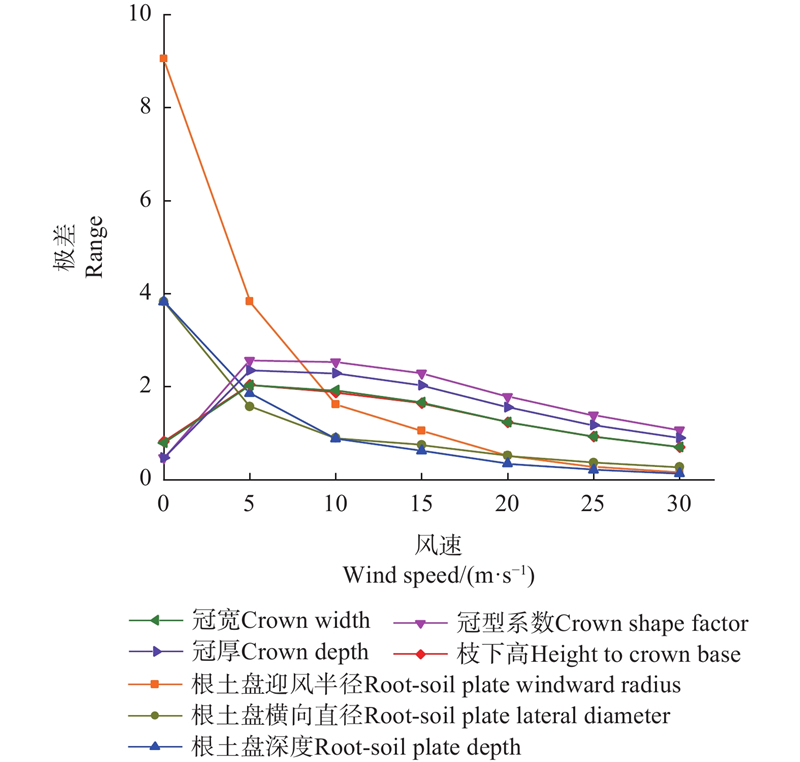
表4
不同土壤含水率和坡度条件下的树木临界风速和树木断裂风速①"
| 工况编号 Case number | 临界风速Critical wind speed | 断裂风速 Breakage wind speed | ||||||||||
| ω=27% | ω=35% | ω=40% | ||||||||||
| 20° | 30° | 40° | 20° | 30° | 40° | 20° | 30° | 40° | ||||
| a | — | — | — | — | — | — | 34.1 | 33.6 | 32.9 | 36.9 | ||
| b | — | — | — | — | — | — | — | — | — | 38.6 | ||
| c | — | — | — | — | — | — | 23.8 | 23.4 | 22.9 | 25.8 | ||
| d | 25.3 | 24.8 | 24.0 | 23.0 | 22.5 | 21.9 | 20.2 | 19.8 | 19.2 | 32.1 | ||
| e | 35.6 | 34.9 | 34.1 | 32.2 | 31.7 | 30.9 | 28.2 | 27.7 | 27.1 | 42.7 | ||
| f | — | — | — | — | — | — | — | — | — | 26.6 | ||
| g | — | — | — | — | 22.2 | 21.6 | 20.0 | 19.6 | 19.1 | 22.5 | ||
| h | — | — | — | — | — | — | 32.3 | 31.9 | 31.3 | 35.0 | ||
| i | 18.9 | 18.4 | 17.7 | 17.3 | 16.8 | 16.2 | 15.3 | 14.9 | 14.4 | 24.9 | ||
| j | 31.2 | 30.4 | 29.3 | 28.6 | 27.9 | 27.0 | 25.5 | 24.9 | 24.2 | 40.3 | ||
| k | — | — | — | — | — | — | 23.9 | 23.6 | 23.3 | 25.8 | ||
| l | — | — | — | — | — | — | — | — | — | 24.8 | ||
| m | 27.8 | 27.1 | 26.2 | 25.5 | 25.0 | 24.2 | 22.8 | 22.4 | 21.7 | 35.5 | ||
| n | — | — | — | — | — | — | — | — | — | 19.1 | ||
| o | — | — | — | — | — | — | — | — | — | 27.0 | ||
| p | — | — | 26.2 | 25.5 | 24.8 | 23.9 | 22.6 | 22.0 | 21.3 | 26.3 | ||
| q | — | — | — | — | — | — | — | — | — | 17.9 | ||
| r | 41.3 | 40.5 | 39.4 | 37.6 | 37.0 | 36.0 | 33.2 | 32.7 | 31.9 | 51.7 | ||
表5
树木临界风速及其影响因子的Pearson相关系数①"
| 项目 Item | 根土盘迎 风半径 Root-soil plate windward radius | 根土盘横 向直径 Root-soil plate lateral diameter | 根土盘深度 Root-soil plate depth | 冠型系数 Crown shape factor | 枝下高 Height to crown base | 冠宽 Crown width | 冠厚 Crown depth | 土壤含水率 Soil moisture content | 坡度 Slope | 临界风速 Critical wind speed |
| 根土盘迎风半径 Root-soil plate windward radius | 1 | |||||||||
| 根土盘横向直径 Root-soil plate lateral diameter | -0.049 | 1 | ||||||||
| 根土盘深度 Root-soil plate depth | -0.299** | 0.255* | 1 | |||||||
| 冠型系数 Crown shape factor | -0.261* | -0.076 | -0.057 | 1 | ||||||
| 枝下高 Height to crown base | -0.139 | -0.19 | 0.179 | -0.056 | 1 | |||||
| 冠宽 Crown width | -0.246* | -0.176 | -0.293** | 0.143 | -0.202 | 1 | ||||
| 冠厚 Crown depth | -0.216 | -0.268* | 0.186 | -0.209 | -0.378** | -0.15 | 1 | |||
| 土壤含水率 Soil moisture content | 0.227* | 0.155 | -0.139 | 0.001 | -0.193 | 0.162 | -0.177 | 1 | ||
| 坡度 Slope | -0.013 | 0.018 | -0.037 | 0.017 | 0.001 | 0.038 | -0.044 | -0.026 | 1 | |
| 临界风速 Critical wind speed | 0.426** | 0.340** | 0.155 | -0.707** | 0.058 | -0.578** | -0.052 | -0.283* | -0.09 | 1 |
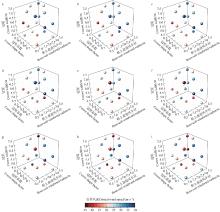
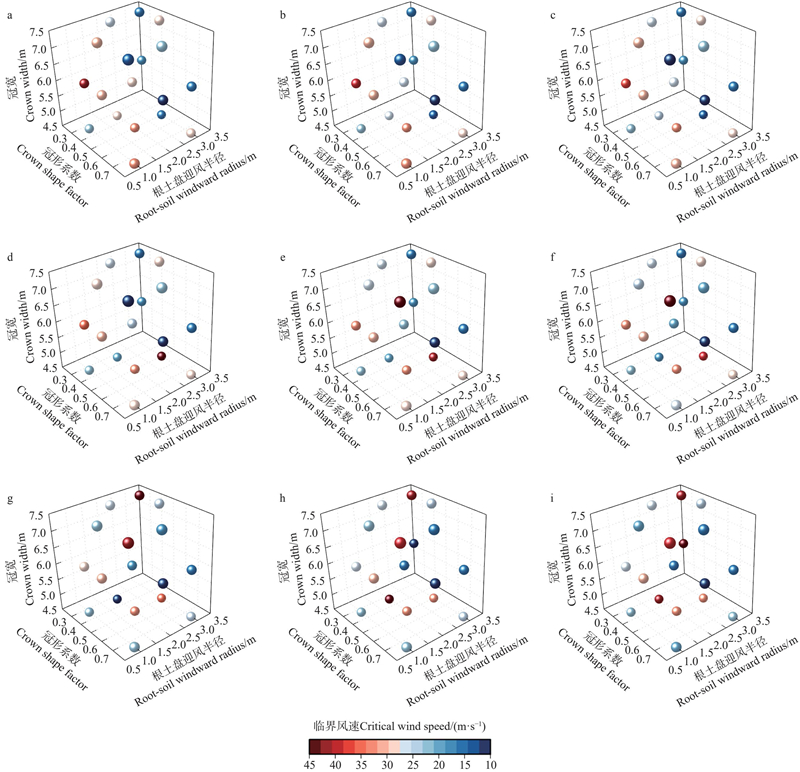
图6
3种形态因子对临界风速的响应 a:坡度20°,土壤含水率27% Slope 20°,soil moisture content 27%;b:坡度30°,土壤含水率27% Slope 30°, soil moisture content 27%;c:坡度40°, 土壤含水率27% Slope 40°, soil moisture content 27%;d:坡度20°,土壤含水率35% Slope 20°, soil moisture content 35%;e:坡度30°, 土壤含水率35% Slope 30°, soil moisture content 35%;f:坡度40°,土壤含水率35% Slope 40°, soil moisture content 35%;g:坡度20°, 土壤含水率40% Slope 20°, soil moisture content 40%;h:坡度30°, 土壤含水率40% Slope 30°, soil moisture content 40%;i:坡度40°,土壤含水率40% Slope 40°,soil moisture content 40%."
|
崔云静, 周建中, 汤昌海, 等. 树木力学模型研究现状及展望. 世界林业研究, 2010, 23 (5): 30- 33.
doi: 10.13348/j.cnki.sjlyyj.2010.05.005 |
|
|
Cui Y J, Zhou J Z, Tang C H, et al. Research status and prospect of tree mechanical model. World Forestry Research, 2010, 23 (5): 30- 33.
doi: 10.13348/j.cnki.sjlyyj.2010.05.005 |
|
| 何相昌. 2023. 风荷载作用下树木对边坡变形和稳定的影响研究. 北京: 北京林业大学. | |
| He X C. 2023. Study on the influence of trees on slope deformation and stability under wind loading. Beijing: Beijing Forestry University. [in Chinese] | |
|
何相昌, 王云琦, 李 通, 等. 重庆缙云山3种典型倒伏树木根土盘特征. 中国水土保持科学(中英文), 2023, 21 (2): 74- 82.
doi: 10.16843/j.sswc.2023.02.010 |
|
|
He X C, Wang Y Q, Li T, et al. Root-soil plate characteristics of three typical lodging trees in Jinyun Mountain, Chongqing. Science of Soil and Water Conservation, 2023, 21 (2): 74- 82.
doi: 10.16843/j.sswc.2023.02.010 |
|
|
及金楠, 张志强, Thierry F, 等. 鲱骨状根构型对典型土体抗倾覆力的有限元分析. 中国水土保持科学, 2007, 5 (3): 14- 18.
doi: 10.3969/j.issn.1672-3007.2007.03.003 |
|
|
Ji J N, Zhang Z Q, Thierry F, et al. Finite element analysis of herringbone-like root anchorage in representative soil types. Science of Soil and Water Conservation, 2007, 5 (3): 14- 18.
doi: 10.3969/j.issn.1672-3007.2007.03.003 |
|
| 李 通, 王云琦, 何相昌, 等. 风荷载作用下三种乔木对边坡变形和稳定的影响. 农业工程学报, 2023a, 39 (5): 110- 119. | |
| Li T, Wang Y Q, He X C, et al. Influences of three typical trees on slope deformation and stability under wind load. Transactions of the Chinese Society of Agricultural Engineering, 2023a, 39 (5): 110- 119. | |
| 李 通, 王云琦, 祁子寒, 等. 重庆缙云山森林火灾干扰边坡的滑坡易发期预测. 农业工程学报, 2023b, 39 (9): 131- 141. | |
| Li T, Wang Y Q, Qi Z H, et al. Prediction of landslide prone period for forest fire disturbed slope in Jinyun Mountain, Chongqing of China. Transactions of the Chinese Society of Agricultural Engineering, 2023b, 39 (9): 131- 141. | |
|
骆丕昭, 王云琦, 李 通, 等. 基于三轴UU试验的土体含水率对根土复合体强度特性的影响. 水土保持学报, 2023, 37 (6): 153- 160.
doi: 10.13870/j.cnki.stbcxb.2023.06.020 |
|
|
Luo P Z, Wang Y Q, Li T, et al. Effect of soil moisture content on strength characteristics of root-soil complex based on triaxial UU test. Journal of Soil and Water Conservation, 2023, 37 (6): 153- 160.
doi: 10.13870/j.cnki.stbcxb.2023.06.020 |
|
|
祁子寒, 王云琦, 王玉杰, 等. 根系对浅表层土大孔隙分布特征及饱和渗透性的影响. 水土保持学报, 2021, 35 (5): 94- 100, 107.
doi: 10.13870/j.cnki.stbcxb.2021.05.014 |
|
|
Qi Z H, Wang Y Q, Wang Y J, et al. Effect of root system on macropores distribution and saturated permeability of surface soil. Journal of Soil and Water Conservation, 2021, 35 (5): 94- 100, 107.
doi: 10.13870/j.cnki.stbcxb.2021.05.014 |
|
| 邵卓平, 吴贻军, 黄天来, 等. 风灾害下树木强度分析的理论、方法及应用. 林业科学, 2017, 53 (5): 170- 178. | |
| Shao Z P, Wu Y J, Huang T L, et al. Theory and method of tree stem strength analysis under wind disaster and its application. Scientia Silvae Sinicae, 2017, 53 (5): 170- 178. | |
| 宋明辉, 付海明. 三维树冠的结构参数与阻力特性的关系. 东华大学学报(自然科学版), 2020, 46 (3): 450- 456. | |
| Song M H, Fu H M. Relationship between structural parameters and resistance characteristics of three-dimensional canopy. Journal of Donghua University (Natural Science), 2020, 46 (3): 450- 456. | |
| 徐鹏飞, 张厚江, 辛振波, 等. 树干横力弯曲中性轴的数值模拟. 北京林业大学学报, 2024, 46 (8): 1- 14. | |
| Xu P F, Zhang H J, Xin Z B, et al. Numerical simulation of neutral axis in transverse bending of tree trunk. Journal of Beijing Forestry University, 2024, 46 (8): 1- 14. | |
| 张旭耀, 张力宏, 赵琰森, 等. 边坡地形湍流风场特性. 农业工程学报, 2025, 41 (23): 107- 116. | |
| Zhang X Y, Zhang L H, Zhao Y S, et al. Characteristics of turbulent wind fields over slope terrain. Transactions of the Chinese Society of Agricultural Engineering, 2025, 41 (23): 107- 116. | |
| 朱锦奇, 苏伯儒, 王云琦, 等. 荆条根系的固土功能随土壤含水率的变化. 林业科学, 2020, 56 (6): 202- 208. | |
| Zhu J Q, Su B R, Wang Y Q, et al. Variation of soil reinforcement of Vitex negundo root with soil moisture. Scientia Silvae Sinicae, 2020, 56 (6): 202- 208. | |
|
朱锦奇, 王云琦, 王玉杰, 等. 基于植物生长过程的根系固土机制及Wu模型参数优化. 林业科学, 2018, 54 (4): 49- 57.
doi: 10.11707/j.1001-7488.20180406 |
|
|
Zhu J Q, Wang Y Q, Wang Y J, et al. Analyses on root reinforcement mechanism based on plant growth process and parameters optimization of Wu model. Scientia Silvae Sinicae, 2018, 54 (4): 49- 57.
doi: 10.11707/j.1001-7488.20180406 |
|
|
朱锦奇, 王云琦, 王玉杰, 等. 四川山矾根系分支节点对根系固土效益的影响. 林业科学, 2021, 57 (2): 115- 125.
doi: 10.11707/j.1001-7488.20210212 |
|
|
Zhu J Q, Wang Y Q, Wang Y J, et al. Effects of root branch of Symplocos setchuensis on root soil reinforcement. Scientia Silvae Sinicae, 2021, 57 (2): 115- 125.
doi: 10.11707/j.1001-7488.20210212 |
|
|
Achim A, Nicoll B C. Modelling the anchorage of shallow-rooted trees. Forestry, 2009, 82 (3): 273- 284.
doi: 10.1093/forestry/cpp004 |
|
|
Achim A, Ruel J C, Gardiner B A, et al. Modelling the vulnerability of balsam fir forests to wind damage. Forest Ecology and Management, 2005, 204 (1): 37- 52.
doi: 10.1016/j.foreco.2004.07.072 |
|
|
An N, Dai Z S, Hu X, et al. Comparing landslide patterns and failure mechanisms in restored and native forest ecosystems: insights from geomorphology, lithology and vegetation. Catena, 2025, 260, 109452.
doi: 10.1016/j.catena.2025.109452 |
|
|
Blackwell P G, Rennolls K, Coutts M P. A root anchorage model for shallowly rooted sitka spruce. Forestry, 1990, 63 (1): 73- 91.
doi: 10.1093/forestry/63.1.73 |
|
|
Burcham D C, Autio W R, Modarres-Sadeghi Y, et al. After pruning, wind-induced bending moments and vibration decrease more on reduced than raised Senegal mahogany (Khaya senegalensis). Urban Forestry & Urban Greening, 2021, 61, 127100.
doi: 10.1016/j.ufug.2021.127100 |
|
|
Chan W L, Cui Y D, Jadhav S S, et al. Experimental study of wind load on tree using scaled fractal tree model. International Journal of Modern Physics B, 2020, 34 (14/16): 2040087.
doi: 10.1142/s0217979220400871 |
|
|
Coutts M P. Components of tree stability in sitka spruce on peaty gley soil. Forestry, 1986, 59 (2): 173- 197.
doi: 10.1093/forestry/59.2.173 |
|
|
Davidson-Arnott R G D, Bauer B O, Walker I J, et al. High-frequency sediment transport responses on a vegetated foredune. Earth Surface Processes and Landforms, 2012, 37 (11): 1227- 1241.
doi: 10.1002/esp.3275 |
|
|
Dupont S, Ikonen V P, Väisänen H, et al. Predicting tree damage in fragmented landscapes using a wind risk model coupled with an airflow model. Canadian Journal of Forest Research, 2015, 45 (8): 1065- 1076.
doi: 10.1139/cjfr-2015-0066 |
|
|
Gardiner B, Berry P, Moulia B. Review: wind impacts on plant growth, mechanics and damage. Plant Science, 2016, 245, 94- 118.
doi: 10.1016/j.plantsci.2016.01.006 |
|
|
Gardiner B, Peltola H, Kellomäki S. Comparison of two models for predicting the critical wind speeds required to damage coniferous trees. Ecological Modelling, 2000, 129 (1): 1- 23.
doi: 10.1016/s0304-3800(00)00220-9 |
|
| Gillies J A, Nickling W G, King J. 2002. Drag coefficient and plant form response to wind speed in three plant species: burning bush (Euonymus alatus), Colorado blue spruce (Picea pungens Glauca. ), and fountain grass (Pennisetum setaceum). Journal of Geophysical Research: Atmospheres, 107(D24): ACL 10-1-ACL 10-15. | |
|
James K R, Haritos N, Ades P K. Mechanical stability of trees under dynamic loads. American Journal of Botany, 2006, 93 (10): 1522- 1530.
doi: 10.3732/ajb.93.10.1522 |
|
|
Jiang H X, Zhang H F, Xin D B, et al. Field measurement of wind characteristics and induced tree response during strong storms. Journal of Forestry Research, 2022, 33 (5): 1505- 1516.
doi: 10.1007/s11676-021-01427-4 |
|
|
Kamimura K, Kitagawa K, Saito S, et al. Root anchorage of hinoki [Chamaecyparis obtuse (Sieb. Et Zucc. ) Endl. ] under the combined loading of wind and rapidly supplied water on soil: analyses based on tree-pulling experiments. European Journal of Forest Research, 2012, 131 (1): 219- 227.
doi: 10.1007/s10342-011-0508-2 |
|
|
Kane B, Smiley E T. Drag coefficients and crown area estimation of red maple. Canadian Journal of Forest Research, 2006, 36 (8): 1951- 1958.
doi: 10.1139/x06-086 |
|
|
Kang X, Wang S, Zou X, et al. Hydro-mechanical response of herbaceous root-reinforced soils and its implications for vegetated-slope stability. Engineering Geology, 2026, 361, 108501.
doi: 10.1016/j.enggeo.2025.108501 |
|
|
Koizumi A, Oonuma N, Sasaki Y, et al. Difference in uprooting resistance among coniferous species planted in soils of volcanic origin. Journal of Forest Research, 2007, 12 (3): 237- 242.
doi: 10.1007/s10310-007-0001-4 |
|
|
Kolbe S, Pfenning M, Schindler D. Wind-induced torsional vibration in a ponderosa pine tree. Forest Ecology and Management, 2024, 553, 121638.
doi: 10.1016/j.foreco.2023.121638 |
|
|
Kolbe S, Rentschler F, Frey J, et al. Assessment of effective wind loads on individual plantation-grown forest trees. Forests, 2022, 13 (7): 1026.
doi: 10.3390/f13071026 |
|
|
Lai C, Xiao B, Feng J L, et al. Crown feature effect evaluation on wind load for evergreen species based on laser scanning and wind tunnel experiments. Scientific Reports, 2022, 12 (1): 21475.
doi: 10.1038/s41598-022-25960-2 |
|
|
Leenders J K, van Boxel J H, Sterk G. The effect of single vegetation elements on wind speed and sediment transport in the Sahelian zone of Burkina Faso. Earth Surface Processes and Landforms, 2007, 32 (10): 1454- 1474.
doi: 10.1002/esp.1452 |
|
|
Liang T, Knappett J A, Leung A, et al. A critical evaluation of predictive models for rooted soil strength with application to predicting the seismic deformation of rooted slopes. Landslides, 2020, 17 (1): 93- 109.
doi: 10.1007/s10346-019-01259-8 |
|
|
Locatelli T, Gardiner B, Tarantola S, et al. Modelling wind risk to Eucalyptus globulus (Labill. ) stands. Forest Ecology and Management, 2016, 365, 159- 173.
doi: 10.1016/j.foreco.2015.12.035 |
|
|
Locatelli T, Tarantola S, Gardiner B, et al. Variance-based sensitivity analysis of a wind risk model: model behaviour and lessons for forest modelling. Environmental Modelling & Software, 2017, 87, 84- 109.
doi: 10.1016/j.envsoft.2016.10.010 |
|
|
Miri A, Webb N P. Characterizing the spatial variations of wind velocity and turbulence intensity around a single Tamarix tree. Geomorphology, 2022, 414, 108382.
doi: 10.1016/j.geomorph.2022.108382 |
|
|
Ng C W W, Guo H W, Ni J J, et al. Effects of soi-plant-biochar interactions on water retention and slope stability under various rainfall patterns. Landslides, 2022, 19 (6): 1379- 1390.
doi: 10.1007/s10346-022-01874-y |
|
|
Ng C W W, Zhang Q, Ni J J, et al. A new three-dimensional theoretical model for analysing the stability of vegetated slopes with different root architectures and planting patterns. Computers and Geotechnics, 2021, 130, 103912.
doi: 10.1016/j.compgeo.2020.103912 |
|
|
Nicoll B C, Achim A, Mochan S, et al. Does steep terrain influence tree stability? A field investigation. Canadian Journal of Forest Research, 2005, 35 (10): 2360- 2367.
doi: 10.1139/x05-157 |
|
|
Nicoll B C, Gardiner B A, Rayner B, et al. Anchorage of coniferous trees in relation to species, soil type, and rooting depth. Canadian Journal of Forest Research, 2006, 36 (7): 1871- 1883.
doi: 10.1139/x06-072 |
|
|
Peltola H, Kellomäki S, Väisänen H, et al. A mechanistic model for assessing the risk of wind and snow damage to single trees and stands of Scots pine, Norway spruce, and birch. Canadian Journal of Forest Research, 1999, 29 (6): 647- 661.
doi: 10.1139/x99-029 |
|
|
Peterson C J, de Mello Ribeiro G H P, Negrón-Juárez R, et al. Critical wind speeds suggest wind could be an important disturbance agent in Amazonian forests. Forestry: an International Journal of Forest Research, 2019, 92 (4): 444- 459.
doi: 10.1093/forestry/cpz025 |
|
|
Rahardjo H, Amalia N, Choon L E, et al. Flux boundary measurements for the study of tree stability. Landscape and Ecological Engineering, 2017, 13 (1): 81- 92.
doi: 10.1007/s11355-016-0303-9 |
|
|
Ver Planck N R, MacFarlane D W. Branch mass allocation increases wind throw risk for Fagus grandifolia. Forestry, 2019, 92 (4): 490- 499.
doi: 10.1093/forestry/cpz001 |
|
|
Vollsinger S, Mitchell S J, Byrne K E, et al. Wind tunnel measurements of crown streamlining and drag relationships for several hardwood species. Canadian Journal of Forest Research, 2005, 35 (5): 1238- 1249.
doi: 10.1139/x05-051 |
|
|
Wu Y J, Shao Z P. Measurement and mechanical analysis of the strains-stresses induced by tree-pulling experiments in tree stems. Trees, 2016, 30 (3): 675- 684.
doi: 10.1007/s00468-015-1310-4 |
|
|
Xue L, Ding H, Wang H Y, et al. Shallow slope stabilization by arbor root systems: a physical model study. Catena, 2024, 246, 108458.
doi: 10.1016/j.catena.2024.108458 |
|
|
Yang M, Défossez P, Danjon F, et al. Analyzing key factors of roots and soil contributing to tree anchorage of Pinus species. Trees, 2018, 32 (3): 703- 712.
doi: 10.1007/s00468-018-1665-4 |
|
|
Zubizarreta-Gerendiain A, Pellikka P, Garcia-Gonzalo J, et al. Factors affecting wind and snow damage of individual trees in a small management unit in Finland: assessment based on inventoried damage and mechanistic modelling. Silva Fennica, 2012, 46 (2): 181- 196.
doi: 10.14214/sf.441 |
| [1] | 李正农,李枫,陈斌,何定颖. 树木风荷载与流场特性的风洞试验[J]. 林业科学, 2020, 56(8): 173-180. |
| 阅读次数 | ||||||
|
全文 |
|
|||||
|
摘要 |
|
|||||

