林业科学 ›› 2026, Vol. 62 ›› Issue (10): 13-29.doi: 10.11707/j.1001-7488.LYKX20260065
张伟溪1,2,张腾倩1,2,3,王梓豪1,2,苗露澜1,2,苑正赛1,2,苏晓华1,2,丁昌俊1,2,4,*(
)
收稿日期:2026-01-29
出版日期:2026-10-10
发布日期:2026-10-16
通讯作者:
丁昌俊
E-mail:changjund@126.com
基金资助:
Weixi Zhang1,2,Tengqian Zhang1,2,3,Zihao Wang1,2,Lulan Miao1,2,Zhengsai Yuan1,2,Xiaohua Su1,2,Changjun Ding1,2,4,*(
)
Received:2026-01-29
Online:2026-10-10
Published:2026-10-16
Contact:
Changjun Ding
E-mail:changjund@126.com
摘要:
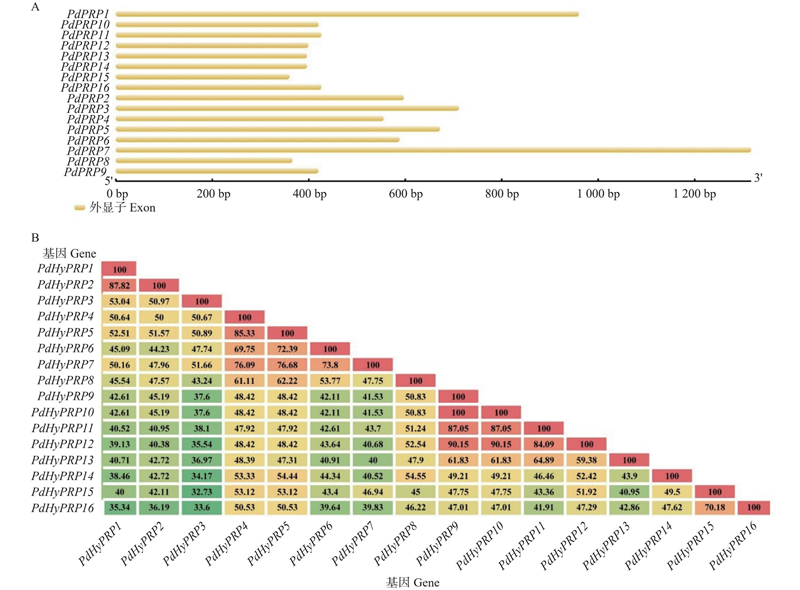
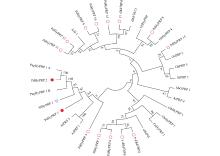
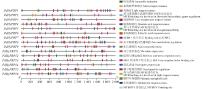
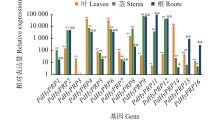
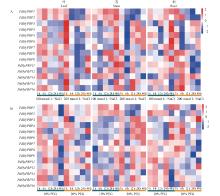
目的: 鉴定国审欧美杨良种‘渤丰3号’杨PdHyPRPs基因的功能,利用CRISPR/Cas9技术创制靶向编辑PdHyPRPs的耐盐杨树新材料,为培育突破性抗逆林木新种质提供分子靶点和材料基础。方法: 基于番茄SlHyPRP1氨基酸序列,在美洲黑杨参考基因组中鉴定PdHyPRPs基因家族成员,通过系统发育分析和同源序列比对等解析其基因结构和蛋白类型。利用实时荧光定量PCR技术,分析‘渤丰3号’杨叶、茎和根中PdHyPRPs家族基因组织表达特征及其对干旱、盐胁迫的响应模式。采用同源克隆获得‘渤丰3号’杨PdHyPRP1和PdHyPRP2的编码序列(CDS),基于CRSPER/Cas9和同源重组技术,构建PdHyPRP1/2基因编辑及抑制表达载体,应用农杆菌介导法转化‘渤丰3号’杨,获得基因编辑、基因沉默和过表达株系。测定盐胁迫下各株系叶片和根系超氧阴离子(O2–)、过氧化氢(H2O2)和丙二醛(MDA)含量,初步评价其耐盐性并验证基因功能。结果: 共鉴定出15个美洲黑杨PdHyPRP基因,其CDS长度为360~1 317 bp,均仅含1个外显子,编码119~438个氨基酸。所编码蛋白结构均包含N端信号肽、富含脯氨酸重复区和C端8-半胱氨酸基序(8CM),属于典型8CM蛋白家族,聚类为6个进化分支。表达特征分析显示,除PdHyPRP13外,14个基因均在‘渤丰3号’杨叶、茎和根中表达并受盐和干旱胁迫诱导,但具有组织特异性,PdHyPRP4、PdHyPRP5、PdHyPRP6、PdHyPRP7和PdHyPRP8在叶、茎和根中均高表达,且表达水平相对稳定,而PdHyPRP1、PdHyPRP2、PdHyPRP9、PdHyPRP11和PdHyPRP12主要在茎和根中高表达。NaCl胁迫下,各组织PdHyPRP1和PdHyPRP2表达模式相对一致,表现为低浓度上调,高浓度随胁迫时间呈先上调后下调趋势。但PEG胁迫下,其在叶、茎和根中表达模式不同。成功克隆‘渤丰3号’杨PdHyPRP1和PdHyPRP2基因,CDS大小分别为840和597 bp,并构建双基因编辑和抑制表达载体,获得PdHyPRP1和PdHyPRP2同时编辑株系及抑制表达株系各2个。耐盐性检测表明,与野生型相比,编辑株系和抑制表达株系叶片损伤更轻,叶片和根系中O2–、H2O2和MDA积累量显著降低,分别为野生型的0.60~0.85倍和0.60~0.86倍,耐盐性提高。结论: 14个PdHyPRPs基因可在‘渤丰3号’杨叶、茎和根中表达,并响应干旱、盐胁迫,但具有组织特异性。PdHyPRP1和PdHyPRP2在‘渤丰3号’杨盐胁迫响应中起负调控作用,其突变或沉默可通过减少活性氧积累和膜脂过氧化程度增强植株耐盐性。成功构建PdHyPRP1/2双基因编辑载体,创制出耐盐性提高的杨树基因编辑新材料,为杨树抗逆分子育种提供了新基因资源和种质基础。
中图分类号:
张伟溪,张腾倩,王梓豪,苗露澜,苑正赛,苏晓华,丁昌俊. ‘渤丰3号’杨PdHyPRPs基因家族鉴定及PdHyPRP1/2耐盐基因编辑杨树获得[J]. 林业科学, 2026, 62(10): 13-29.
Weixi Zhang,Tengqian Zhang,Zihao Wang,Lulan Miao,Zhengsai Yuan,Xiaohua Su,Changjun Ding. Identification of PdHyPRPs Gene Family in Populus × euramericana ‘Bofeng 3’ and Acquisition of Salt Tolerant Gene PdHyPRP1/2 Edited Poplar[J]. Scientia Silvae Sinicae, 2026, 62(10): 13-29.
表1
用于系统发育分析的物种信息"
| 科 Family | 种 Species | 蛋白名称 Protein name | 基因ID Gene ID | 功能 Function | 参考文献 Reference |
| 十字花科Brassicaceae | 拟南芥 Arabidopsis thaliana | AtPRP1 | AT1G54970 | 定位于根部,参与细胞伸长过程 Localized to the root and involved in the process of cell elongation | |
| AtPRP2 | AT2G21140 | 叶、茎、花等地上器官大量表达,参与发育途径 Highly expressed in aboveground organs such as leaves, stems and flowers, and involved in developmental pathways | |||
| AtPRP3 | AT3G62680 | 定位于根部,参与根毛发育 Localized to the root, and involved in root hair development. | |||
| AtPRP4 | AT2G41500 | 种子发育 Involved in seed development | |||
| AZI1 | AT4G12470 | 抗大豆锈病 Involved in plant defense to Asian soybean rust | |||
| 杨柳科 Salicaceae | 84K杨 P. alba × P. glandulosa | PagHyPRP1A | Pop_A06G061665 | 抗旱、耐盐负调控因子 Negative regulator of drought resistance and salt tolerance | |
| PagHyPRP1B | Pop_G06G075919 | ||||
| 芸香科Rutaceae | 枳 Poncirus trifoliata | PtrPRP | Ptrif.0006s1191 | 通过影响活性氧(ROS)稳态发挥耐寒作用 Functions in cold tolerance by influencing ROS homeostasis | |
| 茄科Solanaceae | 番茄 Solanum lycopersicum | SlHyPRP1 | Solyc12T000374 | 负调控盐、低温、高温和氧化胁迫 Negatively regulate salt, low-temperature, high-temperature and oxidative stresses | |
| 本氏烟草 Nicotiana benthamiana | NbHyPRP1 | Nbe16g02620 | 基础防御的负调控因子 A negative regulator in basic defense against pathogens | ||
| 辣椒 Capsicum annuum | CaHyPRP1 | NC_061111 | 负调控病原菌敏感性、抑制防御相关基因表达 Negatively regulate pathogen susceptibility and inhibit the expression of defense-related genes | ||
| 锦葵科Malvaceae | 海岛棉 Gossypium barbadense | GbHyPRP1 | Gobar.D06G154100 | 负调控棉花对黄萎病菌的抗性(通过细胞壁增厚和 ROS积累) Negatively regulate resistance to Verticillium dahliae in cotton (via cell wall thickening and ROS accumulation) | |
| 陆地棉 Gossypium hirsutum | GhPRP5 | Gohir.A05G175900 | 参与纤维发育 Involved in fiber development | ||
| GhHyPRP4 | Gohir.A07G029100 | 叶中优先表达;冷胁迫诱导上调表达,干旱/盐/ABA胁迫下调表达 Expressed in leaves; up-regulated in response to cold and down-regulation to draught, salt or ABA treatment | |||
| 禾本科Poaceae | 水稻 Oryza sativa | OsPRP3 | LOC_Os10g05750 | 调控胞质脯氨酸水平、稳定细胞外基质、增强耐寒性 Regulate cytoplasmic proline levels, stabilize the extracellular matrix, and enhance cold tolerance | |
| 高粱 Sorghum bicolor | SbGPRP1 | Sobic.009G023200 | 响应SA信号及生物/非生物胁迫,增强对病原菌的抗性 Respond to SA signaling, biotic, or abiotic stresses, and enhance resistance to pathogens. | ||
| 豆科Fabaceae | 木豆 Cajanus cajan | CcHyPRP | CRH08913 | 正调控干旱、盐度和高温及真菌病原体稻瘟病菌抗性 Positively regulate resistance to drought, salinity, high temperature, and the fungal pathogen Magnaporthe oryzae | |
| 黄花苜蓿 Medicago falcata | MfHyPRP | ABQ01426 | 正调控耐寒、抗旱及氧化胁迫 Positively regulate cold tolerance, drought resistance and oxidative stress tolerance |
表2
试验所用引物信息①"
| 用途Purpose | 引物名称 Primer name | 序列 Sequence(5'–3') | 用途 Purpose | 引物名称 Primer name | 序列 Sequence(5'–3') |
| 实时定量PCR Real-time fluorescent quantitative PCR | PdHyPRP1-RT-F | GCTTGCTCTTCAGCTCCTTGTTAC | PdHyPRP1、PdHyPRP2特异性克隆引物 Specific cloning primers of PdHyPRP1, PdHyPRP2 | PdHyPRP1-F | GAGAGTGAACATGGATTCTACC |
| PdHyPRP1-RT-R | GCAAACACTACTCGCTAACTC | PdHyPRP1-R | CTAGAGAGAGCAAGTGTAACCAG | ||
| PdHyPRP2-RT-F | TCCAATTGTGAAGCCACCAGTGAC | PdHyPRP2-F | ATGGATTCTACCAAAATTTCAGC | ||
| PdHyPRP2-RT-R | TAGCCCACCAAGAAGATCCAC | PdHyPRP2-R | CTAGAGAGAGCAAGTGTAACCAG | ||
| PdHyPRP3-RT-F | ATATCCACCTGGTTCTGGTG | 载体构建及测序引物 Primers for vector construction and sequencing | PdHyPRP1/2-g1-F | ATATATGGTCTCGattg$\underline{{\rm{CCTCAGCCACCTCAATTCT}}}$GTTTTAGAGCTAGAAATAGC | |
| PdHyPRP3--RT-R | CTGTCCACAAGTTATCAGCAC | ||||
| PdHyPRP4-RT-F | ACCAATCGTGAAGCCACCAAAG | PdHyPRP1/2-g2-R | ATTATTGGTCTCGaaac$\underline{{\rm{CAACTCTTGACTGTGGTTC}}}$CAATCTCTTAGTCGACTCTAC | ||
| PdHyPRP4-RT-R | CAGCATTCATCCTTGGCACTAC | ||||
| PdHyPRP5-RT-F | GGAGACAAGATGGCTAAGTTTGC | PdHyPRP1/2-CIS(NcoI)-F | CATGCCATGGCACCAAAGGGAAAGCCATG | ||
| PdHyPRP5-RT-R | TGGTTTAGGGTGAGGTGTGTAAG | PdHyPRP1/2-CIS(AscI)-R | TTGGCGCGCCTTGAGAGTGGTGCACAAGCAG | ||
| PdHyPRP6-RT-F | CAAGTTAGGTGCATGTGTGGATG | PdHyPRP1/2-ANTI(XbaI)-F | GCTCTAGACACCAAAGGGAAAGCCATG | ||
| PdHyPRP6-RT-R | CAGCATCCAAGTCTACAAGACCT | PdHyPRP1/2-ANTI(BamHI)-R | CGGGATCCTTGAGAGTGGTGCACAAGCAG | ||
| PdHyPRP7-RT-F | GACTTGGATGCTGCCATATGTC | 基因编辑株系 鉴定 Primers for identification of gene-edited lines | U6-1F | TTAATCCAAACTACTGCAGCCTGAC | |
| PdHyPRP7-RT-R | AACACAACCTGCGACCATCAAG | U6-1R | CATCGGAACTGCAAAACTCA | ||
| PdHyPRP8-RT-F | CTTGTCCCAGAGACACATTGAAG | U6-2F | AGCCCTCTTCTTTCGATCCATCAAC | ||
| PdHyPRP8-RT-R | GCCACATGCACTAACAAGTAC | U6-2R | TGTCCCAGGATTAGAATGATTAGGC | ||
| PdHyPRP9-RT-F | GGAAAGTGCCCTAAAGATGCAC | zCas -F | TGAGAACATCGTCATTGAGATGG | ||
| PdHyPRP9-RT-R | TCCACAGACATTGAGAAGCAAGC | zCas - R | TCAGCTTGTCATTCTCATCGTAC | ||
| PdHyPRP11-RT-F | CGGTTCATTACTTAACGTCACCG | 抑制表达株系鉴定 Primers for identification of gene-silencing lines | Cis-F | ATAAGGAAGTTCATTTCATTTG | |
| PdHyPRP11-RT-R | GGATGTTAAGGTTGATGCCCAAG | Cis-R | CAATCAAATGAAGAGCCAAT | ||
| PdHyPRP12-RT-F | GTATGTGCTGATTTGCTCGGTTC | Anti-F | CTTACTTACACTTGCCTTGGAG | ||
| PdHyPRP12-RT-R | ACAGCAGCCTCGAGATCAAGAAG | Anti-R | ATCTGAGCTACACATGCTCAG | ||
| PdHyPRP14-RT-F | TGGTGTTTGTGGCAACTGGTTAG | 过表达株系鉴定 Primers for identification of over-expression lines | pROKII-1-F | AGACGTTCCAACCACGTCTT | |
| PdHyPRP14-RT-R | CTTTCCACAAGCACTTAGGAGC | pROKII-1-R | CCAGTGAATTCCCGATCTAG | ||
| PdHyPRP15-RT-F | CAGCCTCATTGATGGTCTTGTTG | pROKII-2-F | TTTCATTTGGAGAGAACACG | ||
| PdHyPRP15-RT-R | CCTATCGCATTCGTTGAGCAAC | pROKII-2-R | TGCCAAATGTTTGAACGATC | ||
| PdHyPRP16-RT-F | CTCTACCTCGTGCTTTTTGTGG | 编辑株系靶点分析 Primers for target site analysis of gene-edited lines | PdHyPRP1-F | CATCCATCACTATTCGATCC | |
| PdHyPRP16-RT-R | ATTAGAGGGGGAAAGGCAAAGAG | PdHyPRP1-R | GTGTCACTGGTGGCTTAACAA | ||
| Actin-F | CATCCAGGCTGTCCTTTCCC | PdHyPRP2-F | ATATAACAACACTACTCTCCAC | ||
| Actin-R | AACGAAGGATGGCGTGTGG | PdHyPRP2-R | CTAGAGAGAGCAAGTGTAACCAG |
表3
美洲黑杨16个PdHyPRPs基因特征"
| 基因名 Gene name | 基因号 Gene ID | 编码区长度 CDS length/bp | 蛋白长度 Protein length/aa | 相对分子质量 MW/kDa | 等电点 pI | 亚细胞定位预测 Subcellular localization prediction |
| PdHyPRP1 | Podel.18G127900 | 960 | 319 | 32.95 | 9.54 | 细胞壁;细胞核Cell wall; nucleus |
| PdHyPRP2 | Podel.06G070400 | 597 | 198 | 20.57 | 8.94 | 细胞膜;细胞核Cell wall; nucleus |
| PdHyPRP3 | Podel.03G117900 | 711 | 236 | 23.55 | 8.87 | 细胞核 Nucleus |
| PdHyPRP4 | Podel.06G008500 | 555 | 184 | 19.18 | 8.87 | 细胞核Nucleus |
| PdHyPRP5 | Podel.06G008400 | 672 | 223 | 23.31 | 9.26 | 细胞核Nucleus |
| PdHyPRP6 | Podel.06G008600 | 588 | 195 | 20.44 | 7.99 | 细胞膜Cell membrane |
| PdHyPRP7 | Podel.16G016000 | 438 | 46.31 | 9.92 | 细胞壁Cell wall | |
| PdHyPRP8 | Podel.18G025600 | 366 | 121 | 12.48 | 6.12 | 细胞膜Cell membrane |
| PdHyPRP9 | Podel.03G118000 | 420 | 139 | 14.24 | 9.18 | 细胞膜Cell membrane |
| PdHyPRP10 | Podel.T024000 | 420 | 139 | 14.24 | 9.18 | 细胞膜Cell membrane |
| PdHyPRP11 | Podel.01G129400 | 426 | 141 | 14.57 | 9.12 | 细胞膜Cell membrane |
| PdHyPRP12 | Podel.01G170000 | 399 | 132 | 13.56 | 9.06 | 细胞膜Cell membrane |
| PdHyPRP13 | Podel.01G129300 | 396 | 131 | 13.49 | 8.37 | 细胞膜Cell membrane |
| PdHyPRP14 | Podel.14G063600 | 396 | 131 | 13.64 | 8.83 | 细胞膜Cell membrane |
| PdHyPRP15 | Podel.01G129600 | 360 | 119 | 12.81 | 7.47 | 细胞膜Cell membrane |
| PdHyPRP16 | Podel.13G138300 | 426 | 141 | 15.14 | 8.88 | 细胞膜Cell membrane |
图5
‘渤丰3号’杨PdHyPRPs基因在叶、茎和根中的相对表达水平 表达量最低(?ΔCt值最高)的PdHyPRP1(叶)和PdHyPRP3(茎、根)基因分别被赋值为1,绘制其他PdHyPRPs基因分别相对于PdHyPRP1和PdHyPRP3表达的表达水平。*、**表示不同基因在叶中表达量与PdHyPRP1间差异显著(* P<0.05,**P<0.01);#、##表示不同基因在茎中表达量与PdHyPRP3间差异显著(# P<0.05,## P<0.01);&、&&表示不同基因在根中表达量与PdHyPRP3间差异显著(& P<0.05,&& P<0.01)。 PdHyPRP1 (leaf) and PdHyPRP3 (stem and root) genes with the lowest expression level (highest ?ΔCt value) are assigned as 1, respectively, and the expression levels of other PdHyPRP genes are plotted relative to PdHyPRP1 and PdHyPRP3, respectively. The relative expression levels of different PdHyPRP genes are transformed by log10. *, ** indicate that the expression levels of different genes in leaves are significantly different from PdHyPRP1 (* P<0.05, ** P<0.01); #, ## indicate that the expression levels of different genes in stems are significantly different from PdHyPRP3 (# P<0.05, ## P<0.01); &, && indicate that the expression levels of different genes in roots are significantly different from PdHyPRP3 (& P<0.05, && P<0.01)."
图7
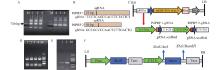
PdHyPRP1、PdHyPRP2基因PCR扩增及载体构建 A: PdHyPRP1、PdHyPRP2基因PCR扩增;1~3:PdHyPRP1;4~6:PdHyPRP2扩增条带;M: DNA Marker DL 2000。B: PdHyPRP1和PdHyPRP2中sgRNA位置关系;C: pHSE401-PdHyPRP1/2载体构建示意图;D: pHSE401-PdHyPRP1/2载体引物U6-1F/R、U6-2F\R 产物;E: pFGC5941-PdHyPRP1/2载体引物Cis-F/R、Anti-F/R PCR产物;F: pFGC5941-PdHyPRP1/2载体构建结构图。A: PCR amplification of PdHyPRP1 and PdHyPRP1, 1–3: PdHyPRP1 and 4–6: PdHyPRP2 amplified bands; M: DNA Marker DL 2000; B: sgRNA position relationship in PdHyPRP1 and PdHyPRP2; C: Schematic diagram of vector construction of pHSE401-PdHyPRP1/2; D: pHSE401-PdHyPRP1/2 vector primers U6-1-F/R and U6-2-F/R PCR products; E: pFGC5941-PdHyPRP1/2 vector primers Cis-F/R and Anti-F/R PCR products; F: Schematic diagram of vector construction of pFGC5941-PdHyPRP1/2."
图8
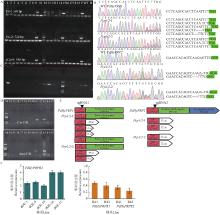
部分基因编辑、过表达、抑制表达植株PCR检测和靶点分析 A: 基因编辑株系PCR检测(WT: 野生型; P: pHSE401-PdPRP1-2质粒; H: dd H2O; M: DNA Marker DL 2000); B: Prp1/2株系中PdHyPRP1和PdHyPRP2序列编辑情况; C: PdHyPRP2过表达植株PCR检测; D: PdHyPRP1/2抑制表达植株PCR检测; E: 基因编辑株系氨基酸序列推导; F:过表达和抑制表达植株qRT-PCR检测。A: PCR identification of gene edited lines (DNA WT: wild type; P: pHSE401-PdPRP1/2 plasmid DNA is used as positive control; H: dd H2O; M: M:DNA Marker DL 2 000); B: Editing of PdHyPRP1 and PdHyPRP2 sequences in Prp1-2 lines; C: PCR identification of PdHyPRP2 overexpressed lines; D: PCR identification of PdHyPRP1/2 silenced lines; E: Deduction of amino acid sequences of the protein-coding regions of gene edited lines; F: qRT-PCR identification of overexpression and silencing lines."
图9
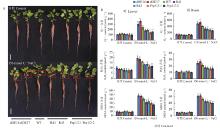
‘渤丰3号’杨基因编辑株系耐盐性测定 A: 盐胁迫下不同株系表型观察, 红色框代表受损伤的部位;比例尺=10 cm; B 盐胁迫下不同株系叶和根中活性氧及MDA含量测定; *、**分别表示Prp1/2-1和Prp1/2-2、R41和R43、dOE16和dOE17株系与WT间差异显著(P<0.05,P<0.01)。A: Growth states of different lines under salt stress, and the red box represents the damaged part; Scale =10 cm; B: O2?, H2O2 and MDA contents in leaves and roots of different lines under salt stress; *, ** indicates significant differences between Prp1/2-1and Prp1/2-2, R41 and R43, dOE16 and dOE17 lines compared with the WT at P<0.05 and P<0.01 level, respectively."
| 范艳玲. 2025. 珙桐PRP基因家族分析及DiPRP14的功能验证. 长沙: 中南林业科技大学. | |
| Fan Y L. 2025. Analysis of the PRP gene family in the dove tree genome and functional validation of a DiPRP14 gene. Changsha: Central South University of Forestry and Technology. [in Chinese] | |
| 韩 青, 陈 瑞, 杨 野, 等. 植物富含脯氨酸蛋白的研究进展. 植物生理学报, 2015, 51 (8): 1179- 1184. | |
| Han Q, Chen R, Yang Y, et al. Progress on plant proline-rich protein. Plant Physiology Communications, 2015, 51 (8): 1179- 1184. | |
|
翟 莹, 雷婷婷, 闫 帆, 等. 大豆逆境诱导基因GmPRP的克隆与表达. 作物学报, 2011, 37 (12): 2152- 2157.
doi: 10.3724/SP.J.1006.2011.02152 |
|
|
Zhai Y, Lei T T, Yan F, et al. Cloning and expression of a stress-induced GmPRP gene in soybean (Glycine max). Acta Agronomica Sinica, 2011, 37 (12): 2152- 2157.
doi: 10.3724/SP.J.1006.2011.02152 |
|
|
钟姗辰, 张伟溪, 张冰玉, 等. ‘渤丰3号’杨叶片高效原生质体提取体系的建立与优化. 林业科学研究, 2025, 38 (2): 116- 126.
doi: 10.12403/j.1001-1498.20240366 |
|
|
Zhong S C, Zhang W X, Zhang B Y, et al. Establishment and optimization of an efficient protoplast extraction system for Populus ‘Bofeng 3 hao’ leaves. Forest Research, 2025, 38 (2): 116- 126.
doi: 10.12403/j.1001-1498.20240366 |
|
|
Banday Z Z, Cecchini N M, Speed D J, et al. Friend or foe: hybrid proline-rich proteins determine how plants respond to beneficial and pathogenic microbes. Plant Physiology, 2022, 190 (1): 860- 881.
doi: 10.1093/plphys/kiac263 |
|
| Bernhardt C, Tierney M L. Expression of AtPRP3, a proline-rich structural cell wall protein from Arabidopsis, is regulated by cell-type-specific developmental pathways involved in root hair formation. Plant Physiology, 2000, 122 (3): 705- 714. | |
| Boron A K, Van Orden J, Markakis M N, et al. Proline-rich protein-like PRPL1 controls elongation of root hairs in Arabidopsis thaliana. Journal of Experimental Botany, 2014, 65 (18): 5485- 5495. | |
|
Debbarma J, Sarki Y N, Saikia B, et al. Ethylene response factor (ERF) family proteins in abiotic stresses and CRISPR-Cas9 genome editing of ERFs for multiple abiotic stress tolerance in crop plants: a review. Molecular Biotechnology, 2019, 61 (2): 153- 172.
doi: 10.1007/s12033-018-0144-x |
|
|
Dvořáková L, Cvrčková F, Fischer L. Analysis of the hybrid proline-rich protein families from seven plant species suggests rapid diversification of their sequences and expression patterns. BMC Genomics, 2007, 8, 412.
doi: 10.1186/1471-2164-8-412 |
|
| Fowler T J, Bernhardt C, Tierney M L. Characterization and expression of four proline-rich cell wall protein genes in Arabidopsis encoding two distinct subsets of multiple domain proteins. Plant Physiology, 1999, 121 (4): 1081- 1092. | |
|
Gothandam K M, Nalini E, Karthikeyan S, et al. OsPRP3, a flower specific proline-rich protein of rice, determines extracellular matrix structure of floral organs and its overexpression confers cold-tolerance. Plant Molecular Biology, 2010, 72 (1/2): 125- 135.
doi: 10.1007/s11103-009-9557-z |
|
| Halder T, Upadhyaya G, Roy S, et al. Glycine rich proline rich protein from Sorghum bicolor serves as an antimicrobial protein implicated in plant defense response. Plant Molecular Biology, 2019, 101 (1/2): 95- 112. | |
|
Huang G Q, Gong S Y, Xu W L, et al. GhHyPRP4, a cotton gene encoding putative hybrid proline-rich protein, is preferentially expressed in leaves and involved in plant response to cold stress. Acta Biochimica et Biophysica Sinica, 2011, 43 (7): 519- 527.
doi: 10.1093/abbs/gmr040 |
|
| Jung H W, Tschaplinski T J, Wang L, et al. Priming in systemic plant immunity. Science, 2009, 324 (5923): 89- 91. | |
|
Kapoor R, Kumar G, Arya P, et al. Genome-wide analysis and expression profiling of rice hybrid proline-rich proteins in response to biotic and abiotic stresses, and hormone treatment. Plants, 2019, 8 (9): 343.
doi: 10.3390/plants8090343 |
|
|
Li D D, Yang J L, Pak S, et al. PuC3H35 confers drought tolerance by enhancing lignin and proanthocyanidin biosynthesis in the roots of Populus ussuriensis. New Phytologist, 2022, 233 (1): 390- 408.
doi: 10.1111/nph.17799 |
|
|
Li J H, Ouyang B, Wang T T, et al. HyPRP1 gene suppressed by multiple stresses plays a negative role in abiotic stress tolerance in tomato. Frontiers in Plant Science, 2016, 7, 967.
doi: 10.3389/fpls.2016.00967 |
|
|
Liu D Q, Han Q, Shah T, et al. A hybrid proline-rich cell-wall protein gene JsPRP1 from Juglans sigillata Dode confers both biotic and abiotic stresses in transgenic tobacco plants. Trees, 2018, 32 (5): 1199- 1209.
doi: 10.1007/s00468-018-1702-3 |
|
|
Liu Z Y, Xie Q J, Tang F F, et al. The ThSOS3 gene improves the salt tolerance of transgenic Tamarix hispida and Arabidopsis thaliana. Frontiers in Plant Science, 2021, 11, 597480.
doi: 10.3389/fpls.2020.597480 |
|
|
Ma Y Y, Wu T L, Zhong G Y, et al. Overexpression of a new proline-rich protein encoding gene CsPRP4 increases starch accumulation in Citrus. Scientia Horticulturae, 2020, 260, 108744.
doi: 10.1016/j.scienta.2019.108744 |
|
|
Mellacheruvu S, Tamirisa S, Vudem D R, et al. Pigeonpea hybrid-proline-rich protein (CcHyPRP) confers biotic and abiotic stress tolerance in transgenic rice. Frontiers in Plant Science, 2016, 6, 1167.
doi: 10.3389/fpls.2015.01167 |
|
|
Nawaz G, Han Y, Usman B, et al. Knockout of OsPRP1, a gene encoding proline-rich protein, confers enhanced cold sensitivity in rice (Oryza sativa L.) at the seedling stage. 3 Biotech, 2019, 9 (7): 254.
doi: 10.1007/s13205-019-1787-4 |
|
|
Peng T, Jia M M, Liu J H. RNAi-based functional elucidation of PtrPRP, a gene encoding a hybrid proline rich protein, in cold tolerance of Poncirus trifoliata. Frontiers in Plant Science, 2015, 6, 808.
doi: 10.3389/fpls.2015.00808 |
|
|
Priyanka B, Sekhar K, Reddy V D, et al. Expression of pigeonpea hybrid-proline-rich protein encoding gene (CcHyPRP) in yeast and Arabidopsis affords multiple abiotic stress tolerance. Plant Biotechnology Journal, 2010, 8 (1): 76- 87.
doi: 10.1111/j.1467-7652.2009.00467.x |
|
|
Rajasheker G, Nagaraju M, Varghese R P, et al. Identification and analysis of proline-rich proteins and hybrid proline-rich proteins super family genes from Sorghum bicolor and their expression patterns to abiotic stress and zinc stimuli. Frontiers in Plant Science, 2022, 13, 952732.
doi: 10.3389/fpls.2022.952732 |
|
|
Saikia B, Debbarma J, Maharana J, et al. SlHyPRP1 and DEA1, the multiple stress responsive eight-cysteine motif family genes of tomato (Solanum lycopersicum L.) are expressed tissue specifically, localize and interact at cytoplasm and plasma membrane in vivo. Physiology and Molecular Biology of Plants, 2020a, 26 (12): 2553- 2568.
doi: 10.1007/s12298-020-00913-z |
|
|
Saikia B, Singh S, Debbarma J, et al. Multigene CRISPR/Cas9 genome editing of hybrid proline rich proteins (HyPRPs) for sustainable multi-stress tolerance in crops: the review of a promising approach. Physiology and Molecular Biology of Plants, 2020b, 26 (5): 857- 869.
doi: 10.1007/s12298-020-00782-6 |
|
|
Tan J L, Zhuo C L, Guo Z F. Nitric oxide mediates cold- and dehydration-induced expression of a novel MfHyPRP that confers tolerance to abiotic stress. Physiologia Plantarum, 2013, 149 (3): 310- 320.
doi: 10.1111/ppl.12032 |
|
|
Tran M T, Doan D T H, Kim J, et al. CRISPR/Cas9-based precise excision of SlHyPRP1 domain(s) to obtain salt stress-tolerant tomato. Plant Cell Reports, 2021, 40 (6): 999- 1011.
doi: 10.1007/s00299-020-02622-z |
|
|
Wang L Q, Wen S S, Wang R, et al. PagWOX11/12a activates PagCYP736A12 gene that facilitates salt tolerance in poplar. Plant Biotechnology Journal, 2021, 19 (11): 2249- 2260.
doi: 10.1111/pbi.13653 |
|
|
Xing H L, Dong L, Wang Z P, et al. A CRISPR/Cas9 toolkit for multiplex genome editing in plants. BMC Plant Biology, 2014, 14 (1): 327.
doi: 10.1186/s12870-014-0327-y |
|
| Xu W L, Zhang D J, Wu Y F, et al. Cotton PRP5 gene encoding a proline-rich protein is involved in fiber development. Plant Molecular Biology, 2013, 82, 353- 365. | |
|
Yang J, Zhang Y, Wang X, et al. HyPRP1 performs a role in negatively regulating cotton resistance to V. dahliae via the thickening of cell walls and ROS accumulation. BMC Plant Biology, 2018, 18 (1): 339.
doi: 10.1186/s12870-018-1565-1 |
|
|
Yeom S I, Seo E, Oh S K, et al. A common plant cell-wall protein HyPRP1 has dual roles as a positive regulator of cell death and a negative regulator of basal defense against pathogens. The Plant Journal, 2012, 69 (5): 755- 768.
doi: 10.1111/j.1365-313X.2011.04828.x |
|
|
Zhang T Q, Zhang W X, Ding C J, et al. A breeding strategy for improving drought and salt tolerance of poplar based on CRISPR/Cas9. Plant Biotechnology Journal, 2023, 21 (11): 2160- 2162.
doi: 10.1111/pbi.14147 |
|
|
Zhou Y Y, Zhang Y, Wang X W, et al. Root-specific NF-Y family transcription factor, PdNF-YB21, positively regulates root growth and drought resistance by abscisic acid-mediated indoylacetic acid transport in Populus. New Phytologist, 2020, 227 (2): 407- 426.
doi: 10.1111/nph.16524 |

| [1] | 周婷婷,王可婧,佃袁勇,樊孝萍,郑志民,丁寄花. 物候工程:重编程光周期通路实现速生林“功能性常绿”的概念验证[J]. 林业科学, 2026, 62(9): 239-244. |
| [2] | 陈珠琳,王雪峰. 基于无人机高光谱与PROSAIL模型的杨树冠层叶绿素含量反演[J]. 林业科学, 2026, 62(8): 106-119. |
| [3] | 王军辉,丁昌俊,王君,李伟,薛良交,罗克明,钮世辉,陈金慧,张伟溪,吴蔼民,张苗苗,赵曦阳,殷恒福. 2025年中国林木遗传育种研究进展[J]. 林业科学, 2026, 62(6): 1-14. |
| [4] | 李思缘,高胜,胡建军,凌杰,陈赢男. Bt转基因杨杂交子代苗期生长性状综合评价与筛选[J]. 林业科学, 2026, 62(6): 154-165. |
| [5] | 李书媛,易刚,樊育彤,崔祺禛,李雨霏,饶国栋. 林木基因组高杂合度对等位基因表达及功能的影响——以银腺杨84K中IQD基因家族为例[J]. 林业科学, 2026, 62(3): 133-145. |
| [6] | 林昕怡,周星鲁,张磊,王丽娟,安新民,胡建军. 转BtCry1Ac基因杨树的生物安全性评价[J]. 林业科学, 2026, 62(2): 134-146. |
| [7] | 郭臣臣,李旗,李思缘,王泽民,陈赢男,韦素云,胡建军. 杨树杂交子代苗期动态生长性状的全基因组选择[J]. 林业科学, 2026, 62(1): 32-41. |
| [8] | 王亚飞,邹瑜,朱叙存,张树森,李少然,王烨,贾黎明. 毛白杨人工林叶片−细根表型及生长节律对间伐的可塑性响应[J]. 林业科学, 2026, 62(1): 95-108. |
| [9] | 王军辉,丁昌俊,李伟,罗克明,王君,张伟溪,钮世辉,张苗苗,赵曦阳,薛良交,殷恒福. 2024年中国林木遗传育种研究进展[J]. 林业科学, 2025, 61(7): 35-51. |
| [10] | 王天欣,牛晋鸿,曹明嵘,刘成功,李金花. 低氮下小黑杨×欧洲黑杨杂交子代苗期性状遗传变异和选择[J]. 林业科学, 2025, 61(2): 142-151. |
| [11] | 张磊,周星鲁,王丽娟,胡建军. 杨树抗虫分子育种与转基因生物安全评价研究进展[J]. 林业科学, 2025, 61(2): 190-203. |
| [12] | 李倩,张帆,孟祥雪,吴小云,庞建壮,许行,张志强. 基于分解重构与机器学习的华北平原杨树人工林净碳交换模拟[J]. 林业科学, 2025, 61(12): 72-82. |
| [13] | 李慧,王清楠,朱成磊,孙化雨,狄小琳,高志民. 3个竹种Rubisco活化酶基因鉴定及其功能[J]. 林业科学, 2025, 61(11): 35-44. |
| [14] | 郭江涛,彭晶晶,马鑫,刘帆,夏永秀. 北方沙地杨树人工林对常规与滴灌施肥的响应[J]. 林业科学, 2025, 61(10): 135-145. |
| [15] | 杨玲玉,石文广,罗志斌. 外生菌根真菌卷边桩菇促进宿主灰杨氮吸收利用特征[J]. 林业科学, 2024, 60(9): 69-79. |
| 阅读次数 | ||||||
|
全文 |
|
|||||
|
摘要 |
|
|||||