|
邓晓星, 朱子旭, 陈长海, 等. 复合材料夹芯结构准静态稳定性性能现状概述. 复合材料学报, 2024, 41 (11): 5701- 5723.
doi: 10.13801/j.cnki.fhclxb.20240325.003
|
|
Deng X X, Zhu Z X, Chen C H, et al. Research status of quasi-static stability performance of composite sandwich structures. Acta Materiae Compositae Sinica, 2024, 41 (11): 5701- 5723.
doi: 10.13801/j.cnki.fhclxb.20240325.003
|
|
郭梓梁, 陈 璇, 陈伯望. 螺栓连接型钢-竹集成材组合梁受弯性能研究. 建筑结构学报, 2025, 46 (2): 50- 58,71.
|
|
Guo Z L, Chen X, Chen B W. Bending performance of bolted steel-bamboo composite beams. Journal of Building Structures, 2025, 46 (2): 50- 58,71.
|
|
郝 秀, 李澍农, 杨春梅, 等. 外力作用下竹材不同尺度的断裂行为及机制. 林业科学, 2023, 59 (11): 118- 123.
|
|
Hao X, Li S N, Yang C M, et al. Crack behavior and mechanism of gradient structure in bamboo under grain splitting and radial compression. Scientia Silvae Sinicae, 2023, 59 (11): 118- 123.
|
|
李海涛, 宣一伟, 许 斌, 等. 竹材在土木工程领域的应用. 林业工程学报, 2020, 5 (6): 1- 10.
doi: 10.13360/j.issn.2096-1359.202003001
|
|
Li H T, Xuan Y W, Xu B, et al. Bamboo application in civil engineering field. Journal of Forestry Engineering, 2020, 5 (6): 1- 10.
doi: 10.13360/j.issn.2096-1359.202003001
|
|
李晓龙, 刘伟庆, 方 海, 等. 格构腹板增强复合材料泡沫夹芯板侧压性能试验与分析. 南京工业大学学报(自然科学版), 2017, 39 (2): 64- 69.
|
|
Li X L, Liu W Q, Fang H, et al. Edgewise compressive test and analysis for lattice web reinforced composite sandwich panels with foam core. Journal of Nanjing University of Technology (Natural Science Edition), 2017, 39 (2): 64- 69.
|
|
欧阳懿桢, 方 海, 刘伟庆, 等. 单向纤维腹板格构增强复合材料夹层板侧压试验研究. 水利与建筑工程学报, 2013, 11 (4): 24- 27.
|
|
Ouyang Y Z, Fang H, Liu W Q, et al. Research on lateral compression test for fiber-reinforced composite sandwich plates with one-way web. Journal of Water Resources and Architectural Engineering, 2013, 11 (4): 24- 27.
|
|
卿 彦. “双碳” 战略目标下木竹基先进功能材料研究进展. 中南林业科技大学学报, 2022, 42 (12): 13- 25.
|
|
Qing Y. Advanced functional materials derived from natural wood and bamboo resources under the double carbon strategy in China. Journal of Central South University of Forestry & Technology, 2022, 42 (12): 13- 25.
|
|
陶 钧, 谢力生, 刘嘉诚, 等. 结构用竹集成材研究进展. 林产工业, 2020, 57 (12): 16- 21.
|
|
Tao J, Xie L S, Liu J C, et al. Research progress of structural laminated bamboo lumber. China Forest Products Industry, 2020, 57 (12): 16- 21.
|
|
王智丰, 李贤军, 易 锦, 等. 大跨胶合木拱桥人致振动及其优化控制. 土木工程学报, 2021, 54 (4): 79- 94.
doi: 10.15951/j.tmgcxb.2021.04.009
|
|
Wang Z F, Li X J, Yi J, et al. Human-induced vibration and optimal control of long-span glulam arch bridges. China Civil Engineering Journal, 2021, 54 (4): 79- 94.
doi: 10.15951/j.tmgcxb.2021.04.009
|
|
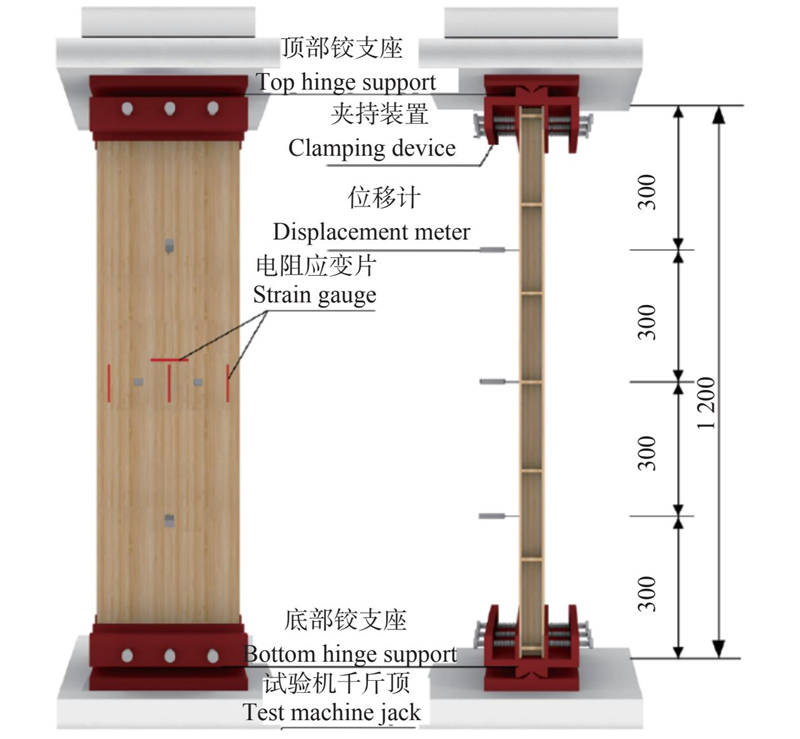
王智丰, 汤舒畅, 彭熙之, 等. 竹集成材格栅夹芯板轴心受压性能. 林业科学, 2025a, 61 (9): 173- 183.
|
|
Wang Z F, Tang S C, Peng X Z, et al. Axial compression performance of laminated bamboo grid sandwich panels. Scientia Silvae Sinicae, 2025a, 61 (9): 173- 183.
|
|
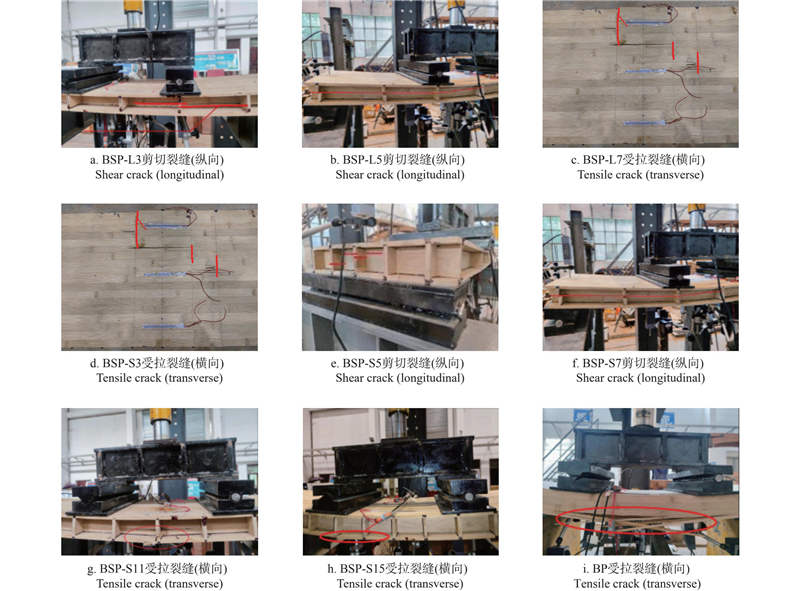
王智丰, 周李承. 不同构型集成竹格栅夹芯板抗弯性能. 北京林业大学学报, 2025b, 47 (1): 147- 155.
doi: 10.12171/j.1000-1522.20240088
|
|
Wang Z F, Zhou L C. Bending performance of laminated bamboo sandwich panels with different lattice configurations. Journal of Beijing Forestry University, 2025b, 47 (1): 147- 155.
doi: 10.12171/j.1000-1522.20240088
|
|
肖 岩, 王 睿, 闻 婕, 等. 正交胶合竹木(CLBT)研究进展. 建筑结构学报, 2022, 43 (11): 126- 139.
|
|
Xiao Y, Wang R, Wen J, et al. Research progress of cross-laminated timber and bamboo(CLBT). Journal of Building Structures, 2022, 43 (11): 126- 139.
|
|
叶翰舟, 傅金和, 程海涛, 等. 以竹代塑加工技术与产品现状及其市场发展潜力. 林业科学, 2024, 60 (1): 129- 141.
doi: 10.11707/j.1001-7488.LYKX20230140
|
|
Ye H Z, Fu J H, Cheng H T, et al. The current status and market development potential of processing technology and products using bamboo as a substitute for plastic. Scientia Silvae Sinicae, 2024, 60 (1): 129- 141.
doi: 10.11707/j.1001-7488.LYKX20230140
|
|
张家亮, 茅 鸣, 俞斌武, 等. 钢-竹组合工字形柱轴压性能试验研究. 建筑结构学报, 2022, 43 (2): 105- 115.
doi: 10.14006/j.jzjgxb.2020.0077
|
|
Zhang J L, Mao M, Yu B W, et al. Experimental study on axial compressive behavior of steel-bamboo I-section composite columns. Journal of Building Structures, 2022, 43 (2): 105- 115.
doi: 10.14006/j.jzjgxb.2020.0077
|
|
祝 典, 方 海, 史慧媛, 等. 格构式腹板增强桐木夹芯复合梁弯曲疲劳性能试验研究. 建筑结构学报, 2018, 39 (S2): 215- 220.
|
|
Zhu D, Fang H, Shi H Y, et al. Experimental study on bending fatigue behavior of wood core sandwich lattice-web composites beams. Journal of Building Structures, 2018, 39 (S2): 215- 220.
|
|
邹 芳, 方 海, 齐玉军, 等. 格构腹板增强轻木夹芯复合材料桥面板的制备与受弯分析. 玻璃钢/复合材料, 2017 (3): 44- 48.
|
|
Zou F, Fang H, Qi Y J, et al. Preparation and flexural analysis of Balsa wood core sandwich composite bridge deck reinforced by lattice webs. Fiber Reinforced Plastics/Composites, 2017 (3): 44- 48.
|
|
Dong W H, Wu Z W, Zhang F, et al. Investigation of the effects of fibre orientation on microstructural damage mechanisms during the milling of laminated bamboo lumber. Biomass and Bioenergy, 2026, 205, 108554.
doi: 10.1016/j.biombioe.2025.108554
|
|
Lurie S A, Solyaev Y O, Volkov-Bogorodskiy D B, et al. Design of the corrugated-core sandwich panel for the Arctic rescue vehicle. Composite Structures, 2017, 160, 1007- 1019.
doi: 10.1016/j.compstruct.2016.10.123
|
|
Peliński K, Smardzewski J. Bending behavior of lightweight wood-based sandwich beams with auxetic cellular core. Polymers, 2020, 12 (8): 1723.
doi: 10.3390/polym12081723
|
|
Wang Z F, Zhou L C, Zhang Z F, et al. Study on bending performance of laminated bamboo sandwich panels with different lattice core layers: Cleaner production of green material. Case Studies in Construction Materials, 2024, 20, e03379.
doi: 10.1016/j.cscm.2024.e03379
|
|
Wang Z, Yang X L, Lai W G, et al. A VAM-based equivalent model for triangular honeycomb sandwich panels: comparison with numerical and experimental data. Materials, 2022, 15 (14): 4766.
doi: 10.3390/ma15144766
|
|
Zheng M H, Zhao J C, Guan S Y, et al. Research on the quasistatic mechanical properties and failure mechanism of laminated bamboo under combined bending-torsion. Construction and Building Materials, 2026, 506, 144840.
doi: 10.1016/j.conbuildmat.2025.144840
|

 )