
Scientia Silvae Sinicae ›› 2026, Vol. 62 ›› Issue (10): 30-41.doi: 10.11707/j.1001-7488.LYKX20260347
• Research papers • Previous Articles Next Articles
Jianwen Hu1,2,3,Mengmeng Gou1,4,*( ),Changfu Liu1,4,Lixiong Zeng1,4,Lei Lei1,4,Jiajia Zhang1,4,Wenfa Xiao1,4
Received:2026-06-05
Online:2026-10-10
Published:2026-10-16
Contact:
Mengmeng Gou
E-mail:goumm0243@163.com
CLC Number:
Jianwen Hu,Mengmeng Gou,Changfu Liu,Lixiong Zeng,Lei Lei,Jiajia Zhang,Wenfa Xiao. Mineral-Associated Organic Carbon Sequestration Potential of Pinus massoniana Plantations with Different Age Groups in the Hilly Region of Central Hubei[J]. Scientia Silvae Sinicae, 2026, 62(10): 30-41.
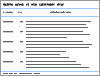
Table 1
Information of P. massoniana plantations with different ages"
| 项目Item | 幼龄林 Young plantation | 中龄林 Middle-aged plantation | 近熟林 Near-mature plantation | 成熟林 Mature plantation |
| 相对位置Relative location | 30°53′16″N, 112°55′42″E | 30°54′40"N, 112°53′39″E | 30°57′20″N 112°53′46″E | 30°59′19″N, 112°56′4″E |
| 海拔 Altitude/m | 98.60±8.70 | 113.10±15.60 | 97.40±4.40 | 161.50±3.60 |
| 坡度 Slope/(°) | 5 | 7 | 5 | 5 |
| 林木平均胸径 Mean diameter at breast height of trees/cm | 7.20±0.10 C | 10.76±0.29 C | 23.63±1.19 B | 30.08±1.51 A |
| 平均树高 Mean tree height/m | 6.7±0.1 C | 8.2±0.1 C | 12.2±0.4 B | 15.4±0.2 A |
| 林分密度 Stand density/(tree·hm?2) | 3 375±535 A | 2 917±131 A | 625±80 B | 525±88 B |
| 土壤密度 Soil density/(g·cm?3) | 1.26±0.07 A | 1.31±0.02 A | 1.36±0.03 A | 1.19±0.06 A |
| 黏粒含量 Clay content (< 2 μm) (%) | 22.90±3.13 AB | 21.72±0.27 AB | 21.53±1.45 B | 29.12±0.84 A |
| 粉粒含量 Silt content (2–20 μm) (%) | 66.17±2.12 A | 65.44±1.01 AB | 67.23±1.69 A | 58.94±1.25 B |
| 砂粒 含量Sand content (> 20 μm) (%) | 10.92±1.10 A | 12.84±1.27 A | 11.25±0.41 A | 11.94±0.73 A |
| 矿物颗粒含量Mineral grain content (< 53 μm) (%) | 99.15±0.10 A | 98.85±0.16 AB | 98.93±0.10 AB | 98.57±0.03 B |
| 比表面积Specific surface area/(m2·g?1) | 80.92±4.40 A | 71.69±4.12 AB | 70.54±5.32 AB | 54.48±3.01 B |
| pH | 6.22±0.03 A | 5.37±0.04 B | 5.44±0.23 B | 4.79±0.04 C |
| 土壤有机碳含量 Soil organic carbon content/(g·kg?1) | 15.35±0.37 BC | 13.22±0.83 C | 18.28±1.05 ABC | 21.9±1.07A |
| 土壤全氮含量 Soil total nitrogen content/(g·kg?1) | 1.62±0.05 B | 1.34±0.07 B | 1.64±0.09 B | 2.06±0.07 A |
| 土壤全磷含量 Soil total phosphorus content/(mg·kg?1) | 227.21±60.84 A | 326.47±8.74 A | 278.13±31.97 A | 292.63±8.19 A |
| 游离态铁氧化物含量Free iron oxide content/(g·kg?1) | 0.74±0.05 C | 1.15±0.07 B | 1.02±0.09 BC | 1.54±0.06 A |
| 游离态铝氧化物含量 Free aluminum oxide content/(g·kg?1) | 2.62±0.36 B | 3.17±0.38 B | 3.63±0.45 AB | 4.98±0.14 A |
| 非晶形铁氧化物含量 Amorphous iron oxide content/(g·kg?1) | 3.51±0.26 AB | 3.77±0.13 A | 3.06±0.03 AB | 2.88±0.12 B |
| 非晶形铝氧化物含量 Amorphous aluminum oxide content/(g·kg?1) | 11.89±0.30 A | 10.48±0.14 AB | 9.55±0.45 B | 9.24±0.57 B |

Fig.1
Key processes of the incubation experiment for assessing mineral-associated organic carbon sequestration potential (A–D) and comparison among treatments of different age groups after six incubation cycles (E) in P. massoniana plantation"

Table 2
Effective saturation value and sequestration potential of mineral-associated organic carbon in P. massoniana plantation"
| 龄组 Age group | 处理 Treatment | MAOC0/ (g·kg?1) | MAOC5/ (g·kg?1) | MAOC6/ (g·kg?1) | 有效饱和值 Effective saturation value/(g·kg?1) | 饱和差 Saturation deficit/ (g·kg?1) | 固存潜力 Sequestration potential (%) |
| 幼龄林 Young plantation | 对照 Control | 14.14±0.30 BCa | 13.87±0.94 Ba | 14.07±0.52 Ba | — | — | — |
| 处理 Treatment | 14.14±0.30 BCc | 24.91±0.29 Aa | 22.71±0.59 ABb | 23.81±0.31 A | 9.67±0.59 A | 40.58±1.98 A | |
| 中龄林 Middle aged plantation | 对照 Control | 11.82±0.69 Ca | 11.84±0.11 Ba | 11.76±0.25 Ca | — | — | — |
| 处理 Treatment | 11.82±0.69 Cb | 18.97±0.81 Aa | 19.62±0.69 Ba | 19.29±0.55 B | 7.47±0.85 AB | 38.67±3.79 A | |
| 近熟林 Near-mature plantation | 对照 Control | 14.89±0.86 Ba | 13.22±0.91 Ba | 11.79±0.53 Ca | — | — | — |
| 处理 Treatment | 14.89±0.86 Bb | 22.02±0.73 Aa | 21.95±1.15 ABa | 21.98±0.24 AB | 7.09±0.68 AB | 32.32±3.36 A | |
| 成熟林 Mature plantation | 对照 Control | 22.29±0.38 Aa | 21.93±1.53 Aa | 22.79±0.16 Aa | — | — | — |
| 处理 Treatment | 22.29±0.38 Aa | 24.80±2.45 Aa | 26.03±1.76 Aa | 25.41±1.71 A | 3.12±2.09 B | 11.34±6.98 B |

Fig.2
Variations of soil chemical properties under effective saturation of mineral-associated organic carbon in P. massoniana plantation"

Table 3
Soil physicochemical properties in P. massoniana plantation when mineral-associated organic carbon reaches effective saturation value"
| 指标Indicator | 幼龄林 Young plantation | 中龄林 Middle aged plantation | 近熟林 Near-mature plantation | 成熟林 Mature plantation |
| 土壤含水量 Soil water content (%) | 7.03±0.61 b | 8.80±0.82 b | 13.66±1.61 a | 10.1±0.14 ab |
| 土壤密度Soil density/(g·cm?3) | 0.99±0.01 a | 1.00±0.03 a | 1.01±0.03 a | 1.00±0.01 a |
| 矿物结合氮含量 Mineral-associated nitrogen content/(mg·g?1) | 2.86±0.05 a | 2.29±0.04 b | 2.56±0.05 ab | 2.71±0.16 a |
| 矿物结合磷含量 Mineral-associated phosphorus content/(mg·g?1) | 0.73±0.02 a | 0.69±0.02 ab | 0.60±0.02 b | 0.60±0.04 b |
| 矿物结合硫含量 Mineral-associated sulfur content/(mg·g?1) | 0.08±0.01 b | 0.06±0.01 b | 0.09±0.01 b | 0.15±0.02 a |
| 矿物结合组分碳氮比 Carbon-to-nitrogen ratio of the mineral-associated fraction | 8.32±0.09 b | 8.43±0.11 b | 8.61±0.23 b | 9.38±0.11 a |
| 矿物结合组分碳磷比 Carbon-to-phosphorus ratio of the mineral-associated fraction | 33.08±0.62 bc | 28.14±1.19 c | 36.69±1.39 b | 43.15±1.97 a |
| 矿物结合组分碳硫比Carbon-to-sulfur ratio of the mineral-associated fraction | 314.12±39.78 ab | 373.88±59.84 a | 269.31±20.60 ab | 182.05±30.02 b |

Fig.3
Correlations between the mineral-associated organic carbon saturation value and post-saturation soil physicochemical properties (a), and correlations between mineral-associated organic carbon sequestration potential and initial soil physicochemical properties (b) in P. massoniana plantations"

Table 4
Driving factors of mineral-associated organic carbon effective saturation value and its sequestration potential in P. massoniana plantation"
| 逐步回归方程 Stepwise regression equation | 决定系数 Determination coefficient | 显著性 Significance |
| MAOCsat = 0.345 6C∶P+ | R2=0.55 | P<0.01 |
| CSP=0.942SSA?34.683 | R2=0.62 | P<0.05 |
|
葛晓改, 周本智, 肖文发. 马尾松人工林凋落物产量、养分含量及养分归还量特性. 长江流域资源与环境, 2014, 23 (7): 996- 1003.
doi: 10.11870/cjlyzyyhj201407009 |
|
|
Ge X G, Zhou B Z, Xiao W F. Study on litterfall, nutrient content and nutrient return of Pinus massoniana plantation. Resources and Environment in the Yangtze Basin, 2014, 23 (7): 996- 1003.
doi: 10.11870/cjlyzyyhj201407009 |
|
| 何 斌, 李 青, 冯 图, 等. 黔西北不同林龄马尾松人工林针叶–凋落物–土壤C、N、P化学计量特征. 生态环境学报, 2019, 28 (11): 2149- 2157. | |
| He B, Li Q, Feng T, et al. Stoichiometry characteristics of C, N, and P in needle leaves, litter, and soil during stand development in a Pinus massoniana plantation in northwest Guizhou Province. Ecology and Environmental Sciences, 2019, 28 (11): 2149- 2157. | |
| 胡建文. 2024. 鄂中丘陵区马尾松人工林林龄序列中土壤有机碳固存机制与潜力. 北京: 中国林业科学研究院. | |
| Hu J W. 2024. Mechanism and potential of soil organic carbon sequestration along a chronosequence of Pinus massoniana plantations in hilly area of central Hubei. Beijing: Chinese Academy of Forestry. [in Chinese] | |
|
黄腾华, 王军锋, 宋恋环, 等. 马尾松木材性质特点及改性研究现状. 世界林业研究, 2023, 36 (6): 45- 50.
doi: 10.13348/j.cnki.sjlyyj.2023.0071.y |
|
|
Huang T H, Wang J F, Song L H, et al. Current research on properties and modification of Masson pine wood. World Forestry Research, 2023, 36 (6): 45- 50.
doi: 10.13348/j.cnki.sjlyyj.2023.0071.y |
|
| 鲁如坤. 2000. 土壤农业化学分析方法. 北京: 中国农业科学技术出版社. | |
| Lu R K. 2000. Analytical methods for soil agrochemistry. Beijing: China Agricultural Science and Technology Press. [in Chinese] | |
| 马 恺, 张秀芬, 王卫东, 等. 太子山国有林场功能定位及发展对策研究. 林业经济问题, 2014, 34 (6): 548- 552. | |
| Ma K, Zhang X F, Wang W D, et al. Research on development strategies and the role of state-owned forest plantation: a case study of Taizi Mountain state-owned forest plantation in Hubei Province. Problems of Forestry Economics, 2014, 34 (6): 548- 552. | |
| 荣 慧, 房 焕, 蒋瑀霁, 等. 松散土样和填装土柱及紧实程度对土壤有机碳矿化的影响. 土壤学报, 2022, 59 (6): 1551- 1560. | |
| Rong H, Fang H, Jiang Y J, et al. Effects of loose soil samples, repacked soil columns and compactness on soil organic carbon mineralization. Acta Pedologica Sinica, 2022, 59 (6): 1551- 1560. | |
|
王万才, 闫文德, 李忠文, 等. 氮添加对马尾松人工林凋落物分解的影响. 中南林业科技大学学报, 2019, 39 (12): 55- 61, 69.
doi: 10.14067/j.cnki.1673-923x.2019.12.008 |
|
|
Wang W C, Yan W D, Li Z W, et al. Effects of nitrogen addition on litter decomposition in Pinus massoniana plantation forest. Journal of Central South University of Forestry & Technology, 2019, 39 (12): 55- 61, 69.
doi: 10.14067/j.cnki.1673-923x.2019.12.008 |
|
|
王晓荣, 雷 蕾, 付 甜, 等. 抚育择伐对马尾松林凋落叶分解速率和养分释放的短期影响. 林业科学, 2020, 56 (4): 12- 21.
doi: 10.11707/j.1001-7488.20200402 |
|
|
Wang X R, Lei L, Fu T, et al. Short-term effects of selective cutting for tending on leaf litter decomposition rate and nutrient release in Pinus massoniana forests. Scientia Silvae Sinicae, 2020, 56 (4): 12- 21.
doi: 10.11707/j.1001-7488.20200402 |
|
|
张明锦, 陈良华, 张 健, 等. 马尾松人工林林窗内凋落叶微生物生物量碳和氮的动态变化. 应用生态学报, 2016, 27 (3): 672- 680.
doi: 10.13287/j.1001-9332.201603.037 |
|
|
Zhang M J, Chen L H, Zhang J, et al. Dynamics of microbial biomass carbon and nitrogen during foliar litter decomposition under artificial forest gap in Pinus massoniana plantation. Chinese Journal of Applied Ecology, 2016, 27 (3): 672- 680.
doi: 10.13287/j.1001-9332.201603.037 |
|
|
Castellano M J, Mueller K E, Olk D C, et al. Integrating plant litter quality, soil organic matter stabilization, and the carbon saturation concept. Global Change Biology, 2015, 21 (9): 3200- 3209.
doi: 10.1111/gcb.12982 |
|
|
Chen L C, Liang M J, Wang S L. Carbon stock density in planted versus natural Pinus massoniana forests in sub-tropical China. Annals of Forest Science, 2016, 73 (2): 461- 472.
doi: 10.1007/s13595-016-0539-4 |
|
|
Coonan E C, Kirkby C A, Kirkegaard J A, et al. Microorganisms and nutrient stoichiometry as mediators of soil organic matter dynamics. Nutrient Cycling in Agroecosystems, 2020, 117 (3): 273- 298.
doi: 10.1007/s10705-020-10076-8 |
|
|
Fang Y Y, Singh B P, Cowie A, et al. Balancing nutrient stoichiometry facilitates the fate of wheat residue-carbon in physically defined soil organic matter fractions. Geoderma, 2019, 354, 113883.
doi: 10.1016/j.geoderma.2019.113883 |
|
|
Feng W T, Plante A F, Six J. Improving estimates of maximal organic carbon stabilization by fine soil particles. Biogeochemistry, 2013, 112 (1): 81- 93.
doi: 10.1007/s10533-011-9679-7 |
|
|
Feng W T, Xu M, Fan M, et al. Testing for soil carbon saturation behavior in agricultural soils receiving long-term manure amendments. Canadian Journal of Soil Science, 2014, 94 (3): 281- 294.
doi: 10.4141/cjss2013-012 |
|
|
Georgiou K, Angers D, Champiny R E, et al. Soil carbon saturation: what do we really know?. Global Change Biology, 2025, 31 (5): e70197.
doi: 10.1111/gcb.70197 |
|
|
Guo X W, Mao X L, Yu W, et al. A field incubation approach to evaluate the depth dependence of soil biogeochemical responses to climate change. Global Change Biology, 2023, 29 (3): 909- 920.
doi: 10.1111/gcb.16505 |
|
|
Hassink J, Whitmore A P. A model of the physical protection of organic matter in soils. Soil Science Society of America Journal, 1997, 61 (1): 131- 139.
doi: 10.2136/sssaj1997.03615995006100010020x |
|
|
He W, Keyhani A B, Ma Z Y, et al. Leaf litter lignin degradation in response to understory vegetation removal in a masson pine plantation. Land Degradation & Development, 2021, 32 (4): 1632- 1642.
doi: 10.1002/ldr.3766 |
|
| Heckman K A, Possinger A R, Badgley B D, et al. 2023. Moisture-driven divergence in mineral-associated soil carbon persistence. Proceedings of the National Academy of Sciences of the United States of America, 120(7): e2210044120. | |
|
Hicks Pries C E, Castanha C, Porras R C, et al. The whole-soil carbon flux in response to warming. Science, 2017, 355 (6332): 1420- 1423.
doi: 10.1126/science.aal1319 |
|
|
Hu J W, Liu C F, Gou M M, et al. Contrasting change patterns of lignin and microbial necromass carbon and the determinants in a chronosequence of subtropical Pinus massoniana plantations. Applied Soil Ecology, 2024, 198, 105385.
doi: 10.1016/j.apsoil.2024.105385 |
|
|
Hu M Y, Dai X Q, Kuzyakov Y, et al. Iron oxides, enzymes, and nutrients control soil organic matter stability in subtropical forest ecosystems. Geoderma, 2026, 467, 117731.
doi: 10.1016/j.geoderma.2026.117731 |
|
|
Huang L X, Pan X M, Ma J M, et al. Assembly of understory woody communities during the close-to-nature restoration of a Pinus massoniana Lamb. plantation in the southern subtropical region of China: from environmental filtering to competitive exclusion. Forest Ecology and Management, 2023, 541, 121060.
doi: 10.1016/j.foreco.2023.121060 |
|
|
Jia J, Zhai G Q, Jia Y F, et al. Fast decomposition of nitrogen-rich mineral-associated organic matter in soils. Global Change Biology, 2025, 31 (8): e70448.
doi: 10.1111/gcb.70448 |
|
|
Khan K S, Mack R, Castillo X, et al. Microbial biomass, fungal and bacterial residues, and their relationships to the soil organic matter C/N/P/S ratios. Geoderma, 2016, 271, 115- 123.
doi: 10.1016/j.geoderma.2016.02.019 |
|
|
Kirkby C A, Kirkegaard J A, Richardson A E, et al. Stable soil organic matter: a comparison of C∶N∶P∶S ratios in Australian and other world soils. Geoderma, 2011, 163 (3/4): 197- 208.
doi: 10.1016/j.geoderma.2011.04.010 |
|
|
Kirkby C A, Richardson A E, Wade L J, et al. Carbon-nutrient stoichiometry to increase soil carbon sequestration. Soil Biology and Biochemistry, 2013, 60, 77- 86.
doi: 10.1016/j.soilbio.2013.01.011 |
|
|
Kirkby C A, Richardson A E, Wade L J, et al. Nutrient availability limits carbon sequestration in arable soils. Soil Biology and Biochemistry, 2014, 68, 402- 409.
doi: 10.1016/j.soilbio.2013.09.032 |
|
|
Liao C, Men X X, Wang C, et al. Nitrogen availability and mineral particles contributed fungal necromass to the newly formed stable carbon pool in the alpine areas of southwest China. Soil Biology and Biochemistry, 2022, 173, 108788.
doi: 10.1016/j.soilbio.2022.108788 |
|
|
Lieberman H P, von Sperber C, Kallenbach C M. Soil phosphorus dynamics are an overlooked but dominant control on mineral-associated organic matter. Global Change Biology, 2025, 31 (7): e70307.
doi: 10.1111/gcb.70307 |
|
|
Liu Y D, Huang Y N, Ndzelu B S, et al. Carbon saturation level regulates the stability of mineral-associated organic carbon in forest soils. Catena, 2025, 259, 109391.
doi: 10.1016/j.catena.2025.109391 |
|
|
Ma X M, Wang C, Wang X, et al. MAOC capacity and microbial drivers refine soil carbon management in forest plantations. Forest Ecology and Management, 2026, 606, 123534.
doi: 10.1016/j.foreco.2026.123534 |
|
|
Mayer M, Leifeld J, Szidat S, et al. Dynamic stability of mineral-associated organic matter: enhanced stability and turnover through organic fertilization in a temperate agricultural topsoil. Soil Biology and Biochemistry, 2023, 184, 109095.
doi: 10.1016/j.soilbio.2023.109095 |
|
|
Mikutta R, Turner S, Schippers A, et al. Microbial and abiotic controls on mineral-associated organic matter in soil profiles along an ecosystem gradient. Scientific Reports, 2019, 9, 10294.
doi: 10.1038/s41598-019-46501-4 |
|
|
Mou Z J, Kuang L H, Zhang J, et al. Nutrient availability and stoichiometry mediate microbial effects on soil carbon sequestration in tropical forests. Soil Biology and Biochemistry, 2023, 186, 109186.
doi: 10.1016/j.soilbio.2023.109186 |
|
|
Orgill S E, Condon J R, Kirkby C A, et al. Soil with high organic carbon concentration continues to sequester carbon with increasing carbon inputs. Geoderma, 2017, 285, 151- 163.
doi: 10.1016/j.geoderma.2016.09.033 |
|
| Osman K T. 2013. Forest soils: properties and management. Cham: Springer. | |
|
Parfitt R L, Whitton J S, Theng B K G. Surface reactivity of a horizons towards polar compounds estimated from water adsorption and water content. Australian Journal of Soil Research, 2001, 39 (5): 1105- 1110.
doi: 10.1071/sr00059 |
|
|
Six J, Conant R T, Paul E A, et al. Stabilization mechanisms of soil organic matter: implications for C-saturation of soils. Plant and Soil, 2002, 241 (2): 155- 176.
doi: 10.1023/A:1016125726789 |
|
|
Sokol N W, Bradford M A. Microbial formation of stable soil carbon is more efficient from belowground than aboveground input. Nature Geoscience, 2019, 12 (1): 46- 53.
doi: 10.1038/s41561-018-0258-6 |
|
|
Sokol N W, Slessarev E, Marschmann G L, et al. Life and death in the soil microbiome: how ecological processes influence biogeochemistry. Nature Reviews Microbiology, 2022, 20 (7): 415- 430.
doi: 10.1038/s41579-022-00695-z |
|
|
Stewart C E, Paustian K, Conant R T, et al. Soil carbon saturation: concept, evidence and evaluation. Biogeochemistry, 2007, 86 (1): 19- 31.
doi: 10.1007/s10533-007-9140-0 |
|
|
Stewart C E, Plante A F, Paustian K, et al. Soil carbon saturation: Linking concept and measurable carbon pools. Soil Science Society of America Journal, 2008, 72 (2): 379- 392.
doi: 10.2136/sssaj2007.0104 |
|
|
Wang X H, Fan A L, Dijkstra F A, et al. Declines in rhizosphere priming and decomposition of mineral-associated organic matter during plantation development. Soil Biology and Biochemistry, 2026, 219, 110175.
doi: 10.1016/j.soilbio.2026.110175 |
|
|
Yang X, Ma D H, Yang T, et al. Dual mechanisms of mineral-microbial interactions in suppressing organic carbon sequestration in calcareous soils. Journal of Environmental Management, 2026, 400, 128692.
doi: 10.1016/j.jenvman.2026.128692 |
|
|
Yu Z, You W B, Agathokleous E, et al. Forest management required for consistent carbon sink in China’s forest plantations. Forest Ecosystems, 2021, 8 (1): 54.
doi: 10.1186/s40663-021-00335-7 |
|
|
Zhao Z Y, Dong P, Fu B, et al. Soil organic carbon distribution and factors affecting carbon accumulation in natural and plantation forests in tropical China. Ecological Indicators, 2023, 148, 110127.
doi: 10.1016/j.ecolind.2023.110127 |
| [1] | Yuxuan Chen,Jiajun Liu,Shan Li,Xiaotong Liu. Changes in Soil Carbon Fractions during Moso Bamboo Expansion and Their Effects on Organic Carbon Accumulation [J]. Scientia Silvae Sinicae, 2026, 62(8): 86-96. |
| [2] | Lingbo Dong,Xuesong Mei,Zhaogang Liu. Estimaton Method on Forest Carbon Sequestration Based on Forest Resources Survey Data at Management Unit Scale [J]. Scientia Silvae Sinicae, 2026, 62(7): 61-73. |
| [3] | Haifeng Yin,Size Liu,Jie Zeng,Yu Su,Anwei Yu,Xianwei Li. Mutual Feedback between Root Decomposition of Pinus massoniana and Soil Nematode Trophic Groups under Forest Gap Transformation [J]. Scientia Silvae Sinicae, 2026, 62(2): 85-96. |
| [4] | Jianwen Hu,Changfu Liu,Mengmeng Gou,Lei Lei,Huiling Chen,Jiajia Zhang,Sufeng Zhu,Ruyuan Hu,Wenfa Xiao. Response and Driving Factors of Soil Organic Carbon and Its Fractions to Stand Age in Pinus massoniana Plantation [J]. Scientia Silvae Sinicae, 2025, 61(6): 75-84. |
| [5] | Xiao He,Guangcheng Luo,Wenqiang Gao,Haikui Li,Weisheng Zeng,Fujun Duan,Xiangdong Lei. Carbon Sequestration Potentiality of Pinus tabuliformis Pure Forest in Zhongtiaoshan Forestry Bureau of Shanxi Province [J]. Scientia Silvae Sinicae, 2025, 61(5): 74-84. |
| [6] | Sufeng Zhu,Mengmeng Gou,Haiping Zhao,Changfu Liu,Zunji Jian,Jianhua Zhu,Wenfa Xiao. Simulated Carbon Dynamics of Pinus massoniana Plantation Ecosystems under Different Harvesting Scenarios Using the CBM-CFS3 Model [J]. Scientia Silvae Sinicae, 2025, 61(12): 24-33. |
| [7] | Shirong Liu,Hui Wang,Haikui Li,Zhen Yu,Junwei Luan. Projections of China’s Forest Carbon Storage and Sequestration and Ways of Their Potential Capacity Enhancement [J]. Scientia Silvae Sinicae, 2024, 60(4): 157-172. |
| [8] | Yunxing Bai,Yunchao Zhou,Xunyuan Zhang,Jiaojiao Du. Water Conservation Capacity of Litter and Soil in Mixed Plantation of Pinus massoniana and Broadleaved Trees [J]. Scientia Silvae Sinicae, 2021, 57(11): 24-36. |
| [9] | Kai Sun,Jiasen Wu,Weixing Sheng,Peikun Jiang,Yunqing Zhang,Jiangfei Ge. Potential of Phytolith-Occluded Organic Carbon Sequestration in Masson Pine Stands at Different Ages in Subtropical China [J]. Scientia Silvae Sinicae, 2020, 56(12): 10-18. |
| [10] | Fei Ling, Zhong Quanlin, Cheng Dongliang, Xu Chaobin, Zhang Zhongrui, Zhang Leilei, Li Jing, Wu Yonghong. Biomass Allocation Between Aboveground-and Underground of shrub Layer Vegetation in Natural Evergreen Broad-Leaved Forest and Chinese Fir Plantation [J]. Scientia Silvae Sinicae, 2016, 52(3): 97-104. |
| [11] | Shi Yapan, Qiao Lu, Chen Lixin, Duan Wenbiao, Zhang Xue, Xu Fei, Liu Xiaorui. Spatiotemporal Heterogeneity of Soil Particulate and Mineral-Associated Organic Carbon of Forest Gaps in Pinus koraiensis Coniferous and Broad-Leaved Mixed Forest [J]. Scientia Silvae Sinicae, 2014, 50(6): 18-27. |
| [12] | Li Bin;Fang Xi;Xiang Wenhua;Tian Dalun;. Carbon Storage, Carbon Density, and Carbon Sequestration Potential of Cunninghamia lanceolata plantations in Hunan Province [J]. Scientia Silvae Sinicae, 2013, 49(3): 25-32. |
| [13] | Liu Enbin;Shi Yongjun;Li Yongfu;Zhou Guomo. Carbon Sequestration Potential of Moso Bamboo Forest in Zhejiang Province Based on the Non-Spatial Structure [J]. Scientia Silvae Sinicae, 2012, 48(11): 9-14. |
| [14] | Li Shaochen;Gao Fuling;Jiang Tingbo. Analysis of Genetic Linkage Groups on Birch Using RAPD Markers [J]. Scientia Silvae Sinicae, 2008, 44(5): 155-159. |
| Viewed | ||||||
|
Full text |
|
|||||
|
Abstract |
|
|||||
