
Scientia Silvae Sinicae ›› 2026, Vol. 62 ›› Issue (9): 165-176.doi: 10.11707/j.1001-7488.LYKX20260008
• Research papers • Previous Articles
Ruijing Xu1,Yi Wang1,Chuanteng Huang2,Chunju Cai1,Shaohui Fan3,Guanglu Liu3,*( )
Received:2026-01-06
Revised:2026-07-05
Online:2026-09-10
Published:2026-09-16
Contact:
Guanglu Liu
E-mail:liuguanglu@icbr.ac.cn
CLC Number:
Ruijing Xu,Yi Wang,Chuanteng Huang,Chunju Cai,Shaohui Fan,Guanglu Liu. Effects of Drought Durations on the Functional Traits of Daemonorops jenkinsiana Seedlings[J]. Scientia Silvae Sinicae, 2026, 62(9): 165-176.
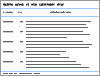
Table 1
Description of functional trait"
| 指标分类 Classification | 指标类型 Type of indicator | 指标描述 Description | 缩写 Abbreviation | 单位 Unit | 生理生态解释 Physio-ecological implications |
| 光合生理性状Physiological traits | 气体交换 Gas exchange | 净光合速率 Net photosynthetic rate | Pn | μmol·m?2 s?1 | 光合作用效率Photosynthetic efficiency |
| 气孔导度Stomatal conductance | Gs | mol·m?2 s?1 | 平衡碳同化与水分消耗Balancing carbon assimilation and water consumption | ||
| 胞间二氧化碳浓度Intercellular carbon dioxide concentration | Ci | μmol·mol?1 | 判断光合限制Identifying limitations to photosynthesis | ||
| 蒸腾速率Transpiration rate | Tr | mol·m?2 s?1 | 水分消耗强度Intensity of water consumption | ||
| 水分利用效率Water use efficiency | WUE | μmol·mol?1 | 水资源利用Water resource utilization | ||
| 叶绿素荧光 Chlorophyll fluorescence | 最小初始荧光 Original fluorescence yield | Fo | 光系统损伤标志Reaction center inactivation as an indicator of photosystem damage | ||
| 暗适应下最大荧光Maximal fluorescence yield | Fm | 反应中心失活程度Extent of reaction center inactivation | |||
| 暗适应下PSⅡ反应中心的最大光化学效率Maximal quantum efficiency of PSⅡ | Fv /Fm | 光抑制或光合机构受损程度Extent of photoinhibition or photosynthetic apparatus damage | |||
| 光适应下PSⅡ反应中心激发能捕获效率Excitation capture efficiency | Fv'/Fm' | 光能捕获能力Light-harvesting capacity | |||
| 作用光存在时PSⅡ实际的光化学量子效率Excitation capture efficiency | PSⅡ | 碳同化速率Carbon assimilation rate | |||
| 电子传递速率Electron transport rate | ETR | μmol·m?2 s?1 | 电子传递效率Electron transport efficiency | ||
| 非光化学淬灭系数Non-photochemical quenching | NPQ | 光保护Photoprotective capacity | |||
| 光化学淬灭系数Photochemical quenching | qP | 光化学活性Photochemical activity | |||
| 生化性状Biochemical traits | 叶片抗性生理物质Leaf resistance-related physiological substances | 超氧化物歧化酶Superoxide Dismutase | SOD | u·g?1 | 抗氧化防御Antioxidant defense |
| 脯氨酸Proline | Pro | u·g?1 | 活性氧清除Reactive oxygen species (ROS) scavenging | ||
| 丙二醛含量Malondialdehyde content | MDA | μmol·g?1 | 细胞膜损伤程度Degree of cell membrane damage | ||
| 非结构碳水化合物Non-structural carbohydrates | 叶可溶性总糖 Leaf total soluble sugars | LTSS | % | 碳代谢和渗透调节Carbon metabolic and osmotic adjustment | |
| 叶淀粉Leaf starch | LSTC | % | 渗透调节Osmotic adjustment | ||
| 叶非结构碳水化合物Leaf non-structural carbohydrates | LNSC | % | 应对胁迫和恢复能力Stress response and recovery capacity | ||
| 根可溶性总糖 Root total soluble sugars | RTSS | % | 碳代谢活性和渗透调节Carbon metabolic activity and osmotic adjustment | ||
| 根淀粉Root starch | RSTC | % | 渗透调节能力 Osmotic adjustment capacity | ||
| 根非结构碳水化合物Root non-structural carbohydrates | RNSC | % | 渗透调节能力 Osmotic adjustment capacity | ||
| 器官形态与 解剖性状 Organ morphology and anatomy traits | 叶片形态Leaf morphological | 单叶叶面积Leaf area | LA | cm2 | 光捕获能力Light-harvesting capacity |
| 比叶面积Specific leaf area | SLA | cm2·g ?1 | 构建成本与资源获取construction cost and resource acquisition | ||
| 干物质含量Leaf dry-matter content | LDMC | g·kg?1 | 抗逆与防御Stress tolerance and defense | ||
| 叶组织密度Leaf tissue density | LTD | g·cm?3 | 叶片韧性和抗逆性Leaf toughness and stress resistance | ||
| 叶片厚度Leaf thickness | LT | μm | 叶片抗性与光照适应性Leaf resistance and light acclimation | ||
| 叶片解剖Leaf anatomical | 上角质层厚度 Upper stratum corneum thickness | USCT | μm | 叶片抗性与光照适应性Leaf resistance and light acclimation | |
| 下角质层厚度 Lower stratum corneum thickness | LSCT | μm | 叶片抗性与光照适应性Leaf resistance and light acclimation | ||
| 上表皮厚度Upper epidermal thickness | UET | μm | 机械强度与水分保持Mechanical strength and water retention | ||
| 下表皮厚度Lower epidermal thickness | LET | μm | 机械强度与水分保持Mechanical strength and water retention | ||
| 主脉维管截面积Sectional area of first-vascular bundle | SAFVB | mm2 | 供水和碳转运Water supply and carbon transport | ||
| 主脉维管韧皮部截面积Cross-sectional area of the vascular ligament of the main vein | CAVL | μm2 | 碳运输Carbon transport | ||
| 主脉维管木质部截面积Cross-sectional area of vascular xylem of main veins | CAVX | μm2 | 水分运输Water transport | ||
| 主脉维管最大导管截面积Maximum catheter cross-sectional area of the aortic vasculature | MCCA | μm2 | 水分运输Water transport | ||
| 主脉维管导管数目Number of aortic conduits | NAC | 水碳运输Water transport | |||
| 二级维管束横截面积Sectional area of second-order vascular bundle | SASVB | μm2 | 水碳运输Water transport | ||
| 二级维管束间距Distance between adjacent vascular bundle | DBAVB | μm | 水碳运输Water transport | ||
| 叶肉空腔面积Leaf pulp cavity area | LPCA | μm2 | 水分利用和光合效率Water use efficiency and photosynthetic performance | ||
| 根解剖 Root anatomical | 根半径Root radius | RA | μm | 根系吸收与水分运输Root water uptake and transport | |
| 根表皮厚度Root epidermal thickness | RET | μm | 干旱的耐受性drought tolerance | ||
| 根皮层厚度Root epidermal thickness/root radius | RCT | μm | 水分径向运输 Radial water transport | ||
| 根中柱半径Root cortex thickness | RCCR | μm | 水分轴向运输Axial water transport | ||
| 生物量性状Biomass traits | 生物量Biomass | 总干质量Total dry weight | TDW | g | 生物量积累Biomass accumulation |
| 地上干质量Dry weight on the ground | DWOG | g | 生物量积累Biomass accumulation | ||
| 地下干质量Dry weight below ground | DWBG | g | 生物量积累Biomass accumulation | ||
| 根冠比Root-crown ratio | RCR | 资源获取与抗旱Resource acquisition and drought resistance |

Fig.1
Effects of prolonged drought on the relative interaction index of functional traits in Daemonorops jenkinsiana"


Fig.2
Principal component analysis of functional traits in D. jenkinsiana seedling under different drought durations"


Fig.3
Pathways of drought effects on biomass of D. jenkinsiana seedlings Photosynthetic physiological traits include net photosynthetic rate, maximum photochemical efficiency of PSⅡ reaction centers under dark adaptation, excitation energy capture efficiency of PSⅡ reaction centers under light adaptation, actual photochemical quantum efficiency of PSⅡ under actinic light, electron transport rate, and photochemical quenching coefficient. Biochemical traits include malondialdehyde content, root total soluble sugars, and root non-structural carbohydrates. Organ morphological and anatomical traits include root radius, root cortex thickness, and root central cylinder radius. Biomass traits include total dry weight, dry weight of aboveground organs, and dry weight of belowground organs. R2 represents the proportion of variance explained for each variable. Numbers on the paths are standardized path coefficients. *, **, and *** indicate significant differences at the P<0.05, 0.01, and 0.001 levels, respectively. GOF = goodness of fit."

Table 2
Global network parameters of D. jenkinsiana seedling trait networks under different drought durations"
| 参数Parameters | 对照 Non-drought | 轻度 干旱 Light drought | 中度干旱 Medium drought | 重度干旱 Severe drought |
| 边密度Edge density | 0.09 | 0.07 | 0.08 | 0.08 |
| 网络直径Diameter | 7.00 | 10.00 | 8.00 | 7.00 |
| 平均路径长度 Average path length | 3.00 | 3.64 | 3.68 | 3.30 |
| 平均聚类系数 Average clustering coefficient | 0.47 | 0.60 | 0.56 | 0.45 |
| 模块化Modularity | 0.47 | 0.59 | 0.66 | 0.53 |

Fig.4
Trait networks of D. jenkinsiana seedling under different drought durations Nodes of the same color belong to the same modular cluster within the network. The size of a node is proportional to its degree of connectivity (the number of links with other traits). Edges in red and green represent positive and negative correlations between two nodes, respectively, with thicker lines indicating stronger correlations. Abbreviations for traits are shown in Tab. 1."


Fig.5
Differences in node parameters of D. jenkinsiana seedling trait networks under different drought durations"

| 郭 雯, 雷 刚, 漆良华, 等. 海南岛簕竹属5个竹种雨季光合特性与叶片形态结构性状. 林业科学, 2019, 55 (8): 63- 72. | |
| Guo W, Lei G, Qi L H, et al. Photosynthetic characteristics and leaf morphological characteristics of five bamboo species of Bambusa in Hainan Island during the rainy season. Scientia Silvae Sinicae, 2019, 55 (8): 63- 72. | |
| 江泽慧, 范少辉, 张昌顺, 等. 棕榈藤研究进展. 江西农业大学学报, 2007, 29 (6): 957- 964,1005. | |
| Jiang Z H, Fan S H, Zhang C S, et al. Advances in rattan research. Acta Agriculturae Universitatis Jiangxiensis, 2007, 29 (6): 957- 964,1005. | |
|
寇 亮, 尹光天, 杨锦昌, 等. 不同滴灌处理对黄藤人工林生长的影响. 中南林业科技大学学报, 2012, 32 (4): 100- 104.
doi: 10.3969/j.issn.1673-923X.2012.04.021 |
|
|
Kou L, Yin G T, Yang J C, et al. Effects of different drip irrigation on growth of Daemonorops margaritae plantation. Journal of Central South University of Forestry&Technology, 2012, 32 (4): 100- 104.
doi: 10.3969/j.issn.1673-923X.2012.04.021 |
|
| 李荣生. 2003. 华南地区3个棕榈藤种水分利用效率和抗旱能力的研究. 北京: 中国林业科学研究院. | |
| Li R S. 2003. Study on drought resistance and water use efficiency of three rattan species in southern China. Beijing: Chinese Academy of Forestry. [in Chinese] | |
| 李雁冰, 范少辉, 刘广路, 等. 遮荫和干旱复合处理对黄藤幼苗个体生长及生理特性的影响. 西北植物学报, 2019, 39 (6): 1096- 1104. | |
| Li Y B, Fan S H, Liu G L, et al. Effect of shading and drought on the growth and physiological response of Daemonorops jenkinsiana. Acta Botanica Boreali-Occidentalia Sinica, 2019, 39 (6): 1096- 1104. | |
| 李雁冰. 2019. 海南甘什岭次生雨林棕榈藤人工促进更新生长研究. 北京: 中国林业科学研究院. | |
| Li Y B. 2019. Study on assisted generation growth of rattan in secondary rain forest in Ganzhaling of Hainan. Beijing: Chinese Academy of Forestry. [in Chinese] | |
| 李 颖, 何念鹏, 刘聪聪. 植物功能性状网络: 概念体系发展与应用进展. 生态学报, 2024, 44 (18): 7944- 7961. | |
| Li Y, He N P, Liu C C. Plant functional trait networks: development of conceptual framework and advances in applications. Acta Ecologica Sinica, 2024, 44 (18): 7944- 7961. | |
|
李泽义, 莫惟轶, 王玉婷, 等. 持续干旱胁迫及复水下红桦幼苗水力学性状与非结构性碳的动态响应. 林业科学, 2025, 61 (9): 90- 100.
doi: 10.11707/j.1001-7488.LYKX20240811 |
|
|
Li Z Y, Mo W Y, Wang Y T, et al. Dynamic response of hydraulic traits and NSC in Betula albo-sinensis seedlings under continuous drought stress and rehydration. Scientia Silvae Sinicae, 2025, 61 (9): 90- 100.
doi: 10.11707/j.1001-7488.LYKX20240811 |
|
| 罗桑卓玛, 辛福梅, 杨小林, 等. 干旱胁迫对香柏幼苗生长和生理指标的影响. 西北农林科技大学学报(自然科学版), 2015, 43 (5): 51- 57, 70. | |
| Luo S, Xin F M, Yang X L, et al. Effect of drought stress on growth and physiological indicators of Sabina pingii var. wilsonii seedlings. Journal of Northwest A&F University (Natural Science Edition), 2015, 43 (5): 51- 57, 70. | |
|
马 玥, 苏宝玲, 韩艳刚, 等. 岳桦幼苗光合特性和非结构性碳水化合物积累对干旱胁迫的响应. 应用生态学报, 2021, 32 (2): 513- 520.
doi: 10.13287/j.1001-9332.202102.028 |
|
|
Ma Y, Su B L, Han Y G, et al. Response of photosynthetic characteristics and non-structural carbohydrate accumulation of Betula ermanii seedlings to drought stress. Chinese Journal of Applied Ecology, 2021, 32 (2): 513- 520.
doi: 10.13287/j.1001-9332.202102.028 |
|
| 彭 超. 2017. 海南岛甘什岭低地次生雨林棕榈藤环境适生性研究. 北京: 中国林业科学研究院. | |
| Peng C. 2017. Study on site adaptability of rattan to environment in lowland secondary rain forest in Ganzhaling of Hainan Island, China. Beijing: Chinese Academy of Forestry. [in Chinese] | |
|
孙化雨, 李利超, 赵韩生, 等. 黄藤2个NAC基因的分子特征及其SSR分子标记开发. 林业科学, 2017, 53 (8): 132- 140.
doi: 10.11707/j.1001-7488.20170815 |
|
|
Sun H Y, Li L C, Zhao H S, et al. Molecular characteristics and SSR marker development of two NAC genes from Daemonorops jenkinsiana. Scientia Silvae Sinicae, 2017, 53 (8): 132- 140.
doi: 10.11707/j.1001-7488.20170815 |
|
|
石蒙蒙, 王雪峰, 袁 莹, 等. 基于冠层图像的海南粗榧苗期生长状态无损监测方法研究. 植物营养与肥料学报, 2023, 29 (11): 2181- 2192.
doi: 10.11674/zwyf.2023182 |
|
|
Shi M M, Wang X F, Yuan Y, et al. Non-destructive monitoring of Cephalotaxus mannii growth status at seedling stage based on canopy images. Journal of Plant Nutrition and Fertilizers, 2023, 29 (11): 2181- 2192.
doi: 10.11674/zwyf.2023182 |
|
|
童金莲, 张博纳, 汤璐瑶, 等. C4植物狗尾草功能性状网络沿降水梯度带的区域分异规律. 植物生态学报, 2025, 49 (11): 1817- 1832.
doi: 10.17521/cjpe.2024.0388 |
|
|
Tong J L, Zhang B N, Tang L Y, et al. Regional differentiation of functional trait network of C4 plants Setaria viridis along precipitation gradient. Chinese Journal of Plant Ecology, 2025, 49 (11): 1817- 1832.
doi: 10.17521/cjpe.2024.0388 |
|
|
万春燕, 余俊瑞, 朱师丹. 喀斯特与非喀斯特森林乔木叶性状及其相关性网络的差异. 植物生态学报, 2023, 47 (10): 1386- 1397.
doi: 10.17521/cjpe.2022.0469 |
|
|
Wan C Y, Yu J R, Zhu S D. Differences in leaf traits and trait correlation networks between karst and non-karst forest tree species. Chinese Journal of Plant Ecology, 2023, 47 (10): 1386- 1397.
doi: 10.17521/cjpe.2022.0469 |
|
| 王 雪, 李 林, 魏识广, 等. 南亚热带常绿阔叶林常见种和偶见种植物性状网络及其适应策略. 生态学报, 2025, 45 (10): 4889- 4899. | |
| Wang X, Li L, Wei S G, et al. Plant trait networks and their adaptive strategies of common and rare species in the subtropical evergreen broad⁃leaved forests of southern China. Acta Ecologica Sinica, 2025, 45 (10): 4889- 4899. | |
| 徐铭泽, 赵洪贤, 李 成, 等. 季节尺度毛乌素沙地黑沙蒿的叶片性状网络特征及驱动因素. 植物生态学报, 2024, 48 (12): 1650- 1665. | |
| Xu M Z, Zhao H X, Li C, et al. Characteristics of seasonal leaf trait network and its drivers in Artemisia ordosica in the Mau Us Sandy Land. Chinese Journal of Plant Ecology, 2024, 48 (12): 1650- 1665. | |
| 徐瑞晶, 胡 璇, 刘广路, 等. 海南岛热带低地雨林2种攀缘竹的叶片功能性状差异. 林业科学, 2021, 57 (12): 155- 166. | |
| Xu R J, Hu X, Liu G L, et al. Differences of leaf functional traits between two climbing bamboo species in tropical lowland rainforest of Hainan Island. Scientia Silvae Sinicae, 2021, 57 (12): 155- 166. | |
|
许煌灿, 尹光天, 曾炳山, 等. 黄藤生态生物学特性的研究. 林业科学研究, 1994, 7 (1): 20- 26.
doi: 10.13275/j.cnki.lykxyj.1998.01.002 |
|
|
Xu H C, Yin G T, Zeng B S, et al. Research on the bio-ecological characteristics of Daemonorops margaritae. Forest Research, 1994, 7 (1): 20- 26.
doi: 10.13275/j.cnki.lykxyj.1998.01.002 |
|
| 杨 华. 2005. 黄藤和单叶省藤遗传多样性与早期性别鉴定的研究. 北京: 中国林业科学研究院. | |
| Yang H. 2005. Study on genetic diversity and sex identification of Daemonorops margaritae & Calamus simplificifolius. Beijing: Chinese Academy of Forestry. [in Chinese] | |
| 杨智慧, 韦柳端, 于 淼, 等. 4种树苗生长的干旱胁迫响应取决于低序级根性状. 林业科学, 2025, 61 (9): 81- 89. | |
| Yang Z H, Wei L D, Yu M, et al. Drought effect on the seedling growth of four species depends on the lower order root traits. Scientia Silvae Sinicae, 2025, 61 (9): 81- 89. | |
| 曾子弘, 张哲文, 孙永江, 等. 沙棘形态和光合系统对干旱、盐碱及其复合胁迫的响应. 北京林业大学学报, 2026, 48 (1): 88- 101. | |
| Zeng Z H, Zhang Z W, Sun Y J, et al. Response of Hippophae rhamnoides morphology and photosynthetic system to drought, salt alkali and their combined stress. Journal of Beijing Forestry University, 2026, 48 (1): 88- 101. | |
|
Gill S S, Tuteja N. Reactive oxygen species and antioxidant machinery in abiotic stress tolerance in crop plants. Plant Physiology and Biochemistry, 2010, 48 (12): 909- 930.
doi: 10.1016/j.plaphy.2010.08.016 |
|
| Hoch G, Richter A, Körner C. 2003. Non-structural carbon compounds in temperate forest trees. Plant, Cell & Environment, 26(7): 1067−1081. | |
|
Ismail A, Gajjar P, Darwish A G, et al. Redox and osmotic homeostasis: Central drivers of drought resilience in grapevine rootstocks. Plant Physiology and Biochemistry, 2025, 221, 109618.
doi: 10.1016/j.plaphy.2025.109618 |
|
|
Kleyer M, Trinogga J, Cebrián-Piqueras M A, et al. Trait correlation network analysis identifies biomass allocation traits and stem specific length as hub traits in herbaceous perennial plants. Journal of Ecology, 2019, 107 (2): 829- 842.
doi: 10.1111/1365-2745.13066 |
|
|
Liu C C, Li Y, He N P. Differential adaptation of lianas and trees in wet and dry forests revealed by trait correlation networks. Ecological Indicators, 2022, 135, 108564.
doi: 10.1016/j.ecolind.2022.108564 |
|
|
Liu J Z, Du T T, Yang X K, et al. A trade-off between leaf water retention capacity and rehydration capacity among plant species. New Phytologist, 2026b, 249 (4): 1727- 1738.
doi: 10.1111/nph.70821 |
|
|
Liu Q, Wu C X, Gao L Q, et al. Coordination between non-structure carbohydrates and hydraulic function under different drought duration, intensity, and post-drought recovery. Environmental and Experimental Botany, 2023, 215, 105485.
doi: 10.1016/j.envexpbot.2023.105485 |
|
|
Liu X Y, Liao P F, Li X, et al. Lianas and trees exhibit distinct hydraulic and functional traits in a subtropical forest. Functional Ecology, 2026a, 40 (1): 280- 293.
doi: 10.1111/1365-2435.70226 |
|
|
Lozano Y M, Aguilar-Trigueros C A, Flaig I C, et al. Root trait responses to drought are more heterogeneous than leaf trait responses. Functional Ecology, 2020, 34 (11): 2224- 2235.
doi: 10.1111/1365-2435.13656 |
|
|
Martin-StPaul N, Delzon S, Cochard H. Plant resistance to drought depends on timely stomatal closure. Ecology Letters, 2017, 20 (11): 1437- 1447.
doi: 10.1111/ele.12851 |
|
|
Maxwell K, Johnson G N. Chlorophyll fluorescence: a practical guide. Journal of Experimental Botany, 2000, 51 (345): 659- 668.
doi: 10.1093/jexbot/51.345.659 |
|
| Pei S J, Chen S Y, Guo L X, et al. , 2010. Arecaceae (Palmae) //Wu Z Y, Raven P H. Flora of China: vol 23. Beijing: Science Press. | |
|
Stancato G C, Mazzafera P, Buckeridge M S. Effect of a drought period on the mobilisation of non-structural carbohydrates, photosynthetic efficiency and water status in an epiphytic orchid. Plant Physiology and Biochemistry, 2001, 39 (11): 1009- 1016.
doi: 10.1016/S0981-9428(01)01321-3 |
|
|
Wang C Q, Luo D Z, Tang S R, et al. A drought-inducible glutathione S-transferase gene (ScGSTF30) confers drought tolerance in sugarcane (Saccharum spp. ). Plant Stress, 2025, 18, 101129.
doi: 10.1016/j.stress.2025.101129 |
|
|
Wang X T, Ji M F, Zhang Y H, et al. Plant trait networks reveal adaptation strategies in the drylands of China. BMC Plant Biology, 2023, 23 (1): 266.
doi: 10.1186/s12870-023-04273-0 |
|
|
Willson A M, Trugman A T, Powers J S, et al. Climate and hydraulic traits interact to set thresholds for liana viability. Nature Communications, 2022, 13, 3332.
doi: 10.1038/s41467-022-30993-2 |
|
|
Xu R J, Qiu Q, Cai C J, et al. The survival of sympodial and monopodial bamboos in the tropics depends on different acclimatization strategies. Tropical Plant Biology, 2025, 18 (1): 21.
doi: 10.1007/s12042-024-09385-x |
|
|
Zulfiqar F, Ashraf M. Proline alleviates abiotic stress induced oxidative stress in plants. Journal of Plant Growth Regulation, 2023, 42 (8): 4629- 4651.
doi: 10.1007/s00344-022-10839-3 |
| [1] | Xueying Ren,Zhirong Xu,Xuan Wang,Zhongyi Li,Xiuhai Zhao,Huaijiang He,Chunyu Zhang,Xinna Zhang. Synergistic and Trade-off Relationships among Multi-Organ Functional Traits of Quercus mongolica and Their Responses to Soil Carbon and Nitrogen Contents [J]. Scientia Silvae Sinicae, 2026, 62(8): 43-54. |
| [2] | Ao Li,Yuxiao Qu,Junzhu Zou,Yingying Yang,Yue Wang,Guansheng Ju,Junxiang Liu. Water Status and Non-structural Carbohydrates of Larix gmelinii var.principis-rupprechtii at Different Drought Damage Levels in Responses to Drought Stress [J]. Scientia Silvae Sinicae, 2026, 62(6): 109-117. |
| [3] | Min Deng,Huaijiang He,Xiangju Wu,Xinna Zhang,Chunyu Zhang,Xiuhai Zhao. Effects of Biomass Allocation Trade-Offs and Traits of Temperate Forests in Northeast China on Seedling Growth [J]. Scientia Silvae Sinicae, 2026, 62(3): 48-60. |
| [4] | Shirong Liu,Yuanqi Chen,Xiuqing Nie,Angang Ming,Hui Wang. Effects of Tree Species Diversity on Multifunctionality and Resilience of Forest Ecosystems [J]. Scientia Silvae Sinicae, 2026, 62(1): 1-18. |
| [5] | Zhihui Yang,Liuduan Wei,Miao Yu,Tianxin Dong,Xingyu Zhang,Xinna Zhang,Bingqian Ma,Chengyang Xu. Drought Effect on the Seedling Growth of Four Species Depends on the Lower Order Root Traits [J]. Scientia Silvae Sinicae, 2025, 61(9): 81-89. |
| [6] | Zeyi Li,Weiyi Mo,Yuting Wang,Huiyao Zhang,Bolong Ma,Xin Huang,Zaimin Jiang,Jing Cai. Dynamic Response of Hydraulic Traits and NSC in Betula albo-sinensis Seedlings under Continuous Drought Stress and Rehydration [J]. Scientia Silvae Sinicae, 2025, 61(9): 90-100. |
| [7] | Yan Zeng,Jirong Mao,Xianglin Chen,Xinyu Xu,Jing Liang,Ying Liu. Osmotic Regulation Mechanism of Pinus tabuliformis Seedlings under the Joint Effects of Nitrogen Addition and Drought Stress [J]. Scientia Silvae Sinicae, 2025, 61(8): 70-79. |
| [8] | Han Bai,Minhui Hao,Huaijiang He,Xinna Zhang,Chunyu Zhang,Xiuhai Zhao. Response of Seedling Leaf Functional Traits to Simulated Nitrogen Deposition for the Major Tree Species of Northeast China [J]. Scientia Silvae Sinicae, 2025, 61(5): 23-32. |
| [9] | Lemei Yang,Baogang Zhang,Youchao Chen,Yanjiang Cai. Leaf Functional Traits of Understory Plants in a Moso Bamboo Forests in Response to Simulated Nitrogen Deposition [J]. Scientia Silvae Sinicae, 2025, 61(12): 61-71. |
| [10] | Xiaoqing Yin,Lan Ma,Fengjiao Niu. Soil Water Transport Characteristics of Robinia pseudoacacia Plantations in the Loess Plateau of Western Shanxi Province under Simulated Drought Conditions [J]. Scientia Silvae Sinicae, 2025, 61(10): 49-59. |
| [11] | Yuanxi Liu,Lina Wang,Junwen Wu,Shimin Li. Non-Structural Carbohydrate and Biomass Characteristics of Pinus yunnanensis Seedlings under Continuous Drought Stress [J]. Scientia Silvae Sinicae, 2024, 60(6): 71-85. |
| [12] | Fanbo Zhou,Yumin Liu,Yamin Liu,Chongwen Dai,Qi Gao,Yulin Zhang,Yating Zhu. Alleviation Effect and Physiological Mechanism of Exogenous Methyl Jasmonate on Drought Damage of Toona ciliata Seedlings [J]. Scientia Silvae Sinicae, 2024, 60(12): 58-71. |
| [13] | Xin Cheng,Chunze Wu,Qingyu Wei,Wei Li,Xing Wei. Growth and Physiological Responses of Fraxinus mandshurica Seedlings Inoculated with Arbuscular Mycorrhizal Fungi to Drought Stress [J]. Scientia Silvae Sinicae, 2023, 59(2): 58-66. |
| [14] | Ren You,Xiangwen Deng,Yanting Hu,Shuai Ouyang,Liang Chen,Wenhua Xiang. Progress on Physiological and Ecological Responses of Trees to Drought Stress and Rewatering [J]. Scientia Silvae Sinicae, 2023, 59(11): 124-136. |
| [15] | Qingzhi Lin,Xiangyuan Zhu,Peili Mao,Lin Zhu,Longmei Guo,Zexiu Li,Banghua Cao,Yingdong Hao,Haitao Tan,Pizheng Hong,Xiaojun Lu. Effects of NaCl and PEG Stresses on Germination and Seedling Growth of Robinia pseudoacacia Seeds with Different Sizes [J]. Scientia Silvae Sinicae, 2022, 58(2): 100-112. |
| Viewed | ||||||
|
Full text |
|
|||||
|
Abstract |
|
|||||
