
Scientia Silvae Sinicae ›› 2026, Vol. 62 ›› Issue (5): 200-212.doi: 10.11707/j.1001-7488.LYKX20250615
• Reviews • Previous Articles Next Articles
Junying Zhu,Huijie Xiao*( )
)
Received:2025-10-12
Revised:2026-02-10
Online:2026-05-10
Published:2026-05-12
Contact:
Huijie Xiao
E-mail:herr_xiao@hotmail.com
CLC Number:
Junying Zhu,Huijie Xiao. Research Progress and Challenges of Multidimensional and Whole-Process Mechanisms of Wind Prevention by Sparse Vegetation in Arid and Semi-Arid Regions[J]. Scientia Silvae Sinicae, 2026, 62(5): 200-212.
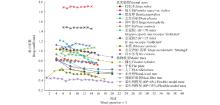
Fig.1
Variation of drag coefficient with wind speed for natural plants and plant model"
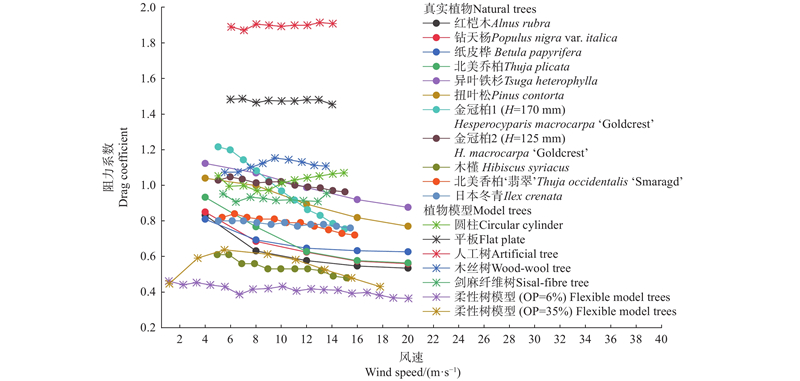
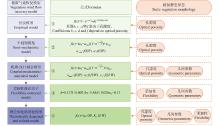
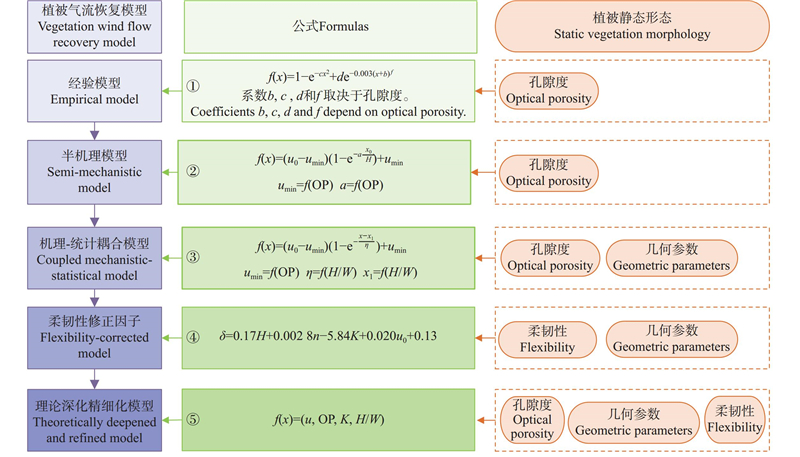
Fig.2
Developmental stages of mathematical models for airflow recovery on the leeward side of vegetation"
|
蔡立坤, 丁国栋, 曲梦雨. 基于数值模拟的网格沙障孔隙率−风速耦合机制与防风固沙效能评价. 干旱区资源与环境, 2025, 39 (8): 104- 115.
doi: 10.13448/j.cnki.jalre.2025.136 |
|
|
Cai L K, Ding G D, Qu M Y. Evaluation of the porosity-wind speed coupling mechanism and wind erosion control efficiency of mesh sand barriers based on numerical simulation. Journal of Arid Land Resources and Environment, 2025, 39 (8): 104- 115.
doi: 10.13448/j.cnki.jalre.2025.136 |
|
|
关德新, 朱廷曜, 韩士杰. 单株树的阻力系数模式. 林业科学, 2001, 37 (6): 11- 14.
doi: 10.3321/j.issn:1001-7488.2001.06.003 |
|
|
Guan D X, Zhu Y Y, Han S J. Theoretical model of drag coefficient of isolated tree. Scientia Silvae Sinicae, 2001, 37 (6): 11- 14.
doi: 10.3321/j.issn:1001-7488.2001.06.003 |
|
|
黄 笑, 云 挺, 薛联凤, 等. 基于流体运动仿真的不同林冠形状抗风强度分析. 南京林业大学学报(自然科学版), 2019, 43 (2): 107- 113.
doi: 10.3969/j.issn.1000-2006.201804035 |
|
|
Huang X, Yun T, Xue L F, et al. Influence of forest canopy shape on windbreak variables using a fluid simulation technique. Journal of Nanjing Forestry University (Natural Sciences Edition), 2019, 43 (2): 107- 113.
doi: 10.3969/j.issn.1000-2006.201804035 |
|
|
李 霞, 程 皓, 刘 刚. 塔里木河下游柽柳防风固沙功能野外观测研究. 新疆农业大学学报, 2008, 31 (5): 7- 10.
doi: 10.3969/j.issn.1007-8614.2008.05.002 |
|
|
Li X, Cheng H, Liu G. Field investigation on function of resisting wind and stabilizing sand by Tamarix spp in lower reaches of Tarim River. Journal of Xinjiang Agricultural University, 2008, 31 (5): 7- 10.
doi: 10.3969/j.issn.1007-8614.2008.05.002 |
|
|
李雅琪, 刘善均, 刘 超, 等. Fluent关于刚性植被尾流区两种数值模拟方法对比. 水电能源科学, 2021, 39 (2): 82- 85.
doi: 10.20040/j.cnki.1000-7709.2021.02.020 |
|
|
Li Y Q, Liu S J, Liu C, et al. Comparison of two numerical simulation methods in fluent for wake area of rigid vegetation. Water Resources and Power, 2021, 39 (2): 82- 85.
doi: 10.20040/j.cnki.1000-7709.2021.02.020 |
|
| 廖空太. 2006. 河西走廊防风固沙林体系结构配置及生态效益研究. 兰州: 甘肃农业大学. | |
| Liao K T. 2006. Study on structure arragement and their eco-effect of windbreak and sand-fixation forest system in Hexi Corridor. Lanzhou: Gansu Agricultural University. [in Chinese] | |
|
刘虎俊, 袁宏波, 郭春秀, 等. 均匀配置的两种仿真灌木林防风效应野外观测. 中国沙漠, 2015, 35 (1): 8- 13.
doi: 10.7522/j.issn.1000-694X.2014.00194 |
|
|
Liu H J, Yuan H B, Guo C X, et al. Windbreak efficiency of two types of simulated shrub forest equally planted in field. Journal of Desert Research, 2015, 35 (1): 8- 13.
doi: 10.7522/j.issn.1000-694X.2014.00194 |
|
|
屈志强, 刘连友, 吕艳丽, 等. 柔韧性概念在沙生植物中的应用. 中国沙漠, 2012, 32 (1): 42- 46.
doi: 10.7522/j.issn.1000-694X.2012.0042 |
|
|
Qu Z Q, Liu L Y, Lü Y L, et al. Application of concept of flexibility in psammophyte research. Journal of Desert Research, 2012, 32 (1): 42- 46.
doi: 10.7522/j.issn.1000-694X.2012.0042 |
|
|
屈志强, 张 莉, 丁国栋, 等. 毛乌素沙地常见灌木单株对土壤风蚀的影响. 中国水土保持科学, 2008, 6 (4): 66- 70.
doi: 10.3969/j.issn.1672-3007.2008.04.012 |
|
|
Qu Z Q, Zhang L, Ding G D, et al. Effect of single shrub on wind erosion in Mu Us Sandland. Science of Soil and Water Conservation, 2008, 6 (4): 66- 70.
doi: 10.3969/j.issn.1672-3007.2008.04.012 |
|
|
任 昱, 王志刚, 杨东慧. 林带冬季相疏透度与透风系数的换算. 林业科学, 2013, 49 (11): 83- 88.
doi: 10.11707/j.1001-7488.20131111 |
|
|
Ren Y, Wang Z G, Yang D H. Conversion of porosity and permeability of shelter belts with winter facies. Scientia Silvae Sinicae, 2013, 49 (11): 83- 88.
doi: 10.11707/j.1001-7488.20131111 |
|
|
邵传平, 朱园园. 鹅掌楸树叶在风中的变形与振动. 力学学报, 2017, 49 (2): 431- 440.
doi: 10.6052/0459-1879-16-179 |
|
|
Shao C P, Zhu Y Y. The deformation and vibration of tulip leaves in wind. Chinese Journal of Theoretical and Applied Mechanics, 2017, 49 (2): 431- 440.
doi: 10.6052/0459-1879-16-179 |
|
|
孙嘉梁, 黄 宁, 赵昱豪, 等. 动态阻力系数模型在沙生柔性植物模拟中的应用与验证. 中国沙漠, 2025, 45 (1): 215- 228.
doi: 10.7522/j.issn.1000-694X.2024.00156 |
|
|
Sun J L, Huang N, Zhao Y H, et al. Application and validation of the varied porosity model in simulating sand-grown flexible plant. Journal of Desert Research, 2025, 45 (1): 215- 228.
doi: 10.7522/j.issn.1000-694X.2024.00156 |
|
| 唐 艳, 刘连友, 屈志强, 等. 植物阻沙能力研究进展. 中国沙漠, 2011, 31 (1): 43- 48. | |
| Tang Y, Liu L Y, Qu Z Q, et al. Research review of capacity of plant for trapping blown sand. Journal of Desert Research, 2011, 31 (1): 43- 48. | |
| 王成龙. 2011. 四种同龄植物防风作用的比较研究. 呼和浩特: 内蒙古农业大学. | |
| Wang C L. 2011. Comparative study on the resistance effect to wind erosion of four kinds of even-aged plant. Hohhot: Inner Mongolia Agricultural University. [in Chinese] | |
|
王佳丽, 贾肖肖, 肖辉杰, 等. 乌兰布和沙漠绿洲农田防护林风场模拟. 中国水土保持科学(中英文), 2025, 23 (5): 90- 100.
doi: 10.16843/j.sswc.2024176 |
|
|
Wang J L, Jia X X, Xiao H J, et al. Wind field simulation of farmland shelterbelt in Ulan Buh Desert Oasis. Science of Soil and Water Conservation, 2025, 23 (5): 90- 100.
doi: 10.16843/j.sswc.2024176 |
|
|
王京学, 王秀龙, 冀晓东, 等. 防护林防风效应风洞模拟试验研究进展. 中国农业大学学报, 2023, 28 (12): 162- 176.
doi: 10.11841/j.issn.1007-4333.2023.12.15 |
|
|
Wang J X, Wang X L, Ji X D, et al. Research progress of wind-tunnel simulation test of windbreak effects of shelterbelt. Journal of China Agricultural University, 2023, 28 (12): 162- 176.
doi: 10.11841/j.issn.1007-4333.2023.12.15 |
|
|
王立刚, 赵 岭, 赵凌泉, 等. 不同树种的农田防护林疏透度的季相变化研究. 吉林林业科技, 1999, 28 (6): 6- 10, 15.
doi: 10.16115/j.cnki.issn.1005-7129.1999.06.002 |
|
|
Wang L G, Zhao L, Zhao L Q, et al. Study on seasonal variation of permeability of farmland shelterbelt with different tree species. Jilin Forestry Scicnce and Technology, 1999, 28 (6): 6- 10, 15.
doi: 10.16115/j.cnki.issn.1005-7129.1999.06.002 |
|
|
王 蕾, 王 志, 刘连友, 等. 沙柳灌丛植株形态与气流结构野外观测研究. 应用生态学报, 2005, 16 (11): 2007- 2011.
doi: 10.13287/j.1001-9332.2005.0281 |
|
|
Wang L, Wang Z, Liu L Y, et al. Field investigation on Salix psammophila plant morphology and airflow structure. Chinese Journal of Applied Ecology, 2005, 16 (11): 2007- 2011.
doi: 10.13287/j.1001-9332.2005.0281 |
|
|
王湘莲, 张友焱, 韩政伟, 等. 不同密度与配置梭梭林防风效果的风洞模拟试验. 生态学报, 2025, 45 (11): 5413- 5425.
doi: 10.20103/j.stxb.202409152241 |
|
|
Wang X L, Zhang Y Y, Han Z W, et al. Wind tunnel simulaion test of wind protection effect of Haloxylon ammodendron forests with different density and configuration. Acta Ecologica Sinica, 2025, 45 (11): 5413- 5425.
doi: 10.20103/j.stxb.202409152241 |
|
|
王翔宇, 丁国栋, 高 函, 等. 带状沙柳沙障的防风固沙效益研究. 水土保持学报, 2008, 22 (2): 42- 46.
doi: 10.3321/j.issn:1009-2242.2008.02.010 |
|
|
Wang X Y, Ding G D, Gao H, et al. Effect of zonal willow Salix psammophila checkerboard on reducing wind and stabilizing sand. Journal of Soil and Water Conservation, 2008, 22 (2): 42- 46.
doi: 10.3321/j.issn:1009-2242.2008.02.010 |
|
|
王志刚, 辛智鸣, 赵英铭, 等. 我国绿洲防护林冬季相防风效应的估算. 林业科学, 2014, 50 (8): 90- 96.
doi: 10.11707/j.1001-7488.20140813 |
|
|
Wang Z G, Xin Z M, Zhao Y M, et al. Evaluation of wind protection effect of oasis shelterbelts in China. Scientia Silvae Sinicae, 2014, 50 (8): 90- 96.
doi: 10.11707/j.1001-7488.20140813 |
|
| 叶静芸. 2017. 旱区植被遥感信息提取与反演. 北京: 中国林业科学研究院. | |
| Ye J Y. 2017. Remote sensing information extraction and inversion of vegetation in dryland areas. Beijing: Chinese Academy of Forestry. [in Chinese] | |
|
尤 源, 赵 浩, 周 娜, 等. 中国荒漠化防治国际合作历程与展望. 世界林业研究, 2021, 34 (4): 72- 76.
doi: 10.13348/j.cnki.sjlyyj.2020.0127.y |
|
|
You Y, Zhao H, Zhou N, et al. Progress and prospect of China’s international cooperation in combating desertification. World Forestry Research, 2021, 34 (4): 72- 76.
doi: 10.13348/j.cnki.sjlyyj.2020.0127.y |
|
|
袁素芬, 陈亚宁, 李卫红. 干旱区新垦绿洲防护林体系的防护效益分析: 以克拉玛依农业综合开发区为例. 中国沙漠, 2007, 27 (4): 600- 607.
doi: 10.3321/j.issn:1000-694X.2007.04.013 |
|
|
Yuan S F, Chen Y N, Li W H. Protective effect of shelterbelts in new-cultivated oasis of arid area: case study in Karamay agricultural development region. Journal of Desert Research, 2007, 27 (4): 600- 607.
doi: 10.3321/j.issn:1000-694X.2007.04.013 |
|
|
张 文, 亢力强, 张 琴, 等. 植株形态对单植株前后风速变化影响的风洞实验. 北京师范大学学报(自然科学版), 2020, 56 (4): 573- 581.
doi: 10.12202/j.0476-0301.2020003 |
|
|
Zhang W, Kang L Q, Zhang Q, et al. Speed upwind and downwind of a single plant. Journal of Beijing Normal University (Natural Science), 2020, 56 (4): 573- 581.
doi: 10.12202/j.0476-0301.2020003 |
|
| 张延旭. 2011. 乌兰布和沙漠绿洲防护林结构及其防风效果研究. 呼和浩特: 内蒙古农业大学. | |
| Zhang Y X. 2011. Research on structure of shelter forest and windbreak effect in Ulan Buh Desert. Hohhot: Inner Mongolia Agricultural University. [in Chinese] | |
|
张 奕, 肖辉杰, 辛智鸣, 等. 乌兰布和沙区典型灌木防风阻沙效益. 中国水土保持科学(中英文), 2021, 19 (1): 87- 96.
doi: 10.16843/j.sswc.2021.01.011 |
|
|
Zhang Y, Xiao H J, Xin Z M, et al. Wind prevention and sand resistance of typical shrubs in Ulan Buh Desert. Science of Soil and Water Conservation, 2021, 19 (1): 87- 96.
doi: 10.16843/j.sswc.2021.01.011 |
|
|
智 丹, 王京学, 肖辉杰, 等. 乌兰布和荒漠绿洲过渡带白刺灌丛沙堆防风效应风洞模拟. 农业工程学报, 2024, 40 (3): 147- 155.
doi: 10.11975/j.issn.1002-6819.202307119 |
|
|
Zhi D, Wang J X, Xiao H J, et al. Wind tunnel simulation on the windbreak effect of Nitraria tangutorum nebkhas in Ulan Buh desert-oasis ecotone of China. Transactions of the Chinese Society of Agricultural Engineering, 2024, 40 (3): 147- 155.
doi: 10.11975/j.issn.1002-6819.202307119 |
|
|
周云鹤, 陈 智, 佟 鑫, 等. 落叶期柠条带防风效果的风洞实验研究. 农机化研究, 2023, 45 (7): 129- 135.
doi: 10.3969/j.issn.1003-188X.2023.07.024 |
|
|
Zhou Y H, Chen Z, Tong X, et al. Wind tunnel experimental study on windbreak effect of Caragana korshinskii strip during defoliation. Journal of Agricultural Mechanization Research, 2023, 45 (7): 129- 135.
doi: 10.3969/j.issn.1003-188X.2023.07.024 |
|
|
朱教君, 姜凤岐, 范志平, 等. 林带空间配置与布局优化研究. 应用生态学报, 2003, 14 (8): 1205- 1212.
doi: 10.13287/j.1001-9332.2003.0271 |
|
|
Zhu J J, Jiang F Q, Fan Z P, et al. Optimization of spatial arrangements and patterns for shelterbelts or windbreaks. Chinese Journal of Applied Ecology, 2003, 14 (8): 1205- 1212.
doi: 10.13287/j.1001-9332.2003.0271 |
|
|
Al-Awadhi J M. The effect of a single shrub on wind speed and nabkhas dune development: a case study in Kuwait. International Journal of Geosciences, 2014, 5 (1): 20- 26.
doi: 10.4236/ijg.2014.51004 |
|
|
Amani-Beni M, Tabatabaei Malazi M, Dehghanian K, et al. Investigating the effects of wind loading on three dimensional tree models using numerical simulation with implications for urban design. Scientific Reports, 2023, 13, 7277.
doi: 10.1038/s41598-023-34071-5 |
|
|
An L K, Wang J, Xiong N N, et al. Assessment of permeability windbreak forests with different porosities based on laser scanning and computational fluid dynamics. Remote Sensing, 2022, 14 (14): 3331.
doi: 10.3390/rs14143331 |
|
|
Angelou N, Dellwik E, Mann J. Wind load estimation on an open-grown European oak tree. Forestry, 2019, 92 (4): 381- 392.
doi: 10.1093/forestry/cpz026 |
|
|
Bailey R M. Spatial and temporal signatures of fragility and threshold proximity in modelled semi-arid vegetation. Proceedings of the Royal Society B: Biological Sciences, 2011, 278 (1708): 1064- 1071.
doi: 10.1098/rspb.2010.1750 |
|
|
Baskaran M, Hutin L, Mulleners K. Reconfiguring it out: how flexible structures interact with fluid flows. Physical Review Fluids, 2023, 8 (11): 110509.
doi: 10.1103/PhysRevFluids.8.110509 |
|
|
Bean A, Alperi R W, Federer C A. A method for categorizing shelterbelt porosity. Agricultural Meteorology, 1974, 14 (1): 417- 429.
doi: 10.1016/0002-1571(74)90035-1 |
|
|
Bekkers C C A, Angelou N, Dellwik E. Drag coefficient and frontal area of a solitary mature tree. Journal of Wind Engineering and Industrial Aerodynamics, 2022, 220, 104854.
doi: 10.1016/j.jweia.2021.104854 |
|
|
Boekee J, van der Linden S J A, Ten Veldhuis M C, et al. Rethinking the roughness height: an improved description of temperature profiles over short vegetation. Boundary-Layer Meteorology, 2024, 190 (7): 31.
doi: 10.1007/s10546-024-00871-z |
|
| Brüchert F, Speck O, Spatz H C. 2003. Oscillations of plants’ stems and their damping: theory and experimentation. Philosophical Transactions of the Royal Society of London, Series B: Biological Sciences, 358(1437): 1487–1492. | |
| Buckley R. Effects of vegetation on the transport of dune sand. Annals of Arid Zone, 1996, 35 (3): 215- 223. | |
|
Bunce A, Volin J C, Miller D R, et al. Determinants of tree sway frequency in temperate deciduous forests of the Northeast United States. Agricultural and Forest Meteorology, 2019, 266, 87- 96.
doi: 10.1016/j.agrformet.2018.11.020 |
|
|
Butler D W, Gleason S M, Davidson I, et al. Safety and streamlining of woody shoots in wind: an empirical study across 39 species in tropical Australia. New Phytologist, 2012, 193 (1): 137- 149.
doi: 10.1111/j.1469-8137.2011.03887.x |
|
|
Cao J X, Tamura Y, Yoshida A. Wind tunnel study on aerodynamic characteristics of shrubby specimens of three tree species. Urban Forestry & Urban Greening, 2012, 11 (4): 465- 476.
doi: 10.1016/j.ufug.2012.05.003 |
|
| Chakrabarti S K. 2002. The Theory and Practice of Hydrodynamics and Vibration. Singapore: World Scientific. | |
|
Cheng H, He W W, Liu C C, et al. Transition model for airflow fields from single plants to multiple plants. Agricultural and Forest Meteorology, 2019, 266, 29- 42.
doi: 10.1016/j.agrformet.2018.11.039 |
|
|
Cheng H, Zhang K D, Liu C C, et al. Wind tunnel study of airflow recovery on the lee side of single plants. Agricultural and Forest Meteorology, 2018, 263, 362- 372.
doi: 10.1016/j.agrformet.2018.08.025 |
|
|
Cleugh H A, Hughes D E. Impact of shelter on crop microclimates: a synthesis of results from wind tunnel and field experiments. Australian Journal of Experimental Agriculture, 2002, 42 (6): 679- 701.
doi: 10.1071/ea02005 |
|
|
Cornelis W M, Gabriels D. Optimal windbreak design for wind-erosion control. Journal of Arid Environments, 2005, 61 (2): 315- 332.
doi: 10.1016/j.jaridenv.2004.10.005 |
|
|
Dargahi M, Newson T, R Moore J. A numerical approach to estimate natural frequency of trees with variable properties. Forests, 2020, 11 (9): 915.
doi: 10.3390/f11090915 |
|
|
De Langre E. Effects of wind on plants. Annual Review of Fluid Mechanics, 2008, 40, 141- 168.
doi: 10.1146/annurev.fluid.40.111406.102135 |
|
|
De Langre E, Gutierrez A, Cossé J. On the scaling of drag reduction by reconfiguration in plants. Comptes Rendus Mécanique, 2012, 340 (1): 35- 40.
doi: 10.1016/j.crme.2011.11.005 |
|
|
Dellwik E, van der Laan M P, Angelou N, et al. Observed and modeled near-wake flow behind a solitary tree. Agricu ltural and Forest Meteorology, 2019, 265, 78- 87.
doi: 10.1016/j.agrformet.2018.10.015 |
|
|
Dong Z B, Luo W Y, Qian G Q, et al. A wind tunnel simulation of the mean velocity fields behind upright porous fences. Agricultural and Forest Meteorology, 2007, 146 (1): 82- 93.
doi: 10.1016/j.agrformet.2007.05.009 |
|
| Dong Z B, Luo W Y, Qian G Q, et al. 2008b. Wind tunnel simulation of the three-dimensional airflow patterns around shrubs. Journal of Geophysical Research: Earth Surface, 113(F02016). | |
| Dong Z B, Luo W Y, Qian G Q, et al. Evaluating the optimal porosity of fences for reducing wind erosion. Sciences in Cold and Arid Regions, 2011, 3 (1): 1- 12. | |
| Dong Z B, Mu Q S, Luo W Y, et al. 2008a. An analysis of drag force and moment for upright porous wind fences. Journal of Geophysical Research: Atmospheres, 113(D04103). | |
|
Dong Z B, Qian G Q, Luo W Y, et al. Threshold velocity for wind erosion: the effects of porous fences. Environmental Geology, 2006, 51 (3): 471- 475.
doi: 10.1007/s00254-006-0343-9 |
|
| Etnier S A, Vogel S. Reorientation of daffodil (Narcissus: Amaryllidaceae) flowers in wind: drag reduction and torsional flexibility. American Journal of Botany, 2000, 87 (1): 29- 32. | |
|
Garcia-Estringana P, Alonso-Blázquez N, Marques M J, et al. Use of Mediterranean legume shrubs to control soil erosion and runoff in central Spain. A large-plot assessment under natural rainfall conducted during the stages of shrub establishment and subsequent colonisation. Catena, 2013, 102, 3- 12.
doi: 10.1016/j.catena.2011.09.003 |
|
| Gardiner B A. 1995. The interaction of wind and tree movement in forest canopies. USA: Cambridge University Press. | |
|
Gardiner B, Berry P, Moulia B. Review: wind impacts on plant growth, mechanics and damage. Plant science, 2016, 245, 94- 118.
doi: 10.1016/j.plantsci.2016.01.006 |
|
|
Getzin S, Wiegand K, Wiegand T, et al. Adopting a spatially explicit perspective to study the mysterious fairy circles of Namibia. Ecography, 2015, 38 (1): 1- 11.
doi: 10.1111/ecog.00911 |
|
|
Gillies J A, Lancaster N, Nickling W G, et al. Field determination of drag forces and shear stress partitioning effects for a desert shrub (Sarcobatus vermiculatus, greasewood). Journal of Geophysical Research: Atmospheres, 2000, 105 (D20): 24871- 24880.
doi: 10.1029/2000JD900431 |
|
| Gillies J A, Nickling W G, King J. Drag coefficient and plant form response to wind speed in three plant species: burning bush (Euonymus alatus), colorado blue spruce (Picea pungens Glauca. ), and fountain grass (Pennisetum setaceum). Journal of Geophysical Research: Atmospheres, 2002, 107 (D24): 4760. | |
|
Gosselin F P. Mechanics of a plant in fluid flow. Journal of Experimental Botany, 2019, 70 (14): 3533- 3548.
doi: 10.1093/jxb/erz288 |
|
|
Grant P F, Nickling W G. Direct field measurement of wind drag on vegetation for application to windbreak design and modelling. Land Degradation & Development, 1998, 9 (1): 57- 66.
doi: 10.1002/(SICI)1099-145X(199801/02)9:1<57::AID-LDR288>3.0.CO;2-7 |
|
|
Grant R H. The influence of the physical attributes of a spruce shoot on momentum transfer. Agricultural and Forest Meteorology, 1985, 36 (1): 7- 18.
doi: 10.1016/0168-1923(85)90061-9 |
|
|
Gross N, Maestre F T, Liancourt P, et al. Unforeseen plant phenotypic diversity in a dry and grazed world. Nature, 2024, 632 (8026): 808- 814.
doi: 10.1038/s41586-024-07731-3 |
|
|
Guan D X, Zhang Y S, Zhu T Y. A wind-tunnel study of windbreak drag. Agricultural and Forest Meteorology, 2003, 118 (1): 75- 84.
doi: 10.1016/s0168-1923(03)00069-8 |
|
|
Guan D X, Zhu T Y, Han S J. Wind tunnel experiment of drag of isolated tree models in surface boundary layer. Journal of Forestry Research, 2000, 11 (3): 156- 160.
doi: 10.1007/BF02855516 |
|
|
Hagen L J, Skidmore E L. Windbreak drag as influenced by porosity. Transactions of the ASAE, 1971, 14 (3): 464- 465.
doi: 10.13031/2013.38315 |
|
|
Hale S E, Gardiner B A, Wellpott A, et al. Wind loading of trees: influence of tree size and competition. European Journal of Forest Research, 2012, 131 (1): 203- 217.
doi: 10.1007/s10342-010-0448-2 |
|
|
Jackson T D, Sethi S, Dellwik E, et al. The motion of trees in the wind: a data synthesis. Biogeosciences, 2021, 18 (13): 4059- 4072.
doi: 10.5194/bg-18-4059-2021 |
|
|
Jacobs A F G. The normal-force coefficient of a thin closed fence. Boundary-Layer Meteorology, 1985, 32 (4): 329- 335.
doi: 10.1007/BF00121998 |
|
| James K R. 2010. A dynamic structural analysis of trees subject to wind loading. Melbourne: The University of Melbourne. | |
|
James K R, Haritos N, Ades P K. Mechanical stability of trees under dynamic loads. American Journal of Botany, 2006, 93 (10): 1522- 1530.
doi: 10.3732/ajb.93.10.1522 |
|
|
Johnson R C Jr, Ramey G E, O’Hagan D S. Wind induced forces on trees. Journal of Fluids Engineering, 1982, 104 (1): 25- 30.
doi: 10.1017/cbo9780511600425.008 |
|
|
Jung S Y, Kim J J, Park H W, et al. Comparison of flow structures behind rigid and flexible finite cylinders. International Journal of Mechanical Sciences, 2018, 142, 480- 490.
doi: 10.1016/j.ijmecsci.2018.05.026 |
|
|
Kane B, Modarres-Sadeghi Y, James K R, et al. Effects of crown structure on the sway characteristics of large decurrent trees. Trees, 2014, 28 (1): 151- 159.
doi: 10.1007/s00468-013-0938-1 |
|
|
Kang L Q, Zhang J J, Yang Z C, et al. Experimental investigation on shear-stress partitioning for flexible plants with approximately zero basal-to-frontal area ratio in a wind tunnel. Boundary-Layer Meteorology, 2018, 169 (2): 251- 273.
doi: 10.1007/s10546-018-0373-3 |
|
|
Kang L Q, Zhang J J, Zou X Y, et al. Experimental investigation of the aerodynamic roughness length for flexible plants. Boundary-Layer Meteorology, 2019, 172 (3): 397- 416.
doi: 10.1007/s10546-019-00449-0 |
|
|
Kang L Q, Zhang M, Li C Y, et al. Effect of plant shapes on sand transport rate and aerodynamic particle entrainment rate from the perspective of plant drag. Catena, 2024, 237, 107818.
doi: 10.1016/j.catena.2024.107818 |
|
|
Koh I, Park C R, Kang W M, et al. Seasonal effectiveness of a Korean traditional deciduous windbreak in reducing wind speed. Journal of Ecology and Environment, 2014, 37 (2): 91- 97.
doi: 10.5141/ecoenv.2014.011 |
|
|
Koizumi A, Motoyama J I, Sawata K, et al. Evaluation of drag coefficients of poplar-tree crowns by a field test method. Journal of Wood Science, 2010, 56 (3): 189- 193.
doi: 10.1007/s10086-009-1091-8 |
|
|
Lai C, Xiao B, Feng J L, et al. Crown feature effect evaluation on wind load for evergreen species based on laser scanning and wind tunnel experiments. Scientific Reports, 2022, 12, 21475.
doi: 10.1038/s41598-022-25960-2 |
|
| Leenders J K. 2007. Wind erosion control with scattered vegetationin the sahelian zone of Burkina Faso. Wageningen, Netherlands: Wageningen University & Research. | |
|
Leenders J K, Van Boxe J H, Sterk G. The effect of single vegetation elements on wind speed and sediment transport in the Sahelian zone of Burkina Faso. Earth Surface Processes and Landforms, 2007, 32 (10): 1454- 1474.
doi: 10.1002/esp.1452 |
|
|
Leenders J K, Sterk G, Van Boxel J H. Modelling wind-blown sediment transport around single vegetation element. Earth Surface Processes and Landforms, 2011, 36 (9): 1218- 1229.
doi: 10.1002/esp.2147 |
|
|
Lee J P, Lee E J, Lee S J. Shelter effect of a fir tree with different porosities. Journal of Mechanical Science and Technology, 2014, 28 (2): 565- 572.
doi: 10.1007/s12206-013-1123-6 |
|
|
Li B L, Sherman D J. Aerodynamics and morphodynamics of sand fences: a review. Aeolian Research, 2015, 17, 33- 48.
doi: 10.1016/j.aeolia.2014.11.005 |
|
|
Li C J, Fu B J, Wang S, et al. Drivers and impacts of changes in China’s drylands. Nature Reviews Earth & Environment, 2021, 2 (12): 858- 873.
doi: 10.1038/s43017-021-00226-z |
|
|
Liu C C, Zheng Z Q, Cheng H, et al. Airflow around single and multiple plants. Agricultural and Forest Meteorology, 2018, 252, 27- 38.
doi: 10.1016/j.agrformet.2018.01.009 |
|
|
Liu J Q, Kimura R, Miyawaki M, et al. Effects of plants with different shapes and coverage on the blown-sand flux and roughness length examined by wind tunnel experiments. Catena, 2021a, 197, 104976.
doi: 10.1016/j.catena.2020.104976 |
|
| Liu R, Zhang J J, Yang X F, et al. 2021b. Simulating airflow around flexible vegetative windbreaks. Journal of Geophysical Research: Atmospheres, 126(19): e2021JD034578. | |
|
Liu S J, Wu H I, Lytton R L, et al. Aerodynamic sheltering effects of vegetative arrays on wind erosion: a numerical approach. Journal of Environmental Management, 1990, 30 (3): 281- 294.
doi: 10.1016/0301-4797(90)90007-J |
|
|
Loeffler A E, Gordon A M, Gillespie T J. Optical porosity and windspeed reduction by coniferous windbreaks in Southern Ontario. Agroforestry Systems, 1992, 17 (2): 119- 133.
doi: 10.1007/BF00053117 |
|
|
Lü P, Dong Z B, Mu Q S, et al. An analysis of drag force on wind of shrubs simulated in a wind tunnel. Environmental Earth Sciences, 2014, 71 (1): 125- 131.
doi: 10.1007/s12665-013-2417-9 |
|
|
Ma R, Li J R, Ma Y J, et al. A wind tunnel study of the seasonal shelter efficiency of deciduous windbreaks. Transactions of the ASABE, 2020, 63 (4): 913- 922.
doi: 10.13031/trans.13782 |
|
|
Manickathan L, Defraeye T, Allegrini J, et al. Comparative study of flow field and drag coefficient of model and small natural trees in a wind tunnel. Urban Forestry & Urban Greening, 2018, 35, 230- 239.
doi: 10.1016/j.ufug.2018.09.011 |
|
|
Mayaud J R, Bailey R M, Wiggs G F S. A coupled vegetation/sediment transport model for dryland environments. Journal of Geophysical Research: Earth Surface, 2017a, 122 (4): 875- 900.
doi: 10.1002/2016JF004096 |
|
|
Mayaud J R, Webb N P. Vegetation in drylands: effects on wind flow and aeolian sediment transport. Land, 2017b, 6 (3): 64.
doi: 10.3390/land6030064 |
|
|
Mayaud J R, Wiggs G F S, Bailey R M. Characterizing turbulent wind flow around dryland vegetation. Earth Surface Processes and Landforms, 2016, 41 (10): 1421- 1436.
doi: 10.1002/esp.3934 |
|
|
Mayaud J R, Wiggs G F S, Bailey R M. A field-based parameterization of wind flow recovery in the lee of dryland plants. Earth Surface Processes and Landforms, 2017c, 42 (2): 378- 386.
doi: 10.1002/esp.4082 |
|
|
Miller D R, Rosenberg N J, Bagley W T. Wind reduction by a highly permeable tree shelter-belt. Agricultural Meteorology, 1974, 14 (1): 321- 333.
doi: 10.1016/0002-1571(74)90027-2 |
|
|
Miri A, Davidson-Arnott R. The effectiveness of a single Tamarix tree in reducing aeolian erosion in an arid region. Agricultural and Forest Meteorology, 2021, 300, 108324.
doi: 10.1016/j.agrformet.2021.108324 |
|
| Miri A, Dragovich D, Dong Z B. Vegetation morphologic and aerodynamic characteristics reduce aeolian erosion. Scientific Reports, 2017, 7 (1): 12831. | |
|
Miri A, Dragovich D, Dong Z B. The response of live plants to airflow-implication for reducing erosion. Aeolian Research, 2018, 33, 93- 105.
doi: 10.1016/j.aeolia.2018.06.002 |
|
|
Moore J R, Maguire D A. Natural sway frequencies and damping ratios of trees: concepts, review and synthesis of previous studies. Trees, 2004, 18 (2): 195- 203.
doi: 10.1007/s00468-003-0295-6 |
|
|
Moore J R, Maguire D A. Simulating the dynamic behavior of Douglas-fir trees under applied loads by the finite element method. Tree Physiology, 2008, 28 (1): 75- 83.
doi: 10.1093/treephys/28.1.75 |
|
| Moore J, Gardiner B, Sellier D. 2018. Tree mechanics and wind loading. Plant Biomechanics. Cham: Springer International Publishing, 79–106. | |
|
Nicoll B C, Ray D. Adaptive growth of tree root systems in response to wind action and site conditions. Tree Physiology, 1996, 16 (11): 891- 898.
doi: 10.1093/treephys/16.11-12.891 |
|
| Niklas K J. 1992. Plant Biomechanics: an engineering approach to plant form and function. Chicago: The University of Chicago Press. | |
| Okin G S. 2008. A new model of wind erosion in the presence of vegetation. Journal of Geophysical Research: Earth Surface, 113(F02S10). | |
|
Pan X, Wang Z, Gao Y, et al. Windbreak and airflow performance of different synthetic shrub designs based on wind tunnel experiments. PLoS One, 2020, 15 (12): e244213.
doi: 10.1371/journal.pone.0244213 |
|
|
Perroni-Ventura Y, Montaña C, García-Oliva F. Relationship between soil nutrient availability and plant species richness in a tropical semi-arid environment. Journal of Vegetation Science, 2006, 17 (6): 719- 728.
doi: 10.1658/1100-9233(2006)17[719:rbsnaa]2.0.co;2 |
|
|
Pierre C, Hiernaux P, Rajot J L, et al. Wind erosion response to past and future agro-pastoral trajectories in the Sahel (Niger). Landscape Ecology, 2022, 37 (2): 529- 550.
doi: 10.1007/s10980-021-01359-8 |
|
|
Raine J K, Stevenson D C. Wind protection by model fences in a simulated atmospheric boundary layer. Journal of Wind Engineering and Industrial Aerodynamics, 1977, 2 (2): 159- 180.
doi: 10.1016/0167-6105(77)90015-0 |
|
|
Raupach M R. Drag and drag partition on rough surfaces. Boundary-Layer Meteorology, 1992, 60 (4): 375- 395.
doi: 10.1007/BF00155203 |
|
|
Raupach M R, Antonia R A, Rajagopalan S. Rough-wall turbulent boundary layers. Applied Mechanics Reviews, 1991, 44 (1): 1- 25.
doi: 10.21236/ada426193 |
|
|
Řeháček D, Khel T, Kučera J, et al. Effect of windbreaks on wind speed reduction and soil protection against wind erosion. Soil and Water Research, 2017, 12 (2): 128- 135.
doi: 10.17221/45/2016-SWR |
|
|
Ren X Y, Zhang G Y, Chen Z G, et al. The influence of wind-induced response in urban trees on the surrounding flow field. Atmosphere, 2023, 14 (6): 1010.
doi: 10.3390/atmos14061010 |
|
|
Rodriguez M, de Langre E, Moulia B. A scaling law for the effects of architecture and allometry on tree vibration modes suggests a biological tuning to modal compartmentalization. American Journal of Botany, 2008, 95 (12): 1523- 1537.
doi: 10.3732/ajb.0800161 |
|
|
Roodbaraky H J, Baker C J, Dawson A R, et al. Experimental observations of the aerodynamic characteristics of urban trees. Journal of Wind Engineering and Industrial Aerodynamics, 1994, 52, 171- 184.
doi: 10.1016/0167-6105(94)90046-9 |
|
|
Rudnicki M, Mitchell S J, Novak M D. Wind tunnel measurements of crown streamlining and drag relationships for three conifer species. Canadian Journal of Forest Research, 2004, 34 (3): 666- 676.
doi: 10.1139/x03-233 |
|
|
Ruiz T G, Zaragoza S R, Cerrato R F. Fertility islands around Prosopis laevigata and Pachycereus hollianus in the drylands of Zapotitlán Salinas, México. Journal of Arid Environments, 2008, 72 (7): 1202- 1212.
doi: 10.1016/j.jaridenv.2007.12.008 |
|
|
Schwartz R C, Fryrear D W, Harris B L, et al. Mean flow and shear stress distributions as influenced by vegetative windbreak structure. Agricultural and Forest Meteorology, 1995, 75 (1): 1- 22.
doi: 10.1016/0168-1923(94)02206-y |
|
|
Seginer I. Windbreak drag calculated from the horizontal velocity field. Boundary-Layer Meteorology, 1972, 3 (1): 87- 97.
doi: 10.1007/BF00769109 |
|
|
Sellier D, Fourcaud T. Crown structure and wood properties: influence on tree sway and response to high winds. American Journal of Botany, 2009, 96 (5): 885- 896.
doi: 10.3732/ajb.0800226 |
|
|
Sellier D, Fourcaud T, Lac P. A finite element model for investigating effects of aerial architecture on tree oscillations. Tree Physiology, 2006, 26 (6): 799- 806.
doi: 10.1093/treephys/26.6.799 |
|
|
Spatz H C, Brüchert F. Basic biomechanics of self-supporting plants: wind loads and gravitational loads on a Norway spruce tree. Forest Ecology and Management, 2000, 135 (1): 33- 44.
doi: 10.1016/s0378-1127(00)00296-6 |
|
| Spatz H C, Brüchert F, Pfisterer J. 2007. Multiple resonance damping or how do trees escape dangerously large oscillations? American Journal of Botany, 94(10): 1603–1611. | |
|
Spatz H C, Theckes B. Oscillation damping in trees. Plant Science, 2013, 207, 66- 71.
doi: 10.1016/j.plantsci.2013.02.015 |
|
|
Středová H, Podhrázská J, Litschmann T, et al. Aerodynamic parameters of windbreak based on its optical porosity. Contributions to Geophysics and Geodesy, 2012, 42 (3): 213- 226.
doi: 10.2478/v10126-012-0008-5 |
|
|
Suter-Burri K, Gromke C, Leonard K C, et al. Spatial patterns of aeolian sediment deposition in vegetation canopies: observations from wind tunnel experiments using colored sand. Aeolian Research, 2013, 8, 65- 73.
doi: 10.1016/j.aeolia.2012.11.002 |
|
|
Tay J Y L, Zotz G, Puczylowski J, et al. Go with the flow: the extent of drag reduction as epiphytic bromeliads reorient in wind. PLoS One, 2021, 16 (6): e0252790.
doi: 10.1371/journal.pone.0252790 |
|
| Taylor P A. 1988. Turbulent wakes in the atmospheric boundary layer. Flow and Transport in the Natural Environment: Advances and Applications. Berlin, Heidelberg: Springer, 270–292. | |
|
Théckès B, Boutillon X, De Langre E. On the efficiency and robustness of damping by branching. Journal of Sound and Vibration, 2015, 357, 35- 50.
doi: 10.1016/j.jsv.2015.07.018 |
|
|
Theckes B, de Langre E, Boutillon X. Damping by branching: a bioinspiration from trees. Bioinspiration & Biomimetics, 2011, 6 (4): 046010.
doi: 10.1088/1748-3182/6/4/046010 |
|
|
Vigiak O, Sterk G, Warren A, et al. Spatial modeling of wind speed around windbreaks. Catena, 2003, 52 (3): 273- 288.
doi: 10.1016/s0341-8162(03)00018-3 |
|
|
Vogel S. Drag and flexibility in sessile organisms. American Zoologist, 1984, 24 (1): 37- 44.
doi: 10.1093/icb/24.1.37 |
|
|
Vogel S. Drag and reconfiguration of broad leaves in high winds. Journal of Experimental Botany, 1989, 40 (8): 941- 948.
doi: 10.1093/jxb/40.8.941 |
|
|
Vollsinger S, Mitchell S J, Byrne K E, et al. Wind tunnel measurements of crown streamlining and drag relationships for several hardwood species. Canadian Journal of Forest Research, 2005, 35 (5): 1238- 1249.
doi: 10.1139/x05-051 |
|
|
Wolfe S A, Nickling W G. The protective role of sparse vegetation in wind erosion. Progress in Physical Geography: Earth and Environment, 1993, 17 (1): 50- 68.
doi: 10.1177/030913339301700104 |
|
| Woodruff N P, Fryrear D W, Lyles A L. Engineering similitude and momentum transfer principles applied to shelterbelt studies. Transactions of the ASAE, 1963, 6 (1): 41- 47. | |
|
Wu T G, Zhang P, Zhang L, et al. Relationships between shelter effects and optical porosity: a meta-analysis for tree windbreaks. Agricultural and Forest Meteorology, 2018, 259, 75- 81.
doi: 10.1016/j.agrformet.2018.04.013 |
|
| Wu X X, Fang H, Fan P P, et al. 2023. Airflow field and shelter effect around flexible plants using fluid-structure interaction (FSI)-large-eddy-simulation (LES) simulations. Journal of Geophysical Research: Biogeosciences, 128(8): e2022JG007061. | |
|
Wu X X, Zou X Y, Zhou N, et al. Deceleration efficiencies of shrub windbreaks in a wind tunnel. Aeolian Research, 2015, 16, 11- 23.
doi: 10.1016/j.aeolia.2014.10.004 |
|
|
Xiang H X, Wu X X, Wang R D, et al. Flexibility evaluation of psammophytes using Young’s modulus based on 3D numerical simulation. Frontiers in Environmental Science, 2024, 12, 1380498.
doi: 10.3389/fenvs.2024.1380498 |
|
|
Yang H, Lu Q, Wu B, et al. Vegetation diversity and its application in sandy desert revegetation on Tibetan Plateau. Journal of Arid Environments, 2006, 65 (4): 619- 631.
doi: 10.1016/j.jaridenv.2005.08.010 |
|
|
Yang Z, Hui K W, Abbas S, et al. A review of dynamic tree behaviors: measurement methods on tree sway, tree tilt, and root-plate movement. Forests, 2021, 12 (3): 379.
doi: 10.3390/f12030379 |
|
|
Zanotto F, Marchi L, Grigolato S. Wind-tree interaction: Technologies, measurement systems for tree motion studies and future trends. Biosystems Engineering, 2024, 237, 128- 141.
doi: 10.1016/j.biosystemseng.2023.12.005 |
|
|
Zhang J M, Yu X X, Jia G D, et al. Determination of optimum vegetation type and layout for soil wind erosion control in desertified land in North China. Ecological Engineering, 2021, 171, 106383.
doi: 10.1016/j.ecoleng.2021.106383 |
|
|
Zhang X L, Buddhika J W G, Wang J Y, et al. Numerical investigation of effects of trees on cross-ventilation of an isolated building. Journal of Building Engineering, 2023, 73, 106808.
doi: 10.1016/j.jobe.2023.106808 |
|
|
Zhang Y J, Gerdts N, Ateljevich E, et al. Simulating vegetation effects on flows in 3D using an unstructured grid model: model development and validation. Ocean Dynamics, 2020, 70 (2): 213- 230.
doi: 10.1007/s10236-019-01333-8 |
| Viewed | ||||||
|
Full text |
|
|||||
|
Abstract |
|
|||||
