
Scientia Silvae Sinicae ›› 2025, Vol. 61 ›› Issue (10): 121-134.doi: 10.11707/j.1001-7488.LYKX20250293
• Research papers • Previous Articles
Luomin Cui1,2,Zhiquan Wang1,Xiaowei Sun1,Chaoguang Yu1,Fangyuan Yu2,Yunlong Yin1,*( )
)
Received:2025-05-11
Online:2025-10-25
Published:2025-11-05
Contact:
Yunlong Yin
E-mail:yinyl066@sina.com
CLC Number:
Luomin Cui,Zhiquan Wang,Xiaowei Sun,Chaoguang Yu,Fangyuan Yu,Yunlong Yin. Potential of Michelia compressa (Magnoliaceae) Breeding[J]. Scientia Silvae Sinicae, 2025, 61(10): 121-134.
Table S1
Inter-genus hybridization affinity between the genus Michelia and other genera in the family Magnoliaceae"
| 母本 Female | 父本 Male | 成功/失败 Success/fail | 参考文献 Reference |
| M. crassipes(CR) | M. fulva(FU) | + | |
| M. compressa(CO) | M. foveolata(FO) | + | |
| M. foveolata(FO) | M. yunnanensis(YU) | + | |
| M. maudiae(MA) | M. doltsopa(DO) | + | |
| M. skinneriana(SK) | M. crassipes(CR) | + | |
| M. cavaleriei var. platypetala(PL) | M. crassipes(CR) | + | |
| M. cavaleriei var. platypetala(PL) | M. guangdongensis(GU) | + | |
| M. cavaleriei var. platypetala(PL) | M. yunnanensis(YU) | + | |
| M. yunnanensis(YU) | M. maudiae(MA) | + | |
| M. yunnanensis(YU) | M. figo(FI) | + | |
| M. yunnanensis(YU) | M. doltsopa(DO) | + | |
| M. yunnanensis(YU) | M. skinneriana(SK) | + | |
| Y. acuminata(AC)a | M. figo(FI) | + | |
| Y. stellata(ST)a | M. cavaleriei var. platypetala(PL) | + | |
| M. champaca(CH) | M. crassipes(CR) | + | |
| M. crassipes(CR) | M. yunnanensis(YU) | + | |
| M. yunnanensis(YU) | M. foveolata(FO) | + | |
| M. yunnanensis(YU) | M. champaca(CH) | + | |
| Y. stellata(ST)a | M. skinneriana(SK) | + | |
| M. crassipes(CR) | M. yunnanensis(YU) | ? | |
| M. yunnanensis(YU) | M. crassipes(CR) | + | |
| M. crassipes(CR) | M. figo(FI) | + | |
| M. crassipes(CR) | M. maudiae(MA) | + | |
| M. crassipes(CR) | M. cavaleriei var. platypetala(PL) | ? | |
| M. crassipes(CR) | M. yunnanensis(YU) | + | |
| M. figo(FI) | M. fulva(FU) | + | |
| M. figo(FI) | M. yunnanensis(YU) | + | |
| M. fulva(FU) | M. yunnanensis(YU) | + | |
| M. fulva(FU) | M. figo(FI) | + | |
| M. fulva(FU) | M. foveolata(FO) | + | |
| M. fulva(FU) | M. crassipes(CR) | + | |
| M. sphaerantha(SP) | M. yunnanensis(YU) | + | |
| M. sphaerantha(SP) | M. fulva(FU) | + | |
| M. sphaerantha(SP) | M. crassipes(CR) | + | |
| M. sphaerantha(SP) | M. figo(FI) | + | |
| M. doltsopa(DO) | M. yunnanensis(YU) | + | |
| M. macclurei(MAC) | M. yunnanensis(YU) | + | |
| M. yunnanensis(YU) | M. fulva(FU) | + | |
| M. yunnanensis(YU) | M. crassipes(CR) | + | |
| M. yunnanensis(YU) | M. doltsopa(DO) | + | |
| M. yunnanensis(YU) | M. figo(FI) | + | |
| M. yunnanensis(YU) | M. macclurei(MAC) | + | |
| M. yunnanensis(YU) | M. sphaerantha(SP) | + | |
| M. yunnanensis(YU) | M. foveolata(FO) | + | |
| M. yunnanensis(YU) | M. maudiae(MA) | + | |
| Ma. hookeri(HO)b | M. yunnanensis(YU) | ? | |
| Ma. hookeri(HO)b | M. sphaerantha(SP) | ? | |
| Ma. insignis(IN)b | M. yunnanensis(YU) | ? | |
| Ma. insignis(IN)b | M. yunnanensis(YU) | ? | |
| Ma. insignis(IN)b | M. figo(FI) | ? | |
| Ma. insignis(IN)b | M. sphaerantha(SP) | ? | |
| Mag. grandiflora(GR)c | M. sphaerantha(SP) | ? | |
| Mag. grandiflora(GR)c | M. figo(FI) | ? | |
| Y. delavayi(DE)a | M. yunnanensis(YU) | ? | |
| Y. delavayi(DE)a | M. figo(FI) | ? | |
| Y. delavayi(DE)a | M. sphaerantha(SP) | ? | |
| M. yunnanensis(YU) | M. fulva(FU) | + | |
| M. yunnanensis(YU) | M. crassipes(CR) | + | |
| M. sphaerantha(SP) | M. crassipes(CR) | + | |
| M. sphaerantha(SP) | M. yunnanensis(YU) | + | |
| M. shiluensis(SH) | M. sirindhorniae(SI) | + | |
| M. shiluensis(SH) | M. maudiae var. rubicunda(RU) | ? | |
| M. shiluensis(SH) | M. cavaleriei var. platypetala(PL) | ? | |
| M. shiluensis(SH) | M. crassipes(CR) | ? | |
| M. shiluensis(SH) | M. martini(MAR) | ? | |
| M. chapensis(CHA) | M. crassipes(CR) | + | |
| M. guangdongensis(GU) | M. foveolata(FO) | + | |
| M. cavaleriei var. platypetala(PL) | M. guangdongensis(GU) | + | |
| M. balansae(BA) | Ma. sp.(SP)b | ? | |
| M. crassipes(CR) | Ma. sp.(SP)b | ? | |
| M. foveolata(FO) | Y. soulangeana(SO)a | ? | |
| M. foveolata(FO) | M. odora(OD) | ? | |
| M. foveolata(FO) | M. yunnanensis(YU) | ? | |
| M. yunnanensis(YU) | Ma. sp.(SP)b | ? | |
| M. yunnanensis(YU) | M. balansae(BA) | + | |
| Ma. sp.(SP)b | M. crassipes(CR) | ? | |
| Ma. sp.(SP)b | M. foveolata(FO) | ? | |
| Ma. glauca(GL)b | M. foveolata(FO) | ? | |
| Y. soulangeana(SO)a | M. foveolata(FO) | + | |
| Y. soulangeana(SO)a | M. doltsopa(DO) | + | |
| Y. liliiflora(LI)a | M. foveolata(FO) | + | |
| Y. liliiflora(LI)a | M. crassipes(CR) | ? | |
| M. balansae(BA) | M. foveolata(FO) | + | |
| M. balansae(BA) | M. figo(FI) | + | |
| M. compressa(CO) | M. yunnanensis(YU) | + | |
| M. crassipes(CR) | M. figo(FI) | + | |
| M. yunnanensis(YU) | M. balansae(BA) | + | |
| M. champaca(CH) | M. figo(FI) | + | |
| M. figo(FI) | M. champaca(CH) | + | |
| M. yunnanensis(YU) | M. doltsopa(DO) | + | |
| M. crassipes(CR) | M. foveolata(FO) | + | |
| M. figo(FI) | M. foveolata(FO) | + | |
| M. foveolata(FO) | M. figo(FI) | + | |
| M. foveolata(FO) | M. crassipes(CR) | + | |
| M. chapensis(CHA) | M. compressa(CO) | ? | 本研究 |
| M. compressa(CO) | M. maudiae(MA) | + | 本研究 |
| M. compressa(CO) | M. cavaleriei var. platypetala(PL) | + | 本研究 |
| M. compressa(CO) | M. maudiae var. rubicunda(RU) | + | 本研究 |
| M. compressa(CO) | M. wilsonii(WI) | + | 本研究 |
| M. compressa(CO) | M. cavaleriei(CA) | + | 本研究 |
| M. compressa(CO) | M. crassipes(CR) | + | 本研究 |
| M. compressa(CO) | M. figo(FI) | ? | 本研究 |
| M. compressa(CO) | Y. delavayi(DE)a | ? | 本研究 |
| M. compressa(CO) | Y. zenii(ZI)a | ? | 本研究 |
| M. compressa(CO) | Y. amoena(AM)a | ? | 本研究 |
| M. foveolata(FO) | M. compressa(CO) | + | 本研究 |
| M. wilsonii(WI) | M. compressa(CO) | ? | 本研究 |
| Y. stellata(ST)a | M. compressa(CO) | ? | 本研究 |
| Y. liliiflora(LI)a | M. compressa(CO) | ? | 本研究 |
Table 1
Michelia compressa blooming period and climate factors in 2023–2025"
| 年份 Year | 始花期 Early flowering stage | 盛花期 Full-bloom stage | 末花期 Late flowering stage | 2月份平均低温/高温 Average high and low temperatures in February/℃ | 2月份降水率 Precipitation days in February (%) | 3月份平均低温/高温 Average high and low temperatures in March/℃ | 3月份降水率 Precipitation days in March (%) |
| 2023 | 02–20 | 02–28 | 03–09 | –4.7/10.2 | 8 | –0.7/28.6 | 6 |
| 2024 | 02–26 | 03–06 | 03–13 | –0.1/14.3 | 14 | 2.6/25.7 | 11 |
| 2025 | 02–18 | 03–02 | 03–15 | –2.2/15.0 | 15 | –1.6/31.7 | 7 |
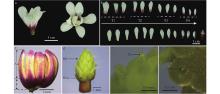
Fig.1
Floral characters of Michelia compressa a: Single flower front and side;b: Floral anatomy;c: Stamens;d: Gynoecium;e: Stigma;f: Ovary. An: Anther;F: Filament;Sti: Stigma;Ova: Ovary;Pc: Papillary cells;Ovu: Ovule; T1: Tepals in the 1st whorl; T2: Tepals in the 2st whorl; T3: Tepals in the 3st whorl; T4: Tepals in the 4st whorl."
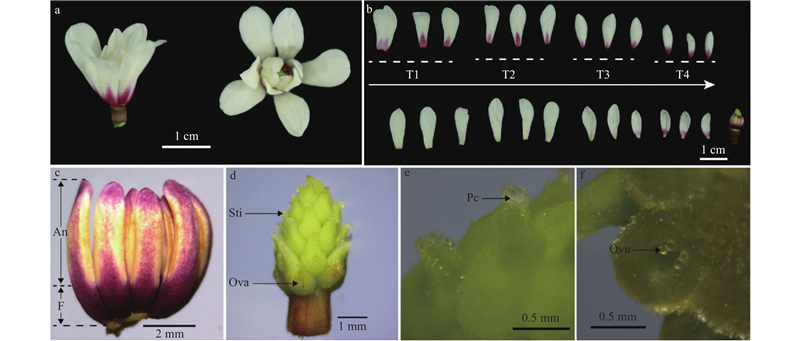
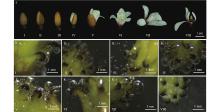
Fig.2
Flowering dynamics and stigma receptivity of Michelia compressa flower R: Receptivity; +: Weak positive reaction; ++: Strong positive reaction; +++: Very strong positive reaction; –: Weaker reaction."
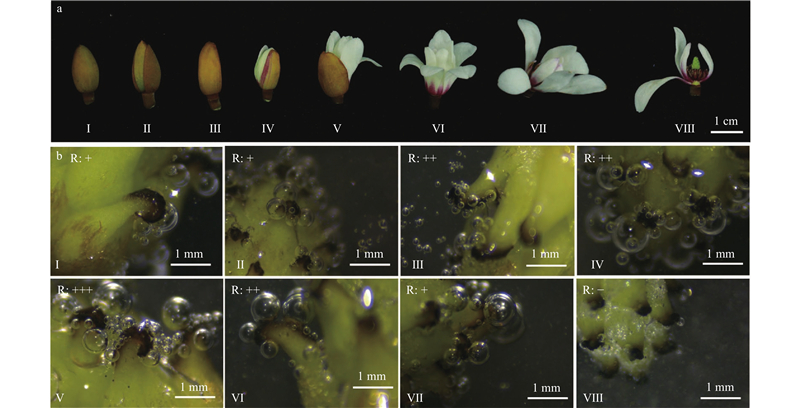
Fig.3
Meiosis of microsporocyte in Michelia compressa a: Prophase I;b, c, d: Metaphase I;e, f, g: Telophase I;h: Telophase II;i: Tetrad;j: Triad;k: Isolated microspore;l: Mature pollen grains. I:Budding stage;II:The first layer of bracts cracked open;III:The first layer of bracts has fallen off;IV:The second layer of bracts begins to crack open;V:The second layer of bracts is about to fall off;VI:The perianth segments are slightly open;VII:The perianth segments are fully opened;VIII:The perianth segments begin to fall off."
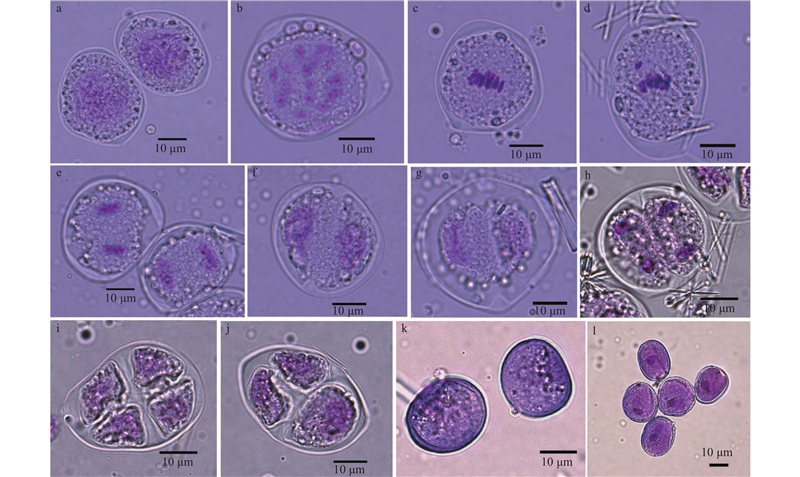
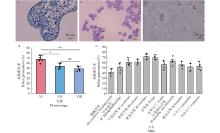
Fig.4
Pollen morphology and germination capacity of Michelia compressa, along with pollen germination capacity of other male parents"
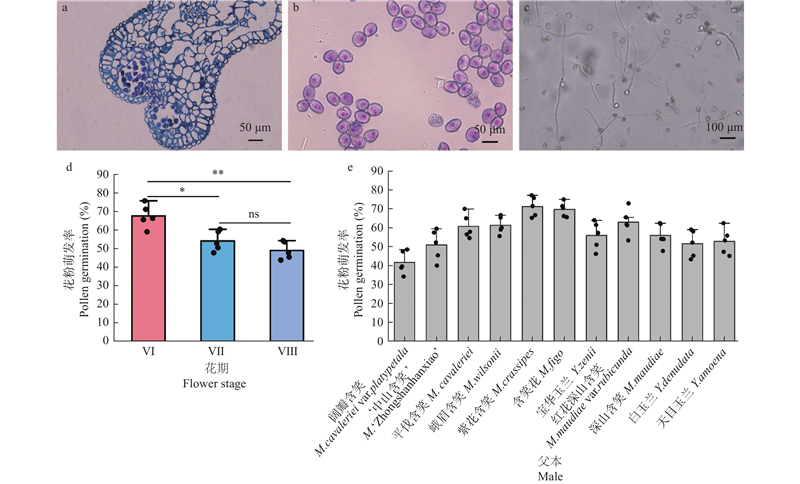
Table 2
Results of hand-pollination"
| 编号 Code | 母本Female | 父本Male | 授粉朵数 Flowers | 果实数 Fruits | 坐果率 Fruit setting rate (%) | 种子数 Seeds |
| 2301 | 台湾含笑Michelia compressa | 天目玉兰Yulania amoena | 20 | 0 | 0 | 0 |
| 2305 | 台湾含笑M. compressa | 宝华玉兰Y. zenii | 14 | 0 | 0 | 0 |
| 2314 | 台湾含笑M. compressa | 红花深山含笑M. maudiae var. rubicunda | 40 | 28 | 70.00 | 238 |
| 2401 | 台湾含笑M. compressa | 阔瓣含笑M. cavaleriei var. platypetala | 30 | 23 | 76.67 | 164 |
| 2402 | 台湾含笑M. compressa | ‘中山含笑’M ‘Zhongshanhanxiao’ | 30 | 7 | 23.33 | 12 |
| 2403 | 台湾含笑M. compressa | 平伐含笑M. cavaleriei | 30 | 21 | 70.00 | 117 |
| 2404 | 台湾含笑M. compressa | 峨眉含笑M. wilsonii | 58 | 27 | 46.55 | 215 |
| 2405 | 台湾含笑M. compressa | 紫花含笑M. crassipes | 30 | 5 | 16.67 | 6 |
| 2407 | 台湾含笑M. compressa | 含笑花M. figo | 33 | 0 | 0 | 0 |
| 2408 | 台湾含笑M. compressa | 宝华玉兰Y. zenii | 30 | 0 | 0 | 0 |
| 2410 | 台湾含笑M. compressa | 深山含笑M. maudiae | 30 | 10 | 33.33 | 29 |
| 2412 | 台湾含笑M. compressa | 白玉兰Y. denudata | 11 | 0 | 0 | 0 |
| 2413 | 台湾含笑M. compressa | 天目玉兰Y. amoena | 24 | 0 | 0 | 0 |
| 2415 | 台湾含笑M. compressa | 红花深山含笑M. maudiae var. rubicunda | 50 | 17 | 34.00 | 82 |
| 2416 | 紫玉兰Y. liliiflora | 台湾含笑M. compressa | 19 | 0 | 0 | 0 |
| 2417 | 峨眉含笑M. wilsonii | 台湾含笑M. compressa | 22 | 0 | 0 | 0 |
| 2418 | 星花玉兰Y. stellata | 台湾含笑M. compressa | 18 | 0 | 0 | 0 |
| 2419 | 乐昌含笑M. chapensis | 台湾含笑M. compressa | 23 | 0 | 0 | 0 |
| 2420 | 金叶含笑M. foveolata | 台湾含笑M. compressa | 25 | 16 | 64.00 | 82 |
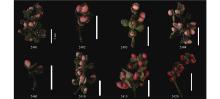
Fig.5
Michelia compressa hybrid fruit The hybrid combinations of fruit numbers are shown in Table 2."
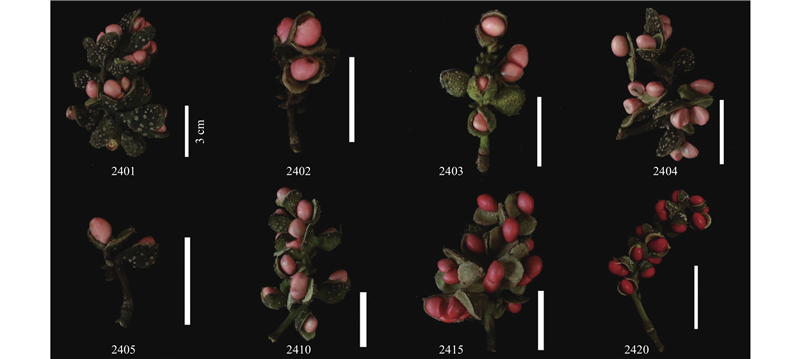
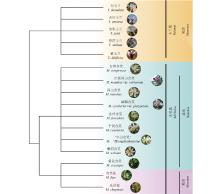
Fig.6
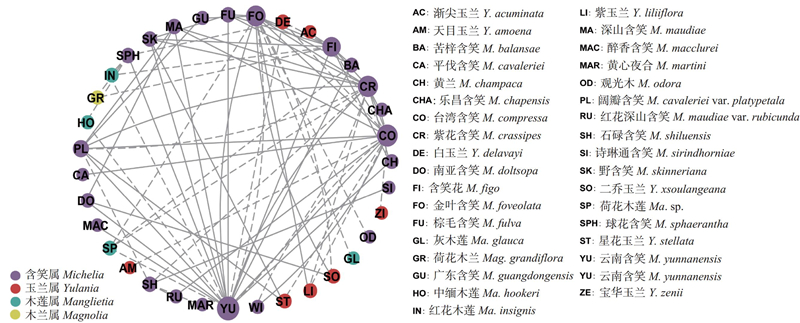
Michelia compressa interspecific and intergeneric affinities"
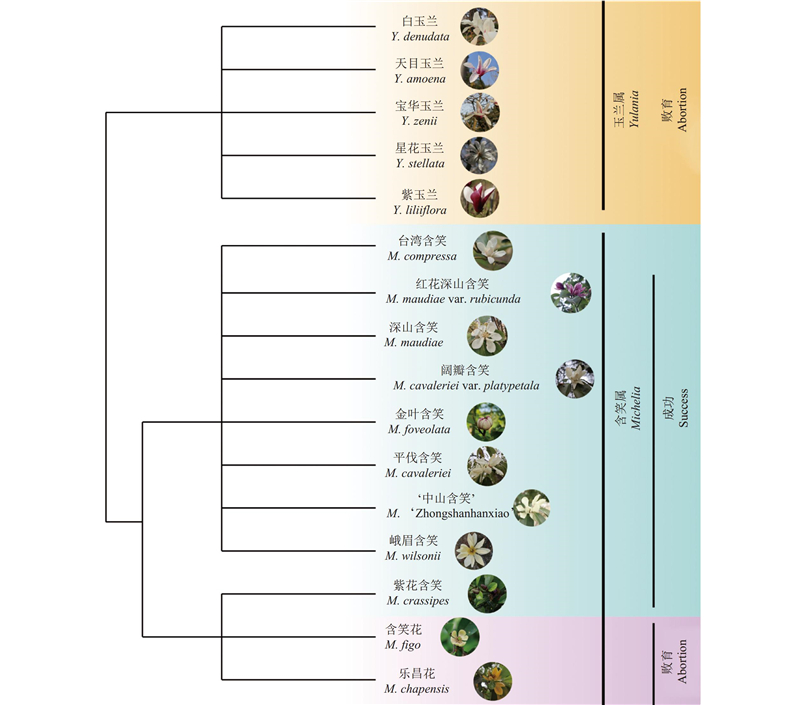
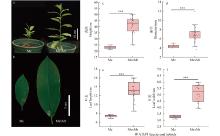
Fig.7
Michelia compressa and M. compressa × M. maudiae var. rubicunda annual seedling phenotypes"
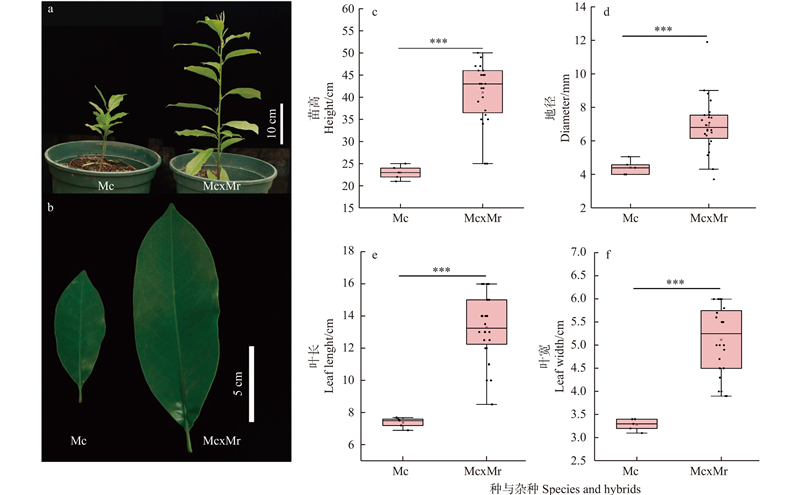
Table 3
Parental genotypes and band types for identifying authentic progenies"
| 亲本基因型 Parental genotypes | 后代基因型 Band types in progenies | 判定真实性杂种基因型 Band types for identifying authentic progenies | 引物 Primer | 杂种基因型 Hybrid band type |
| aa×bb | ab | ab | McES-12 | ab: 1~12 |
| McES-50 | ab: 1~12 | |||
| aa×bc | ab/ac | ab/ac | McES-8 | ab: 2,5,7,8,12;ac: 1,3,4,6,9,10,11 |
| McES-49 | ab: 1,2,4,5,6,7,11;ac: 3,8,9,10,12 |
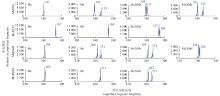
Fig.8
Genotyping by 4 pairs of primers marker for Michelia compressa, M. maudiae var. rubicunda and M. compressa × M. maudiae var. rubicunda Mc: M. compressa;Mr: M. maudiae var. rubicunda;Mc × Mr: M. compressa × M. maudiae var. rubicunda; McES-8, McES-12, McES-49, McES-50: Primers."
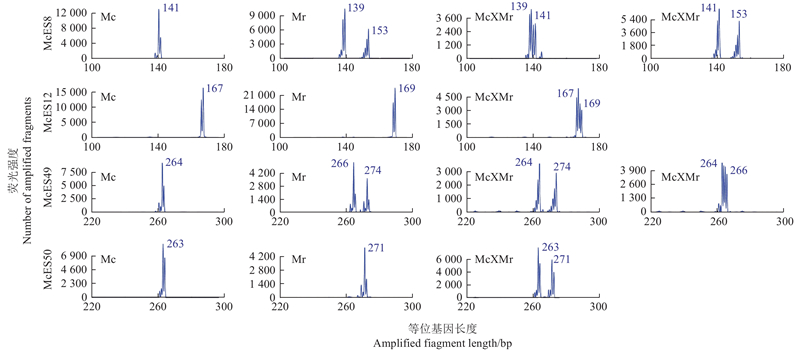
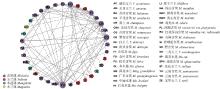
Fig.9
Crosses performed among different species of the Michelia"
| 柴弋霞, 胡希军, 张冬林, 等. 紫花含笑与含笑、深山含笑和阔瓣含笑杂交亲和性分析. 园艺学报, 2018, 45 (10): 1970- 1978. | |
| Chai Y X, Hu X J, Zhang D L, et al. Studies on compatibility of interspecific hybridization between Michelia crassipes and M. figo, M. maudiae, M. platypetala. Acta Horticulturae Sinica, 2018, 45 (10): 1970- 1978. | |
| 陈舜英, 陈芬蕙, 黄裕星, 等. 木兰科乌心石与华盖木种子发芽休眠之研究. 台湾林业科学, 2016, 31 (3): 199- 213. | |
| Chen S Y, Chen F H, Huang Y X, et al. Studies of seed germination and dormancy of the tree species Michelia compressa and Pachylarnax sinica (Magnoliaceae). Taiwan Journal for Science, 2016, 31 (3): 199- 213. | |
| 龚 洵, 潘跃芝, 杨志云, 2001. 木兰科植物的杂交亲和性. 云南植物研究, 23(3): 339–344. | |
| Gong X, Pan Y Z, Yang Z Y, et al. 2001. The cross-compatibility of Magnoliaceae. Acta Botanica Yunnanica, 23(3): 339–344. [in Chinese] | |
| 龚 洵, 张国莉, 潘跃芝, 等. 含笑新品种: 雏菊含笑和春月含笑. 园艺学报, 2003a, 30 (2): 251. | |
| Gong X, Zhang G L, Pan Y Z, et al. Two new hybrid varieties of Michelia. Acta Horticulturae Sinica, 2003a, 30 (2): 251. | |
| 龚 洵, 张国莉, 潘跃芝, 等. 含笑新品种: 郁金含笑、丹芯含笑和沁芳含笑. 园艺学报, 2003b, 30 (1): 123. | |
| Gong X, Zhang G L, Pan Y Z, et al. Three new hybrid varieties of Michelia. Acta Horticulturae Sinica, 2003b, 30 (1): 123. | |
| 李颖婕, 潘跃芝, 龚 洵. 2013. 含笑新品种‘云霞’. 园艺学报, 40(5): 1007–1009. | |
| Li Y J, Pan Y Z, Gong X. 2013. A new hybrid cultivar of Michelia ‘Yunxia’. Acta Horticulturae Sinica, 40(5): 1007–1009. [in Chinese] | |
|
刘向东, 殷云龙. 不同固体培养基配方对台湾含笑花粉萌发的影响及台湾含笑杂交亲和性分析. 植物资源与环境学报, 2022, 31 (2): 49- 56.
doi: 10.3969/j.issn.1674-7895.2022.02.05 |
|
|
Liu X D, Yin Y L. Effects of different solid medium formulas on pollen germination of Michelia compressa and analysis on cross-compatibility of M. compressa. Journal of Plant Resources and Environment, 2022, 31 (2): 49- 56.
doi: 10.3969/j.issn.1674-7895.2022.02.05 |
|
| 毛常丽, 潘跃芝, 龚 洵. 2009. 含笑新品种‘晚春含笑’. 园艺学报, 36(5): 778. | |
| Mao C Y, Pan Y Z, Gong X. 2009. A new hybrid cultivar of Michelia ‘Wanchunhanxiao’. Acta Horticulturae Sinica, 36(5): 778. [in Chinese] | |
|
莫丽文, 赵 莹, 宋希强, 等. 栽培石碌含笑的开花生物学与繁育特性. 热带亚热带植物学报, 2024, 32 (4): 540- 548.
doi: 10.11926/jtsb.4771 |
|
|
Mo L W, Zhao Y, Song X Q, et al. Flowering biological characteristics and reproductive characteristic of cultivated Michelia shiluensis (Magnoliaceae). Journal of Tropical and Subtropical Botany, 2024, 32 (4): 540- 548.
doi: 10.11926/jtsb.4771 |
|
|
亓白岩, 殷云龙, 於朝广, 等. 木兰科含笑属8种植物叶片解剖结构性状与抗寒性的关系. 江苏农业科学, 2013, 41 (4): 150- 153.
doi: 10.3969/j.issn.1002-1302.2013.04.057 |
|
|
Qi B Y, Yin Y L, Yu C G, et al. Relationship between leaf anatomical structural traits and cold resistance in 8 Michelia species (Magnoliaceae). Jiangsu Agricultural Sciences, 2013, 41 (4): 150- 153.
doi: 10.3969/j.issn.1002-1302.2013.04.057 |
|
|
亓白岩, 周冬琴, 於朝广, 等. 8种含笑属植物的抗寒性研究. 江苏农业科学, 2010, (5): 258- 263.
doi: 10.3969/j.issn.1002-1302.2010.05.099 |
|
|
Qi B Y, Zhou D Q, Yu C G, et al. The study on cold resistance of 8 species of Michelia L. Jiangsu Agricultural Sciences, 2010, (5): 258- 263.
doi: 10.3969/j.issn.1002-1302.2010.05.099 |
|
| 邵文豪, 姜景民, 董汝湘, 2016. 含笑新品种‘梦星’. 园艺学报, 43(6): 1219–1220. | |
| Shao W H, Jiang J M, Dong R X. 2016. A new Michelia cultivar ‘Mengxing’. Acta Horticulturae Sinica, 43(6): 1219–1220. [in Chinese] | |
|
王 晶, 王亚玲, 武艳芳, 等. 含笑新品种‘雅馨’的选育. 江苏林业科技, 2023, 50 (5): 32- 34.
doi: 10.3969/j.issn.1001-7380.2023.05.006 |
|
|
Wang J, Wang Y L, Wu Y F, et al. Breeding of a new cultivar Michelia ‘Yaxin’. Journal of Jiangsu Forestry Science & Technology, 2023, 50 (5): 32- 34.
doi: 10.3969/j.issn.1001-7380.2023.05.006 |
|
| 王 晶, 赵强民, 高泽正, 2019. 含笑属Michelia新品种‘香绯’和‘香雪’的选育. 广东园林, 41(6): 53–55. | |
| Wang J, Zhao Q M, Gao Z Z. 2019. Breeding of two new Michelia hybrid varieties. Guangdong Landscape Architecture, 41(6): 53–55. [in Chinese] | |
| 王亚玲, 李 勇, 张寿洲, 等. 木兰科植物的人工杂交. 武汉植物学研究, 2003, 21 (6): 508- 514. | |
| Wang Y L, Li Y, Zhang S Z, et al. The crossing result of Magnoliaceae. Journal of Wuhan Botanical Research, 2003, 21 (6): 508- 514. | |
|
王亚玲, 张寿洲, 李 勇, 等. 木兰科13个分类群和12个杂交组合的染色体数目. 植物分类学报, 2005, 43 (6): 545- 551.
doi: 10.1360/aps030075 |
|
|
Wang Y L, Zhang S Z, Li Y, et al. Chromosome numbers of 13 taxa and 12 crossing combinations in Magnoliaceae. Acta Phytotaxonomica Sinica, 2005, 43 (6): 545- 551.
doi: 10.1360/aps030075 |
|
| 肖玉洁. 2024. 乐昌含笑繁育系统及杂交育种研究. 长沙: 中南林业科技大学. | |
| Xiao Y J. 2024. Study on breeding system and hybrid breeding of Michelia chapensis. Changsha: Central South University of Forestry and Technology. [in Chinese] | |
|
徐海燕, 李文祥, 潘跃芝, 等. 含笑新品种‘云瑞’. 园艺学报, 2014, 41 (2): 403- 404.
doi: 10.3969/j.issn.0513-353X.2014.02.029 |
|
|
Xu H Y, Li W X, Pan Y Z, et al. A new Michelia cultivar ‘Yunrui’. Acta Horticulturae Sinica, 2014, 41 (2): 403- 404.
doi: 10.3969/j.issn.0513-353X.2014.02.029 |
|
| 张 哲, 金晓玲, 胡莹冰, 等. 2022. 紫花含笑的开花动态、传粉特征及柱头可授性. 分子植物育种, https://kns.cnki.net/kcms/detail/46.1068.S.20221117.1106.006.html. | |
| Zhang Z, Jin X L, Hu Y B, et al. 2022. Flowering dynamics, pollination characteristics and stigma receptivity in Michelia crassipes. Molecular Plant Breeding, https://kns.cnki.net/kcms/detail/46.1068.S.20221117.1106.006.html. [in Chinese]) | |
|
张 峥, 邵凤侠, 金晓玲, 等. 金叶含笑与2种含笑的杂交亲和性. 浙江农林大学学报, 2023, 40 (5): 961- 969.
doi: 10.11833/j.issn.2095-0756.20230021 |
|
|
Zhang Z, Shao F X, Jin X L, et al. Compatibility between Michelia foveolata and two Michelia species. Journal of Zhejiang A& F University, 2023, 40 (5): 961- 969.
doi: 10.11833/j.issn.2095-0756.20230021 |
|
|
Barbosa J C J, Caruzo M B R, Simões A R G, et al. Taxonomic revision of the native Magnolia (Magnoliaceae) species of Brazil. PhytoKeys, 2024, 238, 33- 64.
doi: 10.3897/phytokeys.238.113277 |
|
|
Chen T T, Wang Z Q, Wang J J, et al. Transcriptomic and metabolomic analyses unveil the growth advantage mechanism conferred by heterosis of Michelia ‘Zhongshanhanxiao’. Tree Physiology, 2023, 43 (8): 1454- 1466.
doi: 10.1093/treephys/tpad046 |
|
| Chen Y, Chen G, Yang J, et al. 2016. Reproductive biology of Magnolia sinica (Magnoliaecea), a threatened species with extremely small populations in Yunnan, China. Plant Diversity 38(5): 253–258. | |
|
Cui L M, Liu X D, Liu J Q, et al. Genetic relationships of Michelia compressa (Magnoliaceae) with Michelia species and its improvement by interspecific hybridization. Trees-Structure and Function, 2024, 38 (5): 1079- 1094.
doi: 10.1007/s00468-024-02537-2 |
|
|
Cui L M, Liu Z M, Yin Y L, et al. Research progress of chromosome doubling and 2n gametes of ornamental plants. Horticulturae, 2023, 9 (7): 752.
doi: 10.3390/horticulturae9070752 |
|
|
Cui L M, Sun Y N, Xiao K Z, et al. Analysis on the abnormal chromosomal behaviour and the partial female fertility of allotriploid Lilium–‘Triumphator’ (LLO) is not exceptional to the hypothesis of lily interploid hybridizations. Scientia Horticulturae, 2022, 293, 110746.
doi: 10.1016/j.scienta.2021.110746 |
|
|
Dong S S, Wang Y L, Xia N H, et al. Plastid and nuclear phylogenomic incongruences and biogeographic implications of Magnolia s. l. (Magnoliaceae). Journal of Systematics and Evolution, 2022, 60 (1): 1- 15.
doi: 10.1111/jse.12727 |
|
|
Dridi J, Fendri M, Breton C M, et al. Characterization of olive progenies derived from a Tunisian breeding program by morphological traits and SSR markers. Scientia Horticulturae, 2018, 236, 127- 136.
doi: 10.1016/j.scienta.2018.03.042 |
|
| Gottsberger G, Silberbauer-Gottsberger I, Seymour R S, et al. 2012. Pollination ecology of Magnolia ovata may explain the overall large flower size of the genus. Flora-Morphology, Distribution, Functional Ecology of Plants, 207(2): 107–118. | |
|
Han C Y, Luo G F, Ji L, et al. ‘Chilongzhua’ and ‘Yanzhizui’: two interspecific hybrid cultivars of Michelia. HortScience, 2014, 49 (1): 96- 97.
doi: 10.21273/HORTSCI.49.1.96 |
|
|
He J Y, Reddy G V P, Liu M D, et al. A general formula for calculating surface area of the similarly shaped leaves: Evidence from six Magnoliaceae species. Global Ecology and Conservation, 2020, 23, e01129.
doi: 10.1016/j.gecco.2020.e01129 |
|
|
Huang J B, Yang L, Yang L, et al. Stigma receptors control intraspecies and interspecies barriers in Brassicaceae. Nature, 2023, 614 (7947): 303- 308.
doi: 10.1038/s41586-022-05640-x |
|
|
Li C H, Guan H H, Jing X, et al. Genomic insights into historical improvement of heterotic groups during modern hybrid maize breeding. Nature Plants, 2022, 8 (7): 750- 763.
doi: 10.1038/s41477-022-01190-2 |
|
|
Li Y M, Ye T W, Han C X, et al. Cytogenetic analysis of interspecific hybridization in oil-tea (Camellia oleifera). Euphytica, 2021, 217 (2): 28.
doi: 10.1007/s10681-020-02762-z |
|
| Lin T P. Allozyme variations in Michelia formosana (Kanehira) Masamune (Magnoliaceae), and the inference of a glacial refugium in Taiwan. Theoretical and Applied Genetics, 2001, 102 (2): 450- 457. | |
| Liu S Y, Sun Y N, Peng M Z, et al. F1 distant hybrids between two edible lilies (Lilium brownii var. viridulum and L. davidii var. unicolor) produce more n than 2n functional eggs with more recombinant chromosomes. Euphytica, 2023, 220 (1): 4. | |
|
Liu Y M, Zhang L, Sun Y N, et al. The common occurrence of 2n eggs by lily F1 distant hybrids and its significance on lily breeding: a case of analyzing OT hybrids. Euphytica, 2021, 217 (11): 204.
doi: 10.1007/s10681-021-02935-4 |
|
|
Lobdell M S. Register of Magnolia cultivars. HortScience, 2021, 56 (12): 1614- 1675.
doi: 10.21273/HORTSCI16054-21 |
|
|
Ma W C, Li Y M, Gao H R, et al. Functional dissection of three pollen-side quantitative trait loci against multiple stylar unilateral incompatibility mechanisms in Solanum pennellii LA0716. New Phytologist, 2025, 246 (1): 298- 316.
doi: 10.1111/nph.20456 |
|
|
Ma X, Jia Q X, Li S, et al. An enhanced network of energy metabolism, lysine acetylation, and growth-promoting protein accumulation is associated with heterosis in elite hybrid rice. Plant Communications, 2023, 4 (4): 100560.
doi: 10.1016/j.xplc.2023.100560 |
|
|
Madesis P, Abraham E M, Kalivas A, et al. Genetic diversity and structure of natural Dactylis glomerata L. populations revealed by morphological and microsatellite-based (SSR/ISSR) markers. Genetics and Molecular Research, 2014, 13 (2): 4226- 4240.
doi: 10.4238/2014.June.9.8 |
|
| Parris J K. 2018. Magnolia: impact of interspecific hybridization on genetic variation and ongoing breeding initiatives. The United States of America: Clemson University. | |
|
Sun C Q, Chen F D, Teng N J, et al. Factors affecting seed set in the crosses between Dendranthema grandiflorum (Ramat.) Kitamura and its wild species. Euphytica, 2010, 171 (2): 181- 192.
doi: 10.1007/s10681-009-0005-6 |
|
|
Wang B B, Hou M, Shi J P, et al. De novo genome assembly and analyses of 12 founder inbred lines provide insights into maize heterosis. Nature Genetics, 2023, 55 (2): 312- 323.
doi: 10.1038/s41588-022-01283-w |
|
| Wang R H, Jia H, Wang J Z, et al. 2010. Flowering and pollination patterns of Magnolia denudata with emphasis on anatomical changes in ovule and seed development. Flora-Morphology, Distribution, Functional Ecology of Plants, 205(4): 259–265. | |
| Wang R H, Xu S, Liu X Y, et al. 2014. Thermogenesis, flowering and the association with variation in floral odour attractants in Magnolia sprengeri (Magnoliaceae). PLoS One. 9(6): e99356. | |
|
Wang Y B, Li W Q, Wang L X, et al. Three types of genes underlying the Gametophyte factor1 locus cause unilateral cross incompatibility in maize. Nature Communications, 2022, 13 (1): 4498.
doi: 10.1038/s41467-022-32180-9 |
|
|
Wei X, Zhou Y W, Abbas F, et al. Distant heteroploid hybridization improved Hedychium floral scent, floral color and morphologcal traits. Industrial Crops and Products, 2023, 194, 116357.
doi: 10.1016/j.indcrop.2023.116357 |
|
|
Wu L K, Wan L, Cui L M, et al. Analysis of the cross-compatibility of Lilium brownii var. viridulum and L. davidii var. unicolor. Scientia Horticulturae, 2021, 284, 110130.
doi: 10.1016/j.scienta.2021.110130 |
|
|
Wu Q, Jin L, Nie T, et al. The flowering dynamics and breeding system in Magnolia × soulangeana ‘Hongyun’. Scientia Horticulturae, 2024, 324, 112639.
doi: 10.1016/j.scienta.2023.112639 |
|
|
Xu H Y, Li F L, Pan Y Z, et al. Interspecific hybridization processes between Michelia yunnanensis and M. crassipes and embryogenesis of the heterozygote. HortScience, 2017, 52 (8): 1043- 1047.
doi: 10.21273/HORTSCI12086-17 |
|
|
Yao W H, Fan Y, Wang Z H, et al. Diversity and geographic distribution patterns of wild Magnoliaceae species in China. Sustainability, 2024, 16 (21): 9448.
doi: 10.3390/su16219448 |
|
|
Yin Y L, Wang Z Q, Sun M Y, et al. Magnolia compressa Zhongshanhanxiao: a new Magnolia L. cultivar (Magnoliaceae). HortScience, 2023, 58 (10): 1161- 1162.
doi: 10.21273/HORTSCI17229-23 |
|
|
Zhang H H, Wu H Y, Zhou Q, et al. Flowering characteristics and reproductive biology of Nymphaea hybrid, a precious water lily. Scientia Horticulturae, 2021, 287, 110268.
doi: 10.1016/j.scienta.2021.110268 |
|
| Zhang N N, Yu J J, Wang Y H, et al. Molecular evidence for asymmetric hybridization in three closely related sympatric species. AoB Plants, 2018, 10 (1): ply011. | |
|
Zhang S Z, Wang Y L, He Z C, et al. Genome differentiation in Magonoliaceae as revealed from meiotic pairing in interspecific and intergeneric hybrids. Journal of Systematics and Evolution, 2011, 49 (6): 518- 527.
doi: 10.1111/j.1759-6831.2011.00164.x |
|
|
Zhang Y, Zhou S J, Chen Y, et al. New insights into interspecies relationships, chromosomal evolution, and hybrid identification in the Lycoris Herb. BMC Plant Biology, 2025, 25 (1): 78.
doi: 10.1186/s12870-025-06112-w |
| [1] | Xia Bo;Tian Chengming;Luo Youqing;Zhao Fengyu;Ma Jianhai;Wang Guocang;Han Fuzhong. Flowering Characteristics and Chemical Control of the Buds of Arceuthobium sichuanense [J]. Scientia Silvae Sinicae, 2010, 46(4): 98-102. |
| [2] | Yu Chaoguang;Yin Yunlong;Xu Jianhua. Identification of Taxodium Hybrids by SRAP Analysis [J]. Scientia Silvae Sinicae, 2009, 12(2): 142-146. |
| [3] | Li Zhouqi;Wang Zhangrong. RAPD MARKERS USED FOR THE HYBRID IDENTIFICATION AND PARENTS CHOICE IN LIRIODENDRON [J]. Scientia Silvae Sinicae, 2002, 38(5): 169-174. |
| Viewed | ||||||
|
Full text |
|
|||||
|
Abstract |
|
|||||
