
Scientia Silvae Sinicae ›› 2026, Vol. 62 ›› Issue (9): 187-197.doi: 10.11707/j.1001-7488.LYKX20250726
• Research papers • Previous Articles
Ruiyao Chen1,Qianqing Wang1,Wenjing Hao1,Yumeng Jiang2,Lihu Dong2,Zheng Miao2,Jinghui Jiang1,*( )
Received:2025-12-03
Revised:2026-03-10
Online:2026-09-10
Published:2026-09-16
Contact:
Jinghui Jiang
E-mail:jiangjh@caf.ac.cn
CLC Number:
Ruiyao Chen,Qianqing Wang,Wenjing Hao,Yumeng Jiang,Lihu Dong,Zheng Miao,Jinghui Jiang. Effects of Knots Measured and Analyzed by Finite Element Method on Longitudinal Compression Performance of Wood[J]. Scientia Silvae Sinicae, 2026, 62(9): 187-197.

Fig.1
Schematic diagram of longitudinal compressive failure types"


Fig.2
Schematic diagram of the main failure types and mixed failure types of Pinus koraiensis and Larix olgensis clear wood and knotty wood a?d are type Ⅲ and type Ⅵ failures of P. koraiensis clear wood, and type Ⅲ and type Ⅵ failures of L. olgensis clear wood, respectively; e?h are type Ⅲ and type Ⅲ+Ⅵ failures of P. koraiensis knotty wood, and type Ⅲ and type Ⅲ+Ⅵ failures of L. olgensis knotty wood, respectively."

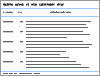
Table 1
The knots size and volume ratio of the specimen are grouped"
| 树种 Tree species | 节子尺寸Knot size | 节子体积比Knot-to-volume ratio | |||||
| 组号 Group | 试样数量 Sample quantity | 范围 Scope/mm | 组号 Group | 试样数量 Sample quantity | 范围 Scope (%) | ||
| 红松 P.koraiensis | T1 | 35 | 0.10~4.00 | T1' | 30 | 0.02~1.00 | |
| T2 | 19 | 4.00~10.00 | T2' | 23 | 1.00~5.00 | ||
| T3 | 29 | 10.00~33.00 | T3' | 30 | 5.00~30.00 | ||
| 长白落叶松 L.olgensis | T4 | 13 | 0.18~4.00 | T4' | 17 | 0.02~1.00 | |
| T5 | 12 | 4.00~10.00 | T5' | 10 | 1.00~5.00 | ||
| T6 | 10 | 10.00~18.75 | T6' | 8 | 5.00~7.85 | ||

Fig.3
Longitudinal compressive strength of two wood species with different knot size classifications"


Fig.4
Longitudinal compressive strength of two wood species classified by different knot-to-volume ratios"

Table 2
Correlation coefficients between various parameters of Pinus koraiensis and longitudinal compressive strength"
| 参数 Parameter | 顺纹抗压强度Longitudinal compressive strength | |
| 相关系数Coefficient | P | |
| 节子尺寸Knot size | ?0.407** | <0.001 |
| 节子体积比 Knot-to-volume ratio | ?0.426** | <0.001 |
Table 3
Correlation coefficients between various parameters of Larix olgensis and longitudinal compressive strength"
| 参数 Parameter | 顺纹抗压强度Longitudinal compressive strength | |
| 相关系数Coefficient | P | |
| 节子尺寸Knot size | ?0.706** | <0.001 |
| 节子体积比 Knot-to-volume ratio | ?0.631** | <0.001 |

Fig.5
The linear relationship between the grain deflection angles near different knots and the longitudinal compressive strength in two types of wood"


Fig.6
Comparison between experimental and finite element simulated load-displacement curves a?c are dead knots at 30°, 40°, and 50°, respectively; d?f are live knots at 30°, 35°, and 40°, respectively; g is a live knot with a crack. TEST1 is the specimen used for modeling in each group, TEST2?TEST5 are the specimens not used for modeling but used for validation in each group, and FE is the finite element simulation curve."

Table 4
Longitudinal compressive strength and modulus of elasticity for tests and finite element simulations"
| 编号 Group | 试验强度 Test strength/MPa | 模拟强度 Simulation strength/MPa | 误差 Error (%) | 试验弹性模量 Test modulus of elasticity/MPa | 模拟弹性模量 Simulated modulus of elasticity/MPa | 误差 Error (%) |
| 死节30° Dead knot, 30° | 26.90 | 26.47 | 1.62 | 38.16 | 42.53 | 11.45 |
| 死节40° Dead knot, 40° | 19.17 | 20.32 | 6.00 | 30.74 | 28.39 | 8.28 |
| 死节50° Dead knot, 50° | 18.20 | 17.59 | 3.47 | 32.94 | 33.80 | 2.61 |
| 活节30° Live knot, 30° | 20.27 | 19.07 | 6.29 | 34.83 | 37.00 | 6.23 |
| 活节35° Live knot, 35° | 18.75 | 17.11 | 9.59 | 28.93 | 33.16 | 14.62 |
| 活节40° Live knot, 40° | 14.69 | 14.70 | 0.07 | 29.12 | 32.61 | 11.98 |
| 活节开裂 Live knot with crack | 11.63 | 10.94 | 6.31 | 19.43 | 21.05 | 8.34 |

Fig.7
Stress contour of finite element simulation for knotty Pinus koraiensis specimen"

| 陈金浩. 2023. 家具用实木板材力学强度预测的光谱迁移建模方法研究. 哈尔滨: 东北林业大学. | |
| Chen J H. 2023. Research on NIR spectral migration modeling method for prediction of mechanical strength of solid wood panels for furniture. Harbin: Northeast Forestry University. [in Chinese] | |
|
龚迎春, 王朝辉, 江京辉, 等. 杉木目测等级规格材足尺抗压和拉伸强度的设计值研究. 林业工程学报, 2017, 2 (2): 22- 27.
doi: 10.13360/j.issn.2096-1359.2017.02.004 |
|
|
Gong Y C, Wang Z H, Jiang J H, et al. Design values of compressive and tensile strength for visually graded Chinese fir dimension lumber. Journal of Forestry Engineering, 2017, 2 (2): 22- 27.
doi: 10.13360/j.issn.2096-1359.2017.02.004 |
|
| 柯病凡. 节子对馬尾松木构件抗弯强度及抗弯弹性模量的影响. 安徽农学院学报, 1982 (2): 11- 21, 120. | |
| Ke B F. Effect of nodes on bending strength and bending elastic modulus of masson pine wood members. Journal of Anhui Agricultural University, 1982 (2): 11- 21, 120. | |
| 李 坚, 甘文涛, 陈志俊, 等. 向新出发, 木材科学前沿发展. 森林工程, 2025, 41 (1): 1- 39. | |
| Li J, Gan W T, Chen Z J, et al. Frontier advances in wood science towards a new departure. Forest Engineering, 2025, 41 (1): 1- 39. | |
|
李明月, 陈东升, 王雪玉, 等. 节子的性质及其对木材材性的影响. 西北林学院学报, 2020, 35 (4): 197- 204.
doi: 10.3969/j.issn.1001-7461.2020.04.31 |
|
|
Li M Y, Chen D S, Wang X Y, et al. Nature of the knot and its impact on wood properties. Journal of Northwest Forestry University, 2020, 35 (4): 197- 204.
doi: 10.3969/j.issn.1001-7461.2020.04.31 |
|
|
刘松龄, 方文彬, 李飞云. 杉木木节对受弯构件承载能力影响的研究. 中南林学院学报, 1981 (1): 22- 38.
doi: 10.14067/j.cnki.1673-923x.1981.01.002 |
|
|
Liu S L, Fang W B, Li F Y. Study on the influence of knotty wood in cedar on the bearing capacity of bending members. Journal of Central South Forestry University, 1981 (1): 22- 38.
doi: 10.14067/j.cnki.1673-923x.1981.01.002 |
|
| 潘禹臣. 2018. 损伤对木梁抗震性能影响的研究. 扬州: 扬州大学. | |
| Pan Y C. 2018. Research on the effect of damage on the seismic behavior of timber beam. Yangzhou: Yangzhou University. [in Chinese] | |
|
阙泽利, 李哲瑞, 冒海燕, 等. SPF规格材密度与节子变异特性对抗弯性能的影响. 林产工业, 2016, 43 (3): 16- 18.
doi: 10.3969/j.issn.1001-5299.2016.03.004 |
|
|
Que Z L, Li Z R, Mao H Y, et al. The influence of bending performance by the variations in wood density and knot of SPF dimension lumber. China Forest Products Industry, 2016, 43 (3): 16- 18.
doi: 10.3969/j.issn.1001-5299.2016.03.004 |
|
| 上官蔚蔚, 任海青, 邢新婷, 等. 2015. 有限元在木材中的应用(Ⅰ): 木材模型及选择. 木材加工机械, 26(2): 42-45. | |
| Shangguan W W, Ren H Q, Xing X T, et al. 2015. Application of finite element in wood (Ⅰ): wood model and selection. Wood Processing Machinery, 26(2): 45-48. [in Chinese] | |
| 宋 闯, 孙丽萍, 王鹏鲲, 等. 基于近红外光谱技术的含节子木材抗弯性能研究. 森林工程, 2024, 40 (4): 168- 174. | |
| Song C, Sun L P, Wang P K, et al. Research on the bending resistance of wood containing knots based on near-infrared spectroscopy technology. Forest Engineering, 2024, 40 (4): 168- 174. | |
| 王燕凤. 2017. 树木年轮图像的边缘检测与树龄测量方法研究. 临安: 浙江农林大学. | |
| Wang Y F. 2017. Study on edge detection for tree-ring detection and tree age measurement. Lin’an: Zhejiang A&F University. [in Chinese] | |
|
王钱晴, 陈瑞瑶, 黄荣庆, 等. 饱和蒸汽处理和松材线虫病对马尾松木材物理力学性能的影响. 东北林业大学学报, 2025, 53 (9): 121- 128.
doi: 10.13759/j.cnki.dlxb.2025.09.005 |
|
|
Wang Q Q, Chen R Y, Huang R Q, et al. Influence of saturated steam treatment and Bursaphelenchus xylophilus disease on the physical and mechanical properties of Pinus massoniana wood. Journal of Northeast Forestry University, 2025, 53 (9): 121- 128.
doi: 10.13759/j.cnki.dlxb.2025.09.005 |
|
| 张 雷. 2017. 木材的力学性质试验研究及数值模拟方法. 北京: 北京交通大学. | |
| Zhang L. 2017. Experimental study on the mechanical properties of wood and the numerical modeling strategies of wood. Beijing: Beijing Jiaotong University. [in Chinese] | |
|
Baño V, Arriaga F, Soilán A, et al. Prediction of bending load capacity of timber beams using a finite element method simulation of knots and grain deviation. Biosystems Engineering, 2011, 109 (4): 241- 249.
doi: 10.1016/j.biosystemseng.2011.05.008 |
|
|
Cherry R, Karunasena W, Manalo A. Mechanical properties of low-stiffness out-of-grade hybrid pine: effects of knots, resin and pith. Forests, 2022, 13 (6): 927.
doi: 10.3390/f13060927 |
|
| Cown J, Walford B, Kimberley O. Cross-grain effect on tensile strength and bending stiffness of Pinus radiata structural lumber. New Zealand Journal of Forestry Science, 1995, 25 (2): 256- 62. | |
|
Fujimoto T, Tsuchikawa S. Identification of dead and sound knots by near infrared spectroscopy. Journal of Near Infrared Spectroscopy, 2010, 18 (6): 473- 479.
doi: 10.1255/jnirs.887 |
|
|
Gu H, Andersson H, Vicen R. Wood defect classification based on image analysis and support vector machines. Wood Science and Technology, 2010, 44, 693- 704.
doi: 10.1007/s00226-009-0287-9 |
|
|
Hossein M A, Shahverdi M, Roohnia M. The effect of wood knot as a defect on modulus of elasticity (MOE) and damping correlation. Notulae Scientia Biologicae, 2011, 3 (3): 145- 149.
doi: 10.15835/nsb336119 |
|
|
Jenkel C, Kaliske M. Finite element analysis of timber containing branches: an approach to model the grain course and the influence on the structural behaviour. Engineering Structures, 2014, 75, 237- 247.
doi: 10.1016/j.engstruct.2014.06.005 |
|
|
Lukacevic M, Füssl J. Numerical simulation tool for wooden boards with a physically based approach to identify structural failure. European Journal of Wood and Wood Products, 2014, 72 (4): 497- 508.
doi: 10.1007/s00107-014-0803-y |
|
|
Nagai H, Murata K, Nakano T. Strain analysis of lumber containing a knot during tensile failure. Journal of Wood Science, 2011, 57, 114- 118.
doi: 10.1007/s10086-010-1154-x |
|
| Oh J K, Kim K M, Lee J J. Use of adjacent knot data in predicting bending strength of dimension lumber by X-ray. Wood and Fiber Science, 2010, 1, 10- 20. | |
|
Rocha V, Costa R, Costa J, et al. Wood knots influence the modulus of elasticity and resistance to compression. Floresta e Ambiente, 2018, 25, e20170906.
doi: 10.1590/2179-8087.090617 |
|
|
Villar J R, Guaita M, Vidal P, et al. Analysis of the stress state at the cogging joint in timber structures. Biosystems Engineering, 2007, 96 (1): 79- 90.
doi: 10.1016/j.biosystemseng.2006.09.009 |
|
| Zhou H, Smith I. Factors influencing bending properties of white spruce lumber. Wood and Fiber Science, 1991, 4, 483- 500. | |
|
Zhou Z, Yin J X, Zhou S Y, et al. Detection of knot defects on coniferous wood surface using near infrared spectroscopy and chemometrics. BioResources, 2016, 11 (4): 9533- 9546.
doi: 10.15376/biores.11.4.9533-9546 |
| [1] | Min Ji,Rui Gao,Xiaohuan Wang,Xingliang Diao,Jiakai Han,Yang Zhao,Guofu Wang,Wei Zhang. Online Detecting Method of Structural Lumber Knot Based on Deep Learning [J]. Scientia Silvae Sinicae, 2025, 61(11): 150-159. |
| [2] | Chen Dongsheng, Li Fengri, Sun Xiaomei, Zhang Shougong. Reconstruction Dynamic Models of Height to Crown Base of Larch(Larix olgensis)Plantation Applying Knot Analysis Technique [J]. Scientia Silvae Sinicae, 2019, 55(9): 103-110. |
| [3] | Li Bo, Zhang Zhankuan. Theoretical Modeling and Analysis for Laser Shock Tensioning Process of Circular Saw Blade [J]. Scientia Silvae Sinicae, 2018, 54(7): 112-117. |
| [4] | Chen Yongping, Guo Wenjing, Wang Zheng. An Improved Algorithm of Veneer Knot Image Recognition Based on Mathematical Morphology [J]. Scientia Silvae Sinicae, 2015, 51(9): 90-95. |
| [5] | He Sheng;Lin Lanying;Fu Feng;Cao Pingxiang. Finite Element Analysis of Bending Strength for Pinus sylvestris var. mongolica Finger-Jointed Lumber [J]. Scientia Silvae Sinicae, 2012, 48(11): 63-68. |
| [6] | Wang Achuan;Yu Linying;Cao Jun. An Inspection for the Veneer Knot Defect Based on Extension of C-V Model and AOS Scheme Coupling with Technique of Painting Background [J]. Scientia Silvae Sinicae, 2011, 47(5): 106-111. |
| [7] | Chen Dongsheng;Li Fengri;Sun Xiaomei;Jia Weiwei. Models to Predict Knot Size for Larch Plantation Using Linear Mixed Model [J]. Scientia Silvae Sinicae, 2011, 47(11): 121-128. |
| [8] | Shao Zhuoping<sup></sup>Tong Yongyao<sup></sup>Sheng Hongyu<sup></sup>Niu Zhongrong<sup></sup>Dong Honggan<sup></sup>. Analysis of Stress Field Near Crack Tip Using Finite Element Method and Prediction of Cracking Direction for Wood Sample with Crack [J]. Scientia Silvae Sinicae, 2010, 46(10): 108-113. |
| [9] | Wu Kaijin. Preparation and Characterization of Gold Extracting Activated Carbon from Bamboo Knot [J]. Scientia Silvae Sinicae, 2009, 12(12): 124-128. |
| [10] | Lu Jun;Li Fengri. Long and Missing Ring of Knots in Pinus sylvertris var.mongolica Plantation [J]. Scientia Silvae Sinicae, 2007, 43(12): 16-21. |
| [11] | Qi Dawei. Log with Knot-Hole Image Processing Based on the Discrete Brownian Random Field and Fractal Parameter [J]. Scientia Silvae Sinicae, 2004, 40(4): 145-147. |
| [12] | Laifa Wang,Baojun Yang,Chuandao Li. EVALUATION OF PATHOGENICITY OF PARASITIC FUNGI TO ROOT-KNOT NEMATODES [J]. Scientia Silvae Sinicae, 1999, 35(3): 41-47. |
| [13] | Cai Liping;Liu Yixing;Shang Deku. ANALYSIS OF TEMPERATURE DISTRIBUTION ON WOOD BY FINITE ELEMENT METHOD [J]. , 1992, 28(1): 90-94. |
| Viewed | ||||||
|
Full text |
|
|||||
|
Abstract |
|
|||||
