
Scientia Silvae Sinicae ›› 2026, Vol. 62 ›› Issue (10): 161-171.doi: 10.11707/j.1001-7488.LYKX20260248
• Research papers • Previous Articles
Shuai Guo1,2( ),Qi Gu1,Han Li1,Enhua Hao1,Qi Dong1,Mengqi Yu2,Pengfei Lu1,*()
Received:2026-04-27
Online:2026-10-10
Published:2026-10-16
Contact:
Pengfei Lu
E-mail:gsnznb98@126.com;lpengfei224@126.com
CLC Number:
Shuai Guo,Qi Gu,Han Li,Enhua Hao,Qi Dong,Mengqi Yu,Pengfei Lu. Host Adaptability of Different Populations of Anoplophora glabripennis[J]. Scientia Silvae Sinicae, 2026, 62(10): 161-171.
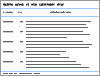
Table 1
Contents of nutrients, secondary metabolites and moisture in the bark of different host plants"
| 项目Item | 复叶槭 Acer negundo | 洋白蜡 Fraxinus pennsylvanica |
| 含水率 Moisture content (%) | 1.561±0.045 a | 1.067±0.049 b |
| 纤维素 Cellulose/(mg?g?1) | 221.436±5.316 a | 198.768±4.315 b |
| 可溶性糖 Soluble sugar/(mg?g?1) | 21.115±0.318 a | 18.608±0.079 b |
| 淀粉 Starch/(mg?g?1) | 16.218±0.536 a | 15.151±0.154 a |
| 蛋白质 Protein/(mg?g?1) | 44.328±0.996 a | 42.000±1.184 a |
| 黄酮类化合物 Flavonoids/(mg?g?1) | 1.844±0.039 b | 1.995±0.035 a |
| 生物碱 Alkaloids/(mg?g?1) | 0.907±0.042 a | 1.011±0.033 a |
| 倍半萜 Sesquiterpenes/(mg?g?1) | 8.784±0.134 a | 8.006±0.035 b |
| 单宁 Tannins/(mg?g?1) | 19.483±0.315 b | 21.202±0.309 a |

Fig.1
Selective feeding of different treatment groups of Anoplophora glabripennis"


Fig.2
Non-selective feeding of different treatment groups of Anoplophora glabripennis Data are mean±SE. Different lowercase letters denote significant differences in feeding area among treatments (P<0.05, t-test)."

Table 2
Selective oviposition of Anoplophora glabripennis in different treatment groups"
| 处理组 Treatment group | 平均刻槽数 Average number of grooves | 平均产卵数 Average number of eggs laid |
| Q-F | 38.333±4.726 a | 15±3 a |
| Q-Y | 0 c | 0 b |
| G-F | 40.667±2.517 a | 15.667±4.163 a |
| G-Y | 9.667±3.055 b | 1.667±0.943 b |

Fig.3
Comparison of survival duration of adult Anoplophora glabripennis fed on single host plant ** indicates highly significant difference by t-test (P<0.01); *** indicates extremely significant difference by t-test (P<0.001)."


Fig.4
Midgut digestive enzyme activities of adult Anoplophora glabripennis Data are mean±SE. Different lowercase letters indicate significant difference among different treatments with the same enzyme by t-test (P<0.05)."


Fig.5
Midgut detoxification enzyme activities of adult Anoplophora glabripennis Data are mean±SE. Different lowercase letters indicate significant difference among different treatments with the same enzyme by t-test (P<0.05)."


Fig.6
Midgut protective enzyme activities of adult Anoplophora glabripennis Data are mean±SE. Different lowercase letters indicate significant difference among different treatments with the same enzyme by t-test (P<0.05)."

Table 3
Correlation analysis of feeding selection, survival duration, midgut enzyme activities and bark contents of host plants in Anoplophora glabripennis from Qiqihar population"
| 项目Item | 含水率 Moisture content | 纤维素 Cellulose | 可溶性糖 Soluble sugar | 淀粉 Starch | 蛋白质 Protein | 黄酮类 化合物 Flavonoids | 生物碱 Alkaloids | 倍半萜 Sesquiterpenes | 单宁 Tannins |
| 选择性取食Selective feeding | 0.657 | 0.6 | 0.6 | 0.6 | 0.714 | ?0.943** | ?0.657 | 0.714 | ?0.714 |
| 非选择性取食Non-selective feeding | 0.714 | 0.6 | 0.6 | 0.6 | 0.657 | ?0.771 | ?0.714 | 0.657 | ?0.657 |
| 存活时长Survival duration | 0.794 | 0.618 | 0.618 | 0.618 | 0.794 | ?0.883* | ?0.794 | 0.794 | ?0.794 |
| 胰蛋白酶活性Trypsin activity | 0.886* | 0.943** | 0.943** | 0.943** | 0.829* | ?0.6 | ?0.886* | 0.829* | ?0.829* |
| α-淀粉酶活性α-amylase activity | ?0.943** | ?0.886* | ?0.886* | ?0.886* | ?0.943** | 0.657 | 0.943** | ?0.943** | 0.943** |
| 纤维素酶活性Cellulase activity | 0.714 | 0.771 | 0.771 | 0.771 | 0.829* | ?0.771 | ?0.714 | 0.829* | ?0.829* |
| 羧酸酯酶活性Carboxylesterase activity | ?0.829* | ?0.771 | ?0.771 | ?0.771 | ?0.714 | 0.771 | 0.829* | ?0.714 | 0.714 |
| 谷胱甘肽-S-转移酶活性 Glutathione S-transferase activity | ?0.771 | ?0.829* | ?0.829* | ?0.829* | ?0.6 | 0.714 | 0.771 | ?0.6 | 0.6 |
| 细胞色素P450酶活性Cytochrome P450 activity | 0.829* | 0.771 | 0.771 | 0.771 | 0.714 | ?0.771 | ?0.829* | 0.714 | ?0.714 |
| 超氧化物歧化酶活性 Superoxide dismutase activity | ?1.000** | ?0.771 | ?0.771 | ?0.771 | ?0.886* | 0.6 | 1.000** | ?0.886* | 0.886* |
| 过氧化氢酶活性Catalase activity | ?0.943** | ?0.886* | ?0.886* | ?0.886* | ?0.943** | 0.657 | 0.943** | ?0.943** | 0.943** |
| 过氧化物酶活性Peroxidase activity | ?0.714 | ?0.771 | ?0.771 | ?0.771 | ?0.829* | 0.771 | 0.714 | ?0.829* | 0.829* |
Table 4
Correlation analysis of feeding selection, survival duration, midgut enzyme activities and bark contents of host plants in Anoplophora glabripennis from Guyuan population"
| 项目Item | 含水率 Moisture content | 纤维素 Cellulose | 可溶性糖 Soluble sugar | 淀粉 Starch | 蛋白质 Protein | 黄酮类 化合物 Flavonoids | 生物碱 Alkaloids | 倍半萜 Sesquiterpenes | 单宁 Tannins |
| 选择性取食Selective feeding | 0.714 | 0.771 | 0.771 | 0.771 | 0.829* | ?0.943** | ?0.714 | 0.829* | ?0.829* |
| 非选择性取食Non-selective feeding | 0.029 | 0.257 | 0.257 | 0.257 | ?0.029 | 0.143 | ?0.029 | ?0.029 | 0.029 |
| 存活时长Survival duration | 0.2 | ?0.429 | ?0.429 | ?0.429 | ?0.029 | 0.2 | ?0.2 | ?0.029 | 0.029 |
| 胰蛋白酶活性Trypsin activity | 0.657 | 0.771 | 0.771 | 0.771 | 0.543 | ?0.771 | ?0.657 | 0.543 | ?0.543 |
| α-淀粉酶活性α-amylase activity | ?0.714 | ?0.771 | ?0.771 | ?0.771 | ?0.829* | 0.771 | 0.714 | ?0.829* | 0.829* |
| 纤维素酶活性Cellulase activity | 0.6 | 0.657 | 0.657 | 0.657 | 0.6 | ?0.886* | ?0.6 | 0.6 | ?0.6 |
| 羧酸酯酶活性Carboxylesterase activity | ?0.943** | ?0.886* | ?0.886* | ?0.886* | ?0.943** | 0.657 | 0.943** | ?0.943** | 0.943** |
| 谷胱甘肽-S-转移酶活性Glutathione S-transferase activity | 0.943** | 0.886* | 0.886* | 0.886* | 0.943** | ?0.657 | ?0.943** | 0.943** | ?0.943** |
| 细胞色素P450酶活性Cytochrome P450 activity | 0.371 | 0.429 | 0.429 | 0.429 | 0.314 | ?0.714 | ?0.371 | 0.314 | ?0.314 |
| 超氧化物歧化酶活性Superoxide dismutase activity | ?0.6 | ?0.371 | ?0.371 | ?0.371 | ?0.6 | ?0.029 | 0.6 | ?0.6 | 0.6 |
| 过氧化氢酶活性Catalase activity | 0.714 | 0.6 | 0.6 | 0.6 | 0.486 | ?0.543 | ?0.714 | 0.486 | ?0.486 |
| 过氧化物酶活性Peroxidase activity | 0.943** | 0.886* | 0.886* | 0.886* | 0.943** | ?0.657 | ?0.943** | 0.943** | ?0.943** |
| 陈 萍, 刘 欢, 侯茂林. 寄主转换对稻纵卷叶螟寄主种群适合度及生命表参数的影响. 昆虫学报, 2021, 64 (3): 400- 408. | |
| Chen P, Liu H, Hou M L. Effects of host shift on fitness and life table parameters of Cnaphalocrocis medinalis host populations. Acta Entomologica Sinica, 2021, 64 (3): 400- 408. | |
| 黄竞芳, 骆有庆, 周章义. 中国光肩星天牛研究的新进展. 陕西林业科技, 1992, (2): 57- 62. | |
| Huang J F, Luo Y Q, Zhou Z Y. New progress in the research on Anoplophora glabripennis in China. Shaanxi Forest Science and Technology, 1992, (2): 57- 62. | |
|
黄铭昊, 尚素琴, 崔树鹏, 等. 不同树种树皮物理特征与光肩星天牛危害的关系. 西北农业学报, 2023, 32 (6): 952- 959.
doi: 10.7606/j.issn.1004-1389.2023.06.014 |
|
|
Huang M H, Shang S Q, Cui S P, et al. Relationship between physical characteristics of bark from different tree species and damage by Anoplophora glabripennis. Northwest China Journal of Agricultural Sciences, 2023, 32 (6): 952- 959.
doi: 10.7606/j.issn.1004-1389.2023.06.014 |
|
| 赖城玲, 张 珺, 申屠旭萍, 等. 植物次生代谢物对植食性昆虫防御作用的研究进展. 应用昆虫学报, 2022, 59 (5): 969- 978. | |
| Lai C L, Zhang J, Shentu X P, et al. Research progress on defensive effects of plant secondary metabolites on phytophagous insects. Chinese Journal of Applied Entomology, 2022, 59 (5): 969- 978. | |
| 李浩培, 吕 飞, 毕拥国, 等. 我国林业重要蛀干害虫光肩星天牛研究进展. 林业与生态科学, 2020, 35 (1): 1- 9. | |
| Li H P, Lü F, Bi Y G, et al. Research progress on Anoplophora glabripennis, an important wood-boring pest in China’s forestry. Journal of Forestry and Ecological Sciences, 2020, 35 (1): 1- 9. | |
|
梁 瑶, 吴宜亭, 马 瑞, 等. 单宁酸对红色和绿色豌豆蚜酶活性的影响. 草原与草坪, 2024, 44 (3): 217- 223.
doi: 10.13817/j.cnki.cyycp.2024.03.026 |
|
|
Liang Y, Wu Y T, Ma R, et al. Effects of tannic acid on enzyme activities of red and green Acyrthosiphon pisum. Grassland and Turf, 2024, 44 (3): 217- 223.
doi: 10.13817/j.cnki.cyycp.2024.03.026 |
|
| 刘 利, 郅军锐, 岳文波, 等. 西花蓟马抗氧化酶基因FoCAT对寄主转换的响应. 山地农业生物学报, 2019, 38 (3): 22- 26. | |
| Liu L, Zhi J R, Yue W B, et al. Response of the antioxidant enzyme gene FoCAT in Frankliniella occidentalisto host shift. Journal of Mountain Agriculture and Biology, 2019, 38 (3): 22- 26. | |
|
聂佳佳, 张爱莲, 张 爽. 取食不同植物对舞毒蛾幼虫生长发育及生化酶的影响. 西南林业大学学报(自然科学), 2024, 44 (5): 200- 206.
doi: 10.11929/j.swfu.202312023 |
|
|
Nie J J, Zhang A L, Zhang S. Effects of feeding on different plants on the growth, development, and biochemical enzymes of Lymantria disparlarvae. Journal of Southwest Forestry University (Natural Science Edition), 2024, 44 (5): 200- 206.
doi: 10.11929/j.swfu.202312023 |
|
|
沈海燕, 梁 运, 陈正浩, 等. 不同寄主植物对云南松毛虫生长发育、繁殖及生理酶活性的影响. 林业科学研究, 2022, 35 (5): 63- 70.
doi: 10.13275/j.cnki.lykxyj.2022.005.007 |
|
|
Shen H Y, Liang Y, Chen Z H, et al. Effects of different host plants on growth, reproduction and physiological enzyme activities of Dendrolimus houi. Forest Research, 2022, 35 (5): 63- 70.
doi: 10.13275/j.cnki.lykxyj.2022.005.007 |
|
| 孙守慧, 郑雅楠, 吕长利, 等. 杨树次生代谢物质与青杨天牛酶活性的关系. 林业科学, 2011, 47 (8): 108- 114. | |
| Sun S H, Zheng Y N, Lü C L, et al. Relationship between secondary metabolites of poplar and enzyme activities of Saperda populnea. Scientia Silvae Sinicae, 2011, 47 (8): 108- 114. | |
|
王欢廷, 黄立飞, 曹雪梅, 等. 不同寄主植物对豆大蓟马体内消化酶活性及营养物质含量的影响. 中国农业科学, 2025, 58 (21): 4429- 4438.
doi: 10.3864/j.issn.0578-1752.2025.21.012 |
|
|
Wang H T, Huang L F, Cao X M, et al. Effects of different host plants on digestive enzyme activities and nutrient contents in Megalurothrips usitatus. Scientia Agricultura Sinica, 2025, 58 (21): 4429- 4438.
doi: 10.3864/j.issn.0578-1752.2025.21.012 |
|
|
王 可, 张久明, 史振平, 等. 极地与深海生境链霉菌产生的吲哚咔唑生物碱杀虫活性及作用机理初探. 环境昆虫学报, 2015, 37 (1): 85- 89.
doi: 10.3969/j.issn.1674-0858.2015.01.13 |
|
|
Wang K, Zhang J M, Shi Z P, et al. Preliminary study on insecticidal activity and mechanism of indolocarbazole alkaloids produced by Streptomyces from polar and deep-sea habitats. Journal of Environmental Entomology, 2015, 37 (1): 85- 89.
doi: 10.3969/j.issn.1674-0858.2015.01.13 |
|
|
王睿琦, 王 莹, 张嶴颖, 等. 美国白蛾幼虫取食对低适合度寄主植物山槐诱导防御的影响. 昆虫学报, 2025, 68 (8): 1123- 1135.
doi: 10.16380/j.kcxb.2025.08.011 |
|
|
Wang R Q, Wang Y, Zhang A Y, et al. Effects of larval feeding of Hyphantria cunea on induced defense of Maackia amurensis, a low-fitness host plant. Acta Entomologica Sinica, 2025, 68 (8): 1123- 1135.
doi: 10.16380/j.kcxb.2025.08.011 |
|
| 王秀吉, 路 浩, 冯宇倩, 等. 不同寄主对小线角木蠹蛾幼虫消化解毒酶的影响. 环境昆虫学报, 2020, 42 (2): 480- 492. | |
| Wang X J, Lu H, Feng Y Q, et al. Effects of different host plants on digestive and detoxification enzymes of Holcocerus insularis larvae. Journal of Environmental Entomology, 2020, 42 (2): 480- 492. | |
| 王学奎, 黄见良. 2015. 植物生理生化实验原理与技术. 3版. 北京: 高等教育出版社. | |
| Wang X K, Huang J L. 2015. Principles and techniques of plant physiological biochemical experiment. 3rd ed. Beijing: Higher Education Press. [in Chinese] | |
|
王紫薇, 徐华潮, 汪云珍, 等. 树皮内含物对光肩星天牛取食与刻槽产卵量的影响. 环境昆虫学报, 2016, 38 (5): 942- 949.
doi: 10.3969/j.issn.1674-0858.2016.05.11 |
|
|
Wang Z W, Xu H C, Wang Y Z, et al. Effects of bark components on feeding and oviposition groove number of Anoplophora glabripennis. Journal of Environmental Entomology, 2016, 38 (5): 942- 949.
doi: 10.3969/j.issn.1674-0858.2016.05.11 |
|
| 吴明可. 2022. 广聚萤叶甲与豚草重新互作对AMF侵染率的影响及其代谢机制研究. 郑州: 河南大学. | |
| Wu M K. 2022. Effects of re-interaction between Ophraella communa and Ambrosia artemisiifolia on AMF infection rate and its metabolic mechanism. Zhengzhou: Henan University. [in Chinese] | |
| 阎雄飞, 刘永华. 4种寄主对光肩星天牛成虫体重、寿命、产卵量和孵化率的影响研究. 中国农学通报, 2012, 28 (25): 52- 56. | |
| Yan X F, Liu Y H. Effects of four host plants on body weight, longevity, oviposition, and hatching rate of adult Anoplophora glabripennis. Chinese Agricultural Science Bulletin, 2012, 28 (25): 52- 56. | |
|
张守科, 张 威, 舒金平, 等. 黄脊竹蝗趋泥行为激发与氮素收支的关系. 生态学杂志, 2019, 38 (10): 3136- 3142.
doi: 10.13292/j.1000-4890.201910.013 |
|
|
Zhang S K, Zhang W, Shu J P, et al. Relationship between mud-puddling behavior excitation and nitrogen budget in the yellow-spined bamboo locust, Ceracris kiangsu. Chinese Journal of Ecology, 2019, 38 (10): 3136- 3142.
doi: 10.13292/j.1000-4890.201910.013 |
|
|
朱香镇, 雒珺瑜, 张 帅, 等. 植物源次生物质棉酚和芸香苷对绿盲蝽保护酶与解毒酶活性的影响. 植物保护学报, 2018, 45 (5): 1044- 1053.
doi: 10.13802/j.cnki.zwbhxb.2018.2017061 |
|
|
Zhu X Z, Luan J Y, Zhang S, et al. Effects of plant-derived secondary metabolites gossypol and rutin on protective and detoxification enzyme activities of Apolygus lucorum. Acta Phytophylacica Sinica, 2018, 45 (5): 1044- 1053.
doi: 10.13802/j.cnki.zwbhxb.2018.2017061 |
|
|
Aboshi T, Yoshinaga N, Nishida R, et al. Phospholipid biosynthesis in the gut of Spodoptera litura larvae and effects of tannic acid ingestion. Insect Biochemistry and Molecular Biology, 2010, 40 (4): 325- 330.
doi: 10.1016/j.ibmb.2010.02.007 |
|
|
Ana Patricia S O, Afonso C A, Emmanuel V P, et al. Evaluation of the insecticidal activity of Moringa oleifera seed extract and lectin (WSMoL) against Sitophilus zeamais. Journal of Stored Products Research, 2020, 87, 101615.
doi: 10.1016/j.jspr.2020.101615 |
|
|
Barbehenn R V, Niewiadomski J, Kochmanski J. Importance of protein quality versus quantity in alternative host plants for a leaf-feeding insect. Oecologia, 2013, 173 (1): 1- 12.
doi: 10.1007/s00442-012-2574-7 |
|
|
Cao Y, Qi G L, Jiang F Y, et al. Population performance and detoxifying and protective enzyme activities of four thrips species feeding on flowers of Magnolia grandiflora (Ranunculales: Magnolia). Pest Management Science, 2023, 79 (9): 3239- 3249.
doi: 10.1002/ps.7509 |
|
|
Dong W B, Hou D L, Hou Q F, et al. Effects of ultraviolet light stress on protective and detoxification enzymes in insects. Tropical Plants, 2024, 3, e007..
doi: 10.48130/tp-0024-0008 |
|
|
Dres M, Mallet J. Host races in plant-feeding insects and their importance in sympatric speciation. Philosophical Transactions of the Royal Society of London Series B Biological Sciences, 2002, 357 (1420): 471- 492.
doi: 10.1098/rstb.2002.1059 |
|
|
Forbes A A, Devine S N, Hippee A C, et al. Revisiting the particular role of host shifts in initiating insect speciation. Evolution, 2017, 71 (5): 1126- 1137.
doi: 10.1111/evo.13164 |
|
|
Gloss A D, Dittrich A, Goldman-Huertas B, et al. Maintenance of genetic diversity through plant-herbivore interactions. Current Opinion in Plant Biology, 2013, 16 (4): 443- 450.
doi: 10.1016/j.pbi.2013.06.002 |
|
|
Guo H J, Zhang Y J, Tong J H, et al. An aphid-secreted salivary protease activates plant defense in phloem. Current Biology, 2020, 30 (24): 4826- 4836.
doi: 10.1016/j.cub.2020.09.020 |
|
|
Javal M, Roques A, Haran J, et al. Complex invasion history of the Asian long-horned beetle: fifteen years after first detection in Europe. Journal of Pest Science, 2019, 92 (1): 173- 187.
doi: 10.1007/s10340-017-0917-1 |
|
|
Li S Y, Li H, Wang J T, et al. Hormetic response and co-expression of cytochrome P450 and cuticular protein reveal the tolerance to host-specific terpenoid defences in an emerging insect pest, Pagiophloeus tsushimanus (Coleoptera: Curculionidae). Journal of Pest science, 2023, 96, 141- 160.
doi: 10.1007/s10340-022-01509-0 |
|
|
Liu Y X, Dietrich C H, Wei C. The impact of geographic isolation and host shifts on population divergence of the rare cicada Subpsaltria yangi. Molecular Phylogenetics and Evolution, 2024, 199, 108146.
doi: 10.1016/j.ympev.2024.108146 |
|
| Matsubayashi K W, Ohshima I, Nosil P. Ecological speciation in phytophagous insects. Entomologia Experimentalis et Applicata, 2010, 134 (1): 1- 27. | |
|
Naidoo S, Christie N, Acosta J J, et al. Terpenes associated with resistance against the gall wasp, Leptocybe invasa, in Eucalyptus grandis. Plant Cell and Environment, 2018, 41 (8): 1840- 1851.
doi: 10.1111/pce.13323 |
|
|
Nenaah G E. Potential of using flavonoids, latex and extracts from Calotropis procera (Ait.) as grain protectants against two coleopteran pests of stored rice. Industrial Crops and Products, 2013, 45, 327- 334.
doi: 10.1016/j.indcrop.2012.12.043 |
|
|
Qi R H, Pei J H, Zhou Q, et al. Comparative metabolic defense responses of three tree species to the supplemental feeding behavior of Anoplophora glabripennis. International Journal of Molecular Sciences, 2024, 25 (23): 12716.
doi: 10.3390/ijms252312716 |
|
|
Slatyer R A, Hirst M, Sexton J P. Niche breadth predicts geographical range size: a general ecological pattern. Ecology Letters, 2013, 16 (8): 1104- 1114.
doi: 10.1111/ele.12140 |
|
|
Vidal M C, Lill J T, Marquis R J, et al. Geographic variation in performance of a widespread generalist insect herbivore. Ecological Entomology, 2020, 45 (3): 617- 625.
doi: 10.1111/een.12833 |
|
|
Vidal M C, Quinn T W, Stireman J O, et al. Geography is more important than host plant use for the population genetic structure of a generalist insect herbivore. Molecular Ecology, 2019, 28 (18): 4317- 4334.
doi: 10.1111/mec.15218 |
|
|
Wang G J, Wang X, Yang Z J, et al. Effects of Fusarium solani on the growth and development of Anoplophora glabripennis larvae. Microbial Ecology, 2023b, 87 (1): 23.
doi: 10.1007/s00248-023-02332-5 |
|
| Wang L X, Li C C, Luo Y Q, et al. 2023a. Current and future control of the wood-boring pest Anoplophora glabripennis. Insect Science, 30(6): 1534−1551. | |
|
Wang X, Du Z Y, Duan Y G, et al. Population genomics analyses reveal the role of hybridization in the rapid invasion of fall armyworm. Journal of Advanced Research, 2025, 74, 43- 55.
doi: 10.1016/j.jare.2024.09.028 |
|
| Winkler I, Scheffer S J, Lewis M L, et al. 2018. Anatomy of a neotropical insect radiation. Bmc Evolutionary Biology, 18(1): 30. | |
|
Zou X P, Xu Z B, Zou H W, et al. Glutathione s-transferase sigste1 in Spodoptera litura may be associated with feeding adaptation of host plants. Insect Biochemistry and Molecular Biology, 2016, 70, 32- 43.
doi: 10.1016/j.ibmb.2015.10.005 |
| [1] | Hanyao Tang,Jiyang Zheng,Dun Wang. An Effective Method for Biological Control of Anoplophora glabripennis (Coleoptera: Cerambycidae) by Using a Vector Mite, Pyemotes moseri (Acarina: Pyemotidae), Carrying Insecticidal Fungi [J]. Scientia Silvae Sinicae, 2022, 58(8): 157-164. |
| [2] | Cui Xiaoning, Yi Zhihao, Wang Ming, Liu Deguang, Liao Shujiang, Xu Zheng. Maturation Feeding Preference of Adult Agrilus mali and Related Host Plant Leaf Volatiles [J]. Scientia Silvae Sinicae, 2016, 52(11): 96-106. |
| [3] | Yang Qian, Xie Yingping, Fan Jinhua, Shao Shengfu, Wu Jun, Wang Yanshi, Zhao Changsheng, Zhang Yingwei. Genetic Differentiation of Matsucoccus matsumurae from Three Geographic Populations in China [J]. Scientia Silvae Sinicae, 2013, 49(12): 88-96. |
| [4] | Li Xingang;Yang Lijun;Liu Laping;Liu Huixia. Host Selection of Adult Dioryctria pryeri [J]. Scientia Silvae Sinicae, 2009, 12(2): 75-81. |
| [5] | Li Xingang;Liu Huixia;Liu Laping;Ma Yangmin. Study on Host-Plant Volatiles Affecting the Host Selection of Dioryctria pryeri [J]. Scientia Silvae Sinicae, 2006, 42(6): 71-78. |
| [6] | Sun Xugen;Qiao Luqin. The Effect on the Selectivity of Tetranychus viennensis for Different Host Plants by Vilatiles From Plant [J]. Scientia Silvae Sinicae, 2004, 40(3): 193-197. |
| [7] | Li Jianmin;Zhou Zhichun;Wu Kaiyun;Jin Guoqing. GENETIC DIFFERENTIATION OF GEOGRAPHIC POPULATIONS IN LIRIODENDRON CHINENSE USING RAPD MARKERS [J]. Scientia Silvae Sinicae, 2002, 38(4): 61-66. |
| [8] | Taoqin Ru,Xiangdong Li,Hongwei Song,Jinzhong Sun,Xiaoju Song. STUDY ON THE RELATIONSHIP BETWEEN DAMAGE DEGREE OF ANOPLOPHORA GLABRIPENNIS (MOTSCH.) AND FOREST MANAGEMENT LEVEL AND PREDICTION [J]. Scientia Silvae Sinicae, 1999, 35(zk): 143-145. |
| [9] | Zongzhao Mu,Chengjin Qi,Ruobo Yin,Ruibo Zhang,Jialiang Yu. A RESEARCH FOR THE OCCURENCE OF ANOPLOPHORA GLABRIPENNIS (MOTSCHULSKY) IN THE POPLAR INTENSIVE MANAGEMENT PLANTATION [J]. Scientia Silvae Sinicae, 1999, 35(zk): 146-150. |
| Viewed | ||||||
|
Full text |
|
|||||
|
Abstract |
|
|||||
