
Scientia Silvae Sinicae ›› 2026, Vol. 62 ›› Issue (10): 107-124.doi: 10.11707/j.1001-7488.LYKX20260137
• Research papers • Previous Articles
Shuang Wu1,Junxing He1,Xiaobo Song1,Guangzhu Li1,Baoxin Li1,Qingguo Ma1,2,*( ),Dong Pei1
Received:2026-03-08
Online:2026-10-10
Published:2026-10-16
Contact:
Qingguo Ma
E-mail:mqg@caf.ac.cn
CLC Number:
Shuang Wu,Junxing He,Xiaobo Song,Guangzhu Li,Baoxin Li,Qingguo Ma,Dong Pei. Screening and Validation of Phenotypic Markers Related to Early-Fruiting Traits in Juglans regia[J]. Scientia Silvae Sinicae, 2026, 62(10): 107-124.

Fig.1
Color comparison of developing branch between precocious and normal walnut resources"


Fig.2
Frequency of various length types of vegetative and bearing branches in precocious and normal walnut resources"


Fig.3
Number and shape of leaflet in precocious and normal walnut resources"


Fig.4
Leaf morphological traits and size of precocious and normal walnut resources"


Fig.5
Morphological characteristics and growth mode of mixed buds and leaf buds in precocious and normal walnut resources"


Fig.6
Fruiting amount and morphological traits of green fruits in precocious and normal walnut resources"


Fig.7
Quantitative traits of nuts from precocious and normal walnut resources"


Fig.8
Morphological diversity of nut traits across early- and late-fruiting walnut accessions"


Fig.9
OPLS-DA analysis of phenotypic indexes between precocious and normal walnut resources A: Score plot of OPLS-DA; B: Loading diagram of OPLS-DA; C: Plot of permutation test. R2X[1] and R2Xo[1] are the proportions of variance in the X variables explained by the first predictive and the first orthogonal component, respectively; $M1.DA(P) and $M1.DA(N) are the class dummy variables generated automatically by SIMCA for discriminant analysis, representing the positive (P) and the negative (N) classes; carrying no orthogonal information, both lie on the horizontal axis (orthogonal loading = 0); X: Phenotypic indicator: Y: Early ripening/late ripening category; R2: Explanatory power of the model for the Y variable; Q2: Prediction rate of cross validation; TLL, TLW, TLSI and TLVN are terminal leaf length, width, shape index and vein number, respectively; LLL, LLW, LLA and LLSI are leaflet length, width, area and shape index, respectively; BLL, BLW, BLA, BLSI, BLPA and BLVN are basal leaflet length, width, area, shape index, leaflet-petiole angle and vein number, respectively; FLVN and FLPPA are the vein number and leaflet-petiole angle of the first leaflet pair below the terminal leaflet, respectively; SLVN and SLPPA are the vein number and leaflet-petiole angle of the second leaflet pair below the terminal leaflet (the middle leaflets), respectively; CLL, PL and LA are compound leaf length, petiole length and lenticel area, respectively; FSI, NLD, NLaD, NSW and NST are fruit shape index, nut longitudinal diameter, nut lateral diameter, nut suture width and nut shell thickness, respectively; MBIP is the mixed bud insertion position."

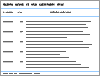
Table 1
VIP values of differential indicators between precocious and normal walnut resources"
| 编号 No. | 指标名称 Trait name | VIP均值 Average VIP value | VIP临界值 VIP critical value (α=0.01) |
| No.1 | 混合芽着生位置 Mixed bud insertion position (MBIP) | 1.601 7 | 0.190 0 |
| No.2 | 坚果质量 Nut weight (NW) | 1.273 9 | 0.207 7 |
| No.3 | 核壳厚度 Nut shell thickness (NST) | 1.206 0 | 0.267 6 |
| No.4 | 基叶面积 Basal leaf area (BLA) | 1.156 2 | 0.097 9 |
| No.5 | 基叶长度 Basal leaf length (BLL) | 1.155 7 | 0.061 9 |
| No.6 | 基叶?叶柄夹角 Basal leaf-petiole angle (BLPA) | 1.147 6 | 0.261 7 |
| No.7 | 中叶?叶柄夹角 Second leaflet pair-petiole angle below terminal leaf (SLPPA2) | 1.120 4 | 0.248 7 |
| No.8 | 短枝节间长度 Short shoot internode length (SSIL) | 1.056 0 | 0.332 3 |
| No.9 | 小叶宽度 Leaflet leaf width (LLW) | 1.051 0 | 0.131 3 |
| No.10 | 顶叶面积 Terminal leaf area (TLA) | 1.048 0 | 0.173 5 |
| No.11 | 坚果横径 Nut transverse diameter (NTD) | 1.029 1 | 0.212 7 |
| No.12 | 小叶面积 Leaflet leaf area (LLA) | 1.025 0 | 0.120 8 |
| No.13 | 基叶宽度 Basal leaf width (BLW) | 1.019 3 | 0.081 7 |
Table 2
Layered structure mode of differentiation indicators between precocity and normal walnuts"
| 目标层A Target layer A | 约束层C Restrained layer C | 指标层P Trait layer P |
| 早、晚实核桃的差异性指标 Differential factors between precocious and normal walnut | C1:果实指标 Nut trait | P1:坚果质量 Nut weight/g;P2:坚果横径 Nut transverse diameter/mm; P3:核壳厚度Nut shell thickness/mm |
| C2:叶片指标 Leaf trait | P4:中叶–叶柄夹角Second leaflet pair-petiole angle below terminal leaf/(°);P5:小叶宽度Leaflet leaf width/mm;P6:基叶长度Basal leaf length/mm;P7:基叶面积Basal leaf area/mm2;P8:基叶–叶柄夹角Basal leaf-petiole angle/(°);P9:顶叶面积Terminal leaf area/mm2;P10:小叶面积Leaflet leaf area/mm2;P11:基叶宽度Basal leaf width/mm | |
| C3:茎枝指标 Stem and shoot trait | P12:短枝节间长度 Short shoot internode length/mm | |
| C4:混合芽指标 Mixed bud trait | P13:混合芽着生位置 Mixed bud insertion position (0/1) |
Table 3
Judgment matrix and its consistency check"
| A–Ci | |||||||||
| A | C1 | C2 | C3 | C4 | 权重Wi | ||||
| C1 | 1 | 1/8 | 1/4 | 1/3 | 0.052 5 | ||||
| C2 | 8 | 1 | 5 | 6 | 0.646 6 | ||||
| C3 | 4 | 1/5 | 1 | 2 | 0.184 8 | ||||
| C4 | 3 | 1/6 | 1/2 | 1 | 0.116 2 | ||||
| λmax = 4.121 5, CR = 0.045 5 < 0.100 0 | |||||||||
| C1–Pi | |||||||||
| C1 | P1 | P2 | P3 | 权重Wi | |||||
| P1 | 1 | 4 | 5 | 0.035 9 | |||||
| P2 | 1/4 | 1 | 2 | 0.010 5 | |||||
| P3 | 1/5 | 1/2 | 1 | 0.006 1 | |||||
| λmax = 3.024 6, CR = 0.052 5 < 0.100 0 | |||||||||
| C2–Pi | |||||||||
| C2 | P4 | P5 | P6 | P7 | P8 | P9 | P10 | P11 | 权重Wi |
| P4 | 1 | 1 | 1/2 | 1/3 | 1/2 | 2 | 2 | 1 | 0.061 9 |
| P5 | 1 | 1 | 1/2 | 1/3 | 1 | 2 | 2 | 2 | 0.073 7 |
| P6 | 2 | 2 | 1 | 1/2 | 1 | 3 | 3 | 2 | 0.111 2 |
| P7 | 3 | 3 | 2 | 1 | 2 | 3 | 4 | 3 | 0.174 1 |
| P8 | 2 | 1 | 1 | 1/2 | 1 | 2 | 3 | 2 | 0.097 0 |
| P9 | 1/2 | 1/2 | 1/3 | 1/3 | 1/2 | 1 | 1 | 1 | 0.041 6 |
| P10 | 1/2 | 1/2 | 1/3 | 1/4 | 1/3 | 1 | 1 | 1/2 | 0.035 0 |
| P11 | 1 | 1/2 | 1/2 | 1/3 | 1/2 | 1 | 2 | 1 | 0.052 1 |
| λmax = 8.134 6, CR = 0.013 6 < 0.100 0 | |||||||||
| C3–Pi | |||||||||
| C3 | P12 | 权重Wi | |||||||
| P12 | 1 | 0.116 2 | |||||||
| λmax = 1.00 0, CR = 0.000 0 < 0.100 0 | |||||||||
| C4–Pi | |||||||||
| C4 | P13 | 权重Wi | |||||||
| P13 | 1 | 0.184 8 | |||||||
| λmax = 1.00 0, CR = 0.000 0 < 0.100 0 | |||||||||
Table 4
Probability grading of the weighted relational degree for walnut early-fruiting traits (3-level)"
| 项目 Items | 分级级次 Grading level | ||
| Ⅰ级 Grade Ⅰ | Ⅱ级 Grade Ⅱ | Ⅲ级 Grade Ⅲ | |
| 分点值 Dividing point value (%) | 71.41 | 77.21 | |
| 区间值Interval value (%) | ≤ 60.49 | 60.49~67.19 | ≥ 67.19 |
| 出现概率(实际/理论) Occurrence probability (reality/theory) (%) | 38.46/30.00 | 16.66/40.00 | 44.87/30.00 |
Table 5
Judgment matrix and its consistency check after adjusting the weight of fruit index"
| A–Ci | |||||||||
| A | C1 | C2 | C3 | C4 | 权重Wi | ||||
| C1 | 1 | 1/7 | 1 | 4 | 0.131 5 | ||||
| C2 | 2 | 1 | 7 | 9 | 0.693 3 | ||||
| C3 | 1 | 1/7 | 1 | 4 | 0.131 5 | ||||
| C4 | 1/4 | 1/9 | 1/4 | 1 | 0.043 7 | ||||
| λmax = 4.163 7, CR = 0.061 3 < 0.100 0 | |||||||||
| C1–Pi | |||||||||
| C1 | P1 | P2 | P3 | 权重Wi | |||||
| P1 | 1 | 4 | 5 | 0.089 9 | |||||
| P2 | 1/4 | 1 | 2 | 0.026 3 | |||||
| P3 | 1/5 | 1/2 | 1 | 0.015 4 | |||||
| λmax = 3.024 6, CR = 0.023 6 < 0.100 0 | |||||||||
| C2–Pi | |||||||||
| C2 | P4 | P5 | P6 | P7 | P8 | P9 | P10 | P11 | 权重Wi |
| P4 | 1 | 1 | 1/2 | 1/3 | 1/2 | 2 | 2 | 1 | 0.066 4 |
| P5 | 1 | 1 | 1/2 | 1/3 | 1 | 2 | 2 | 2 | 0.079 0 |
| P6 | 2 | 2 | 1 | 1/2 | 1 | 3 | 3 | 2 | 0.119 2 |
| P7 | 3 | 3 | 2 | 1 | 2 | 3 | 4 | 3 | 0.186 6 |
| P8 | 2 | 1 | 1 | 1/2 | 1 | 2 | 3 | 2 | 0.103 9 |
| P9 | 1/2 | 1/2 | 1/3 | 1/3 | 1/2 | 1 | 1 | 1 | 0.044 6 |
| P10 | 1/2 | 1/2 | 1/3 | 1/4 | 1/3 | 1 | 1 | 1/2 | 0.037 5 |
| P11 | 1 | 1/2 | 1/2 | 1/3 | 1/2 | 1 | 2 | 1 | 0.055 8 |
| λmax = 8.134 6, CR = 0.013 6 < 0.100 0 | |||||||||
| C3–Pi | |||||||||
| C3 | P12 | 权重Wi | |||||||
| P12 | 1 | 0.043 6 | |||||||
| λmax = 1.00 0, CR = 0.000 0 < 0.100 0 | |||||||||
| C4–Pi | |||||||||
| C4 | P13 | 权重Wi | |||||||
| P13 | 1 | 0.131 6 | |||||||
| λmax = 1.00 0, CR = 0.000 0 < 0.100 0 | |||||||||
|
白世践, 李 超, 王爱玲, 等. 吐鲁番地区无核葡萄主要品质性状因子分析与综合评价. 西北农业学报, 2016, 25 (1): 92- 102.
doi: 10.7606/j.issn.1004-1389.2016.01.013 |
|
|
Bai S J, Li C, Wang A L, et al. Factor analysis and comprehensive evaluation of seedless grape quality in Turpan. Acta Agriculturae Boreali-Occidentalis Sinica, 2016, 25 (1): 92- 102.
doi: 10.7606/j.issn.1004-1389.2016.01.013 |
|
|
贺 鹏, 张 涛, 宋海云, 等. 广西澳洲坚果果实品质分析与综合评价. 食品科学, 2021, 42 (24): 242- 251.
doi: 10.7506/spkx1002-6630-20201128-295 |
|
|
He P, Zhang T, Song H Y, et al. Quality analysis and comprehensive evaluation of the fruit of Macadamia integrifolia grown in Guangxi Province. Food Science, 2021, 42 (24): 242- 251.
doi: 10.7506/spkx1002-6630-20201128-295 |
|
|
黄闽敏, 张 强, 王国安, 等. 栽植密度对新疆早实核桃果实动态生长影响及其与光合特性的关系. 西南农业学报, 2016, 29 (12): 2812- 2816.
doi: 10.16213/j.cnki.scjas.2016.12.009 |
|
|
Huang M M, Zhang Q, Wang G A, et al. Effects of planting density on dynamic growth of early bearing walnut in Xinjiang and its relationship with photosynthetic characteristics. Southwest China Journal of Agricultural Sciences, 2016, 29 (12): 2812- 2816.
doi: 10.16213/j.cnki.scjas.2016.12.009 |
|
|
李 洋, 张赟齐, 温 玥, 等. 早实核桃坚果表型和内在品质的关联分析及模型构建. 南京林业大学学报(自然科学版), 2025, 49 (1): 119- 127.
doi: 10.12302/j.issn.1000-2006.202401005 |
|
|
Li Y, Zhang Y Q, Wen Y, et al. Correlation analysis and model construction of nut phenotype and kernel quality of early-fruiting walnuts (Juglans regia). Journal of Nanjing Forestry University (Natural Sciences Edition), 2025, 49 (1): 119- 127.
doi: 10.12302/j.issn.1000-2006.202401005 |
|
|
李少辉, 赵 巍, 刘松雁, 等. SDE-GC-MS结合OPLS-DA分析不同生态区谷子品种香气特征. 中国农业科学, 2023, 56 (13): 2586- 2596.
doi: 10.3864/j.issn.0578-1752.2023.13.012 |
|
|
Li S H, Zhao W, Liu S Y, et al. Aroma characteristics of foxtail millet varieties from different ecological regions by analysis of SDE-GC-MS combined with OPLS-DA. Scientia Agricultura Sinica, 2023, 56 (13): 2586- 2596.
doi: 10.3864/j.issn.0578-1752.2023.13.012 |
|
|
李文文, 陈金艳, 蔡 虎, 等. 胡桃科植物花发育研究进展. 果树学报, 2024, 41 (10): 2091- 2105.
doi: 10.13925/j.cnki.gsxb.20240265 |
|
|
Li W W, Chen J Y, Cai H, et al. Research progress on flower development of Juglandaceae plants. Journal of Fruit Science, 2024, 41 (10): 2091- 2105.
doi: 10.13925/j.cnki.gsxb.20240265 |
|
| 李因刚, 柳新红, 马俊伟, 等. 浙江楠种群表型变异. 植物生态学报, 2014, 38 (12): 1315- 1324. | |
| Li Y G, Liu X H, Ma J W, et al. Phenotypic variations in populations of Phoebe chekiangensis. Chinese Journal of Plant Ecology, 2014, 38 (12): 1315- 1324. | |
| 刘录祥, 孙其信. 灰色系统理论应用于作物新品种综合评估初探. 中国农业科学, 1989, 22 (3): 22- 27. | |
| Liu L X, Sun Q X. A preliminary study on application of grey system theory to comprehensive evaluation of new crop varieties. Scientia Agricultura Sinica, 1989, 22 (3): 22- 27. | |
| 刘思峰, 杨英杰, 吴利丰, 等. 2020. 灰色系统理论及其应用(第8版). 北京: 科学出版社. | |
| Liu S F, Yang Y J, Wu L F, et al. 2020. Grey system theory and its application (8th ed.). Beijing: Science Press. [in Chinese] | |
|
马 凯, 韩立群, 崔海洋, 等. 新疆与美国早实核桃品种生长结实与成花特性比较. 中国农业大学学报, 2018, 23 (10): 49- 56.
doi: 10.11841/j.issn.1007-4333.2018.10.06 |
|
|
Ma K, Han L Q, Cui H Y, et al. Analysis on the growth and fruiting and flower initiation characteristics of Xinjiang and American early fruiting walnut (Juglans regia L.). Journal of China Agricultural University, 2018, 23 (10): 49- 56.
doi: 10.11841/j.issn.1007-4333.2018.10.06 |
|
|
田胜平, 汪阳东, 陈益存, 等. 山苍子天然种群叶片和种实性状的表型多样性. 生态学杂志, 2012, 31 (7): 1665- 1672.
doi: 10.13292/j.1000-4890.2012.0309 |
|
|
Tian S P, Wang Y D, Chen Y C, et al. Phenotypic diversity of natural Litsea cubeba population’s leaf- and fruit traits. Chinese Journal of Ecology, 2012, 31 (7): 1665- 1672.
doi: 10.13292/j.1000-4890.2012.0309 |
|
|
王 磊, 曹亚龙, 孟海军, 等. 国内外核桃品种选育研究进展. 果树学报, 2022, 39 (12): 2406- 2417.
doi: 10.13925/j.cnki.gsxb.20220255 |
|
|
Wang L, Cao Y L, Meng H J, et al. Research progress in walnut variety breeding at home and abroad. Journal of Fruit Science, 2022, 39 (12): 2406- 2417.
doi: 10.13925/j.cnki.gsxb.20220255 |
|
| 王兆成, 王 磊, 周梦钰, 等. 3个薄壳山核桃品种叶片结构特征和枝条导水功能比较. 植物资源与环境学报, 2021, 30 (3): 38- 45. | |
| Wang Z C, Wang L, Zhou M Y, et al. Comparison on leaf structure characteristics and branch hydraulic function of three Carya illinoinensis cultivars. Journal of Plant Resources and Environment, 2021, 30 (3): 38- 45. | |
| 吴 晔. 2015. 去除二次雄花技术对早实核桃生理落果及单果质量的影响. 山西果树 (1): 8–10. | |
| Wu Y. 2015. Effects of removing secondary male flowers on physiological fruit drop and single fruit weight of early-bearing walnut. Shanxi Fruits, (1): 8–10. [in Chinese] | |
| 奚声珂. 我国胡桃属(Juglans L.)种质资源与核桃(Juglans regia L.)育种. 林业科学, 1987, 23 (3): 342- 350. | |
| Xi S K. Gene resources of Juglans and genetic improvement of Juglans regia in China. Scientia Silvae Sinicae, 1987, 23 (3): 342- 350. | |
|
张深梅, 奚建伟, 洪俊彦, 等. 大别山山核桃果实与叶片性状的表型多样性研究. 林业科学研究, 2020, 33 (1): 152- 161.
doi: 10.13275/j.cnki.lykxyj.2020.01.020 |
|
|
Zhang S M, Xi J W, Hong J Y, et al. A study on phenotypic diversity of fruit and leaf traits in Carya dabieshanensis. Forest Research, 2020, 33 (1): 152- 161.
doi: 10.13275/j.cnki.lykxyj.2020.01.020 |
|
|
张天云, 杨瑞成, 陈 奎. 基于层次分析法确定工程材料评价指标的权重. 兰州理工大学学报, 2007, 33 (2): 17- 19.
doi: 10.3969/j.issn.1673-5196.2007.02.005 |
|
|
Zhang T Y, Yang R C, Chen K. Determination of weighing values for assessment indexes of engineering materials based on analytic hierarchy procedure. Journal of Lanzhou University of Technology, 2007, 33 (2): 17- 19.
doi: 10.3969/j.issn.1673-5196.2007.02.005 |
|
| 张志华, 裴 东. 2018. 核桃学. 北京: 中国农业出版社. | |
| Zhang Z H, Pei D. 2018. Walnut science. Beijing: China Agriculture Press. [in Chinese] | |
|
赵 喆, 周志豪, 森巴特, 等. 焦叶症及其防控下的核桃坚果产量品质影响研究. 林业科学研究, 2025, 38 (1): 1- 13.
doi: 10.12403/j.1001-1498.20240472 |
|
|
Zhao Z, Zhou Z H, Sen B T, et al. Study on the influences of Juglans leaf necrosis and its control on the yield and quality of walnut nuts. Forest Research, 2025, 38 (1): 1- 13.
doi: 10.12403/j.1001-1498.20240472 |
|
| 中华人民共和国国家统计局. 2025. 中国统计年鉴. 北京: 中国统计出版社. | |
| China National Bureau of Statistics. 2025. China statistical yearbook. Beijing: China Statistics Press. [in Chinese] | |
|
朱春华. 如何运用SPSS软件进行简单随机抽样. 统计与决策, 2014, 30 (9): 71- 73.
doi: 10.13546/j.cnki.tjyjc.2014.09.005 |
|
|
Zhu C H. How to use SPSS software for simple random sampling. Statistics & Decision, 2014, 30 (9): 71- 73.
doi: 10.13546/j.cnki.tjyjc.2014.09.005 |
|
|
Andriyas T, Leksungnoen N, Uthairatsamee S, et al. Interspecific and environmental influence on the foliar metabolomes of Mitragyna species through recursive OPLSDA modeling. Plants, 2025, 14 (17): 2721.
doi: 10.3390/plants14172721 |
|
|
Anthony B M, Minas I S. Canopy architecture impact on peach tree physiology, vigor diffusion, productivity and fruit quality. Scientia Horticulturae, 2025, 342, 114025.
doi: 10.1016/j.scienta.2025.114025 |
|
| Deng J L. Introduction to grey system theory. The Journal of Grey System, 1989, 1 (1): 1- 24. | |
| Flexas J, Barbour M M, Brendel O, et al. 2012. Mesophyll diffusion conductance to CO2: an unappreciated central player in photosynthesis. Plant Science, 193/194: 70–84. | |
|
Flexas J, Niinemets Ü, Gallé A, et al. Diffusional conductances to CO2 as a target for increasing photosynthesis and photosynthetic water-use efficiency. Photosynthesis Research, 2013, 117 (1/2/3): 45- 59.
doi: 10.1007/s11120-013-9844-z |
|
| Furbank R T, Tester M. Phenomics–technologies to relieve the phenotyping bottleneck. Trends in Plant Science, 2011, 16 (12): 635- 644. | |
|
Gillaspy G, Ben-David H, Gruissem W. Fruits: a developmental perspective. The Plant Cell, 1993, 5 (10): 1439- 1451.
doi: 10.2307/3869794 |
|
|
Hassankhah A, Rahemi M, Mozafari M R, et al. Flower development in walnut: altering the flowering pattern by gibberellic acid application. Notulae Botanicae Horti Agrobotanici Cluj-Napoca, 2018, 46 (2): 700- 706.
doi: 10.15835/nbha46211183 |
|
|
Janković S, Stanković J, Janković D, et al. Morphology and morphogenesis of female reproductive organs in some walnut (Juglans regia L.) genotypes. Scientia Horticulturae, 2021, 289 (17): 110471.
doi: 10.1016/j.scienta.2021.110471 |
|
|
Lawson T, Blatt M R. Stomatal size, speed, and responsiveness impact on photosynthesis and water use efficiency. Plant Physiology, 2014, 164 (4): 1556- 1570.
doi: 10.1104/pp.114.237107 |
|
|
Li X W, Yang Y, Henry R J, et al. Plant DNA barcoding: from gene to genome. Biological Reviews, 2015, 90 (1): 157- 166.
doi: 10.1111/brv.12104 |
|
| Lorts C M, Briggeman T, Sang T. Evolution of fruit types and seed dispersal: a phylogenetic and ecological snapshot. Journal of Systematics and Evolution, 2008, 46 (3): 396- 404. | |
| Luchi N, Ma R, Capretti P, et al. Anatomical and physiological traits of cork formation in woody plants. Annals of Botany, 2005, 96 (4): 579- 593. | |
| Ma M, Zhang H P, Niu J X, et al. Genetic mapping and SCAR marker conversion of early-fruiting gene in walnut (Juglans regia L.). Molecular Breeding, 2023, 43 (5): 1- 15. | |
|
Moles A T, Ackerly D D, Webb C O, et al. A brief history of seed size. Science, 2005, 307 (5709): 576- 580.
doi: 10.1126/science.1104863 |
|
| Niinemets Ü, Portsmuth A, Tobias M. 2006. Leaf shape and venation pattern alter the photosynthetic responses of foliage to light intensity. Plant, Cell & Environment, 29(5): 854–867. | |
|
Osorio S, Costa F, Gibon Y, et al. Advances in fruit development and ripening. Journal of Experimental Botany, 2023, 74 (20): 6205- 6208.
doi: 10.1093/jxb/erad379 |
|
| Saaty T L. Decision making with the analytic hierarchy process. International Journal of Services Sciences, 2008, 1 (1): 83- 98. | |
|
Seymour G B, Østergaard L, Chapman N H, et al. Fruit development and ripening. Annual Review of Plant Biology, 2013, 64, 219- 241.
doi: 10.1146/annurev-arplant-050312-120057 |
|
|
Soler M, Serra O, Molinas M, et al. A genomic approach to suberin biosynthesis and cork differentiation. Plant Physiology, 2007, 144 (1): 419- 431.
doi: 10.1104/pp.106.094227 |
|
| Valladares F, Niinemets Ü. 2008. Shade tolerance, a key plant feature of complex nature and consequences. Annual Review of Ecology, Evolution, and Systematics, 39: 237–257. | |
| Yu D, Zhao Y, Han L Q, et al. Comparative study on flower bud differentiation of female and male early blooming type walnut varieties. Journal of Fruit Science, 2022, 39 (10): 1054- 1062. | |
| Yuan X, Quan S W, Liu J M, et al. 2022. Evolution of the PEBP gene family in Juglandaceae and their regulation of flowering pathway under the synergistic effect of JrCO and JrNF-Y proteins. International Journal of Biological Macromolecules, 223(Part A): 202–212. | |
| Zhang H P, Hu H F, Niu J X, et al. Early fruiting and its RAPD analysis of walnut in Xinjiang Uygur Autonomous. Acta Botanica Boreali-Occidentalia Sinica, 2005, 25 (11): 2157- 2162. | |
|
Zhang S B, Chen H, Pan C D. Effects of the source–sink relationship on walnut nut quality at the scale of the fruit–bearing branch. Forests, 2022, 13 (7): 1034.
doi: 10.3390/f13071034 |
| [1] | Dongyuan Tian,Zhaogang Liu,Lichun Jiang,Lingbo Dong. Identification of the Influencing Factors on the Regeneration Quantity of Natural Forests in the Central Part of Daxing’anling Mountains Based on Random Forest [J]. Scientia Silvae Sinicae, 2026, 62(5): 69-79. |
| [2] | Yawen Xu,Yongjie Xu,Zuoping Tan,Qizhu Wang,Qiaoling Zou,Wansheng Chen. A Nutritional Diagnosis and Yield Prediction Model for Walnut Orchards Based on Multi-Factor Analysis [J]. Scientia Silvae Sinicae, 2026, 62(3): 171-181. |
| [3] | Xiahui Hua,Xianyin Ding,Shaoze Wu,Qinyun Huang,Shu Diao,Yadi Wu,Qifu Luan. Aboveground Biomass Models for Young Pinus elliottii Plantations Based on Various Growth Factors [J]. Scientia Silvae Sinicae, 2026, 62(3): 211-222. |
| [4] | Huiqi Zhong,Jingyu Chai,Kailiang Wang,Jianhua Teng,Wenyu Bi,Anni Wang,Ping Lin. Construction of Near Infrared Spectroscopy Prediction Models Based on CARS-PLSR for Determining Oil Content and Fatty Acid Composition of Camellia oleifera Kernel [J]. Scientia Silvae Sinicae, 2026, 62(2): 111-125. |
| [5] | Wankuan Zhu,Zhichao Wang,Yuxing Xu,Runxia Huang,Yi Tao,Yuanyuan Zhong,Apeng Du. Simulation of Soil Respiration in a Stratified Mixed Stand of Eucalyptus spp. and Manglietia glauca in Leizhou Peninsula Based on Machine Learning Algorithms [J]. Scientia Silvae Sinicae, 2026, 62(1): 67-82. |
| [6] | Hongwei Zhou,Yongzheng Li,Wenhui Guo,Yifan Chen,Haochang Hu,Siyan Zhang,Di Cui,Yumo Chen. Prediction of Subcompartment-Scale Spread of Pine Wilt Disease Based on Cellular Automata Model [J]. Scientia Silvae Sinicae, 2026, 62(1): 133-143. |
| [7] | Yongchao Bai,Weixiong Wang,Baoxin Li,Jingya Yang,Qi Wang,Rongfei Zhou,Ben Niu,Dong Pei. Juglans Leaf Necrosis: Disease Development and Influencing Factors [J]. Scientia Silvae Sinicae, 2025, 61(3): 169-181. |
| [8] | Shihao Zhu,Zhiwei Wu,Zhengjie Li,Shun Li. Moisture Dynamics and Modeling of Ground Surface Fine Dead Combustibles in Pinus massoniana Forest in Southern Jiangxi, China [J]. Scientia Silvae Sinicae, 2024, 60(5): 158-168. |
| [9] | Xiaofang Zhang,Xuzhan Guo,Liang Hong,Tao Chen,Liyong Fu,Huiru Zhang. Comparison of Single Tree Crown Prediction Models of Larix principis-rupprechtii and Betula platyphylla in the Core Area of the Winter Olympics in China [J]. Scientia Silvae Sinicae, 2022, 58(10): 89-100. |
| [10] | Fei Ren,Jiaqi Zhang,Hengkang Hu,Bi Liang,Youjun Huang,Heqiang Lou,Qixiang Zhang. Expression Stability of Red Fluorescent Protein Gene DsRED in the Regeneration of Walnut (Juglans regia) Plant [J]. Scientia Silvae Sinicae, 2020, 56(12): 166-176. |
| [11] | Bi Liang,Jiaqi Zhang,Fei Ren,Hengkang Hu,Chuanmei Xu,Yuanyuan Hu,Youjun Huang,Heqiang Lou,Qixiang Zhang. Cloning and Expression Analysis of Ent-Kaurene Oxidase Gene CcKo in Carya cathayensis [J]. Scientia Silvae Sinicae, 2020, 56(10): 70-82. |
| [12] | Zhou Naifu, Song Xiaobo, Zhang Junpei, Chang Yingying, Pei Dong. Histological Mechanism of Bud Grafting in Walnut [J]. Scientia Silvae Sinicae, 2019, 55(6): 37-43. |
| [13] | Zhang Jiaqi, Hu Hengkang, Xu Chuanmei, Hu Yuanyuan, Huang Youjun, Xia Guohua, Huang Jianqin, Chang Yingying, Ye Lei, Lou Heqiang, Zhang Qixiang. Cloning, Subcellular Localization and Function Verification of Gibberellin 2-Oxidase Gene in Walnut (Juglans regia) [J]. Scientia Silvae Sinicae, 2019, 55(2): 50-60. |
| [14] | Hu Zhenzhu, Pan Cunde, Pan Xin, Zhu Baixue. Estimation Models for Water Content of Walnut Leaves Based on Spectral Moisture Index [J]. Scientia Silvae Sinicae, 2016, 52(12): 39-49. |
| [15] | Yuan Wei, Zhang Jie, Zhou Bo, Wang Aihong, Yu Lei, Ma Kexin. Environmental Suitability for Camping Tourism in Langxiang Nature Reserve Based on Analytic Hierarchy Process [J]. Scientia Silvae Sinicae, 2015, 51(5): 21-27. |
| Viewed | ||||||
|
Full text |
|
|||||
|
Abstract |
|
|||||
