
Scientia Silvae Sinicae ›› 2026, Vol. 62 ›› Issue (10): 181-195.doi: 10.11707/j.1001-7488.LYKX20260031
• Research papers • Previous Articles
Panpan Ma1,3,Manyu Fang1,Tianjun Xie1,Jinqiu Xie1,Peng Xiao1,Feibin Wang2,Hiroshi Isoda3,Zeli Que1,*( )
Received:2026-01-16
Online:2026-10-10
Published:2026-10-16
Contact:
Zeli Que
E-mail:zelique@njfu.edu.cn
CLC Number:
Panpan Ma,Manyu Fang,Tianjun Xie,Jinqiu Xie,Peng Xiao,Feibin Wang,Hiroshi Isoda,Zeli Que. Effects of Short-Term Visual-Tactile Interaction in Wooden Environments on Human Psychological and Physiological Restoration[J]. Scientia Silvae Sinicae, 2026, 62(10): 181-195.
Table 1
Experimental conditions for each test group"
| 组别Group | 视觉刺激Visual stimulus | 光泽度 Glossiness (GU) | 触觉刺激Tactile stimulus | 粗糙度Roughness (Ra)/μm | ||
| 顺纹 Parallel-grain | 横纹 Cross-grain | |||||
| VU-TF (n=16) | 杉木墙面(未涂饰)Uncoated fir wall | 6.40 | 杉木Chinese fir board | 3.23 | 9.57 | |
| VC-TF (n=16) | 杉木墙面(涂饰)Coated fir wall | 51.12 | 杉木Chinese fir board | 3.23 | 9.57 | |
| VC-TP (n=16) | 杉木墙面(涂饰)Coated fir wall | 51.12 | 浸渍纸贴面刨花板Paper-overlaid particleboard | 1.31 | 5.48 | |
| VL-TT (n=16) | 白乳胶漆墙面 Latex-painted wall | 2.10 | 瓷砖Tile | 0.57 | ||

Fig.1
Materials used in this study"


Fig.2
Experimental setup and procedure"


Fig.3
Schematic diagram of the experimental procedure"

Table 2
Bipolar adjective pairs used in the semantic differential scale"
| 评价维度 Evaluation dimension | 自然联想度 Natural association | 舒适度 Comfort | 喜好度 Preference | 稀有度 Rarity |
| 形容词对 Adjective pair | 不能联想到自然环境?能联想到自然环境 Cannot associate with natural environment- can associate with natural environment | 不舒服?舒服 Uncomfortable-comfortable | 讨厌?喜欢 Dislike-like | 常见?稀有 Common-rare |
Table 3
Summary of psychological and physiological measures"
| 类别Category | 指标Index | 表征Characterization |
| 心率变异性Heart rate variability (HRV) | HF | 副交感神经活动水平Parasympathetic nervous activity level |
| LF/HF | 交感?副交感神经相对平衡Sympathetic-parasympathetic balance ratio | |
| SDNN | 整体自主神经调节水平Overall autonomic regulatory capacity | |
| RMSSD | 副交感神经活动水平Parasympathetic nervous activity level | |
| 皮肤电活动Electrodermal activity (EDA) | SCL | 交感神经基础唤醒水平Sympathetic basal arousal level |
| SCR | 瞬时刺激诱发的交感神经反应Transient stimulus-induced sympathetic response | |
| 环境感官评价Environmental sensory evaluation | SD | 环境印象评价Environmental impression evaluation |
| IRCS-Extent | 环境主观延展感评价Subjective environmental spaciousness perception | |
| 认知疲劳诱发Cognitive fatigue induction | Stroop | 抑制控制能力Inhibitory control ability |
| OSPAN | 工作记忆容量Working memory capacity | |
| 恢复状态评价Restorative state evaluation | STAI-6 | 状态焦虑水平State anxiety level |
| SVS | 主观活力水平Subjective vitality level | |
| ROS | 恢复结果Restorative outcome | |
| VAS | 主观压力水平Subjective stress level |

Fig.4
Δln(LF/HF) among different groups"


Fig.5
Δln(HF) among different groups"


Fig.6
ΔSDNN among different groups"


Fig.7
ΔRMSSD among different groups"


Fig.8
SCL temporal change among different groups"


Fig.9
ΔSCL among different groups"


Fig.10
SCR mean amplitude and peak counts among different groups in the recovery period"

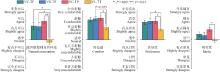
Fig.11
Subjective impression evaluation of the visual-tactile environment"

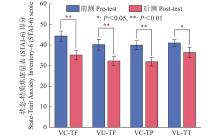
Fig.12
STAI-6 scores pre- and post-recovery"

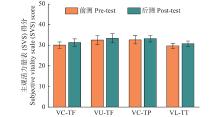
Fig.13
SVS scores pre- and post-recovery"


Fig.14
ROS scores among different groups"

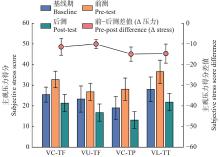
Fig.15
Subjective stress at each stage"


Fig.16
Subjective evaluation of sense of extension"

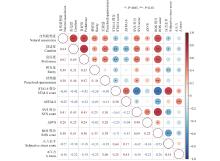
Fig.17
Correlation coefficient matrix of psychological indicators"

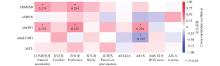
Fig.18
Cross-correlation coefficient matrix of psychological-physiological indicators"

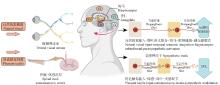
Fig.19
Schematic diagram of two possible ANS-regulating neural pathways induced by visual-tactile stimulation"

Table S1
Bipolar adjective pairs used in the sensory perception experiment"
| 视觉特性 Visual characteristics | 触觉特性 Tactile characteristics | 情感与偏好评价 Affective-preference evaluation | |
| 哑光?亮光 Matte-glossy | 粗糙?光滑 Rough-smooth | 旧?新 Old-new | 讨厌?喜欢 Dislik-like |
| 对比弱? 对比强 Low contrast- high contrast | 硬?软 Hard-soft | 人工?天然 Artificial-natural | 脏?干净 Dirty-clean |
| 暗?亮 Dark-bright | 冷?暖 Cold-warm | 粗劣?精致 Unrefined-elegant | 紧张?放松 Tense-relaxed |
| 厚?薄 Thick -thin | 不舒服?舒服 Uncomfortable- comfortable | 廉价?昂贵 Cheap-expensive | |
| 黏手?顺滑 Sticky-slippery | 联想到自然? 不能联想自然 Can associate with natural environment- cannot associate with natural environment | 常见?稀有 Common-rare | |
Table S2
Factor scores of each dimension (mean±SE)"
| 组别Group | 情感判断 Affective judgment | 自然联想 Natural association | 品质价值 Value perception |
| VC-TF (n=24) | ?0.54±0.13** | 0.39±0.19* | ?0.71±0.10** |
| VC-TP (n=24) | 0.76±0.16** | ?0.08±0.19* | ?0.90±0.14** |
| 李 坚, 甘文涛, 陈志俊, 等. 向新出发, 木材科学前沿发展. 森林工程, 2025, 41 (1): 1- 39. | |
| Li J, Gan W T, Chen Z J, et al. Frontier advances in wood science towards a new departure. Forest Engineering, 2025, 41 (1): 1- 39. | |
| 李 静, 徐洪澎, 张 超, 等. 高校室内木质化空间的心理增益探析. 世界建筑, 2024, (2): 58- 63. | |
| Li J, Xu H P, Zhang C, et al. Discussion on the psychological beneflts of wooden interior spaces on university campuses. World Architecture, 2024, (2): 58- 63. | |
| 张 悦, 李 超, 郭叶莹子, 等. 木材的视觉刺激及人体心理生理响应研究进展. 北京林业大学学报, 2022, 44 (6): 156- 166. | |
| Zhang Y, Li C, Guo-Ye Y Z, et al. Research development on human psychological and physiological responses to visual stimulation of wood. Journal of Beijing Forestry University, 2022, 44 (6): 156- 166. | |
|
Chen J, Chen G M. Academic burnout among Chinese college students: a study based on FSQCA method. Acta Psychologica, 2025a, 253, 104701.
doi: 10.1016/j.actpsy.2025.104701 |
|
|
Chen X, Duan W T, Liu Y, et al. The influence of material and spatial size on indoor environment preference evaluation. Journal of Asian Architecture and Building Engineering, 2025b, 24 (3): 1112- 1122.
doi: 10.1080/13467581.2023.2278447 |
|
|
Davidovic M, Starck G, Olausson H. Processing of affective and emotionally neutral tactile stimuli in the insular cortex. Developmental Cognitive Neuroscience, 2019, 35, 94- 103.
doi: 10.1016/j.dcn.2017.12.006 |
|
|
Du Q Y, Liu H W, Yang C J, et al. The development of a short Chinese version of the state-trait anxiety inventory. Frontiers in Psychiatry, 2022, 13, 854547.
doi: 10.3389/fpsyt.2022.854547 |
|
|
Gong Z X, Zhou M, Dai Y X, et al. A large-scale fMRI dataset for the visual processing of naturalistic scenes. Scientific Data, 2023, 10, 559.
doi: 10.1038/s41597-023-02471-x |
|
|
Habay J, Arenales Arauz Y L, Proost M, et al. Mental fatigue negatively impacts cognitive and physical performance outcomes: a large-scale randomized crossover trial. Medicine and Science in Sports and Exercise, 2026, 58 (2): 225- 241.
doi: 10.1249/MSS.0000000000003852 |
|
|
Hu Q W, Li X H, Fang H, et al. The tactile perception evaluation of wood surface with different roughness and shapes: a study using galvanic skin response. Wood Research, 2022, 67 (2): 311- 325.
doi: 10.37763/wr.1336-4561/67.2.311325 |
|
|
Ikei H, Nakamura M, Miyazaki Y. Physiological effects of visual stimulation using knotty and clear wood images among young women. Sustainability, 2020, 12 (23): 9898.
doi: 10.3390/su12239898 |
|
|
Ikei H, Song C, Miyazaki Y. Physiological effects of touching wood. International Journal of Environmental Research and Public Health, 2017, 14 (7): 801.
doi: 10.3390/ijerph14070801 |
|
|
Kumpulainen S, Kilpiäinen M, Koski J, et al. Wooden interiors improve heart rate variability-derived psychophysiological well-being: an acute cross-over study. Environment and Behavior, 2024, 56 (3/4): 155- 178.
doi: 10.1177/00139165241270631 |
|
|
Laborde S, Mosley E, Thayer J F. Heart rate variability and cardiac vagal tone in psychophysiological research-recommendations for experiment planning, data analysis, and data reporting. Frontiers in Psychology, 2017, 8, 213.
doi: 10.3389/fpsyg.2017.00213 |
|
|
Lesage F X, Berjot S. Validity of occupational stress assessment using a visual analogue scale. Occupational Medicine, 2011, 61 (6): 434- 436.
doi: 10.1093/occmed/kqr037 |
|
|
Ma P P, Shi Q, Xie T J, et al. Materials selection in biophilic building design: multisensory perception and psycho-physical mapping of wood materials. Buildings, 2026, 16 (4): 726.
doi: 10.3390/buildings16040726 |
|
|
Makowski D, Pham T, Lau Z J, et al. NeuroKit2: a Python toolbox for neurophysiological signal processing. Behavior Research Methods, 2021, 53 (4): 1689- 1696.
doi: 10.3758/s13428-020-01516-y |
|
|
Marteau T M, Bekker H. The development of a six-item short-form of the state scale of the Spielberger State: Trait Anxiety Inventory (STAI). British Journal of Clinical Psychology, 1992, 31 (3): 301- 306.
doi: 10.1111/j.2044-8260.1992.tb00997.x |
|
|
Nakamura M, Ikei H, Miyazaki Y. Effects of visual stimulation using wooden-wall images with different amounts of knots on psychological and physiological responses. Wood Science and Technology, 2022, 56 (6): 1869- 1886.
doi: 10.1007/s00226-022-01419-5 |
|
|
Nakanishi E Y, Poulin P, Blanchet P, et al. A systematic review of the implications of construction materials on occupants’ physical and psychological health. Building and Environment, 2024, 257, 111527.
doi: 10.1016/j.buildenv.2024.111527 |
|
|
Personeni G, Savescu A. Ecological validity of virtual reality simulations in workstation health and safety assessment. Frontiers in Virtual Reality, 2023, 4, 1058790.
doi: 10.3389/frvir.2023.1058790 |
|
|
Queirolo L, Fazia T, Roccon A, et al. Effects of forest bathing (shinrin-yoku) in stressed people. Frontiers in Psychology, 2024, 15, 1458418.
doi: 10.3389/fpsyg.2024.1458418 |
|
|
Rolls E T. Two what, two where, visual cortical streams in humans. Neuroscience & Biobehavioral Reviews, 2024, 160, 105650.
doi: 10.1016/j.neubiorev.2024.105650 |
|
|
Rolls E T. Hippocampal revolutions. Neuroscience & Biobehavioral Reviews, 2026, 180, 106492.
doi: 10.1016/j.neubiorev.2025.106492 |
|
|
Ryan R M, Frederick C. On energy, personality, and health: subjective vitality as a dynamic reflection of well-being. Journal of Personality, 1997, 65 (3): 529- 565.
doi: 10.1111/j.1467-6494.1997.tb00326.x |
|
| Sheth C, McGlade E, Yurgelun-Todd D. 2017. Chronic stress in adolescents and its neurobiological and psychopathological consequences: an RDoC perspective. Chronic Stress, 1: 2470547017715645. | |
|
Shibata S, Tokuhiro K, Ikeuchi A, et al. Visual properties and perceived restorativeness in green offices: a photographic evaluation of office environments with various degrees of greening. Frontiers in Psychology, 2024, 15, 1443540.
doi: 10.3389/fpsyg.2024.1443540 |
|
|
Task Force of the European Society of Cardiology and the North American Society of Pacing and Electrophysiology. Heart rate variability: standards of measurement, physiological interpretation, and clinical use. Circulation, 1996, 93 (5): 1043- 1065.
doi: 10.1161/01.CIR.93.5.1043 |
|
| Tavakol M, Dennick R. Making sense of Cronbach’s alpha. International Journal of Medical Education, 2011, 2, 53- 55. | |
|
Taylor A G, Goehler L E, Galper D I, et al. Top-down and bottom-up mechanisms in mind-body medicine: development of an integrative framework for psychophysiological research. Explore, 2010, 6 (1): 29- 41.
doi: 10.1016/j.explore.2009.10.004 |
|
|
Tsunetsugu Y, Matsubara E, Sugiyama M. Evaluation of the impact of wooden living environments on humans. Mokuzai Gakkaishi, 2017, 63 (1): 1- 13.
doi: 10.2488/jwrs.63.1 |
|
|
Tsunetsugu Y, Sugiyama M. Heat transfer, physiological responses, and subjective perceptions during short contact time with wood or other materials. Journal of Wood Science, 2021, 67 (1): 27.
doi: 10.1186/s10086-021-01960-0 |
|
|
Wereszczyński M, Chwiłka P, Smołka E, et al. Data from SymSPAN and OSPAN working memory capacity tasks in online and laboratory settings. Data in Brief, 2025, 62, 111923.
doi: 10.1016/j.dib.2025.111923 |
|
| Westfield P. 2024. Working memory capacity, mental fatigue, and human performance. Proceedings of the 2nd International Conference on Cognitive Aircraft Systems. SCITEPRESS - Science and Technology Publications, 126−133. | |
|
Wu J L, Guan Z T, Li C L, et al. Brain functional connectivity after Stroop task induced cognitive fatigue. Scientific Reports, 2025, 15, 22342.
doi: 10.1038/s41598-025-08330-6 |
|
|
Yin J, Yuan J, Arfaei N, et al. Effects of biophilic indoor environment on stress and anxiety recovery: a between-subjects experiment in virtual reality. Environment International, 2020, 136, 105427.
doi: 10.1016/j.envint.2019.105427 |
|
|
Zhang R H, Deng H F, Xiao X. The insular cortex: an interface between sensation, emotion and cognition. Neuroscience Bulletin, 2024, 40 (11): 1763- 1773.
doi: 10.1007/s12264-024-01211-4 |
| [1] | Yihang Jiang,Qingwei Zeng,Zhenhua Liu,Jianguo Zhang,Xiongqing Zhang. Impact mechanism of Large-Diameter Timber Yield of Chinese Fir under Close-to-Nature Transformation from Chinese Fir to Phoebe bournei Based on Bayesian Network Model [J]. Scientia Silvae Sinicae, 2026, 62(4): 81-90. |
| [2] | Yuxin Hu,Yihang Jiang,Zhenhua Liu,Guangyu Zhu,Jianguo Zhang,Xiongqing Zhang. Effects of Understory Enrichment Planting Modes in Pure Chinese fir Forests on Soil Quality and Microbial Communities [J]. Scientia Silvae Sinicae, 2026, 62(3): 61-73. |
| [3] | Jiaqi Cai,Xueping Zhang,Ping Mao,Jing Yang,Senwen Yu,Kai Zhu,Kui Zhang,Xu Wang,Haijun Xu. Preparation of Smoke Flavorings of Cunninghamia lanceolata by Superheated Steam Distillation-Cracking and their Composition Analysis [J]. Scientia Silvae Sinicae, 2026, 62(3): 193-200. |
| [4] | Yamin Du,Zhu Li,Jiali Jiang,Fangyu Yin,Jianxiong Lü. Water Vapor Sorption Characteristics of Wood During Cyclic Adsorption-Desorption Processes [J]. Scientia Silvae Sinicae, 2024, 60(9): 150-158. |
| [5] | Lü Ziqing, Duan Aiguo. Biomass and Carbon Storage Model of Cunninghamia lanceolata in Different Production Areas [J]. Scientia Silvae Sinicae, 2024, 60(2): 1-11. |
| [6] | Mengjia Yang,Xianhua Zou,Zhijuan Guo,Zhao Peng,Yan He,Zhiyuan Peng,Bida Yao,Guomin Huang,Liqin Zhu,Rongzhen Huang. Dynamics of Photosynthetic Carbon Allocation in Seedlings of Two Chinese Fir Families Based on 13C Tracing [J]. Scientia Silvae Sinicae, 2024, 60(12): 35-46. |
| [7] | Xiaoyan Li,Aiguo Duan,Jianguo Zhang. Effects of Initial Planting Density on Dominant Height Growth of Chinese Fir (Cunninghamia lanceolata) Plantation in Different Distribution Areas [J]. Scientia Silvae Sinicae, 2023, 59(8): 22-29. |
| [8] | Yancheng Qu,Yihang Jiang,Yanyan Jiang,Jianguo Zhang,Anli Luo,Xiongqing Zhang. Tree Leaf Biomass Models of Chinese fir Plantations Based on Sapwood Area and Diameter at Breast Height and Diameter at Crown Base [J]. Scientia Silvae Sinicae, 2023, 59(7): 106-114. |
| [9] | Xinguo Zhang,Qixiang Zhang. Effects of Garden Plants Smellscape on Human Health [J]. Scientia Silvae Sinicae, 2023, 59(4): 100-116. |
| [10] | Jiaqi Chen,Guangyu Zhao,Yanglong Li,Yuhong Dong,Lingyu Hou,Ruzhen Jiao. Age Changes of Soil Phosphorus Form and Content in Chinese Fir Plantations [J]. Scientia Silvae Sinicae, 2022, 58(5): 10-17. |
| [11] | Yuedong Shi,Hong Zheng,Daiquan Ye,Jisen Shi,Liming Bian. Spatial and Competition Effects for Growth Traits of Chinese Fir and Their Impacts on Estimations of Genetic Parameters [J]. Scientia Silvae Sinicae, 2022, 58(5): 75-84. |
| [12] | Shuzhen Wang,Jingjing Liang,Mingzhuo Bao,Fei Pan,Chuifan Zhou. Variation of Soil Phosphorus Fractions and the Phosphorus Solubilizing Microbial Communities in Chinese Fir Monoculture Plantations with Different Ages [J]. Scientia Silvae Sinicae, 2022, 58(2): 58-69. |
| [13] | Min Chen,Huayan Lai,Shanshan Zheng,Ming Li,Xiangqing Ma,Pengfei Wu. Effects of Exogenous Ethylene on Growth and Phosphorus Use Efficiency of Chinese Fir Seedlings under Phosphorus Stress [J]. Scientia Silvae Sinicae, 2021, 57(7): 43-50. |
| [14] | Ru Jia,Haiyan Sun,Yurong Wang,Rui Wang,Rongjun Zhao,Haiqing Ren. Relativity of Microstructures and Mechanical Properties of Juvenile Woods of 10-Year-Old New Chinese Fir Clones 'Yang 020' and 'Yang 061' [J]. Scientia Silvae Sinicae, 2021, 57(5): 165-175. |
| [15] | Hao Zang,Hongsheng Liu,Jincheng Huang,Zudong Zhang,Xunzhi Ouyang,Jinkui Ning. Effects of Competition, Climate Factors and Their Interactions on Diameter Growth for Chinese Fir Plantations [J]. Scientia Silvae Sinicae, 2021, 57(3): 39-50. |
| Viewed | ||||||
|
Full text |
|
|||||
|
Abstract |
|
|||||
