
Scientia Silvae Sinicae ›› 2026, Vol. 62 ›› Issue (8): 179-190.doi: 10.11707/j.1001-7488.LYKX20250628
• Research papers • Previous Articles Next Articles
Wen Qu,Chuanlong Cai,Qihao Xu,Jiyu Liu,Yucheng Ding,Chunmei Yang,Wenlong Song*( )
)
Received:2025-10-17
Revised:2026-05-18
Online:2026-08-10
Published:2026-08-20
Contact:
Wenlong Song
E-mail:wlsong139@126.com
CLC Number:
Wen Qu,Chuanlong Cai,Qihao Xu,Jiyu Liu,Yucheng Ding,Chunmei Yang,Wenlong Song. Online Measurement System for Mechanical Wooden Door and Window Materials Based on Support Vector Machine Regression Error Compensation[J]. Scientia Silvae Sinicae, 2026, 62(8): 179-190.
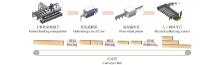
Fig.1
Process flow diagram of the production line for wooden door and window materials"
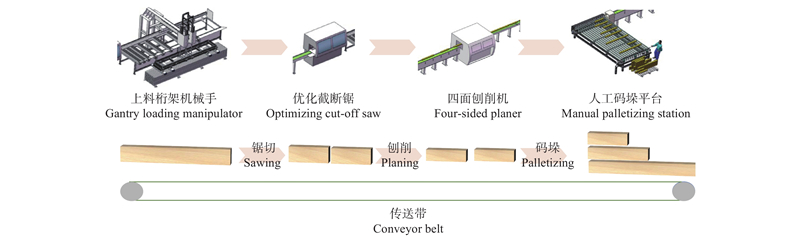
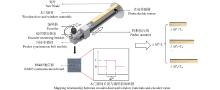
Fig.2
Mechanism and device for measuring the length of mechanical wooden door and window materials"
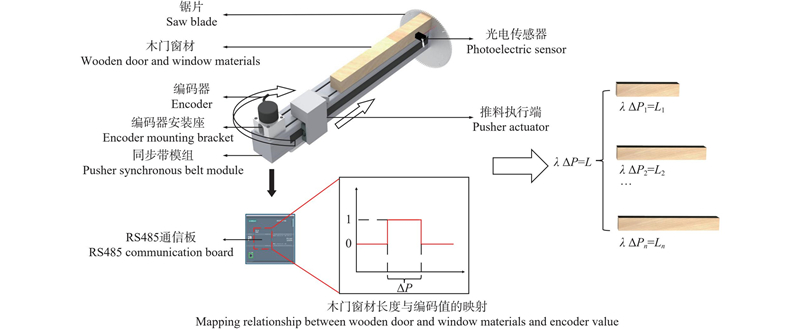
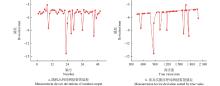
Fig.3
Analysis of the measurement device deviations"
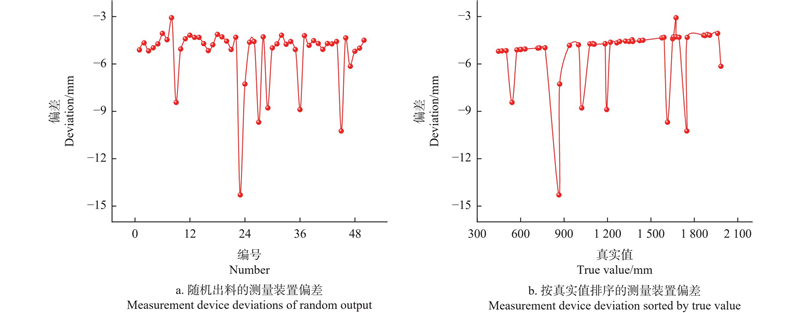
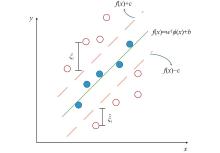
Fig.4
Fundamental principle of support vector regression"
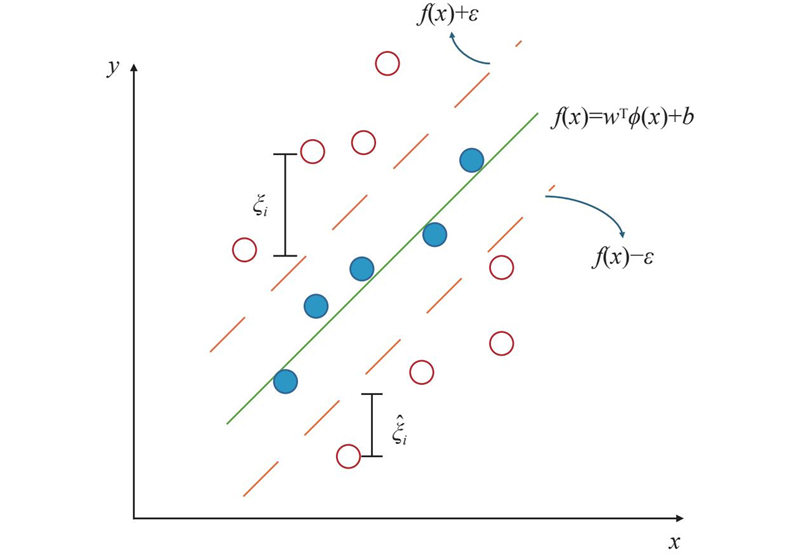
Fig.5
Error distribution of uncompensated measured values"
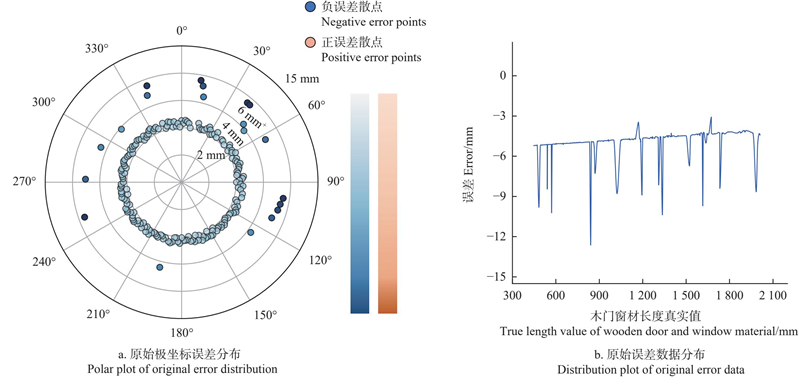
Fig.6
Error distributions after compensation by different models"
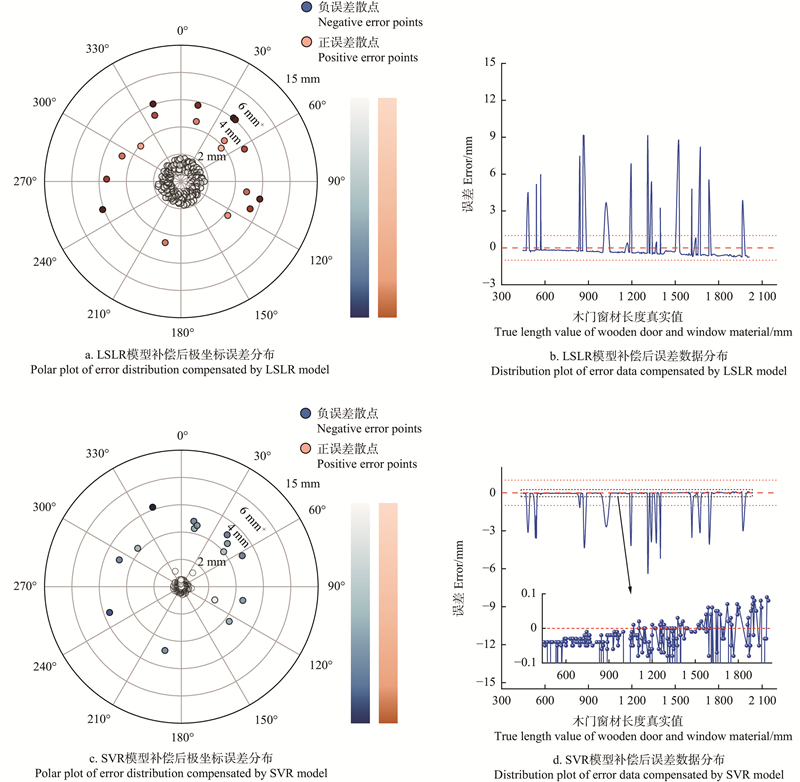

Table 1
Performance comparison of compensation models"
| 方法Method | R2 | MAE | RMSE |
| LSLR | 0.989 5 | 1.047 4 | 2.359 7 |
| SVR | 0.999 8 | 0.412 7 | 1.594 8 |

Fig.7
Timing diagram of the communication deployment scheme"
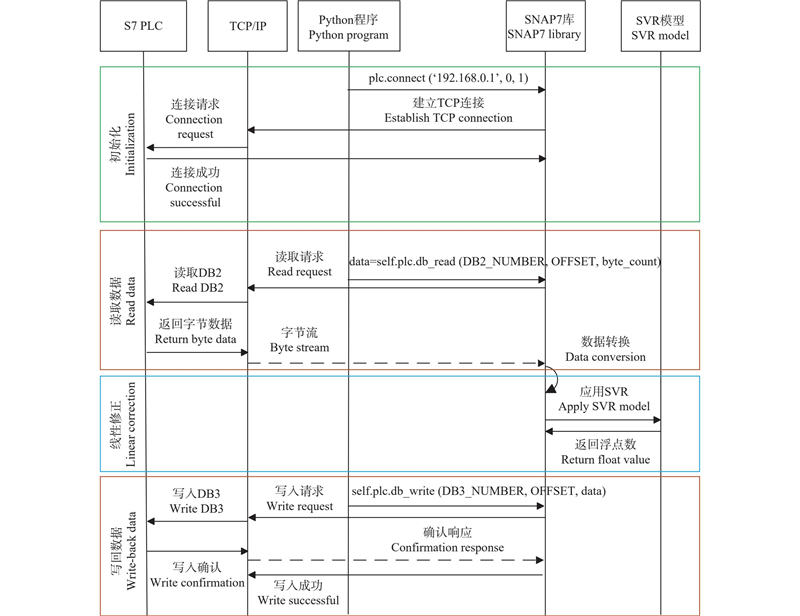

Fig.8
Physical overview of the measurement device"
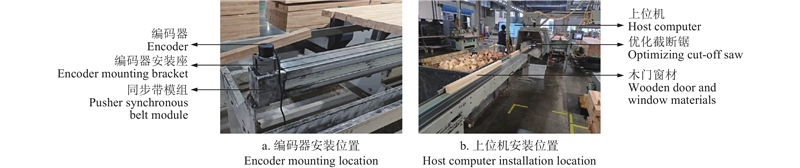
Fig.9
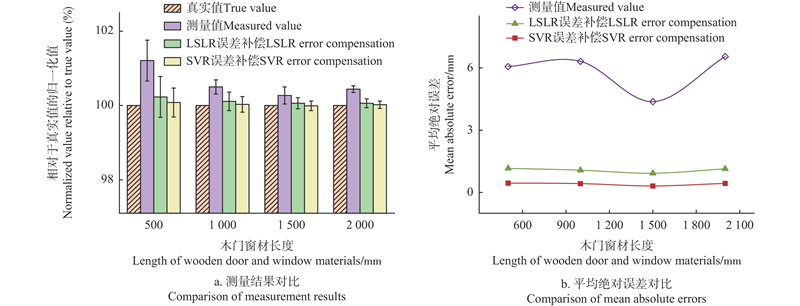
Comparative analytical results of compensation effects for wooden door and window materials of different lengths"
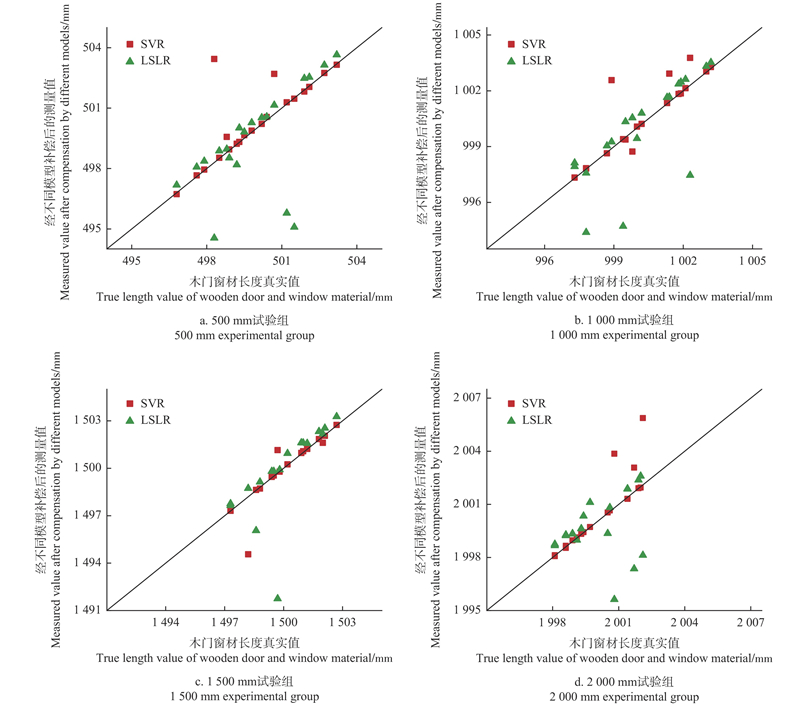
Fig.10
Comparative analytical results of measurement accuracy versus absolute error based on different compensation models"
| 蔡 舒, 吴超华, 罗 威, 等. 基于机器视觉的套筒件尺寸测量研究. 现代制造工程, 2025 (4): 123- 131. | |
| Cai S, Wu C H, Luo W, et al. Research on dimensional measurement of sleeve pieces based on machine vision. Modern Manufacturing Engineering, 2025 (4): 123- 131. | |
|
蔡志鑫, 党 章, 吕 勇, 等. 自适应动模式分解和GA-SVM在行星轴承故障分类中的应用. 工程科学学报, 2023, 45 (9): 1559- 1568.
doi: 10.13374/j.issn2095-9389.2022.07.01.001 |
|
|
Cai Z X, Dang Z, Lü Y, et al. Adaptive dynamic mode decomposition and GA-SVM with application to fault classification of planetary bearing. Chinese Journal of Engineering, 2023, 45 (9): 1559- 1568.
doi: 10.13374/j.issn2095-9389.2022.07.01.001 |
|
| 李秉晨, 于惠钧, 丁华轩, 等. 基于CEEMD和LSTM-ARIMA的短期风速预测. 中国测试, 2022, 48 (2): 163- 168. | |
| Li B C, Yu H J, Ding H X, et al. Short-term wind speed prediction based on CEEMD and LSTM-ARIMA. China Measurement & Test, 2022, 48 (2): 163- 168. | |
| 刘世荣, 王 晖, 李海奎, 等. 碳中和目标下中国森林碳储量、碳汇变化预估与潜力提升途径. 林业科学, 2024, 60 (4): 157- 172. | |
| Liu S R, Wang H, Li H K, et al. Projections of China’s forest carbon storage and sequestration and ways of their potential capacity enhancement. Scientia Silvae Sinicae, 2024, 60 (4): 157- 172. | |
|
梁志豪, 赵克刚, 刘延伟, 等. 基于光电编码器的齿轮动态传递误差测量系统. 机械传动, 2018, 42 (6): 151- 156.
doi: 10.16578/j.issn.1004.2539.2018.06.032 |
|
|
Liang Z H, Zhao K G, Liu Y W, et al. Measurement system of gear dynamic transmission error based on optical encoder. Journal of Mechanical Transmission, 2018, 42 (6): 151- 156.
doi: 10.16578/j.issn.1004.2539.2018.06.032 |
|
| 牟浩蕾, 张 贾, 冯振宇, 等. 基于WOA-BP-LSTM自编码器的CFRP薄壁C柱轴压响应预测. 航空学报, 2026, 47 (4): 112- 124. | |
| Mou H L, Zhang J, Feng Z Y, et al. Prediction of axial crushing response for CFRP thin-walled C-columns based on WOA-BP-LSTM autoencoder. Acta Aeronautica et Astronautica Sinica, 2026, 47 (4): 112- 124. | |
| 任长清, 张 栋, 丁星尘, 等. 双梁堆垛机械手协同动作优先度的模糊量化与运动规划. 森林工程, 2026, 42 (2): 327- 339. | |
| Ren C Q, Zhang D, Ding X C, et al. Fuzzy quantification of priority of cooperative actions and motion planning for double-beam stacking manipulators. Forest Engineering, 2026, 42 (2): 327- 339. | |
| 石昌玉, 丁禹程, 曲 文, 等. 定制化被动式木门窗材柔性分类智能控制系统设计. 森林工程, 2024, 40 (3): 162- 169. | |
| Shi C Y, Ding Y C, Qu W, et al. Design of customized passive wood door and window material flexible classification intelligent control system. Forest Engineering, 2024, 40 (3): 162- 169. | |
|
宋 闯, 孙丽萍, 王鹏鲲, 等. 基于近红外光谱技术的含节子木材抗弯性能研究. 森林工程, 2024, 40 (4): 168- 174.
doi: 10.7525/j.issn.1006-8023.2024.04.018 |
|
|
Song C, Sun L P, Wang P K, et al. Research on the bending resistance of wood containing knots based on near-infrared spectroscopy technology. Forest Engineering, 2024, 40 (4): 168- 174.
doi: 10.7525/j.issn.1006-8023.2024.04.018 |
|
| 徐伟涛. “碳中和”背景下木质林产品碳汇能力提升路径研究. 林产工业, 2021, 58 (9): 81- 83. | |
| Xu W T. Study on the pathway of improving carbon sink capacity of wood forest products under the background of “carbon neutralization”. China Forest Products Industry, 2021, 58 (9): 81- 83. | |
|
杨春梅, 季新龙, 曲 文, 等. 面向门窗材的粒子群算法组框码垛优化. 森林工程, 2026, 42 (1): 127- 139.
doi: 10.7525/j.issn.1006-8023.2026.01.012 |
|
|
Yang C M, Ji X L, Qu W, et al. Optimization research on PSO-based framing palletizing for door/window materials. Forest Engineering, 2026, 42 (1): 127- 139.
doi: 10.7525/j.issn.1006-8023.2026.01.012 |
|
| 杨菲菲, 张王菲, 赵 磊, 等. 基于GF-1数据的二阶段遥感特征优选与森林地上生物量反演模型. 林业科学, 2025, 61 (4): 9- 19. | |
| Yang F F, Zhang W F, Zhao L, et al. Two-stage remote sensing feature optimization and GF-1 data-supported forest above-ground biomass inversion. Scientia Silvae Sinicae, 2025, 61 (4): 9- 19. | |
|
杨战社, 王云浩, 孔晨再. 基于GWO-SVR的锂电池剩余使用寿命预测. 电源学报, 2023, 21 (2): 154- 162.
doi: 10.13234/j.issn.2095-2805.2023.2.154 |
|
|
Yang Z S, Wang Y H, Kong C Z. Prediction of remaining useful life of lithium-ion batteries based on GWO-SVR method. Journal of Power Supply, 2023, 21 (2): 154- 162.
doi: 10.13234/j.issn.2095-2805.2023.2.154 |
|
|
张明琰, 高永亮, 曹艳朵. 基于Python系统的西门子PLC位控制方法. 工业控制计算机, 2024, 37 (6): 61- 62.
doi: 10.3969/j.issn.1001-182X.2024.06.023 |
|
|
Zhang M Y, Gao Y L, Cao Y D. Bit control method for Siemens PLC based on Python system. Industrial Control Computer, 2024, 37 (6): 61- 62.
doi: 10.3969/j.issn.1001-182X.2024.06.023 |
|
| 张 晶, 余旌胡. 线性回归模型参数估计方法的分辨率. 数学物理学报, 2020, 40 (5): 1381- 1392. | |
| Zhang J, Yu J H. Parameter resolution of estimation methods for linear regression models. Acta Mathematica Scientia, 2020, 40 (5): 1381- 1392. | |
| 张剑超, 白 洁. 生态文明视域下我国木材资源可持续发展方向初探. 林产工业, 2021, 58 (12): 115- 117. | |
| Zhang J C, Bai J. The direction of sustainable development of wood resources in China from the perspective of ecological civilization. China Forest Products Industry, 2021, 58 (12): 115- 117. | |
| 周正道, 崔东文. 基于18种核函数映射的孪生回归支持向量机月径流预测. 中国农村水利水电, 2026 (4): 107- 115. | |
| Zhou Z D, Cui D W. Twin regression support vector machine monthly runoff prediction based on 18 kernel function mappings. China Rural Water and Hydropower, 2026 (4): 107- 115. | |
|
Cai N, Xie W, Peng H X, et al. A novel error compensation method for an absolute optical encoder based on empirical mode decomposition. Mechanical Systems and Signal Processing, 2017, 88, 81- 88.
doi: 10.1016/j.ymssp.2016.10.031 |
|
|
Dhiman H S, Deb D, Guerrero J M. Hybrid machine intelligent SVR variants for wind forecasting and ramp events. Renewable and Sustainable Energy Reviews, 2019, 108, 369- 379.
doi: 10.1016/j.rser.2019.04.002 |
|
|
Gao P P, Liu F, Sun X Z, et al. Rapid non-contact visual measurement method for key dimensions of revolving workpieces. International Journal of Metrology and Quality Engineering, 2021, 12, 10.
doi: 10.1051/ijmqe/2021008 |
|
|
Jin Y Y, Tian F Y, She Y N, et al. Thermal insulation properties of delignified balsa and paulownia wood “foams” with polylactic acid coverings. Forests, 2023, 14 (12): 2339.
doi: 10.3390/f14122339 |
|
|
Manin L, Michon G, Remond D, et al. From transmission error measurement to pulley-belt slip determination in serpentine belt drives: influence of tensioner and belt characteristics. Mechanism and Machine Theory, 2009, 44 (4): 813- 821.
doi: 10.1016/j.mechmachtheory.2008.04.003 |
|
|
Merry R J E, van de Molengraft M J G, Steinbuch M. Velocity and acceleration estimation for optical incremental encoders. Mechatronics, 2010, 20 (1): 20- 26.
doi: 10.1016/j.mechatronics.2009.06.010 |
|
|
Qiu H B, Yang S, Han Y M, et al. Improvement of the performance of plantation wood by grafting water-soluble vinyl monomers onto cell walls. ACS Sustainable Chemistry & Engineering, 2018, 6 (11): 14450- 14459.
doi: 10.1021/acssuschemeng.8b03112 |
|
|
Redekar A, Dhiman H S, Deb D, et al. On reliability enhancement of solar PV arrays using hybrid SVR for soiling forecasting based on WT and EMD decomposition methods. Ain Shams Engineering Journal, 2024, 15 (6): 102716.
doi: 10.1016/j.asej.2024.102716 |
|
|
Shen D L, Zhang S F, Ming W Y, et al. Development of a new machine vision algorithm to estimate potato’s shape and size based on support vector machine. Journal of Food Process Engineering, 2022, 45 (3): e13974.
doi: 10.1111/jfpe.13974 |
|
|
Sun Y C, Zhang L G, Li W T. Research on online measurement method for small workpiece circular holes based on machine vision. Journal of Computers, 2024, 35 (2): 167- 181.
doi: 10.53106/199115992024043502011 |
|
|
Tan Q C, Kou Y, Miao J W, et al. A model of diameter measurement based on the machine vision. Symmetry, 2021, 13 (2): 187.
doi: 10.3390/sym13020187 |
|
|
Taniguchi K, Tamiya H, Enomoto T, et al. Advanced linear encoder calibration system with sub-nanometer resolution. CIRP Annals, 2020, 69 (1): 437- 440.
doi: 10.1016/j.cirp.2020.04.064 |
|
|
Zhao L, Chen J Y, Pan D F, et al. Robust, fire-retardant, and water-resistant wood/polyimide composite aerogels with a hierarchical pore structure for thermal insulation. Gels, 2023, 9 (6): 467.
doi: 10.3390/gels9060467 |
| [1] | Xuexing Fan,Huichun Zhang,Yiping Zou,Yuping Huang,Liming Bian. Inversion of Plant Chlorophyll Content Based on Multispectral Imaging and Machine Learning [J]. Scientia Silvae Sinicae, 2023, 59(7): 78-88. |
| [2] | Jiaqi Ding,Wenli Huang,Yingchun Liu,Yang Hu. Estimation of Forest Aboveground Biomass in Northwest Hunan Province Based on Machine Learning and Multi-Source Data [J]. Scientia Silvae Sinicae, 2021, 57(10): 36-48. |
| [3] | Qiu Sai, Xing Yanqiu, Tian Jing, Ding Jianhua. Forest Canopy Height Estimation of Large Area Using Spaceborne LIDAR and HJ-1A/HSI Hyperspectral Imageries [J]. Scientia Silvae Sinicae, 2016, 52(5): 142-149. |
| Viewed | ||||||
|
Full text |
|
|||||
|
Abstract |
|
|||||
